
Reviewed · ANGKOR WAT TOURS
2-Day Angkor Wat and Kulen Mountain Waterfall Tour with Picnic
Angkor Wat at sunrise is the headline, but the better surprise is how much ground this two-day trip covers. You begin before dawn at the temple, then move through Angkor Thom, Ta Prohm, and Pre Rup before spending a cooler second day among villages, jungle, sacred river carvings, and Phnom Kulen Waterfall. The mix of temples and countryside gives you more than a standard Angkor circuit.
I like two things in particular: the small maximum group of 14, which should make it easier to hear your guide, and the practical touches such as cold water, towels, air-conditioning, breakfast, and a picnic lunch. Guides including Mony, Sam, Seila, Sotin, David, and Mr Ho have been praised for clear explanations, friendly care, and even taking excellent photographs.
The main drawback is the pace. Day 1 starts around 4:30 or 5:00 a.m. and packs in many major sites, while the $79 price does not include the $37 Angkor pass. Add that fee before comparing the cost with other Siem Reap tours.
Key points at a glance
- Sunrise at Angkor Wat: Arrive before dawn for the classic reflection-pool view, then explore the temple for about two hours.
- A full first day of major temples: Pre Rup, Ta Prohm, Bayon, Angkor Thom’s South Gate, and the elephant and Leper King terraces all fit into one circuit.
- A more relaxed Kulen day: Travel through Cambodian villages before visiting Poeng Ta Kho, the 1000 Lingas, Preah Ang Thom, and the waterfall.
- Local food is part of the plan: Day 1 includes Khmer noodle soup, palm cake, and steamed rice treats. Day 2 brings a picnic lunch beside the waterfall.
- Helpful guide-and-driver setup: You ride in an air-conditioned minivan or minibus with an English-speaking guide, water, and towels.
- Good value for a two-day package: The $79 fee includes transport, guide services, breakfast, lunch, and the Phnom Kulen admission ticket, but not the Angkor pass.
Why this two-day plan works
Siem Reap can tempt you into an exhausting temple checklist. This trip follows that familiar path on Day 1, then changes the mood completely on Day 2. You get the essential Angkor sights first, while Phnom Kulen adds forest, mountain views, religious sites, and time by the water.
That contrast matters. Angkor Wat and Bayon show the power of the Khmer Empire through enormous stone buildings and carved faces. Phnom Kulen gives you a better sense of the countryside and the natural setting tied to Cambodia’s early Khmer rulers. You are not simply looking at one temple after another.
The schedule is guided, but it is not private. The group can reach 14 people, and transport is by air-conditioned minivan or minibus. That is a useful middle ground: more personal than a large coach, but less costly than arranging a private guide and vehicle.
You should also know that this is an active sightseeing program. You will walk through temple courtyards, climb or use uneven paths in some areas, and spend time outdoors in strong heat. The included water and towels help, but comfortable shoes, sun protection, and an early bedtime before Day 1 will make a real difference.
More Angkor Wat Tours in Siem Reap:
- Angkor Wat Sunrise or Sunset Tour with Guide from Siem Reap
★ 5.0 · 12,109 reviews - Siem Reap: Angkor Wat: Small-Group Sunrise or Sunset Tour
★ 5.0 · 9,444 reviews - Siem Reap: Angkor Wat 2-Day Tour with Sunrise and Sunset
★ 4.9 · 4,429 reviews
Day 1 begins before sunrise at Angkor Wat
Pickup is scheduled from your hotel lobby between 4:30 and 5:00 a.m. The exact early start is not a minor detail. It is the price of seeing Angkor Wat before the day becomes hot and crowded.
The first goal is the sunrise over Angkor Wat. The temple silhouette and the water in front create one of Siem Reap’s most famous views. The sunrise itself is weather-dependent, so clouds may soften the scene, but the quiet arrival and first light on the towers are still worthwhile.
You have about two hours here. That gives you time to watch the sky change and begin exploring the temple complex rather than rushing away after a photograph. Your guide can also help place the building in its religious and royal setting, which makes the long galleries and courtyards easier to understand.
The practical catch is the Angkor pass, which is not included. It costs $37 per person according to the tour details and covers the Angkor sites on this day. Keep that extra cost in mind from the start.
Cambodian breakfast near Srah Srang
After Angkor Wat, you stop for about 45 minutes near Srah Srang and a local village breakfast. The meal is described as Khmer noodle soup with traditional sweets such as palm cake and steamed rice desserts.
I like this pause because it breaks up the temple routine with something connected to daily Cambodian food. It is not just a packaged snack in the vehicle. You get a chance to taste a simple local breakfast and take a short rest after the pre-dawn start.
Srah Srang is also known for its broad reservoir and open setting, though the scheduled stop here is mainly a breakfast break. Do not expect a long, separate guided visit to the reservoir. The value is the combination of food, village surroundings, and a chance to recover before the next temples.
Pre Rup gives the circuit a brick-built change of mood
The next stop is Pre Rup, with about 40 minutes to explore. This is described as Angkor’s largest brick temple, so it gives you a different visual experience from the sandstone structures that follow.
The warm brickwork and stepped form make Pre Rup especially useful early in the day, when the sun brings out the temple’s reddish color. It is a strong stop for people who want more than only the most famous Angkor names.
The schedule does not include the admission ticket separately because the Angkor pass is the required pass for the temple sites. Your guide can explain the structure and its role, but the visit is fairly short. Treat it as a focused stop rather than a long, unhurried exploration.
More Kulen Mountain Tours in Siem Reap:
- Kulen Waterfall Join-in Tour (local Picnic lunch)
★ 5.0 · 2,434 reviews - Kulen Mountain: Small-Group Tour and Picnic lunch
★ 4.9 · 1,802 reviews - Siem Reap: Kulen Mountain, Beng Mealea and Tonle Sap Tour
★ 5.0 · 1,483 reviews - Phnom Kulen Waterfall & the Sacred 1000 Lingas (with Lunch)
★ 4.8 · 974 reviews
Ta Prohm is the atmospheric temple stop
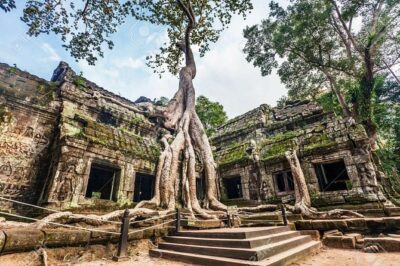
Ta Prohm receives about an hour, and this is likely to be one of the most memorable parts of Day 1. The temple has been left partly overgrown, with tree trunks and huge roots pressing against the stone walls.
Its fame as the Tomb Raider temple has brought plenty of attention, but the real appeal is the relationship between forest and architecture. You walk through dark doorways, courtyards, and narrow passages where the roots seem to hold the ruins together.
This is also a place where the pace can feel tight. Ta Prohm has many corners worth seeing, and the ground can be uneven. Stay close enough to your group to hear instructions, but take the time allowed to look up at the roots and carved stone rather than treating the visit as a quick photo stop.
Several people who joined this experience singled out guides such as Mony for taking strong photos. That can be useful here, where the setting naturally creates dramatic pictures, but remember that the guide still has to manage the group and keep the schedule moving.
Bayon and the stone faces of Angkor Thom
You spend about an hour at Bayon, the temple famous for its many smiling stone faces. It sits within Angkor Thom, the walled royal city associated with King Jayavarman VII.
Bayon is not as immediately tidy as Angkor Wat. Its towers crowd together, and the carved faces appear from different angles as you walk around the temple. A good explanation helps here, because the structure can feel confusing without some direction.
The hour is enough for a guided introduction and a look at the main features. If you are fascinated by carved details, you may wish you had longer. Still, after the open scale of Angkor Wat and the forest setting of Ta Prohm, Bayon supplies a strong change of pace.
The tour then visits the Terrace of the Elephants and the Terrace of the Leper King. Each stop lasts about 15 minutes. These are short visits, but they add context to Angkor Thom as a royal center rather than leaving you with only a temple-focused view.
The Elephant Terrace served as a viewing platform for King Jayavarman VII, while the Leper King Terrace sits at the northwest corner of the old Royal Square. Your guide’s commentary is especially useful here because the surviving walls and carvings can be easy to pass without understanding their purpose.
Angkor Thom’s South Gate closes the temple day
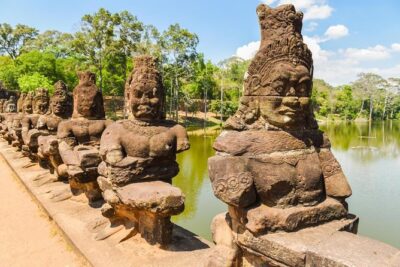
The South Gate gets about 10 minutes. It is a famous entrance built under Jayavarman VII and is often photographed for its approach and monumental design.
This is a brief stop, so you should not expect a full walk through the gate area. It works well as the final visual note of the Angkor Thom circuit, after the more substantial visits to Bayon and the terraces.
You then return to your accommodation in Siem Reap. After a day that began before dawn, this is the point where I would plan a quiet evening, an early meal, and plenty of sleep. The first day is rewarding, but it asks a lot from you.
Day 2 trades temple crowds for Phnom Kulen
Pickup on Day 2 is later, between 8:00 and 8:30 a.m. That extra sleep is welcome. You travel through rural Cambodian villages toward Phnom Kulen National Park, watching local life along the roads and seeing a quieter side of the Siem Reap area.
The drive to the park takes about an hour and a half according to the schedule. That is a meaningful part of the day, not dead time. Phnom Kulen is outside the central Angkor circuit, and the rural route helps you understand how quickly the surroundings change once you leave Siem Reap.
The tour includes the Phnom Kulen admission ticket, so the second day has fewer surprise costs. You should still budget for soft drinks if you want anything beyond the included water and meals.
Poeng Ta Kho brings the mountain views
Poeng Ta Kho, described as an amazing cliff viewpoint, is scheduled for about 30 minutes. From the summit area, you can look over jungle and distant mountain peaks.
This stop is about open space and views rather than carved architecture. After the enclosed passages of Ta Prohm and the crowded towers of Bayon, the change is welcome. It also gives you a chance to take photos that show Cambodia beyond the temples.
The time is short, and the quality of the view can depend on weather. If clouds or haze reduce the distance, the stop may feel less dramatic. Still, the mountain setting adds something that a standard Angkor-only tour cannot provide.
The 1000 Lingas connects water, faith, and stone
At the 1000 Lingas site, you spend around 30 minutes seeing ancient Hindu symbols carved into the riverbed. The sacred river is linked with 9th-century carvings, and the water runs through a setting with small cascades.
This is one of the more unusual stops because the carvings are not simply placed on a temple wall. They are part of the river itself, connecting religious imagery with the movement of water. Your guide’s explanation can help you see why this site matters beyond its name.
The stop may also offer a chance to cool off near the water, but the tour’s main swimming and picnic time comes later at Phnom Kulen Waterfall. Bring sensible footwear and follow your guide’s instructions around wet or uneven ground.
Preah Ang Thom and its reclining Buddha
The next visit is Preah Ang Thom pagoda, home to Cambodia’s largest 16th-century reclining Buddha statue. You have about an hour here.
This is an active religious place, not only an archaeological stop. Dress and behave respectfully, and listen to your guide about appropriate conduct. The reclining Buddha gives the day another layer, showing that Phnom Kulen remains a place of worship as well as a national park attraction.
The tour description does not include the admission ticket for this stop separately, so ask your guide if you need clarification about any local charges. The main park admission is included.
A picnic beside Phnom Kulen Waterfall
The final major stop lasts about two hours at Phnom Kulen Waterfall. You have time to relax, enjoy a picnic with local food, and cool down after the road and walking earlier in the day.
This is the part that makes the second day feel like more than an extension of the temple circuit. You can sit beside the water, take in the forest setting, and have a meal without rushing from one carved structure to the next. Several people who joined the tour especially liked the food, the waterfall setting, and the care shown by the guide team.
The picnic lunch is included, as are cool bottles of water and towels. Those towels are a small but useful touch after time in the heat. The tour does not include soft drinks, so bring or buy any extra beverages you want.
The waterfall stop is also the best chance to slow down. If your priority is maximum temple coverage, Day 1 delivers that. If you want a refreshing break and a more relaxed connection with the outdoors, Day 2’s final stop may be the stronger memory.
What the $79 price really covers
At $79 per person, the basic price is attractive for two guided days. It includes:
- Air-conditioned minivan or minibus transport
- An English-speaking professional guide
- Day 1 breakfast
- Day 2 picnic lunch
- Phnom Kulen admission
- Bottled water and towels
- Hotel pickup and return
The important calculation is the extra $37 Angkor pass. Your effective known cost becomes $116 per person before any soft drinks or other personal spending.
That is still fair for a two-day program covering the major Angkor sites and a separate national park excursion. Booking transport, a guide, meals, and the Kulen ticket on your own could take more time and make the cost less predictable.
The value is strongest if you want a ready-made plan and do not want to negotiate transport for Phnom Kulen. It is less compelling if you already have a private driver, hold an Angkor pass, and prefer to spend an entire day at one or two temples.
Guides, vehicles, and the group size
The group limit is 14 people. That is not a private tour, but it is small enough to keep the guide’s explanations within reach and make hotel pickup less cumbersome than a large coach trip.
The guide names associated with this experience include Mony, Sam, Seila, Sotin, David, and Mr Ho. Specific praise has focused on friendly service, clear background information, cheerful personalities, photography help, and careful attention to keeping people hydrated.
Your experience can vary by guide, but the structure supports a good guiding style. The most useful guide here is not simply someone who points out a famous building. You want someone who can explain the difference between Angkor Wat, Bayon, Ta Prohm, the royal terraces, and the religious sites on Kulen without burying you in facts.
The air-conditioned vehicle matters, especially between stops. Day 2 includes long driving time to and from the mountain, while Day 1 involves an early start and repeated walking. The vehicle gives you a place to recover in the heat.
Who should book this tour
I would choose this trip if you have only two days in Siem Reap and want the major temple names plus a natural and rural day. It suits first-time visitors who value a guide, included meals, and a clear schedule.
It is also a good fit for couples, friends, and small groups who want help with photographs. Mony was specifically praised for taking excellent pictures, and other guides received similar praise for warm service and local explanations.
Families may appreciate the air-conditioning, water, towels, and planned meals, though the pre-dawn start can be hard for young children. Anyone with limited stamina should know that Day 1 is long and busy, even though many of the individual stops are short.
You may want another plan if your main goal is slow temple study. The itinerary covers a lot, and the 15-minute terrace visits leave little room for lingering. You may also prefer a private trip if you want to change the order, skip sites, or spend more time photographing one temple.
Free cancellation is available if you cancel at least 24 hours before the experience begins. Changes or cancellations made later do not qualify for a refund.
Should you book the Angkor and Kulen combination?
Book it if you want breadth, guidance, and easy transport in a compact two-day plan. You will see Angkor Wat at sunrise, the roots of Ta Prohm, Bayon’s carved faces, the key points of Angkor Thom, and the very different setting of Phnom Kulen.
The best reason to choose it is the balance between stone and nature. The best reason to hesitate is the packed first day and the added Angkor pass fee.
For a first visit to Siem Reap, I think the combination makes good sense. Just prepare for the early alarm, wear shoes suited to uneven ground, and calculate the $37 temple pass before booking. If those details work for you, this tour offers a practical way to see both Cambodia’s famous monuments and a cooler, more rural side of the region.
FAQ
What time does the tour start?
Day 1 hotel pickup is scheduled between 4:30 and 5:00 a.m. Day 2 pickup is scheduled between 8:00 and 8:30 a.m.
Is the Angkor Wat admission ticket included?
No. The Angkor pass costs $37 per person and is not included in the tour price.
Is Phnom Kulen admission included?
Yes. The Phnom Kulen National Park admission ticket is included.
What food is provided?
Day 1 includes breakfast with local food such as Khmer noodle soup, palm cake, and steamed rice desserts. Day 2 includes a picnic lunch at Phnom Kulen Waterfall.
Is transportation provided?
Yes. Hotel pickup and return are provided in an air-conditioned minivan or minibus.
How large is the group?
The activity allows a maximum of 14 travelers.
Is cancellation free?
Yes, if you cancel at least 24 hours before the experience start time. Cancellations made less than 24 hours in advance are not refunded.
More 2-Day Experiences in Siem Reap
- Angkor 2-Day Sunset & Sunrise Small-Group Tour
★ 5.0 · 2,567 reviews - 2 Days Exclusive Temple Highlights with Sunset and Sunrise Tour
★ 5.0 · 1,157 reviews - Siem Reap: Angkor Sunrise 1- or 2-Day Guided Temples Tour
★ 4.9 · 1,132 reviews - 2 Days Guided Historical Tour in Angkor
★ 5.0 · 855 reviews
More Waterfall Tours in Siem Reap
- Guided Small-Group Tour in Kulen Mountain Park Waterfall
★ 5.0 · 480 reviews - Kulen Mountain Waterfall Tour with Picnic Lunch from Siem Reap
★ 5.0 · 238 reviews - Kulen Waterfall & 1000 Linga River Small-Group Tours
★ 5.0 · 234 reviews - 3-Days Discovery Of Angkor: Waterfalls,Floating Village and Banteay Srei temple
★ 5.0 · 214 reviews
New around Siem Reap
- Kulen Mountain With Ticket included Plus Banteay Srei Temple Tour★ 5.0 · 7 reviews
- 2 Days Angkor temples with Sunrise & Sunset★ 5.0 · 7 reviews
- Private Siem Reap Airport Transfer to hotel in town★ 5.0 · 7 reviews
- 1-Day private Angkor Temple Tour with Sun Rise by Tuk Tuk from Siem Reap★ 4.5 · 7 reviews
- Siem Reap: Morning Cooking Class & Market Tour★ 5.0 · 7 reviews
- Kulen Mountain, Killing Fields and War Museum Tour★ 5.0 · 7 reviews
- War Museum, Killing Field, and APOPO Hero RATs Tour★ 5.0 · 7 reviews
- Half-Day: Silk Farm, Senteur Angkor, and Satcha Workshop★ 4.6 · 7 reviews
Angkor Wat Tours, compared.
Angkor Wat Sunrise or Sunset Tour with Guide from Siem Reap
Read our review →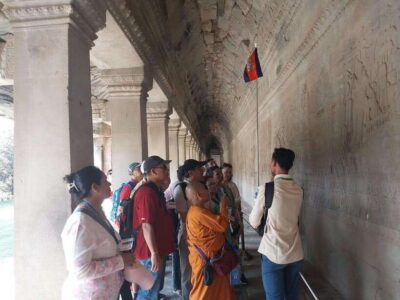
Angkor Wat: Small-Group Sunrise or Sunset Tour
Read our review →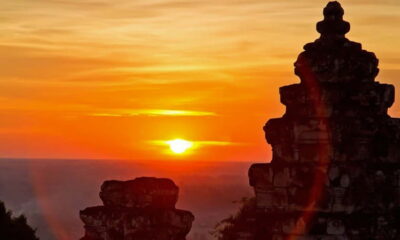
Angkor Wat Sunrise tour with Small – Group and Guide tours
Read our review →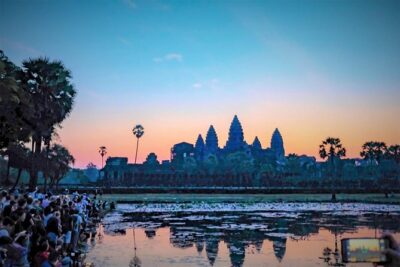
Angkor Wat Highlights and Sunrise Guided Tour from Siem Reap
Read our review →
Angkor Wat Sunset Small Group Tour with Lunch Included
Read our review →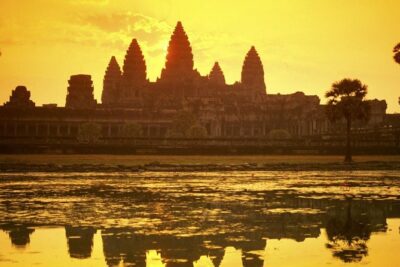
Full-Day Angkor Wat Sunrise Private Tour with Guide from Siem Reap
Read our review →
Angkor Wat Sunrise & 3 Main Temples with Breakfast – Small Group
Read our review →Browse the lists this tour appears in