
Reviewed · ANGKOR SUNRISE TOURS
Siem Reap: Angkor Sunrise 1- or 2-Day Guided Temples Tour
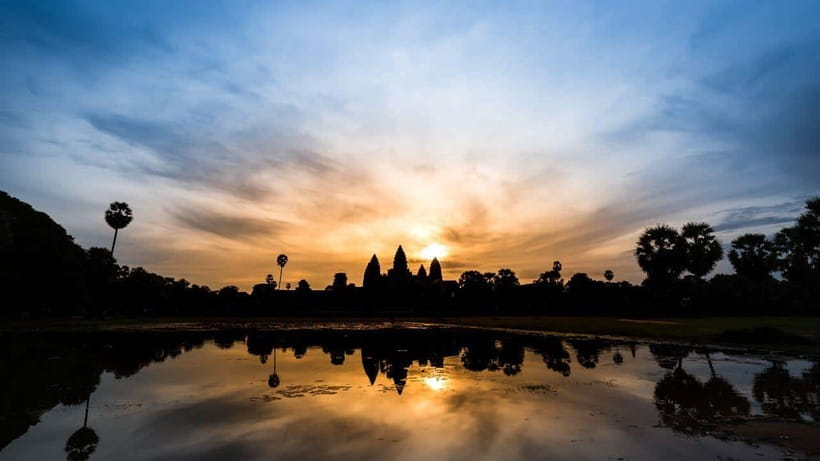
Angkor Wat at sunrise is the headline, but the real strength of this tour is the way it gives you two very different days in the temple complex. You see the famous monuments, then move farther out to quieter sites such as Banteay Srei and Preah Khan, where the setting and details matter as much as sheer size.
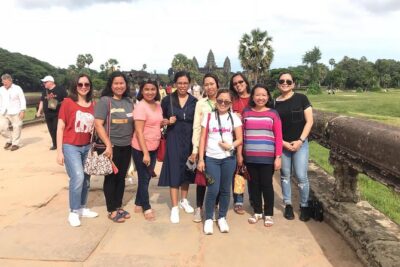
I like the small groups of up to 15 and the practical care built into the day: air conditioning, cold water, and cool towels waiting after temple walks. I also like the guides’ habit of finding less crowded photo spots and helping solo visitors with pictures. The main drawback is the schedule. Day 2 starts around 4:20 AM, and the two-day plan packs in a great deal of walking, stairs, heat, and early starts.
Key points to know before booking
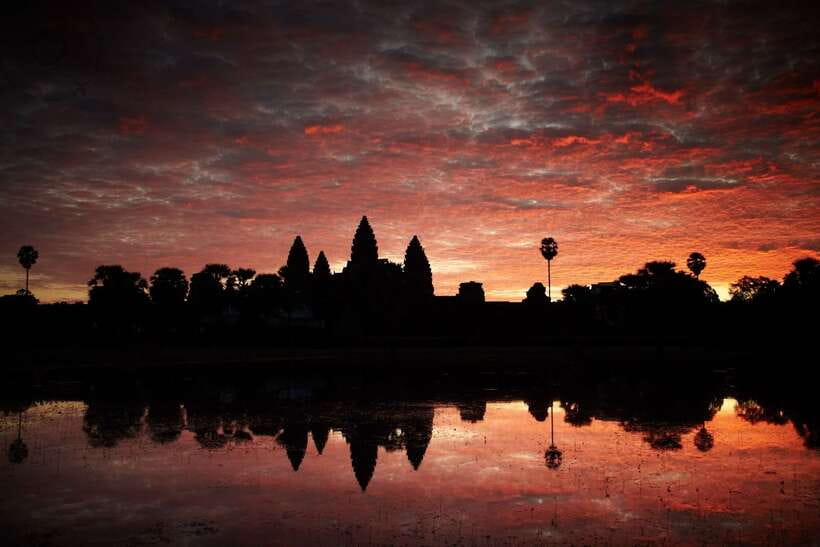
- Sunrise begins before dawn: Pickup is usually between 4:20 and 4:35 AM on the Angkor Wat sunrise day.
- The two-day route offers the best value: You see Banteay Srei, Pre Rup, Neak Pean, and Preah Khan as well as Angkor Wat, Bayon, Angkor Thom, and Ta Prohm.
- Guides are a major part of the experience: Sak, Pal Saruon, Sokpee, Pi, Bun, and other English-speaking guides are praised for clear explanations, local insight, humor, and photography help.
- The bus comforts matter: Cold water, air conditioning, and eucalyptus or scented cool towels are especially welcome after walking in the Cambodian heat.
- The temple pass costs extra: A 2 to 3 day pass for all temples is listed at $62 per person, and meals are not included.
- Expect real physical effort: Uneven ground, temple steps, rubble, long walks, and high temperatures make comfortable shoes and modest clothing essential.
What the $19 price really covers
At $19 per person, this is an unusually low starting price for a guided Angkor tour. The price covers hotel pickup and drop-off, an English-speaking guide, an air-conditioned vehicle, bottled water, and cool towels. It does not cover the temple pass or meals, so the final cost is much higher than the advertised tour fee.
The required temple pass is listed at $62 per person for two or three days. You can buy it online, and the operator advises arranging it so the details are sent one day before the tour starts. Add meals at local restaurants near the temples, and you have the full budget to consider.
Even with those extras, the tour can be good value if you want to see a wide spread of Angkor without arranging transport, route planning, temple explanations, and sunrise timing yourself. A private tuk-tuk or car gives you more control, but it will not necessarily provide the same amount of historical explanation or the easy company of a small group.
The value is strongest for a short stay in Siem Reap. In two days, you cover the major sights and several outlying temples, while the guide supplies the connections that can be hard to find on your own. The tradeoff is less freedom to linger at one favorite ruin.
More Angkor Sunrise Tours in Siem Reap:
- Angkor Wat Sunrise or Sunset Tour with Guide from Siem Reap
★ 5.0 · 12,109 reviews - Angkor Wat Sunrise tour with Small – Group and Guide tours
★ 5.0 · 3,655 reviews - Full-Day Angkor Wat Sunrise Private Tour with Guide from Siem Reap
★ 5.0 · 2,920 reviews
Day 1: Banteay Srei and the Grand Circuit
The first day usually begins with hotel pickup around 7:40 to 8:10 AM. The route heads beyond Angkor Thom, where the temples feel more spread out and the crowds may be lighter than at the main Angkor Wat complex.
Your first stop is Pre Rup, a Hindu temple built in 961 or 962. Its laterite and sandstone construction gives it a sturdy, earthy look, and it provides a useful introduction to the older architectural style you will see during the day. The upper levels require steps, so take your time, especially after the journey from Siem Reap.
Banteay Srei is the artistic prize of the morning. This smaller sandstone temple is famous for its fine carvings, and the detail is easier to appreciate than the grand scale of Angkor Wat. Figures, floral patterns, and mythological scenes cover the stone with unusual precision.
I find Banteay Srei valuable because it changes your idea of what an Angkor temple can be. It is not the biggest site, but its careful carving rewards a slower look. Your guide can point out scenes and symbols that might otherwise blur into a wall of decoration.
The drawback is distance. Banteay Srei sits well beyond the central temple group, so part of the day is spent driving. That travel is worthwhile if you have two days, but if you choose a one-day option, check which temples are included before booking. The supplied plan gives the full Banteay Srei and Grand Circuit schedule for the two-day version.
Neak Pean and Preah Khan after the morning heat
On the return toward the central complex, you visit Neak Pean, a Buddhist temple on a circular artificial island within Jayatataka Baray. The approach across the water gives the stop a different feel from the broad stone terraces and towers elsewhere.
Neak Pean is not a site where you spend hours climbing through rooms. Its appeal lies in the water setting and the idea of a temple placed within a carefully planned baray, or reservoir. It works well as a change of pace after Banteay Srei.
Preah Khan is more atmospheric and sprawling. Commissioned by Jayavarman VII in honor of his father, it combines corridors, courtyards, carved stone, tree roots, and partially restored structures. The World Monuments Fund is involved in its restoration, and some sections are in remarkably good condition.
This is one of the stops I would not skip. Preah Khan offers the feeling of a ruined city rather than a single monument. You can see how trees and stone now share the same space, but the site also retains enough structure for the guide to explain its original purpose.
There is a practical point here: the ground can be rough, and the route through the temple is not a smooth indoor museum visit. Wear shoes with a firm sole, watch your footing, and keep some water with you.
Sunset and the long first day
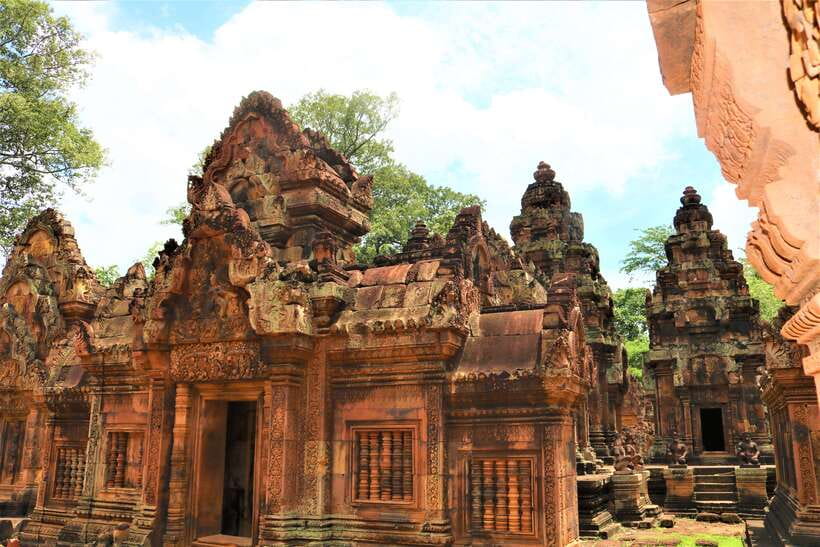
The first day ends with sunset before the return to Siem Reap. The exact finish varies in the supplied timing details, with some information placing hotel arrival around 4 to 5 PM and other details indicating an evening return after sunset, around 6 to 7:30 PM. Confirm the final schedule with the operator the day before.
That timing matters because Day 2 begins before dawn. If you stay for sunset, you should plan a quiet evening, an early meal, and a very early bedtime. The sunset itself is a pleasant close to a full day, but it is not a reason to underestimate the fatigue.
Meals are not included. Food can be purchased at local restaurants near the temples, and the guide may organize a stop during the route. Bring some cash if you want to keep the day moving, but allow enough time to eat and rest rather than treating lunch as an afterthought.
More early starts in Siem Reap:
- Siem Reap: Angkor Wat: Small-Group Sunrise or Sunset Tour
★ 5.0 · 9,444 reviews - Siem Reap: Angkor Wat 2-Day Tour with Sunrise and Sunset
★ 4.9 · 4,429 reviews - Angkor Wat Highlights and Sunrise Guided Tour from Siem Reap
★ 5.0 · 3,213 reviews - Angkor Wat Sunrise & 3 Main Temples with Breakfast – Small Group
★ 5.0 · 2,857 reviews
Day 2: Angkor Wat before the crowds
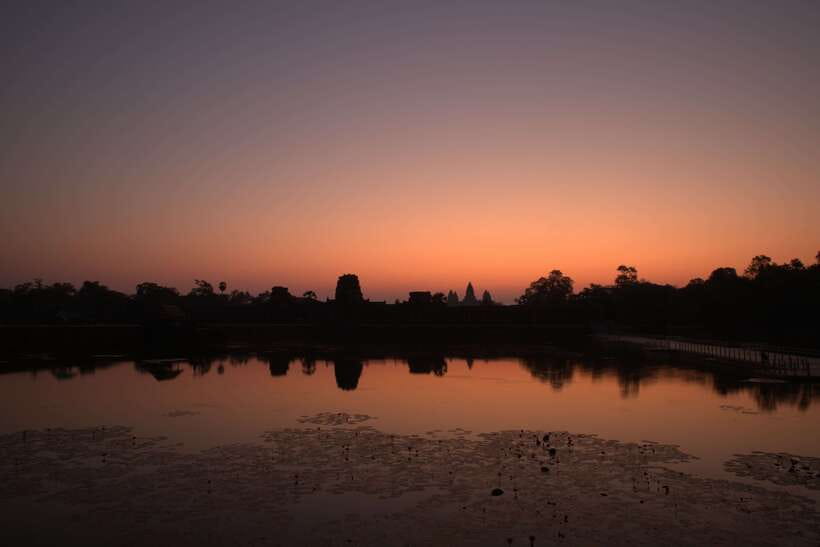
Pickup for the sunrise day is usually between 4:20 and 4:35 AM. The exact time is provided one day before departure, so keep your phone available and confirm the arrangement.
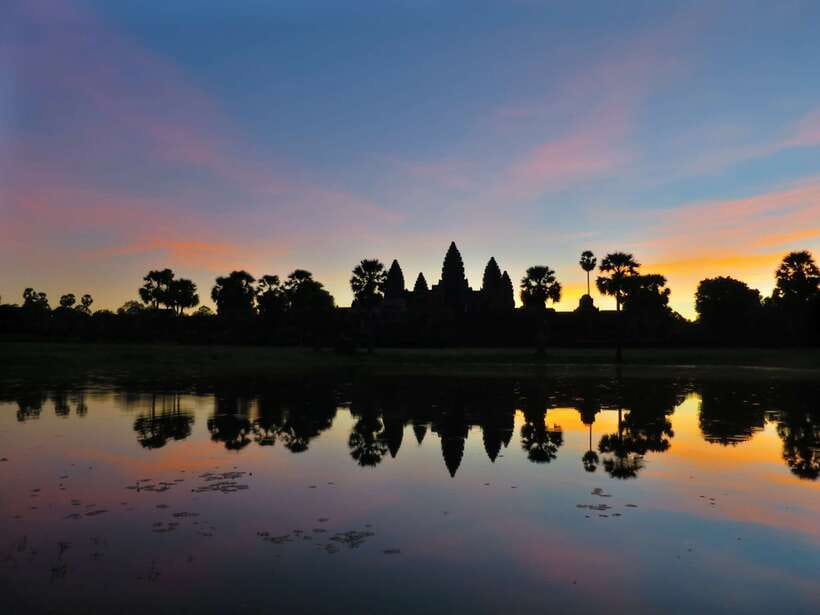
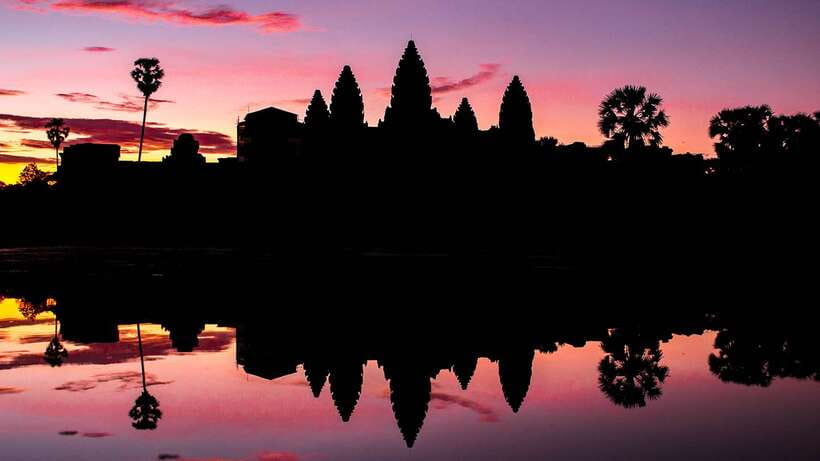
You travel to Angkor Wat in darkness and wait outside the temple for first light. Sunrise conditions are never guaranteed. Cloud can soften or block the view, as happened on one outing, but the early arrival still lets you enter before the main daytime heat.
A useful tip is to follow the guide’s advice about where to watch. The most crowded place is not always the best one. Guides such as Sak and Pal Saruon are praised for placing their groups in good positions, including quieter seating along the outer wall rather than forcing everyone into the tightest crowd at the moat. You can still get reflection photos without spending the entire wait shoulder to shoulder.
After sunrise, the guide leads you through Angkor Wat itself for about two hours. This is not just a quick photo stop. You see corridors, central chambers, upper terraces, and bas-relief carvings while the guide explains the religious ideas and stories behind them.
Angkor Wat is enormous, and without a plan it is easy to spend your energy wandering while missing important details. A good guide gives the building a sequence: approach, galleries, carved scenes, inner sanctuaries, and upper levels. The explanation also helps you understand the shift between Hindu and Buddhist elements visible across the wider Angkor complex.
Breakfast follows just outside the temple. It is at your own expense, but the stop gives you a chance to recover before the next set of monuments. The early start is physically demanding, so I would treat breakfast as essential rather than optional.
Angkor Thom, Bayon, and the stone faces
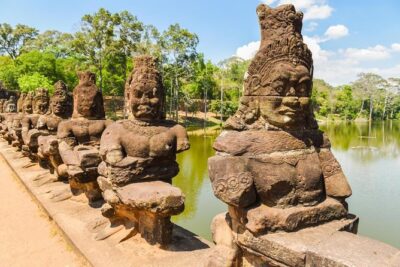
The morning continues at the Southern Gate of Angkor Thom, the fortified city built under Jayavarman VII. The gate is flanked by 54 stone figures on each side, gods to the left and demons to the right, creating a striking entrance scene.
This is a good place to listen closely to the guide. The figures are not random decoration, and the arrangement connects to the larger religious stories and symbolic design of the city. It is also a popular photo stop, so a guide who knows when to pause and where to stand can save time.
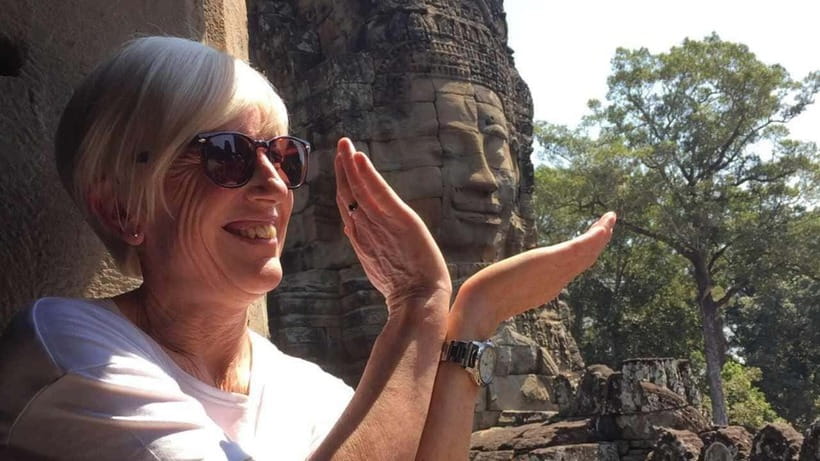
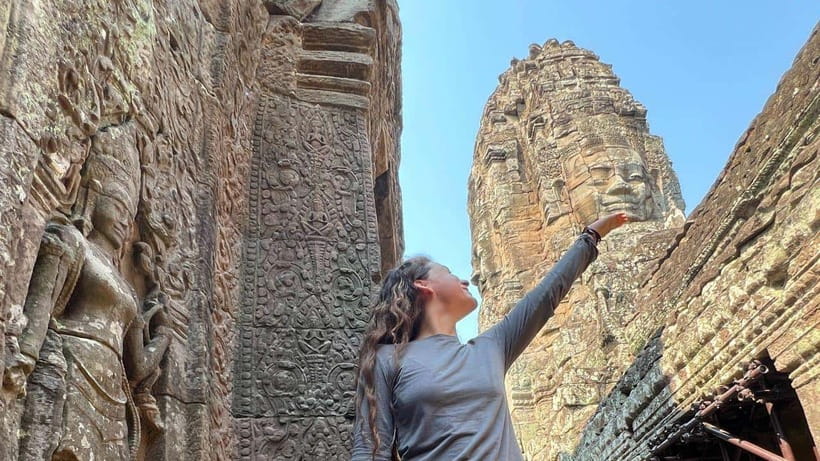
Inside Angkor Thom, you visit Bayon Temple. Its central towers carry more than 200 enormous carved faces, giving the temple a mood that changes as you move through the galleries. From one angle a face may seem calm, from another almost watchful.
Bayon is one of the strongest stops on the route because it is both visually memorable and structurally confusing. Towers, passageways, and reliefs overlap in a way that is hard to read from a map. The guide helps you notice scenes of daily Khmer life as well as religious imagery.
You then see the Terrace of the Leper King and the Terrace of Elephants, two important features of Angkor Thom’s ceremonial center. These are more open than Bayon, so the contrast helps you understand the city as a royal and public space rather than a collection of isolated temples.
Ta Prohm, where trees meet stone
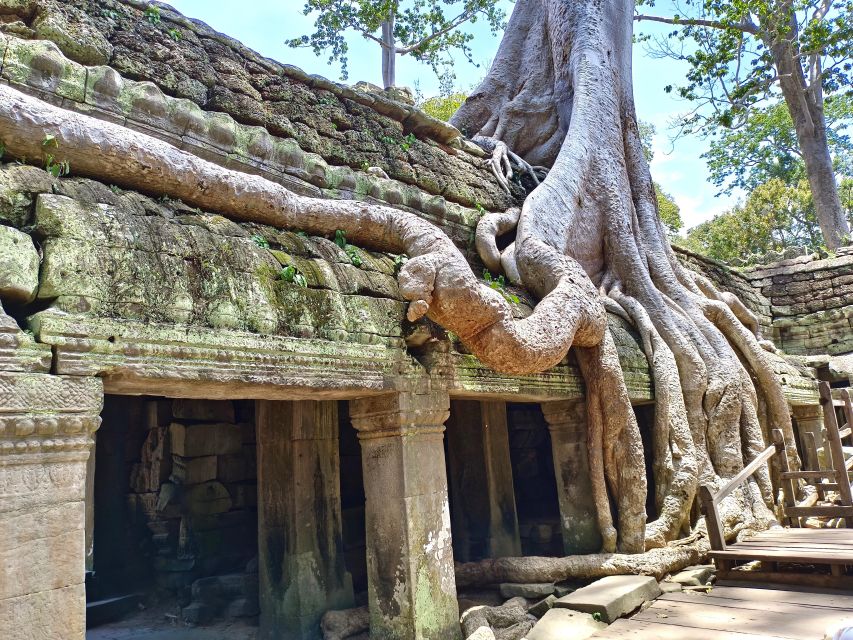
The final major stop is Ta Prohm, the jungle temple often associated with tree roots winding through crumbling walls. It was once home to almost 3,000 monks, and its partly ruined condition makes it feel very different from Angkor Wat.
Ta Prohm is popular for good reason, but it can also be crowded. Your guide may steer you toward less packed angles and help you find the familiar tree-and-stone views without turning the whole visit into a single photo queue.
I like Ta Prohm as the closing temple because it leaves you with a sense of time and change. Angkor Wat shows planning and power at monumental scale. Ta Prohm shows what happens when a huge religious complex is left to weather, vegetation, and restoration.
The two-day route is carefully ordered, but it is still a lot. One detailed account described six sites on Day 1 and four on Day 2, with roughly 10 hours on the first day and about nine on the second. Other published timing gives a Day 2 return between 12:30 and 1:30 PM. Treat those figures as useful planning guides, not fixed guarantees.
The guides and drivers make the difference
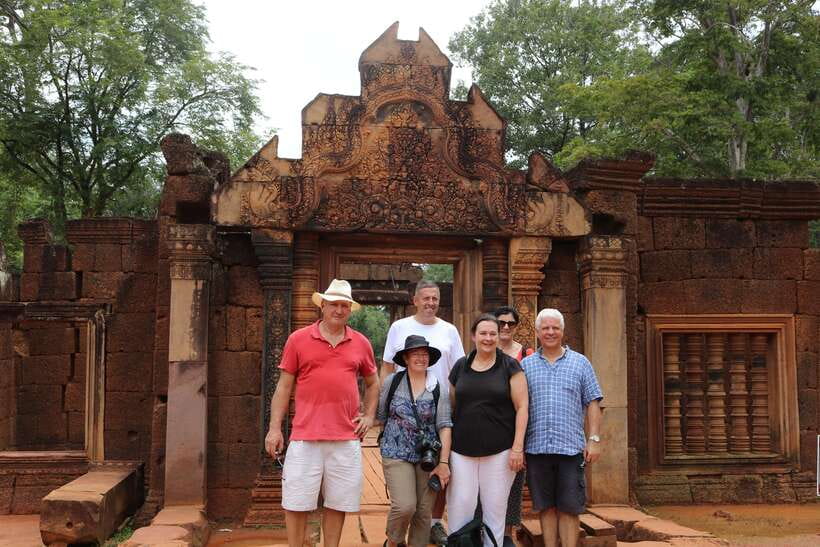
The monuments are extraordinary on their own, but the quality of the day depends heavily on the guide. Names frequently associated with strong outings include Sak, Pal Saruon, Sokpee, Pi, Bun, Saruon Pal, and Sopheaprath. You may not be able to request a particular person, but the pattern is clear: the guide is central to the experience.
The best guides do more than repeat dates. They explain Hindu and Buddhist ideas, Khmer architecture, Cambodian life, and the role of each monument. Several guides are also happy to take photographs, a real help if you are traveling alone or want everyone in the group included.
The driver matters just as much during a hot temple day. Drivers named Vichet, Naro, Ro, Mao, Water, Kiel, Seyha, and others are praised for safe driving and good timing. The air-conditioned vehicle gives you a necessary break between sites, while cold water and cool towels help you reset before the next walk.
The group is limited to 15, though some departures may be smaller. A group of five or six allows more room for questions and makes it easier to stay together. Still, this is a shared tour, so you will need to follow the agreed schedule.
What to wear and how hard it feels
Wear comfortable shoes with good grip. You will walk over uneven ground, climb temple steps, and sometimes move around rubble. Sunglasses, a sun hat, insect repellent, and a camera are sensible additions.
Shorts are not allowed, and you must cover your knees and shoulders when visiting the temples. Choose light, modest clothing that remains comfortable in heat. The supplied water and towels are helpful, but they do not remove the need to protect yourself from the sun.
This tour is not suitable for children under eight or wheelchair users. The physical demands are not extreme for an active adult, but the combination of long walks, early starts, heat, and stairs can wear you down.
One day or two days?
Choose the two-day option if Angkor is a main reason for your visit to Siem Reap. It gives you time for Banteay Srei, Preah Khan, Neak Pean, and Pre Rup before the central highlights, and the temple variety keeps the experience from becoming a blur of similar stone towers.
Choose the one-day option only if your schedule is tight. The available information describes the sunrise-focused day in detail, but it does not specify every possible one-day combination. Check the exact route before paying, especially if Banteay Srei is a priority.
The two-day plan also gives the guide more time to explain the difference between temples built under different rulers and religious traditions. You will still be tired, but you are less likely to leave feeling that you saw only Angkor Wat and a few famous photographs.
Should you book this Angkor tour?
I would book it if you want structure, historical context, and efficient transport at a low tour price, and if you can handle the early morning and long walks. The 4.9 rating from 1,132 reviews and the 94 percent perfect transport score support the practical strengths of the operation, especially the drivers, cold towels, and reliable air conditioning.
I would not choose it if you want to set your own pace, spend half a day photographing one temple, or avoid a pre-dawn start. The temple pass and meals also need to be added to the headline price.
For most first visits, I would choose the two-day version. Ask your guide about the best sunrise position, follow the suggested photo stops, keep drinking water, and save your energy for Ta Prohm and Bayon. That combination gives you the grand monument, the intricate carving, the royal city, and the forest-wrapped ruins in one well-planned visit.
FAQ
Is the Angkor temple pass included?
No. The temple pass is not included. A 2 to 3 day pass for all temples is listed at $62 per person and can be purchased online.
Are meals included?
No. Meals are purchased separately at local restaurants near the temples.
What time does the sunrise day start?
Hotel pickup for Day 2 is usually between 4:20 and 4:35 AM. The exact pickup time is provided one day before the tour.
What time does the tour finish?
Day 2 usually ends with hotel arrival between 12:30 and 1:30 PM. Day 1 timing varies because the route includes sunset, so confirm the final return time with the operator.
Is hotel pickup included?
Yes. Hotel pickup and drop-off are included for both days.
What language does the guide speak?
The live guide speaks English.
Can children or wheelchair users join?
The tour is not suitable for children under eight or wheelchair users. You should also be prepared for uneven paths, stairs, rubble, and considerable walking.
More 2-Day Experiences in Siem Reap
- Angkor 2-Day Sunset & Sunrise Small-Group Tour
★ 5.0 · 2,567 reviews - 2 Days Exclusive Temple Highlights with Sunset and Sunrise Tour
★ 5.0 · 1,157 reviews - 2 Days Guided Historical Tour in Angkor
★ 5.0 · 855 reviews - 2-Day Angkor Wat With Small, Big Circuit and Banteay Srei Tour
★ 5.0 · 545 reviews
New around Siem Reap
- Kulen Mountain With Ticket included Plus Banteay Srei Temple Tour★ 5.0 · 7 reviews
- 2 Days Angkor temples with Sunrise & Sunset★ 5.0 · 7 reviews
- Private Siem Reap Airport Transfer to hotel in town★ 5.0 · 7 reviews
- 1-Day private Angkor Temple Tour with Sun Rise by Tuk Tuk from Siem Reap★ 4.5 · 7 reviews
- Siem Reap: Morning Cooking Class & Market Tour★ 5.0 · 7 reviews
- Kulen Mountain, Killing Fields and War Museum Tour★ 5.0 · 7 reviews
- War Museum, Killing Field, and APOPO Hero RATs Tour★ 5.0 · 7 reviews
- Half-Day: Silk Farm, Senteur Angkor, and Satcha Workshop★ 4.6 · 7 reviews
Angkor Sunrise Tours, compared.
Angkor Wat Sunrise or Sunset Tour with Guide from Siem Reap
Read our review →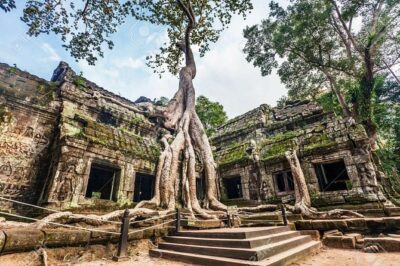
Angkor Wat Sunrise tour with Small – Group and Guide tours
Read our review →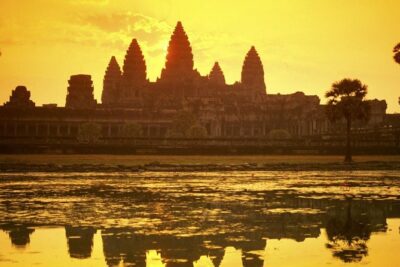
Full-Day Angkor Wat Sunrise Private Tour with Guide from Siem Reap
Read our review →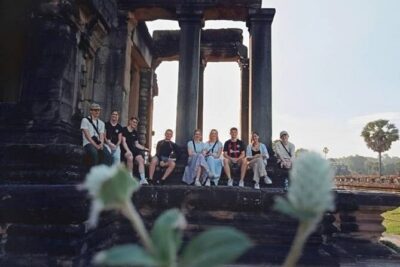
Angkor Wat Sunrise & 3 Main Temples with Breakfast – Small Group
Read our review →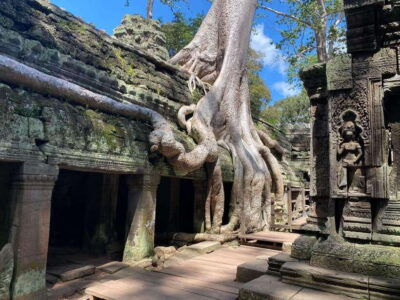
Angkor Wat Sunrise and Full-Day Sightseeing Tour
Read our review →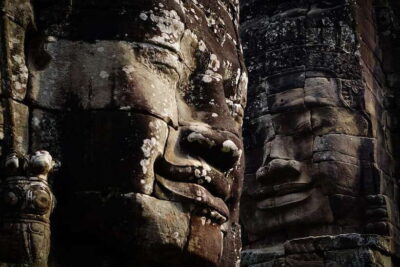
Angkor Wat Sunrise Explore The Most Iconic Temples
Read our review →
Browse the lists this tour appears in