
Reviewed · SIEM REAP TOURS
Angkor 2-Day Sunset & Sunrise Small-Group Tour
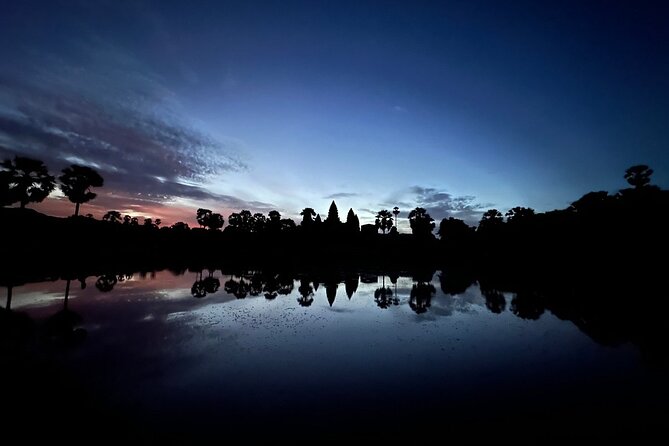
Angkor Wat at sunrise is the star here, but the smart part is the wider plan. Over two days, you see the famous temples, smaller sites, and countryside monuments without trying to cram the entire Angkor Archaeological Park into one punishing day. Banteay Srei gives you finely carved sandstone far from the main crowd, while Preah Khan and Neak Pean bring a different mood.
I like the cool, air-conditioned vehicle and the careful comfort touches, especially chilled water and cool towels after hot walks. I also like the guides, including Pal, Sak, Sokpee, and Chhay, who explain the carvings, answer questions, and often take photos for solo visitors. The main catch is stamina: day one can stretch from 8 a.m. to about 7 p.m., and day two may begin around 4:10 to 4:30 a.m.
Key points to know before booking
- Sunrise begins before dawn: You leave your Siem Reap hotel around 4:10 to 4:30 a.m., depending on the season.
- Banteay Srei is the special extra: This smaller temple is known for exceptionally fine relief work and sits deep in the countryside.
- You avoid the open-air tuk-tuk: Transport is by air-conditioned vehicle, a major help in Cambodia’s heat and dust.
- The temple pass costs extra: The tour price is $49, but a two to three-day temple pass costs another $62 per person.
- Groups are capped at 15: Actual groups may be smaller, with reported examples of six, seven, and thirteen people.
- Plan for serious walking: Temple paths are dusty, surfaces can be uneven, and shoulders and knees must be covered inside the temples.
What the two-day plan is really like
This is a fast but sensible introduction to Angkor. You cover the major names, then add temples that many first-time visitors would miss if they simply hired a tuk-tuk and followed the most obvious route.
The pace is not lazy. Day one begins at 8 a.m. and works through four principal stops before sunset. Day two starts in the dark, gives Angkor Wat its best light, then moves through Angkor Thom and Ta Prohm. One departure covered nine temples on the first day, while another saw eleven across both days, so the exact count can vary with timing and the guide’s routing.
That range matters. You get a strong overview, but this is not a slow archaeological seminar. If you want long periods of quiet at every shrine, book private transport and spread the park over more days. If you have limited time in Siem Reap, the schedule makes good use of it.
More Sunset Tours in Siem Reap:
- Angkor Wat Sunrise or Sunset Tour with Guide from Siem Reap
★ 5.0 · 12,109 reviews - Siem Reap: Angkor Wat: Small-Group Sunrise or Sunset Tour
★ 5.0 · 9,444 reviews - Sunset tour of Kampong Phluk stilts home village on the Tonle Sap
★ 5.0 · 4,865 reviews
Day one: remote temples and a sunset finish
Preah Khan, roots and broken stone
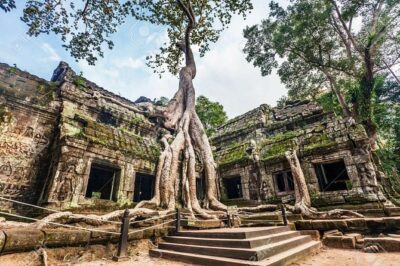
Preah Khan is a fine opening stop because it feels atmospheric rather than polished. The temple is ruined, with tree roots and crumbling stone structures creating the tangled look many people hope to find at Angkor.
You have about an hour here. That is enough to see the main sections and hear the basic story of the site, though you may wish for more time if you enjoy photographing doorways, corridors, and carved details.
A guide adds real value at Preah Khan. Without context, it can feel like a long series of walls and piles of stone. A good guide such as Pal or Sak can point out what you are looking at and help separate original religious design from later damage and restoration.
Neak Pean and its circular island
Neak Pean is a shorter visit, with about 40 minutes allowed. The temple sits on a circular island in the Jayatataka Baray, an artificial reservoir.
This stop changes the rhythm of the morning. Instead of wandering through a huge complex, you approach a compact Buddhist temple surrounded by water. The setting is part of the appeal, so keep your camera ready as you walk toward the island.
The visit is brief, and the admission fee is not included. As with the other temple stops, your guide can explain the religious purpose and layout, which makes this more than a quick photo stop.
More Small Group Tours in Siem Reap:
- Angkor Wat Sunset Small Group Tour with Lunch Included
★ 5.0 · 3,059 reviews - Angkor Wat Sunrise & 3 Main Temples with Breakfast – Small Group
★ 5.0 · 2,857 reviews - Kulen Mountain: Small-Group Tour and Picnic lunch
★ 4.9 · 1,802 reviews - Angkor Wat Small-Group Exploration with Expert Guide
★ 5.0 · 1,544 reviews
Banteay Srei, the day’s finest carving
Banteay Srei is the reason this tour works better than a simple Angkor Wat highlights outing. The temple is smaller than Angkor Wat, but its sandstone reliefs are famous for their precision and detail.
You get about an hour and a half here. Look closely at the carved figures, lintels, and pediments. The compact scale helps you appreciate the workmanship in a way that can be harder at the vast central temples.
Banteay Srei is also deep in the countryside, away from the core group of monuments. The longer drive is useful because it shows you that Angkor is not one building. It is a large archaeological area with royal temples, reservoirs, processional spaces, and smaller religious sites spread across the region.
The trade-off is time on the road. You will not spend every minute walking among temples, but that countryside outing gives the day welcome variety.
Pre Rup, a strong stone pyramid
Pre Rup was built as the state temple of Khmer King Rajendravarman and dedicated in 961 or early 962. It is a Hindu temple mountain made from brick, laterite, and sandstone.
The design is bold and geometric. You climb through a stepped structure rather than moving through a shaded maze of corridors. The higher levels give you a broad view over the surrounding area, though the climb can be uncomfortable in strong heat.
The day may finish with sunset from a hilltop area. Timing and conditions matter here. One reported departure reached the sunset area after a long day, and heavy smog made the view less impressive. The climb can also be difficult if you have asthma or breathing problems. Treat sunset as a pleasant possibility, not a guaranteed perfect sky.
Day one may last until about 7 p.m. That is a long stretch in tropical heat, even with air-conditioning between stops. Eat a solid breakfast, carry only what you need, and expect dust on the paths.
Day two: Angkor Wat before the crowds
The 4:10 a.m. departure
The second day begins before dawn. Pickup is generally between 4:10 and 4:30 a.m., depending on the season, and you enter Angkor Wat in darkness from the less-used eastern side.
This early start is demanding. You may sit or wait on the ground for about an hour and a half before the sun appears, so bring something light to sit on if you have room. A phone flashlight can help during the walk in, although the tour also provides transport and a guide to organize the visit.
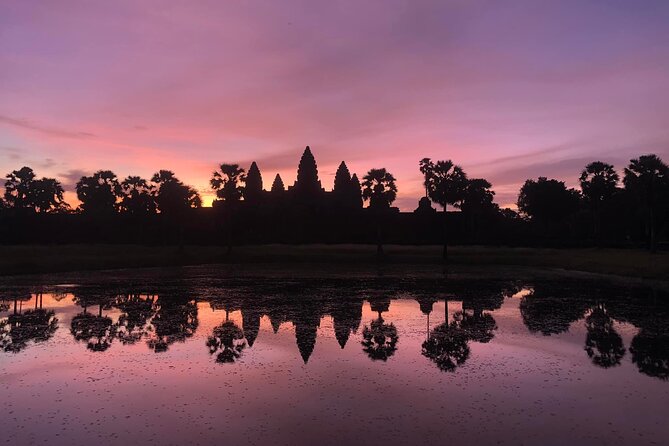
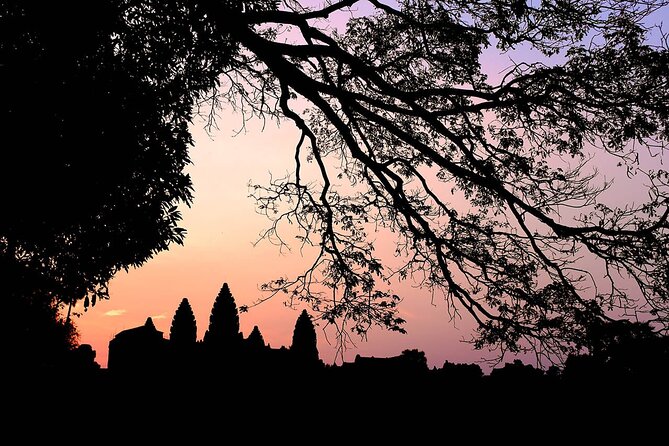
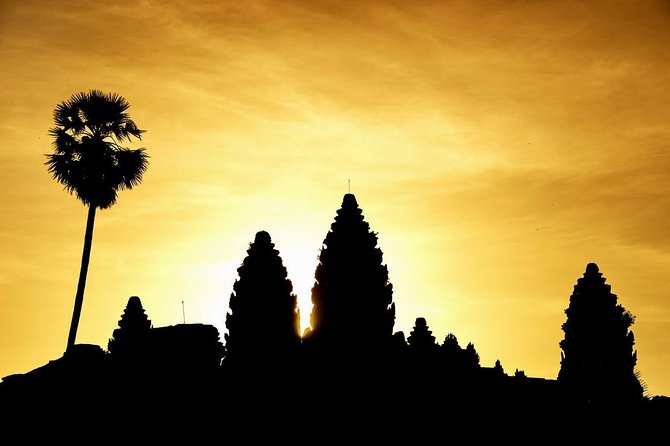
The reward is the changing light over Angkor Wat. Even with clouds or rain, the temple can feel quiet and solemn before the daytime heat and crowds arrive. Sunrise is not guaranteed to be a blazing orange display, but the pre-dawn atmosphere is often the more memorable part.
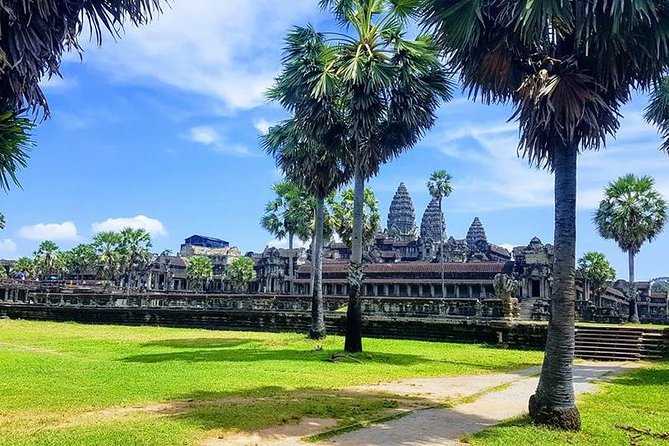
After the sun rises, you spend about three hours at Angkor Wat. That gives you time to walk through the galleries, see the towers, and listen to the stories behind the carvings. The site is enormous, so do not expect to understand every corner in one visit.
Dress correctly. Shoulders and knees must be covered inside the temples. Comfortable walking shoes are essential, and an umbrella can help in wet weather. One departure provided umbrellas during rain, but you should still prepare for changing conditions.
Angkor Thom and the South Gate
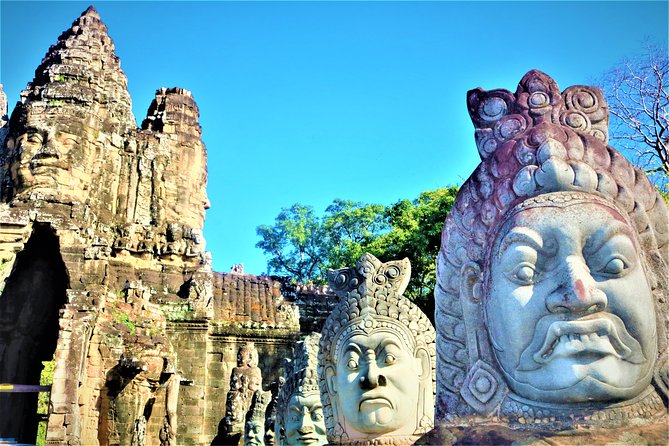
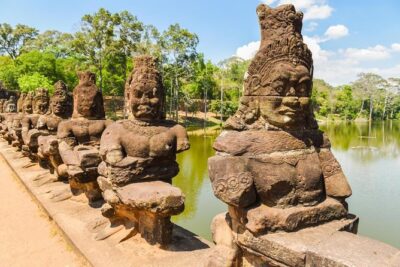
Angkor Thom was the capital of the Khmer Empire, and the scale becomes clear before you even reach the main temple. The South Gate is a dramatic entrance, with a monumental approach that gives you a sense of the city’s former importance.
You spend about 30 minutes at the South Gate and about an hour and a half exploring Angkor Thom. The short gate stop works well for photographs and a guide’s explanation of the approach, while the longer visit gives you time to understand the city within its walls.
Angkor Thom is one of the places where a guide’s skill matters most. The broad spaces and repeated stone faces can blur together if you walk through alone. Guides such as Sokpee and Chhay are praised for bringing the symbols, stories, and Cambodian cultural context into the visit without making the walk feel like a lecture.
The Terraces of the Elephants and Leper King
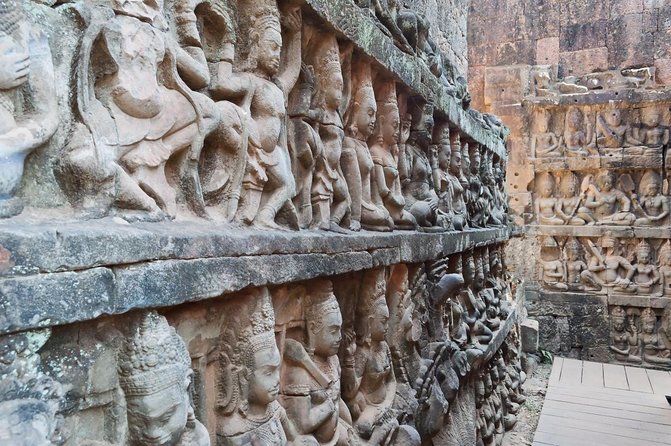
The tour passes the Terrace of the Leper King and the Terrace of the Elephants. The latter served as a grand platform for royal ceremonies and public displays.
The listed schedule allows about an hour and a half around the terraces, with no separate admission charge for this portion. These are not enclosed temples, so they offer a break from dark galleries and steep interior steps.
Pay attention to the carved figures along the walls. The terraces make more sense when you imagine them as part of a royal capital rather than isolated ruins. Your guide can help connect the stone platform to the larger city you have just entered.
Ta Prohm, the atmospheric finale
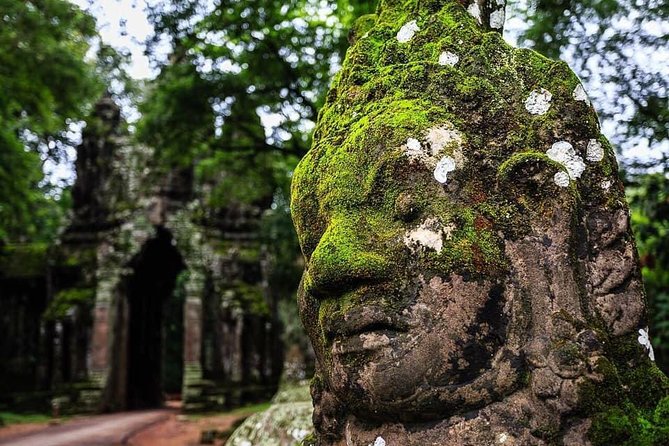
Ta Prohm is one of Angkor’s most memorable stops. It was once home to 2,740 monks, and today its crumbling structures and tree roots create the unmistakable scene associated with the temple.
You have about an hour here. That is enough for the main route, but Ta Prohm rewards patience. Pause at the doorways and look at how roots, stone, and collapsed galleries meet. The temple feels less formal than Angkor Wat and less open than the terraces.
It can also be crowded. Your guide may know quieter corners and better photo positions, but you should expect other groups at the famous views. Guides including Pal and Pi are especially appreciated for helping solo visitors and couples get photos without losing too much time.
The second day is often finished around noon, according to the stated tour experiences, but the exact end time can change. After the pre-dawn start and several hours of walking, a midday finish is welcome.
Why the air-conditioned vehicle matters
The transport is not just a small luxury. Angkor involves repeated walks in heat, then a return to the vehicle on dusty paths. A climate-controlled van lets you cool down between sites instead of sitting in an open tuk-tuk under direct sun.
Drivers such as Naro, Mao, Keal, Ha, and Vichet are repeatedly praised for punctual pickups and safe driving. The small service touches matter: cold bottled water and cool or mint-scented towels are offered after stops. For a long day, that can make the difference between staying engaged and simply trying to survive until lunch.
The roads can be rough, and dust is part of the setting. Air-conditioning will not remove every discomfort, but it gives you a clean break between walks. The vehicle is also useful for families and anyone who finds prolonged heat tiring.
The guide can make or break Angkor
I would not choose this tour only for the transport. I would choose it because a good guide changes how you see the temples.
Pal is often praised for clear explanations, visual aids on an iPad, and help with photographs. Sak is known for mixing historical detail with a friendly manner. Sokpee is noted for patience and careful answers, while Chhay brings humor and Cambodian cultural background into the tour.
The guide also helps with the practical side. You get instructions before each stop, reminders about meeting times, and help finding photo spots. Solo visitors do not have to rely on strangers to take every picture.
Guide quality can vary by departure, so you may not receive one of these exact names. Still, the repeated pattern is clear: the guide is expected to explain the temple stories, answer questions, keep the group moving, and help you understand the symbols rather than merely point at them.
What the $49 price really includes
The advertised price is $49 per person. That covers two days of temple touring, hotel pickup and drop-off in Siem Reap, an English-speaking licensed guide, air-conditioned transport, bottled water, cool towels, and the sunset and sunrise portions.
The important extra is the temple pass. You pay $62 per person directly at the site for a two to three-day pass. That brings the basic cost to $111 per person before meals.
Meals are not included. You choose and pay for food along the way. One reported lunch stop was inexpensive and reasonably good, but do not expect a formal included meal or a fixed restaurant experience.
At $111 before food, the tour offers solid value if you want transport, guiding, and a packed route. Hiring separate transport and arranging a guide may give you more control, but you would need to organize the early pickup, remote Banteay Srei, temple timing, and sunset yourself.
Who should book this tour
This suits you if:
- You have only two days for Angkor.
- You want the major temples plus Banteay Srei and smaller sites.
- You prefer air-conditioning to an open tuk-tuk.
- You are happy with a small shared group.
- You want help understanding the carvings and religious stories.
- You are willing to wake before dawn for sunrise.
- You like having someone take photographs for you.
Families can manage it, though children must be accompanied by an adult and children younger than five are not allowed. One family with children aged seven and eight enjoyed the schedule, but the heat and long walking day still require patience.
This is not the best pick if you need a relaxed pace, dislike early mornings, or have trouble with steep climbs, dust, heat, or long periods on your feet. You can request a flexible swap of days, and a day between the sunset and sunrise portions may be possible, but confirm the arrangement before you book.
Practical advice for a smoother visit
Wear light clothing that still covers your shoulders and knees. Use sturdy shoes, bring sunscreen, and carry a small bag for water and personal items.
Keep the early morning realistic. You may wait in darkness before sunrise, and clouds can soften the famous view. The experience is still worthwhile for the silhouette and quiet, but do not judge the tour by the color of the sky.
Expect the first day to be longer than the phrase two days may suggest. The 8 a.m. start, countryside drive, temple walks, and sunset finish can put you back at the hotel around 7 p.m. The next morning begins before 4:30 a.m., so plan an easy evening after day one.
Free cancellation is available up to 24 hours before the start time. Changes or cancellations within 24 hours are not accepted, based on local time.
Should you book the Angkor 2-Day tour?
Yes, if you want a well-organized first look at Angkor and you can handle the pace. The strongest reasons are the combination of Angkor Wat sunrise, Banteay Srei, Ta Prohm, Angkor Thom, and the lesser-visited northern temples, all linked by cool transport and a guide who can explain what you are seeing.
I would book it for a short stay, a solo visit, or a first trip to Siem Reap. I would skip it only if you want complete freedom, a slow photographic study, or a later morning. Remember the real price is $49 plus the $62 pass, and treat the sunset as weather dependent. For two busy days, the plan gives you a lot of Angkor without making you arrange every piece yourself.
FAQ
What is included in the $49 tour price?
The price includes two days of temple touring, a licensed English-speaking guide, air-conditioned transport, hotel pickup and drop-off in Siem Reap, bottled water, cool towels, sunset, and sunrise.
Is the Angkor temple pass included?
No. You must pay an additional $62 per person directly at the site for a two to three-day temple pass.
What time does the sunrise day begin?
Hotel pickup is usually between 4:10 and 4:30 a.m., depending on the time of year.
How large is the group?
The tour has a maximum of 15 participants. Actual groups can be smaller.
Are meals included?
No. Meals are not included, but you can buy food at your own choice during the tour.
What should I wear to the temples?
Shoulders and knees must be covered inside the temples. Comfortable walking shoes are recommended.
Can the two tour days be separated?
The day arrangement is described as flexible, and a day between the sunset and sunrise portions may be possible. Confirm the requested schedule before the activity.
More early starts in Siem Reap
- Angkor Wat Sunrise tour with Small – Group and Guide tours
★ 5.0 · 3,655 reviews - Angkor Wat Highlights and Sunrise Guided Tour from Siem Reap
★ 5.0 · 3,213 reviews - Full-Day Angkor Wat Sunrise Private Tour with Guide from Siem Reap
★ 5.0 · 2,920 reviews - Siem Reap: Angkor Wat Sunrise and Full-Day Sightseeing Tour
★ 4.9 · 2,828 reviews
More things to do after dark in Siem Reap
- Siem Reap: Angkor Wat 2-Day Tour with Sunrise and Sunset
★ 4.9 · 4,429 reviews - Siem Reap: Full-Day Angkor Wat Guided Tour with Sunset
★ 4.9 · 3,803 reviews - Siem Reap: Angkor Wat Sunrise or Sunset Guided Tour
★ 4.9 · 2,123 reviews - Siem Reap Floating Village Kampong Phluk Sunset with Boat
★ 5.0 · 1,962 reviews
New around Siem Reap
- Kulen Mountain With Ticket included Plus Banteay Srei Temple Tour★ 5.0 · 7 reviews
- 2 Days Angkor temples with Sunrise & Sunset★ 5.0 · 7 reviews
- Private Siem Reap Airport Transfer to hotel in town★ 5.0 · 7 reviews
- 1-Day private Angkor Temple Tour with Sun Rise by Tuk Tuk from Siem Reap★ 4.5 · 7 reviews
- Siem Reap: Morning Cooking Class & Market Tour★ 5.0 · 7 reviews
- Kulen Mountain, Killing Fields and War Museum Tour★ 5.0 · 7 reviews
- War Museum, Killing Field, and APOPO Hero RATs Tour★ 5.0 · 7 reviews
- Half-Day: Silk Farm, Senteur Angkor, and Satcha Workshop★ 4.6 · 7 reviews
Siem Reap Tours, compared.
Angkor Wat Sunrise or Sunset Tour with Guide from Siem Reap
Read our review →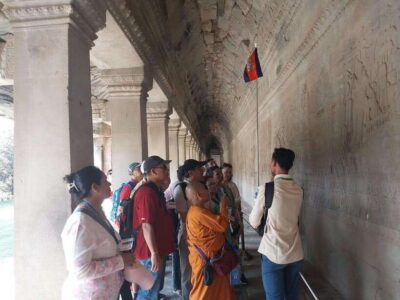
Angkor Wat: Small-Group Sunrise or Sunset Tour
Read our review →
Sunset tour of Kampong Phluk stilts home village on the Tonle Sap
Read our review →
Kampong Phluk Floating Village Tour with Boat
Read our review →
Angkor Wat Sunrise tour with Small – Group and Guide tours
Read our review →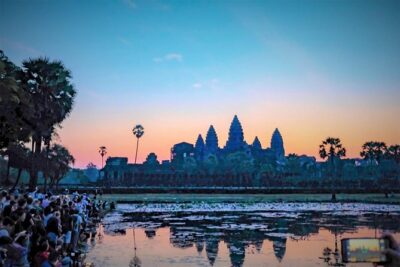
Angkor Wat Highlights and Sunrise Guided Tour from Siem Reap
Read our review →Browse the lists this tour appears in