
Reviewed · BANTEAY SREI TOURS
3-Days Discovery Of Angkor: Waterfalls,Floating Village and Banteay Srei temple
Angkor Wat is only part of the story here. This three-day private tour pairs the major temples with Kulen Mountain waterfalls, the finely carved Banteay Srei, and a boat trip through Kampong Phluk on Tonle Sap. I like the variety, and I like having a guide such as Sam, Seila, or Saroun explain the temples while your driver brings cold water and towels back to the van.
The private format also gives you room to slow down, change the pace, and seek quieter photo angles. The main drawback is the workload: Day 1 is long and hot, Day 2 includes a lengthy drive, and several important costs, including park fees and the Tonle Sap boat, are extra.
Key points at a glance
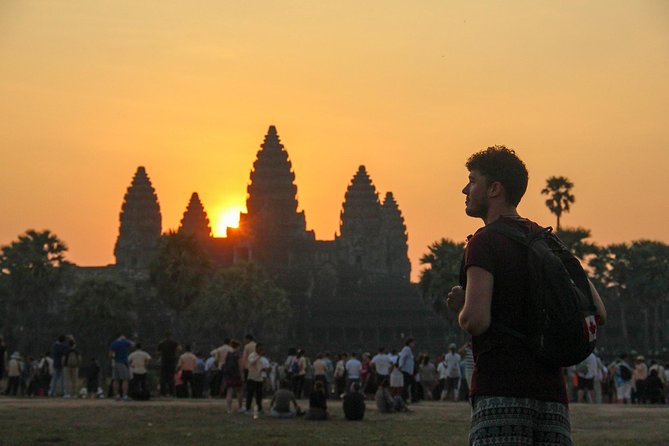
- Sunrise and sunset at Angkor Wat: You see the temple in two very different kinds of light, with sunrise scheduled for Day 3 and sunset at Phnom Bakheng on Day 1.
- A private car or minivan for three days: Hotel pickup and return keep the logistics simple, especially during the early 4:40 AM start.
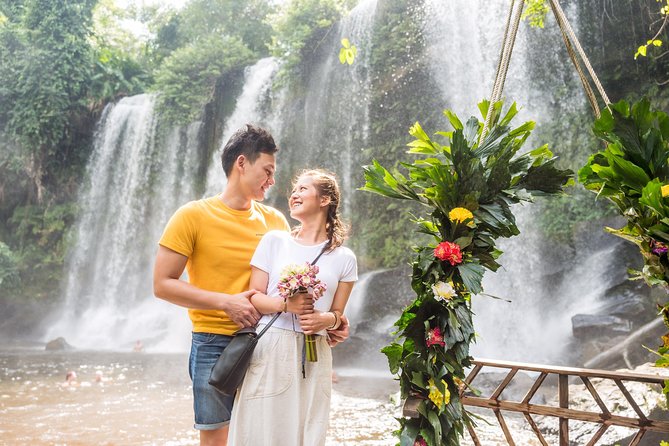
- Kulen waterfalls and riverbed carvings: Phnom Kulen adds a nature stop and the chance to swim when water levels permit.
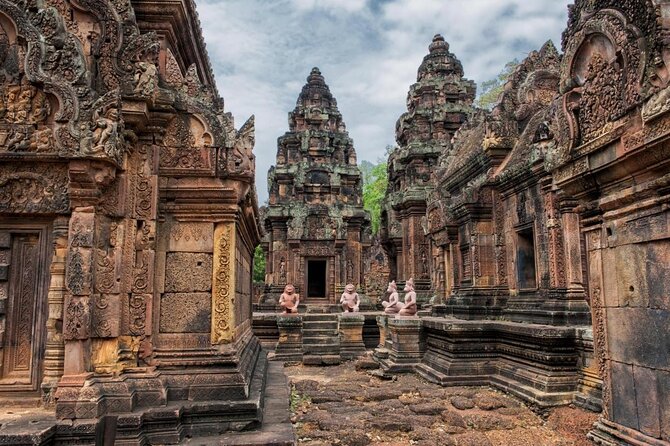
- Banteay Srei’s detailed stonework: This smaller temple is famous for its delicate sculptures dedicated to Shiva.
- Kampong Phluk by private boat: You visit a flooded village and part of Tonle Sap, Southeast Asia’s largest freshwater lake.
- Extra charges matter: The listed price of $183.08 per person does not include Angkor admission, Kulen fees, or the $15 Tonle Sap boat ride.
Why this three-day plan works in Siem Reap
I like the way the schedule spreads Angkor over three different kinds of days. Day 1 gives you the grand royal city and the headline monuments. Day 2 moves out into the countryside for waterfalls, Banteay Srei, and Tonle Sap. Day 3 returns to the temples, but with the sunrise first and smaller ruins later.
That order has a practical benefit. You are not trying to fit every major temple into one exhausting circuit. You still walk a lot, but the change of setting helps keep the experience from becoming a blur of carved doorways and sandstone galleries.
This is a private activity, so only your own group takes part. That matters at Angkor, where a large group can make every stop feel rushed. You can ask for more time at a bas-relief, take a short break, or adjust the pace if someone in your party is tired.
The tour is priced at $183.08 per person, with group discounts offered. That is a fair starting price for three days of private transport, an English-speaking guide, hotel transfers, cool water, and towels. Still, budget carefully. The Angkor pass is not included, Phnom Kulen National Park costs $20 per person, the Kulen Mountain pass is another $20, and the Tonle Sap boat ride costs $15 per person. Meals and soft drinks are also on you.
More Banteay Srei trips:
- Full-Day Banteay Srei & 4 Temples – Grand Tours Join-in Tour
★ 5.0 · 1,155 reviews - Siem Reap Tour: Angkor Wat Sunrise, Bayon, Ta Prohm, Banteay Srei
★ 5.0 · 931 reviews - 2-Day Angkor Wat With Small, Big Circuit and Banteay Srei Tour
★ 5.0 · 545 reviews
Day 1: Angkor Thom, Bayon, and sunset from Phnom Bakheng
Your guide and driver collect you from your hotel lobby at 8:00 AM. The first practical stop is the ticket office for the Angkor pass, so keep your booking plans and payment arrangements clear before you leave town.
You then enter Angkor Thom through the South Gate. Allow about 15 minutes here. The gate gives you an early look at the scale of the old city, with monumental figures lining the approach and a face tower above the entrance. It is a short stop, but your guide can help you understand how the gate fits into the wider Khmer city.
Bayon Temple and its famous stone faces
Bayon receives about 45 minutes, and it deserves close attention. The temple is known for its large carved faces, but the tight upper levels and corridors also reward a slow look. Built in the late 12th or early 13th century under the Buddhist king Jayavarman VII, Bayon was the central temple of Angkor Thom.
This is one place where a good guide makes a major difference. Guides including Seila and Sam have been praised for explaining Cambodian religion, royal power, and temple details in a way that connects the carvings to the place around you. Ask your guide to point out specific scenes rather than trying to absorb every wall at once.
Baphuon, the Elephants, and the Leper King
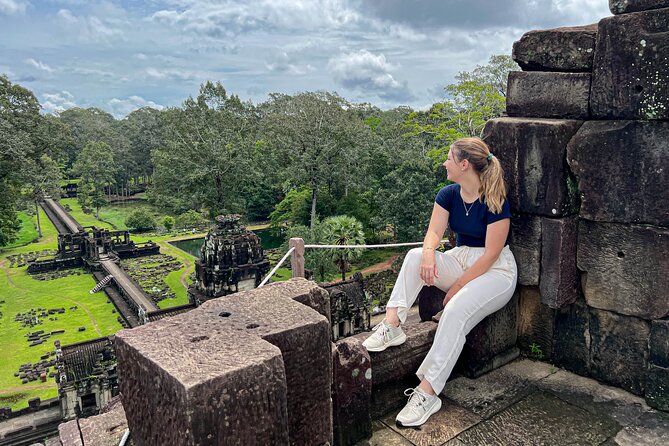
Baphuon takes about 35 minutes. This 11th-century temple mountain has a different feel from Bayon, with long approaches and steep stone levels. The structure was built as the state temple of Udayadityavarman II, and its design gives you a useful contrast with the later monuments of Jayavarman VII.
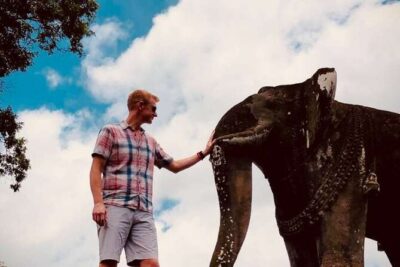
Next comes the Terrace of the Elephants, a 15-minute stop. The terrace once served as a viewing platform for the king and his court. Its carved elephants and long ceremonial frontage make more sense when you think of it as part of a royal square, not an isolated ruin.
The Terrace of the Leper King gets another 15 minutes. The name comes from a later statue and tradition, not from the original purpose of the terrace. The hidden inner carvings are especially important here, so walk around the structure rather than looking only at the outer wall.
More Floating Village Tours in Siem Reap:
- From Siem Reap: Kampong Phluk Floating Village Tour by Boat
★ 4.9 · 6,979 reviews - Siem Reap: Kampong Phluk Floating Village Tour with Boat
★ 4.9 · 3,843 reviews - Siem Reap Floating Village Kampong Phluk Sunset with Boat
★ 5.0 · 1,962 reviews - Kompong Phluk Floating Village Half-Day Tour ( Morning / Sunset )
★ 5.0 · 1,494 reviews
Lunch and the afternoon at Angkor Wat
Lunch takes place at a local restaurant in Angkor Park, with about 45 to 60 minutes set aside. Food and drinks are not included. This is not the time to plan a long meal, since the afternoon still includes Angkor Wat and potentially Phnom Bakheng.
Angkor Wat receives about 90 minutes. That is enough for a focused introduction, but not enough to inspect every gallery and carving in detail. You will see the huge moat, the long entrance approach, the central towers, and the temple’s extensive reliefs. The monument was built as a Hindu temple and later used as a Buddhist site, which helps explain some of the changes you see in its imagery and use.
The heat can be intense. Wear loose clothing that covers your shoulders and knees, carry water, and use sunscreen and mosquito spray. Comfortable shoes are essential because the grounds are large and the stone surfaces can be uneven.
Phnom Bakheng at sunset
If the weather and your energy hold, the day finishes at Phnom Bakheng. The climb normally begins around 4:00 PM, and the total visit is listed at about two hours. The hilltop is popular, so access and timing can affect how long you actually spend at the top.
This is a conditional part of the program, not a guarantee that you will reach the summit every day. That is sensible. After Angkor Thom and Angkor Wat, many people will be ready for a break. If sunset is a priority, tell your guide early and pace the earlier stops accordingly.
Day 2: Kulen National Park and Banteay Srei
Day 2 begins at 8:00 AM and heads to Phnom Kulen National Park. The drive takes you away from the main Angkor circuit and gives the day a more open, rural feel. The park visit lasts about three hours, so expect this to be the longest nature stop of the tour.
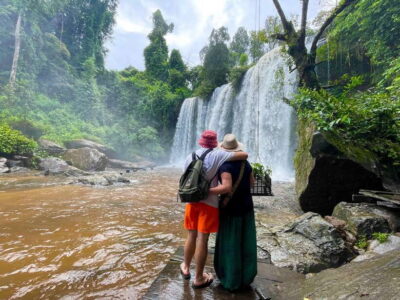
Kulen is known for its waterfall, but water levels change with the season. Swimming is possible, though there may be little water from March through July during the dry period. This makes the stop more weather-dependent than the temples. Bring suitable clothing if you plan to swim, but do not count on a large cascade at every time of year.
The park also contains the remarkable riverbed lingas, carved symbols associated with Hindu worship. These carvings are a strong reason to visit beyond the waterfall. They show how sacred sites were built into the natural setting, with the river itself becoming part of the religious design.
Admission is not included. The listed fees are $20 per person for Phnom Kulen National Park and $20 per person for the Kulen Mountain pass. Add both to your budget before deciding that the tour price is your full cost.
Banteay Srei and the finest small-scale carving
Banteay Srei follows Kulen, with about 45 minutes at the temple. Built in the 10th century and dedicated to Shiva, it is smaller than Angkor Wat but famous for exceptionally detailed sculpture.
The reddish stone and fine carvings give the temple a different character from the larger state monuments. Your guide can help you notice the decorative figures around doorways and lintels, where small details are easy to miss in the bright sun.
Forty-five minutes is a brisk visit. You will see the main parts and get a clear sense of the temple, but you will not have unlimited time for photography or a slow study of every carving. The private format helps here because your guide can focus on the areas that interest your group most.
Kampong Phluk and Tonle Sap
Before returning to Siem Reap, you continue to Kampong Phluk, a flooded village on Tonle Sap. The visit includes a private boat ride of about one hour. This is a useful change from temple architecture, giving you a look at a community shaped by the annual rise and fall of the lake.
Tonle Sap is Southeast Asia’s largest freshwater lake. The village environment changes with the water level, so the appearance of houses, channels, and surrounding vegetation can vary by season. Keep your expectations flexible. This is a real community and a working water environment, not a staged museum.
The private boat costs $15 per person and is not included. That extra charge is easy to overlook, so factor it into your total. The boat ride is also more exposed than the air-conditioned vehicle, so sun protection remains important.
Day 3: Sunrise, Ta Prohm, and the quieter eastern temples
Day 3 begins very early, with hotel pickup at 4:40 AM. You head to Angkor Wat for sunrise, and breakfast is included on this day only. The early start is demanding, but it lets you see the temple before the heat builds and gives the trip its most memorable time of day.
Sunrise conditions are never fully predictable. Clouds may soften the view, and the area can be busy. Your guide can still help you choose a useful viewing position and organize the morning so you do not waste time after the light appears.
Ta Prohm and the Tomb Raider connection
After sunrise and breakfast, you visit Ta Prohm for about an hour. The temple is famous for its trees and stone corridors, and it was used as a location for the film Tomb Raider. The movie took liberties elsewhere, but Ta Prohm’s tangled, partly overgrown appearance is genuine.
The appeal is not only the trees. Look for the contrast between careful Khmer construction and the damage caused by time, weather, and plant growth. Some areas are narrow, and an hour allows a good walk through the main sections without turning the stop into a full architectural study.
Pre Rup and Ta Som
Pre Rup receives about 35 minutes. Built in 961 or early 962 as the state temple of Rajendravarman, this pyramid temple was dedicated to Shiva. Its tiered form makes it easy to read as a temple mountain, and it gives you another example of how Khmer rulers used height and geometry to express sacred authority.
Ta Som is a smaller 12th-century temple built under Jayavarman VII. Allow about 35 minutes. Its scale is more intimate than the major monuments, and the most memorable feature is the tree growing over one of the structures. This can be a welcome pause after the larger, more crowded sites.
Neak Pean and Preah Khan
Neak Pean takes about 20 minutes. The temple sits on an artificial island in a reservoir linked with Preah Khan. Its setting around water makes it different from the hill and pyramid temples, though the short visit means you will mainly see the central layout and approach.
The final stop is Preah Khan, with about an hour. Built in the 12th century for Jayavarman VII in honor of his father, it is a large temple complex with long passages, courtyards, and a mixture of religious and architectural details. An hour gives you time to walk through the main route and appreciate the way the temple unfolds in stages.
This final day is still full. The sunrise makes it feel longer, but the stops are spread across different types of temples, from the famous Ta Prohm to the less imposing Ta Som and Neak Pean. If your group includes older people or anyone with limited stamina, tell the guide. The tour has been handled flexibly for older family members, but you should still expect substantial walking and heat.
Guides, drivers, and the private-tour advantage
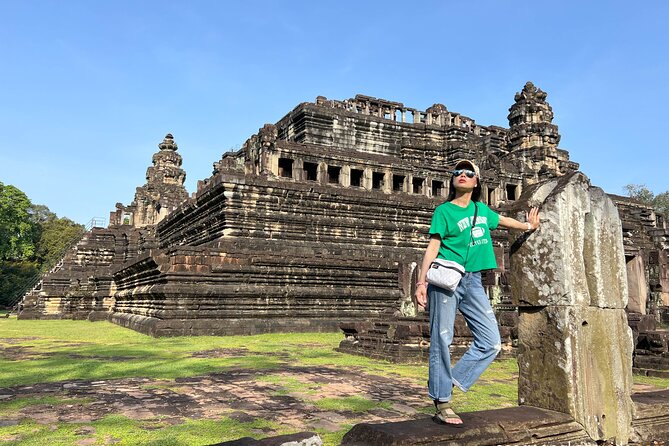
The human service is a major part of this experience. Guides named Sam, Seila, Samath, Saroun, Sarakei, and Sunny have been associated with strong temple explanations, patient pacing, and help with photographs. You cannot assume a particular guide unless the operator confirms it, but the repeated strengths are clear: historical context, flexibility, and attention to photo timing.
Several guides are also good at using the drive between stops. Instead of giving every explanation while you are standing in direct sun, they may explain Cambodian kings, religion, and temple design during the ride. That leaves you more freedom to look and take pictures once you arrive.
The drivers add practical comfort. Cold water and cool towels are provided after hot walks, and drivers such as Tha, Leap, Sophat, Kim, May, Samady, and Handsome have been praised for punctual pickups and safe driving. That matters on Day 2, when the road to Kulen includes dirt-road sections.
The vehicle is a private air-conditioned car or minivan. Hotel pickup and return are included on all three days, which saves you from arranging separate tuk-tuks or negotiating transport each morning. For a private group, that convenience helps justify the price.
Who should book this Angkor tour?
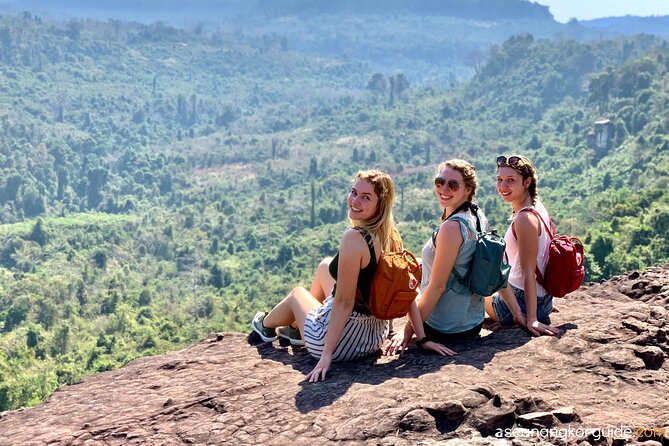
I would choose this tour if you have three days in Siem Reap and want the major Angkor sites plus two important outings beyond the core park. It suits families, couples, and small groups who prefer their own vehicle and guide rather than joining a large coach.
It is also a good match for photographers. The schedule includes sunrise and sunset, and guides such as Samath have helped visitors find strong angles and avoid the most obvious crowd points. The private format gives you more control over when to stop.
I would think twice if you dislike early mornings, long drives, or a full walking schedule. Day 1 is especially demanding, Day 2 is spread across distant sites, and Day 3 starts before dawn. You should also be comfortable paying for meals, temple admission, Kulen fees, and the Tonle Sap boat separately.
Dress modestly at every temple. Clothing covering your shoulders and knees is recommended, and the Apsara Authority can restrict access to areas for clothing considered immodest. Loose, lightweight clothing is the practical choice in Cambodia’s heat.
Free cancellation is available up to 24 hours before the start time. After that point, the amount paid is not refunded, and late changes are not accepted.
Should you book it?
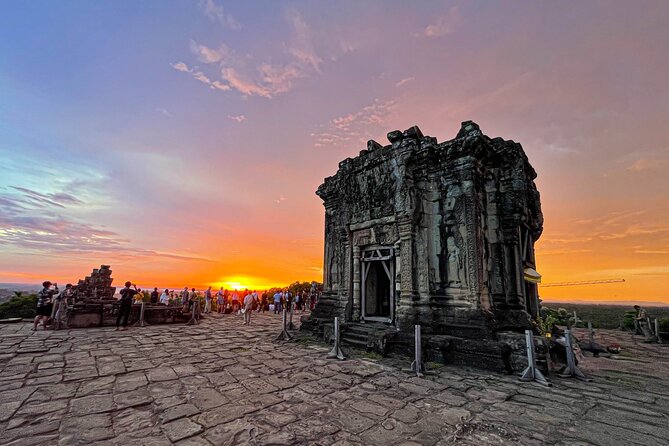
Book this three-day Angkor tour if you want a well-filled private schedule rather than a simple Angkor Wat day trip. The strongest reasons are the range of places, the useful split between temple-heavy and nature-focused days, and the comfort of having the same private transport throughout.
Before booking, add the known extras to the $183.08 price. You will need to cover Angkor admission, $40 in listed Kulen fees, the $15 Tonle Sap boat, food, and soft drinks. If that total fits your budget and you can manage the early start, this is a practical way to see Siem Reap’s main temples, Kulen, Banteay Srei, and Tonle Sap in one organized trip.
FAQ
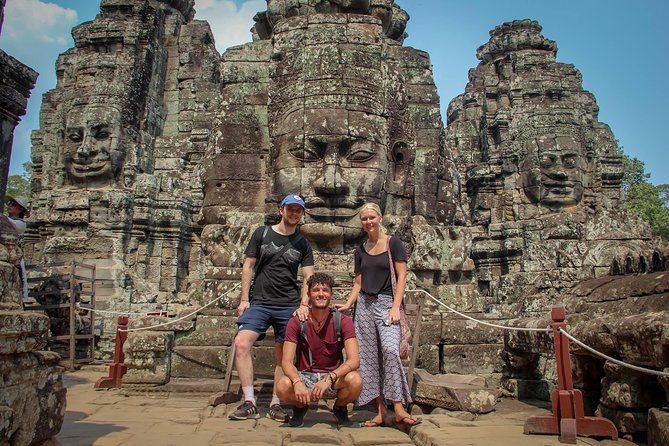
Is this a private tour?
Yes. Only your own group participates, with private transport by air-conditioned car or minivan.
What time does the tour start?
Day 1 and Day 2 pickup is scheduled for 8:00 AM. Day 3 pickup is at 4:40 AM for the Angkor Wat sunrise.
Is breakfast included on all three days?
No. Breakfast is included on Day 3 only. Lunch, other food, and soft drinks are not included.
Are the Angkor and Kulen admission fees included?
No. The Angkor pass is purchased before entering the park. Phnom Kulen National Park costs $20 per person, and the Kulen Mountain pass costs another $20 per person.
How much does the Tonle Sap boat ride cost?
The private Tonle Sap boat ride costs $15 per person and is paid separately.
Can you swim at the Kulen waterfalls?
Yes, swimming is possible, but water levels can be low from March through July during the dry season.
More Waterfall Tours in Siem Reap
- Kulen Waterfall Join-in Tour (local Picnic lunch)
★ 5.0 · 2,434 reviews - Phnom Kulen Waterfall & the Sacred 1000 Lingas (with Lunch)
★ 4.8 · 974 reviews - Guided Small-Group Tour in Kulen Mountain Park Waterfall
★ 5.0 · 480 reviews - Kulen Mountain Waterfall Tour with Picnic Lunch from Siem Reap
★ 5.0 · 238 reviews
New around Siem Reap
- Kulen Mountain With Ticket included Plus Banteay Srei Temple Tour★ 5.0 · 7 reviews
- 2 Days Angkor temples with Sunrise & Sunset★ 5.0 · 7 reviews
- Private Siem Reap Airport Transfer to hotel in town★ 5.0 · 7 reviews
- 1-Day private Angkor Temple Tour with Sun Rise by Tuk Tuk from Siem Reap★ 4.5 · 7 reviews
- Siem Reap: Morning Cooking Class & Market Tour★ 5.0 · 7 reviews
- Kulen Mountain, Killing Fields and War Museum Tour★ 5.0 · 7 reviews
- War Museum, Killing Field, and APOPO Hero RATs Tour★ 5.0 · 7 reviews
- Half-Day: Silk Farm, Senteur Angkor, and Satcha Workshop★ 4.6 · 7 reviews
Banteay Srei Tours, compared.
Full-Day Banteay Srei & 4 Temples – Grand Tours Join-in Tour
Read our review →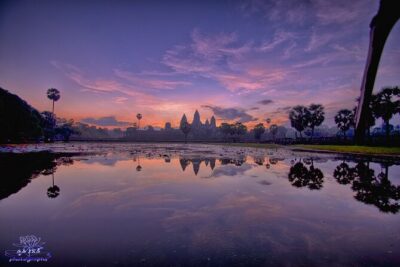
2-Day Angkor Wat With Small, Big Circuit and Banteay Srei Tour
Read our review →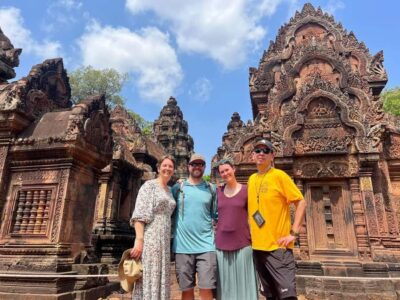
Banteay Srei, Kulen Waterfall & Beng Mealea Exploration
Read our review →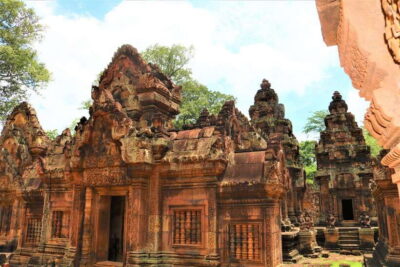
Kulen Waterfall, Banteay Srei, and Beng Mealea Tour
Read our review →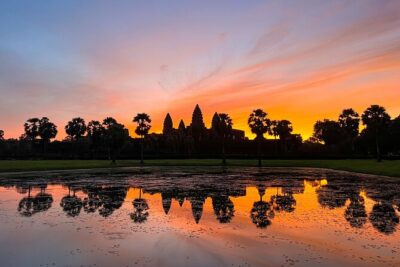
2-Day Angkor Wat Tour with Banteay Srei and Floating Village
Read our review →
Banteay Srei, Beng Mealea and Kulen Mountain with Picnic
Read our review →Browse the lists this tour appears in