
Reviewed · ANGKOR WAT TOURS
2-Day Angkor Wat Tour with Banteay Srei and Floating Village
Angkor Wat is only the beginning here. This private two-day route takes you from the giant smiling faces of Bayon and the tree roots of Ta Prohm to the fine carvings of Banteay Srei, with a sunrise and a possible sunset along the way. You cover a lot, but the air-conditioned car gives you a useful place to cool down between temple walks.
I like the private format, which lets you adjust the pace and add or remove stops. I also like the small comforts: cold water, cool towels, and a driver who is ready when you return to the car. The main caution is the schedule. A 4:40 AM pickup, long temple walks, and a late afternoon boat trip make this a full two days.
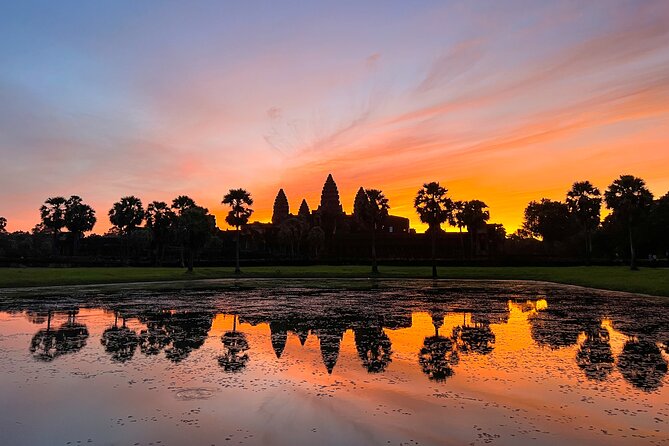
- Sunrise at Angkor Wat: Start before dawn for the classic reflection-pool view, then return to the temple when the crowds begin to spread out.
- A strong temple lineup: Bayon, Baphuon, Angkor Wat, Ta Prohm, Preah Khan, Banteay Srei, and several quieter monuments are included.
- Private guiding: Your English-speaking guide can shape the day around your interests, energy, and photography needs.
- Comfort between ruins: Travel in an air-conditioned car or minivan, with bottled water and cool towels provided.
- Tonle Sap add-on: Visit Kampong Phluk by local boat for an extra $15 per person, including the Tonle Sap pass and private boat ride.
- Good short-trip coverage: This is designed to cover the essential Siem Reap sights in two days, rather than leaving you to sort out temple routes yourself.
Why Two Days Works Better Than One
If you have only two or three nights in Siem Reap, this tour gives you a practical plan. Angkor Archaeological Park is spread over a wide area, and the major temples are not arranged in a neat walking route. A private car and guide save you from piecing together transport, temple order, and opening hours on your own.
The price is $130 per person. That is a reasonable starting price for two days of private transport, an English-speaking guide, a driver, and breakfast on the second morning. It is not the final cost, though. The Angkor admission fee is listed separately at $62 per person, and the optional Tonle Sap pass and private boat ride add $15 per person.
Food and soft drinks are also extra. Lunch breaks are taken at local restaurants inside or near the park, and you pay directly for what you order. I would budget for the park pass, two lunches, drinks, and the floating village before deciding how it fits your trip budget.
The private setup is the real value. You are not tied to the pace of a large coach group. You can spend longer at Angkor Wat, move quickly through a small monument, or ask for a photo stop. Several guides named in the tour feedback, including Sean, Seila, Raman, Sam, Saylor, and Mr. Makara, were praised for clear explanations, flexibility, and finding good photo positions. Specific guide assignment is not guaranteed, so ask when booking if one of these guides is important to you.
Day One: Bayon and the Royal City of Angkor Thom
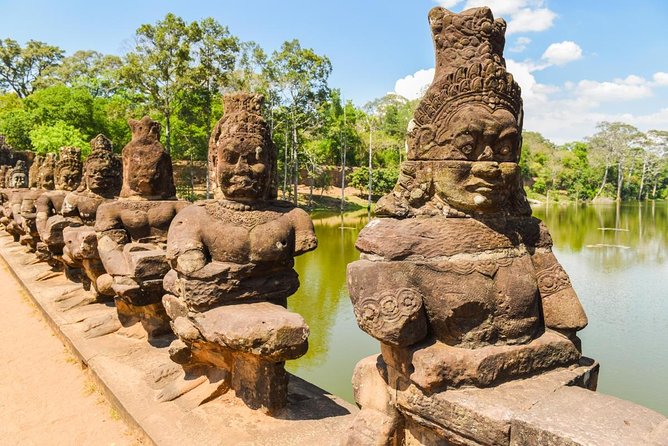
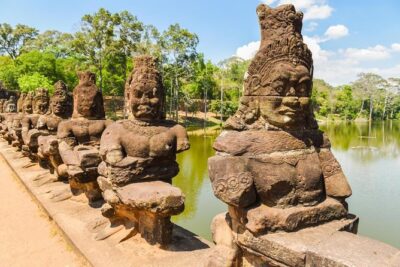
The first morning begins in Angkor Thom, the enormous walled royal city created under King Jayavarman VII. Its name means Great City, and the route gives you a useful introduction to the political and religious center of the Khmer Empire before moving to Angkor Wat.
More Angkor Wat Tours in Siem Reap:
- Angkor Wat Sunrise or Sunset Tour with Guide from Siem Reap
★ 5.0 · 12,109 reviews - Siem Reap: Angkor Wat: Small-Group Sunrise or Sunset Tour
★ 5.0 · 9,444 reviews - Siem Reap: Angkor Wat 2-Day Tour with Sunrise and Sunset
★ 4.9 · 4,429 reviews
Bayon Temple
Bayon is the day’s first major stop and one of Angkor’s most memorable sights. Its towers carry serene stone faces, while the lower galleries contain carvings of battles, markets, ceremonies, and daily life.
Your guide matters here. Without context, Bayon can feel like a maze of corridors and leaning towers. With a good explanation, you begin to see how the temple was built as a Buddhist state temple and why its central position inside Angkor Thom mattered.
The planned visit is about 45 minutes. That is enough for a guided look, but not enough to inspect every relief. If you care about sculpture and photography, ask your guide if you can extend this stop and shorten one of the smaller monuments.
Baphuon and the Two Terraces
Baphuon is a 11th-century temple mountain in Angkor Thom. Its three levels require some walking and steps, so comfortable shoes are important. The structure gives you a different feel from Bayon, with a more vertical design and broad stone terraces.
The Terrace of the Elephants follows. This long platform was used by the king to view royal processions and victorious armies. You will spend only about 15 minutes here, but it helps you understand the scale of Angkor Thom as a royal city rather than a collection of isolated temples.
The nearby Terrace of the Leper King is a short stop of about 10 minutes. Its outer walls contain tightly packed carvings, and a guide can point out details that are easy to miss when you are looking from the path. Do not expect a long visit. This is a quick but worthwhile addition to the royal square.
Angkor Wat After Lunch
After a lunch break of roughly 45 to 60 minutes, you visit Angkor Wat itself. Lunch is not included, so check prices before ordering and carry water even though the driver provides drinks during the day.
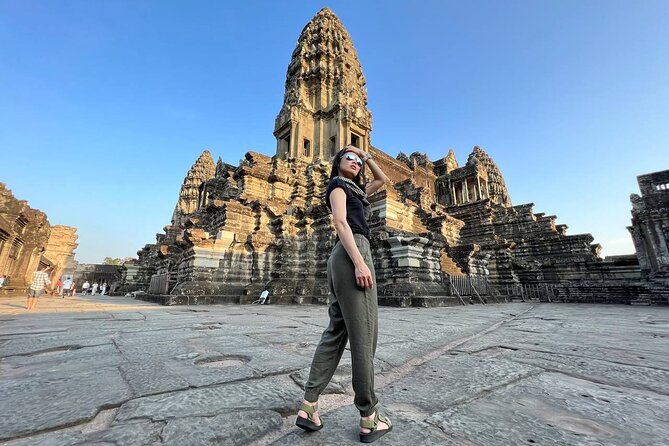
Angkor Wat was built as a Hindu temple dedicated to Vishnu and later became a Buddhist site. Its long causeway, vast galleries, towers, and carved scenes make it the largest religious monument in the world by area. The first afternoon visit lets you see the temple in daylight without asking you to spend the entire first day waiting for sunrise.
The scheduled visit is about 90 minutes. That gives you time for the main approach, central galleries, and key carvings, but Angkor Wat can easily occupy several hours. You may want to tell the guide in advance if you prefer architecture, religious symbolism, photography, or a brisk overview.
A good guide can also help you avoid wasting energy. Angkor Wat involves a lot of walking on uneven stone, and the heat can build quickly. Take shade breaks. You do not gain much by racing through every gallery while tired.
More Banteay Srei trips:
- Full-Day Banteay Srei & 4 Temples – Grand Tours Join-in Tour
★ 5.0 · 1,155 reviews - Siem Reap Tour: Angkor Wat Sunrise, Bayon, Ta Prohm, Banteay Srei
★ 5.0 · 931 reviews - 2-Day Angkor Wat With Small, Big Circuit and Banteay Srei Tour
★ 5.0 · 545 reviews - From Siem Reap: Banteay Srei Temple & Grand 5 Temple Tour
★ 4.8 · 262 reviews
Phnom Bakheng: A Sunset Option, Not a Promise
If weather and energy allow, the day may finish at Phnom Bakheng for sunset. The visit is listed as optional in practice, and the wording makes clear that it depends on conditions and how tired you are.
That is sensible. After Angkor Thom and Angkor Wat, the climb and wait may feel like too much. If the sky is clear and you still have energy, Phnom Bakheng can provide a broad view over the surrounding area. If not, returning to your hotel is the wiser choice. A sunset stop should be a bonus, not the reason to book the tour.
Day Two: Sunrise, Roots, and Smaller Temples
Day two starts very early. Pickup from your hotel lobby is scheduled for 4:40 AM so you can reach Angkor Wat before sunrise. Bring a light layer if you feel cool before dawn, plus insect repellent and a sun hat for later in the day.
Sunrise is one of the tour’s headline moments, but it is also the busiest part of the visit. Your guide can help you position yourself near the water and then decide when to move into the temple. The reflection of the towers may be beautiful, though clouds and water conditions control the final picture.
After sunrise, you return for breakfast. Breakfast is included only on day two. The supplied information does not specify a fixed breakfast venue, so confirm the exact arrangement with the operator.
Ta Prohm
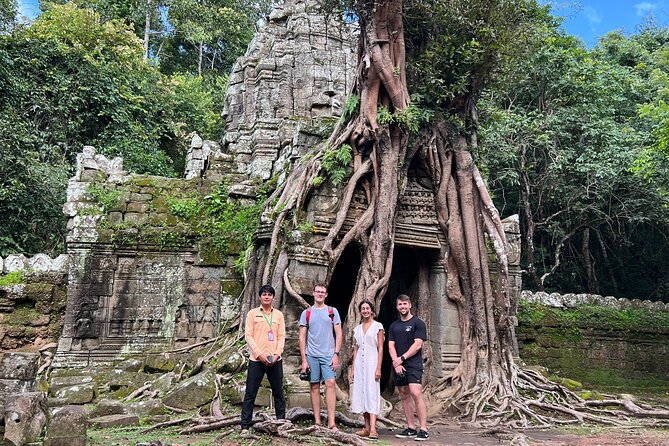
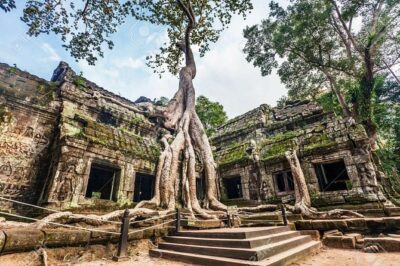
Ta Prohm is often the temple people picture when they think of Angkor swallowed by the jungle. Trees and huge roots grow over parts of the stone buildings, creating a powerful contrast between living forest and carved architecture.
The temple is scheduled for about one hour. That is enough to see its most striking sections, though paths can be uneven and narrow. Ta Prohm is also a major stop, so patience helps when moving through popular areas.
I would pay close attention to the guide here. It is easy to focus only on the roots, but Ta Prohm was built under Jayavarman VII and was part of a larger religious and institutional complex. The roots make the pictures, but the building’s original purpose gives the visit meaning.
Pre Rup and East Mebon
Pre Rup is a Hindu temple built as the state temple of King Rajendravarman in the 10th century. Its brick and laterite structure has a more open, weathered feel than Angkor Wat. The 40-minute stop gives you time to climb, look across the upper levels, and study the construction.
East Mebon was built on an artificial island in the center of the now-dry East Baray reservoir. Its guardian elephants are the main visual draw. The 30-minute visit is enough to walk around the central levels and consider how much water engineering supported the temple city.
These stops are valuable because they broaden your view of Angkor. The park is not only about the famous monuments. Older Hindu temples and waterworks show how the city changed across different kings and religious traditions.
Ta Som and Neak Pean
Ta Som is a smaller late-12th-century temple associated with Jayavarman VII. It has a quieter, more intimate feel than Ta Prohm, and its trees and carved stone give you another look at the way nature has taken hold of the ruins.
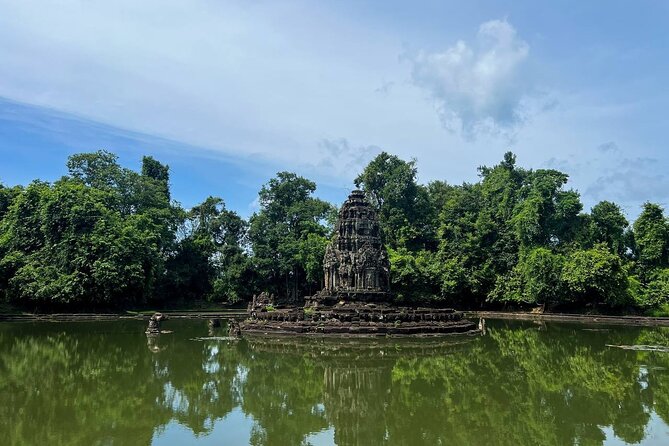
Neak Pean is unusual. The temple was built on an island and connected to a system of pools. Its setting reflects the importance of water in Khmer religious thought and city planning. The planned stop is about 30 minutes, and the approach may feel more like a short walk to a monument than a full temple exploration.
Preah Khan
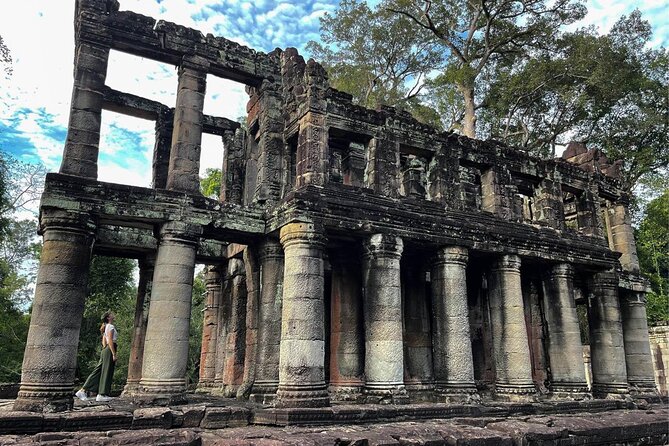
Preah Khan is one of the larger stops on day two, with about an hour scheduled. King Jayavarman VII built it to honor his father. Long corridors, courtyards, carvings, and partially restored sections reward a slower visit.
This is a good place to ask questions. Preah Khan can seem confusing at first, but the guide can explain how the building was used and help you read the layout. It also offers a useful contrast with the more famous Angkor Wat and Ta Prohm.
Another lunch break follows, again at your own expense. By this point, you may be ready for a proper meal and a longer rest in the vehicle.
Banteay Srei and the Finest Carving
In the early afternoon, the car heads toward Banteay Srei. It is farther from the central temple group, but the drive is worthwhile for anyone interested in detail.
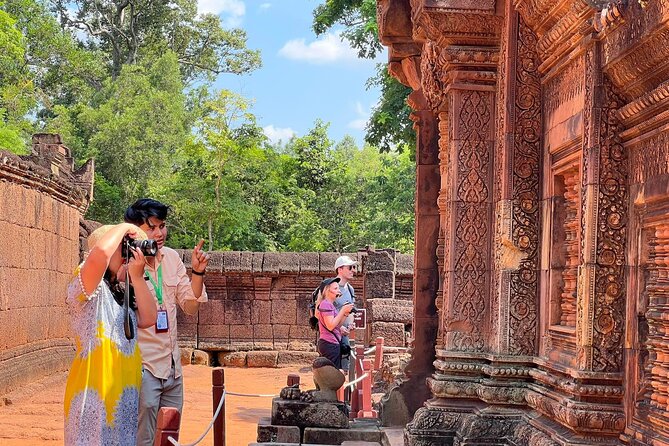
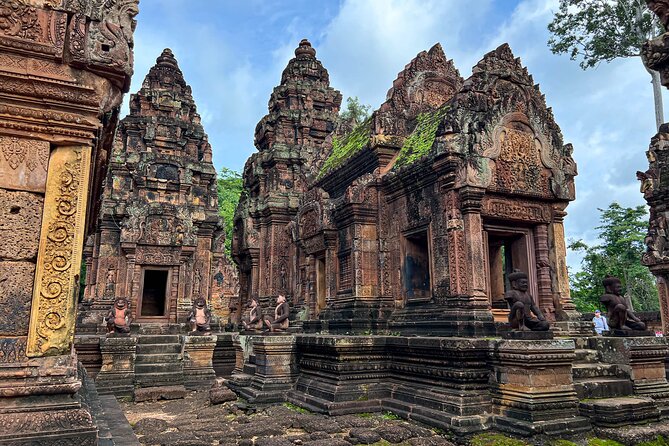
Banteay Srei is smaller than Angkor Wat, yet its pinkish sandstone carvings are exceptionally fine. The lintels and figures are packed with precise detail, and the compact scale makes the craftsmanship easier to appreciate up close.
The visit lasts about 45 minutes. That is enough for a focused walk, but the temple can feel rushed after a morning of ruins. I would protect this stop rather than treating it as an afterthought. Banteay Srei is one of the clearest reasons this two-day route is stronger than a basic Angkor Wat and Angkor Thom outing.
The admission information lists Banteay Srei as free, but the main Angkor pass is still a separate cost. Confirm ticket requirements with the operator before arrival so there is no confusion at the entrance.
Kampong Phluk on Tonle Sap Lake
The final major outing is Kampong Phluk, a flooded fishing village about 21 kilometers from Siem Reap. A local boat carries you through the village and onto Tonle Sap Lake, with about 90 minutes planned for the visit.
This is an optional extra, costing $15 per person for the Tonle Sap pass and private boat ride. It is not included in the $130 tour price. The boat trip adds a different side of Cambodian life after two days focused on monuments, but you should choose it with realistic expectations.
Water levels change through the year. From the end of March to the end of July, the water recedes. Some boats can become stuck, and smaller canoes may not be able to pass through the flooded forest. The village may look less like a postcard during this season, but you can see more of how residents manage daily life during the dry period.
That seasonal detail is important. If you want the most obviously flooded setting, ask about current water conditions before paying for the boat. If you are interested in local routines and changing conditions, the dry season can offer a less polished but more revealing visit.
Comfort, Pace, and What to Pack
The private air-conditioned car or minivan is not a minor perk. Cambodia’s heat can make temple visits tiring, and a cool vehicle gives you a chance to recover between stops. The driver provides cool towels and bottled water, details repeatedly singled out in the feedback.
The guide is with you for the temple explanations, while the driver handles the road and vehicle. Several guides were praised for strong English, clear historical explanations, flexible timing, and help with taking photos. Mr. Makara was also specifically noted for taking carefully framed portrait and panoramic pictures, while other guides were praised for knowing quieter routes and good viewpoints.
Bring:
- Comfortable shoes for uneven paths and steps
- Sunscreen and a sun hat
- Insect repellent
- Extra cash for meals and drinks
- A phone or camera with enough battery for the early start
The itinerary is physically manageable for most people, but it is not effortless. You will walk over stone, climb temple steps, sit through drives, and wake before dawn. Most people can participate, but your guide should know if you need a slower pace.
Who Should Book This Angkor Wat Tour
I would choose this tour if you want the major Angkor sights but prefer not to arrange transport and temple order yourself. It is especially useful for a short Siem Reap visit, families who need schedule flexibility, and couples or small groups who want a private guide.
It also suits photographers. The sunrise, possible sunset, tree-covered Ta Prohm, and detailed Banteay Srei provide plenty of variety. A guide who understands the light and knows where to position you can make a real difference.
I would hesitate if you dislike early mornings, long sightseeing days, or extra costs beyond the advertised price. You should also think twice about the floating village if your main interest is temples, since it adds both cost and travel time.
The tour has free cancellation up to 24 hours before the start time. Changes or cancellations inside that window are not accepted for a refund.
Should You Book It?
Book this two-day Angkor Wat tour if you want a well-organized private overview with strong guide support, air-conditioning, and a wide mix of temples. The best parts are the flexible pacing, the careful explanations, the comfort of the vehicle, and the inclusion of Banteay Srei rather than only the central monuments.
Before paying, add the $62 Angkor admission fee, meal costs, and the optional $15 floating village charge to your budget. Ask about the assigned guide, current Tonle Sap water levels, and how much time you can spend at Angkor Wat and Banteay Srei.
For a quick visit to Siem Reap, this is a sensible and full itinerary. It will not feel leisurely, but it gives you a strong first look at Angkor and a useful glimpse of life around Tonle Sap.
FAQ
Is the Angkor admission fee included in the $130 price?
No. The admission fee is listed separately at $62 per person. Food, soft drinks, and the Tonle Sap pass and boat ride are also not included.
Is the floating village included?
No. Kampong Phluk is an optional extra. The listed cost for the Tonle Sap pass and a private boat ride is $15 per person.
What transportation is provided?
The tour includes private transportation in an air-conditioned car or minivan, along with a professional English-speaking guide and driver.
What time does the sunrise day begin?
You are scheduled to be picked up from your hotel lobby at 4:40 AM on day two for sunrise at Angkor Wat.
Is breakfast included?
Breakfast is included on day two only. Lunch and other food and drinks are not included.
Can most people participate?
Yes. Most people can participate, though the tour includes walking on uneven surfaces, temple steps, an early start, and long sightseeing days.
What happens at Kampong Phluk during the dry season?
From the end of March to the end of July, water levels can recede. Some boats may become stuck, and smaller canoes may not reach the flooded forest. The setting may look less like a postcard, but you can see another side of village life during the dry period.
More 2-Day Experiences in Siem Reap
- Angkor 2-Day Sunset & Sunrise Small-Group Tour
★ 5.0 · 2,567 reviews - 2 Days Exclusive Temple Highlights with Sunset and Sunrise Tour
★ 5.0 · 1,157 reviews - Siem Reap: Angkor Sunrise 1- or 2-Day Guided Temples Tour
★ 4.9 · 1,132 reviews - 2 Days Guided Historical Tour in Angkor
★ 5.0 · 855 reviews
More Floating Village Tours in Siem Reap
- From Siem Reap: Kampong Phluk Floating Village Tour by Boat
★ 4.9 · 6,979 reviews - Siem Reap: Kampong Phluk Floating Village Tour with Boat
★ 4.9 · 3,843 reviews - Siem Reap Floating Village Kampong Phluk Sunset with Boat
★ 5.0 · 1,962 reviews - Kompong Phluk Floating Village Half-Day Tour ( Morning / Sunset )
★ 5.0 · 1,494 reviews
New around Siem Reap
- Kulen Mountain With Ticket included Plus Banteay Srei Temple Tour★ 5.0 · 7 reviews
- 2 Days Angkor temples with Sunrise & Sunset★ 5.0 · 7 reviews
- Private Siem Reap Airport Transfer to hotel in town★ 5.0 · 7 reviews
- 1-Day private Angkor Temple Tour with Sun Rise by Tuk Tuk from Siem Reap★ 4.5 · 7 reviews
- Kulen Mountain, Killing Fields and War Museum Tour★ 5.0 · 7 reviews
- War Museum, Killing Field, and APOPO Hero RATs Tour★ 5.0 · 7 reviews
- Siem Reap: Morning Cooking Class & Market Tour★ 5.0 · 7 reviews
- Half-Day: Silk Farm, Senteur Angkor, and Satcha Workshop★ 4.6 · 7 reviews
Angkor Wat Tours, compared.
Angkor Wat Sunrise or Sunset Tour with Guide from Siem Reap
Read our review →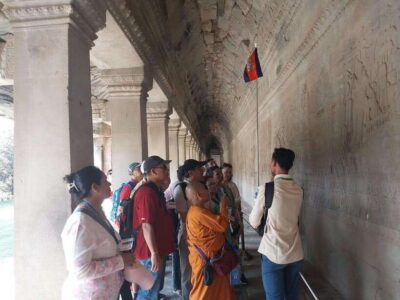
Angkor Wat: Small-Group Sunrise or Sunset Tour
Read our review →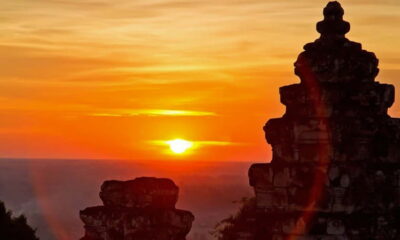
Angkor Wat Sunrise tour with Small – Group and Guide tours
Read our review →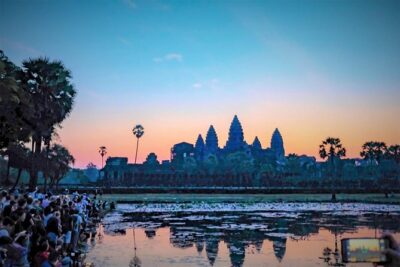
Angkor Wat Highlights and Sunrise Guided Tour from Siem Reap
Read our review →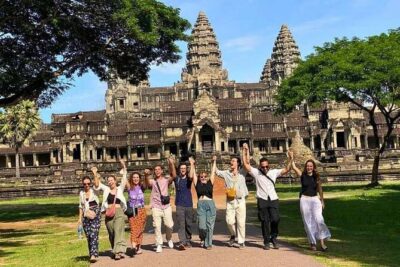
Angkor Wat Sunset Small Group Tour with Lunch Included
Read our review →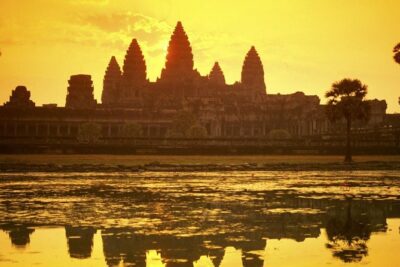
Full-Day Angkor Wat Sunrise Private Tour with Guide from Siem Reap
Read our review →
Angkor Wat Sunrise & 3 Main Temples with Breakfast – Small Group
Read our review →Browse the lists this tour appears in