
Reviewed · ANGKOR WAT TOURS
Siem Reap: Angkor Wat 2day Big and Small Circuit Guided Tour
Angkor Wat at sunrise is the headline, but this tour gives you much more than one famous temple and a quick photo stop. Over two days, you move from the grand avenues of Angkor Thom to jungle-wrapped Ta Prohm and quieter temples such as Neak Pean and Banteay Kdei.
I like the small-group or private format, which should make it easier to hear your English-speaking guide and ask questions. I also like the practical touches: air-conditioned van transport, hotel pickup and drop-off, cool water, wipe towels, and rest breaks.
The main catch is cost planning. The $39 price does not include the temple pass or meals, and the second day begins very early for sunrise. You also need to be comfortable walking over uneven ground and climbing temple steps.
Key points to know before booking
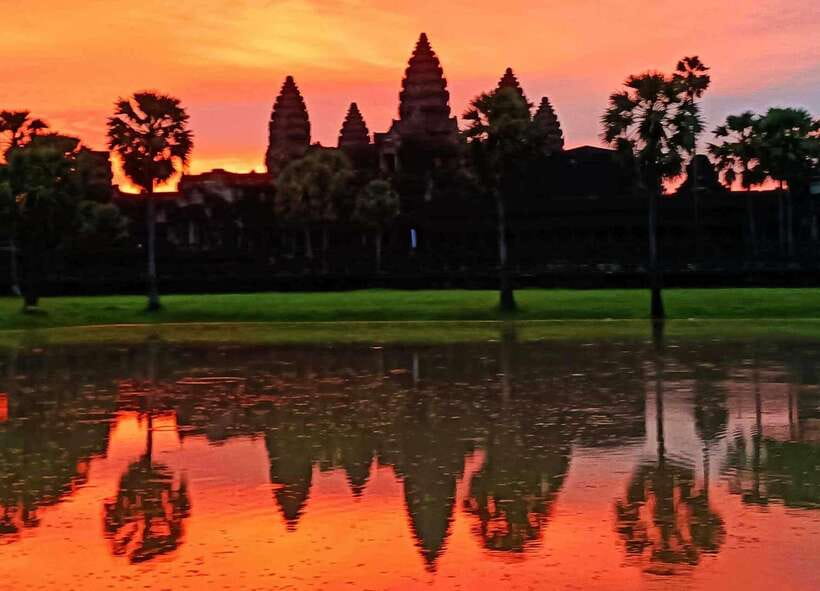
- Sunrise at Angkor Wat: Start early for the view across the reflecting pools, then explore while the air is cooler.
- Two distinct temple circuits: The tour combines major sights such as Angkor Wat, Bayon, and Ta Prohm with quieter stops including Neak Pean and East Mebon.
- Guides Sayon and Sam: Sayon is praised for his history knowledge and positive spirit, while Sam is praised for clear explanations of the temples and their setting.
- Air-conditioned transport: Hotel pickup, van transport, cool water, towels, and rest stops are included.
- Budget-friendly headline price: The $39 fee covers the guided touring and transport, but you must buy the Angkor temple pass separately and pay for food.
- Demanding early start: Children under 12, wheelchair users, and people with mobility impairments are not considered suitable for this activity.
Two days that show Angkor beyond the postcard
The Angkor complex is too large for a quick visit. A single morning can give you the famous outline of Angkor Wat and the smiling faces of Bayon, but it leaves out the temples that explain how broad and varied the Khmer capital was.
This two-day plan gives you time to see both sides. One part focuses on temples around the Grand Circuit, including Preah Khan, Neak Pean, Ta Som, East Mebon, and Pre Rup. The other puts Angkor Wat, Angkor Thom, Ta Prohm, Banteay Kdei, and Ta Keo at the center.
I like that balance. You get the big names, but you also get places where the design, setting, and state of preservation feel different. The tradeoff is a packed schedule. You will spend a good part of both days walking, climbing, waiting for light, and getting back into the van.
The exact starting times depend on availability, but day one begins around sunset and day two includes an early sunrise departure. Confirm the pickup time when you book, because the tour uses the same pickup time assigned to your reservation.
More Angkor Wat Tours in Siem Reap:
- Angkor Wat Sunrise or Sunset Tour with Guide from Siem Reap
★ 5.0 · 12,109 reviews - Siem Reap: Angkor Wat: Small-Group Sunrise or Sunset Tour
★ 5.0 · 9,444 reviews - Siem Reap: Angkor Wat 2-Day Tour with Sunrise and Sunset
★ 4.9 · 4,429 reviews
Day one: sunset and the Grand Circuit
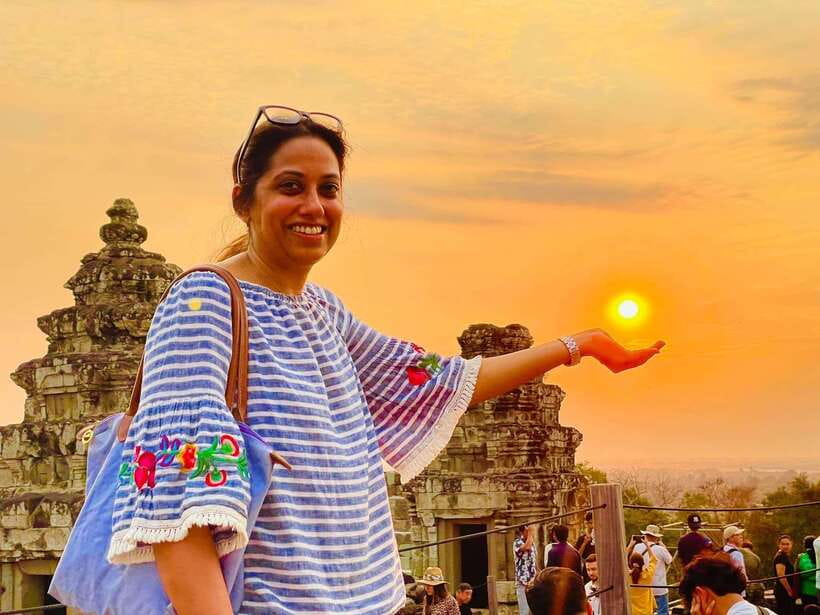
The first day starts with a sunset view within the Angkor complex. Phnom Bakheng is the hilltop temple associated with this part of the visit. Reaching it involves walking uphill, so it is not the best stop for anyone who finds slopes or uneven paths difficult.
Phnom Bakheng was built with 33 towers representing the heavens. That idea gives the temple a useful layer of meaning: it was not simply a high point for views, but a sacred model of the universe. The sunset setting can be beautiful, though light and access conditions may affect how long you can stay at the top.
From there, the tour moves through several temples that are less famous than Angkor Wat but full of detail.
Preah Khan, a temple with scale and purpose
Preah Khan is described as the largest temple on this circuit. It was built by King Bayon for his father, making it both a religious site and a monument tied to royal family life.
You can expect long passageways, stone carvings, and a sense of a large working complex rather than one isolated tower. This is a stop where your guide adds real value. The stone can look like a maze if you explore without context, while an explanation of the temple’s purpose helps you understand why its halls and entrances were arranged as they were.
Because Preah Khan is large, wear shoes that will not rub and keep water with you. The included van and rest breaks matter here. You are not simply hopping out for ten minutes, taking a picture, and leaving.
Neak Pean and the old healing waters
Neak Pean sits on an island surrounded by water. During the Angkor period, the water around the temple was used for bathing and health.
This makes Neak Pean different from the larger stone temples. The water system is part of the point, not just a scenic backdrop. Listen for the connection between the temple and the wider network of reservoirs and channels that supported life in the Angkor period.
The stop may feel more compact than Preah Khan or Angkor Wat, but that is part of its appeal. You are seeing how religion, water, health, and design were linked.
A few more Siem Reap half-days to weigh up
- Angkor 2-Day Sunset & Sunrise Small-Group Tour
★ 5.0 · 2,567 reviews - 2 Days Exclusive Temple Highlights with Sunset and Sunrise Tour
★ 5.0 · 1,157 reviews - Siem Reap: Angkor Sunrise 1- or 2-Day Guided Temples Tour
★ 4.9 · 1,132 reviews - 2 Days Guided Historical Tour in Angkor
★ 5.0 · 855 reviews
Ta Som, where a tree takes over the gate
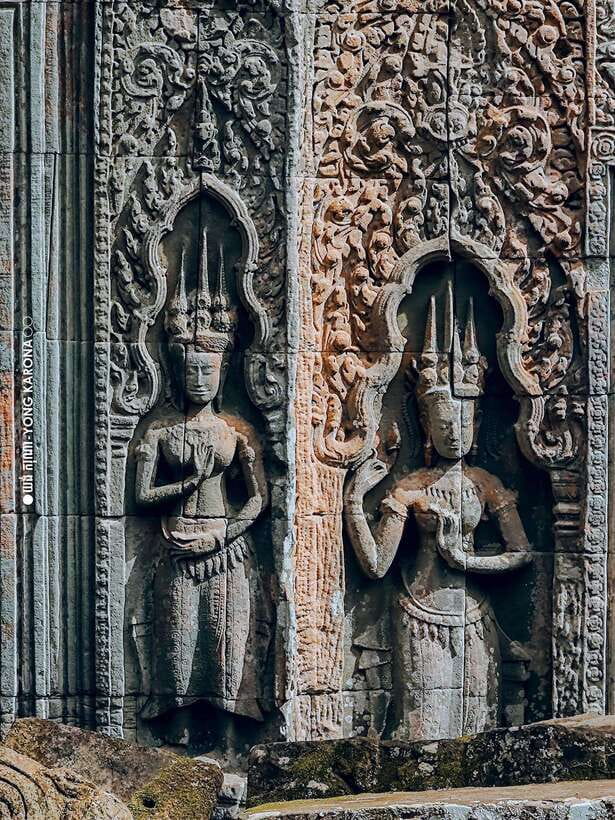
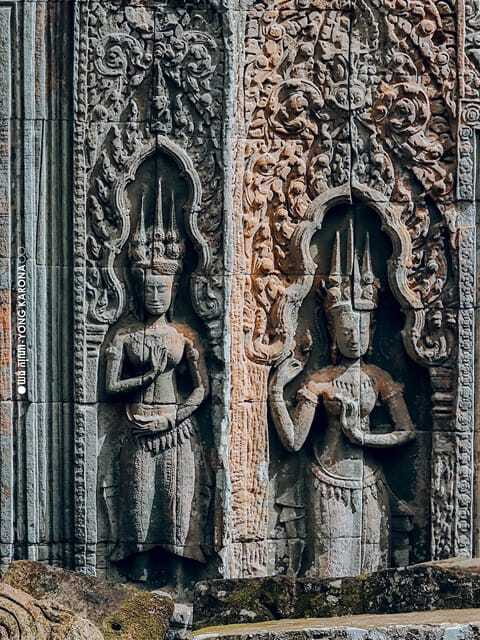
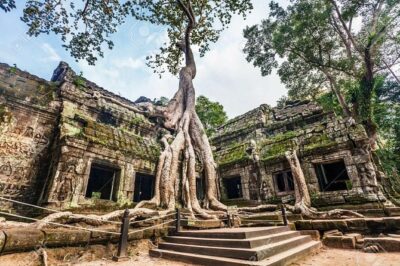
Ta Som is known for the large tree growing over its east gate. It also has many sculptures of dancers with long hair, giving the temple a more intimate and decorative character.
The tree is the obvious photograph, but do not stop there. Look for the carved figures and ask your guide to point out the repeated details. Ta Som was built for the king’s sister, another reminder that the temple complex includes monuments connected to family members as well as gods and kings.
This is a good stop for anyone who wants a quieter contrast with the best-known temples. It is also a reminder that nature is now part of the appearance of many Angkor sites.
East Mebon and Pre Rup
East Mebon was built for the ancestors and once sat in the middle of a reservoir. It was constructed as early as the 10th century, giving you a look at an earlier phase of Angkorian building.
The reservoir is no longer the same feature it was in the temple’s original setting, so your guide’s explanation is important. Without it, you may miss how dramatically the surrounding environment has changed.
Pre Rup was built by a king for himself. It is sometimes mistaken for a crematorium because of a stone structure that resembles a coffin. The supplied explanation offers a different reading: the structure was used by Hindus for meditation during the full moon.
That detail is a good example of why I prefer a guided visit here. The stones alone cannot explain how later visitors interpreted the site or how religious practice shaped its use. Pre Rup is also a high temple, so expect steps and exposed sun.
Day two: sunrise over Angkor Wat
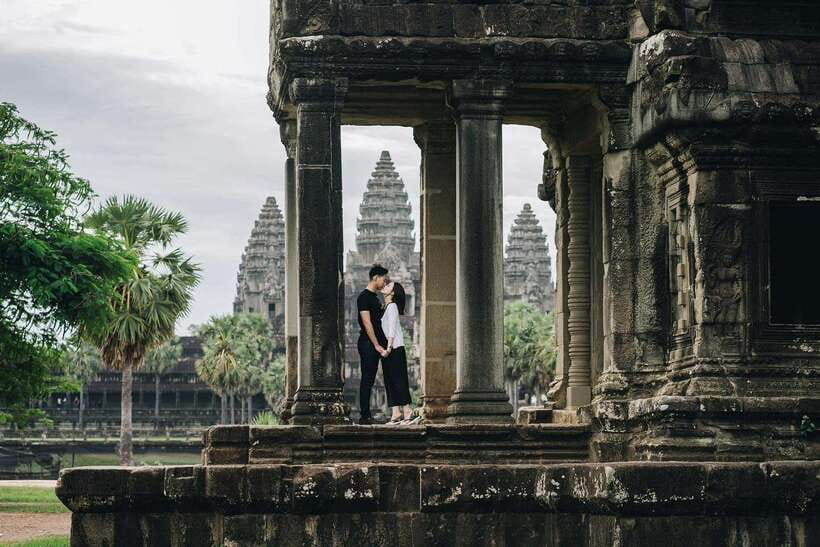
Day two begins before most people would choose to get out of bed. That is the price of seeing Angkor Wat in the soft light of sunrise, and it is also the best reason to accept the early start.
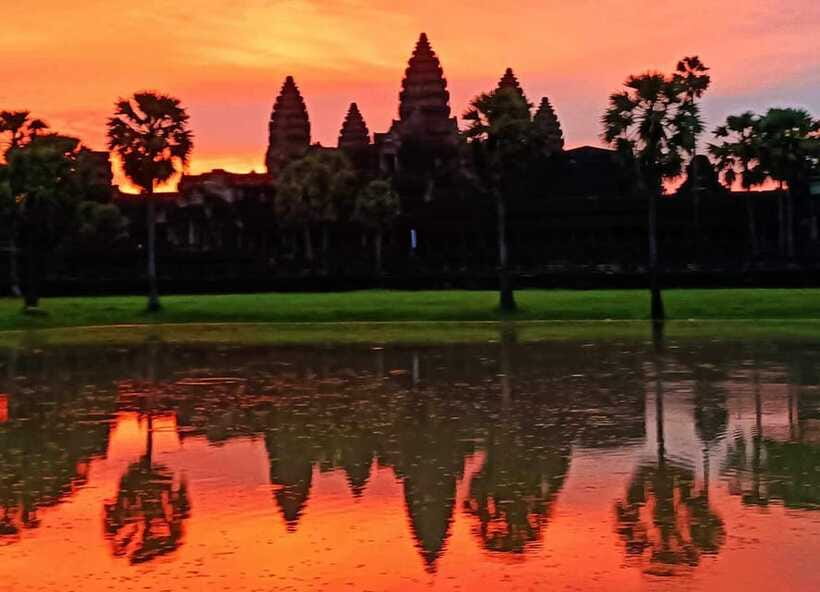
Angkor Wat is Cambodia’s most visited attraction and part of the UNESCO-listed Angkor archaeological site. At sunrise, the temple’s towers and reflection can take on a different look from the hot, bright conditions later in the day.
You should bring a camera, but do not let the camera control the morning. Once the sun is up, take time to look at the scale of the complex and the relationship between the temple, water, and long approach. The guide can then add the historical and cultural context that a photograph cannot provide.
The morning timing has another benefit: cooler weather and fewer people than you may find later in the day. It will not feel empty, since sunrise is popular, but the early hours are still kinder for walking.
After Angkor Wat, the route continues to several nearby temples. Rest and food breaks are built into the day, but food itself is not included, so bring money for meals and snacks.
Angkor Thom and Bayon’s stone faces
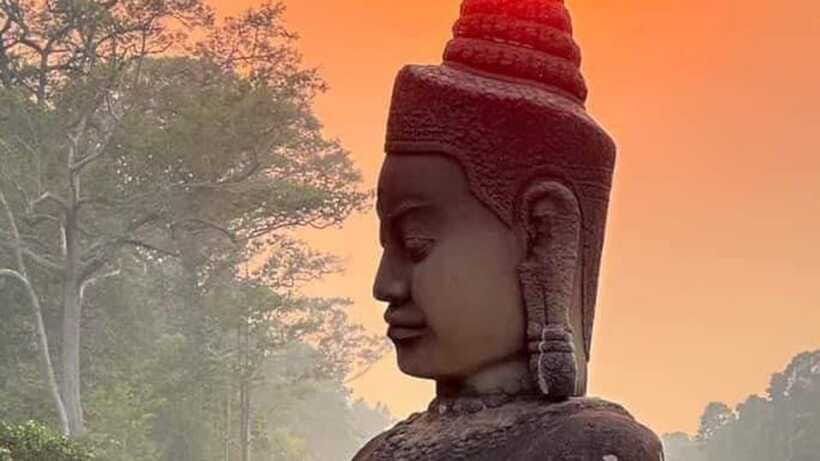
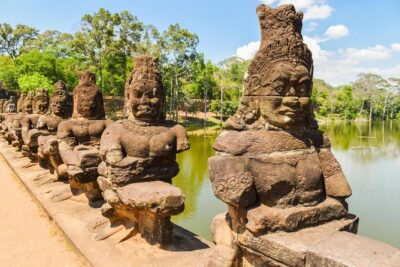
The South Gate of Angkor Thom is one of the most memorable approaches in the complex. Its bridge is lined with statues of gods, creating a dramatic entrance before you even reach the temple.
This is a place where the route matters. The gate is not just a structure to photograph from the van. The line of statues gives you a sense of procession and power, and your guide can explain the meaning of the figures and their role in the entrance design.
Inside Angkor Thom, Bayon is famous for its large smiling faces carved into the towers. The effect can feel playful at first, but the scale and repetition are serious displays of royal and religious authority.
Bayon can be confusing to explore because of its tight corridors and many faces appearing from different angles. Stay close enough to your guide to catch the explanations, especially if you want to understand how the temple fits into Angkor Thom rather than treating it as a collection of stone portraits.
Ta Prohm, where trees share the frame
Ta Prohm is the jungle temple made famous by Tomb Raider. The film connection brings many people here, but the temple deserves more than a movie reference.
Roots and trees have become part of the visual identity of Ta Prohm, wrapping around walls and doorways. You see a striking meeting between constructed stone and living growth. The effect is memorable, though some paths and surfaces can be uneven.
I would give this stop time for both photographs and close looking. Carvings, door frames, and enclosed galleries reward attention, while the larger tree-covered views explain why Ta Prohm is one of the most sought-after stops in Angkor.
Do not expect a quiet, private jungle scene at every turn. Ta Prohm is one of the famous stops, and the tour’s small-group format helps, but it cannot remove the site’s popularity.
Banteay Kdei and Ta Keo
Banteay Kdei is a Buddhist temple that is largely unrestored and still used by monks. Its condition gives you a different experience from the more orderly, heavily photographed monuments.
Unrestored stone can look less polished, but that is precisely its value. You get a stronger sense of age and change. The temple also offers a useful reminder that Angkor is not an abandoned set of ruins. Religious life remains connected to the site.
Ta Keo is a mountain temple built in the 10th century. You will walk up it, moving between ancient stone and the modern world around it.
The climb is the key consideration. Comfortable shoes are not optional, and people with mobility impairments may find this stop unsuitable. If you manage the ascent, the temple gives you a clear feel for the steep, elevated design used to represent sacred mountains.
What the $39 price really covers
At $39 per person, this is a low-cost way to arrange two full days of Angkor touring. The fee includes a guided tour, air-conditioned van transport, hotel pickup and drop-off, sunset and sunrise viewings, rest breaks, cool water, wipe towels, and local tax.
That is good value if you want transport and an English-speaking guide without arranging each temple transfer yourself. The two-day format also spreads the sightseeing across more than one morning, which is easier than trying to force every major stop into one long day.
You must budget separately for the temple entrance pass and food. The pass can be purchased online through Angkor Enterprise at angkorenterprise.gov.kh or at the ticket office. Since the pass is not included, add that cost before comparing this tour with other options.
The price also depends on the group arrangement. Private and small-group options are available. A private tour should give you more control over pauses and questions, while a small group may be the better value if you are happy with a shared schedule.
The guide can make or break the temple circuit
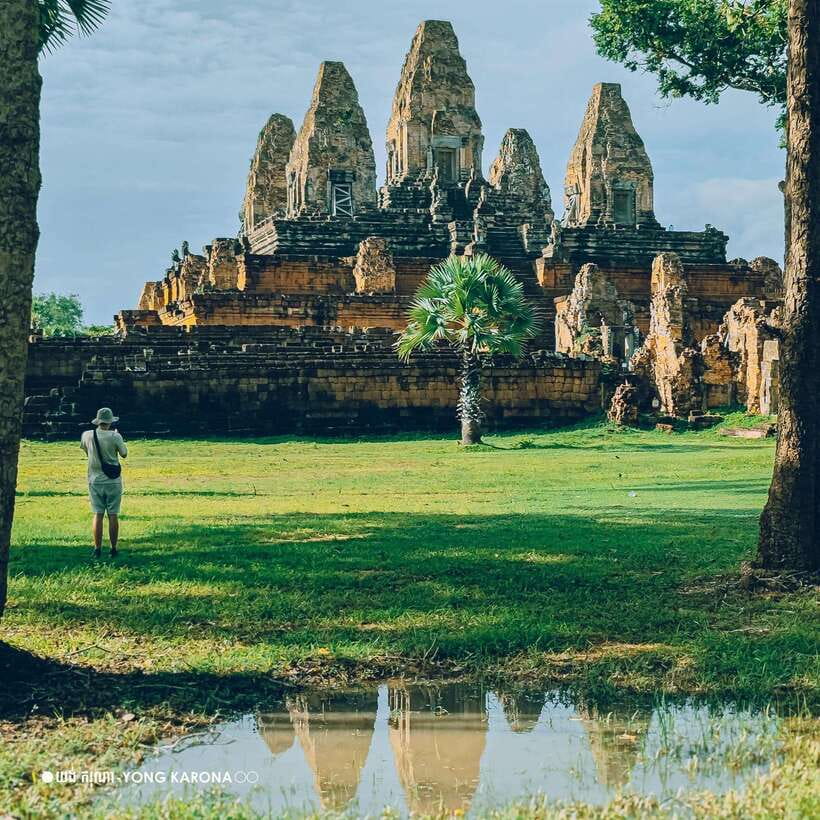
Angkor rewards explanation. A guide can point out why East Mebon was connected to ancestors, explain the water at Neak Pean, and separate the real purpose of Pre Rup from the crematorium idea.
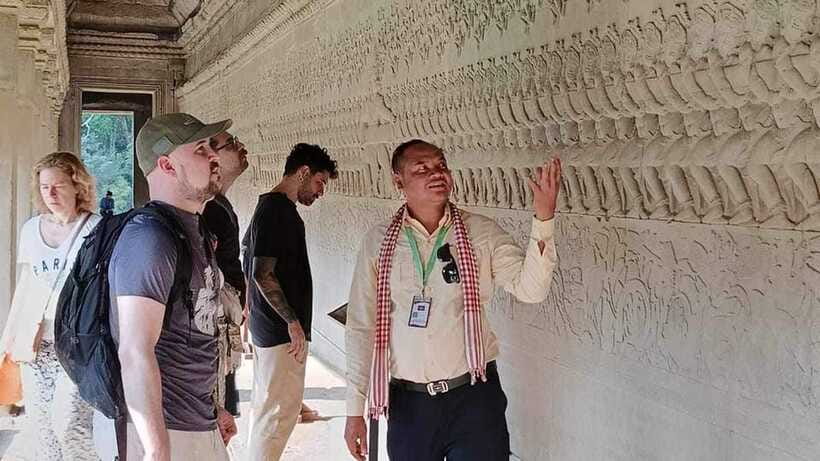
The English-speaking guides named in the feedback are Sayon and Sam. Sayon is praised for his temple, city, and country knowledge, along with a positive spirit and clear passion for local history. Sam is praised for explaining the history and setting of the sites in detail.
Those comments suggest that the guiding is one of the strongest reasons to choose this tour rather than simply hiring transport. The operator is Angkor Wat Share Tours, and the overall rating provided is 5 out of 5 from three verified bookings.
That is a small sample, so I would not treat it as proof that every departure will feel identical. Still, the repeated praise for the guides is specific, not vague. If history and cultural context matter to you, confirm that an English-speaking guide is included when you book.
Practical preparation for two hot walking days
Bring comfortable shoes, a hat, sunscreen, water, and a camera. The tour supplies cool water, but you should still prepare for heat, walking, and long periods outside.
Wear clothing suitable for walking and respectful visits to historic temples. The sites include steps, uneven ground, and uphill sections. Flash photography is not allowed, and littering is prohibited.
You should carry your passport or an identity card. A copy is accepted according to the tour information. Keep it available for the temple pass process and any checks connected with your visit.
The tour is not suitable for children under 12, wheelchair users, or people with mobility impairments. That limitation makes sense given the climb at Phnom Bakheng and Ta Keo, plus uneven temple paths throughout the complex.
Free cancellation is available up to 24 hours before the tour for a full refund, and you can reserve now and pay later. Those terms are useful if your Siem Reap plans are still shifting, but the practical question is still your energy level. Two days of temple walking, with one sunrise start, takes commitment.
Should you book this Angkor tour?
I would choose this tour if you want the major Angkor sights plus a solid selection of less famous temples, and you prefer having transport and historical explanation arranged together. It is especially suited to adults and older teens who walk well, enjoy early starts, and want more than the standard Angkor Wat photo.
I would look elsewhere if you want a slow, luxury-paced visit, a food-inclusive package, or an itinerary designed for limited mobility. The schedule covers a lot, and the $39 fee becomes less low-cost once you add the temple pass and meals.
For the best fit, book it with realistic expectations: sunrise will be early, Ta Keo and Phnom Bakheng require effort, and the famous sites will not be empty. If you are ready for that, the combination of Bayon’s faces, Ta Prohm’s roots, Angkor Wat’s sunrise, and the quieter Grand Circuit temples gives you a strong two-day introduction to Angkor.
FAQ
Is the Angkor temple pass included in the $39 price?
No. The temple entrance fee must be purchased separately, either online through Angkor Enterprise or at the ticket office.
Are meals included?
No. Food is not included, although the tour includes breaks for rest.
What transport is provided?
The tour includes hotel pickup and drop-off and transportation by air-conditioned van.
Is the tour offered in English?
Yes. The tour includes a live English-speaking guide. Private and small-group options are available.
How early does the tour begin?
The second day includes an early start for sunrise at Angkor Wat. The exact starting time depends on availability, so check the assigned time when booking.
Who should not book this activity?
The activity is not suitable for children under 12, wheelchair users, or people with mobility impairments. Comfortable walking shoes are recommended because the tour includes uneven paths, uphill walking, and temple steps.
New around Siem Reap
- Siem Reap Temple and Waterfall 3-Day Tour★ 4.5 · 3 reviews
- Siem Reap: Guided Day Trip to Local Village & Cooking Class★ 5.0 · 3 reviews
- Savor the Countryside: Tours with Authentic Cooking Classes”★ 5.0 · 3 reviews
- Siem Reap Private Tour: Angkor Wat Sunrise And Banteay Srei★ 5.0 · 3 reviews
- Angkor Wat Sunrise TukTuk Tour★ 5.0 · 3 reviews
- Angkor Wat Sunset In Private and Small-In-Group★ 4.3 · 3 reviews
- Exclusive Angkor temples and Small group temples tours★ 5.0 · 3 reviews
- Angkor Wat: Highlights and Sunrise with Spanish Guide★ 4.8 · 3 reviews
Angkor Wat Tours, compared.
Angkor Wat Sunrise or Sunset Tour with Guide from Siem Reap
Read our review →
Angkor Wat: Small-Group Sunrise or Sunset Tour
Read our review →
Angkor Wat Sunrise tour with Small – Group and Guide tours
Read our review →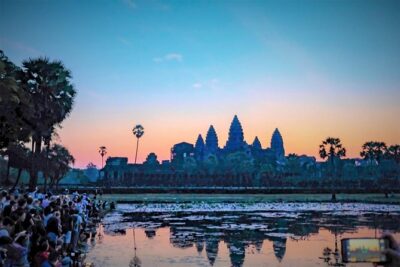
Angkor Wat Highlights and Sunrise Guided Tour from Siem Reap
Read our review →
Angkor Wat Sunset Small Group Tour with Lunch Included
Read our review →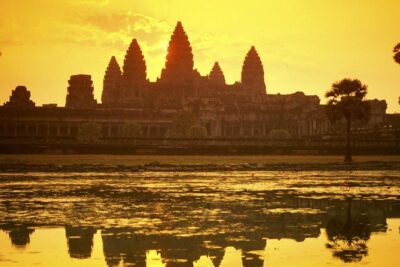
Full-Day Angkor Wat Sunrise Private Tour with Guide from Siem Reap
Read our review →
Angkor Wat Sunrise & 3 Main Temples with Breakfast – Small Group
Read our review →Browse the lists this tour appears in