
Reviewed · ANGKOR TEMPLE TOURS
Private Tour: (Avoid Crowds & Heat) 2-Day Angkor Temples
Angkor is best seen in layers, and this private two-day tour gives you both: the grand monuments people come to Cambodia to see and quieter ruins where jungle, stone, and silence take over. The route includes Angkor Wat, Bayon, Ta Prohm, and Angkor Thom, but it also makes time for Banteay Srei, Neak Pean, Preah Khan, and Ta Nei.
I like the private format, which lets your guide adjust the pace and steer you toward less crowded corners. I also like the practical setup: hotel pickup in Siem Reap, an air-conditioned private vehicle, snacks, cold drinks, and cool towels. Guides including Tay, Sopheara, Viet, and Kim have received especially strong praise for their temple knowledge and personal attention.
The main catch is cost planning. The advertised $62 price does not include the Angkor Archaeological Park pass, which costs $62 per person for a two or three-day visit. You should also be ready for heat, long walks, and plenty of stairs at some temples.
Key points to know before you book
- Banteay Srei brings the finest carvings: Its pink sandstone details are among the most delicate in the Angkor area.
- Day one is quieter and more varied: Banteay Samre, Pre Rup, Preah Khan, and Neak Pean offer a calmer start than Angkor Wat.
- Day two covers the essential monuments: Angkor Wat, Angkor Thom, Bayon, Ta Prohm, and Ta Nei make a strong first visit.
- A private guide changes the rhythm: You can ask questions, linger at a favorite site, and avoid some busy routes.
- Air conditioning matters: The private vehicle, cold water, snacks, and cool towels provide welcome relief between temples.
- Ask about sunrise or sunset on day one: The operator offers one of these outings at no extra charge if you request it.
Why two days works well at Angkor
Angkor is not one temple. It is a huge archaeological area filled with monuments from different periods, religious traditions, and royal building programs. Trying to see the main sites in a single day can turn a remarkable place into a hot race between parking lots.
This tour takes a sensible approach. Day one moves through temples outside the most crowded core, including Banteay Srei and the so-called Big Loop. Day two focuses on the famous monuments, when you are better prepared to understand what you are seeing.
You get a private guide and private transport, so this is not a fixed coach tour with a large group. That matters in Cambodia’s heat. If one temple captures your attention, you can ask for a little more time. If a site feels repetitive or your legs are tiring, you can keep the visit moving.
The 99 percent recommendation rate and five-star rating from 88 reviews point to a consistently well-received experience, particularly for guiding. The strongest praise goes to guides such as Tay, Sopheara, Viet, and Kim, who are described as clear, patient, and skilled at explaining Khmer architecture and culture.
More Angkor Temple Tours in Siem Reap:
- Siem Reap Tour: Angkor Wat Sunrise, Bayon, Ta Prohm, Banteay Srei
★ 5.0 · 931 reviews - Siem Reap: Bike the Angkor Temples – Full-Day 30km Tour
★ 5.0 · 463 reviews - Angkor Wat one Day Private Tour for All Highlight Angkor Temples
★ 5.0 · 199 reviews
Day one: Banteay Srei and the quieter eastern temples
The tour begins with hotel pickup in Siem Reap at about 7:30 a.m. The first stop, Banteay Srei, lies a little more than 20 kilometers north of Angkor. Plan on about an hour here.
Banteay Srei means Citadel of Beauty, and it earns the name through its detailed carving. The temple was built in the second half of the 10th century, mainly from pink sandstone. The stone gives the monument a warm color, while the small scale and fine decoration make it feel different from the massive royal temples visited later.
This is the place to slow down and look closely. Rather than being impressed only by size, you will notice carved figures, floral patterns, and carefully cut surfaces. A guide is useful here because the details can blur together when you are seeing many temples in a row.
The drawback is distance. Banteay Srei sits farther from the central Angkor group, so you spend more time in the vehicle. For a first visit, I think the journey earns its place because the temple looks and feels unlike Angkor Wat or Bayon.
Next comes Banteay Samre, an isolated temple in a peaceful setting. The visit lasts about 45 minutes. Built in the first half of the 12th century, it has towers and a general design that recall Angkor Wat.
Banteay Samre is a good counterpoint to Banteay Srei. The first is prized for delicate decoration, while the second gives you a more enclosed, fortress-like temple experience. It also helps break up the day, since you are not simply visiting one enormous complex after another.
Pre Rup: laterite, brick, and a high platform
Pre Rup takes about 30 minutes. Built in the middle of the 10th century, it uses laterite, brick, and sandstone in a combination that gives the temple a striking mix of color and texture.
The name Pre Rup means turning the body, a reference connected with funerary rites. You do not need to memorize every detail to appreciate the site, but this is a good stop for learning how Khmer builders combined different materials and built upward in strong geometric levels.
There are stairs and elevated sections here, so wear shoes with a firm grip. The tour information makes clear that the temples involve climbing, and one person specifically noted that the experience suits you best if you are physically able to manage many steps.
Preah Khan and Neak Pean: two very different ruins
Preah Khan is one of the most rewarding stops on day one, with about an hour to explore. King Jayavarman VII built it in the late 12th century as a Buddhist university and city.
The scale is larger than the compact temples earlier in the day. Preah Khan also has an atmospheric quality similar to Ta Prohm, with trees and stone sharing the same space. Its unusual round-columned, two-story building gives the temple a detail you will not find at every Angkor site.
Give yourself time to walk beyond the first entrance. The value here is not just one famous view, but the sequence of corridors, courtyards, carvings, and partial ruins. Your guide can help you understand how Preah Khan worked as a place of learning and worship, not simply as a monument.
Neak Pean takes about 30 minutes and offers a different experience. Built in the late 12th century by Jayavarman VII, it was associated with miraculous healing. The central monument appears in the middle of a pond, creating a strong visual effect and a clear symbolic connection with purity and water.
Neak Pean is not a site where you spend hours climbing through rooms. You approach it along a walkway and look across the water toward the unusual central structure. It provides a quiet pause after Preah Khan, though the visit may feel brief if you prefer large temple interiors.
A few more Siem Reap half-days to weigh up
- Siem Reap: Angkor Wat 2-Day Tour with Sunrise and Sunset
★ 4.9 · 4,429 reviews - Angkor 2-Day Sunset & Sunrise Small-Group Tour
★ 5.0 · 2,567 reviews - 2 Days Exclusive Temple Highlights with Sunset and Sunrise Tour
★ 5.0 · 1,157 reviews - Siem Reap: Angkor Sunrise 1- or 2-Day Guided Temples Tour
★ 4.9 · 1,132 reviews
Day two: the essential Angkor circuit
Day two brings the monuments most first-time visitors want to see. Angkor Wat receives about two hours, followed by roughly two hours around Angkor Thom, one hour at Ta Prohm, and 30 minutes at Ta Nei.
The exact order and timing can vary, especially if you add the complimentary sunrise or sunset option. Tell your guide on day one if you want sunrise or sunset the following day. The operator includes it at no extra charge.
Angkor Wat: allow time for the scale
Angkor Wat is the world’s largest religious monument, and two hours gives you a useful first look without making the day too slow. The approach across the moat helps you understand the temple’s scale before you reach the galleries and inner structures.
You will want to look at both the overall design and the smaller carved details. Angkor Wat rewards a guide who can explain its layout, religious purpose, and architectural choices. Without context, it can be easy to spend the visit taking photos and miss how carefully the monument is organized.
Two hours is enough for a focused visit, but it is not an exhaustive study. If Angkor Wat is your main reason for coming to Siem Reap, you may wish the tour allowed longer here. The benefit of the private format is that you can discuss this with your guide and ask about the best use of your time.
Angkor Thom and Bayon: a city within walls
Angkor Thom is not a single building but a large former Khmer capital enclosed by walls. The two-hour visit introduces several important sites within the city, including Bayon, Phimeanakas, Baphuon, the Terrace of the Elephants, and the Terrace of the Leper King.
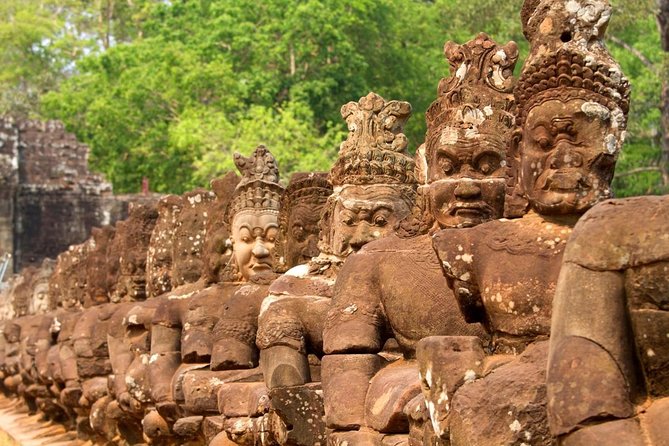
Bayon is the centerpiece for many people. Its towers and large carved faces create a mood unlike Angkor Wat. The monument can feel confusing at first, with galleries and towers packed together, so this is another place where a guide makes the visit easier to follow.
Baphuon gives you a sense of the engineering and ambition behind Angkor Thom. The terraces and elevated structures require walking and climbing, while the Elephants and Leper King terraces offer a closer look at royal display and carved stonework.
Two hours is a reasonable block for Angkor Thom, but do not expect to examine every corner of the city. The advantage is breadth. You see how the capital functioned as a group of linked temples and ceremonial spaces rather than treating each building as an isolated stop.
Ta Prohm: trees, stone, and a famous atmosphere
Ta Prohm receives about an hour, which is enough to explore its best-known paths without exhausting yourself. Its appeal comes from the way strangler figs and silk-cotton trees grow among the ruins, with roots wrapping around walls and doorways.
The effect is romantic and dramatic, but Ta Prohm is more than a photo stop. It was built during the reign of Jayavarman VII in the late 12th century, and the remaining galleries show how large and complex the original temple was.
Ta Prohm is also famous as a filming location, which means it can be one of the busiest stops. Your guide’s ability to adjust the route is particularly useful here. The tour is designed to avoid crowds and heat where possible, but no private operator can make a popular monument empty.
Ta Nei: a small temple and a quieter finish
Ta Nei is a Buddhist temple built during the reign of Jayavarman VII in the late 12th century. The visit lasts about 30 minutes and is intended as a quieter stop away from the main crowds.
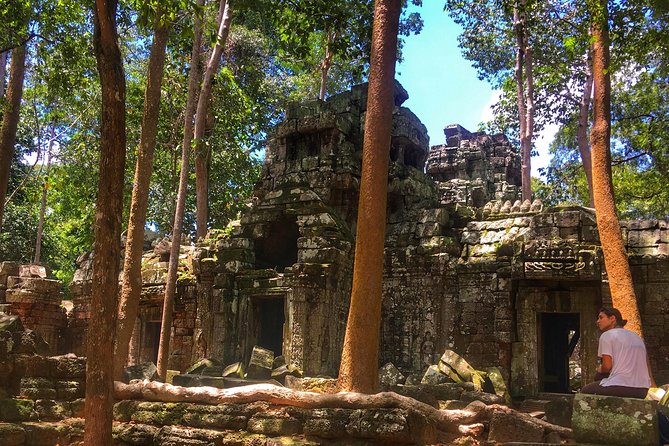
Compared with Angkor Wat or Ta Prohm, Ta Nei is modest. That is precisely its value. You get a small, unrestored temple atmosphere in the jungle, with less pressure to follow a famous viewpoint or compete for space.
Do not book this tour expecting every stop to be grand. Ta Nei works because it gives the day a change of scale. After the major monuments, a smaller ruin helps you appreciate how much of Angkor remains beyond the headline sites.
What the private setup is really worth
The price listed for the tour is $62, before the park pass. The separate Angkor entrance ticket costs $62 per person for a two or three-day visit, so you should budget for both charges.
That makes the tour more expensive than simply hiring basic transport, but the value comes from the combination of a licensed guide, private vehicle, hotel transfers, and flexible pacing. You are not paying only to be driven from temple to temple. You are paying for explanations, route planning, and help making sense of a very large site.
The air-conditioned car is not a minor extra. Siem Reap’s heat can wear you down quickly, especially after stairs and exposed stone courtyards. Snacks, refreshments, and cool towels add comfort between stops.
The private format is especially useful for couples, families, and small groups with different energy levels. You can ask questions without waiting for a full bus to settle down, and the guide can respond to your interests.
Practical points for a smoother visit
Start with comfortable footwear. Several temples involve stairs, uneven stone, and climbing. One person who loved the tour still stressed the physical demands, so do not treat this as a gentle sightseeing ride.
Use the transport breaks wisely. Drink water, cool down, and save some energy for the second day. The supplied snacks, cold water, and cool towels help, but they do not replace sensible pacing.
Tell the guide early if sunrise or sunset matters to you. The option is complimentary, but you need to request it on day one so the next day can be arranged around it.
The tour suits most people according to the provided information, but temple access is not the same as an easy walk. If you have limited mobility, ask the operator before booking because the route includes stairs and uneven surfaces.
Cancellation is free if you cancel at least 24 hours before the local start time. Changes or cancellations inside that window are not accepted for a refund.
Who should book this two-day tour?
I would choose it for a first visit to Angkor, especially if you want the major temples but also want time at less prominent sites. The route has a good balance: Banteay Srei for detail, Preah Khan for atmosphere, Angkor Wat for scale, Bayon for character, and Ta Nei for quiet.
It is also a strong match for anyone who values explanation. The guides named through the operator, including Tay, Sopheara, Viet, and Kim, are repeatedly praised for their command of history and culture, clear English, patience, and ability to shape the day around the group.
I would think twice if your only goal is a long, unhurried visit inside Angkor Wat. This tour covers a lot, and some stops are timed at 30 minutes. It is also not the right choice if stairs, heat, or extended walking will make two full temple days unpleasant.
For most first-time visitors, though, the plan makes sense. You get the essential Angkor monuments, remote temples, private transport, and a guide who can turn a long list of ruins into a connected story. Just add the park pass to your budget and arrive ready for a little climbing.
FAQ
Is the Angkor entrance pass included?
No. The Angkor Archaeological Park entrance ticket costs $62 per person for a two or three-day visit and must be paid separately.
What does the $62 tour price include?
The tour price includes a professional licensed guide, private hotel pickup and drop-off in Siem Reap, transport in a private air-conditioned vehicle, snacks, and refreshments.
Is this a group tour?
No. It is a private activity, so only your own group participates. Group discounts are listed as available.
What time does the tour start?
Pickup begins in Siem Reap at about 7:30 a.m.
Can I request sunrise or sunset?
Yes. Tell your guide on day one if you would like sunrise or sunset the following day. This option is complimentary.
Which temples are visited?
The route includes Banteay Srei, Banteay Samre, Pre Rup, Preah Khan, Neak Pean, Angkor Wat, Angkor Thom, Ta Prohm, and Ta Nei.
Is the tour suitable for most people?
The tour information says most people can participate. However, the temples include stairs, climbing, and uneven walking surfaces, so you should consider your physical ability before booking.
What is the cancellation policy?
You can cancel for a full refund up to 24 hours before the experience starts. Cancellations or changes made less than 24 hours before the local start time are not accepted for a refund.
New around Siem Reap
- Kulen Mountain With Ticket included Plus Banteay Srei Temple Tour★ 5.0 · 7 reviews
- 2 Days Angkor temples with Sunrise & Sunset★ 5.0 · 7 reviews
- Private Siem Reap Airport Transfer to hotel in town★ 5.0 · 7 reviews
- 1-Day private Angkor Temple Tour with Sun Rise by Tuk Tuk from Siem Reap★ 4.5 · 7 reviews
- Siem Reap: Morning Cooking Class & Market Tour★ 5.0 · 7 reviews
- Kulen Mountain, Killing Fields and War Museum Tour★ 5.0 · 7 reviews
- War Museum, Killing Field, and APOPO Hero RATs Tour★ 5.0 · 7 reviews
- Half-Day: Silk Farm, Senteur Angkor, and Satcha Workshop★ 4.6 · 7 reviews
Angkor Temple Tours, compared.
1-Day private Angkor Temple Tour from Siem Reap
Read our review →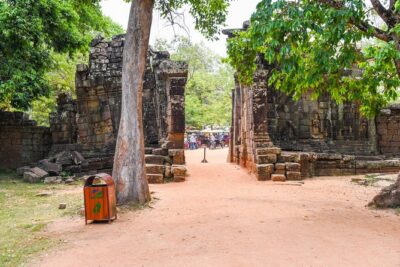
Private Full-Day Angkor Temple and Sunset Viewing with Lunch
Read our review →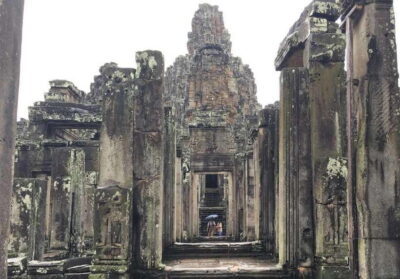

Private one-day tuktuk ‘small tour’ of the oldest Angkor temples
Read our review →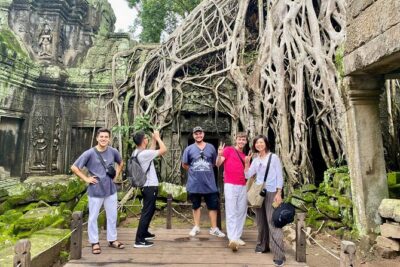
Explore Angkor Temple & Other – Private Vehicle with Tour Guided
Read our review →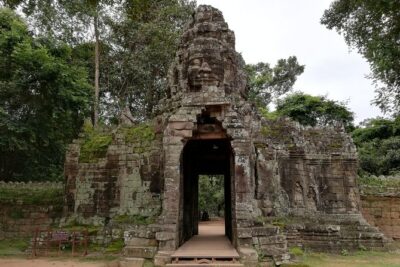
Angkor Wat Private Driver Tours to Angkor Wat Sunrise, Angkor Thom & Ta Prohm
Read our review →Browse the lists this tour appears in