
Reviewed · ANGKOR TEMPLE TOURS
Siem Reap: Bike the Angkor Temples – Full-Day 30km Tour
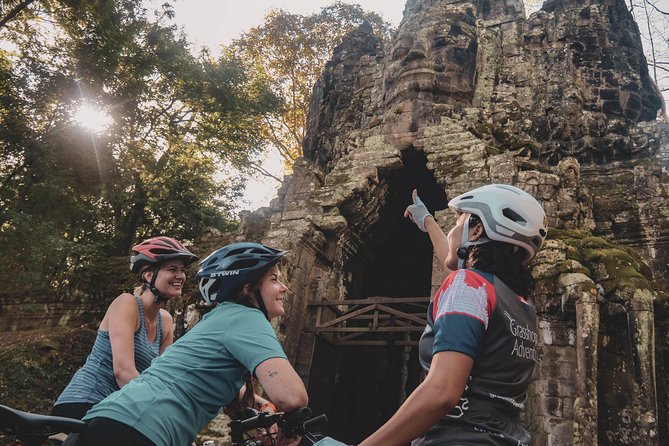
Angkor is far too large to see well on foot, and a bicycle gives you more than a ride between monuments. You pedal through forest paths, village roads, and the great gates of the park, then reach Angkor Wat, Bayon, and Ta Prohm under your own power. Guides such as Chen, Moon, Wich, and Mun add temple stories and practical care along the way.
I like the small maximum of 10 people, which keeps the pace personal and makes it easier to ask questions. I also like the thoughtful support: well-maintained mountain bikes, helmets, cold water, fruit, snacks, lunch if selected, and even a cool coconut drink and towel at the finish.
The catch is simple: 25 to 30 kilometers in Cambodian heat is still a serious day out. Most of the route is flat, but sandy and bumpy tracks can test your knees, balance, and patience. You do not need to be a racer, but you should be comfortable riding for several hours.
Key points at a glance
- Ride beyond the main roads: Forest tracks, village lanes, rice-field areas, and small roads show you parts of Angkor that a car or tuk-tuk usually skips.
- See the essential temples: The day includes Angkor Wat, Bayon, the Terrace of the Leper King, the Terrace of the Elephants, the Royal Enclosure, and Ta Prohm.
- Small-group care: The maximum group size is 10, and guides or assistants help with road safety, pacing, and bike problems.
- Useful refreshments: Bottled water, fruit, snacks, and a Khmer lunch are provided when you book the lunch option.
- A real physical outing: Expect about 15 to 18 miles on mostly flat roads, with some dirt and uneven sections.
- Good introduction to Angkor: The guide handles the route while explaining temple symbolism, Cambodian history, and local life.
Why cycling changes your Angkor day
Angkor Archaeological Park covers a huge area, roughly half the size of New York City. You need transport, but the usual motorized options can make the park feel like a sequence of stops viewed through a window.
A bicycle changes the rhythm. You hear the road beneath the tires, feel the shade change as you leave town, and have time to notice houses, farm yards, wooded paths, and the enormous entrance gates. The route uses public roads as well as off-road sections, so you get a closer look at the setting around the temples, not only the monuments themselves.
I especially like that the cycling is not built around speed. You stop to walk through the temples, take photographs, drink water, eat fruit, and listen to explanations. The guide usually rides at a manageable pace, and an assistant or second guide may help at the front or back of the group.
Still, this is not a gentle sightseeing loop. The heat can make the final part feel long, even for people in their 50s who are used to regular exercise. Sand and rough tracks are more tiring than the flat distance suggests. Bring sunscreen, a hat, practical shoes, and clothing that will survive a day on a bike.
More Bike Tours in Siem Reap
- Siem Reap Countryside Bike Tour / E-Bike or Tuk Tuk
★ 5.0 · 935 reviews - Angkor Sunrise Bike Tour / E-Bike or Tuk Tuk
★ 5.0 · 615 reviews - Siem Reap: Angkor Wat Sunrise Bike Tour & Jungle Breakfast
★ 5.0 · 415 reviews
Starting at 7:30 am in Siem Reap
You make your own way to ផ្ទះគ្រូ Café, the listed meeting point in Siem Reap. The tour begins at 7:30 am, giving you a useful early start before the hottest part of the day.
At the bike shop, you meet the guide, receive a safety briefing, and choose a mountain bike and helmet. The bikes are adjusted to your height, and some riders have noted that the suspension and general condition are suited to the rougher sections. Water is available from the beginning.
The group then rides toward the Angkor complex. One practical advantage is that the guide helps you purchase the Angkor Pass at the entrance. The single-day temple ticket costs an additional US$37, so add that to the US$35 tour price when working out the real cost.
The tour itself is good value for anyone who wants active transport, route planning, and interpretation in one package. You are paying for a full day, a bike, safety support, refreshments, and a guide who knows which smaller roads and trails connect the monuments. It is not the cheapest way to enter Angkor, but the admission fee is separate for every visitor, no matter how you explore the park.
Angkor Wat: begin with Cambodia’s essential monument
Angkor Wat is the first major stop, and that is a sensible choice. The towers, galleries, carved walls, and broad approach give you a strong first look at the scale of the Khmer empire.
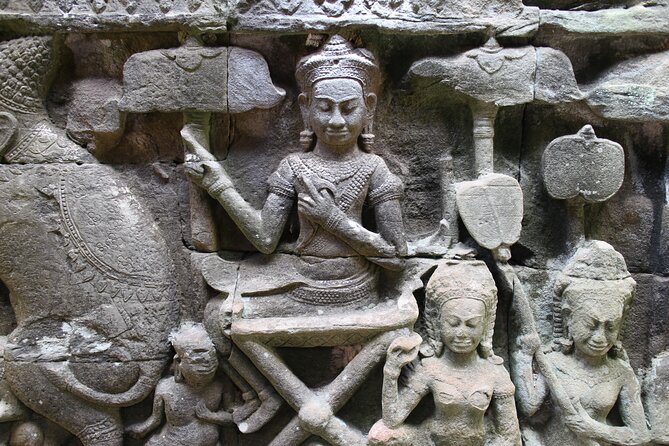
You have about an hour here, with time to leave the bikes, walk through the complex, view bas-reliefs, and hear how the carvings connect to the Hindu epic Ramayana. A guide can help you read details that are easy to miss when you are focused only on photographing the towers.
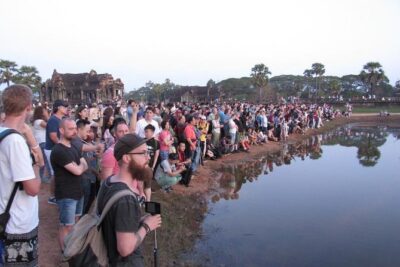
The first stop can also feel busy and grand rather than quiet and personal. Angkor Wat is the park’s most famous monument, so the cycling does not remove all crowds. What it does provide is a memorable arrival, riding into the complex instead of stepping out of a vehicle in a parking area.
Wear clothing that meets temple rules. Sleeveless tops and see-through shirts are not accepted, and pants or shorts must reach at least the knee. These rules apply during the temple visits, not just at Angkor Wat.
Angkor Thom and Bayon: faces, gates, and good stories
After Angkor Wat, the route follows the main road toward Angkor Thom. Along the approach, stone figures of divinities and demons line the way, giving you a sense of the ceremonial design of the ancient city.
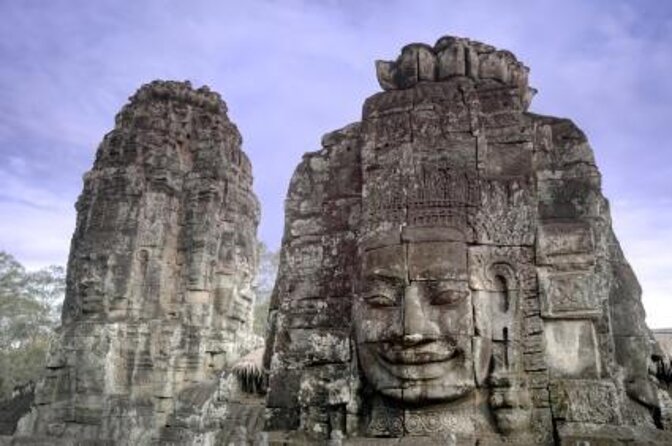
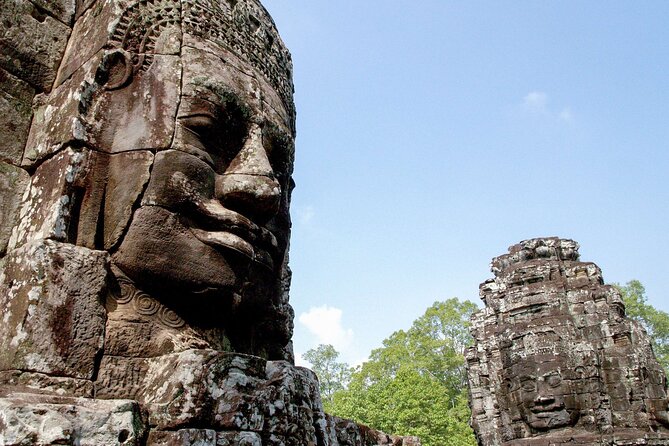
Bayon is the main attraction here. Its towers carry the famous serene faces, often described as smiling bodhisattva faces. The effect is powerful, but the temple can be confusing to explore without help. Towers, passages, and carved galleries overlap in a tight space, so a guide’s explanation gives structure to the visit.
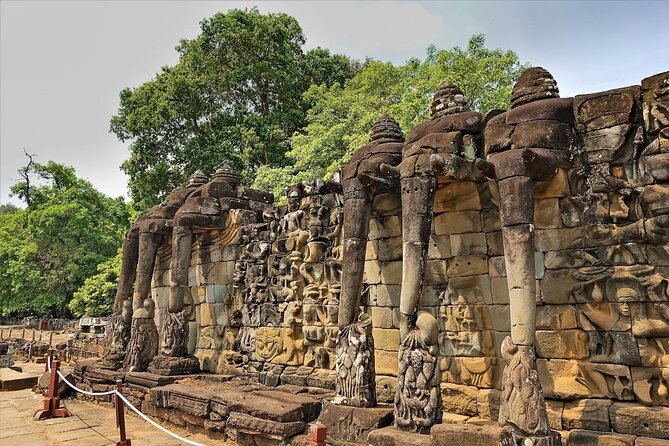
The tour also includes the Terrace of the Leper King, the Terrace of the Elephants, and the Royal Enclosure. These stops help fill in the role of Angkor Thom as a royal center rather than treating Bayon as an isolated photo stop.
This is one of the strongest parts of the day for anyone who wants context. Guides including Chen and Sunchen have been praised for connecting temple details with Cambodian history and present-day culture. That link matters. You are not simply looking at old stone; you are getting help understanding how the monuments fit into the country’s larger story.
More Angkor Temple Tours in Siem Reap:
- Siem Reap Tour: Angkor Wat Sunrise, Bayon, Ta Prohm, Banteay Srei
★ 5.0 · 931 reviews - Angkor Wat one Day Private Tour for All Highlight Angkor Temples
★ 5.0 · 199 reviews - 1-Day private Angkor Temple Tour from Siem Reap
★ 4.9 · 178 reviews - Siem Reap: Bike the Angkor Temples – Full-Day 30km Tour
★ 4.9 · 159 reviews
Srah Srang: the sensible place to pause
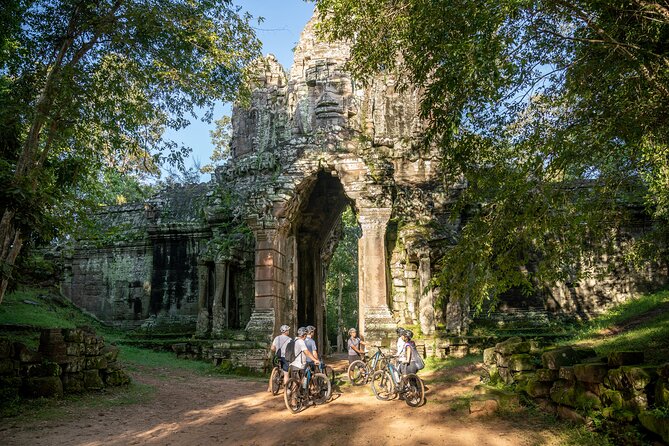
The midday portion includes a longer break around Srah Srang, with lunch and snacks to keep you moving. If you choose the lunch option, a local Khmer meal is arranged in advance. The food has been described as generous and tasty, with enough choice to suit a group, and you should provide dietary requirements when booking.
Srah Srang itself is a reservoir area with a calmer feel than the major temple courtyards. The stop gives your legs a break and offers time to eat without rushing straight back onto the bikes.
The heat is the main issue here, not the distance. Temperatures can reach 35 degrees Celsius, and you may feel fine in the morning before the sun catches up with you. Drink before you feel thirsty, use the regular water stops, and treat the fruit break as fuel rather than an optional extra.
Some groups may have the lunch break near the Terrace of the Elephants, while the itinerary also places a longer stop around Srah Srang. Exact timing can shift with the group, temple conditions, and pace. The important point is that the day includes a substantial midday rest rather than asking you to cycle continuously.
Forest paths and Ta Prohm’s tree roots
The ride between the main monuments is part of the attraction. You may leave the paved route for wooded tracks, sandy sections, and uneven paths. These stretches can be fun and atmospheric, but they are not ideal for a complete beginner who has little confidence on loose surfaces.
The countryside sections also show why this tour feels different from a standard temple circuit. You pass through small villages and rural areas, with glimpses of homes, farm yards, and everyday life near the park. The cycling is slower than a vehicle transfer, but it gives you a better sense of how the ancient site sits within a living community.
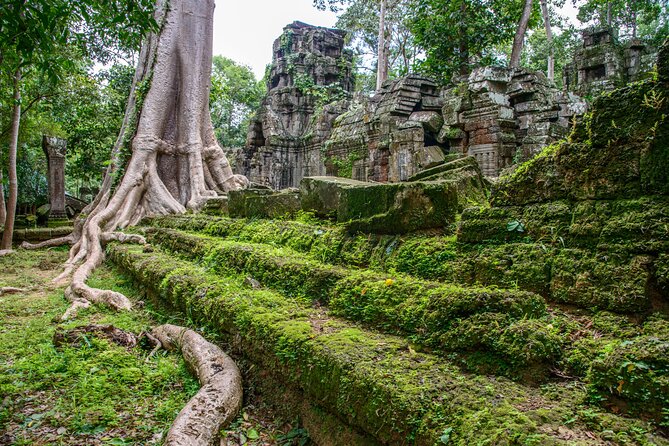
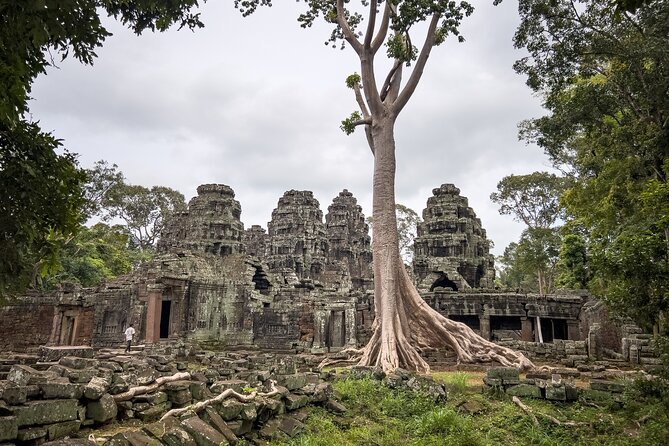
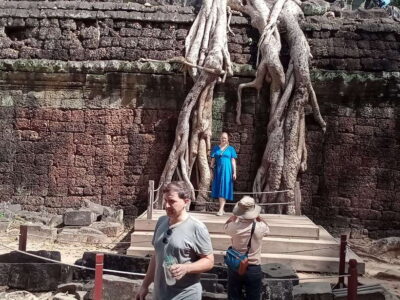
Ta Prohm is the afternoon highlight. Tall trees, moss-covered stones, and spreading roots wrap around the ruins, creating the park’s most instantly recognizable scene after Angkor Wat. The temple feels less ordered than the restored or open courtyards elsewhere, and the roots make the relationship between forest and stone impossible to ignore.
You get about an hour to walk around and hear the stories behind the monument. The setting is photogenic, but the ground can be uneven and the spaces can narrow around the roots. Good shoes matter here, especially after a full day of pedaling.
The ride back through villages
After Ta Prohm, you cycle back toward Siem Reap, again using a mixture of small roads and rural routes. The return can feel like a quiet comedown after the monuments. You have already seen the major temples, so the pleasure comes from the ride itself and the chance to notice local life at a slower pace.
The experience ends back at the meeting point, usually in the afternoon, though the advertised duration is approximately 8 hours and 30 minutes. The total timing can depend on stops, group speed, heat, and how long you spend inside each temple.
The finish is handled with unusual care. Cold coconut water, a cool towel, or both may be waiting at the office. Some riders also appreciate being able to keep the provided water bottle as a small souvenir. After several hours in the saddle, these details are more than decoration.
How hard is 30 kilometers in Angkor?
The route is mostly flat, so the main challenge is duration rather than climbing. You will ride roughly 15 to 18 miles, with stops that break up the effort, but the surface changes from asphalt to dirt, sand, and bumpy forest tracks.
I would rate it as a moderate active day. You should be able to ride a bicycle for several hours and handle uneven ground. The tour is not aimed at speed, and guides work to keep the group together, but it is not a substitute for a short city ride.
Families can take part, and a child seat is available on request for a child weighing up to 14 kilograms. Most people can participate, but the distance and heat still matter. An 11- or 13-year-old who rides regularly may enjoy it, while a child unused to long rides could find the day difficult.
The best preparation is plain and practical:
- Wear comfortable cycling clothes and shoes.
- Use sunscreen and bring a hat.
- Choose shorts or trousers that cover the knees.
- Carry a light layer that meets temple dress rules.
- Drink water often, even when you are not thirsty.
- Expect sand and bumps, not only smooth pavement.
Group size, guides, and safety
With a maximum of 10 people, this is small enough to feel more personal than a large coach outing. A private upgrade is available if you want undivided attention, while the group option gives you company on a long day.
The guides are one of the tour’s strongest features. Chen is repeatedly associated with clear explanations and a personal approach. Moon has been praised for temple commentary and for making sure lunch worked for the group. Wich, Mun, Meun, Pat, Samnang Chan, Samie, and Sam have also led highly regarded outings.
The names may vary on your date, but the useful pattern is consistent: the guide is expected to explain the monuments, answer questions, set a safe pace, and lead you over bike-friendly routes. A second guide, assistant, or mechanic may ride with the group, helping at the front or back and dealing with practical problems.
Road safety still requires your attention. You ride on public roads for part of the route, so follow the guide’s hand signals and keep a sensible gap. The tour is described as safety-focused rather than speed-focused, which is exactly what you want in unfamiliar traffic.
What the US$35 price really covers
The listed price is US$35 per person. That includes the bike, helmet, English-speaking cycling guide, bottled water, fruit, snacks, and lunch if you choose the lunch option.
The Angkor Pass is not included and costs US$37 for single-day entry. Hotel pickup and drop-off are also excluded, so you must reach the café yourself and return from there after the ride.
Even after adding the temple ticket, the package offers solid value if you would otherwise hire separate transport and a guide. The route planning, bike setup, refreshments, and access to quieter roads are the real benefits. If you only want to see three temples quickly, a tuk-tuk may be easier and less tiring. If you want the journey between monuments to count, the bicycle earns its price.
Group discounts are available, and you can select a private format if that better suits your schedule or riding ability.
Who should book this ride?
I would choose this tour if you want Angkor to feel like a place rather than a list of monuments. It suits first-time visitors who enjoy outdoor activity, families with active older children, history fans who like to ask questions, and anyone curious about villages and forest routes around the temples.
I would think twice if you dislike heat, have trouble riding on loose ground, or want a short, effortless sightseeing day. The itinerary is full, and the final kilometers may be tiring even though the route is mostly level.
The free cancellation policy allows a full refund if you cancel at least 24 hours before the start time. Service animals are allowed, public transport is nearby, and most people can participate, but you should still disclose dietary needs and request a child seat in advance if needed.
Should you book the Angkor bike tour?
Book it if you want the famous temples plus the roads between them. The greatest value is not simply cycling to Angkor Wat. It is reaching the monuments through forest and village routes, seeing rural Cambodia at ground level, and having a guide such as Chen or Moon turn carved stone into a readable story.
Skip it in favor of motor transport if comfort and efficiency matter more than the active part of the day. For everyone else, this is a well-supported, full-day way to meet Angkor, provided you arrive ready for heat, dust, and tired legs.
FAQ
Where does the bike tour start?
The tour starts at ផ្ទះគ្រូ Café in Siem Reap, at 9VH7+X7G, Krong Siem Reap.
What time does the tour begin?
The listed start time is 7:30 am.
How long does the experience last?
The approximate duration is 8 hours and 30 minutes. It ends back at the meeting point in Siem Reap.
How far do you ride?
The cycling distance is approximately 15 to 18 miles, or 25 to 30 kilometers.
Which temples are included?
The route includes Angkor Wat, Bayon, the Terrace of the Leper King, the Terrace of the Elephants, the Royal Enclosure, Ta Prohm, and the Srah Srang area.
Is the Angkor Pass included?
No. The single-day Angkor temple entry ticket costs US$37 and is paid separately.
Is lunch included?
Lunch is included only if you select the option with lunch. Snacks, fruit, and bottled water are included.
Are bikes and helmets provided?
Yes. The tour provides a bike and helmet, with mountain bikes fitted for the rider.
What clothing is required at the temples?
Sleeveless and see-through shirts are not allowed. Pants and shorts must reach at least the knee for temple entry.
Can children join the tour?
Most people can participate, and a child seat is available on request for a child weighing up to 14 kilograms. The ride length and heat should be considered before booking for a child.
What is the cancellation policy?
You can cancel at least 24 hours before the start time for a full refund. Cancellations or changes made less than 24 hours before the start time are not accepted for a refund.
More Full-Day in Siem Reap
- Siem Reap: Full-Day Angkor Wat Guided Tour with Sunset
★ 4.9 · 3,803 reviews - Full-Day Angkor Wat Sunrise Private Tour with Guide from Siem Reap
★ 5.0 · 2,920 reviews - Siem Reap: Angkor Wat Sunrise and Full-Day Sightseeing Tour
★ 4.9 · 2,828 reviews - Full-Day Guided Sunset Tour of Angkor Wat
★ 5.0 · 1,507 reviews
New around Siem Reap
- Kulen Mountain With Ticket included Plus Banteay Srei Temple Tour★ 5.0 · 7 reviews
- 2 Days Angkor temples with Sunrise & Sunset★ 5.0 · 7 reviews
- Private Siem Reap Airport Transfer to hotel in town★ 5.0 · 7 reviews
- 1-Day private Angkor Temple Tour with Sun Rise by Tuk Tuk from Siem Reap★ 4.5 · 7 reviews
- Siem Reap: Morning Cooking Class & Market Tour★ 5.0 · 7 reviews
- Kulen Mountain, Killing Fields and War Museum Tour★ 5.0 · 7 reviews
- War Museum, Killing Field, and APOPO Hero RATs Tour★ 5.0 · 7 reviews
- Half-Day: Silk Farm, Senteur Angkor, and Satcha Workshop★ 4.6 · 7 reviews
Angkor Temple Tours, compared.
1-Day private Angkor Temple Tour from Siem Reap
Read our review →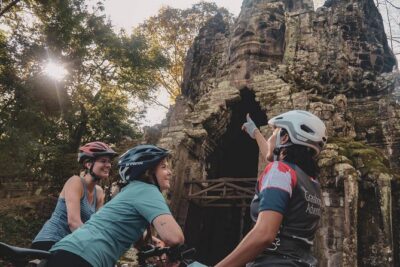
Private Full-Day Angkor Temple and Sunset Viewing with Lunch
Read our review →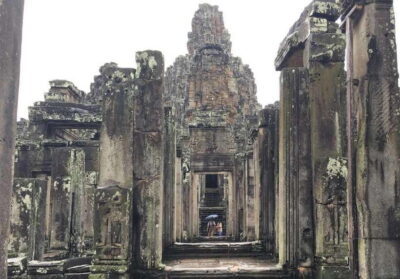
Private one-day tuktuk ‘small tour’ of the oldest Angkor temples
Read our review →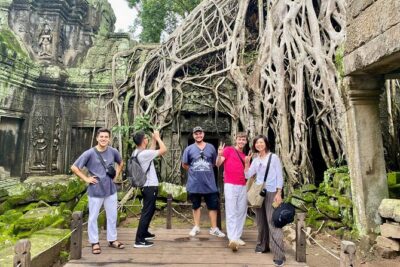
Explore Angkor Temple & Other – Private Vehicle with Tour Guided
Read our review →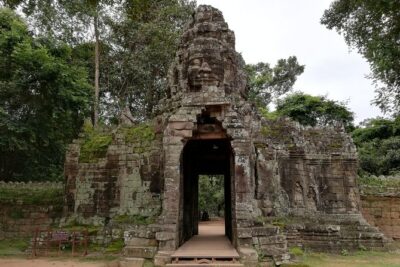
Angkor Wat Private Driver Tours to Angkor Wat Sunrise, Angkor Thom & Ta Prohm
Read our review →
Browse the lists this tour appears in