
Reviewed · BANTEAY SREI TOURS
Angkor Grand Circuit Tour & Banteay Srei
The best reason to choose this tour is simple: it takes you beyond Angkor Wat’s busiest sights and into smaller, quieter temples with very different moods. Preah Khan feels sprawling and maze-like, Neak Pean sits on an island, and Banteay Srei is a miniature masterpiece carved in pink sandstone.
I like the private format, since Mr. K can adjust the pace and point out what matters to your group. I also like the practical setup: hotel pickup, an air-conditioned vehicle, cold drinking water, and an English-speaking guide are all included. The main caution is cost planning. The $50 tour price does not include the required Angkor Pass, which adds $37 per person, and the advertised itinerary does not list Pre Rup even though the overview mentions it as a sunset option.
Key points at a glance
- Banteay Srei’s fine carvings: See unusually detailed three-dimensional work in pinkish sandstone at a temple built for Shiva.
- A quieter side of Angkor: The Grand Circuit reaches less-visited sites than the standard Small Circuit.
- Private touring with Mr. K: An English-speaking guide can tailor the day to your interests and explain life beyond the temple walls.
- Six contrasting temple stops: Move from the broad ruins of Preah Khan to the compact design of Ta Som and Banteay Samre.
- A full-day pace: The tour lasts about 6 to 8 hours, with the listed stops taking roughly eight hours in total.
- Budget for the Angkor Pass: The $50 fee covers the tour services, but not the $37 admission charge.
Why the Grand Circuit feels different
Angkor’s famous Small Circuit gives you the headline sights. The Grand Circuit asks for more time and rewards you with a quieter, more varied day. You still see major Khmer architecture, but the experience is less about checking off one enormous monument after another.
I like this route for a second day in Siem Reap. After seeing the best-known temples, you can pay closer attention to design, setting, and small details. The route also reaches farther from the central group, ending at Banteay Srei, about 25 kilometers northeast of the main Angkor temples.
This is a private activity, so only your group takes part. That matters at a site where your interests may not match those of a large bus group. You can ask Mr. K to spend more time on carvings, religious meaning, or the history of the surrounding area. The available feedback places strong emphasis on his attentive approach, local information, and ability to suggest which temples deserve more of your time.
The day is still a substantial outing. The six listed stops have suggested visit times of one hour at Preah Khan, Neak Pean, Ta Som, and Eastern Mebon, followed by two hours each at Banteay Samre and Banteay Srei. Add driving time, pickup, and short breaks, and the advertised 6 to 8 hours makes sense, though you should expect a fairly full day.
More Banteay Srei trips:
- Full-Day Banteay Srei & 4 Temples – Grand Tours Join-in Tour
★ 5.0 · 1,155 reviews - Siem Reap Tour: Angkor Wat Sunrise, Bayon, Ta Prohm, Banteay Srei
★ 5.0 · 931 reviews - 2-Day Angkor Wat With Small, Big Circuit and Banteay Srei Tour
★ 5.0 · 545 reviews
Preah Khan: broad ruins with room to wander
Preah Khan is the first stop and one of the most rewarding places on this route. Built in the 12th century by King Jayavarman VII in honor of his father, it sits northeast of Angkor Thom and west of the Jayatataka reservoir.
Give yourself the full hour if you can. Preah Khan is not a compact monument that reveals itself in one glance. Its long corridors, courtyards, and partly ruined structures create a sense of movement through a former religious complex.
The rough stone and tree growth give the temple a weathered character, but the appeal is not only visual. This is a place where a guide can help you understand how the different sections fit together. Mr. K’s role is especially useful here because the scale can make it hard to know what deserves attention.
The drawback is that the complex may feel confusing without context. If you prefer a quick, polished photo stop, Preah Khan can seem sprawling. If you enjoy looking closely and walking through layered spaces, it is an excellent opening to the day.
Admission is not included in the tour price, and you need the Angkor Pass for the temple sites.
Neak Pean: a temple reached across the water
Neak Pean changes the rhythm completely. Instead of entering a large land-based enclosure, you approach an artificial island with a Buddhist temple at its center. The island sits in Jayatataka Baray, the reservoir associated with Preah Khan.
The route toward the island is part of the experience. Water and open space separate Neak Pean from the denser temple ruins, giving the stop a calmer feel. The design is unusual within the Angkor complex, and the one-hour visit is enough to appreciate its setting without turning the stop into a long walk.
I like Neak Pean because it offers contrast. After Preah Khan’s corridors and stone walls, this temple feels more open and symbolic. It is also a good place to listen to an explanation from your guide rather than simply move from one carved doorway to the next.
The available details list admission here as free, but the overall tour still requires the Angkor Pass. Treat the pass as your park admission for the day.
Ta Som: a small temple with a memorable gate
Ta Som was built at the end of the 12th century for King Jayavarman VII and lies northeast of Angkor Thom, east of Neak Pean. It is smaller than Preah Khan, which makes it easier to understand at a glance.
Its most memorable feature is the tree-entwined gate. Roots and stone meet in a way that gives the entrance a strong sense of age, but the temple is more than a single photo point. Walk slowly enough to notice the scale and the relationship between the gateway and the surrounding ruins.
One hour is a sensible amount of time here. You can examine the gate, pass through the temple remains, and hear the story behind the site without feeling rushed. Ta Som is also useful for comparison. After seeing a large 12th-century complex, you can see how a smaller plan creates a more intimate visit.
If you are hoping for a large monument with many chambers, Ta Som may feel brief. Its appeal comes from proportion, setting, and the striking tree growth rather than size.
A few more Siem Reap half-days to weigh up
- Angkor Wat Sunrise or Sunset Tour with Guide from Siem Reap
★ 5.0 · 12,109 reviews - Siem Reap: Angkor Wat: Small-Group Sunrise or Sunset Tour
★ 5.0 · 9,444 reviews - From Siem Reap: Kampong Phluk Floating Village Tour by Boat
★ 4.9 · 6,979 reviews - Sunset tour of Kampong Phluk stilts home village on the Tonle Sap
★ 5.0 · 4,865 reviews
Eastern Mebon: five towers above an old reservoir
Eastern Mebon is an earlier style of temple, built with five towers arranged like the numbers on a die atop a three-tiered base. It was surrounded by three enclosures and originally connected with the East Baray, a large reservoir.
The five-tower layout gives the temple a clear visual order. You can understand the central idea quickly, then spend your time looking at the raised platforms and details around the structure. This is a useful stop for anyone who wants to compare temple plans instead of treating every ruin as the same.
The one-hour visit keeps the pace moving. It also helps break up the day before the longer stops at Banteay Samre and Banteay Srei. Ask your guide to point out how the temple’s raised position related to the water system and religious design.
Eastern Mebon is less immediately dramatic than a temple wrapped in trees. Its value comes from its plan and historical setting, so it benefits from explanation. Without a guide, you might walk through quickly and miss why the five towers matter.
Banteay Samre: a strong, compact Hindu temple
Banteay Samre is scheduled for two hours, making it one of the day’s major stops. Located about 400 meters east of the East Baray, it was built in the early 12th century during the reigns of Suryavarman II and Yasovarman II.
The temple is Hindu, and its structure has a more enclosed, fortress-like quality than Neak Pean. The longer stop gives you time to examine the galleries and carved stone without treating the temple as a rushed add-on.
I value Banteay Samre because it sits between the better-known central temples and the more specialized Banteay Srei. It gives you another example of Khmer temple design before the final stop, and it makes the route feel like a study of changing forms rather than a simple list of monuments.
Two hours may feel generous if you are not interested in architectural details. If you like to photograph doorways, reliefs, and changing light on the stone, the time is useful. Your guide’s ability to adjust attention to your group is an advantage here.
Banteay Srei: the day’s finest small-scale detail
Banteay Srei is the reason many people choose this combination. Dedicated to Shiva and built in the 10th century, it is far smaller than the major Angkor temples, but its carvings are exceptionally intricate.
The stone has a soft pinkish tone, and the reliefs have a crisp, almost three-dimensional quality. Figures, patterns, and mythological scenes are packed into the surfaces with unusual care. The temple is often called the jewel of Khmer art or the Citadel of the Women, names linked to its delicate craftsmanship rather than its size.
Its origin is also unusual. Banteay Srei was not commissioned by a king, but by a Brahman courtier. That detail gives the site a different place in the story of Angkor and is exactly the kind of fact that helps the temple feel like more than a pretty final stop.
Plan on the full two hours. The carvings reward close looking, and the smaller scale makes details easier to notice than at a vast complex. I would save your most careful photography for here, since the fine stonework is the visual highlight of the day.
Banteay Srei is farther from the main temple group than the other listed stops. That extra distance adds driving time, but it is also why the visit feels distinct. You are not simply repeating the central Angkor experience.
The guide and vehicle make the long route easier
The tour includes hotel pickup and drop-off, an air-conditioned vehicle, cold drinking water, and an English-speaking guide. Those are practical inclusions, not decoration. Siem Reap can make temple touring tiring, and a cool vehicle between sites gives you a needed reset.
The private arrangement is especially helpful. The group does not have to follow strangers’ interests or wait for a large party at every stop. You can ask for more detail at Banteay Srei, move more quickly through a site that matters less to you, or focus on local culture beyond the monuments.
Mr. K is the named guide connected with this experience. The strongest praise centers on his informative and attentive manner, his knowledge of which temples deserve attention, and the way he talks about the area outside the park. That last point matters. Angkor is not an isolated collection of stones, and learning about Cambodia beyond the temple walls can make the day more meaningful.
Still, your booking information should confirm the guide assignment if having Mr. K specifically is important to you. The provided tour details name him in connection with the experience, but they do not promise that every departure will have him personally.
Price, Angkor Pass, and the real value
The tour costs $50 per person. The Angkor Pass costs another $37 per person, bringing the basic total to $87 each before any other personal spending.
At first glance, that is more than a simple tuk-tuk day. The value comes from the package: private participation, pickup and drop-off, air-conditioning, cold water, and an English-speaking guide. You are also covering a broad route that would be harder to manage if you had to arrange each stop yourself.
The price makes the most sense for a couple, family, or small group that wants a private day and some help interpreting the temples. Group discounts may improve the value for larger parties, though the exact discount is not specified.
The cost is less compelling if you only want transport and plan to read everything independently. In that case, you are paying for guiding and organization you may not use. I would choose this tour when the cultural explanation and flexible private format matter as much as getting from one temple to the next.
One itinerary detail to confirm before booking
The overview mentions Pre Rup as a sunset-view temple, but the six-stop schedule lists Preah Khan, Neak Pean, Ta Som, Eastern Mebon, Banteay Samre, and Banteay Srei. Pre Rup is not listed among those stops.
That does not mean it will never be offered, but you should ask before booking if sunset at Pre Rup is a priority. The published duration is already full, especially with two hours at both Banteay Samre and Banteay Srei. Adding another temple could require shortening a stop or extending the day.
This is the one detail I would clarify in advance. A clear plan will help you set realistic expectations about timing, especially if you want both Banteay Srei and a sunset visit.
Who should book this Angkor day
I would recommend this tour for you if you have already seen the main Angkor highlights or have enough time for a second temple day. It suits people who prefer quieter sites, detailed carvings, and a guide who can explain what they are seeing.
It is also a good fit for families and small private groups. The air-conditioned vehicle, cold water, and hotel service reduce the effort of organizing a long day, while the private format gives you more control over the pace.
You may want a different plan if this is your only day at Angkor and you have not yet seen Angkor Wat or Angkor Thom. The Grand Circuit is an excellent companion to those major sites, but it is not a substitute for them if your priority is the classic first visit.
Bring patience for the drive to Banteay Srei and allow the full 6 to 8 hours. The tour works best when you treat it as a day of contrasts: large and small temples, water and dry stone, broad corridors and fine carvings.
Should you book it?
Book this tour if you want a private, guide-led second day at Angkor and care about places beyond the standard route. Preah Khan, Ta Som, and Banteay Srei give the day real variety, while the included transport and water make the long circuit easier.
I would book it with two checks: confirm whether Pre Rup is actually included, and add the $37 Angkor Pass to your budget. If you are happy with those terms, this is a strong choice for a quieter and more detailed look at Cambodia’s temple complex, with Banteay Srei as the fitting final highlight.
FAQ
How long does the Angkor Grand Circuit and Banteay Srei tour last?
The experience lasts approximately 6 to 8 hours. The listed stops include four one-hour visits and two two-hour visits, so the day also allows time for transport and pickup.
What temples are included?
The scheduled stops are Preah Khan, Neak Pean, Ta Som, Eastern Mebon, Banteay Samre, and Banteay Srei.
Is Pre Rup included in the tour?
Pre Rup is mentioned in the overview as a sunset-view temple, but it is not included in the listed six-stop itinerary. Confirm this point with the provider before booking if you want to visit Pre Rup.
Is the Angkor Pass included?
No. The Angkor Pass costs $37 per person and is not included in the $50 tour price.
What does the tour price include?
The price includes an English-speaking guide, pickup and drop-off, an air-conditioned vehicle, and cold drinking water.
Is this a private tour?
Yes. Only your group participates in the activity.
Can I cancel for a full refund?
Yes, if you cancel at least 24 hours before the experience start time. Cancellations or changes made less than 24 hours in advance are not accepted for a refund.
New around Siem Reap
- Siem Reap Temple and Waterfall 3-Day Tour★ 4.5 · 3 reviews
- Siem Reap: Guided Day Trip to Local Village & Cooking Class★ 5.0 · 3 reviews
- Savor the Countryside: Tours with Authentic Cooking Classes”★ 5.0 · 3 reviews
- Siem Reap Private Tour: Angkor Wat Sunrise And Banteay Srei★ 5.0 · 3 reviews
- Angkor Wat Sunset In Private and Small-In-Group★ 4.3 · 3 reviews
- Angkor Wat Sunrise TukTuk Tour★ 5.0 · 3 reviews
- Angkor Wat: Highlights and Sunrise with Spanish Guide★ 4.8 · 3 reviews
- Full Day to Banteay Srei, Kulen National Park and Beng Mealea★ 5.0 · 3 reviews
Banteay Srei Tours, compared.
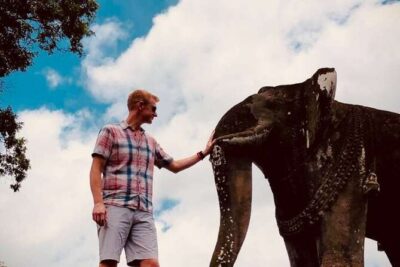
Full-Day Banteay Srei & 4 Temples – Grand Tours Join-in Tour
Read our review →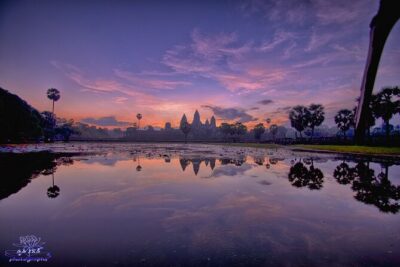
2-Day Angkor Wat With Small, Big Circuit and Banteay Srei Tour
Read our review →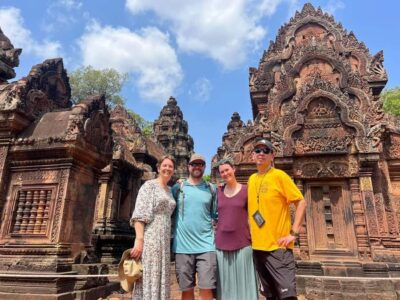
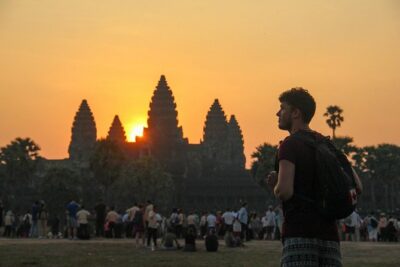
3-Days Discovery Of Angkor: Waterfalls,Floating Village and Banteay Srei temple
Read our review →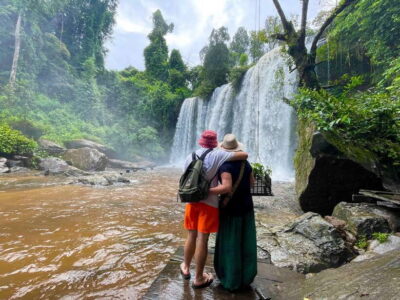
Banteay Srei, Kulen Waterfall & Beng Mealea Exploration
Read our review →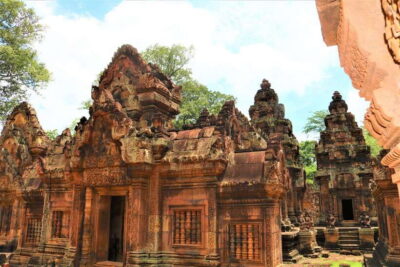
Kulen Waterfall, Banteay Srei, and Beng Mealea Tour
Read our review →
2-Day Angkor Wat Tour with Banteay Srei and Floating Village
Read our review →Browse the lists this tour appears in