
Reviewed · ANGKOR TEMPLE TOURS
Private Siem Reap 3 Day Tour Discover All Highlight Angkor Temple
Angkor Wat at sunrise is only the opening act here. This private three-day tour links the famous temples with the Roluos group, Tonle Sap, a floating village, working craft centers, and quieter monuments that are awkward to reach alone. Your guide and driver take care of the long hops between sites, leaving you to focus on stonework, stories, and shade.
I like the private vehicle and flexible format, especially for three full days in Cambodia’s heat. I also like the practical touches: cold water and cool towels are supplied throughout, and one review specifically praised Ree, the driver, for an air-conditioned, clean, safe Toyota Highlander. The main caution is the schedule. Several listed stop times look inaccurate, so confirm the daily order and pacing before you go.
Key points to know before booking
- Sunrise at Angkor Wat: Start early, see the temple in the morning, then return to your hotel for breakfast before continuing.
- A private Tonle Sap cruise: The boat trip to Kampong Phluk is included, giving you a look at homes and daily life around the lake.
- Three different temple days: Roluos comes first, Angkor Thom and Ta Prohm fill the second day, and Banteay Srei and the grand circuit finish the third.
- Comfort in the Cambodian heat: An air-conditioned private vehicle, bottled water, and cool fresh towels are included.
- Local craft and food stops: Satcha Cambodian Handicraft Center and a palm sugar producer add more than ruins to the plan.
- Budget beyond the tour price: The $253.65 per-person cost does not include the Angkor Pass, meals, or tips.
Why three private days work well in Siem Reap
Siem Reap’s temple zone is spread over a large area, and the monuments are not arranged in a tidy walking route. A private car matters here. You can move from the Roluos temples east of town to Tonle Sap, then return for Wat Bo and Satcha without spending your day arranging separate rides.
The private setup also helps with the rhythm of the visit. You can spend longer at a carved doorway that catches your eye, take a break when the heat builds, or keep moving if a smaller monument does not hold your attention. The tour is not a fixed group outing, so the only people participating are your party.
An English-speaking licensed guide is included, along with hotel pickup and drop-off in Siem Reap. The vehicle is air-conditioned, and water and cool towels are available across all three days. Those details may sound minor at breakfast, but after walking temple steps in the sun, they become part of the tour’s real value.
At $253.65 per person, this is not a bare-bones sightseeing transfer. You are paying for a private guide, private transport, a three-day plan, hotel service, and the floating-village cruise. The Angkor Pass is extra, as are food and tips. Lunches can be bought at local restaurants, with dishes listed at roughly $3 to $10, and both vegetarian and non-vegetarian choices are available.
More Angkor Temple Tours in Siem Reap:
- Siem Reap Tour: Angkor Wat Sunrise, Bayon, Ta Prohm, Banteay Srei
★ 5.0 · 931 reviews - Siem Reap: Bike the Angkor Temples – Full-Day 30km Tour
★ 5.0 · 463 reviews - Angkor Wat one Day Private Tour for All Highlight Angkor Temples
★ 5.0 · 199 reviews
Day one: Roluos temples, Tonle Sap, and Siem Reap culture
The first morning begins away from Angkor Wat’s headline monuments at Preah Ko, a Shiva temple in the old Hariharalaya capital, now known as Roluos. It is a compact stop, scheduled for about 30 minutes, and works well as an introduction to early Khmer temple design.
Next comes Bakong, the largest and most important stop in this group. Built in 881 under Indravarman I, it helped establish the temple-pyramid form that appears again and again around Angkor. Give yourself the full hour here. The scale and structure make more sense when your guide explains how Bakong influenced later state temples.
Lolei is smaller and less visually striking than Preah Ko and Bakong, but it completes the Roluos trio. The planned visit is about 30 minutes. I would treat this as a context stop rather than a major photographic highlight. Seeing the three temples together helps you understand how Khmer architecture developed before the grand Angkor period.
The day then shifts from stone to water at Kampong Phluk, a community on Tonle Sap. The included private cruise is scheduled for three hours. You will see a way of life shaped by the lake, where families have lived for several generations and fishing supports a large part of Cambodia’s population.
This is one of the most useful parts of the tour because it gives the temple story a human setting. Cambodia is not only ancient towers and carved gods. Tonle Sap still supports millions of people, and its changing water levels shape homes, transport, work, and food.
The listing also includes Tonle Sap Lake as a separate 30-minute stop. Since the Kampong Phluk visit already takes place on the lake, ask your guide how these two portions fit together. The exact arrangement may depend on local conditions and the day’s timing.
Back in town, Wat Bo provides a change of scale. This is one of Siem Reap’s older temples and is known for late 19th-century wall paintings. It is scheduled for an hour, making it a good place to look at more recent religious art after a day of much older monuments.
Satcha Cambodian Handicraft Center follows. The center works with local artisans and combines traditional skills with contemporary design. You can see how Cambodian craft is being presented today, rather than treating local culture as something frozen in the past.
Day two: sunrise, Angkor Thom, and the jungle temple
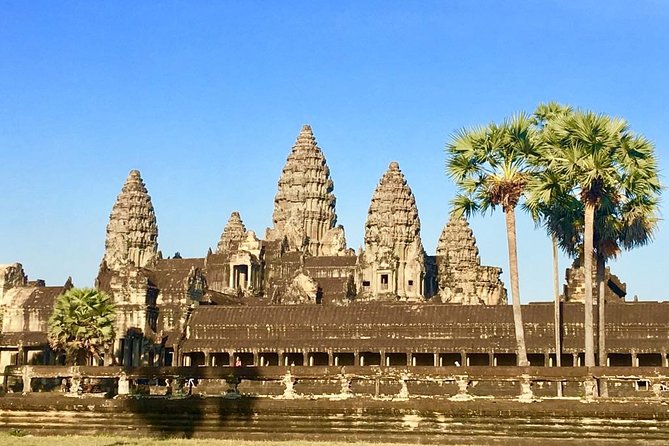
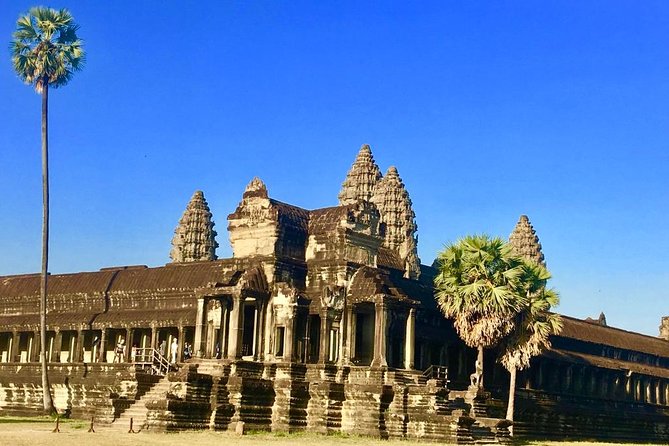
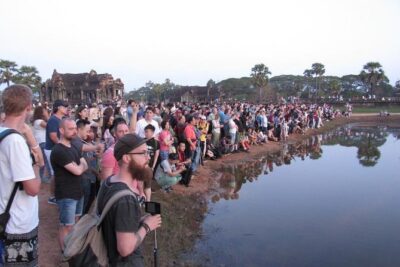
Day two starts early at Angkor Wat. You watch sunrise, explore the temple grounds for about three hours, and then return to your hotel for breakfast before setting out again. That breakfast break is a sensible touch. Angkor Wat is much easier to appreciate when you are not trying to push through the entire day without food or rest.
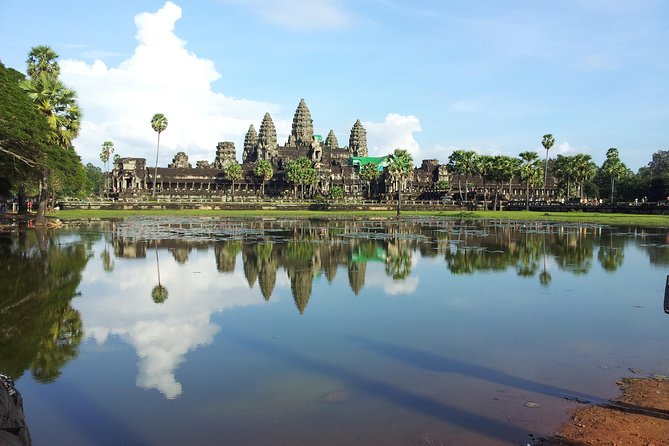
Angkor Wat is Cambodia’s national symbol, but its fame can make it easy to rush. Use the guide to notice the long galleries, religious changes, and scale of the complex. The admission fee is not included, and your guide assists with buying the Angkor Pass at the park entrance.
After breakfast, the route enters Angkor Thom through the South Gate. The gate, lined with sculpted figures, is one of the most recognizable approaches in the park. The visit is only about 30 minutes, but the drive through the gate gives you a clear sense that you are entering a planned royal city rather than simply another temple compound.
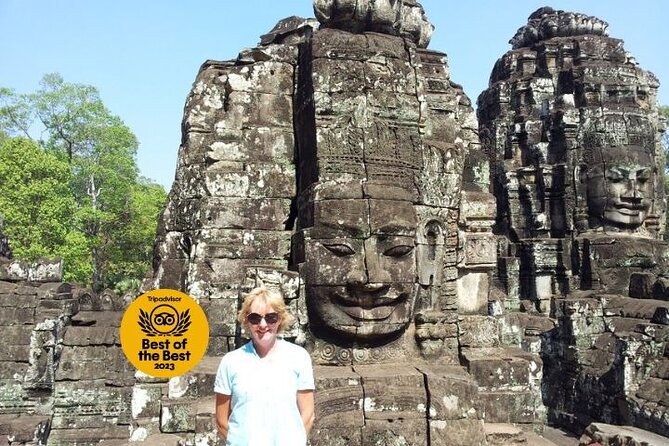
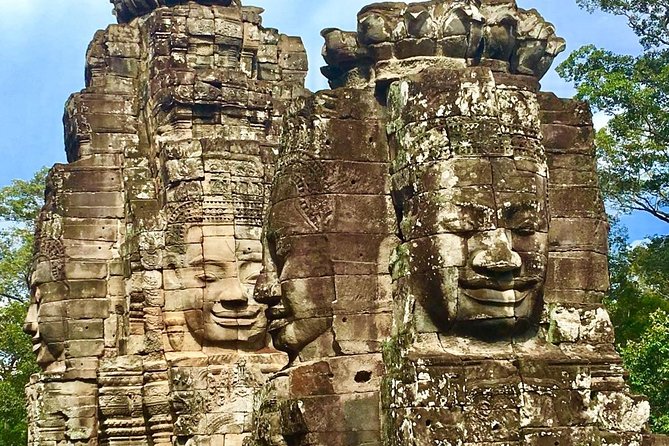
The Bayon is the major stop inside Angkor Thom. Its many serene stone faces are among the best-known images in Cambodia. Plan on an hour, and use that time to look closely at how the faces appear from different angles as you move through the galleries.
Baphuon, completed around 1060, served as a state temple dedicated to Shiva. Phimeanakas, built and altered by several kings, is more restrained and is largely made of laterite. Together, these sites show that Angkor Thom was a working royal center with layers of construction, not a single-period monument.
The Terraces of the Elephants and the Leper King sit along the old Royal Square. The Elephant Terrace is a long platform and ceremonial wall, while the Leper King Terrace is valued for its detailed carvings. Each is scheduled for 45 minutes, enough time for your guide to point out details that can be easy to miss at ground level.
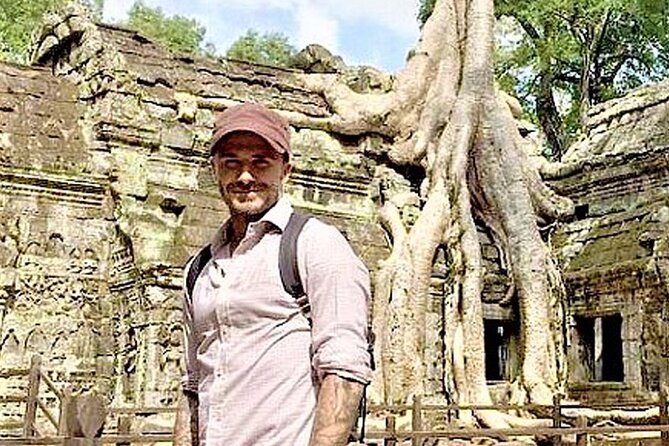
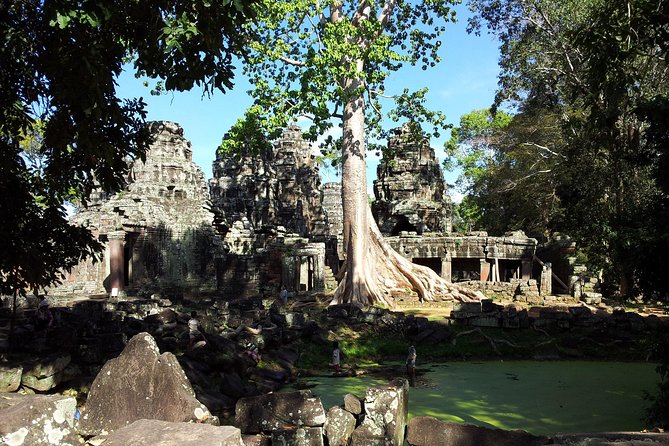
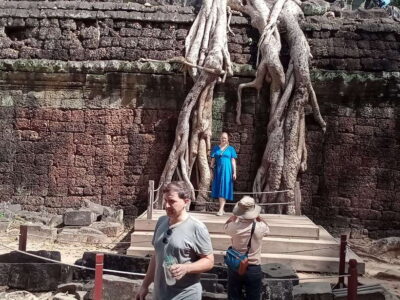
Ta Prohm is the afternoon crowd-pleaser, and for good reason. Known as the jungle temple, it has enormous trees and roots growing around sections of the structure. It is scheduled for an hour. Expect a more enclosed, atmospheric visit than at Angkor Wat, though the popularity of the site means your guide’s timing can make a difference.
Banteay Kdei and Ta Nei round out the day. Banteay Kdei is a large Buddhist temple associated with Jayavarman VII, and Ta Nei is a smaller late 12th-century temple dedicated to the Buddha. Ta Nei receives about 40 minutes and offers a quieter finish than the better-known monuments.
One timing note deserves attention. Banteay Kdei is shown with a seven-and-a-half-hour duration, which cannot sensibly be a normal stop alongside every other day-two site. Treat that figure as a likely scheduling error and ask for the actual plan before booking. A private tour should allow adjustment, but you still want to know how much time is intended at each temple.
Day three: fine carvings and the outer temple circuit
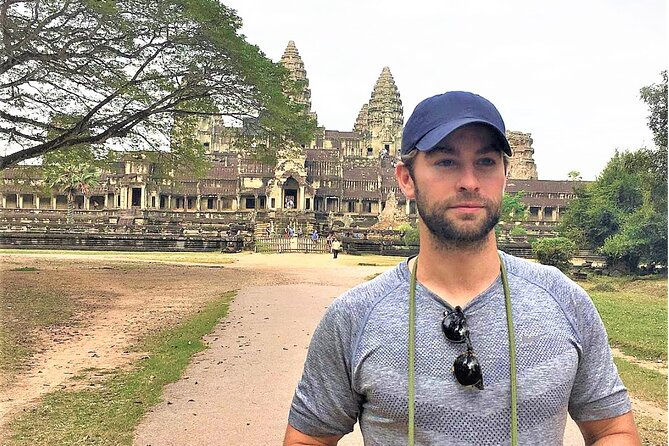
Banteay Srei is the star of the third day. Located farther from the central Angkor group, it is celebrated for its fine pinkish sandstone carvings and smaller scale. The scheduled visit is two hours, which gives you time to study the details rather than simply walk around the walls.
The temple is often singled out as one of Cambodia’s most beautiful, but the appeal is not just size or fame. Banteay Srei rewards close looking. Doorways, lintels, and figures carry a level of detail that can be harder to appreciate at the larger complexes.
Banteay Samre follows, with about an hour planned. Built during the 12th century, it is a Hindu temple with a more enclosed, fortress-like feel. Because it receives fewer headlines than Angkor Wat or Ta Prohm, the stop helps keep the third day from becoming a repeat of the central circuit.
The palm sugar producer visit adds a practical local note. You can see the product being made and stop near the burning stove to understand how it is produced and priced. This is also a shopping stop, so set your own limits. It is useful if you want a small Cambodian food gift, but it will feel less important if your priority is temple archaeology.
The afternoon continues through the grand circuit with Preah Khan, Neak Pean, Pre Rup, and East Mebon. Preah Khan was dedicated in 1191 to the father of Jayavarman VII and is a large complex of corridors, courtyards, and carved stone. The listed two-minute duration is clearly too short for a meaningful visit, so confirm the intended time.
Neak Pean is unlike the other temples on this route. It was built on an artificial island in a large reservoir, with a layout connected to water and healing. The scheduled hour gives you time to appreciate the design rather than treating it as a quick roadside stop.
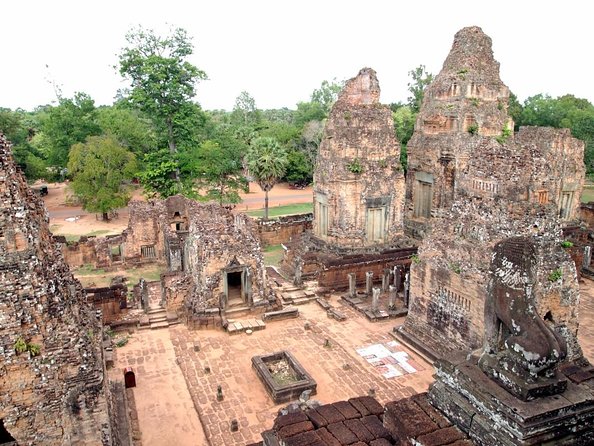
Pre Rup is a tall temple mountain founded in 961. Its upper levels give the monument a strong vertical shape, and the hour planned here should suit anyone who enjoys architectural form and old brickwork.
East Mebon was also built on an artificial island, this time in the East Baray, a reservoir that is now dry. The 50-minute visit provides a final look at how water engineering and religious architecture were linked at Angkor.
The day-three schedule also lists the palm sugar stop as one day and six hours. That is plainly not a practical stop length within a three-day tour. Ask the operator for corrected timing for both the sugar visit and Preah Khan. This is the most important planning issue in the supplied schedule.
A few more Siem Reap half-days to weigh up
- From Siem Reap: Angkor Wat and Floating Village 3-Day Trip
★ 5.0 · 100 reviews - 3-Day Angkor Wat with All Interesting Major Temples, Banteay Srei & Beng Mealea
★ 5.0 · 70 reviews - 3-Day Angkor Wat & All Interesting Major Temples & Kulen Mount Waterfall
★ 5.0 · 63 reviews - 3 Days Siem Reap Explorer – Small Group
★ 5.0 · 50 reviews
What the tour does especially well
The strongest feature is the range. Across three days, you move from early Roluos temples to the peak of Angkor architecture, then to later Buddhist sites, a lake community, contemporary handicrafts, and local food production.
The driver service also deserves attention. Ree is identified as the private driver in one account, with an air-conditioned Toyota Highlander described as clean, safe, and in excellent condition. A named driver is not guaranteed for every booking, but you can request confirmation if that matters to you.
The tour also earns its price through convenience. Hotel pickup and drop-off, private transport, a licensed English-speaking guide, water, towels, and a private boat mean fewer small arrangements to make on your own. The tradeoff is that admission, meals, and tips remain outside the quoted price.
Who should book it
I would choose this for a first visit to Siem Reap if you want the major temples but also want Tonle Sap, Roluos, Banteay Srei, craft work, and a palm sugar stop. It suits couples, families, and small groups who value control over pace and do not want to share a vehicle.
It is less suitable if you prefer slow, unstructured temple visits. The plan covers a lot, and day two in particular is full. You should also be comfortable with early starts, walking around large temple grounds, and climbing some temple steps.
Most people can participate, and the tour is near public transportation, though the included hotel service makes that less important. Confirmation is provided at booking, and free cancellation is available up to 24 hours before the start time. Changes or cancellations inside that window are not accepted for a refund.
Should you book this three-day Angkor tour?
Book it if you want a broad, well-supported introduction to Siem Reap and value a private car, guide, and flexible pace. The combination of Angkor Wat sunrise, Bayon, Ta Prohm, Banteay Srei, Tonle Sap, and the older Roluos group gives you a fuller picture than a temple-only plan.
Before paying, ask for a corrected timetable, especially for Banteay Kdei, Preah Khan, and the palm sugar stop. If the operator confirms a sensible schedule, $253.65 per person is a fair package price for private service over three days, though you must budget separately for the Angkor Pass, lunches, and tips.
FAQ
Is hotel pickup and drop-off included?
Yes. Private pickup and drop-off are included, and you need to provide your Siem Reap hotel name for the pickup.
Is the Angkor Pass included in the price?
No. The Angkor Pass is not included. Your guide will assist you with purchasing it at the entrance to Angkor Park.
Is this a private tour?
Yes. Only your group participates in the tour, with private transfers by air-conditioned vehicle.
Is a guide included?
Yes. A professional English-speaking licensed tour guide is included.
Is the Tonle Sap boat trip included?
Yes. A private cruise to visit the floating village at Tonle Sap Lake is included, with Kampong Phluk listed as the main village visit.
Are meals included?
No. Meals are at your own expense. Local restaurant dishes are listed at about $3 to $10, with vegetarian and non-vegetarian options.
What is the cancellation policy?
You can cancel at least 24 hours before the local start time for a full refund. Cancellations or changes made less than 24 hours before the start time are not accepted for a refund.
New around Siem Reap
- Kulen Mountain With Ticket included Plus Banteay Srei Temple Tour★ 5.0 · 7 reviews
- 2 Days Angkor temples with Sunrise & Sunset★ 5.0 · 7 reviews
- Private Siem Reap Airport Transfer to hotel in town★ 5.0 · 7 reviews
- 1-Day private Angkor Temple Tour with Sun Rise by Tuk Tuk from Siem Reap★ 4.5 · 7 reviews
- Siem Reap: Morning Cooking Class & Market Tour★ 5.0 · 7 reviews
- Kulen Mountain, Killing Fields and War Museum Tour★ 5.0 · 7 reviews
- War Museum, Killing Field, and APOPO Hero RATs Tour★ 5.0 · 7 reviews
- Half-Day: Silk Farm, Senteur Angkor, and Satcha Workshop★ 4.6 · 7 reviews
Angkor Temple Tours, compared.
1-Day private Angkor Temple Tour from Siem Reap
Read our review →
Private Full-Day Angkor Temple and Sunset Viewing with Lunch
Read our review →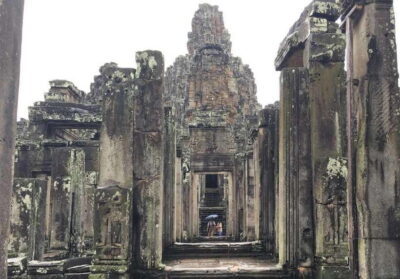
Private one-day tuktuk ‘small tour’ of the oldest Angkor temples
Read our review →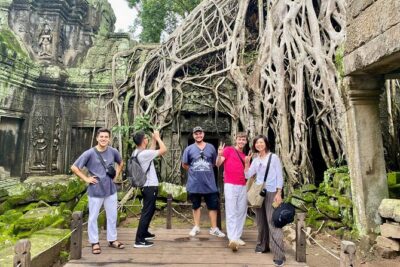
Explore Angkor Temple & Other – Private Vehicle with Tour Guided
Read our review →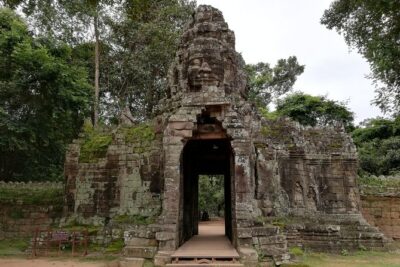
Angkor Wat Private Driver Tours to Angkor Wat Sunrise, Angkor Thom & Ta Prohm
Read our review →Browse the lists this tour appears in