
Reviewed · ANGKOR WAT TOURS
3-Day Angkor Wat & All Interesting Major Temples & Kulen Mount Waterfall
Angkor Wat is only the beginning here. This three-day private tour links the famous temple with quieter ruins, a waterfall swim at Phnom Kulen, the pink sandstone of Banteay Srei, and the early Khmer temples around Roluos. You get the big sights, but also enough smaller stops to see how wide the Angkor story really is.
I like the private vehicle and flexible pace, especially when a guide such as Chhay, Pal Saruon, Chandri, Em Somuch, or Small Mony can adjust the day to your interests. I also like the mix of temples and nature: Kulen waterfall breaks up three demanding days of stone stairs, courtyards, and long walks.
The catch is the pace. Day one can run from an 8:00am pickup through sunset, day two includes a long drive to Phnom Kulen, and day three begins at 5:00am. The advertised $248.50 price also excludes the Angkor pass, Kulen entrance, and meals, so your final cost will be higher.
Five things to know before you book
- The tour covers the major Angkor sights: Angkor Wat, Ta Prohm, Bayon, Baphuon, Phimeanakas, the terraces, and Phnom Bakheng all appear on day one.
- Phnom Kulen changes the rhythm: You spend about five hours in the national park, including the carved riverbed and waterfall area.
- A private guide makes the full schedule workable: You have your own licensed English-speaking guide and air-conditioned vehicle rather than joining a larger group.
- Sunrise and sunset require commitment: Day three starts at 5:00am, while Phnom Bakheng sunset involves a climb and possible waiting.
- The price needs careful calculation: Add $62 for the Angkor temples, $20 for Kulen Mountain, and about $5 per lunch, with meals otherwise paid from the menu.
Day one: Angkor Wat, Ta Prohm, and the heart of Angkor Thom
The first morning begins with hotel or guest-house pickup at 8:00am. The route includes a stop to buy the required temple pass, then heads to Angkor Wat for about two and a half hours.
Angkor Wat rewards a slow start. Its scale can be hard to grasp from photographs, so take time to notice the long approach, galleries, towers, and carved details. Your guide can place the temple within Cambodia’s Hindu past and explain how its religious use changed over time.
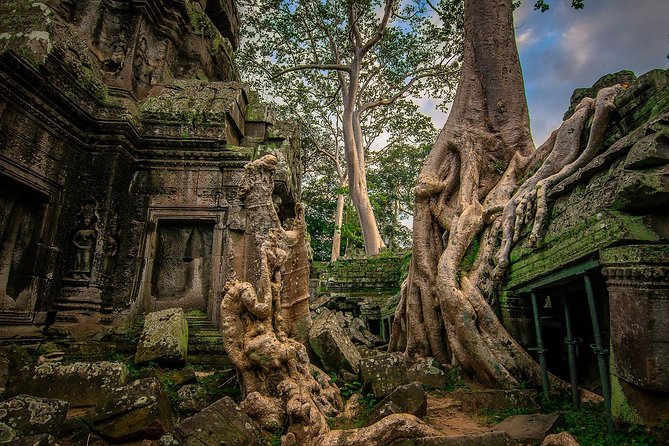
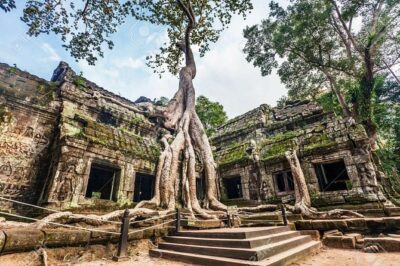
The temple is the day’s headline stop, but it is not the only major one. After Angkor Wat, you continue along the small circuit to Ta Prohm, spending about two hours among giant tree roots and partly restored stone buildings. This is the temple associated with the film Tomb Raider, though its appeal does not depend on the movie connection.
Ta Prohm can be crowded, and the roots attract plenty of attention. Still, the combination of trees and masonry gives it a different feel from Angkor Wat’s ordered symmetry. I would let your guide know if you want time for photographs, since the schedule has many more stops ahead.
Ta Nei is a useful contrast. It is smaller, less restored, and surrounded by large trees. The 45-minute visit is short, but this is one of the better places in the plan for a quieter temple experience. You may find the rougher condition more atmospheric than the polished routes at the best-known monuments.
More Angkor Wat Tours in Siem Reap:
- Angkor Wat Sunrise or Sunset Tour with Guide from Siem Reap
★ 5.0 · 12,109 reviews - Siem Reap: Angkor Wat: Small-Group Sunrise or Sunset Tour
★ 5.0 · 9,444 reviews - Siem Reap: Angkor Wat 2-Day Tour with Sunrise and Sunset
★ 4.9 · 4,429 reviews
Angkor Thom’s faces, royal terraces, and pyramid temple
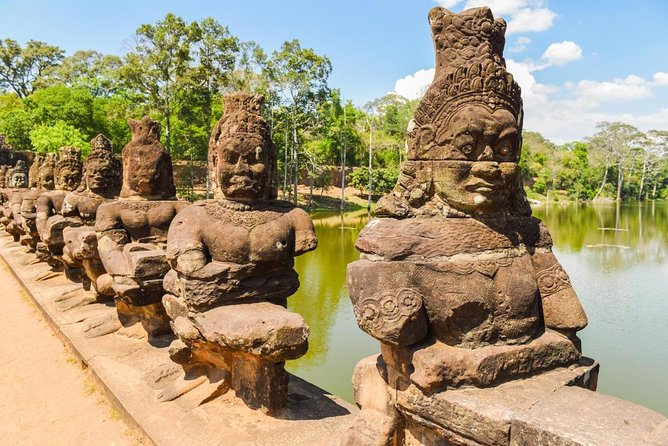
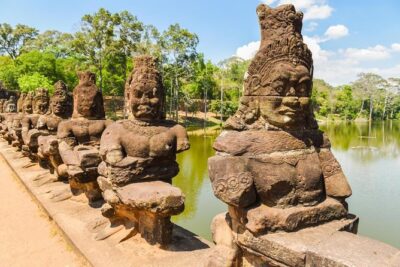
The eastern Victory Gate receives a quick ten-minute stop before you continue to Bayon. It is mainly a photograph and orientation point, so do not expect a long inspection.
Bayon sits at the center of Angkor Thom and is famous for its towers with serene carved faces. The itinerary describes 49 towers and 196 faces associated with Avalokitesvara, the Buddhist bodhisattva. Numbers can blur together after a full morning, but the important point is the change from Angkor Wat’s Hindu design to the Buddhist symbols of King Jayavarman VII’s period.
You have about 45 minutes at Bayon. That is enough for a focused visit, though you may wish you had longer if you enjoy close study of bas-reliefs. The private format helps here: you can ask your guide to explain a particular carving rather than simply follow a fixed group pace.
Next comes Baphuon, a Hindu temple built before Angkor Wat in the 11th century. The large reclining Buddha behind it dates to the 16th century, giving the site another layer of religious change. A 30-minute visit lets you see the main form without turning the stop into a long climb.
Phimeanakas is a smaller but important pyramid temple in the center of the old royal palace area. The visit lasts about 15 minutes and connects with the ancient Royal Enclosure Wall. Its value is less about a single spectacular view and more about understanding how temples, palace grounds, and royal power fit together.
The Terrace of the Elephants follows with a ten-minute stop. Look for the elephant carvings along the platform, once used by kings to watch returning armies. The nearby Terrace of the Leper King gets another ten minutes and completes this royal-center section.
Phnom Bakheng sunset and the limits of a full first day
The final stop is Phnom Bakheng, where you can climb the hill for a sunset view. The plan allows about two hours, partly because sunset access is limited and waiting may be necessary.
You can skip the sunset if you prefer not to wait. That flexibility matters. After Angkor Wat, Ta Prohm, Angkor Thom, and several smaller temples, many people will value an earlier dinner and rest more than another crowded viewpoint.
Day one is excellent for coverage, but it is not gentle. You should expect repeated walking, uneven temple surfaces, heat, and a long period on your feet. Comfortable shoes, water, and a willingness to shorten optional stops will make the day much better.
Day two: the long road to Phnom Kulen
Day two goes beyond Angkor Park to Phnom Kulen National Park, more than 60 kilometers away. About five hours are allocated to the park, so this is not a quick photo stop squeezed between temples.
The riverbed carved with lingas, known as the 1000 Lingas, gives the visit its religious focus. These carvings represent Shiva’s supreme essence and show how water, worship, and royal construction were connected in Khmer culture.
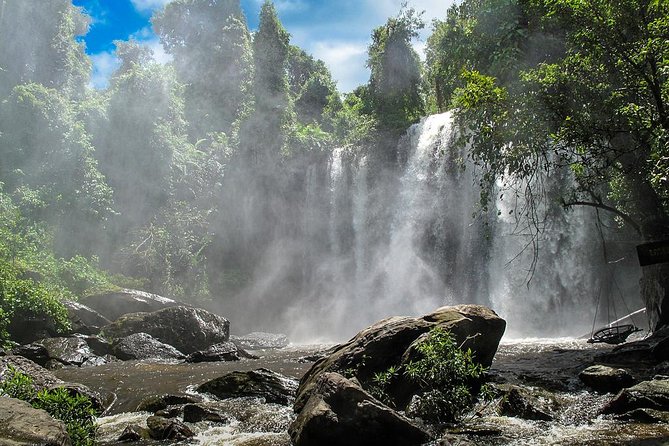
The park also includes a rock Reclining Buddha and a waterfall where you can swim. That swim is the day’s physical and sensory break after the stonework of Angkor. Bring suitable clothing and keep in mind that the included cool water and wet towels are useful, but do not replace everything you need for a day outdoors.
Because the park is far from Siem Reap, the drive takes a meaningful part of the day. I would choose this tour only if you want more than temple architecture. If your entire goal is to maximize ruins, the long road to Kulen reduces time elsewhere. If you value a waterfall, forest setting, and a different side of Cambodia, it is one of the plan’s strongest choices.
More Kulen Mountain Tours in Siem Reap:
- Kulen Waterfall Join-in Tour (local Picnic lunch)
★ 5.0 · 2,434 reviews - Kulen Mountain: Small-Group Tour and Picnic lunch
★ 4.9 · 1,802 reviews - Siem Reap: Kulen Mountain, Beng Mealea and Tonle Sap Tour
★ 5.0 · 1,483 reviews - Phnom Kulen Waterfall & the Sacred 1000 Lingas (with Lunch)
★ 4.8 · 974 reviews
Banteay Srei, Banteay Samre, and Pre Rup
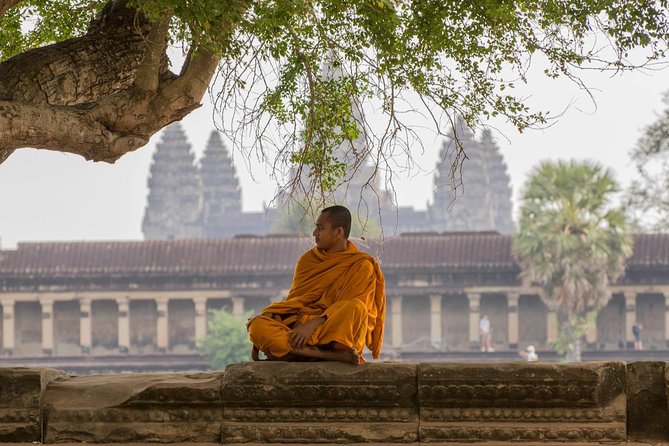
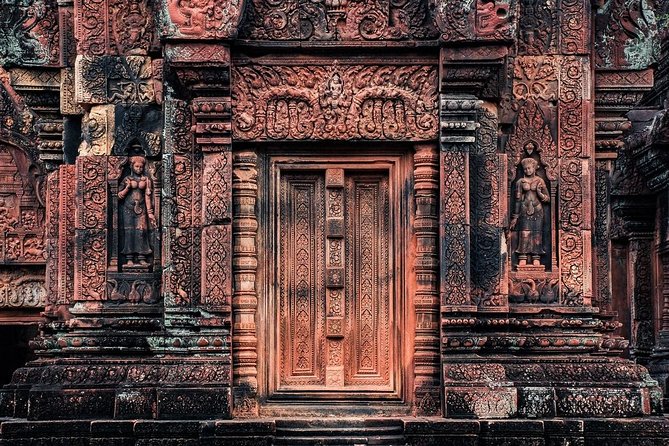
After Phnom Kulen, the route continues to Banteay Srei, often called the Ladies Temple. Built from pink sandstone in the latter half of the 10th century, it was dedicated mainly to Shiva and associated with the Hindu trinity.
Banteay Srei is smaller than Angkor Wat, but its carved decoration is unusually fine. The one-hour stop is well judged for seeing the temple and its detail without treating it as a quick roadside pause.
Banteay Samre follows for about 45 minutes. This 12th-century Hindu temple is often compared in design with Angkor Wat. It receives less attention than the headline monuments, which makes it a useful addition for someone who wants a broader sense of Khmer temple design.
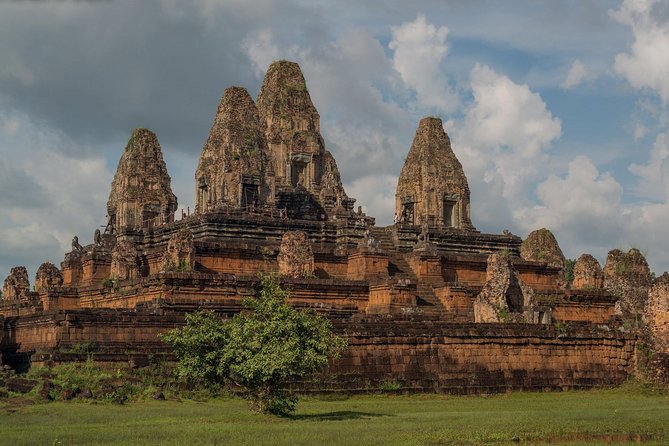
Pre Rup, built in the late 10th century and dedicated to Hindu gods, closes the day with a 30-minute visit. Its name is often translated as turning the body, and local belief connects the temple with funerals. You will probably appreciate the stop more after your guide explains the religious meaning rather than simply pointing out its three levels.
Day three: sunrise and the quieter eastern temples
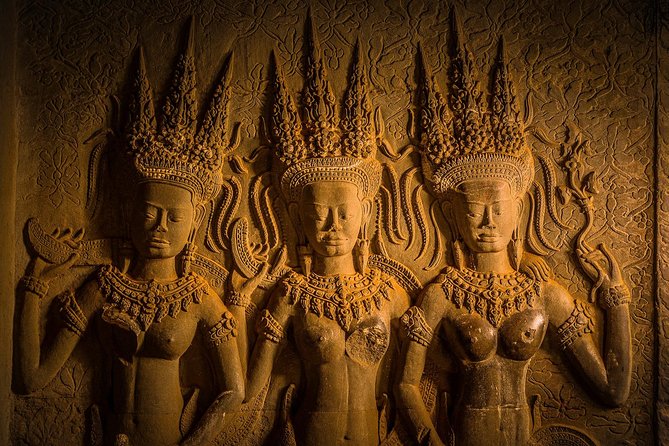
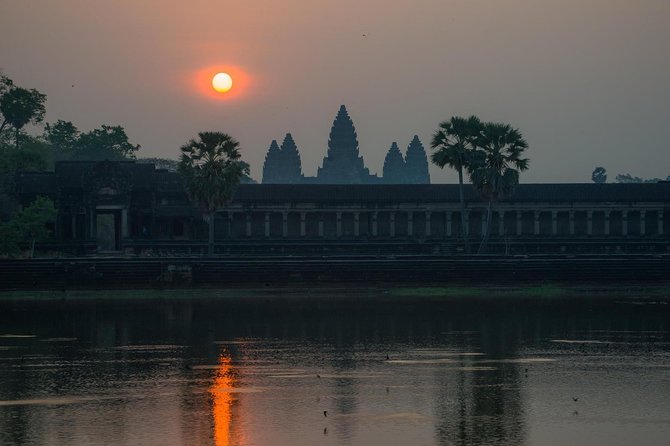
The final day begins at 5:00am for sunrise at Angkor Wat. You spend about one hour and 45 minutes at the temple area, including the early start and the wait for light.
Sunrise is beautiful when conditions cooperate, but it is not guaranteed to be dramatic. The practical point is that this is a real early morning, not a relaxed breakfast outing. Plan to rest after day two and decide in advance if the view matters enough to you.
After breakfast, you return to the temples for Preah Khan. Built by King Jayavarman VII and dedicated to his father, this vast Buddhist monastery gives you a strong sense of the king’s religious and building program. One hour is enough to trace a good section of its corridors and courtyards.
Neak Pean is a small island temple in the middle of the last baray, or reservoir, and receives about 30 minutes. Its setting makes it different from the enclosed pyramid temples, though water levels and access conditions can affect exactly what you see.
Ta Som, another small Buddhist temple east of Neak Pean, also gets 30 minutes. The scale is more manageable than Angkor Wat, and the visit helps keep day three from becoming only a parade of enormous monuments.
Eastern Mebon and the first Roluos temples
Eastern Mebon is a three-level temple mountain crowned by five towers. Large elephant statues mark its corners, giving you details to look for during the one-hour visit.
The route then reaches the Roluos group, an earlier cluster connected with the ancient city of Hariharalaya. Lolei is a small ninth-century Hindu temple and receives 15 minutes. Preah Ko, the first temple built in that former city, gets about 30 minutes.
Bakong is the largest temple in the Roluos group and the first sandstone temple mountain built by Khmer rulers. Its 45-minute stop is the natural centerpiece of this section. The earlier date and different setting help you see that Angkor was not created all at once around Angkor Wat.
Lunch is not included, but the schedule allows a break at a restaurant along the way. The supplied estimate is about $5 per person, depending on the menu. That is modest, but you should budget for lunch on all three days rather than treating the quoted tour price as all-inclusive.
Artisans Angkor and Siem Reap’s Old Market
The last day can finish with Artisans Angkor, a working showcase for Cambodian craft skills. You may see products and techniques connected with stone carving, wood carving, lacquering, gilding, and silk processing.
This stop adds a useful modern connection to the ancient sites. You can also skip it if your priority is temple time, and the same applies to Psar Chaa, the Old Market in central Siem Reap. The market is a simple way to end with local shopping and city life rather than another ruin.
What the $248.50 price really covers
At $248.50 per person, this is not the cheapest way to see Angkor, but it includes a private air-conditioned vehicle, a driver, a licensed English-speaking guide, hotel pickup and return, parking fees, road tolls, drinking water, and wet towels.
The important extra costs are clear:
- Angkor Wat and the other temples: $62 per person
- Phnom Kulen entrance: $20 per person
- Lunches: about $5 per person, depending on the menu
That brings the known cost to $330.50 per person before meals. A group discount may improve the value for a larger party, but the exact discount is not provided.
For a private three-day arrangement with substantial driving and a guide throughout, the cost can make sense if you want structure and personal explanations. It is less attractive if you plan to see only Angkor Wat and a few nearby temples. The value comes from the range: remote Kulen, the Roluos group, sunrise, sunset, and the ability to adjust the pace.
Several named guides connected with this experience include Chhay, Pal Saruon, Chandri, Em Somuch, and Small Mony. Guide assignments can vary, so you should not assume a particular person unless the operator confirms it. The strongest praise centers on clear temple explanations, help finding good photo spots, flexibility, and patient drivers.
Who will like this private temple circuit
I would recommend it to first-time visitors who want Cambodia’s main temple sights explained rather than simply photographed. It also suits couples, families, and small private groups that prefer their own vehicle and the option to skip sunset, Artisans Angkor, or the Old Market.
It is a good fit for people who want variety. You get Hindu and Buddhist monuments, royal terraces, carved riverbeds, a waterfall swim, old temple groups, traditional crafts, and a city market.
I would hesitate if you dislike early mornings, long drives, repeated temple walking, or tightly packed sightseeing. The program is adjustable, but it still covers a great deal. A private tour gives you control, not unlimited time or unlimited energy.
Free cancellation is available up to 24 hours before the start time. Changes or cancellations made less than 24 hours before departure are not accepted for a refund.
Should you book this Angkor and Kulen tour?
Book it if you want a broad, guided introduction to Siem Reap in three days and appreciate having transport, a driver, and temple explanations arranged for you. The best parts are the range of sites, the quieter Ta Nei and Roluos temples, and the break at Phnom Kulen waterfall.
Before paying, add the $62 Angkor pass, $20 Kulen fee, and meal money to your budget. Also ask yourself if you are ready for a 5:00am sunrise, a possible Phnom Bakheng wait, and a long day one. If the answer is yes, this is a strong private option for seeing far more than Angkor Wat alone.
FAQ
How long is the tour?
The experience lasts approximately three days.
Is hotel pickup included?
Yes. Pickup is offered from your hotel or guest house, and the vehicle returns you to your accommodation at the end of the day.
Is this a private tour?
Yes. Only your group participates in the private activity.
What transport is provided?
A private air-conditioned vehicle with a driver is included. Parking fees and road tolls are also covered.
Are the temple entrance fees included?
No. The Angkor Wat and temple admission fee is listed as $62 per person, and the Phnom Kulen entrance fee is $20 per person.
Are meals included?
No. Lunch depends on the menu, with an estimated cost of $5 per person.
Can I cancel for a full refund?
Yes, if you cancel at least 24 hours before the experience start time. Cancellations or changes made less than 24 hours before the start time are not accepted for a refund.
More 3-Day Experiences in Siem Reap
- From Siem Reap: Angkor Wat and Floating Village 3-Day Trip
★ 5.0 · 100 reviews - 3-Day Angkor Wat with All Interesting Major Temples, Banteay Srei & Beng Mealea
★ 5.0 · 70 reviews - 3 Days Siem Reap Explorer – Small Group
★ 5.0 · 50 reviews - Best of Siem Reap 3-Day Private Tour to Angkor Wat & Tonle Sap
★ 5.0 · 47 reviews
More Waterfall Tours in Siem Reap
- Guided Small-Group Tour in Kulen Mountain Park Waterfall
★ 5.0 · 480 reviews - Kulen Mountain Waterfall Tour with Picnic Lunch from Siem Reap
★ 5.0 · 238 reviews - Kulen Waterfall & 1000 Linga River Small-Group Tours
★ 5.0 · 234 reviews - 3-Days Discovery Of Angkor: Waterfalls,Floating Village and Banteay Srei temple
★ 5.0 · 214 reviews
New around Siem Reap
- Kulen Mountain With Ticket included Plus Banteay Srei Temple Tour★ 5.0 · 7 reviews
- Private Siem Reap Airport Transfer to hotel in town★ 5.0 · 7 reviews
- 2 Days Angkor temples with Sunrise & Sunset★ 5.0 · 7 reviews
- 1-Day private Angkor Temple Tour with Sun Rise by Tuk Tuk from Siem Reap★ 4.5 · 7 reviews
- Siem Reap: Morning Cooking Class & Market Tour★ 5.0 · 7 reviews
- Kulen Mountain, Killing Fields and War Museum Tour★ 5.0 · 7 reviews
- War Museum, Killing Field, and APOPO Hero RATs Tour★ 5.0 · 7 reviews
- Half-Day: Silk Farm, Senteur Angkor, and Satcha Workshop★ 4.6 · 7 reviews
Angkor Wat Tours, compared.
Angkor Wat Sunrise or Sunset Tour with Guide from Siem Reap
Read our review →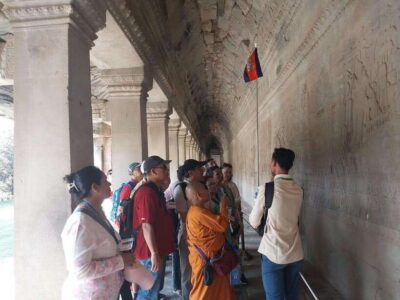
Angkor Wat: Small-Group Sunrise or Sunset Tour
Read our review →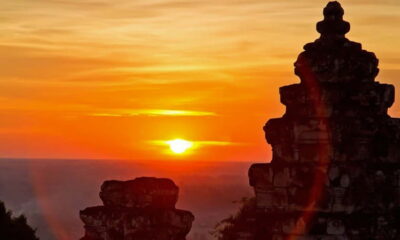
Angkor Wat Sunrise tour with Small – Group and Guide tours
Read our review →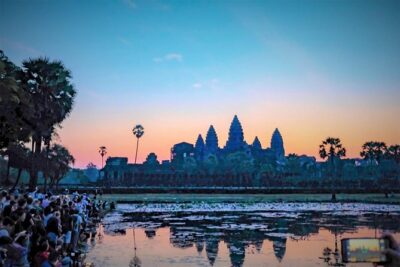
Angkor Wat Highlights and Sunrise Guided Tour from Siem Reap
Read our review →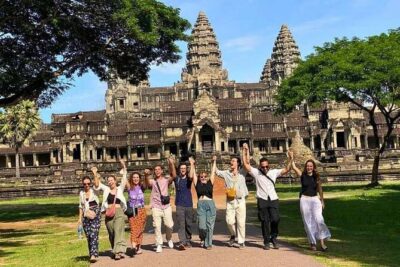
Angkor Wat Sunset Small Group Tour with Lunch Included
Read our review →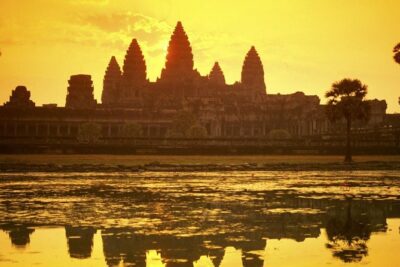
Full-Day Angkor Wat Sunrise Private Tour with Guide from Siem Reap
Read our review →
Angkor Wat Sunrise & 3 Main Temples with Breakfast – Small Group
Read our review →Browse the lists this tour appears in