
Reviewed · ANGKOR TEMPLE TOURS
Two Day Angkor Temples Tours
Angkor’s temples are not a one-monument attraction. This two-day tour gives you a thoughtful sweep of the complex, from the delicate pink sandstone carvings at Banteay Srei to the tree-covered ruins of Ta Prohm and the vast scale of Angkor Wat. The private format also lets your guide adjust the pace instead of marching you from one site to the next.
I like the local guiding and the well-planned mix of famous temples and quieter sites. Guides including Borey Hang, Mr. Kim, Mr. Bunleat, and Kimhoeun explain Hindu and Buddhist ideas alongside Cambodian history, while also helping with photographs. I also like the air-conditioned vehicle, a welcome comfort in Siem Reap’s heat.
The main consideration is cost beyond the advertised $102.57. Temple admission is not included, and GST is also excluded, so your final expense will be higher. The schedule is full, and several stops involve walking over uneven stone and climbing temple steps.
Key points at a glance
- Banteay Srei opens with fine pink sandstone carving, including some of the most detailed work in the Angkor region.
- The private format keeps the tour flexible, with only your group taking part.
- Preah Khan, Neak Pean, Ta Som, Eastern Mebon, and Pre Rup add variety beyond the usual Angkor Wat circuit.
- Borey Hang and the other named guides bring strong cultural context, including Hindu and Buddhist traditions.
- Photography help is part of the guiding style, useful at Angkor Wat, Ta Prohm, and the temple mountains.
- The $102.57 price covers an air-conditioned vehicle and guiding, but not temple tickets or GST.
Why two days works well at Angkor
Angkor is best approached as a collection of distinct monuments, not as one huge archaeological stop. Each temple has its own plan, period, religious purpose, and mood. In two days, you can see the major names while also getting to several sites that are often left out of a rushed first visit.
This tour divides the experience sensibly. The first day focuses on Banteay Srei and the eastern and northern temples, including Preah Khan and Pre Rup. The second day is reserved for the heavy hitters: Angkor Wat, Phnom Bakheng, Angkor Thom, and Ta Prohm.
That division matters. You get a strong opening day of smaller and medium-sized temples, then a second day with the monuments that usually define a first visit to Angkor. I would still expect a busy schedule. The listed stops add up to several hours of temple time before driving, breaks, and transitions are counted.
Because this is a private activity, you are not sharing the vehicle or guide with strangers. That is particularly useful if you want more explanation at one temple, need a slower pace, or care about stopping at good photo positions. Guides have also adjusted plans around a group’s interests, so you have more room to shape the day than on a fixed coach outing.
More Angkor Temple Tours in Siem Reap:
- Siem Reap Tour: Angkor Wat Sunrise, Bayon, Ta Prohm, Banteay Srei
★ 5.0 · 931 reviews - Siem Reap: Bike the Angkor Temples – Full-Day 30km Tour
★ 5.0 · 463 reviews - Angkor Wat one Day Private Tour for All Highlight Angkor Temples
★ 5.0 · 199 reviews
Day one: Banteay Srei and the eastern temples
Banteay Srei and the finest small-scale carving
Banteay Srei is about detail rather than size. Built in the 10th century and dedicated to Shiva, this Hindu temple is cut from warm pinkish stone. Its carved doorways, lintels, and decorative figures reward close attention, so your guide’s explanation can make a real difference here.
You have about an hour at the temple. That is enough for a good look, though anyone who enjoys photographing carvings may want every available minute. Banteay Srei is one of the day’s essential stops, but admission is not included in the tour price.
Banteay Samre, a quieter 12th-century companion
Banteay Samre dates from the 12th century, around the period of Angkor Wat, and was dedicated to Vishnu. Its preserved structure gives you a useful comparison with the larger monuments you see later.
The one-hour visit works well after Banteay Srei. The temple is substantial without being overwhelming, and its more contained layout makes it easier to understand how galleries, towers, and entrance areas fit together. Your guide can help connect the design to the religious ideas used across Angkor.
A few more Siem Reap half-days to weigh up
- Siem Reap: Angkor Wat 2-Day Tour with Sunrise and Sunset
★ 4.9 · 4,429 reviews - Angkor 2-Day Sunset & Sunrise Small-Group Tour
★ 5.0 · 2,567 reviews - 2 Days Exclusive Temple Highlights with Sunset and Sunrise Tour
★ 5.0 · 1,157 reviews - Siem Reap: Angkor Sunrise 1- or 2-Day Guided Temples Tour
★ 4.9 · 1,132 reviews
Preah Khan, long corridors and carved stone
Preah Khan means Sacred Sword and is one of Angkor’s largest temple complexes. I especially like its sense of discovery. You move through vaulted corridors, carved stone, and sections where lichen has softened the surface. It has some of Ta Prohm’s atmospheric quality, but the setting feels less dominated by the famous tree roots.
The planned hour gives you enough time to see the main character of the complex without trying to inspect every passage. Ask your guide to point out how the temple functions as a large, layered site rather than treating it as a single building.
Neak Pean, a small temple on an artificial island
Neak Pean is a sharp change of scale. This Buddhist temple was built by Jayavarman VII on an artificial island in the man-made lake known as Jayatataka, or the North Baray. The setting is part of the attraction, and the short 40-minute stop keeps the day moving.
This is not a place where you spend hours climbing or exploring interiors. Instead, you get a compact architectural pause, a look at the water setting, and another example of Jayavarman VII’s Buddhist building program. The approach and surrounding area still require walking, so comfortable shoes matter.
Ta Som, a quick stop with a memorable gate
Ta Som is a small late 12th-century temple built by Jayavarman VII. It is described as a satellite temple of Preah Khan, and the connection is easy to appreciate when you see its modest scale and related period.
The schedule allows 30 minutes, which is enough for a quick circuit and photographs. The eastern gate, with its large carved head, is the feature to watch for. I would not expect the same extended exploration possible at Preah Khan, but Ta Som provides a pleasant change from the larger complexes.
Eastern Mebon and Pre Rup, two temple mountains
Eastern Mebon was built by Rajendravarman II in the 10th century. It once sat on an island in the Eastern Baray, but the reservoir is now dry, leaving the temple on land. That change gives you a useful glimpse of how water management shaped Angkor’s religious and urban life.
You have about 50 minutes here. The temple’s position and form are as important as its carvings, so listen for the connection between the former reservoir and the monument.
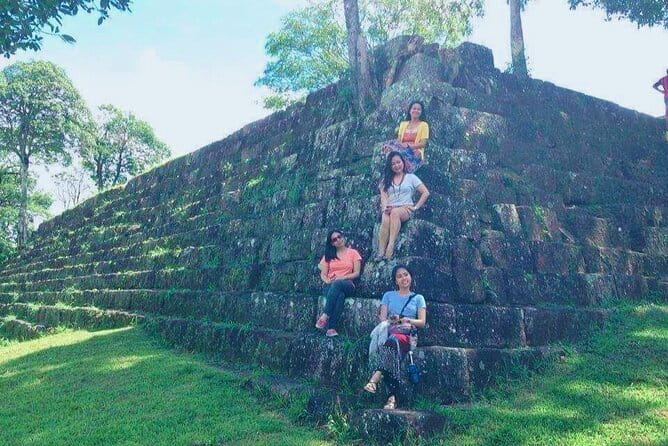
A short drive brings you to Pre Rup, built by the same king and located about one kilometer south of Eastern Mebon. It is a pyramid-shaped temple mountain with three tiers, and the upper levels give the site its character. The planned 40 minutes is enough for a look and some climbing, though the steps can be demanding for anyone with limited mobility.
The two stops work as a pair. Eastern Mebon shows a temple once linked to water, while Pre Rup presents a more pronounced vertical structure. Together they make the first day more than a checklist of ruins.
Day two: Angkor Wat, Angkor Thom, and Ta Prohm
Angkor Wat deserves the longest look
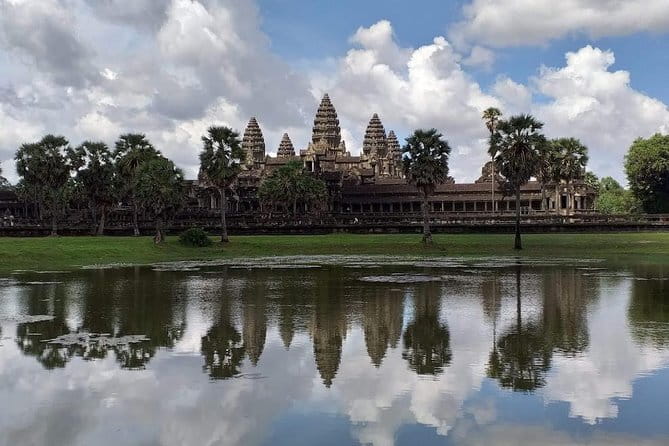
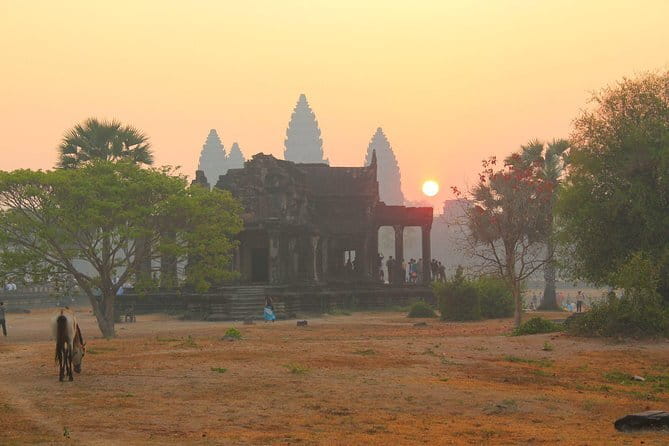
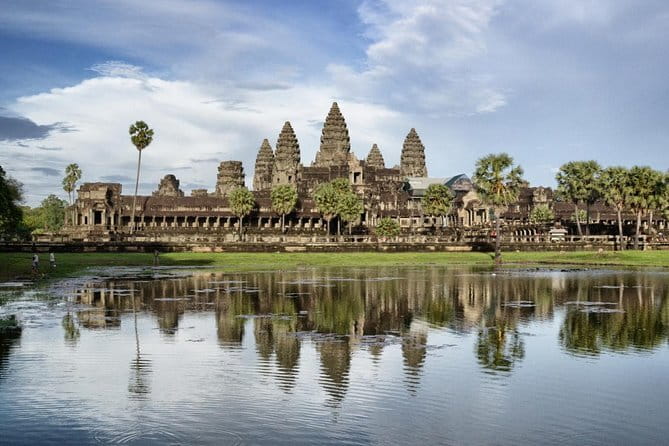
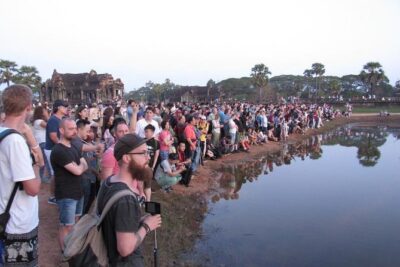
Angkor Wat was built by Suryavarman II in the 12th century as a temple dedicated to Vishnu. It is the largest and most imposing monument in the Angkor complex, and the two-hour visit is appropriate. Trying to reduce it to a quick photo stop would miss the point.
You will want time to take in its overall plan, galleries, towers, reliefs, and changing views as you move through the site. A good guide can explain why the temple was built, how its Hindu symbolism works, and how the design differs from the later Buddhist monuments.
The scale can be difficult to grasp alone. This is where a guide such as Borey, Kim, Bunleat, or Kimhoeun can add real value. The strongest guiding on this tour is not simply naming kings and dates. It places the carvings in their Hindu or Buddhist setting and helps you read the temple as a religious building rather than a pile of old stone.
Phnom Bakheng is a very brief listed stop
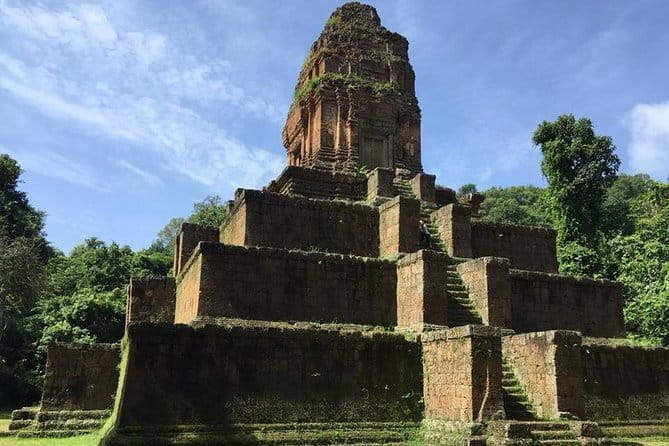
Phnom Bakheng was built by Yasovarman I in the early 10th century and is considered the first of the temple mountains near Angkor. It has five tiers and seven levels of towers, giving it an important place in the development of Angkorian temple design.
The schedule lists only one minute here, so you should treat this as a brief look rather than a full visit. That unusually short timing is worth clarifying when you book. It may mean a quick stop or a viewing point within the day, but the supplied details do not promise an extended climb or sunset visit.
Angkor Thom puts Angkor into an urban frame
Angkor Thom, meaning Great City, was the last city of Angkor and was built by Jayavarman VII. The city may have supported a population of one million in the surrounding region at its height. Those numbers are difficult to picture until you see the scale of the enclosure and understand that Angkor was an urban center, not just a series of isolated temples.
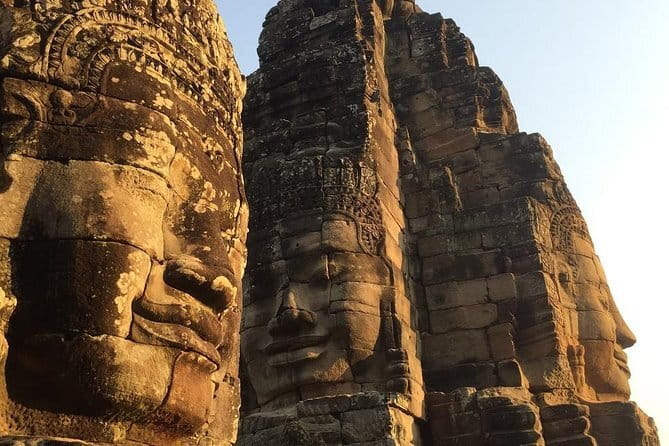
The two-hour visit gives you room to explore the city’s major features. It is centered on the Bayon, whose towers carry the famous large faces. Your guide can help you distinguish the city itself from the central temple and explain how Jayavarman VII’s Buddhist era differed from the Hindu periods represented elsewhere.
I find Angkor Thom especially valuable for context. Angkor Wat can feel like a singular masterpiece. Angkor Thom shows how that monument fit into a much larger system of roads, gates, walls, temples, and political power.
Ta Prohm provides the day’s most atmospheric finish
Ta Prohm is the ruin most closely associated with trees growing through ancient stone. Its appeal comes from the contrast between architecture and vegetation, but the temple deserves more than a quick photograph. The one-hour stop lets you examine corridors, doorways, and areas where the ruin has retained a raw, partly reclaimed appearance.
Ta Prohm is also the place where a flexible guide can make the greatest difference. One family particularly enjoyed the temple, and the guide adjusted the plan around that interest. That is the practical advantage of a private tour: you can spend more time at the places that speak to you instead of following a rigid group schedule.
The site can be uneven and crowded at popular points, so patience helps. Your guide’s photography advice may be useful here, especially if you want more than the standard tree-root image.
The guides are the heart of the experience
The company uses several guides, and the names most closely associated with this tour are Borey Hang, Mr. Kim, Mr. Bunleat, and Kimhoeun. Borey is described as having family ties to Siem Reap across several generations, and he is praised for clear English, local familiarity, and quick responses before the tour.
The strongest common thread is the guides’ ability to explain more than dates. Borey and the other guides discuss the history of the Angkor kingdom, Hinduism, Buddhism, and Cambodia’s more recent past. That wider frame helps you understand why the temples changed purpose and style over time.
Photography is another useful strength. The guiding approach includes help finding good photo positions and practical advice for phone photography. You should still tell the company in advance if photographs are a major priority, since the exact guide assigned to your dates is not guaranteed in the supplied information.
Flexibility also comes through clearly. Guides have adapted the schedule to suit a family’s interests and adjusted the pace when someone wanted longer explanations. If you prefer a brisk overview, say so. If you want detailed discussion of carvings and religious symbolism, say that too.
What the $102.57 price really covers
At $102.57 per person, the tour offers a private two-day structure with an air-conditioned vehicle and a guide. I see the value in that arrangement if you want personal explanations and a plan that covers much more than Angkor Wat alone.
The price does not include admission tickets to the temples. GST is also not included. You should add those costs before comparing this tour with other options, since a lower headline price may not mean a lower final cost.
The vehicle matters in Siem Reap. The days include a wide spread of sites, from Banteay Srei to the northern temples and the central Angkor monuments. Air conditioning gives you a more comfortable break between visits, especially after walking over exposed stone.
The private format can also justify the price for families, couples, or small groups with shared interests. Group discounts are offered, though the exact discount is not specified. If you are traveling with several people, ask for the total price rather than judging only by the per-person figure.
Pace, fitness, and practical preparation
You should have a moderate level of physical fitness. The tour includes walking through large temple compounds, uneven surfaces, and at least some stepped temple mountains. The listed durations are estimates, and the real day may feel longer once transport and movement between areas are included.
Wear shoes that handle uneven stone. Bring water, sun protection, and a phone or camera if photography matters to you. The air-conditioned vehicle is useful, but you will still spend much of the actual sightseeing time outdoors.
Pickup is offered, while the stated ticket redemption point is Angkor Enterprise on Apsara Road in Siem Reap. Confirm the exact pickup arrangement before setting out, since the supplied details identify both a pickup option and a redemption point.
The tour is usually booked about 28 days ahead. That suggests planning early, especially if you want a particular guide such as Borey or have fixed travel dates. Confirmation is provided at booking.
Cancellation is free up to 24 hours before the start time. Within 24 hours, the amount paid is not refunded, and changes are not accepted. The experience also requires good weather. If poor weather cancels it, you are offered another date or a full refund.
Who should book this Angkor tour?
I would choose this tour if you have two days in Siem Reap and want both the headline temples and a broader look at the Angkor complex. It suits you especially well if you value explanation, photography help, and the ability to adjust the pace.
Families can benefit from the private format, since the guide can respond to different energy levels and interests. Couples and small groups who want a stronger focus on architecture, religion, or photographs should also find the format useful.
I would hesitate if you want a slow, unstructured temple visit. The schedule is ambitious, and Day One in particular covers seven stops. I would also compare the full cost after admission and GST before deciding.
Should you book the Two Day Angkor Temples Tours?
Book it if you want a well-rounded first look at Angkor with a private guide who can connect architecture to Cambodian culture and religion. The mix of Banteay Srei, Preah Khan, Eastern Mebon, Angkor Wat, Angkor Thom, and Ta Prohm gives you variety, not just famous photo stops.
Before paying, confirm the temple admission cost, GST, pickup details, and which guide is available. Ask about the one-minute Phnom Bakheng listing if that site matters to you. If the final price fits your budget and you are comfortable with a full walking schedule, this is a strong choice for two focused days in Siem Reap.
FAQ
Where does the tour take place?
The tour operates from Siem Reap, Cambodia, and visits the Angkor temple complex and surrounding temple sites.
How long does the tour last?
The experience lasts approximately two days.
Is this a private tour?
Yes. Only your own group participates in the activity.
Is hotel pickup available?
Pickup is offered. The stated ticket redemption point is Angkor Enterprise on Apsara Road in Krong Siem Reap.
Is transportation included?
Yes. An air-conditioned vehicle is included.
Are temple admission tickets included?
No. Admission tickets are not included in the tour price.
Is GST included in the price?
No. GST, or Goods and Services Tax, is not included.
What is the tour price?
The listed price is $102.57 per person. Group discounts are offered.
How far in advance is the tour usually booked?
The tour is booked an average of 28 days in advance.
Can I cancel for a full refund?
Yes, if you cancel at least 24 hours before the experience start time. Cancellations made within 24 hours are not refunded, and changes within that period are not accepted. If poor weather causes the operator to cancel, you are offered another date or a full refund.
New around Siem Reap
- Kulen Mountain With Ticket included Plus Banteay Srei Temple Tour★ 5.0 · 7 reviews
- 2 Days Angkor temples with Sunrise & Sunset★ 5.0 · 7 reviews
- Private Siem Reap Airport Transfer to hotel in town★ 5.0 · 7 reviews
- 1-Day private Angkor Temple Tour with Sun Rise by Tuk Tuk from Siem Reap★ 4.5 · 7 reviews
- Siem Reap: Morning Cooking Class & Market Tour★ 5.0 · 7 reviews
- Kulen Mountain, Killing Fields and War Museum Tour★ 5.0 · 7 reviews
- War Museum, Killing Field, and APOPO Hero RATs Tour★ 5.0 · 7 reviews
- Half-Day: Silk Farm, Senteur Angkor, and Satcha Workshop★ 4.6 · 7 reviews
Angkor Temple Tours, compared.
1-Day private Angkor Temple Tour from Siem Reap
Read our review →
Private Full-Day Angkor Temple and Sunset Viewing with Lunch
Read our review →
Private one-day tuktuk ‘small tour’ of the oldest Angkor temples
Read our review →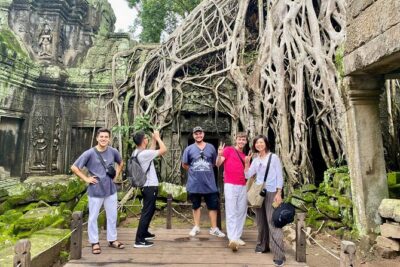
Explore Angkor Temple & Other – Private Vehicle with Tour Guided
Read our review →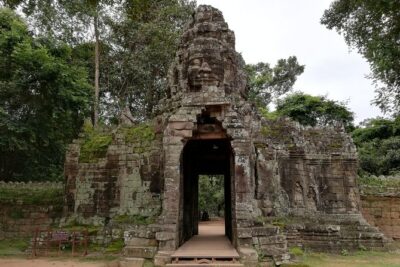
Angkor Wat Private Driver Tours to Angkor Wat Sunrise, Angkor Thom & Ta Prohm
Read our review →Browse the lists this tour appears in