
Reviewed · ANGKOR WAT TOURS
2 Days Discover Angkor Wat Complex and Cambodia’s Villages Tours
Angkor Wat is only part of this two-day outing. You also reach Beng Mealea, a largely unrestored temple where trees and brush press against old sandstone, then trade temple towers for stilt houses and fishing life at Kompong Phluk on Tonle Sap. That wider mix gives you a better feel for Cambodia than a temple-only day.
I like the private format, with transport for just your group and room to work with your guide. I also like the guides’ practical touch: Praim is praised for clear English, thoughtful timing, local knowledge, and taking photos when asked, while Khim is noted for detailed explanations of the temples.
The main catch is the pace. A 5:00 am start, long temple walks, Beng Mealea’s distance from Siem Reap, and the extra fees can make these two days tiring. You need moderate fitness, and the advertised $235 price does not include major admission and boat costs.
Key points at a glance
- Beng Mealea adds a wilder temple experience: This remote, mostly unrestored site feels very different from the carefully managed monuments near Angkor Wat.
- The tour covers both monuments and daily life: You see Khmer temples, country villages, a local market, stilted homes, fishing activity, and Tonle Sap.
- Private transport keeps the plan flexible: Your group of up to 10 rides in an air-conditioned SUV or minivan with its own guide.
- The 5:00 am start matters: You get an early beginning for the first day, but you should be ready for long days and plenty of walking.
- Praim and Khim are named guide options in the feedback: Both receive strong praise for English, temple explanations, and personal attention.
- Budget for $69 in listed extras per person: Angkor and the other temples cost $37, Beng Mealea costs $10, and the Tonle Sap boat and village admission cost $22.
Why this two-day plan works
This is a good choice if you want more than the standard Angkor circuit. Day one concentrates on the major monuments around the ancient Khmer capital. Day two shifts the focus to a remote ruin and the water-based communities of Siem Reap Province.
That change of setting is important. Angkor’s grand stone temples explain the power and beliefs of the Khmer Empire. Kompong Phluk and Tonle Sap show how people live with seasonal water today. You get architecture, rural Cambodia, and lake life in one private package.
The experience is also easier to manage than joining a large coach group. You travel in an air-conditioned SUV or minivan, and only your own party participates. The group limit is 10, so this suits a family, a group of friends, or a small private gathering better than a solo visitor looking for the cheapest possible seat.
The tradeoff is that this is not a slow, leisurely temple retreat. There are several stops, the start is early, and day two includes a substantial trip to Beng Mealea before the Tonle Sap portion. I would choose it for variety and coverage, not for relaxed afternoons at one site.
More Angkor Wat Tours in Siem Reap:
- Angkor Wat Sunrise or Sunset Tour with Guide from Siem Reap
★ 5.0 · 12,109 reviews - Siem Reap: Angkor Wat: Small-Group Sunrise or Sunset Tour
★ 5.0 · 9,444 reviews - Siem Reap: Angkor Wat 2-Day Tour with Sunrise and Sunset
★ 4.9 · 4,429 reviews
Day one: Angkor Wat before the royal city
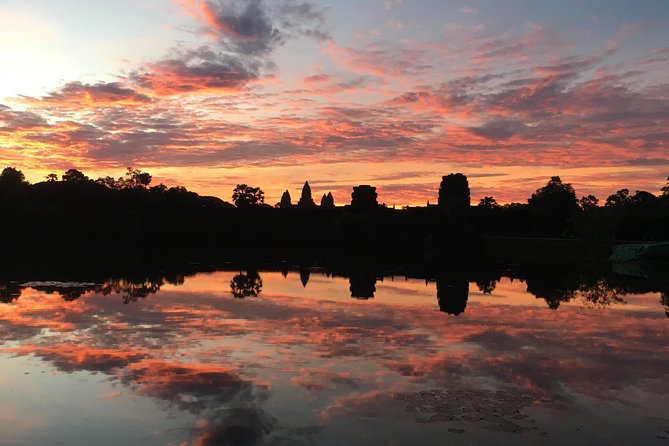
The first day begins at 5:00 am. That early start is the clearest signal of how ambitious the schedule is. You should have breakfast arrangements sorted before pickup and wear footwear suited to temple paths and steps.
Angkor Wat receives about two hours. Built as a Hindu temple dedicated to Vishnu, it occupies a site of roughly 162.6 hectares and ranks among the world’s largest religious monuments. Two hours gives you a useful first look at its scale, towers, galleries, and carved stone, though you should not expect to inspect every corner.
Your guide matters most here. A strong explanation helps connect the building to Khmer kingship, Hindu worship, and the design of a temple mountain. Praim is specifically praised for explaining both Cambodia’s past and its present in clear English. Khim is also praised for detailed temple interpretation, making either guide a valuable addition to a place that can otherwise feel like a grand collection of stones.
The Angkor admission fee is separate. The listed cost is $37 per person for Angkor Wat and the other Angkor temples visited during the tour. Keep that in your working budget rather than treating the $235 group price as the final amount.
Ta Prohm and Ta Keo: roots, stone, and steep steps
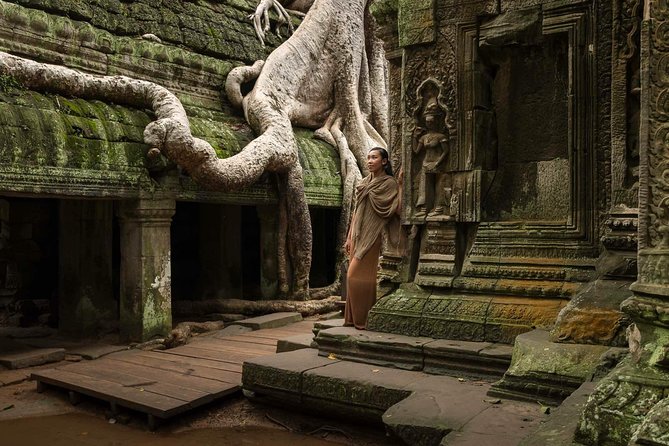
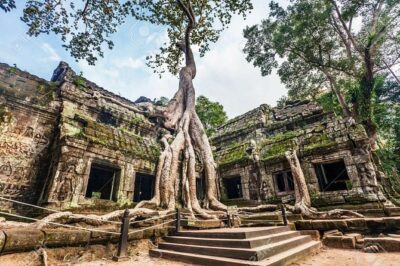
Ta Prohm takes about an hour. Its appeal is immediate: huge trees and thick roots grow across the walls, giving the temple its famous jungle appearance. It was also featured in the film Tomb Raider, but the movie connection is only one small part of its appeal.
I like Ta Prohm because it shows the uneasy relationship between stone monuments and the forest around them. The temple is not simply a clean archaeological display. Tree roots, broken walls, and shadowed corridors make the site feel more physical and unpredictable than Angkor Wat.
The popularity of Ta Prohm can also make it feel less quiet than Beng Mealea. Your guide can help you focus on the surviving structure and carvings rather than only looking for the most recognizable photo angle.
Ta Keo follows for about 30 minutes. It is one of Angkor’s tallest monuments, built by Jayavarman V as a mountain temple. Its five sanctuaries sit on top of a five-stepped pyramid rising about 22 meters.
This is a short stop, but it adds a different lesson. Ta Keo emphasizes height and strong geometric form, while Ta Prohm is remembered for roots and ruin. The steps may require care, and the tour’s moderate fitness requirement is relevant here. If you dislike steep temple stairs, tell the guide early so the pace can be handled sensibly.
Angkor Thom, Bayon, and the faces of a royal capital
Angkor Thom was an ancient Khmer capital built around 1181 under King Jayavarman VII. The city is almost square and was enclosed by walls about 8 meters high. You spend about 30 minutes seeing the city area, then another 30 minutes at the Terrace of the Elephants.
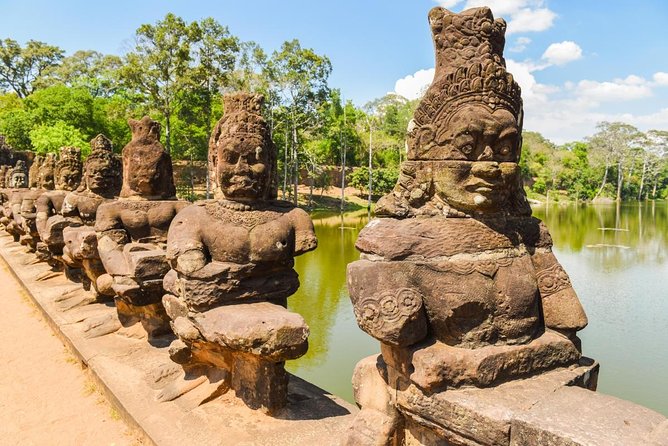
The Terrace of the Elephants served as a viewing platform for the king, particularly for military victories and public ceremonies. It is a useful place to imagine Angkor Thom not as a group of isolated temples but as a royal city with power, movement, and public display.
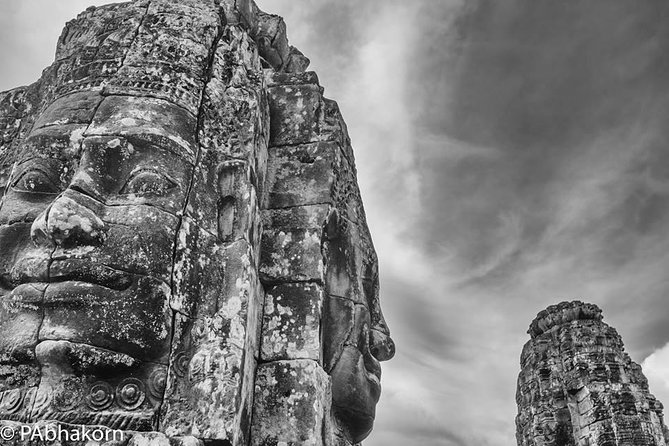
Bayon gets about an hour and may be the most memorable stop for many people. The temple is known for its large stone faces, often described as smiling or Buddha-like, and was built in the late 12th or early 13th century as Jayavarman VII’s state temple.
Bayon rewards a guide who can explain what you are looking at. The faces appear from different angles as you move through the towers, and the tight arrangement can be confusing without some direction. Praim’s ability to answer questions and adjust explanations to your interests would be useful here. The same applies to Khim, whose temple knowledge is singled out for praise.
By the end of day one, you have seen the monumental, the overgrown, the steep, and the carefully carved. That range is one reason the tour offers good value for people with only two days in Siem Reap.
A few more Siem Reap half-days to weigh up
- Angkor 2-Day Sunset & Sunrise Small-Group Tour
★ 5.0 · 2,567 reviews - 2 Days Exclusive Temple Highlights with Sunset and Sunrise Tour
★ 5.0 · 1,157 reviews - Siem Reap: Angkor Sunrise 1- or 2-Day Guided Temples Tour
★ 4.9 · 1,132 reviews - 2 Days Guided Historical Tour in Angkor
★ 5.0 · 855 reviews
Day two: Beng Mealea and Cambodia beyond the main temples
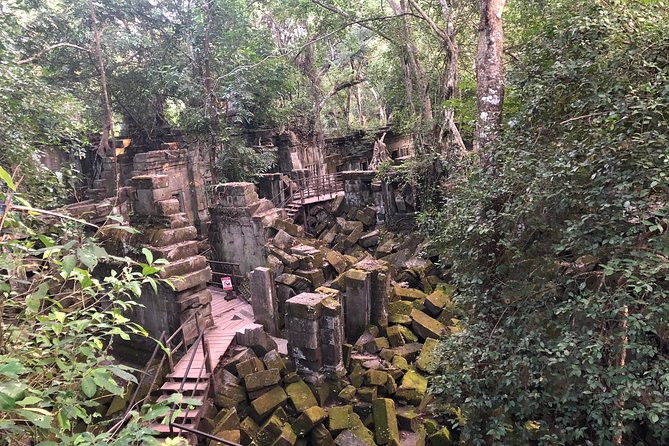
Day two begins with a trip to Prasat Beng Mealea, usually called Beng Mealea, for about two hours. The temple was built as a Hindu site, although some carvings show Buddhist motifs. Sandstone is its main material, and the complex is largely unrestored, with trees and heavy brush growing through and around the remains.
Beng Mealea is the strongest reason to choose this tour over a basic Angkor package. Angkor Wat and Bayon are essential, but they are also the polished centerpieces of the area. Beng Mealea gives you a more broken, raw impression of what a ruined temple can look like when restoration has been limited.
That condition also means you should set realistic expectations. The site may feel rougher underfoot and less orderly than the main Angkor monuments. The two-hour visit allows time to look closely, but you should still wear practical shoes and expect some physical effort.
The trip to Beng Mealea also makes day two more demanding. The supplied details do not state the drive time, so I would not assume a quick transfer. Ask your guide about the day’s timing at pickup, especially if you want a long visit at the lake later.
Kompong Phluk and the changing water of Tonle Sap
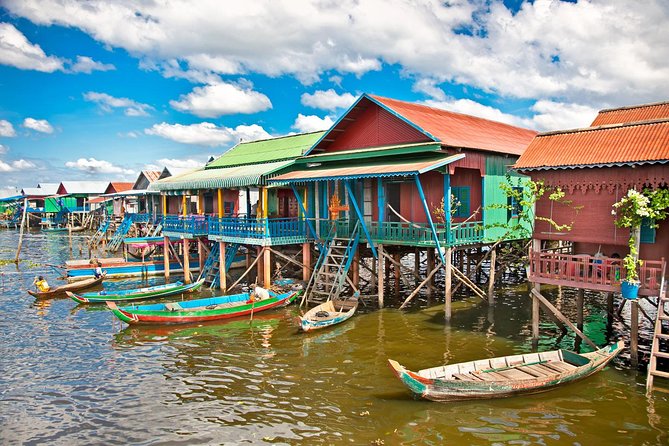
After Beng Mealea, the tour turns to Kompong Phluk, a commune and village in Siem Reap Province built on stilts beside Tonle Sap. The name means Harbor of the Tusks. The community depends largely on fishing, and the village offers a look at life shaped by the lake rather than by temple tourism.
This is where the tour’s cultural balance improves. Stone temples can tell you about kings and religious ideas, but stilted homes and fishing communities show how people organize daily life around changing water levels. You should pay attention to the practical details of the village, including the way buildings are raised above the water and how access changes with the season.
The village and lake portion is listed at about two hours in Kompong Phluk and one hour on Tonle Sap. A private boat ride is part of the required extra cost, not the tour’s base price. Admission and the private boat ride to Tonle Sap and Kompong Phluk cost $22 per person.
Tonle Sap is the largest freshwater lake in Southeast Asia and is seasonally inundated. Its connected river runs about 120 kilometers. The lake is not just a scenic stop. Its changing size affects transport, fishing, homes, and village routines.
You should keep your expectations grounded. This is a visit to a working community, not a staged historical monument. The experience may vary with water levels and conditions, and the supplied details do not promise a specific wildlife sighting or a particular boat route. What you can count on is a shift from temple architecture to a water-based way of life.
What the $235 price really covers
The advertised cost is $235 per group of up to 10 people, which can be strong value if you fill the vehicle. It includes an air-conditioned SUV or minivan, an English-speaking guide, cold drinking water, and cold towels.
For a group of 10, the transport and guiding work out to $23.50 per person before admissions. For two people, the per-person cost is much higher, but the private format may still suit you if you value control over the pace and do not want to join strangers.
The required listed extras add up to $69 per person:
- Angkor Wat and the other temples: $37
- Beng Mealea: $10
- Tonle Sap and Kompong Phluk admission plus private boat: $22
That means a couple should plan for $373 per person if the $235 group price is split between two people, before meals, beverages, and personal expenses. A full group of 10 would pay a far lower share of the transport and guide cost, while the $69 admission total remains per person.
Meals and beverages are not included. You also pay for personal expenses. Cold water and towels are supplied, which is helpful in Cambodia’s heat, but they do not replace lunch or other drinks.
The guide can make or break the long days
The strongest praise centers on the guides, especially Praim and Khim. Praim is described as professional, helpful, flexible, and strong in English. His ability to explain both historical subjects and present-day Cambodia gives the tour a wider frame than temple facts alone.
He is also noted for planning the days well and taking photos if you want that service. Photo help is a small but useful benefit on a private outing, especially when you are traveling as a couple or family and want everyone in the picture.
Khim receives praise for in-depth temple explanations and impressive knowledge of the stories behind the monuments. Since the tour includes several sites with different styles, a guide who can compare them is especially useful.
Guide assignments can vary, so you should not assume a particular person is guaranteed unless the provider confirms it. Still, the named guides give you a practical sense of the guiding standard to look for: clear English, good timing, answers to questions, and willingness to adapt the day to your interests.
Who should book this private Angkor tour?
I would recommend it to you if you have two full days in Siem Reap and want a broad introduction rather than a narrow temple checklist. It suits people who want Angkor’s essential monuments but also care about Cambodia’s villages, fishing economy, and rural setting.
It is particularly useful for:
- Families or friends who can share the group price
- First-time visitors who want a guide through the major temples
- People who prefer private transport and a flexible schedule
- Anyone interested in both Khmer monuments and present-day village life
- Visitors with moderate fitness who can handle long days and temple walking
I would hesitate if you want a slow schedule, dislike early starts, or only want the most famous Angkor sites. You may also find the cost less attractive if you are traveling alone or with one companion and cannot spread the group fee across several people.
Pickup is offered, mobile tickets are available, and confirmation arrives at booking. The meeting time is 5:00 am. Free cancellation is available up to 24 hours before the start time, but changes or cancellations inside that window are not accepted for a refund.
Should you book these two days?
Book this tour if variety is your priority. Angkor Wat, Ta Prohm, Ta Keo, Angkor Thom, the Terrace of the Elephants, and Bayon give you a solid first day of temple coverage. Beng Mealea adds the rougher ruin experience, while Kompong Phluk and Tonle Sap bring in village life that many short temple visits miss.
The best value comes when several people share the private vehicle and guide. Before booking, add the $69 per-person admissions to the advertised group price, confirm the guide and pickup details, and be honest about your ability to manage a 5:00 am start and two active days.
If that plan fits your energy and budget, this is a well-rounded way to see Siem Reap beyond its most famous temple photograph.
FAQ
How long is the tour?
The experience lasts approximately two days.
What time does the tour start?
The stated start time is 5:00 am.
How many people can join the private tour?
The tour is private, and the group can include up to 10 people.
What transportation is provided?
You travel in an air-conditioned SUV or an air-conditioned minivan.
Is an English-speaking guide included?
Yes. An English-speaking tour guide is included.
Are temple entrance fees included in the $235 price?
No. The listed entrance fee for Angkor Wat and the other temples is $37 per person.
What extra fee applies to Beng Mealea?
Beng Mealea has a separate entrance fee of $10 per person.
Is the Tonle Sap boat ride included?
No. Admission and the private boat ride for Tonle Sap and Kompong Phluk cost $22 per person.
Can I cancel for a full refund?
Yes, if you cancel at least 24 hours before the experience start time. Cancellations made less than 24 hours in advance are not refunded.
New around Siem Reap
- Kulen Mountain With Ticket included Plus Banteay Srei Temple Tour★ 5.0 · 7 reviews
- 2 Days Angkor temples with Sunrise & Sunset★ 5.0 · 7 reviews
- Private Siem Reap Airport Transfer to hotel in town★ 5.0 · 7 reviews
- 1-Day private Angkor Temple Tour with Sun Rise by Tuk Tuk from Siem Reap★ 4.5 · 7 reviews
- Kulen Mountain, Killing Fields and War Museum Tour★ 5.0 · 7 reviews
- War Museum, Killing Field, and APOPO Hero RATs Tour★ 5.0 · 7 reviews
- Siem Reap: Morning Cooking Class & Market Tour★ 5.0 · 7 reviews
- Half-Day: Silk Farm, Senteur Angkor, and Satcha Workshop★ 4.6 · 7 reviews
Angkor Wat Tours, compared.
Angkor Wat Sunrise or Sunset Tour with Guide from Siem Reap
Read our review →
Angkor Wat: Small-Group Sunrise or Sunset Tour
Read our review →
Angkor Wat Sunrise tour with Small – Group and Guide tours
Read our review →
Angkor Wat Highlights and Sunrise Guided Tour from Siem Reap
Read our review →
Angkor Wat Sunset Small Group Tour with Lunch Included
Read our review →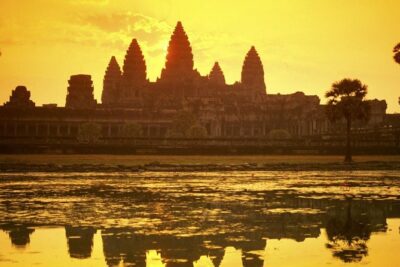
Full-Day Angkor Wat Sunrise Private Tour with Guide from Siem Reap
Read our review →
Angkor Wat Sunrise & 3 Main Temples with Breakfast – Small Group
Read our review →Browse the lists this tour appears in