
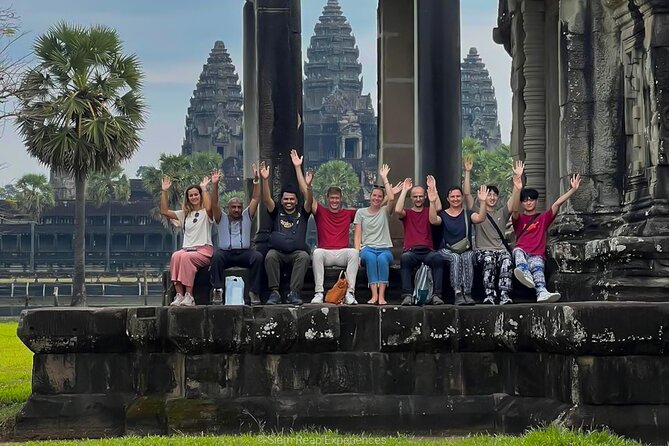
Reviewed · SIEM REAP TOURS
2 Days Guided Historical Tour in Angkor
Angkor is best seen slowly, and this two-day temple tour gives you time for the famous sights plus quieter corners of the complex. You begin before dawn at Angkor Wat, then move through Angkor Thom, Bayon, Ta Keo, Ta Prohm, Pre Rup, Ta Som, Neak Pean, Preah Khan, and Phnom Bakheng.
I like the small group limit of 15, which leaves room for questions and makes the long days feel less like a herd being pushed through gates. I also like the practical care: hotel pickup, an air-conditioned vehicle, cold water, and wet towels matter a great deal in Cambodia’s heat.
The main drawback is the early start and the extra temple-ticket cost. The tour is $35, but the Angkor pass is listed separately at $62 per person, and meals are not included. You also need good walking stamina and patience for two full days among busy, uneven temple grounds.
Key points at a glance
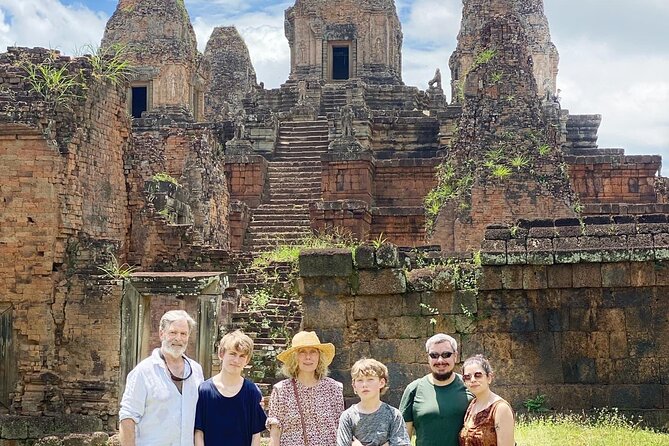
- Sunrise begins at 4:30 a.m.: You reach Angkor Wat in time for the famous morning view, then explore the temple with a guide.
- Two different kinds of temple days: Day one focuses on Angkor Wat and the major central temples, while day two reaches more widely scattered sites.
- Guides bring the stones to life: Sam, Vone, Sok, Heang, Sary, Sayon, and other guides are noted for clear explanations, humor, patience, and help with photos.
- Comfort is built into the price: Hotel pickup and drop-off, air-conditioned transport, cold water, and wet towels are included.
- The $35 price is not the full cost: Add the stated $62 temple pass, plus breakfast and lunch.
- Expect a lot of walking: Two days bring more history and better coverage, but the schedule can be tiring in heat approaching 40 degrees Celsius.
Why two days works better than a rushed Angkor visit
Angkor is not one temple. It is a huge historic complex spread around Siem Reap, with monuments from different periods and religious traditions. If you try to squeeze the key sites into one hurried outing, you may see the stonework but miss the connections between royal power, Hindu worship, Buddhism, water management, and temple design.
This tour gives you two useful rhythms. The first day covers the monuments most people put at the top of their list. The second day moves toward smaller and less crowded temples, where you have more space to look closely and take photos without a constant stream of people behind you.
The price of $35 per person is good for a shared tour with transport and a guide. The value becomes clearer if you compare it with arranging a vehicle and guide yourself for two days. Still, do your real budget before booking: the $62 temple ticket is extra, and food is also on you. At the stated prices, the basic tour plus admission comes to $97 per person before meals.
The group can reach 15 people. That is small enough for a personal feel compared with a large coach, but it is not a private tour. Your experience will depend partly on the guide assigned to your group. Names associated with strong guiding here include Sam, Vone, Sok, Heang, Sary, Sayon, Pheap, and Sem.
More Historical Tours in Siem Reap
- Siem Reap: Banteay Srei and Grand Circuit Heritage Tour
★ 4.9 · 163 reviews - Banteay Srei and Grand Circuit Heritage Tour from Siem Reap
★ 5.0 · 142 reviews - Angkor World Heritage with Sunrise – Small Group
★ 5.0 · 32 reviews
Day one: Angkor Wat before breakfast
Pickup begins around 4:30 a.m. The exact meeting arrangement matters, so be ready at your hotel and confirm the pickup details in advance. One poor experience involved a guide calling only after leaving the hotel, leaving the couple trying to catch up by tuk-tuk. That is avoidable with a clear pickup confirmation and a phone kept ready.
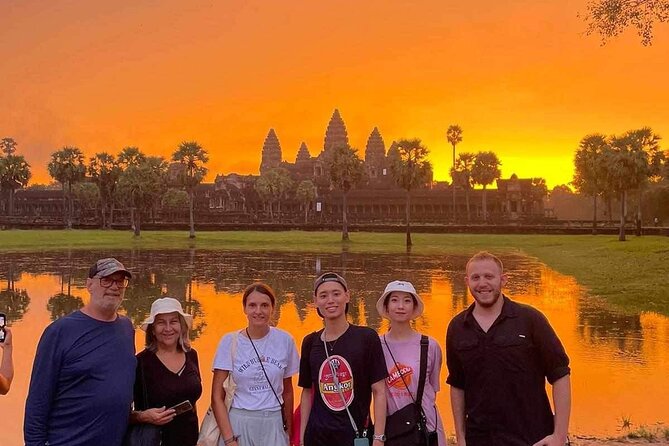
The first stop is Angkor Wat, reached in time for sunrise. Bring a small flashlight if you have one, since the approach begins in darkness. The sunrise itself can be beautiful, but it is not guaranteed to deliver a perfect sky. The real advantage is arriving early enough to see the temple before the strongest heat and then having a guide explain its design, carvings, and place in Khmer history.
You spend about two hours at Angkor Wat. That is long enough for a useful introduction and personal time, though the temple is so large that you will not examine every corner. Wear shoes suitable for uneven paths and stairs, and keep water close. The temple pass is not included, so you need to purchase or arrange that separately according to the operator’s instructions.
Angkor Thom and the smiling faces of Bayon
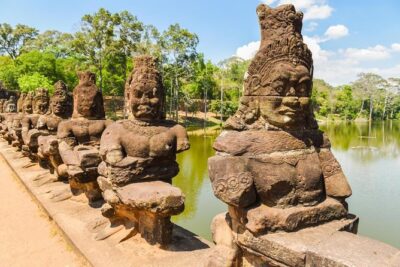
After Angkor Wat, the route continues to the South Gate of Angkor Thom. This 12th-century entrance is more than a passageway. Carved faces look out from the gate, while stone figures line the causeway. Your guide can help you read the scene as part of the wider plan of Angkor Thom rather than treating it as a quick photo stop.
The visit here lasts about 30 minutes. That is enough to see the gate and causeway, but it is a short stop, especially if the road is busy or your group wants photographs. Keep your camera ready before you arrive.
Next comes Bayon, with roughly two hours to explore. This Buddhist temple is famous for its huge carved faces, often described as smiling, which appear from towers throughout the structure. Bayon can feel confusing at first. The towers, galleries, and narrow passages do not reveal their design all at once, so a guide is useful here.
A good guide can point out details you might walk past, explain the temple’s connection to King Jayavarman VII, and help you understand how Buddhist imagery fits into the wider Angkor complex. Sam and Heang are among the guides praised for answering questions and explaining the temples in a clear, lively way. Vone is also known for adding humor and helping with photos.
Ta Keo and Ta Prohm after the morning crowds
Ta Keo follows a breakfast break. Breakfast is not included, so bring money and be clear about how much time your group has. The stop at Ta Keo lasts about an hour, and the temple is a powerful example of the temple-mountain form.
Ta Keo is associated with an early use of sandstone on a large scale. Its steep, geometric structure gives you a different visual experience from the carved faces of Bayon. The climb and uneven surfaces can be hard on tired legs, so take your time and do not treat the stop as a race.
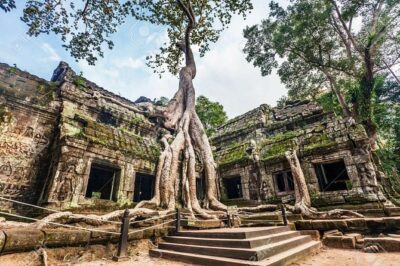
Ta Prohm is the day’s other major draw. Trees grow through and around the temple, giving the site the weathered appearance that made it famous. It is easy to focus only on the roots and stone doorways, but the guide can also explain the temple’s place in the Bayon period and its original purpose.
You get about an hour at Ta Prohm. That may feel short if you want every corridor and photograph, but it helps the group keep to schedule. Expect more people here than at several of the second-day temples. The combination of famous scenery, narrow passages, and tree-covered ruins can slow movement.
Day one usually feels full without being absurdly rushed. You see four major temples plus the Angkor Thom gate, though the heat can change that impression. One useful feature is the air-conditioned vehicle. When the sun becomes too much, you can recover in the vehicle between stops rather than spending every minute outdoors.
A completely different sort of day from the same base:
- Angkor Wat Sunrise or Sunset Tour with Guide from Siem Reap
★ 5.0 · 12,109 reviews - Siem Reap: Angkor Wat: Small-Group Sunrise or Sunset Tour
★ 5.0 · 9,444 reviews - From Siem Reap: Kampong Phluk Floating Village Tour by Boat
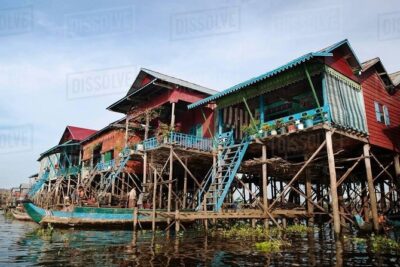
★ 4.9 · 6,979 reviews - Sunset tour of Kampong Phluk stilts home village on the Tonle Sap
★ 5.0 · 4,865 reviews
Day two: brick towers, quiet ruins, and old royal roads
Day two starts with Pre Rup, a Hindu temple built as the state temple of King Rajendravarman in 961 or early 962. It is a temple mountain made from brick, laterite, and sandstone, and it gives you a strong sense of how Angkor’s building styles changed over time.
The planned visit is about two hours. Pre Rup is a good place for your guide to explain the difference between a state temple and a smaller shrine, as well as the role of Hindu beliefs in Angkor’s royal culture. The exposed stone and open setting can make this one of the hotter stops, so use the supplied water and take shade breaks when available.
Ta Som is smaller and quieter. Built at the end of the 12th century for King Jayavarman VII, it lets you look at details without the same scale and pressure found at Angkor Wat or Bayon. The one-hour stop is enough to walk through, take photos, and listen to the story without feeling that you need to conquer a vast site.
Neak Pean changes the mood again. The temple sits on an artificial island in a reservoir associated with Preah Khan. The approach and water setting make it different from the hill-like temple mountains and enclosed galleries elsewhere on the route.
You have about an hour here. The amount you see can depend on access conditions and the pace of the group, but the stop is valuable because it shows Angkor as a planned water world, not just a collection of stone monuments. Your guide can connect the reservoir, island temple, and royal building program in a way that is hard to grasp from a quick photograph.
Preah Khan gives day two its scale
Preah Khan is the largest and longest stop on the second day, with about two hours scheduled. King Jayavarman VII built it in the 12th century to honor his father. It sits northeast of Angkor Thom, near the Jayatataka reservoir, and its galleries offer a long walk through layered spaces.
This is where a guide such as Sam or Sayon can make a major difference. There are many doorways, carvings, courtyards, and changes in scale. You can wander happily, but clear historical signposts help you understand what you are seeing and why the temple matters.
The benefit of placing Preah Khan on day two is that you are not trying to absorb it after a full list of famous monuments on the first morning. The drawback is simple: by this point, your feet may be tired. Carry less, drink often, and use restroom breaks rather than waiting until you are uncomfortable.
Phnom Bakheng and the sunset question
Phnom Bakheng is listed as the final stop, with two minutes assigned in the schedule. It is a Hindu temple mountain dedicated to Shiva and built near the end of the ninth century during the reign of King Yasovarman.
The very short listed duration is a warning to clarify the sunset plan before you go. The tour description says you stay to watch the sunset, but the itinerary gives Phnom Bakheng only two minutes. Those details do not match. Ask how much time your group will actually have and where the vehicle will leave you.
Do not assume that a sunset stop means a long climb or a guaranteed viewpoint. The supplied information confirms the sunset plan, but not the exact access procedure or amount of time at the top. This is the one part of the schedule I would verify carefully before paying.
Guides, group size, and the human side of the tour
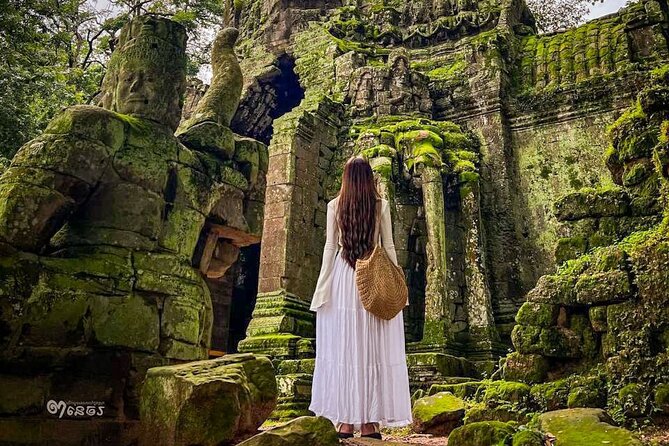
The guide is the key variable in a historical tour. The strongest experiences here come from guides who explain the Khmer Empire and Cambodian history, answer questions, mix facts with personal stories, and then allow you time to explore alone.
Sam is repeatedly associated with strong historical explanations, patience, and interesting stories. Vone is noted for humor, close attention to small details, and taking photos and videos. Heang is praised for clear explanations at every temple, while Sary and Sayon are described as helpful and well informed.
That does not mean every group receives the same guide or the same style. If you have a preferred language, ask before booking. One French-speaking couple had trouble following the explanations and wished a Francophone guide had been arranged. The available information does not promise a French guide.
A maximum of 15 people is a sensible compromise. You get the cost of a shared excursion without the size of a major bus group. The guide can still gather everyone for explanations, though you will sometimes need to wait while others take pictures or catch up.
Heat, walking, and what to pack
Two days at Angkor require more than curiosity. You will walk across open courtyards, uneven stone, temple paths, and areas exposed to the sun. One visitor found the heat near 40 degrees Celsius difficult, even with regular water and breaks in the air-conditioned vehicle.
The tour supplies cold water and a wet towel. These are not decorative extras. After a hot walk through Ta Prohm or Pre Rup, a cold drink and damp towel can reset your energy.
Pack light, breathable clothing, a hat, sunscreen, and shoes with a firm grip. Bring a flashlight for the pre-dawn start. You also need money for breakfast and other meals, since food is excluded.
The schedule includes clean restroom breaks and restaurant stops according to the experience details. Exact restaurants are not specified, so do not book this expecting a particular meal or dining style.
Pickup, payment, and cancellation terms
Hotel pickup and drop-off in Siem Reap are included. The stated meeting point is behind the Angkor Night Market at Siem Reap Pub Hostel, and drop-off can be at your hotel or somewhere around Pub Street. Confirm your hotel location and pickup time, especially because the first departure is at 4:30 a.m.
The tour costs $35 per person, with a maximum group size of 15. The Angkor temple ticket is listed as an additional $62 per person, and meals are not included. Mobile ticketing and booking confirmation are provided.
Most people can take part, but the schedule is physically active. The information does not promise wheelchair access or a private vehicle, so ask the operator directly if you have mobility needs or require a special arrangement.
Free cancellation is available when you cancel at least 24 hours before the start time. Cancellations or changes made less than 24 hours before the start are not accepted for a refund, and the cutoff follows local time.
Who should book this Angkor tour?
I would choose this tour if you want the main Angkor monuments explained properly but also want to reach smaller sites beyond the usual first-day circuit. It suits couples, families with older children, and solo visitors who prefer a guide and shared transport rather than arranging every temple independently.
It is also a good match if you value historical context. Bayon, Neak Pean, Ta Keo, and Preah Khan make more sense when someone connects their construction dates, religious purpose, and royal patrons.
I would hesitate if you dislike early mornings, long walking days, shared groups, or fixed schedules. I would also ask questions first if the sunset at Phnom Bakheng is the main reason you are booking, since the listed two-minute stop does not explain the actual sunset arrangements.
Final verdict: good coverage at a fair base price
This is a strong, practical way to see Angkor over two days. You get sunrise at Angkor Wat, the carved faces of Bayon, the trees of Ta Prohm, and a second day devoted to less visited temples such as Ta Som, Neak Pean, and Preah Khan.
The guides are a major strength, especially names such as Sam, Vone, Sok, Heang, Sary, and Sayon. The air-conditioned vehicle, cold water, wet towels, and hotel service also make the $35 tour price feel fair.
Book it if you want broad coverage and useful explanations, but budget the extra $62 pass and meals. Confirm the pickup call, ask about your guide’s language, and clarify the Phnom Bakheng sunset timing. With those details settled, this tour gives you a lot of Angkor for two demanding but rewarding days.
FAQ
How much does the two-day Angkor tour cost?
The tour costs $35 per person. The Angkor temple ticket is not included and is listed at $62 per person. Meals are also not included.
What time does the tour start?
The stated start time is 4:30 a.m. on the first day, allowing you to reach Angkor Wat for sunrise.
Is hotel pickup included?
Yes. Hotel pickup and drop-off in Siem Reap are included. Drop-off can be at your hotel or somewhere around Pub Street.
Which temples are included?
The route includes Angkor Wat, Angkor Thom South Gate, Bayon, Ta Keo, Ta Prohm, Pre Rup, Ta Som, Neak Pean, Preah Khan, and Phnom Bakheng. The tour description states that 11 temples are covered over two days, although ten named stops appear in the provided schedule.
Is the temple entrance ticket included?
No. The temple ticket is an additional cost listed at $62 per person.
Are meals included?
No. Meals are not included. There is a breakfast break near Ta Keo, and you should pay for your own food.
How large is the group?
The group has a maximum of 15 people. This is a shared tour rather than a private excursion.
What is included besides the guide?
The tour includes an air-conditioned vehicle, tour guide, cold water, wet towels, hotel pickup, hotel drop-off, and visits to the listed Angkor temples.
Can I cancel for a full refund?
Yes, if you cancel at least 24 hours before the experience start time. Cancellations or changes made less than 24 hours before the start time are not accepted for a refund.
More 2-Day Experiences in Siem Reap
- Siem Reap: Angkor Wat 2-Day Tour with Sunrise and Sunset
★ 4.9 · 4,429 reviews - Angkor 2-Day Sunset & Sunrise Small-Group Tour
★ 5.0 · 2,567 reviews - 2 Days Exclusive Temple Highlights with Sunset and Sunrise Tour
★ 5.0 · 1,157 reviews - Siem Reap: Angkor Sunrise 1- or 2-Day Guided Temples Tour
★ 4.9 · 1,132 reviews
New around Siem Reap
- Kulen Mountain With Ticket included Plus Banteay Srei Temple Tour★ 5.0 · 7 reviews
- 2 Days Angkor temples with Sunrise & Sunset★ 5.0 · 7 reviews
- Private Siem Reap Airport Transfer to hotel in town★ 5.0 · 7 reviews
- 1-Day private Angkor Temple Tour with Sun Rise by Tuk Tuk from Siem Reap★ 4.5 · 7 reviews
- Siem Reap: Morning Cooking Class & Market Tour★ 5.0 · 7 reviews
- Kulen Mountain, Killing Fields and War Museum Tour★ 5.0 · 7 reviews
- War Museum, Killing Field, and APOPO Hero RATs Tour★ 5.0 · 7 reviews
- Half-Day: Silk Farm, Senteur Angkor, and Satcha Workshop★ 4.6 · 7 reviews
Siem Reap Tours, compared.
Angkor Wat Sunrise or Sunset Tour with Guide from Siem Reap
Read our review →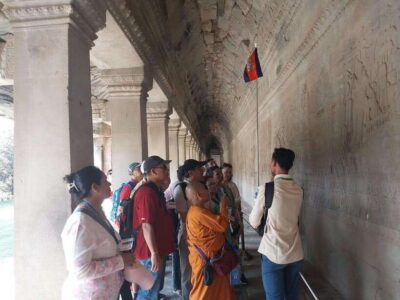
Angkor Wat: Small-Group Sunrise or Sunset Tour
Read our review →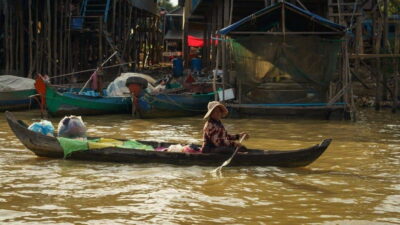
Sunset tour of Kampong Phluk stilts home village on the Tonle Sap
Read our review →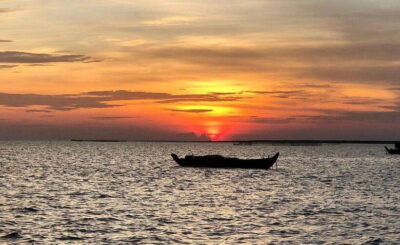
Kampong Phluk Floating Village Tour with Boat
Read our review →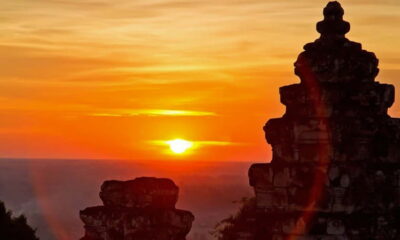
Angkor Wat Sunrise tour with Small – Group and Guide tours
Read our review →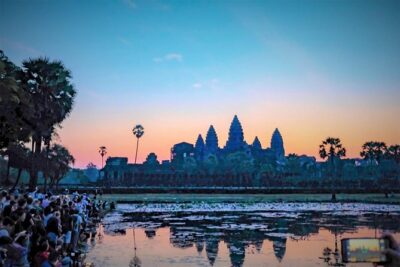
Angkor Wat Highlights and Sunrise Guided Tour from Siem Reap
Read our review →Browse the lists this tour appears in