
Reviewed · ANGKOR WAT TOURS
2-Day Angkor Wat, Koh Ker & Beng Mealea Tour
Koh Ker’s seven-tiered pyramid gives this tour its unusual edge. You get the famous Angkor circuit on day one, then trade crowds and polished paths for jungle ruins and a very different Khmer temple style on day two. I like the private format and the fact that transport stays arranged from Siem Reap to the more remote sites.
I also like having one guide for both days, especially since the temples raise plenty of questions about their builders and purpose. The main drawback is cost and time: the $147.44 tour price does not include temple passes, food, or personal expenses, and day two is a long outing beyond the main park.
Key points to know before booking
- Koh Ker adds a rare pyramid temple that looks unlike the better-known Angkor monuments.
- Day one covers Angkor Wat, Ta Prohm, and Bayon, giving you the classic Siem Reap circuit in one organized day.
- Day two reaches Beng Mealea and Koh Ker, where the ruins feel less orderly and more exposed to the jungle.
- Private transport and a dedicated guide remove the need to arrange separate motorcycles or taxis.
- Cold drinking water is provided, a small but useful comfort in Cambodia’s heat.
- Budget another $52 for temple passes, based on the listed $37 Angkor pass, $10 Koh Ker ticket, and $5 Beng Mealea ticket.
This tour is built around contrast. Day one gives you Cambodia’s most famous sights, with Angkor Wat’s grand towers, Ta Prohm’s tree-covered ruins, and Bayon’s stone faces. Day two takes you farther out, where Koh Ker’s seven-level pyramid and Beng Mealea’s broken corridors feel less formal and more remote.
I think that mix works well for a first visit to Siem Reap, provided you accept the pace. Angkor Wat alone can occupy much of a morning, and the two remote sites require extra time on the road. You are not simply ticking off five temples. You are seeing how Khmer temple design changes from one site to another.
The tour costs $147.44 per person before admission fees. Add the listed $37 one-day Angkor pass, $10 Koh Ker ticket, and $5 Beng Mealea ticket, and your known total reaches $199.44, not counting meals or drinks beyond the supplied water. That is a fair price for private transport and a guide across two days, but it is not an all-inclusive bargain.
Angkor Wat, the reason most people come to Siem Reap
Angkor Wat is the natural opening act. It is the largest temple built during the Khmer Empire and draws more than two million people each year. Those numbers matter because the scale of the place can be hard to grasp until you are walking through its courtyards and looking up at its towers.
Your guide can help turn a giant stone complex into something easier to understand. Without context, you may notice galleries, towers, steps, and long walkways without knowing how they fit together. With a guide beside you, you can ask about the structure, its decoration, and the questions that still surround its past.
I suggest keeping your expectations balanced. Angkor Wat is famous for good reason, but fame also means it is the busiest stop on this route. The private format lets you move at your own pace, yet it cannot remove the site’s popularity. Give yourself time to look closely rather than rushing from one photograph to the next.
You should also plan for the temple dress rules from the start. Shoulders and knees must be covered to enter the temples, so practical clothing matters more than fashion here. The supplied cold water is useful during a hot day, but you should still think carefully about sun protection and comfortable walking clothes.
More Angkor Wat Tours in Siem Reap:
- Angkor Wat Sunrise or Sunset Tour with Guide from Siem Reap
★ 5.0 · 12,109 reviews - Siem Reap: Angkor Wat: Small-Group Sunrise or Sunset Tour
★ 5.0 · 9,444 reviews - Siem Reap: Angkor Wat 2-Day Tour with Sunrise and Sunset
★ 4.9 · 4,429 reviews
Ta Prohm, where stone and jungle meet
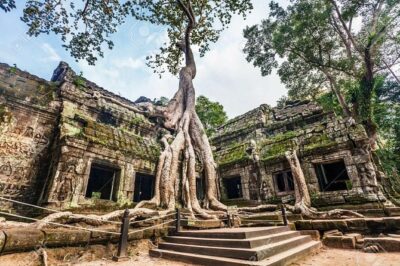
Ta Prohm is often called the Tomb Raider temple because it appeared in the Angelina Jolie film. That connection brings many people here, but the film is only part of the appeal. The temple has been left partly to the elements, with trees growing through and around the old masonry.
This is one of the most visually memorable stops because the ruins do not feel neatly separated from nature. Roots press against walls, branches stretch above corridors, and broken stone gives the site a rougher character than the more ordered Angkor Wat.
The tradeoff is that the most recognizable sections can be busy. Your guide can help you understand what you are seeing, while the private arrangement gives you some say in how long you linger. You may prefer to spend less time chasing the familiar movie angles and more time noticing how the temple’s structure has been affected by centuries of exposure.
Ta Prohm also helps you see why a guide is useful on this trip. It is easy to focus only on the trees, but the temple is still an architectural site, not just a dramatic photo setting. Ask questions as you go. The guide is with you for the full two days, so the explanation can develop instead of starting from scratch at every stop.
Bayon and the stone faces of Angkor Thom
Bayon sits in the middle of Angkor Thom, the ancient walled city that served as the heart of the Khmer Empire for many centuries. Its towers carry the famous carved faces, which look down from different directions and give the temple a watchful, almost mysterious mood.
The faces are often linked to the king or to gods. The supplied information notes that their exact meaning remains open to interpretation, making Bayon a good place to ask your guide about what is known and what is still uncertain. That kind of discussion was a strong part of guide Sam’s approach, with detailed explanations and an interest in the unanswered questions of the past.
Bayon is also a fitting final stop for day one because it differs from both Angkor Wat and Ta Prohm. Angkor Wat feels broad and carefully planned. Ta Prohm feels tangled and broken. Bayon feels compact, vertical, and full of repeated faces that reveal themselves as you walk around the towers.
You will probably be tired by this point. That is not a flaw in the site, but it is a reality of the schedule. A two-day temple tour asks a lot of your legs and attention. The advantage of a private tour is that you do not have to match a large group’s pace. You can ask for more time at a place you care about, or keep moving if the heat is taking over.
Koh Ker’s seven-tiered pyramid
Koh Ker is the boldest reason to choose this tour instead of a standard Angkor package. The main temple is a seven-tiered pyramid, a form that looks unlike the familiar Angkor monuments. Its unusual design has led to plenty of speculation, including fanciful ideas about outside help in its construction. You should treat those stories as speculation, but they do show how striking the structure is.
The setting adds to the effect. Koh Ker sits in dense jungle, away from the main concentration of Angkor sites, and the tour allows several hours to explore the pyramid and the surrounding area. The distance is part of the value. You are not seeing another version of the same temple. You are seeing a different expression of Khmer building and a site with a quieter atmosphere.
Koh Ker can also feel more demanding. The pyramid’s levels and surrounding ruins may require more careful walking than a flat, polished sightseeing stop. The information provided does not promise specific facilities or accessibility arrangements, so you should be prepared for uneven temple terrain and a more basic visit.
This is where organized transport matters most. Koh Ker is not a place you want to reach by improvising a chain of separate rides. Having suitable transport arranged for your group keeps the day simpler, particularly after the long first day.
The $10 Koh Ker ticket is separate from the tour price. Remember to bring extra cash for admission, since the temple passes are not included. The guide and cold water are included, but meals and other personal costs are yours.
More Beng Mealea jungle-temple days:
- Siem Reap: Kulen Mountain, Beng Mealea and Tonle Sap Tour
★ 5.0 · 1,483 reviews - Kulen Mountain with Beng Mealea and Tonle Sap Small Group Tour
★ 5.0 · 780 reviews - Koh Ker Temple Group & Beng Mealea Full-Day Join-in Tour
★ 5.0 · 710 reviews - From Siem Reap: Koh Ker and Beng Mealea Temples Tour
★ 4.9 · 293 reviews
Beng Mealea and the ancient highway
Beng Mealea gives you another view of Khmer ruins. It was once positioned along an ancient highway linking the main Angkor temples with Preah Khan. Today, the site is known for large, broken remains that were designed to resemble Angkor Wat.
That resemblance makes the visit especially useful. You can compare the two temples rather than seeing Beng Mealea in isolation. Angkor Wat presents a grand, organized vision. Beng Mealea is smaller, more damaged, and easier to read as a ruin, with collapsed sections and stonework that no longer forms a complete picture.
The site is large, though it is still much smaller than Angkor Wat. You may find yourself walking among fallen blocks and incomplete corridors instead of following a clear procession through intact galleries. For some people, that is the most rewarding part. The ruins leave room for imagination, but they also make a guide’s explanation more helpful.
Beng Mealea has its own $5 admission fee. That is a modest cost, but it belongs in your budget because the tour price does not cover it. The same dress rule applies here: cover your shoulders and knees before entering the temple areas.
This is a private tour, so only your group participates. That does not mean the schedule becomes entirely loose. The temples are far apart, and day two includes enough road time that the overall structure needs to stay on track.
Still, private touring gives you useful control. You can ask your guide to spend more time explaining a particular carving, slow down when the heat becomes uncomfortable, or keep moving when you have seen enough. That flexibility is much more valuable at Angkor than it may sound on paper because every person has a different tolerance for long walks, stairs, heat, and repeated stonework.
Transport is organized throughout the experience. You do not need to arrange motorcycles or separate taxis between Siem Reap, the Angkor sites, Koh Ker, and Beng Mealea. Suitable transport is provided for the group size, though the exact vehicle is not specified.
The meeting point is in Siem Reap. It is described as easy to find, which is helpful when you are starting early or trying to avoid confusion before a long day. Confirmation is received at booking, and mobile tickets are available.
One communication problem previously caused a late start for a guest traveling with Sam. The two days still went well, but this is a useful reminder to confirm your pickup or meeting details before departure. A late start matters more on a packed temple schedule than it does on a short city tour.
A guide can make or break a temple visit. These sites are enormous, and many details are difficult to interpret without help. A good explanation should give you dates and architectural information, but it should also separate firm knowledge from theories.
Sam is specifically associated with a detailed, curious guiding style. He explained the sites in depth and showed interest in what remains unknown about the past. That matters at Bayon, where the meaning of the carved faces invites debate, and at Koh Ker, where the unusual pyramid has encouraged more imaginative theories.
You should use the private setting to ask questions. Ask what is known about a structure, what is uncertain, and how the temples relate to one another. The supplied information says the guide is with you on both days, which gives you a chance to build on earlier explanations rather than receive five disconnected site talks.
The guide also helps with the practical side of the visit. Temple rules, the order of the sites, walking demands, and pauses for water are easier to handle when one person is looking after your group’s progress.
At $147.44 per person, this is not simply an admission ticket with a ride attached. The price covers a private two-day experience with a guide, organized transport, and cold drinking water. It also removes the hassle of arranging separate transport to two outlying temple sites.
The extra admission fees change the calculation. You need:
- $37 for the one-day Angkor pass
- $10 for Koh Ker
- $5 for Beng Mealea
That adds $52 per person, bringing the known combined cost to $199.44 before food, drinks beyond the supplied water, and personal expenses. Accommodation is also not included.
I see the value most clearly if you are short on planning time or uncomfortable handling transport on your own. The package gives you an organized route and a guide for both days. If you already have reliable transport and enjoy researching temples independently, the price may feel less attractive.
The tour is often booked about 42 days ahead. That does not guarantee a sold-out date, but it suggests you should not leave planning until the last moment if your Siem Reap dates are fixed.
Dress for temple access, not just for the road. Your shoulders and knees must be covered, and this rule applies across the temple visits. Light, comfortable clothing that meets the requirement will save you from trying to adjust your outfit at the entrance.
Cold water is provided, which is a welcome touch during two days of outdoor sightseeing. Food and other drinks are not included, so budget for those separately. Personal expenses are also outside the tour price.
You can cancel for a full refund if you do so at least 24 hours before the start time. Changes or cancellations made less than 24 hours before departure are not accepted for a refund, and the cut-off follows local time.
Most people can participate, according to the supplied tour information. Still, the combination of long temple days, uneven ruins, and the seven-tiered Koh Ker pyramid means you should think honestly about your walking comfort before booking.
I would recommend this experience to a first-time Siem Reap visitor who wants the main Angkor sights plus something less typical. It suits you especially well if you want a private guide, prefer not to arrange long-distance transport, and like having room to ask questions.
It is also a good match for anyone who has already seen photographs of Angkor Wat and wants more than the standard circuit. Koh Ker changes the rhythm of the trip, while Beng Mealea shows how a temple modeled on Angkor Wat looks after centuries of damage and exposure.
You may want a different plan if you dislike long road journeys, prefer short sightseeing days, or want every meal and entrance fee included. The price rises once admissions are added, and day two is ambitious. This is a temple-focused experience, not a relaxed holiday schedule.
Book this tour if you want Angkor Wat’s essential sights on day one and a more unusual temple day on day two. The strongest reasons are the private transport, the same guide across both days, and the chance to see Koh Ker’s seven-tiered pyramid without limiting your visit to the central Angkor sites.
Before paying, set aside the extra $52 for temple admissions, check that your clothing covers shoulders and knees, and confirm the meeting details in Siem Reap. If you are comfortable with two full days of ruins, walking, and road time, this route gives you a broad and memorable picture of the area’s temple traditions.
FAQ
What is included in the 2-Day Angkor Wat, Koh Ker and Beng Mealea Tour?
The tour includes a guide, cold drinking water, and suitable transport for the group size. Food, drinks beyond the supplied water, accommodation, personal expenses, and temple passes are not included.
How much do the temple passes cost?
The listed costs are $37 per person for a one-day Angkor pass, $10 per person for Koh Ker, and $5 per person for Beng Mealea. The total is $52 per person.
Is this a private tour?
Yes. Only your group participates in the activity, and the tour allows you to go at your own pace.
Where does the tour start?
The meeting point is in Siem Reap, Siem Reap Province. The meeting point is described as easy to find.
What should I wear to the temples?
You must cover your shoulders and knees to enter the temples. Choose clothing that meets those rules for both days.
Can I cancel for a full refund?
Yes. You can cancel at least 24 hours before the experience start time for a full refund. Cancellations or changes made less than 24 hours before the start time are not accepted for a refund.
More 2-Day Experiences in Siem Reap
- Angkor 2-Day Sunset & Sunrise Small-Group Tour
★ 5.0 · 2,567 reviews - 2 Days Exclusive Temple Highlights with Sunset and Sunrise Tour
★ 5.0 · 1,157 reviews - Siem Reap: Angkor Sunrise 1- or 2-Day Guided Temples Tour
★ 4.9 · 1,132 reviews - 2 Days Guided Historical Tour in Angkor
★ 5.0 · 855 reviews
More Koh Ker pyramid trips
- Preah Vihear: Full-Day Preah Vihear and Koh Ker Temple Tour
★ 4.9 · 263 reviews - Full-Day Preah Vihear, Koh Ker and Beng Mealea Private Tour
★ 4.4 · 101 reviews - Preah Vihear temple – Koh Ker & Other temple with Small Group
★ 5.0 · 96 reviews - 4-Day Excursion of Angkor, Koh Ker, Beng Mealea, Tonle Sap and Waterfalls
★ 5.0 · 87 reviews
New around Siem Reap
- Siem Reap Temple and Waterfall 3-Day Tour★ 4.5 · 3 reviews
- Siem Reap Private Tour: Angkor Wat Sunrise And Banteay Srei★ 5.0 · 3 reviews
- Siem Reap: Guided Day Trip to Local Village & Cooking Class★ 5.0 · 3 reviews
- Savor the Countryside: Tours with Authentic Cooking Classes”★ 5.0 · 3 reviews
- Angkor Wat Sunrise TukTuk Tour★ 5.0 · 3 reviews
- Angkor Wat Sunset In Private and Small-In-Group★ 4.3 · 3 reviews
- Exclusive Angkor temples and Small group temples tours★ 5.0 · 3 reviews
- Angkor Wat: Highlights and Sunrise with Spanish Guide★ 4.8 · 3 reviews
Angkor Wat Tours, compared.
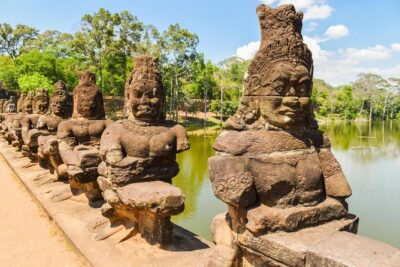
Angkor Wat Sunrise or Sunset Tour with Guide from Siem Reap
Read our review →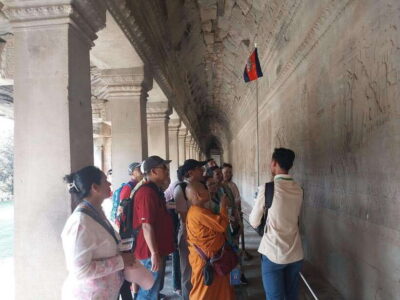
Angkor Wat: Small-Group Sunrise or Sunset Tour
Read our review →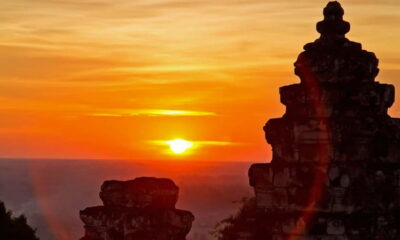
Angkor Wat Sunrise tour with Small – Group and Guide tours
Read our review →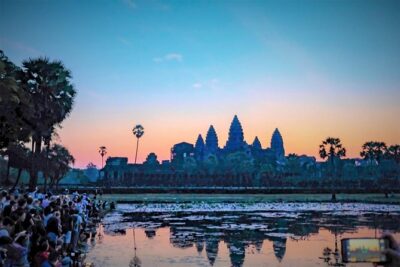
Angkor Wat Highlights and Sunrise Guided Tour from Siem Reap
Read our review →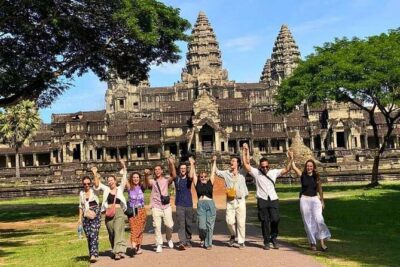
Angkor Wat Sunset Small Group Tour with Lunch Included
Read our review →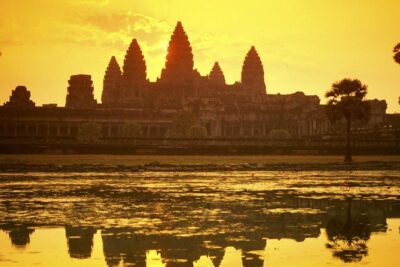
Full-Day Angkor Wat Sunrise Private Tour with Guide from Siem Reap
Read our review →
Angkor Wat Sunrise & 3 Main Temples with Breakfast – Small Group
Read our review →Browse the lists this tour appears in