
Reviewed · ANGKOR WAT TOURS
Sunrise at Angkor Wat and Small Tour with Tours Guide
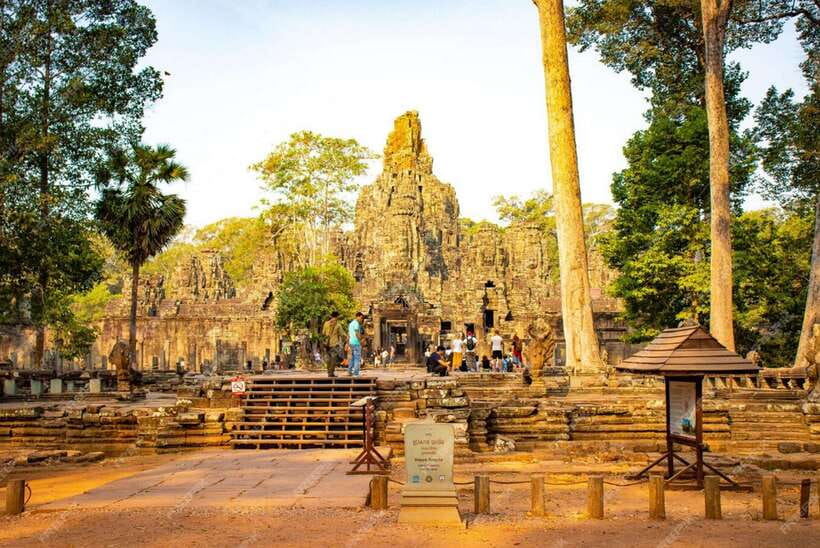
Angkor Wat at sunrise is the main event here, and the early start gets you to the temple before the day becomes hot. You’ll watch the sky brighten behind the famous towers, then spend the morning among the stone faces of Bayon and the jungle-covered ruins of Ta Prohm.
I like the low tour price and the chance to see several major temples in one day without arranging transport. I also like the local guide service, especially when you get someone such as Ounra, who is praised for finding good viewpoints and taking photos.
The catch is simple: the $6 price does not include the Angkor pass, which costs $37 for one day. Shared groups can also be large, with one group reaching 22 people, and some visitors found the guide’s English hard to follow.
Key points to know before booking
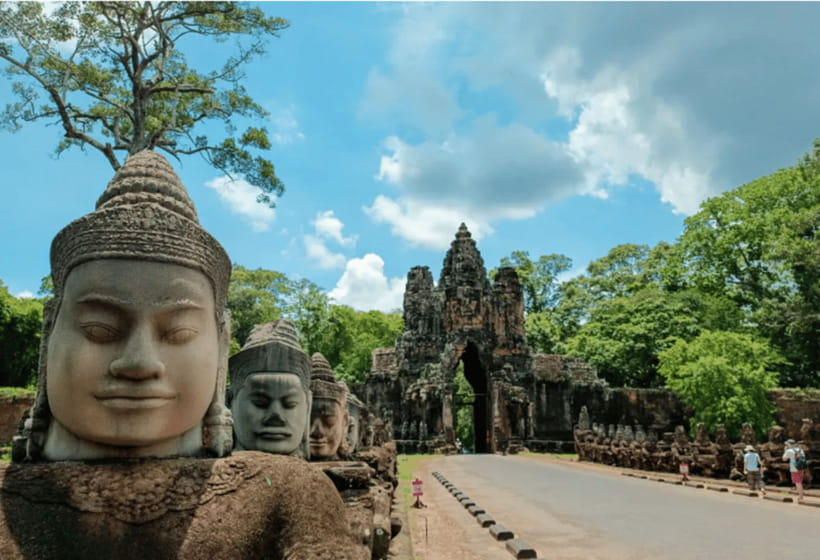
- Sunrise begins around 4:30 AM: You need to be ready well before dawn for hotel pickup.
- The Angkor pass costs extra: Add $37 for a one-day pass, or choose a three-day pass for $62 or seven days for $72.
- Five major temple areas are covered: Angkor Wat, Angkor Thom, Bayon, Ta Prohm, and Banteay Kdei all feature in the day.
- Ounra is a strong guide choice: He is praised for finding good sunrise views and helping with photos, though guide assignment may vary.
- Shared and private options are available: A private group gives you more control, while the shared option keeps the advertised tour price low.
- Lunch is not included: You’ll need to pay for food and drinks, and a temple-area restaurant may charge more than one in town.
Why the 4:30 AM start is worth it
The day begins before sunrise, with pickup from your hotel in Siem Reap in an air-conditioned vehicle. You’ll need to provide your hotel name and room number by email or WhatsApp so the operator can arrange the pickup.
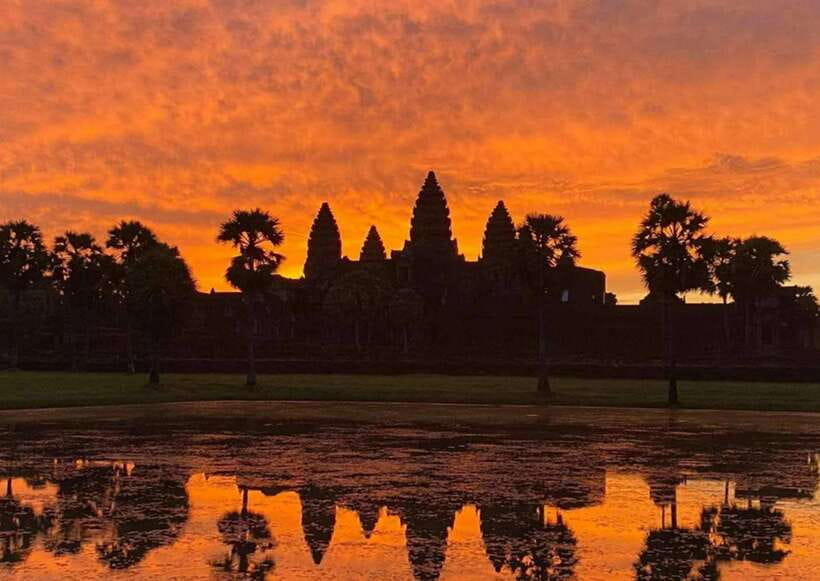
This is not a gentle start. You may leave your bed around 4:30 AM, reach the Angkor entrance in darkness, and walk toward the temple while other early visitors gather near the reflecting pools. Still, the timing matters. By midmorning, Angkor’s heat can be tiring, so seeing the most famous temple first is a sensible plan.
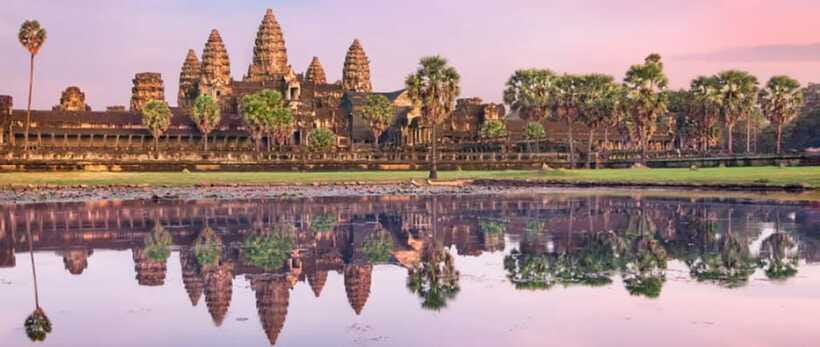
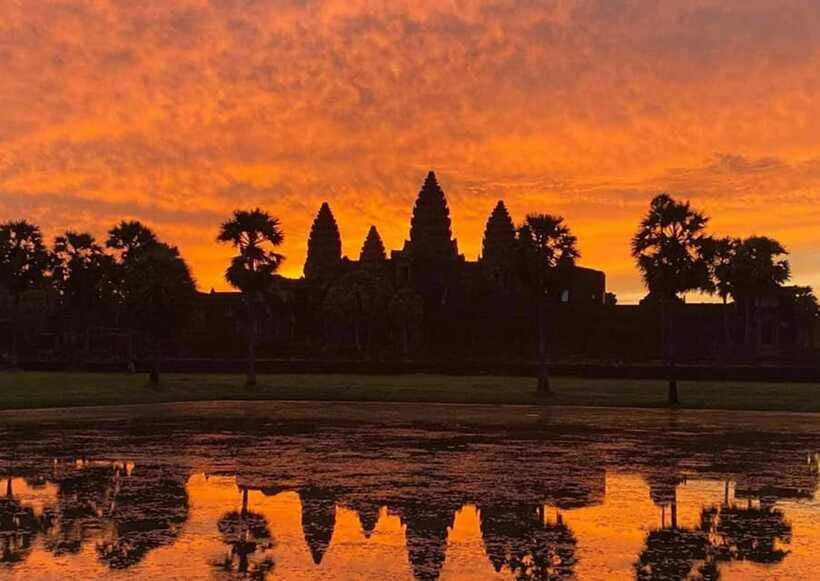
The sunrise view is not guaranteed to produce a perfect red sky. Weather controls that part. What you do get is the gradual outline of Angkor Wat, the changing light on the towers, and a quiet start before the busiest part of the day.
Guide Ounra has been singled out for knowing good photo positions and avoiding some of the crowds. That can make a real difference at sunrise, when a small shift in position may give you a clearer view of the temple and a better photograph.
Bring a small flashlight if you have one, though the tour includes a guided walk. Wear shoes with a secure sole, since the temple grounds involve walking over uneven surfaces. A hat, sunscreen, and water are still useful later, even though bottled drinking water is included.
More Angkor Sunrise Tours in Siem Reap:
- Angkor Wat Sunrise or Sunset Tour with Guide from Siem Reap
★ 5.0 · 12,109 reviews - Angkor Wat Sunrise tour with Small – Group and Guide tours
★ 5.0 · 3,655 reviews - Full-Day Angkor Wat Sunrise Private Tour with Guide from Siem Reap
★ 5.0 · 2,920 reviews
Angkor Wat, two hours with the temple at its best
After the sunrise viewing, you’ll spend about two hours around Angkor Wat, including a guided walk and sightseeing inside the complex. This gives you time to look beyond the familiar tower view.
Angkor Wat was built as a monumental religious complex, and its scale becomes clearer once you move through the galleries and courtyards. Your guide explains Cambodian culture, temple art, the Khmer Empire, and the meaning behind the carvings. This context helps turn a grand stone building into a place with purpose and symbolism.
The schedule includes a 30-minute breakfast break and another short 15-minute pause. Breakfast is not included in the tour price, so plan to pay separately. You may prefer to bring something small from Siem Reap, especially if you do not want to spend time choosing food near the temples.
The first section of the day is also the most physically demanding in terms of timing. You are awake early, walking through a large complex, and still have several temples ahead. Pace yourself instead of treating the sunrise as a race.
South Gate and the stone faces of Angkor Thom
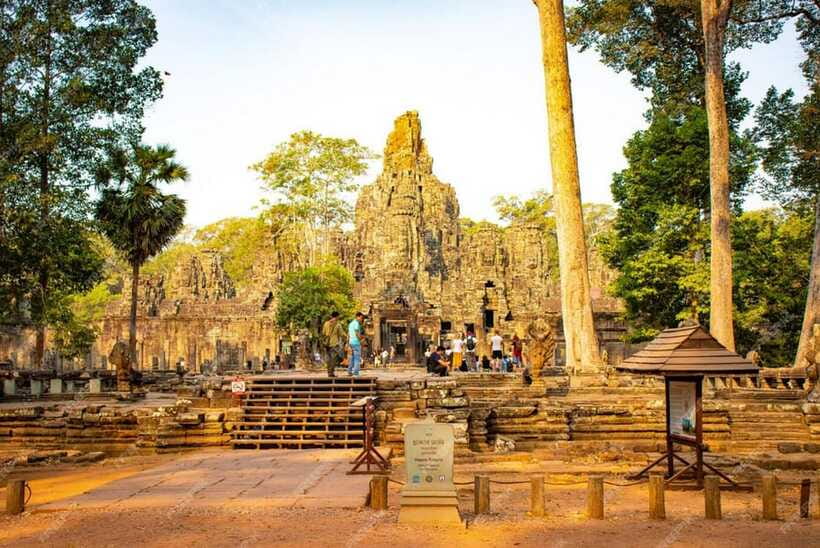
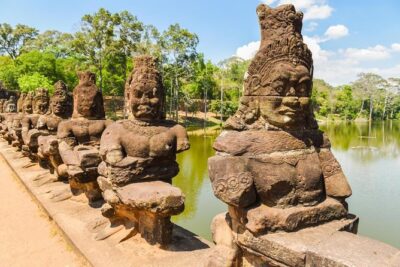
The route continues to the South Gate of Angkor Thom, where you get a photo stop and a guided visit. The approach is one of the more memorable parts of the day because the gate is reached across a bridge lined with monumental figures.
From here, the guide introduces the former royal city of Angkor Thom and its major temples. The tour allows about an hour at the South Gate, followed by more time for the Bayon area.
The South Gate is a useful place to hear about the Khmer Empire before you focus on individual buildings. Your guide can explain how the gates, roads, temples, and royal spaces fitted together. The setting also gives you a chance to take photographs before moving deeper into the complex.
Do not expect a long, private stop. This is a popular route, and a shared group needs to keep moving. If photography is your main goal, tell the guide early. Ounra’s strength, based on the experience described by one visitor, is helping people find good angles and taking photos for them.
Bayon and Baphoun: faces, towers, and royal power
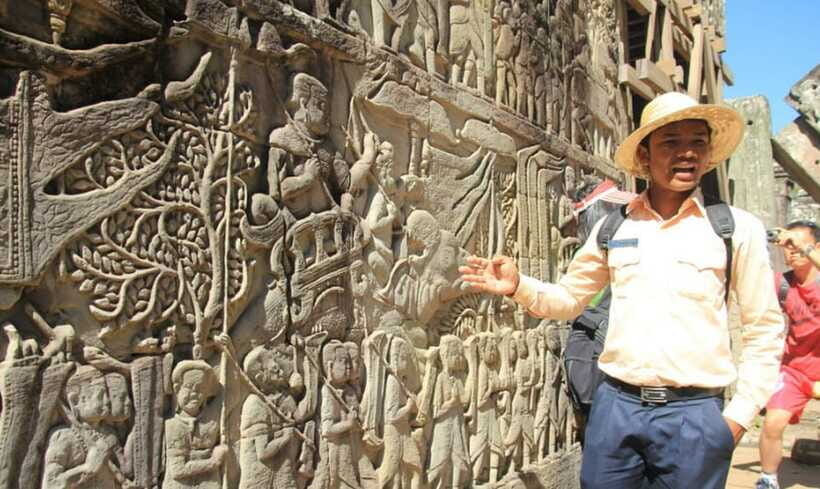
Bayon receives about 90 minutes, which is enough for a guided visit without turning the entire morning into one temple. Its best-known feature is the collection of huge carved faces associated with the bodhisattva Avalokitesvara. The stated description refers to 54 towers and 216 faces, though the exact count you see can depend on how the towers are counted and what remains visible.
Bayon is different from Angkor Wat in mood and shape. Instead of a long, balanced view toward tall central towers, you move through a dense maze of stone towers and smiling faces. The closer you get, the more the faces seem to appear around you.
The guide’s explanation is valuable here because the carvings can otherwise blur into a mass of stone. Listen for details about the Khmer rulers, religious ideas, and the purpose of the temple. Even a short explanation can help you notice how the faces watch over the corridors.
Baphoun is also part of the Angkor Thom visit. It adds another view of the royal center and gives the day more variety than a route focused only on the best-known temples.
The walking can be tiring, especially after the early start. This is one reason the experience is not considered suitable for people over 70. The stated age guidance is broad rather than a medical assessment, but you should take it seriously if uneven paths, stairs, or long walks are difficult for you.
More Angkor Wat Tours in Siem Reap:
- Siem Reap: Angkor Wat: Small-Group Sunrise or Sunset Tour
★ 5.0 · 9,444 reviews - Siem Reap: Angkor Wat 2-Day Tour with Sunrise and Sunset
★ 4.9 · 4,429 reviews - Siem Reap: Full-Day Angkor Wat Guided Tour with Sunset
★ 4.9 · 3,803 reviews - Angkor Wat Highlights and Sunrise Guided Tour from Siem Reap
★ 5.0 · 3,213 reviews
The Elephant and Leper King terraces
The tour also takes you to the Terrace of the Elephants and the Terrace of the Leper King. These were royal viewing platforms linked to public ceremonies and the king’s great audience hall.
The Elephant Terrace is long and highly decorated, with carved elephants and other figures along the walls. It is easier to appreciate when you understand its role as a viewing platform rather than treating it as another isolated temple.
The Terrace of the Leper King is smaller and more enclosed in feel. Its carved walls reward a closer look, and the guide can point out details that you might miss while walking past.
This stop is less about a dramatic single photograph and more about connecting the monuments to royal life. You see where power was displayed and audiences were held, not just where religious worship took place.
Ta Prohm, where roots meet the ruins
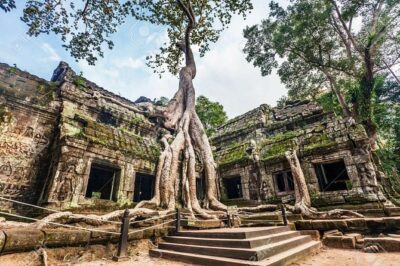
Ta Prohm gets about two hours, making it one of the fullest stops of the day. This is the temple most associated with trees growing over and around the stone structures.
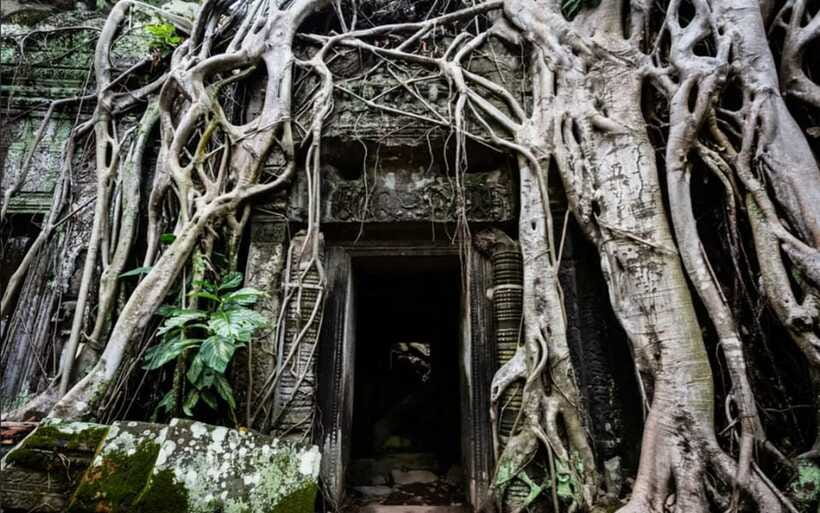
The attraction is the meeting of nature and architecture. Large roots press against walls, frame doorways, and create the shadowed atmosphere that makes Ta Prohm feel so different from Angkor Wat. The temple has been preserved with much of its overgrown character, although paths and visitor routes help protect the site.
Ta Prohm is a good place to slow down and look at construction details. The trees are dramatic, but the carved doorways, galleries, and collapsed sections also tell you how large the complex once was.
It can be crowded at the best-known root-covered spots. A guide who knows alternative viewpoints can help, but a shared group may still need to wait for photographs. The two-hour visit gives you a fair chance to see more than the famous doorway, provided the group stays on schedule.
You’ll want sturdy shoes here. The ground can be uneven, and the temple ruins require careful attention as you walk. The air-conditioned vehicle provides relief between stops, but much of the site time is outdoors.
Banteay Kdei adds a quieter final temple
The final temple is Banteay Kdei, built by King Jayavarman VII in the late 12th century. It is often a useful closing stop because it continues the architectural story without repeating exactly the same experience as Bayon or Ta Prohm.
Banteay Kdei has a worn, atmospheric quality, with galleries, courtyards, and stonework that show the effects of time. It is less about one instantly recognizable view and more about exploring the structure at a slower pace.
The supplied schedule gives the main focus to Angkor Wat, Angkor Thom, Bayon, and Ta Prohm, while Banteay Kdei is described as the final visit before returning to Siem Reap. Exact time there may depend on the day’s pace, traffic, group size, and how long the earlier stops take.
That flexibility is normal on an eight-hour temple trip. If Banteay Kdei is especially important to you, mention it when booking or choose the private option so you have a better chance of shaping the timing.
Transport, group size, and the long temple day
Round-trip hotel transfers are included, along with an air-conditioned vehicle, bottled water, and a cold towel. These details sound modest, but they matter after several hours in Cambodia’s heat.
The driver is separate from the guide. One detailed account praised the driver for being kind, helpful, and on time, while the guide handled explanations and photos. Driver quality can affect the feel of a long day, especially when you return tired.
You can choose a shared group or a private group. The shared option is the obvious budget choice, but group size affects how easily you move through narrow temple spaces and how much time you get for questions. A group of 22 people can feel slow at photo stops and may make it harder to hear every explanation.
A private group costs more than the advertised shared rate, but it may be worthwhile if you care about photography, have limited time, or want to adjust the pace. It also gives you a better chance to ask detailed questions about Cambodian art and history.
English is the guide language. The quality of communication may vary by guide. Ounra is specifically praised for both explanations and photography, while another account found the English of a guide difficult to understand. If clear spoken English is essential, contact the operator before booking and ask which guide is likely to lead your departure.
What the $6 price really means
At $6 per person, the advertised tour price is unusually low for an eight-hour guided temple day with hotel transport. But it is only the cost of the tour service.
You must buy an Angkor pass separately:
- One day: $37
- Three days: $62
- Seven days: $72
The passes listed must be used on consecutive days. For a single day, your basic total becomes $43 per person before breakfast, lunch, or other drinks.
That is still a fair price for transport and a guide covering several major sites. The value is strongest if you want the classic Angkor route and do not want to arrange a tuk-tuk or car yourself.
Meals are not included. Lunch may be available at a restaurant near the temples, but the cost can be higher than in central Siem Reap. One account specifically found the selected restaurant expensive for the area, though the food was considered good by another person on a different departure.
Bring extra cash for food and drinks. Bottled water and the cold towel are meant to be included, but one person reported receiving neither. I would confirm these details at pickup and carry backup water, especially because of the early start and warm conditions.
Who should choose this Angkor tour?
I would choose this experience if you have one full day in Siem Reap and want to cover the major temples with a guide. It suits first-time visitors who want historical explanations, hotel transfers, and help with photographs.
It also works well for people who want to keep the tour cost low. The shared option gives you transport and a planned route for very little money, as long as you budget for the pass and meals.
I would think twice if you dislike early mornings, large groups, or fixed schedules. The 4:30 AM pickup is the price of seeing sunrise, and the day does not finish until roughly eight hours later.
The tour may also be hard for anyone with limited mobility. The experience includes substantial walking and temple terrain, and it is listed as unsuitable for people over 70. If you need a slower day, a private group may help, but the physical setting will not change.
The overall rating is 4.6 from 22 ratings, with the strongest praise focused on the sunrise, helpful guides, photography assistance, punctual drivers, and the number of major temples covered. The less positive points concern missing water or towels, group size, restaurant prices, and occasional difficulty understanding English.
Should you book it?
Book this tour if you want the essential Angkor Wat circuit at a very low starting price, and you are willing to pay separately for the temple pass and meals. The sunrise, Bayon faces, Ta Prohm roots, and royal terraces make a strong one-day introduction.
Choose the private option if photographs, personal questions, or a slower pace matter more than saving every dollar. For a shared departure, confirm pickup details, ask about bottled water and the cold towel, and be ready for a long day with a sizable group.
If you can accept the early alarm and keep your expectations realistic about the $6 headline price, this is a practical way to see Angkor’s main sights with local guidance.
FAQ
What time does the tour start?
Hotel pickup begins at about 4:30 AM so you can reach Angkor Wat for sunrise.
How long does the experience last?
The tour lasts about eight hours, including temple visits, breaks, and return transport to Siem Reap.
Is the Angkor entrance pass included?
No. You must purchase an Angkor pass separately. Prices listed are $37 for one day, $62 for three days, and $72 for seven days.
Can I choose a private tour?
Yes. A private group option is available, as well as a shared group option.
Is hotel pickup included?
Round-trip transfers to and from your hotel are included. You should provide your hotel name and room number by email or WhatsApp.
What language does the guide speak?
The live tour guide speaks English.
Are food and drinks included?
No. Meals and beverages are not included. Bottled drinking water is listed as included, along with a cold towel.
Which temples are visited?
The route includes Angkor Wat, the South Gate of Angkor Thom, Bayon, Baphoun, the Terrace of the Elephants, the Terrace of the Leper King, Ta Prohm, and Banteay Kdei.
Is the tour suitable for people over 70?
The experience is listed as not suitable for people over 70. It also involves extensive walking around temple sites, so you should consider your fitness and comfort on uneven ground.
More early starts in Siem Reap
- Angkor Wat Sunrise & 3 Main Temples with Breakfast – Small Group
★ 5.0 · 2,857 reviews - Siem Reap: Angkor Wat Sunrise and Full-Day Sightseeing Tour
★ 4.9 · 2,828 reviews - Angkor 2-Day Sunset & Sunrise Small-Group Tour
★ 5.0 · 2,567 reviews - Siem Reap: Angkor Wat Sunrise or Sunset Guided Tour
★ 4.9 · 2,123 reviews
New around Siem Reap
- Kulen Mountain With Ticket included Plus Banteay Srei Temple Tour★ 5.0 · 7 reviews
- 2 Days Angkor temples with Sunrise & Sunset★ 5.0 · 7 reviews
- Private Siem Reap Airport Transfer to hotel in town★ 5.0 · 7 reviews
- 1-Day private Angkor Temple Tour with Sun Rise by Tuk Tuk from Siem Reap★ 4.5 · 7 reviews
- Siem Reap: Morning Cooking Class & Market Tour★ 5.0 · 7 reviews
- Kulen Mountain, Killing Fields and War Museum Tour★ 5.0 · 7 reviews
- War Museum, Killing Field, and APOPO Hero RATs Tour★ 5.0 · 7 reviews
- Half-Day: Silk Farm, Senteur Angkor, and Satcha Workshop★ 4.6 · 7 reviews
Angkor Wat Tours, compared.
Angkor Wat Sunrise or Sunset Tour with Guide from Siem Reap
Read our review →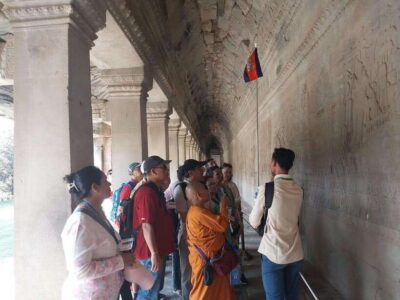
Angkor Wat: Small-Group Sunrise or Sunset Tour
Read our review →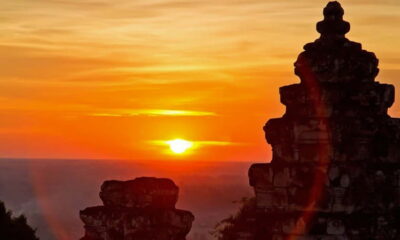
Angkor Wat Sunrise tour with Small – Group and Guide tours
Read our review →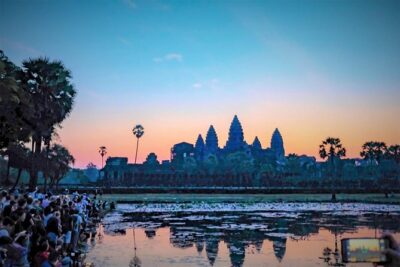
Angkor Wat Highlights and Sunrise Guided Tour from Siem Reap
Read our review →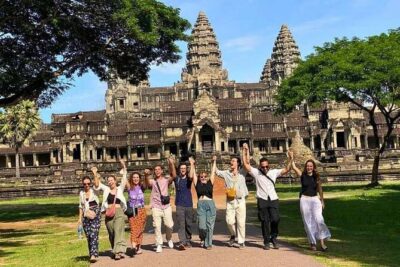
Angkor Wat Sunset Small Group Tour with Lunch Included
Read our review →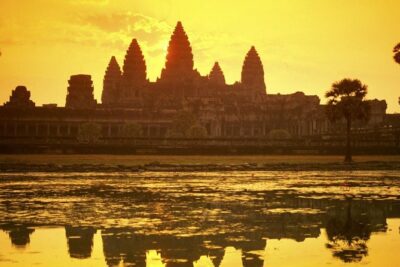
Full-Day Angkor Wat Sunrise Private Tour with Guide from Siem Reap
Read our review →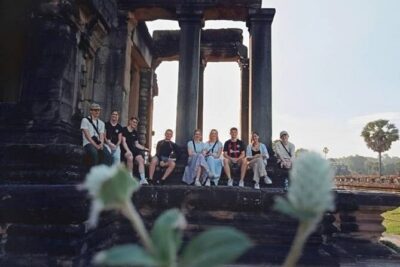
Angkor Wat Sunrise & 3 Main Temples with Breakfast – Small Group
Read our review →Browse the lists this tour appears in