
Reviewed · ANGKOR WAT TOURS
Siem Reap: Angkor Wat Sunrise and Best Temples Tour
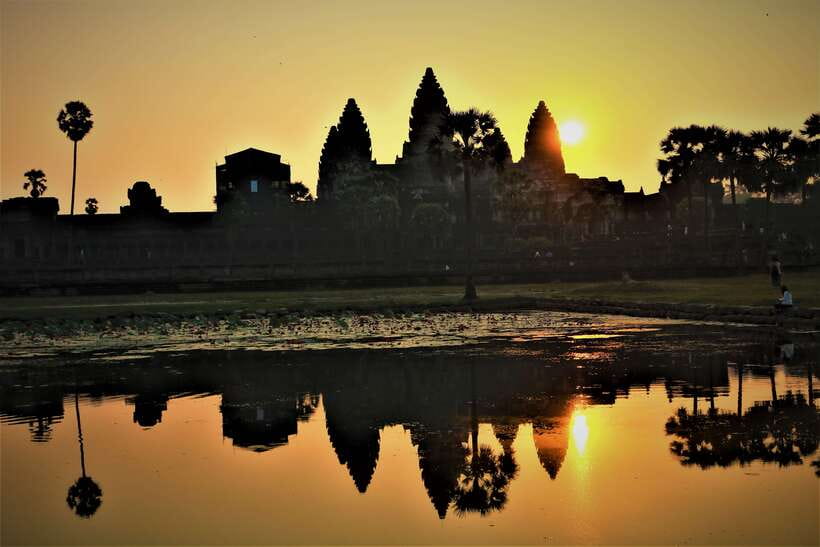
Angkor Wat at sunrise is the reason to set the alarm for an hour most people consider uncivilized. You enter the temple before dawn, walk through dark corridors with a torch, and watch the sky brighten behind one of Cambodia’s great monuments. I especially like the eastern entrance, which offers a quieter approach, and the chance to see the temple before the heat reaches full strength.
I also like the guide-led context. Guides such as Kiss, Sok, Chan Dara, and Mr Bun have been praised for clear English, cultural insight, and help with photographs. The main drawback is simple: this is a long, early day, and the famous sunrise viewing area can still be crowded. You need to arrive early and keep moving if you want to see every temple.
Key points to know before booking
- Sunrise begins before dawn: Bring a torch and expect to walk through Angkor Wat in darkness.
- The Angkor Pass costs extra: Add USD 37 for a one-day pass, making the basic total about USD 63 per person.
- The route covers major highlights: Angkor Wat, Srah Srang, Angkor Thom, Bayon, Ta Prohm, and a possible visit to Ta Nei.
- Guiding is a major strength: The English or Spanish-speaking guide explains architecture, religion, Cambodian culture, and local history.
- Heat management matters: The air-conditioned van, cold water, and cool towels are welcome after temple walks.
- This suits active sightseers: Expect stairs, uneven ground, heat, and several hours of walking. The tour is not suitable for wheelchair users.
Sunrise at Angkor Wat starts the day
Pickup begins before sunrise from your hotel in Siem Reap. The drive to Angkor takes about 40 minutes by air-conditioned vehicle, though the exact pickup time depends on the day’s sunrise and local arrangements.
You should arrange a hotel wake-up call. This is not the morning to trust a phone alarm hidden under a pillow. Wear shoes you can walk in for hours, and bring a torch because the first part of the visit takes place in low light.
The group enters Angkor Wat from the eastern side, described as a less-used approach. This is a fine detail for anyone who dislikes being swept into a crowd at the main entrance. You move through cloistered passages and reach the temple area as the light changes.
The sunrise view is the emotional high point of the morning. The classic view looks toward the temple towers as the sky turns pale, but the best position is not guaranteed. One visitor found that crowds had already gathered and that arriving early was essential for a clear view. Plan to wait, stand, and protect your camera position rather than arriving at the last minute.
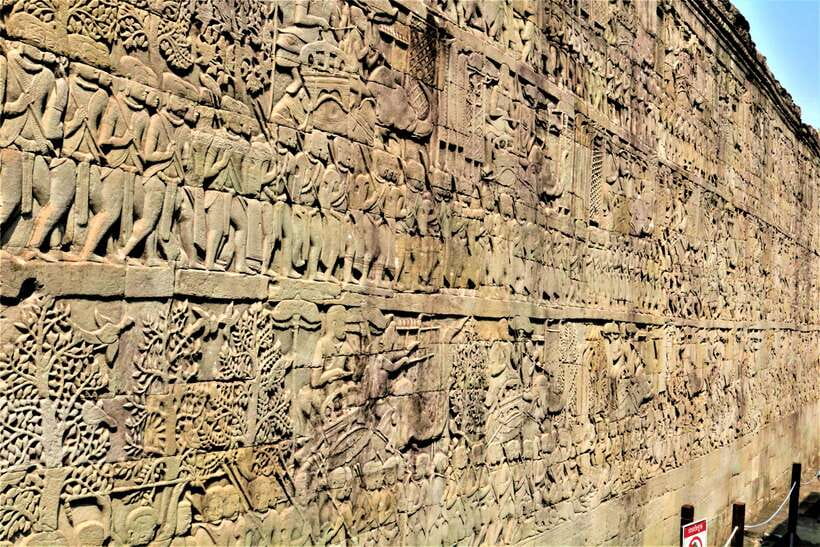
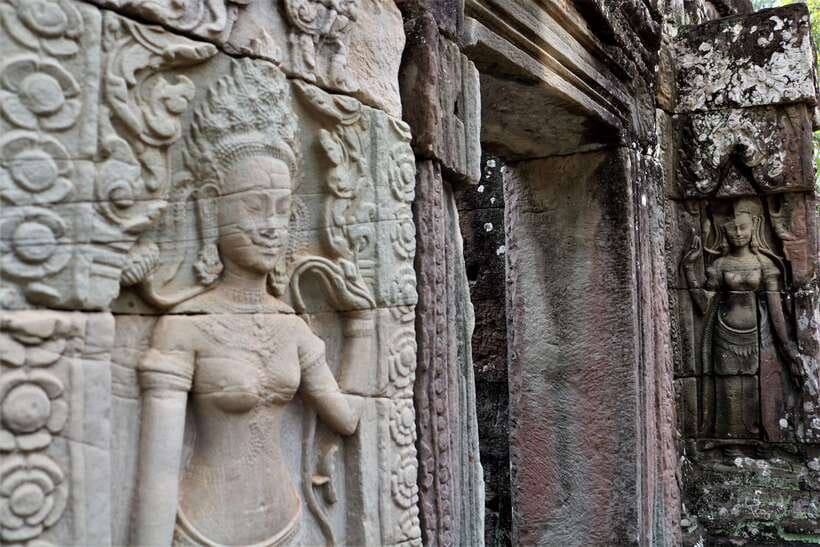
Once the sun is up, the temple becomes easier to read. Your guide can point out the scale of the galleries, the stonework, and the long bas-relief carvings. Angkor Wat contains one of the world’s longest stretches of bas-relief sculpture, so a guide helps you notice more than the towers and postcard view.
The early start has a second benefit. You explore during the cooler part of the day, at least for a while. Cambodia’s heat can turn a beautiful monument into hard work by late morning, so using the first hours for Angkor Wat is a sensible plan.
More Angkor Sunrise Tours in Siem Reap:
- Angkor Wat Sunrise or Sunset Tour with Guide from Siem Reap
★ 5.0 · 12,109 reviews - Angkor Wat Sunrise tour with Small – Group and Guide tours
★ 5.0 · 3,655 reviews - Full-Day Angkor Wat Sunrise Private Tour with Guide from Siem Reap
★ 5.0 · 2,920 reviews
Breakfast beside Srah Srang gives you a pause
After Angkor Wat, the tour includes a breakfast break near Srah Srang. Breakfast is not included in the price, so you can use a hotel breakfast pack or order food at a local restaurant after sunrise.
This pause matters. Angkor Wat is a large site, and the first visit includes walking, standing, photography, and a very early start. A proper break gives you time to drink, eat, use the bathroom, and cool down before the next temples.
If your hotel provides breakfast, request a packed meal in advance. That is one of the most useful small preparations for this tour. Bring cash as well, since meals are not covered and the temple pass is also paid separately.
Srah Srang itself is listed as the breakfast stop rather than a long formal temple visit. Think of it as a practical place to reset, not a major guided portion of the day.
Angkor Thom explains the empire’s scale
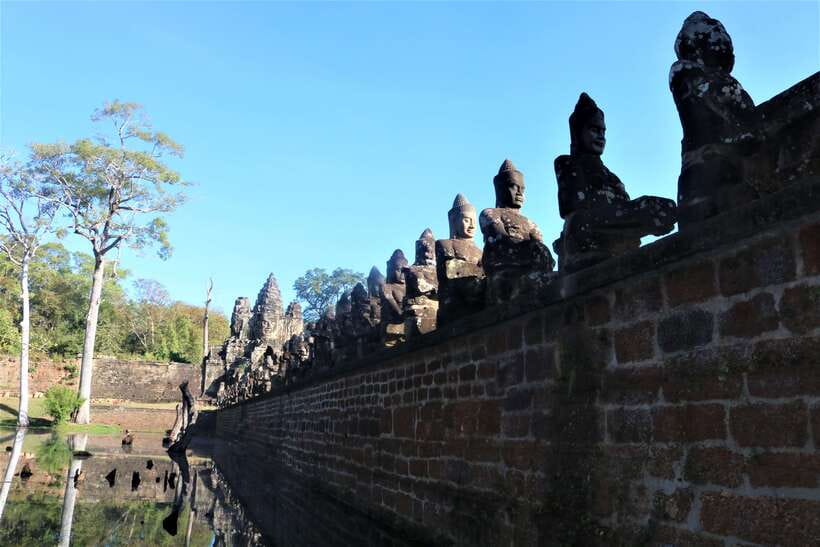
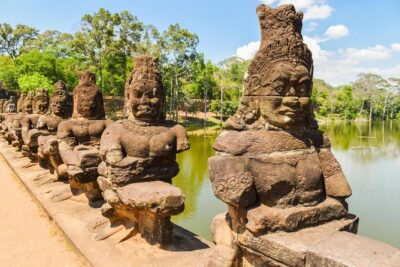
The next major section takes you to Angkor Thom, the fortified city that once formed the center of the Khmer Empire. The Southern Gate is especially memorable. It is flanked by 54 stone figures on each side, with gods on the left and demons on the right.
This is more than a quick photo stop. The figures pull a large religious story into view, and the guide can explain the difference between the two lines and how the gateway was arranged. You also get a sense of Angkor Thom as a planned city, not simply a collection of isolated ruins.
The gate can be busy, so your guide’s help is useful for getting the group through without losing time. Keep your camera ready, but do not spend the whole visit trying to capture every figure. The day includes several major stops, and one Spanish-language review made the practical point that stopping too long for photographs can leave too little time for the full route.
Bayon’s stone faces reward a closer look
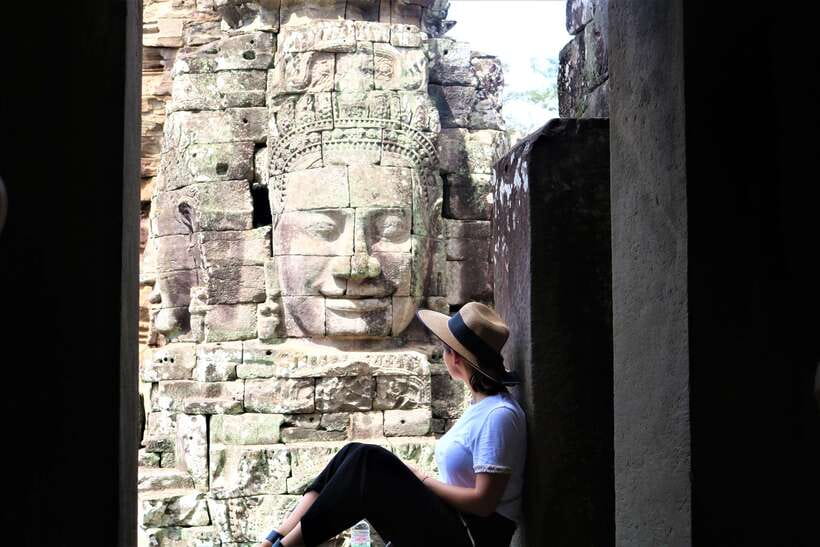
Inside Angkor Thom, Bayon is the temple that tends to stop people in their tracks. Its central towers carry more than 200 enormous carved faces, each with the calm, almost smiling expression associated with the site.
From a distance, Bayon can look like a pile of towers. Up close, the arrangement becomes more interesting. Narrow passages, changing angles, and giant faces appear and disappear as you walk. This is where a good guide earns the fee by explaining what you are seeing and pointing out architectural details you might otherwise miss.
The tour allows guided sightseeing and time to walk around. That balance is useful. You get a clear explanation, then some space to look on your own and take photographs.
Bayon can also feel cramped in places, especially when several groups arrive together. The visit rewards patience more than speed. If you are interested in architecture, ask your guide about the towers and carvings. Guides on this tour have been praised for answering questions about Cambodian culture, politics, language, and the reasons buildings were designed as they were.
More Angkor Wat Tours in Siem Reap:
- Siem Reap: Angkor Wat: Small-Group Sunrise or Sunset Tour
★ 5.0 · 9,444 reviews - Siem Reap: Angkor Wat 2-Day Tour with Sunrise and Sunset
★ 4.9 · 4,429 reviews - Siem Reap: Full-Day Angkor Wat Guided Tour with Sunset
★ 4.9 · 3,803 reviews - Angkor Wat Highlights and Sunrise Guided Tour from Siem Reap
★ 5.0 · 3,213 reviews
The terraces add royal ceremony and darker detail
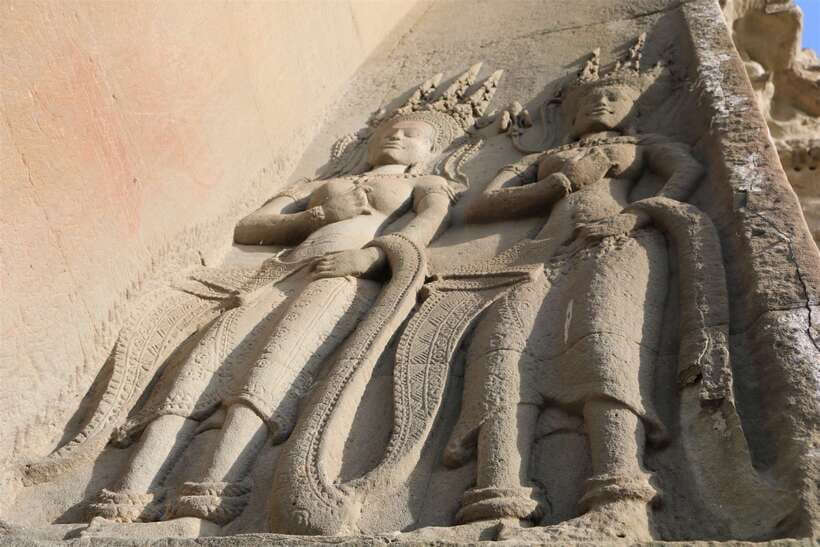
The Terrace of the Elephants and the Terrace of the Leper King are included in the Angkor Thom portion of the day. They are different from Bayon, so the stop adds variety rather than giving you another tower complex.
The Terrace of the Elephants is linked to the ceremonial side of Angkor Thom. The Terrace of the Leper King is known for its carved figures and enclosed reliefs. A quick walk past both can feel rushed, especially after a long morning, but the guide’s explanation helps connect them to the larger city.
This is also a good point to watch your energy. You may still feel fresh after sunrise, but the combination of early rising, sun, and stone paving catches up with you. Drink the supplied mineral water, use the cool towel when you return to the vehicle, and take the shaded breaks offered by the guide.
Ta Prohm brings the jungle into the ruins
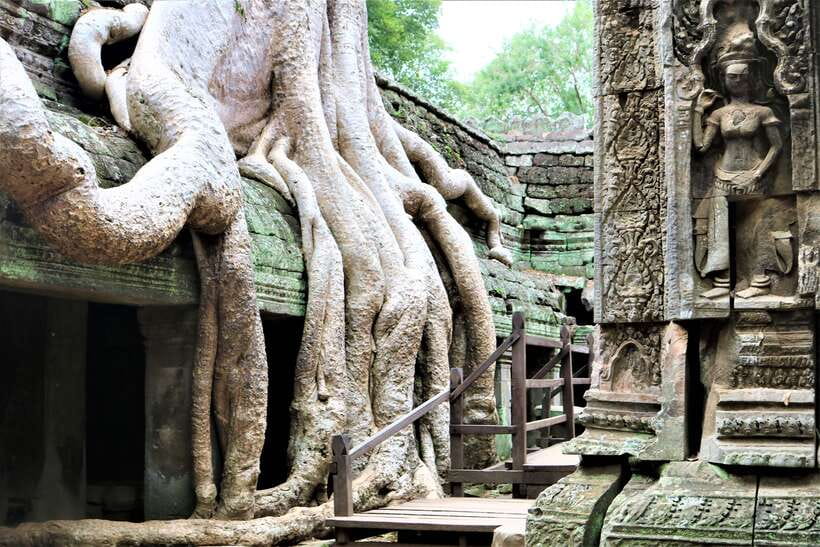
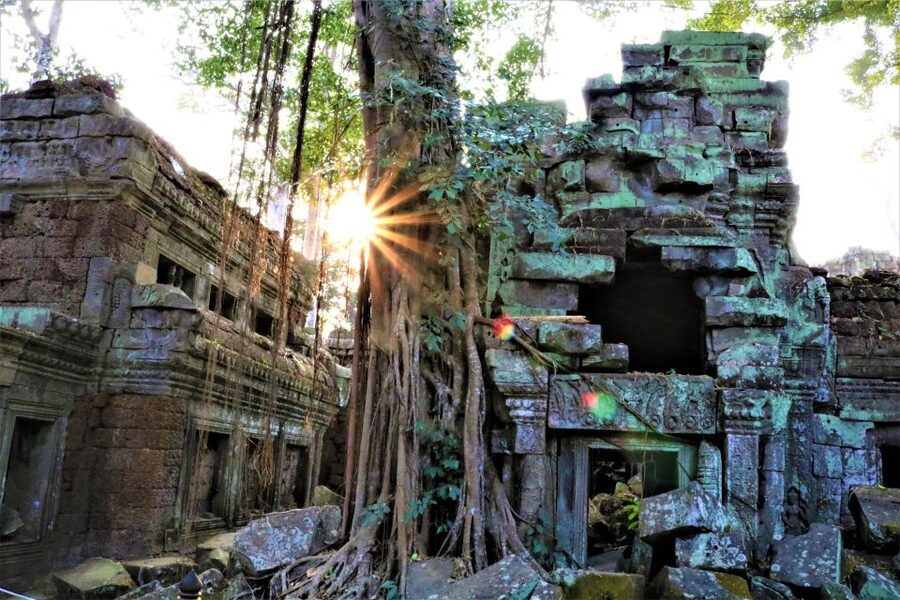
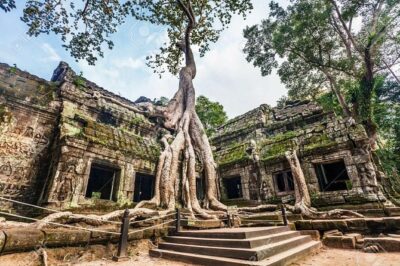
Ta Prohm is the most atmospheric stop on the route. Trees grow around the stone buildings, roots press against walls, and shaded corridors give the temple a more enclosed feeling than Angkor Wat or Bayon.
The site is widely associated with the film Tomb Raider, but its appeal does not depend on the movie. The trees and broken stone make it easy to picture how the temple looked when vegetation had taken over much of the complex. It was once home to 2,740 monks, a detail that gives the ruins a human scale.
Ta Prohm is a strong photography stop, but it is also one of the places where crowds can affect the mood. The tour aims for cooler hours and less congestion, yet this is still one of Angkor’s most popular temples. Move with the group, then use the time allowed for your own photos.
The stone paths can be uneven, and roots or damaged surfaces require care. Comfortable walking shoes are essential. You also need clothing that covers your shoulders and knees because these are sacred places. Short skirts are not allowed.
Ta Nei offers a quieter temple contrast
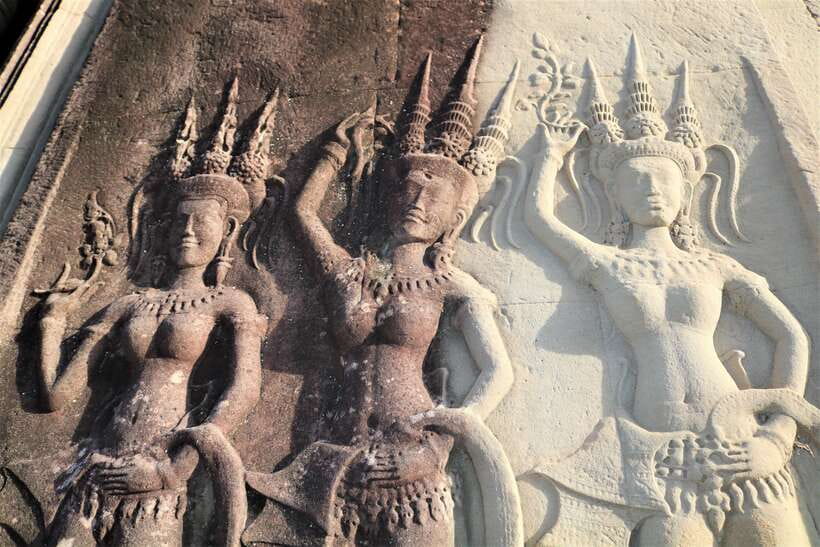
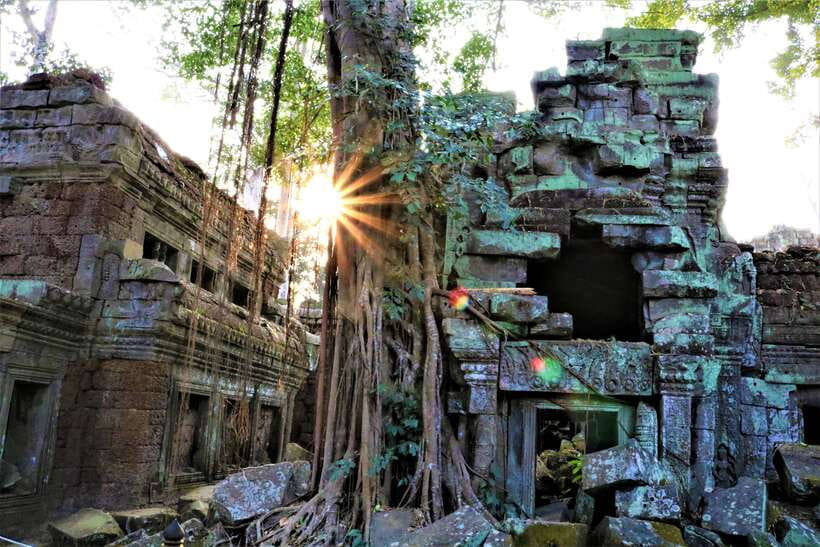
The tour description also includes Ta Nei, a late 12th-century stone temple within Angkor and a more secluded stop than the headline sites. It is described as jungle-enveloped, which gives it a different mood from the carefully photographed view at Angkor Wat.
Ta Nei is important for people who want more than the standard three-temple circuit. It helps you see that Angkor is not just one famous monument and two supporting stops. The area contains many remains from the Khmer Empire, and a smaller temple can make the scale of the whole complex easier to grasp.
There is a slight planning point here. The detailed schedule lists Ta Prohm and Bayon, while the fuller description also names Ta Nei and places it before Ta Prohm. The exact order may vary, so confirm the day’s route with the provider if Ta Nei is a priority for you. The overall activity lasts eight hours, and guides may need to adjust timing on a busy day.
What the guide and driver add
This tour is more than transport between ruins. The licensed guide is the person who turns carved stone into a readable place. Kiss has been praised for upbeat energy during the early start, strong English, cultural explanations, and help finding good photo angles. Sok, Chan Dara, and Mr Bun have also been praised for clear explanations and patient answers.
That individual guide can shape the day, so the names should be treated as examples rather than a promise of a specific assignment. The listed tour languages are English and Spanish.
The driver also matters more than it might seem. Returning to an air-conditioned van with cold water and a cool towel is a small luxury after walking through hot temple grounds. The vehicle gives you a place to rest between stops rather than forcing you to remain in the sun all day.
A small group is the better choice if you like questions and some personal attention. One booking had only about half a dozen people, which allowed time for independent exploration and regular breaks. Group size can vary, so choose a private tour if you want more control over pace and photography.
Price, temple pass, and what is actually included
The advertised price is USD 26 per person. That covers the licensed guide, hotel pickup and drop-off, air-conditioned transport, sightseeing described in the program, mineral water, and cool towels.
The important extra cost is the one-day Angkor Pass at USD 37 per person. It is payable on the day, and Visa cards are accepted. Your realistic minimum cost is therefore about USD 63 per person before breakfast or any other food.
At that combined price, the tour offers reasonable value for a full day at Angkor. The pass itself is unavoidable for the temple visit, while the tour fee pays for transport, guiding, and the convenience of covering several major sites in one morning and afternoon.
Meals are not included. A hotel breakfast pack is the easiest answer, but you can also order at a local restaurant after sunrise. Carry cash for food and small expenses.
Who should book this Angkor tour
I would choose this tour if you have one full day in Siem Reap and want the main Angkor sights explained rather than simply photographed. It is especially useful for a first visit, when the complex can feel too large to understand on your own.
It suits people who like an active schedule, early starts, history, architecture, and a mixture of famous and less polished ruins. The guides can also help if you want to ask about Cambodian culture beyond the temple carvings.
It is less suitable if you dislike crowds, cannot walk for several hours, or need a late morning start. It is not suitable for wheelchair users, and the combination of uneven temple surfaces, stairs, heat, and long walking stretches should be taken seriously.
For the best experience, bring a sun hat, sunscreen, insect repellent, camera, cash, and a torch. Wear loose, respectful clothing that covers your shoulders and knees. The cool hours help, but this is still Cambodia, not an air-conditioned museum.
Should you book it?
Book this tour if sunrise at Angkor Wat is high on your list and you want the major temples covered in one organized day. The strongest reasons are the early eastern entry, useful guide commentary, hotel pickup, and practical support from the driver.
I would be cautious only if you want a slow, private photographic tour. The schedule is full, and lingering too long at one temple can mean less time at another. For most first-time visitors, though, the mix of Angkor Wat, Angkor Thom, Bayon, Ta Prohm, and the possible Ta Nei visit gives you a well-rounded introduction at a fair tour cost, once you add the required pass.
FAQ
How much does the tour cost?
The tour price is USD 26 per person. The one-day Angkor Pass costs an additional USD 37 per person, payable on the day, so the tour and pass together come to about USD 63 before meals.
Is hotel pickup and drop-off included?
Yes. Hotel pickup and drop-off are included, with pickup and return listed for the Siem Reap area around 57 2 Thnou Street.
How long does the activity last?
The activity lasts eight hours. Check availability for the exact starting time because the tour begins before dawn for the Angkor Wat sunrise.
Which languages are available?
The live guide is available in English or Spanish.
Do I need to bring a torch?
Yes. The tour enters Angkor Wat in darkness from the eastern side, so you should bring a torch for the early temple walk.
Are meals included?
No. Meals are not included. You can request a breakfast pack from your hotel or order at a local restaurant after sunrise.
Is the tour suitable for wheelchair users?
No. The activity is not suitable for wheelchair users. Comfortable walking shoes are recommended, and you should expect uneven temple surfaces and extended walking.
More early starts in Siem Reap
- Angkor Wat Sunrise & 3 Main Temples with Breakfast – Small Group
★ 5.0 · 2,857 reviews - Siem Reap: Angkor Wat Sunrise and Full-Day Sightseeing Tour
★ 4.9 · 2,828 reviews - Angkor 2-Day Sunset & Sunrise Small-Group Tour
★ 5.0 · 2,567 reviews - Siem Reap: Angkor Wat Sunrise or Sunset Guided Tour
★ 4.9 · 2,123 reviews
New around Siem Reap
- Siem Reap Temple and Waterfall 3-Day Tour★ 4.5 · 3 reviews
- Savor the Countryside: Tours with Authentic Cooking Classes”★ 5.0 · 3 reviews
- Siem Reap Private Tour: Angkor Wat Sunrise And Banteay Srei★ 5.0 · 3 reviews
- Siem Reap: Guided Day Trip to Local Village & Cooking Class★ 5.0 · 3 reviews
- Angkor Wat Sunset In Private and Small-In-Group★ 4.3 · 3 reviews
- Angkor Wat Sunrise TukTuk Tour★ 5.0 · 3 reviews
- Angkor Wat: Highlights and Sunrise with Spanish Guide★ 4.8 · 3 reviews
- Full Day to Banteay Srei, Kulen National Park and Beng Mealea★ 5.0 · 3 reviews
Angkor Wat Tours, compared.
Angkor Wat Sunrise or Sunset Tour with Guide from Siem Reap
Read our review →
Angkor Wat: Small-Group Sunrise or Sunset Tour
Read our review →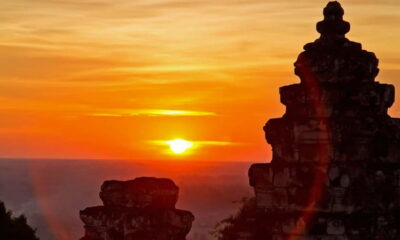
Angkor Wat Sunrise tour with Small – Group and Guide tours
Read our review →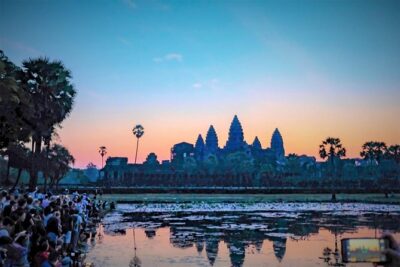
Angkor Wat Highlights and Sunrise Guided Tour from Siem Reap
Read our review →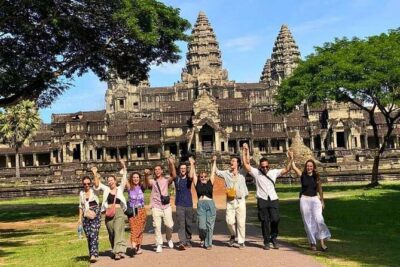
Angkor Wat Sunset Small Group Tour with Lunch Included
Read our review →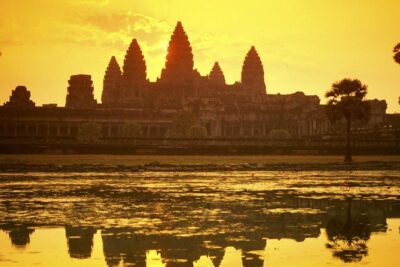
Full-Day Angkor Wat Sunrise Private Tour with Guide from Siem Reap
Read our review →
Angkor Wat Sunrise & 3 Main Temples with Breakfast – Small Group
Read our review →Browse the lists this tour appears in