
Reviewed · ANGKOR WAT TOURS
Private 2 Days Angkor Wat Sunrise and Discover all Major Temples
Angkor Wat at sunrise is the hook, but this private two-day tour gives you much more than the famous reflection pool and five towers. You move from the great state temples to quiet Ta Nei, delicate Banteay Srei, and the jungle-framed ruins of Preah Khan with your own guide and driver.
I like the private vehicle and flexible pace, especially because the Angkor complex covers a huge area. I also like the mix of major monuments and less-visited stops, including Ta Nei and Banteay Kdei. The main consideration is the early start and full schedule. Also, sunset is advertised, but the detailed program does not name a specific sunset stop, so confirm that point before booking.
Key points to know before you book
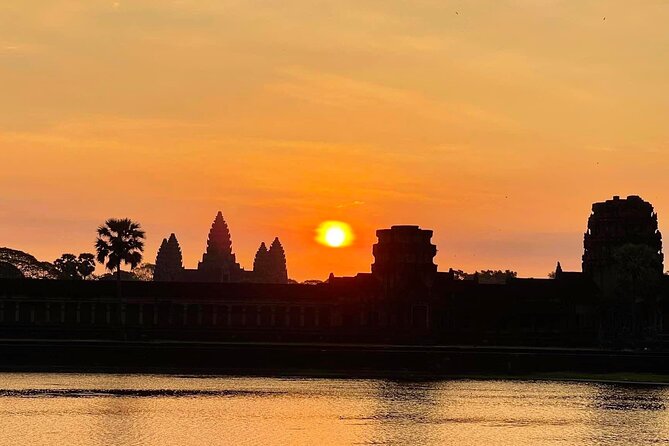
- Sunrise begins at 4:30 a.m.: You reach Angkor Wat before daylight for the classic view of its towers.
- Two full temple days: The route covers Angkor Wat, Angkor Thom, Bayon, Banteay Srei, Preah Khan, Pre Rup, and many more.
- Private touring matters here: You travel only with your own party, guide, and driver, rather than following a large group.
- Remote stops balance the famous ones: Ta Nei and Banteay Kdei offer a quieter look at Angkor’s stonework.
- Transport is built for the heat: The package includes an air-conditioned vehicle, bottled water, and cool towels.
- The Angkor Pass costs extra: Your guide assists with buying the required temple pass, while meals and tips are also separate.
Why this two-day Angkor plan works
Angkor is not one temple. It is a vast archaeological park spread across roughly 390 square miles, or 1,000 square kilometers. A short visit can easily become a blur of towers, galleries, stairways, and carved faces. Two private days give you time to see the landmarks while still reaching parts of the park that many quick tours skip.
The route also follows a sensible pattern. Day one concentrates on Angkor Wat and the central Angkor Thom area before moving to Ta Nei and Banteay Kdei. Day two heads farther out to Banteay Srei, then loops through Preah Khan, Neak Pean, Ta Som, Eastern Mebon, and Pre Rup.
I would choose this format if you want a guide to explain what you are seeing rather than simply arrange a car. The guide is an official licensed professional with excellent English, and the experience is private, so you can ask questions without holding up a busload of strangers.
Past customer feedback has singled out guides named Leap and Sara, along with drivers including Ry, La, Pheap, Sophal, and Paul. Names and assignments can change, but the recurring pattern is clear: the guide and driver are important parts of the experience. Guides have helped explain temple history, local food, and Cambodian culture, while drivers have been praised for being careful, kind, and attentive to families with young children.
More Angkor Sunrise Tours in Siem Reap:
- Angkor Wat Sunrise or Sunset Tour with Guide from Siem Reap
★ 5.0 · 12,109 reviews - Angkor Wat Sunrise tour with Small – Group and Guide tours
★ 5.0 · 3,655 reviews - Full-Day Angkor Wat Sunrise Private Tour with Guide from Siem Reap
★ 5.0 · 2,920 reviews
Angkor Wat before breakfast
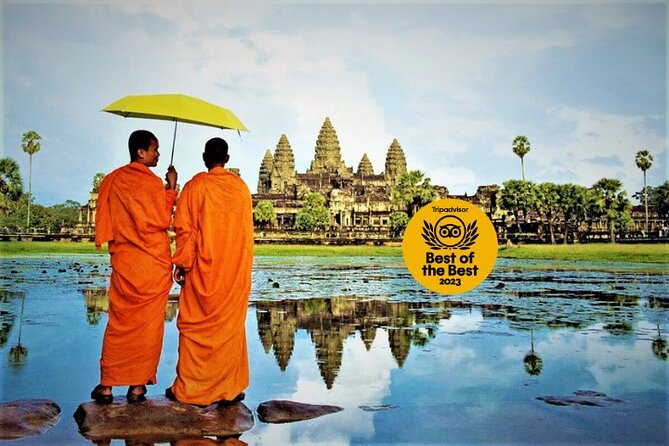
The first pickup is around 4:30 a.m. for Angkor Wat. That is an hour many people would normally spend asleep, but the reward is the temple’s familiar outline appearing as the sky brightens.
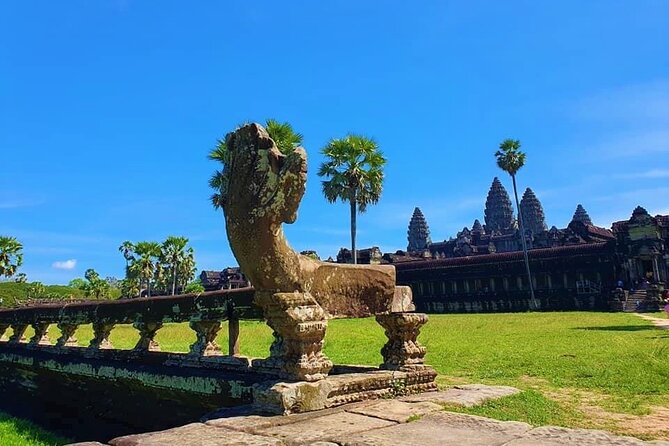
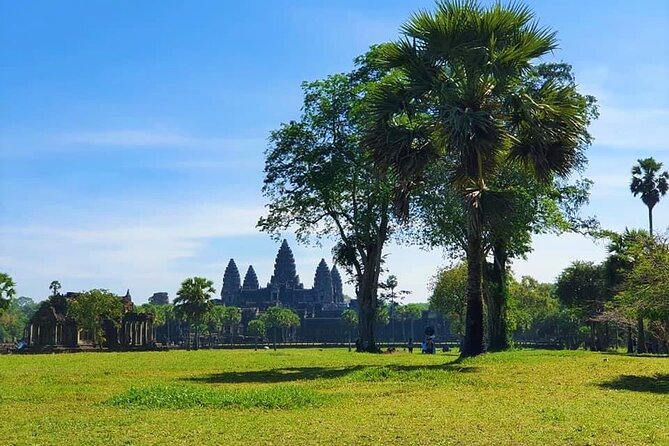
Angkor Wat was built as a Hindu temple and later became a Buddhist site. It is Cambodia’s national emblem, and the five central towers are among the most recognizable forms in Southeast Asia. At sunrise, the dark stone silhouette and changing light give you a strong first impression of the scale of the monument.
You should expect a popular viewing area and a wait before the sun appears. The experience is not quiet solitude. Still, the early timing lets you see the temple before the day becomes hotter, and the guide can help you understand the bas-reliefs, galleries, and religious design after the initial sunrise view.
The scheduled visit lasts about two hours. That is enough for a useful introduction, though Angkor Wat itself can absorb much longer. If you enjoy studying carved scenes or walking every gallery, you may find the pace brisk. The private format gives you a better chance to discuss this with your guide and adjust where possible.
The Angkor Pass is not included. Your guide assists you in purchasing it at the entrance to the park, and the same pass covers the temples on both days. Build that extra cost into your budget before comparing this tour with other options.
Angkor Thom and the faces of Bayon
After Angkor Wat, the route turns to Angkor Thom, the great walled city that followed Angkor Wat as the Khmer capital. You first stop at the South Gate, where a stone causeway crosses a broad moat.
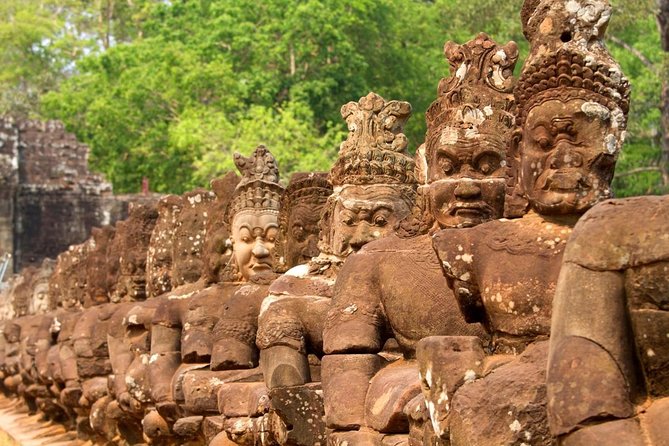
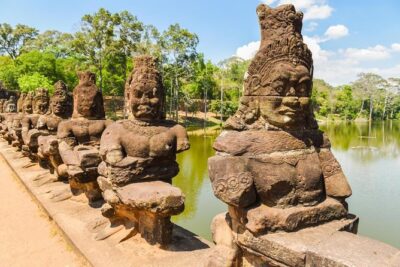
The causeway is lined with giant figures pulling a serpent. This is a version of the famous Churning of the Ocean of Milk story, a Hindu tale linked to the search for the elixir of life. The gate itself is topped by a large face, giving you an early hint of what is waiting inside the city.
The South Gate visit takes about 40 minutes. That allows time for photographs and an explanation of the statues, but it can feel short if you want to inspect every figure closely. The guide’s historical context is especially useful here because the entrance is more than a decorative gateway. It introduces the religious and political ideas behind the city.
Inside Angkor Thom, you spend about 40 minutes getting oriented before visiting Bayon. The name means great city, and the enclosure once held temples, royal buildings, terraces, and civic spaces. Much of the original city was built in materials that did not survive as well as the stone monuments, so what you see today is only part of the former capital.
Bayon gets the longest visit in this section, about 90 minutes. It is famous for its many serene stone faces, but the temple is also packed with carved scenes of warfare, markets, ceremonies, and daily life. I like Bayon because it feels less orderly than Angkor Wat. Its towers crowd together, galleries turn unexpectedly, and the faces appear from different levels.
The guide can help you separate the temple’s Buddhist symbolism from later Hindu and Buddhist changes. That matters because Angkor’s monuments were altered by successive rulers and religious shifts. Without explanation, Bayon can look like a maze of weathered stone. With context, its unusual design becomes easier to read.
Baphuon, royal terraces, and a quieter temple
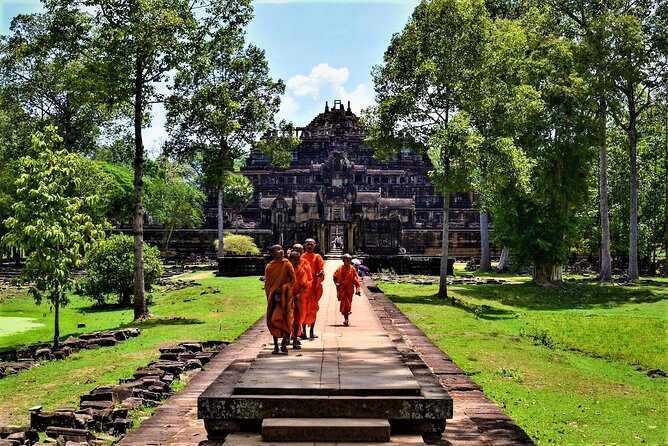
Baphuon is only a short distance from Bayon, but it has a very different character. It was once the largest Khmer temple before Angkor Wat was built and rises in a long, imposing form. The visit lasts about an hour, giving you time to notice the scale and the complicated restoration work that has kept the structure standing.
Phimeanakas follows, with about 20 minutes scheduled. Its name means Aerial Palace or Celestial Temple. This is a shorter stop, useful for seeing another part of the royal center, but it is not likely to be the most memorable temple of the day if you have already spent substantial time at Bayon and Baphuon.
The Terrace of the Elephants takes about 30 minutes. Its carved elephants and royal platform formed part of Angkor Thom’s ceremonial center. Nearby, the Terrace of the Leper King adds another half-hour and rewards close attention to its layered carvings.
These terraces are not enclosed temples with dramatic towers. They work best when your guide explains how the royal square functioned. I would listen for details about processions, public ceremonies, and the meaning of the carved figures. In the midday heat, these stops can also feel tiring, so comfortable shoes, a hat, and water are useful.
Ta Nei changes the mood. This late 12th-century stone temple was built under Jayavarman VII and dedicated to the Buddha. The visit lasts about 50 minutes. It is a good choice for you if you prefer atmospheric ruins and close-up stone details over only visiting the most famous monuments.
Ta Nei is one of the reasons I find this tour stronger than a basic Angkor Wat and Bayon outing. It gives you a sense of the wider park and the way smaller religious buildings fit into the larger Khmer world.
More Angkor Wat Tours in Siem Reap:
- Siem Reap: Angkor Wat: Small-Group Sunrise or Sunset Tour
★ 5.0 · 9,444 reviews - Siem Reap: Angkor Wat 2-Day Tour with Sunrise and Sunset
★ 4.9 · 4,429 reviews - Siem Reap: Full-Day Angkor Wat Guided Tour with Sunset
★ 4.9 · 3,803 reviews - Angkor Wat Highlights and Sunrise Guided Tour from Siem Reap
★ 5.0 · 3,213 reviews
Banteay Kdei and the end of day one
Banteay Kdei is another late-period Buddhist temple associated with Jayavarman VII. It sits near the meeting point of the Small Circuit and Grand Circuit, close to the Srah Srang reservoir.
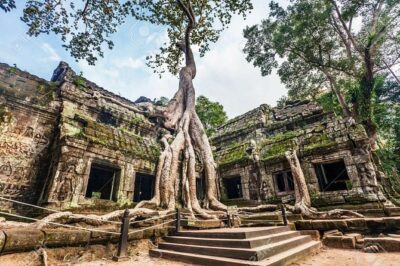
The planned visit is about 50 minutes. Expect galleries, courtyards, doorways, and areas where trees and stone meet. The structure is less polished than Angkor Wat, which is part of its appeal. You can look closely at how time, weather, and restoration have shaped the site.
Day one is long, especially after the 4:30 a.m. pickup. The private air-conditioned vehicle is a real practical advantage. You can cool down between temples, and bottled water and fresh cool towels are included. The program does not provide lunch, so you pay for meals at local restaurants. Dishes generally cost about $3 to $10, with vegetarian and non-vegetarian choices.
The tour description also promises a sunset view from one of Angkor’s best viewpoints. The detailed stop list for day one ends at Banteay Kdei and does not specify the sunset location or timing. I would ask the provider to confirm whether sunset is included on your chosen date and where it takes place. That small clarification can prevent a mismatch between your expectations and the actual schedule.
Banteay Srei and the outer temples
Day two begins with Banteay Srei, about 25 miles from Siem Reap. The journey out is worthwhile because this small temple is famous for unusually fine pink and reddish sandstone carving.
Banteay Srei was built in the 10th century and is dedicated to Shiva. Its scale feels intimate compared with Angkor Wat, while the detail in the lintels, pediments, and figures is remarkably precise. The two-hour stop gives you time to study the carvings instead of rushing through for a few photographs.
This is one place where a guide adds real value. The figures and stories can be difficult to identify on your own, and the temple’s history is tied to a different period of Khmer rule than many of the monuments seen on day one.
Banteay Samre follows for about 50 minutes. Built in the early 12th century during the reigns of Suryavarman II and Yasovarman II, it is a Hindu temple with a compact, fortified feel. It resembles some of Angkor Wat’s design ideas but receives less attention because of its location outside the central cluster.
There is also a stop at Preah Dak village, known for souvenirs, objects, and local arts. The schedule provides no fixed duration for this visit. Treat it as an optional cultural pause rather than a major temple stop. If you want to buy something, ask about prices and take your time. If your priority is seeing every monument, confirm how long the stop will last.
Preah Khan, Neak Pean, and Ta Som

Preah Khan is one of day two’s major highlights. Jayavarman VII dedicated it in 1191 to his father, represented by a central image called Jayavarmeshvara. The temple served religious and royal purposes, and its long corridors and courtyards make it easy to sense how large the complex once was.
You have about an hour here. The layout rewards slow walking, but the schedule may not allow you to explore every corner. I would stay alert for carved details and ask your guide to point out the temple’s layers of use. Preah Khan is more than a pile of ruins. Its design shows how worship, administration, and royal memory were joined in Khmer architecture.
Neak Pean takes about an hour and is unlike most other Angkor temples. It was built on an artificial island in a large reservoir, with a central sanctuary and surrounding water features. The approach and unusual plan make it a welcome change after the long corridors of Preah Khan.
Ta Som offers another 40-minute stop. Built during Jayavarman VII’s reign, it is smaller and less formal than the major monuments. The purpose is not fully clear, but its compact structure and worn carvings make it a pleasant place to slow down.
The value of this section is variety. Preah Khan gives you scale, Neak Pean gives you an unusual water-centered plan, and Ta Som gives you a smaller temple experience. You are not simply seeing the same structure repeatedly.
Eastern Mebon and sunset at Pre Rup

Eastern Mebon was built in the 10th century by Rajendravarman II and dedicated to Shiva. It was once located on an island in the East Baray reservoir, though the surrounding water is no longer present in the same way.
The scheduled visit lasts 30 minutes. Look for the guardian elephants at the corners and the temple’s mountain symbolism. It is a concise stop, but it adds an earlier chapter of Khmer architecture to a program otherwise weighted toward the era of Jayavarman VII.
Pre Rup is the final listed temple, with about an hour. Founded in 961, it is one of Rajendravarman II’s major monuments. Its brick towers and rising terraces give it a strong outline, and it is specifically promoted as a sunset viewpoint.
If the sunset portion of the tour is operating as described, Pre Rup is the logical place to end the day. The exact lighting conditions depend on the date and weather, and the upper levels may feel demanding after two full days of walking. Even so, the temple gives the itinerary a fitting final stop, shifting your attention from carved faces and enclosed galleries to the broader view across Angkor.
What the private setup adds
The price is $149.46 per person. That does not include the Angkor Pass, meals, or tips, so the final cost will be higher. Still, the value is reasonable if your group wants a private guide and private transport over two long days.
You are paying for hotel pickup and drop-off, an official English-speaking guide, an air-conditioned vehicle, bottled water, cool towels, service charges, and government VAT. Group discounts may improve the per-person price if you are booking for several people.
A private tour is particularly useful for families, couples, and small groups with different energy levels. You can ask for more explanation at Bayon, less time at a minor stop, or a pause between temples. The experience is listed as suitable for most people, but the schedule involves early mornings, heat, and considerable walking around ancient structures.
The air conditioning is not a luxury here. It gives you a break between sites, while the cool towels are a small but welcome touch. Drivers have been praised for careful driving and for helping families with children feel safe. You should still be clear about your hotel name at booking so pickup can be arranged properly.
Free cancellation is available if you cancel at least 24 hours before the local start time. Changes or cancellations inside that window are not accepted for a refund.
Who should book this Angkor tour?
I would choose this tour if you have only two days in Siem Reap and want the main temples covered without giving up smaller sites. It suits you especially well if you value explanations, hotel pickup, and the comfort of a private car.
It is less suitable if you dislike early mornings, want a relaxed schedule, or prefer to spend half a day at only one monument. The plan is ambitious. Day one begins before dawn, and both days include several stops.
Before paying, confirm three things: the Angkor Pass cost, the exact sunset plan, and the guide and driver assigned to your date. If those details work for you, the combination of landmark temples, quieter ruins, historical context, and private transport makes this a strong way to get your bearings in Angkor.
FAQ
What time does the tour begin?
Day one begins with hotel pickup at about 4:30 a.m. for sunrise at Angkor Wat.
Is the Angkor Pass included?
No. The Angkor Pass is separate. Your guide will assist you in purchasing it at the entrance to Angkor Park, and it covers the temples in the program.
Are meals included?
No. Lunches and other meals are at your own expense. Local restaurants offer vegetarian and non-vegetarian dishes, with menu prices generally ranging from $3 to $10 per dish.
Is this a private tour?
Yes. Only your own group participates, with a private guide and private vehicle.
What kind of transport is provided?
The tour includes private transfers in an air-conditioned vehicle, along with bottled water and cool towels.
Is hotel pickup included?
Yes. Pickup and drop-off at your hotel in Siem Reap are included. You need to provide the hotel name when booking.
Does the tour include sunrise and sunset?
Sunrise at Angkor Wat is scheduled on day one. A sunset view is advertised, and Pre Rup is listed on day two, but the detailed schedule does not state the exact sunset stop. Confirm the plan with the provider before booking.
Are tips included?
No. Tips for the guide and driver are not included.
Can I cancel for a full refund?
Yes, if you cancel at least 24 hours before the experience start time. Cancellations or changes made less than 24 hours before the start are not accepted for a refund.
More 2-Day Experiences in Siem Reap
- 2 Days Exclusive Temple Highlights with Sunset and Sunrise Tour
★ 5.0 · 1,157 reviews - Siem Reap: Angkor Sunrise 1- or 2-Day Guided Temples Tour
★ 4.9 · 1,132 reviews - 2 Days Guided Historical Tour in Angkor
★ 5.0 · 855 reviews - 2-Day Angkor Wat With Small, Big Circuit and Banteay Srei Tour
★ 5.0 · 545 reviews
More early starts in Siem Reap
- Angkor Wat Sunrise & 3 Main Temples with Breakfast – Small Group
★ 5.0 · 2,857 reviews - Siem Reap: Angkor Wat Sunrise and Full-Day Sightseeing Tour
★ 4.9 · 2,828 reviews - Angkor 2-Day Sunset & Sunrise Small-Group Tour
★ 5.0 · 2,567 reviews - Siem Reap: Angkor Wat Sunrise or Sunset Guided Tour
★ 4.9 · 2,123 reviews
New around Siem Reap
- Kulen Mountain With Ticket included Plus Banteay Srei Temple Tour★ 5.0 · 7 reviews
- 2 Days Angkor temples with Sunrise & Sunset★ 5.0 · 7 reviews
- Private Siem Reap Airport Transfer to hotel in town★ 5.0 · 7 reviews
- 1-Day private Angkor Temple Tour with Sun Rise by Tuk Tuk from Siem Reap★ 4.5 · 7 reviews
- Siem Reap: Morning Cooking Class & Market Tour★ 5.0 · 7 reviews
- Kulen Mountain, Killing Fields and War Museum Tour★ 5.0 · 7 reviews
- War Museum, Killing Field, and APOPO Hero RATs Tour★ 5.0 · 7 reviews
- Half-Day: Silk Farm, Senteur Angkor, and Satcha Workshop★ 4.6 · 7 reviews
Angkor Wat Tours, compared.
Angkor Wat Sunrise or Sunset Tour with Guide from Siem Reap
Read our review →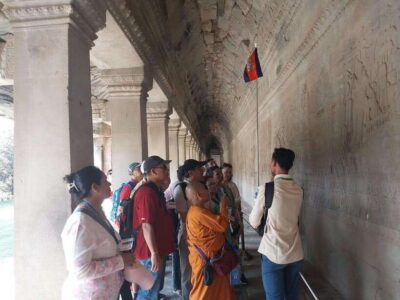
Angkor Wat: Small-Group Sunrise or Sunset Tour
Read our review →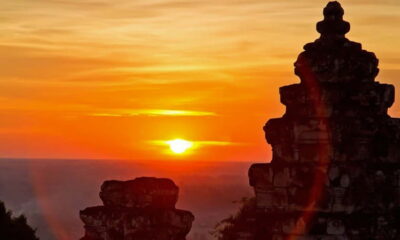
Angkor Wat Sunrise tour with Small – Group and Guide tours
Read our review →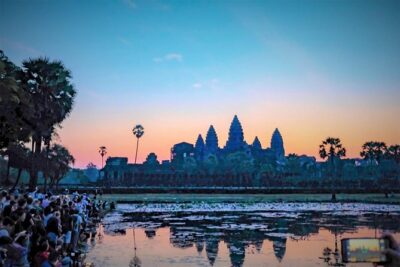
Angkor Wat Highlights and Sunrise Guided Tour from Siem Reap
Read our review →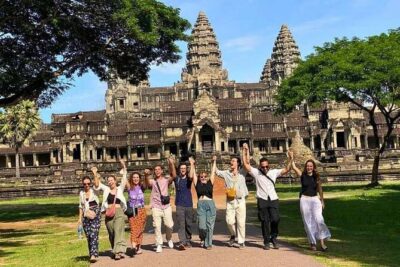
Angkor Wat Sunset Small Group Tour with Lunch Included
Read our review →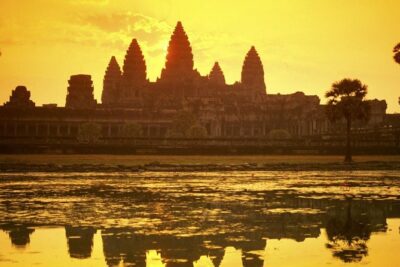
Full-Day Angkor Wat Sunrise Private Tour with Guide from Siem Reap
Read our review →
Angkor Wat Sunrise & 3 Main Temples with Breakfast – Small Group
Read our review →Browse the lists this tour appears in