
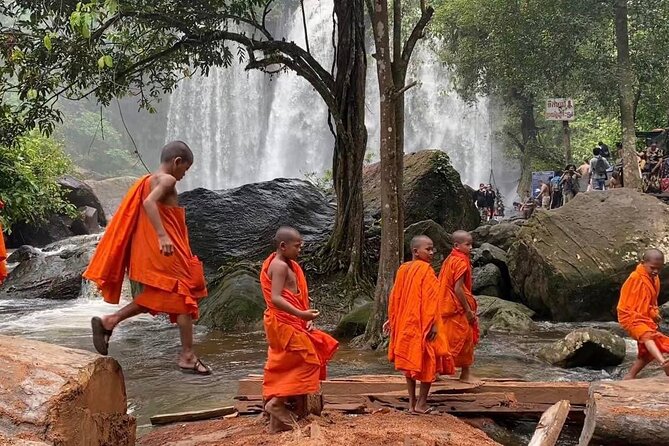
Reviewed · SIEM REAP TOURS
Kullen Waterfall Park with Small Group included entrance fee
Phnom Kulen’s appeal is simple: in one day, you move from an ancient riverbed carved with Hindu symbols to a sacred pagoda, a forest waterfall, and a sobering museum about Cambodia’s recent past. The 1,000 Lingas are the star, but the day works because it connects old Khmer religion with rural life and modern Cambodian history.
I like the small vehicle and limited group size, capped at 13 people, and I like the care shown in practical details: cold water, wet towels, and a minibus that guides Chout, Makara, and others have kept cool and clean between stops. The main drawback is timing. In dry conditions, the waterfall can be less impressive, swimming may not be possible, and the lingas can be hard to see.
Key points to know before booking
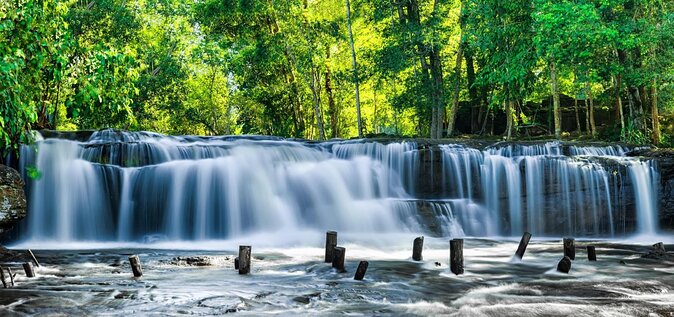
- Sacred riverbed carvings: See lingas carved into stone around 800 AD, though visibility depends on water levels.
- A refreshing waterfall stop: Swimming is possible when conditions allow, but the falls are strongest at certain times of year.
- A small group of up to 13: You get a more personal outing than on a large coach tour.
- Park entry is included: The $20 Phnom Kulen entrance fee is covered in the $45 price.
- A useful local touch: The day includes a palm sugar demonstration and a look at rural production.
- The Landmine Museum costs extra: A separate admission fee is listed, so budget for it and confirm the current amount.
Why Phnom Kulen makes a good break from Siem Reap
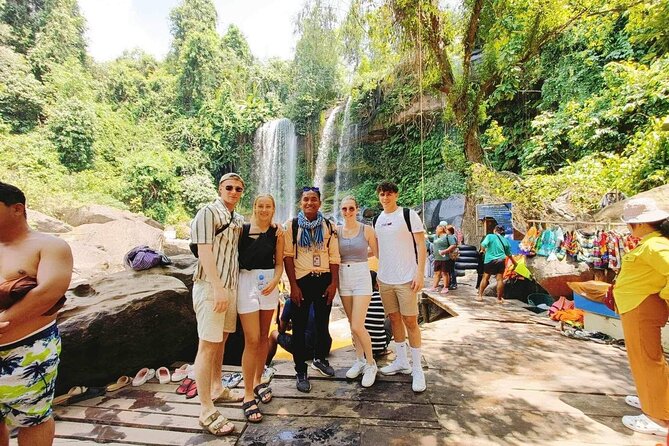
Angkor gets most of the attention around Siem Reap, yet Phnom Kulen gives you a different view of Cambodia. This is not a parade of temple towers. It is a mountain park with forest, old stonework, religious sites, village activity, and water that still carries sacred meaning.
The tour begins at 8:30 a.m. from a meeting point behind the Angkor Night Market, with pickup and drop-off included. The outing lasts about eight hours, though the exact rhythm depends on road conditions, walking pace, and how long you spend at the waterfall.
You ride in an air-conditioned minivan. That matters. Phnom Kulen can be hot, and the road into the park involves a climb. Cold water and wet towels are included, which is a small but welcome comfort after walking outside.
The group limit of 13 gives the day a good middle ground. You are not paying for a private tour, but you should have more opportunity to ask questions and take photos than you would on a large bus. Some departures may be much smaller. One group had only two people, giving the guide plenty of time to adjust the pace.
More Waterfall Tours in Siem Reap:
- Kulen Waterfall Join-in Tour (local Picnic lunch)
★ 5.0 · 2,434 reviews - Phnom Kulen Waterfall & the Sacred 1000 Lingas (with Lunch)
★ 4.8 · 974 reviews - Guided Small-Group Tour in Kulen Mountain Park Waterfall
★ 5.0 · 480 reviews
The climb into Phnom Kulen National Park
The first major section takes about an hour and 15 minutes. Phnom Kulen is an isolated chain of mountain plateaux south of the Dângrêk Mountains, and the drive gives you a change of scenery from Siem Reap’s town streets and temple zone.
Partway up, the tour stops at a stone quarry. This is a useful addition because it shows that the mountain is not only a religious site. Stone has long been cut here, and the quarry helps connect the natural setting with the building tradition seen across Cambodia.
Your guide supplies the context, usually in clear English. Chout and Makara receive especially strong praise for explaining the sites, sharing facts about Cambodia, and helping with photos. Guides Pheap and Caout are also named as friendly and helpful. The quality of this day depends heavily on the guide, so these details matter.
The quarry stop is not a major attraction in itself. Think of it as a short orientation to the mountain and its resources. If you want an entire day of temple ruins, this may feel like a side trip. If you enjoy seeing how a place works beyond its famous monuments, it earns its place.
Seeing the 1,000 Lingas in the riverbed
The 1,000 Lingas section is scheduled for about two hours, making it the cultural heart of the outing. The lingas are Hindu symbols carved into the riverbed around 800 AD. Their presence reflects the old Khmer practice of giving religious meaning to water, stone, and the land around them.
You follow a tranquil river walk and look for carvings in different sizes. The setting is part of the experience. This is not a monument viewed from a platform. You are walking along the bedrock and looking down at details that can be easy to miss without a guide.
Water levels make a real difference. In the wetter season, the river may cover parts of the carvings. In drier conditions, the shapes can be easier to identify, though the waterfall may have less force. The advice from the tour is to visit between January and March for stronger falls and better visibility, but conditions can vary.
This is the point where expectations matter most. The name 1,000 Lingas sounds grand, but the carvings are not all immediately visible or perfectly preserved. One report described the lingas as difficult to see under certain conditions. Listen closely to your guide and take your time rather than expecting a single dramatic monument.
The river walk can also be slippery. The supplied details do not specify a formal difficulty rating, so sensible shoes are a good idea. You should be comfortable walking outdoors and standing in heat for portions of the day.
Preah Ang Thom and Cambodia’s reclining Buddha
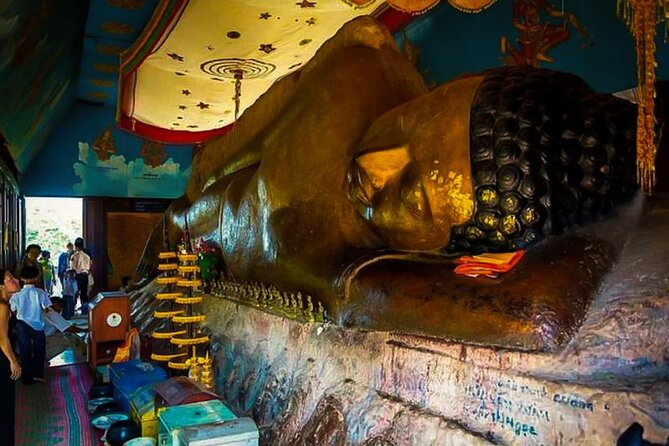
Preah Ang Thom Pagoda takes about two hours in the schedule, though that time may include walking, viewing the religious site, and time around the mountain area. The pagoda is associated with Phnom Kulen and the 1,000 Lingas, and it is known for a large reclining Buddha statue described as the biggest in Cambodia.
This stop changes the mood. At the riverbed, you are studying ancient carvings. At the pagoda, you are visiting a living religious place. One account describes receiving a blessing from a nun outside the pagoda, which shows how the site can feel personal as well as historic.
Dress and behave respectfully at the pagoda. The tour information does not give a formal clothing rule, but this is an active religious setting, not simply an archaeological stop. Your guide can help explain what is appropriate.
The two-hour allocation may seem long if you prefer quick sightseeing. For visitors who want time to look, receive a blessing, take photographs, and hear the background, it allows the stop to breathe. If your main goal is swimming, you may find the pacing slower than expected.
More Small Group Tours in Siem Reap:
- Siem Reap: Angkor Wat: Small-Group Sunrise or Sunset Tour
★ 5.0 · 9,444 reviews - Angkor Wat Sunset Small Group Tour with Lunch Included
★ 5.0 · 3,059 reviews - Angkor Wat Sunrise & 3 Main Temples with Breakfast – Small Group
★ 5.0 · 2,857 reviews - Angkor 2-Day Sunset & Sunrise Small-Group Tour
★ 5.0 · 2,567 reviews
Kulen Waterfall: the day’s cool reward
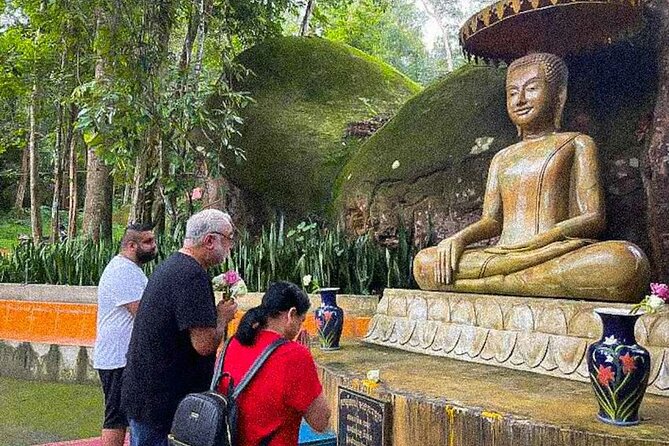
The waterfall receives about two hours, and for many people this is the most relaxing part of the day. Kulen Waterfall is linked to the holy water of Shiva and the linga carvings, so swimming here is not only a nature break. It also fits the religious story of Phnom Kulen.
When water conditions are good, you can take a refreshing dip. Several accounts describe the waterfall as lovely for swimming, while another warns that swimming may not be possible in drier conditions. The falls are strongest at certain points in the year, with January through March specifically recommended by the guide team.
Bring or wear swim gear if you hope to enter the water. The tour includes wet towels, but food is not included, and the supplied details do not promise changing facilities or other swimming amenities. Keep your plans flexible.
The waterfall is a good place to judge the tour’s value. If you want a day with both culture and a break from the heat, two hours here is useful. If the water is low, the outing loses some of its recreational appeal, though the pagoda and historic sites remain.
Palm sugar, rural life, and the road back
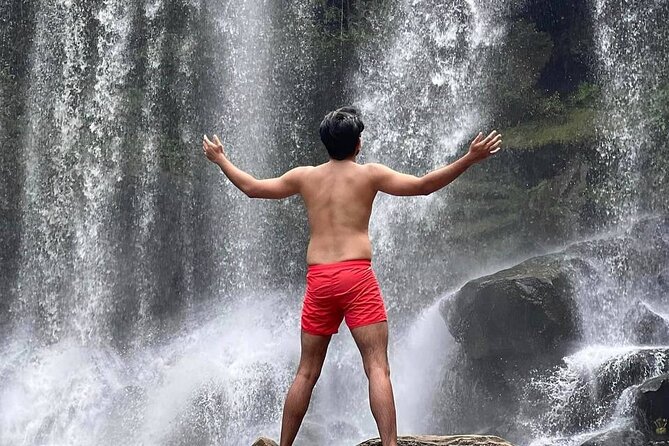
Before the final museum stop, the tour includes about an hour at a local palm sugar-making activity. You get a look at traditional hand production and may also see local crafts, medicines, honey, or other small-scale products.
This part helps keep the tour from becoming a string of monuments. You see how local knowledge and products fit into daily life. It is also a chance to try items such as palm sugar or grilled bananas from roadside vendors, though purchases and food are not included in the tour price.
The stop may appeal more to some people than to others. If you prefer archaeology, it can feel like a pause between major attractions. If you want contact with ordinary rural work, it adds useful texture without requiring another full village excursion.
The final stop is the Cambodia Landmine Museum, established by former child soldier Aki Ra. It focuses on Cambodia’s recent conflict and the continuing effects of landmines. This is a sober counterpoint to the ancient monuments and the cheerful waterfall stop.
Admission is not included. The tour details list the fee as $3, while a provider response refers to a different amount, so you should confirm the current charge before going. The museum is optional in the sense that it is separately paid, but it adds important context to Cambodia’s modern story.
Is the $45 price good value?
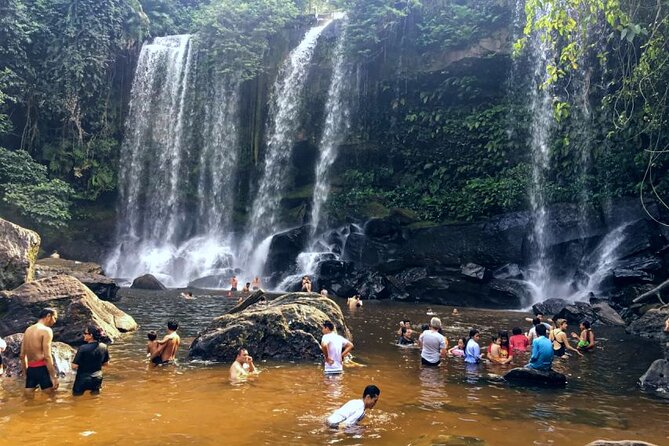
At $45 per person, the tour includes hotel pickup and drop-off, an air-conditioned vehicle, an English-speaking guide, taxes, park entry, cold water, and wet towels. The $20 park fee alone makes the package more useful than a simple transport service.
You are also paying for a full day away from Siem Reap, with several different types of stops. A private car could give you more control, but a small group keeps the price below a private outing while still offering a more personal feel than a large coach.
Food is not included. You will need to pay for lunch or snacks yourself, and the Landmine Museum requires a separate admission fee. These are not serious flaws, but include them in your budget.
The price is strongest when the waterfall is flowing well and you value the guide’s explanations. It is weaker if you expect eight continuous hours of sightseeing. The schedule includes driving, pauses, rural activity, and time at the pagoda, so the day is best understood as a broad cultural outing rather than a packed list of major ruins.
Who should book this Phnom Kulen tour?
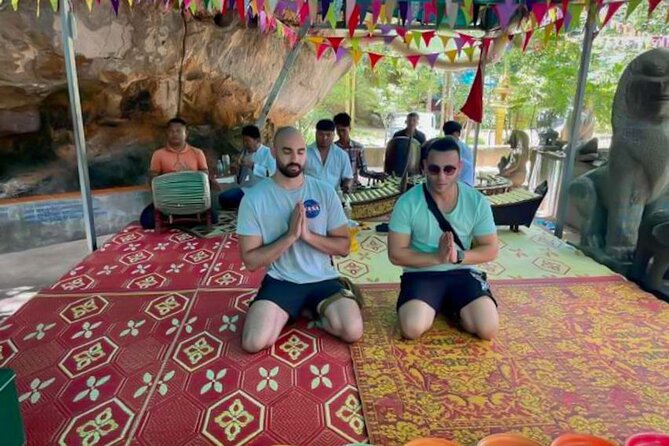
I would choose this for someone spending several days in Siem Reap who wants to get beyond the standard Angkor circuit. It suits you if you enjoy combining ancient religion, local life, nature, and recent history in one outing.
It is also a good match if you prefer a guide who can explain what you are seeing. Chout and Makara are praised for historical explanations, friendliness, and help with photographs. Pheap and Caout are also named positively, and the minibus service has been noted for staying cool and clean.
You may want another option if your priority is a guaranteed swim, a long hike, or a tightly timed full day. The condition of the river and waterfall can change the feel of the visit. The tour is also not ideal for someone who wants only polished temple architecture.
The activity is suitable for most people according to the supplied information, and it has a maximum of 13 participants. Pickup begins at the stated meeting point behind the Angkor Night Market, and the experience returns there at the end.
My verdict on the 8-hour Phnom Kulen outing
I would book this tour if I wanted a well-rounded day outside Siem Reap and accepted that water conditions shape the experience. The strongest features are the included park entrance, comfortable minivan, small group, and guides who add useful historical and cultural explanation.
Book it in a season when the waterfall is likely to be flowing well if swimming matters to you. If the 1,000 Lingas and waterfall are your main goals, ask about current conditions before departure. If you want a broader view of Cambodia, the quarry, palm sugar stop, pagoda, and Landmine Museum make the day more worthwhile.
The tour offers free cancellation up to 24 hours before the start time. A minimum number of participants is required, and if that number is not reached, you can receive a different date or a full refund.
FAQ
How long does the Phnom Kulen tour last?
The tour lasts approximately eight hours and begins at 8:30 a.m. It ends back at the meeting point in Siem Reap.
Is hotel pickup included?
Yes. Pickup and drop-off are included, with the listed meeting point behind the Angkor Night Market in Siem Reap.
Is the Phnom Kulen entrance fee included?
Yes. The Phnom Kulen National Park entrance fee is included in the tour price. The supplied details state that this fee is $20.
How many people are in the group?
The tour has a maximum of 13 participants. Some departures may have fewer people.
Can I swim at Kulen Waterfall?
Swimming is possible when conditions allow. Water levels vary, and the waterfall may be less suitable for swimming during drier periods.
Is the Cambodia Landmine Museum included?
No. Museum admission is not included. The tour details list an additional fee of $3, while another provider note refers to a different amount, so confirm the current price before visiting.
Can I cancel for a full refund?
Yes. You can cancel at least 24 hours before the experience start time for a full refund. Changes or cancellations made less than 24 hours before departure are not accepted for a refund.
New around Siem Reap
- Kulen Mountain With Ticket included Plus Banteay Srei Temple Tour★ 5.0 · 7 reviews
- 2 Days Angkor temples with Sunrise & Sunset★ 5.0 · 7 reviews
- Private Siem Reap Airport Transfer to hotel in town★ 5.0 · 7 reviews
- 1-Day private Angkor Temple Tour with Sun Rise by Tuk Tuk from Siem Reap★ 4.5 · 7 reviews
- Siem Reap: Morning Cooking Class & Market Tour★ 5.0 · 7 reviews
- Kulen Mountain, Killing Fields and War Museum Tour★ 5.0 · 7 reviews
- War Museum, Killing Field, and APOPO Hero RATs Tour★ 5.0 · 7 reviews
- Half-Day: Silk Farm, Senteur Angkor, and Satcha Workshop★ 4.6 · 7 reviews
Siem Reap Tours, compared.
Angkor Wat Sunrise or Sunset Tour with Guide from Siem Reap
Read our review →
Angkor Wat: Small-Group Sunrise or Sunset Tour
Read our review →
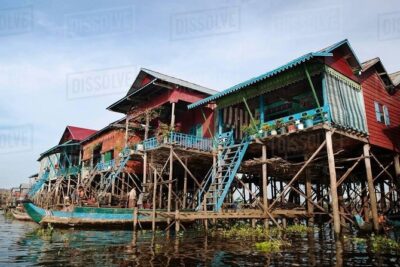
Sunset tour of Kampong Phluk stilts home village on the Tonle Sap
Read our review →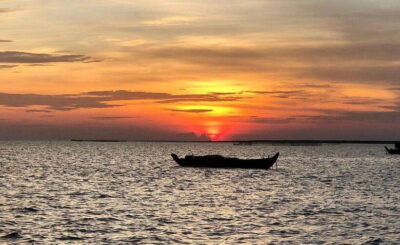
Kampong Phluk Floating Village Tour with Boat
Read our review →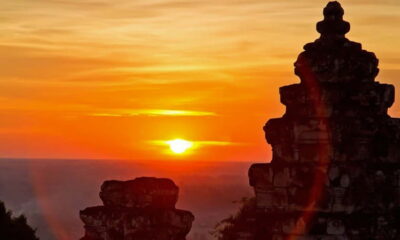
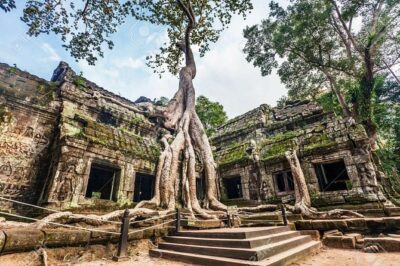
Angkor Wat Sunrise tour with Small – Group and Guide tours
Read our review →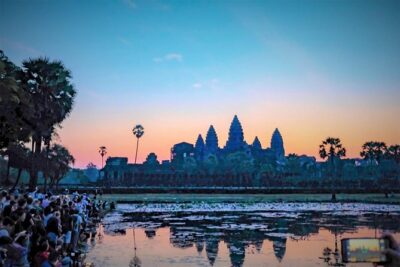
Angkor Wat Highlights and Sunrise Guided Tour from Siem Reap
Read our review →Browse the lists this tour appears in