
Reviewed · ANGKOR WAT TOURS
Full Day Angkor Wat with Sunset by Tuk Tuk
Angkor Wat is only the beginning here. This private tuk-tuk day also takes you to the giant stone faces of Bayon, the tree-wrapped ruins of Ta Prohm, and quieter Banteay Kdei, with sunset planned at Pre Rup. The range of temples gives you a better sense of Angkor than a quick stop at the main temple alone.
I like the personal format, since only your group takes part, and I like the practical care built into the ride. A guide named Sokha was praised for clear English and a steady stream of facts, while the driver supplied chilled water and cold flannels in the heat. The main drawback is the long, warm day, and the temple admission fee, food, and lunch are extra.
Key points at a glance
- Sunset at Pre Rup: The day finishes at a classic Angkor temple, giving the schedule a memorable final stop.
- Four major temple visits: Angkor Wat, Bayon, Ta Prohm, and Banteay Kdei each offer a different view of Khmer architecture.
- Private tuk-tuk transport: Your group travels together instead of joining a larger shared vehicle.
- Hotel pickup and drop-off: The tour starts and ends at your accommodation in Siem Reap.
- Guide support from Sokha: The named guide received praise for strong English and detailed explanations.
- Budget-friendly structure: At $39 per person, the price covers transport, guiding, water, and pickup, but not temple entry or meals.
A full day among Angkor’s great temples
The temples of Angkor mark about six centuries of Khmer civilization, from 802 to 1432. That date range matters because Angkor is not one isolated monument. It is a large collection of religious and royal sites built across different periods, with changes in scale, design, and purpose visible from one stop to the next.
This tour begins with hotel pickup at about 8:00 in the morning and lasts roughly seven hours. You travel by tuk-tuk, the open-sided motorized trolley commonly used around Siem Reap. It is a simple way to move between the temple areas, with more air around you than in a closed car, though the heat will still be part of the experience.
I like this format for a first substantial visit to Angkor. You get a guide to explain what you are seeing, but you also have enough time at each main site to walk around instead of racing through a list of photo stops. Since it is a private activity, your group is the only group taking part, which gives you more control than a large coach tour.
The schedule is described as a full day ending at Pre Rup for sunset. The detailed stop list names Angkor Wat, Bayon, Ta Prohm, and Banteay Kdei, so you should confirm the precise sunset arrangement when booking. Pre Rup is specifically identified as the final sunset temple, even though it is not included among the four timed stops.
More Tuk Tuk Tours in Siem Reap
- Siem Reap: Angkor Wat Private Tuk-Tuk Tour
★ 4.9 · 2,222 reviews - Siem Reap Countryside Bike Tour / E-Bike or Tuk Tuk
★ 5.0 · 935 reviews - Angkor Sunrise Bike Tour / E-Bike or Tuk Tuk
★ 5.0 · 615 reviews
Starting at Angkor Wat, the essential first stop
You spend about two hours at Angkor Wat, the largest and most famous temple in the area. For many people, this is the site they most want to see, but the scale can make a first visit hard to organize without help.
A guide can give your walk some shape. Rather than simply pointing out the largest towers, you can ask about the temple’s place in Khmer civilization, its design, and the details you might otherwise pass without noticing. The experience information specifically highlights licensed English-speaking guiding, and Sokha is named as a guide who explained the sites clearly and supplied many facts.
Two hours is a useful amount of time, but not an exhaustive one. You will have time to get a strong impression of the temple and explore its main areas, yet you should not expect to see every corner at a slow pace. Angkor Wat is large, and walking around stone courtyards in hot weather takes effort.
Admission is not part of the $39 price. That is an important calculation before you book. The tour fee pays for the tuk-tuk, guide, water, and hotel transfers, while you must handle the temple entrance cost separately.
Bayon and the royal city of Angkor Thom
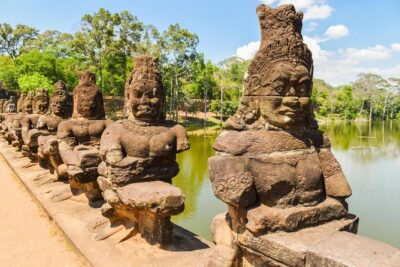
After Angkor Wat, the route heads north toward Angkor Thom, the former capital of the Khmer Empire. The stop lasts about two hours and includes Bayon, the temple famous for its enormous carved faces.
Bayon feels very different from Angkor Wat. At Angkor Wat, the effect comes from broad scale and a strong central design. Bayon is more enclosed and visually busy, with towers and faces appearing as you move through the temple. The change helps you understand that Angkor was a functioning royal center, not simply a group of abandoned monuments.
The surrounding Angkor Thom setting adds useful context. You are not just visiting one temple, but entering the area that once served as a capital. A guide is especially useful here because the stonework can look confusing at first. Sokha was described as keeping the group informed throughout the day, which is the sort of service that helps you connect separate ruins into one larger story.
The two-hour allocation is generous enough for a proper walk, though the day’s total length means you should keep some energy in reserve. This is not a relaxed one-temple outing. You will be moving through several sites, and the heat can make each stairway and courtyard feel more demanding than it appears on a map.
Ta Prohm and the trees among the ruins
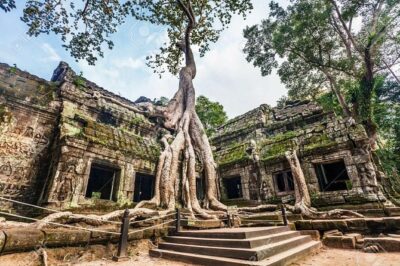
Ta Prohm receives another two-hour visit and offers the most immediately dramatic change of mood. This temple sits amid jungle growth, with trees and roots pressing against the old stonework. Banteay Kdei later provides another partly overgrown setting, but Ta Prohm is the more famous example of architecture and vegetation sharing the same space.
The ruins form a maze-like walk. You can look for carved details, narrow passages, and the large roots that weave through the walls. The attraction is not only the age of the temple. It is the tension between the built structure and the trees that now threaten to overtake it.
I would pay attention to your footing and pace here. The route through old temple ruins can be uneven, and the temptation is to hurry after finding a striking view. Two hours gives you room to explore without treating the site as a five-minute photograph, but you still have Banteay Kdei and the sunset ahead.
Lunch is not included, and the details specify that it is at your own expense. You should plan for that break as part of the day rather than assuming the tour fee covers a meal. Food and drinks are also excluded, although mineral water is included.
More Angkor Wat Tours in Siem Reap:
- Angkor Wat Sunrise or Sunset Tour with Guide from Siem Reap
★ 5.0 · 12,109 reviews - Siem Reap: Angkor Wat: Small-Group Sunrise or Sunset Tour
★ 5.0 · 9,444 reviews - Siem Reap: Angkor Wat 2-Day Tour with Sunrise and Sunset
★ 4.9 · 4,429 reviews - Siem Reap: Full-Day Angkor Wat Guided Tour with Sunset
★ 4.9 · 3,803 reviews
Banteay Kdei, a quieter fourth temple
Banteay Kdei is scheduled for about one hour. Its name is also given as the citadel of monks’ cells, and its partly overgrown remains offer a smaller-scale counterpoint to Angkor Wat, Bayon, and Ta Prohm.
This is a good stop for looking closely. The site has tall trees and cotton tree roots weaving through ruined walls, giving it a worn, quieter character. You may find the one-hour visit easier to manage after the two larger stops, especially if you want to slow down and notice the stonework rather than cover a huge area.
The shorter timing also tells you what to expect. Banteay Kdei is an additional temple stop, not the main focus of the day. It rounds out the route and shows another side of Angkor, but it will not receive the same amount of time as Angkor Wat, Bayon, or Ta Prohm.
Pre Rup at sunset
The tour summary places sunset at Pre Rup, the final major moment of the day. This changes the rhythm from sightseeing in bright morning and afternoon light to waiting for the day’s last colors over an ancient temple setting.
Sunset timing can never be fully guaranteed because the experience requires good weather. If poor weather cancels the outing, the stated policy offers you a different date or a full refund. That is useful protection, but it also means you should avoid building an inflexible same-night plan around the sunset view.
Pre Rup is not listed with a separate duration in the detailed stop schedule, so you should ask how much time is planned there and how the return to Siem Reap will work. The important point is that the day is designed to finish there, rather than ending after the earlier temples.
Why the tuk-tuk format works in the heat
The tuk-tuk is one of the strongest practical reasons to choose this outing. You are not walking between the widely separated temples, and you are not sealed inside a bus. The open motorized trolley lets you sit back between stops and see something of the route.
That openness has a trade-off. On a very hot day, the breeze from moving can help, but the ride is not air-conditioned. One detailed account praised the tuk-tuk’s performance in hot weather and noted that the driver provided chilled water and ice-cold flannels. Mineral water is included, but you should not assume that every extra refreshment or meal is covered.
The driver’s role matters more than it might first appear. A careful driver makes the transfers feel less tiring and keeps the day moving between four temple areas. The supplied information describes the driver as attentive, which is encouraging for anyone concerned about a long day on the road.
Hotel pickup and drop-off are included. That removes the need to arrange separate transport to the first temple or find your own way back after sunset.
What the $39 price really covers
At $39 per person, this is an appealing price for a private day if you value transport and a guide but do not need meals or entry included. You are paying for approximately seven hours, a private tuk-tuk, an English-speaking guide, hotel transfers, and mineral water.
The word private is important. Only your group participates, so the experience is not built around a large shared schedule. A smaller group can make it easier to hear the guide, ask questions, and adjust the pace within the day’s limits.
Still, $39 is not the complete cost. Temple entrance is excluded, as are lunch, food, and drinks. Add those expenses before comparing this option with tours that advertise a higher headline price but include more items.
Group discounts are available, which may improve the value if you are booking for several people. The tour is also booked well in advance on average, around 116 days, so the private format and price may make early planning sensible during busy periods.
The guide can shape the whole day
The temples are impressive on their own, but the guide is what turns a series of ruins into a coherent visit. A good explanation helps you understand why Angkor Wat feels different from Bayon, why Ta Prohm has its tree-covered appearance, and how Banteay Kdei fits into the wider complex.
Sokha is the guide specifically named in the available experience details. He is described as speaking good English and keeping the group informed with a seemingly endless supply of facts. That is exactly the kind of help I want at Angkor, where the carvings, royal connections, and temple layouts can blur together after several hours.
Guide assignments can depend on the provider’s schedule, so you should not assume Sokha will lead every departure. The stated service is a licensed and experienced English-speaking guide. If having a particular guide matters to you, ask Cambodia Transport Service about availability before booking.
Who should book this Angkor day?
I would recommend this tour to you if you want the major Angkor highlights in one private outing and prefer a tuk-tuk to a larger vehicle. It suits first-time visitors who want background as they walk, couples or small groups who value a shared schedule, and anyone who likes ending a busy sightseeing day with sunset.
It is less suitable if you want a slow, highly specialized archaeological visit. Four named temple stops plus Pre Rup make for a full program, and the heat can limit how leisurely you feel by late afternoon.
Families and most able participants can take part according to the supplied information, but you should still consider the length of the day and the walking involved at old temple sites. The activity is private, so your own group can manage its pace better than a large party, though the main route still has a fixed amount to cover.
Booking, weather, and simple planning notes
Confirmation is provided at booking, and free cancellation is available if you cancel at least 24 hours before the start time. Changes or cancellations inside that 24-hour window are not accepted for a refund.
The tour requires good weather. If bad weather causes the provider to cancel, you are offered another date or a full refund. A minimum number of participants is also required, and if that condition causes cancellation, you are offered another date or experience, or a full refund.
Bring your temple admission money and budget for lunch and any drinks beyond the included water. Wear clothing suitable for a long temple day, keep your schedule open through sunset, and confirm the Pre Rup timing because the overview and detailed stop list describe the day differently.
Should you book the Full Day Angkor Wat with Sunset by Tuk Tuk?
Book it if you want a well-priced private introduction to Angkor with the four key temple stops, hotel transfers, an English-speaking guide, and a sunset finish. The strongest features are the personal tuk-tuk format, the useful variety of temples, and the practical care shown by the driver with cold water and flannels.
Skip it if you want air-conditioned transport, included meals, or a short and easy outing. Also check the separate temple fee before comparing prices. For a full first day at Angkor, though, $39 per person offers a sensible mix of guidance, transport, and time at the ruins, with Pre Rup giving the schedule a fitting final scene.
FAQ
How long does the tour last?
The experience lasts approximately seven hours.
What time does hotel pickup begin?
The stated departure time is 8:00 in the morning.
Which temples are included in the main itinerary?
The detailed route includes Angkor Wat, Bayon Temple, Ta Prohm Temple, and Banteay Kdei.
Is sunset at Pre Rup included?
Yes. The tour overview describes the day as ending with sunset at Pre Rup, although no separate duration is listed for that stop.
Is temple admission included in the price?
No. Temple entrance fees are not included.
Are lunch, food, and drinks included?
No. Lunch, food, and drinks are not included. Mineral water is included.
Is the tour private?
Yes. Only your group participates in this private activity.
What happens if bad weather cancels the tour?
You are offered a different date or a full refund if poor weather causes cancellation.
More things to do after dark in Siem Reap
- Siem Reap Floating Village Kampong Phluk Sunset with Boat
★ 5.0 · 1,962 reviews - Full-Day Guided Sunset Tour of Angkor Wat
★ 5.0 · 1,507 reviews - Kompong Phluk Floating Village Half-Day Tour ( Morning / Sunset )
★ 5.0 · 1,494 reviews - Siem Reap: Full Day Angkor Wat Temple Experience with Sunset
★ 4.9 · 1,490 reviews
More Sunset Tours in Siem Reap
- Sunset tour of Kampong Phluk stilts home village on the Tonle Sap
★ 5.0 · 4,865 reviews - Angkor Wat Sunset Small Group Tour with Lunch Included
★ 5.0 · 3,059 reviews - Angkor 2-Day Sunset & Sunrise Small-Group Tour
★ 5.0 · 2,567 reviews - Siem Reap: Angkor Wat Sunrise or Sunset Guided Tour
★ 4.9 · 2,123 reviews
New around Siem Reap
- Siem Reap Temple and Waterfall 3-Day Tour★ 4.5 · 3 reviews
- Siem Reap: Guided Day Trip to Local Village & Cooking Class★ 5.0 · 3 reviews
- Savor the Countryside: Tours with Authentic Cooking Classes”★ 5.0 · 3 reviews
- Siem Reap Private Tour: Angkor Wat Sunrise And Banteay Srei★ 5.0 · 3 reviews
- Angkor Wat Sunset In Private and Small-In-Group★ 4.3 · 3 reviews
- Angkor Wat Sunrise TukTuk Tour★ 5.0 · 3 reviews
- Exclusive Angkor temples and Small group temples tours★ 5.0 · 3 reviews
- Angkor Wat: Highlights and Sunrise with Spanish Guide★ 4.8 · 3 reviews
Angkor Wat Tours, compared.
Angkor Wat Sunrise or Sunset Tour with Guide from Siem Reap
Read our review →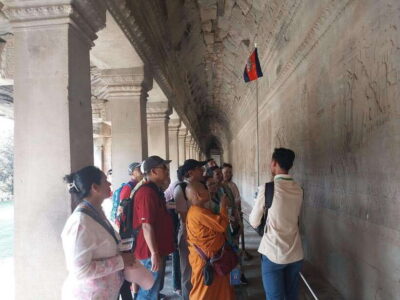
Angkor Wat: Small-Group Sunrise or Sunset Tour
Read our review →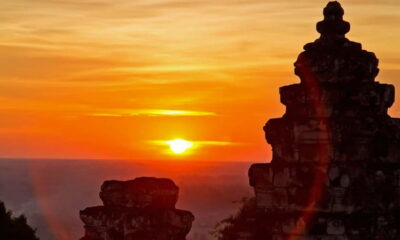
Angkor Wat Sunrise tour with Small – Group and Guide tours
Read our review →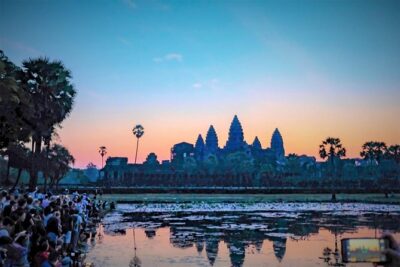
Angkor Wat Highlights and Sunrise Guided Tour from Siem Reap
Read our review →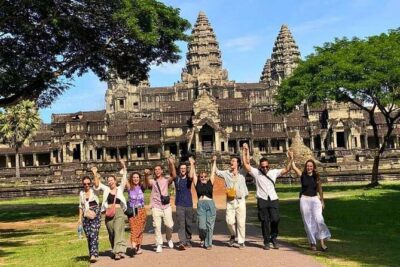
Angkor Wat Sunset Small Group Tour with Lunch Included
Read our review →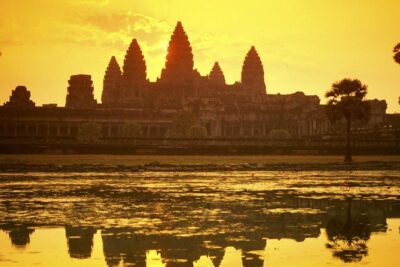
Full-Day Angkor Wat Sunrise Private Tour with Guide from Siem Reap
Read our review →
Angkor Wat Sunrise & 3 Main Temples with Breakfast – Small Group
Read our review →Browse the lists this tour appears in