
Reviewed · ANGKOR WAT TOURS
Angkor Wat: Sunrise: Ta Prohm and Bayon Temple Tour
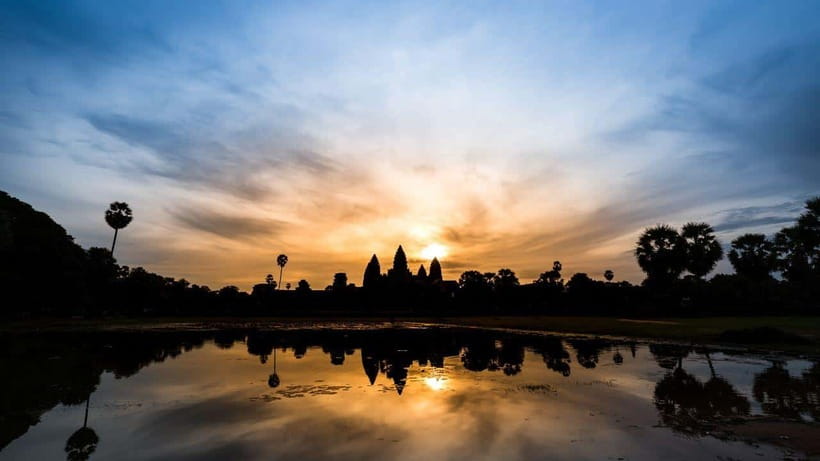
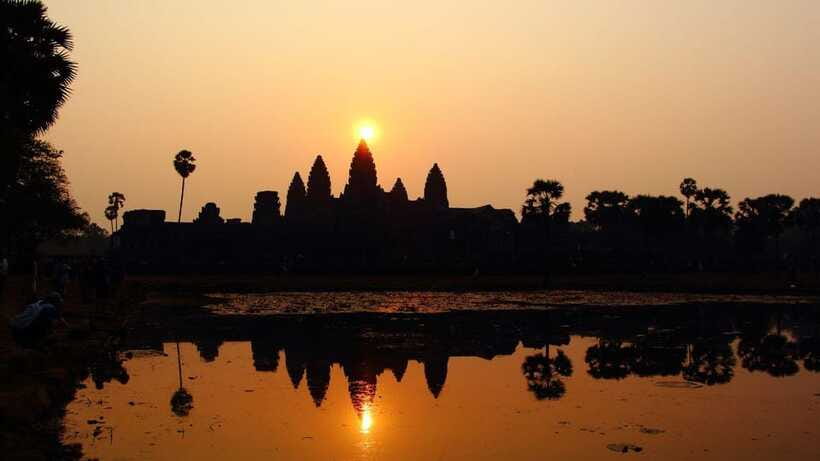
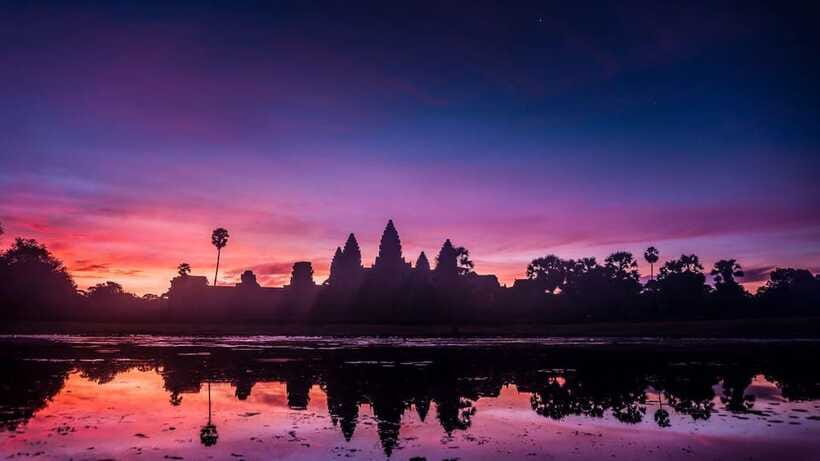
Angkor Wat at sunrise is the star here, and the early start earns its keep. You enter from the eastern side before daylight, move through old cloisters, and reach the temple pools as the sky brightens behind those famous towers. The first two hours are devoted to Angkor Wat, so you are not rushed through the site that brought you to Siem Reap.
I like the quiet eastern entrance and the care from the guide and driver. Guides such as Sokpee, Chhay, Kiz, and Sopheaprath have been praised for clear history, good humor, and help with photos. I also like the simple comforts: air conditioning, bottled water, and cool towels after each stop.
The tradeoff is the alarm clock. Pickup is before 4am, and the temple entrance fee adds $37 to the $16 tour price. You also need to walk on uneven surfaces, cover your shoulders and knees, and cope with heat later in the morning.
Key points at a glance
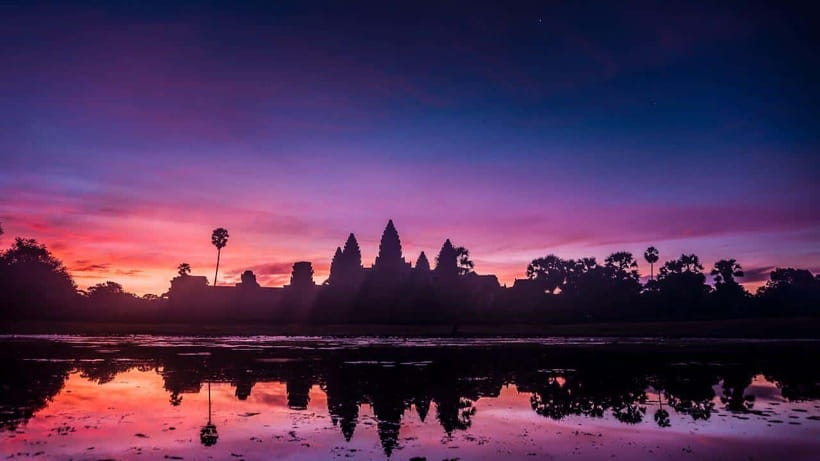
- Sunrise from Angkor Wat’s library pools: Arrive early enough to claim a good view of the temple and its reflection.
- Two full hours inside Angkor Wat: See cloisters, central chambers, upper terraces, and long stretches of carved bas-reliefs.
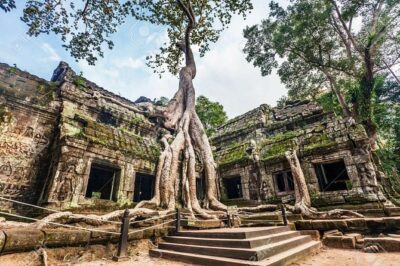
- Ta Prohm at its most atmospheric: Walk through a temple where trees and stone share the same space.
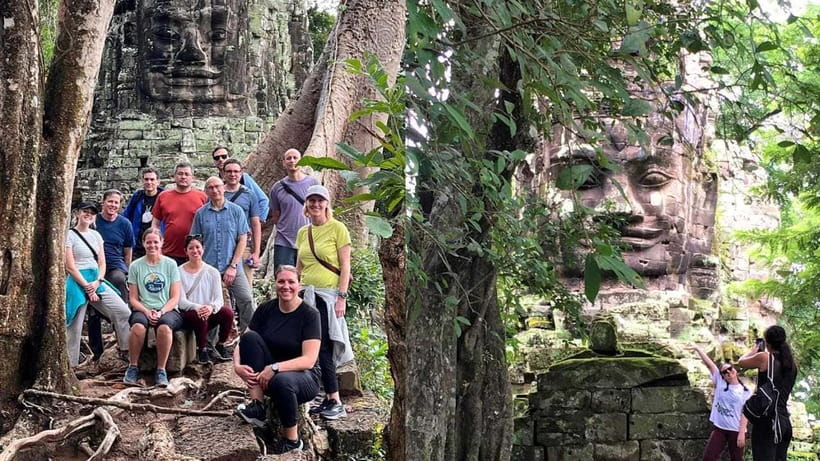
- Bayon’s huge carved faces: Study more than 200 faces on the central towers of this 12th-century temple.
- Angkor Thom’s south gate: See the stone gods and demons lining the approach to the fortified city.
- A low tour price with one major extra: Pay $16 for the guided outing, then add the $37 one-day temple pass and your breakfast.
Why the pre-dawn start is worth it
Your day begins with hotel pickup in Krong Siem Reap. The drive to the Angkor area takes about 20 minutes by air-conditioned van, but the important part is leaving early enough to reach the temple before sunrise. The exact pickup time depends on the day, so check availability when booking.
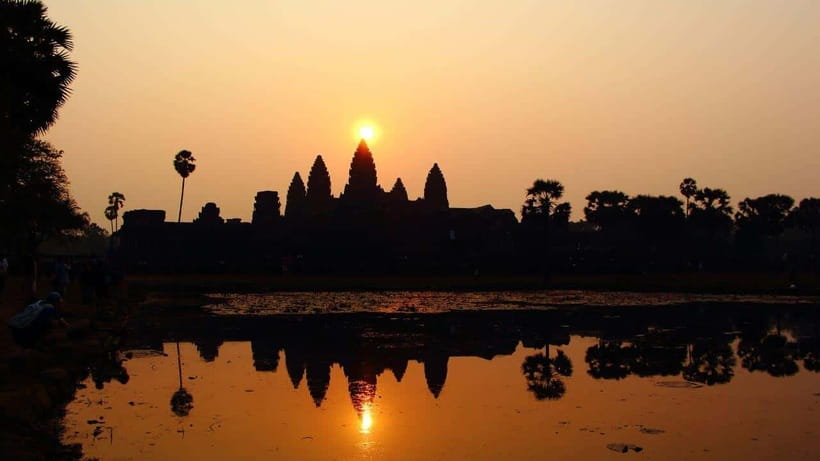
Arriving in darkness changes the feel of Angkor Wat. The eastern entrance is less celebrated than the postcard view from the west, yet it gives you a useful introduction to the temple. You move through cloistered corridors while the stone is still shadowy, then make your way toward the pools and the open view of the towers.
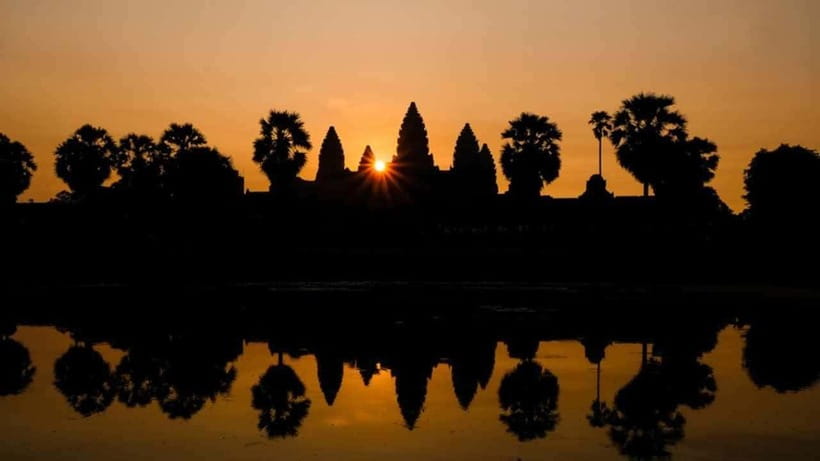
The sunrise itself depends on the weather. On a clear morning, the towers and their reflection can glow in warm color. Cloud can soften or partly hide the display, but the temple remains impressive as daylight reveals its scale. I would not book this tour only for a perfect orange sky. Book it for the rare pleasure of seeing Angkor Wat wake up, even when nature does not follow a photographer’s plan.
Bring a small torch for the early walk. Keep your camera ready, but do not let the first ten minutes become a race for pictures. The temple’s details emerge gradually, and your guide can help you find a sensible viewing position without losing the group.
More Angkor Wat Tours in Cambodia:
- Angkor Wat Sunrise or Sunset Tour with Guide from Siem Reap
★ 5.0 · 12,109 reviews - Siem Reap: Angkor Wat: Small-Group Sunrise or Sunset Tour
★ 5.0 · 9,444 reviews - Siem Reap: Angkor Wat 2-Day Tour with Sunrise and Sunset
★ 4.9 · 4,429 reviews
Two hours inside Angkor Wat
After the first look at the towers, the tour moves into the main temple. This is where the experience earns more than a quick sunrise stop. You spend roughly two hours examining corridors, inner chambers, the upper terraces, and the long bas-relief carvings.
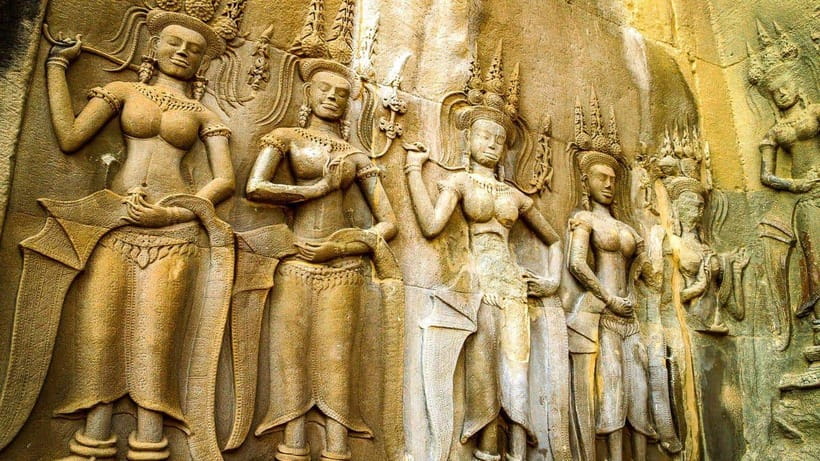
Angkor Wat was built during the Khmer Empire and reflects the religious and political power of that period. Your English-speaking guide explains the stories cut into the walls and connects the stonework with daily life, kingship, and religious ideas. That context matters because the carvings can otherwise become a blur of battles, processions, figures, and repeated patterns.
The bas-reliefs are a major reason to stay inside. They stretch along the galleries and form one of the world’s longest continuous carved sequences. A good guide helps you understand what you are looking at instead of simply pointing out that the wall is old.
You should expect a fair amount of walking and some steps. Comfortable shoes are essential, especially if you want to enjoy the upper terraces rather than spend the visit worrying about your feet. Shoulders and knees must be covered inside the temples, and shorts are not allowed.
The upper levels also require care. You are there to see the architecture, not just photograph it, so keep your pace steady and listen when your guide gives directions. The morning begins cool by Cambodian standards, but the stone and sun soon make the conditions warmer.
Breakfast beside Srah Srang
The itinerary allows about an hour at Srah Srang for breakfast and a rest. Breakfast is not included, but you can buy it at a local restaurant or bring a boxed meal from your hotel. One useful detail from the day is that the breakfast stop is not treated as a hurried snack between temples. You have time to eat, cool down, and recover after Angkor Wat.
This pause is well placed. Sunrise requires a very early departure, and the next two temples involve more walking. I would ask your hotel about a boxed breakfast the night before if you prefer familiar food or want to save time. You can also bring cash for the local restaurant.
Do not expect the $16 tour price to cover your meal. The breakfast stop is convenient, but it is an extra cost. Bottled water and cool towels are included, and they become genuinely useful as the morning grows hotter.
Ta Prohm and the power of decay
Ta Prohm is the next major stop, with about an hour for a guided visit and walk. This temple is famous for its trees, but the plants are only part of the appeal. Ta Prohm gives you a clear sense of what happens when a large religious complex is no longer maintained by the people who built it.
Stone galleries break into shadow, roots press against walls, and carved surfaces appear through the vegetation. The site is atmospheric without needing much decoration from a guidebook. You can see why this is one of Angkor’s most memorable temples.
Ta Prohm once housed 2,740 monks. That figure helps you picture the site as a working religious center rather than a pretty ruin in the forest. The temple also looks much as it did when French explorer Henri Mouhot reached it in the early 1850s, which adds another layer to the visit.
The drawback is that Ta Prohm can feel cramped at popular points, and the ground is uneven. The supplied details do not specify the group size, so do not assume you will have a private, quiet walk. Stay close to your guide, especially if you stop for pictures. One guide’s advice about sticking together like mango sticky rice is funny, but it also makes practical sense in a large temple complex.
More Angkor Temple Tours in Cambodia:
- Siem Reap Tour: Angkor Wat Sunrise, Bayon, Ta Prohm, Banteay Srei
★ 5.0 · 931 reviews - Siem Reap: Bike the Angkor Temples – Full-Day 30km Tour
★ 5.0 · 463 reviews - Angkor Wat one Day Private Tour for All Highlight Angkor Temples
★ 5.0 · 199 reviews - 1-Day private Angkor Temple Tour from Siem Reap
★ 4.9 · 178 reviews
Angkor Thom and the southern gate
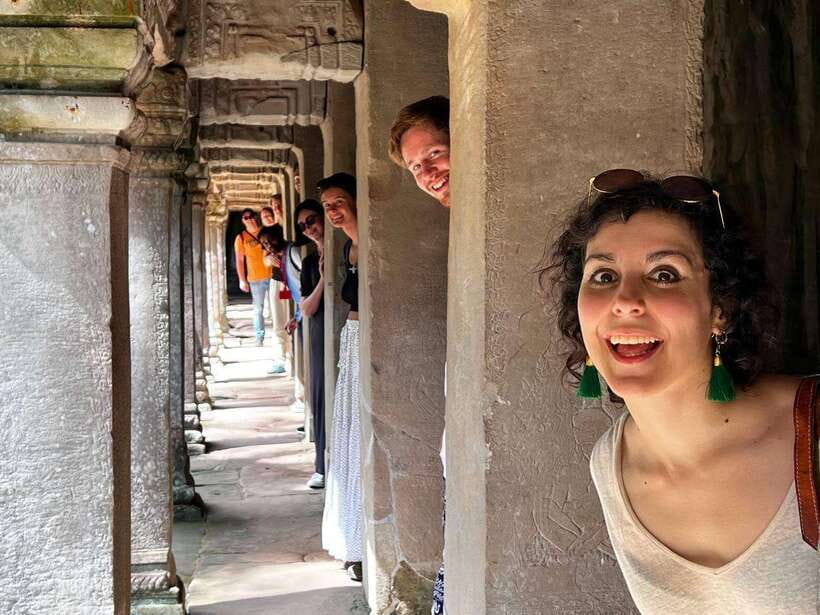
From Ta Prohm, the route continues to Angkor Thom, the fortified city that once formed the center of the Khmer capital. You pass the Terrace of the Leper King and the Terrace of Elephants before reaching Bayon.
These terraces are quick viewing stops rather than long independent visits, but they help you read Angkor Thom as a planned royal city. The Terrace of Elephants is linked with royal ceremony and public display, while the Terrace of the Leper King carries its own carved figures and stories. Your guide supplies the background that turns a roadside pause into part of the larger city plan.
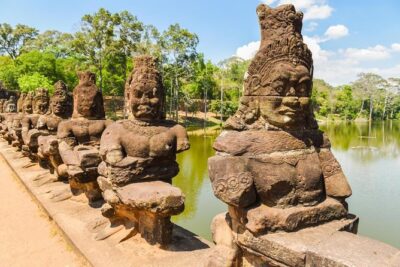
The southern gate is another worthwhile stop. A row of 54 stone figures lines each side of the approach, with gods on the left and demons on the right. The figures once formed a dramatic entrance to the fortified city, and the arrangement gives you a clear visual example of Khmer religious ideas.
Allow about 20 minutes here. It is a short visit, but the gate is easy to appreciate because the figures create a strong approach to the city walls. Have your camera ready, then make room for other people and return to the vehicle when asked.
Bayon’s forest of stone faces
Bayon is the final main temple, with about an hour for walking and a guided visit. Built in the 12th century, it is known for its central towers covered with more than 200 enormous carved faces.
Bayon is not as immediately symmetrical as Angkor Wat. Its galleries and towers can feel confusing at first, which is exactly why a guide helps. As you move closer to the towers, faces appear from different angles, sometimes looking directly at you and sometimes seeming to watch from the side.
I like Bayon as a counterpoint to Angkor Wat. Angkor Wat gives you long galleries, broad scale, and carefully ordered views. Bayon feels closer, stranger, and more enclosed. You spend less time looking across a grand court and more time negotiating passages between towers.
The hour is enough for a useful introduction, though serious photographers or architecture fans may want longer. Because the tour must return to Siem Reap by early afternoon, you will not have unlimited time at each temple. That is the central compromise of a half-day temple circuit: you see the essential places, but you do not study every corner.
What the guides add
The guide is more than a person who leads you from one temple to the next. The better moments on this route come from having someone explain why a carving matters, point out a useful photo position, and keep the group moving without making the day feel mechanical.
Several guides have earned strong praise for different strengths. Sokpee is described as punctual, attentive, and especially good at explaining religion, architecture, and the kingdoms connected with the temples. Chhay is known for history, Cambodian anecdotes, and a playful sense of humor. Kiz has been praised for warmth and practical care, while Sopheaprath is noted for arranging photo spots and making sure people are comfortable. Lucky, also called Samnung, is remembered for jokes as well as temple information.
You should not assume you will receive a particular guide when booking. Still, these names give you a useful sense of the team’s style. The tour is conducted in English, and the guide can answer questions about the temples and Cambodia’s past.
The driver matters too. The van is air-conditioned, and the service includes hotel pickup and drop-off. Water and a cool towel are supplied, with particularly attentive care after temple visits. Those are modest extras, but they matter after walking in heat and dust.
Price, temple pass, and real value
The tour costs $16 per person. That is a low price for an eight-hour outing with hotel transportation, an English-speaking guide, air conditioning, bottled water, and visits to four major Angkor sites.
The key point is that the temple entrance fee is separate. You must pay $37 for the one-day pass, which covers all the temples visited on this tour. In practical terms, your main costs are $53 before breakfast and any other personal spending.
That total remains fair if you want a structured first day at Angkor. Transport alone can be a concern in Siem Reap, and a guide helps you understand what you are seeing instead of wandering among ruins with no context. The tour also saves you from arranging separate rides between Angkor Wat, Ta Prohm, Angkor Thom, and Bayon.
The value is less clear if you already have a driver, know the temples well, and want to spend half a day at one site. This schedule is designed for coverage and guidance. It is not designed for slow architectural study or a private pace.
Who should book this temple tour
I would recommend this experience to a first-time visitor who wants the classic Angkor sights in one well-organized morning. It suits solo visitors, couples, and small groups who appreciate having a guide explain the carvings and keep the route on track.
It is also a good choice if you want sunrise photographs without arranging your own transport. The early arrival can help you find a useful position near the water, though the sky remains out of anyone’s control.
You should think twice if you dislike pre-dawn starts, walking, or shared schedules. The tour is not suitable for children under eight or wheelchair users. You also need clothing that covers shoulders and knees, comfortable shoes, biodegradable sunscreen, a camera, and cash.
The activity lasts eight hours, but the temple visits finish in time for you to return to Siem Reap between about 12:30 and 1:30pm. That makes it easier to keep the afternoon free, though the early start may leave you ready for a quiet lunch and rest.
Free cancellation is available up to 24 hours before departure, and you can reserve now and pay later. The tour also includes skip-the-ticket-line access, but you still need to pay the separate temple entrance fee.
Should you book it?
Book this tour if you want the big Angkor experience without spending your first morning solving transport, routes, and temple history on your own. The strongest points are the two-hour visit inside Angkor Wat, the atmospheric stop at Ta Prohm, the carved faces at Bayon, and guides who bring humor and clear explanations to a very large subject.
Bring a torch, arrange breakfast in advance, wear proper temple clothing, and budget $37 for the pass. If you can accept the pre-dawn wake-up and the fixed pace, $16 buys a useful, comfortable introduction to Angkor.
FAQ
How much does the tour cost?
The tour costs $16 per person. The one-day temple entrance fee costs an additional $37 and is not included. Breakfast is also separate.
How long does the experience last?
The tour lasts eight hours. It usually ends between 12:30 and 1:30pm.
What temples and sites are included?
The route includes Angkor Wat, Srah Srang for a breakfast break, Ta Prohm, Bayon Temple, Angkor Thom, the Terrace of the Leper King, the Terrace of Elephants, and the southern gate of Angkor Thom.
Is breakfast included?
No. You can buy breakfast at a local restaurant near Srah Srang or bring a boxed breakfast from your hotel.
What should I wear?
You need clothing that covers your shoulders and knees inside the temples. Shorts are not allowed. Comfortable shoes are recommended.
Is the tour suitable for children and wheelchair users?
The activity is not suitable for children under eight or wheelchair users. It also involves walking around ancient temple sites on uneven surfaces.
More early starts in Cambodia
- Angkor Wat Sunrise tour with Small – Group and Guide tours
★ 5.0 · 3,655 reviews - Angkor Wat Highlights and Sunrise Guided Tour from Siem Reap
★ 5.0 · 3,213 reviews - Full-Day Angkor Wat Sunrise Private Tour with Guide from Siem Reap
★ 5.0 · 2,920 reviews - Angkor Wat Sunrise & 3 Main Temples with Breakfast – Small Group
★ 5.0 · 2,857 reviews
New around Cambodia
- One Day Private Guide Tours History in Phnom Penh Incl. admission★ 4.5 · 7 reviews
- Kulen Mountain With Ticket included Plus Banteay Srei Temple Tour★ 5.0 · 7 reviews
- ( Free eSim) Phnom Penh Historical Full Day Tour★ 5.0 · 7 reviews
- 2 Days Angkor temples with Sunrise & Sunset★ 5.0 · 7 reviews
- Private Siem Reap Airport Transfer to hotel in town★ 5.0 · 7 reviews
- From HCM: Mekong Delta Floating Market 3days exit Phnom Penh★ 3.4 · 7 reviews
- 1-Day private Angkor Temple Tour with Sun Rise by Tuk Tuk from Siem Reap★ 4.5 · 7 reviews
- Siem Reap: Morning Cooking Class & Market Tour★ 5.0 · 7 reviews
Angkor Wat Tours, compared.
Angkor Wat Sunrise or Sunset Tour with Guide from Siem Reap
Read our review →
Angkor Wat: Small-Group Sunrise or Sunset Tour
Read our review →
Angkor Wat Sunrise tour with Small – Group and Guide tours
Read our review →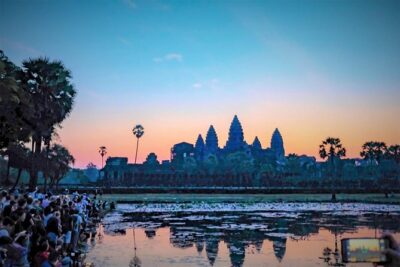
Angkor Wat Highlights and Sunrise Guided Tour from Siem Reap
Read our review →
Angkor Wat Sunset Small Group Tour with Lunch Included
Read our review →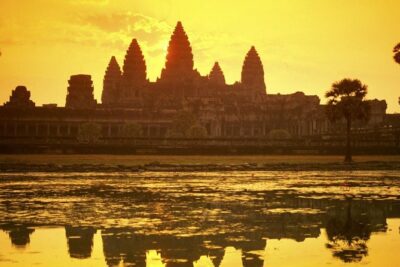
Full-Day Angkor Wat Sunrise Private Tour with Guide from Siem Reap
Read our review →
Angkor Wat Sunrise & 3 Main Temples with Breakfast – Small Group
Read our review →Browse the lists this tour appears in