
Reviewed · ANGKOR WAT TOURS
Angkor Wat & Floating Village 3-Day Private Tour
Angkor Wat is only one part of this three-day private tour. You also reach Ta Prohm’s tree-covered ruins, the carved pink sandstone of Banteay Srei, the forest trail to Kbal Spean, and Kampong Phluk on Tonle Sap. That wider range gives you a better sense of Cambodia than a one-day temple dash.
I like the private format, since your guide can adjust the pace and explain Hindu and Buddhist imagery as you go. I also like the practical touches: hotel pickup, a cool vehicle, bottled water, and cold tissues matter in Siem Reap’s heat. Guides such as Mork, Long, Sambath, Chhoeum, Visovitou, and Smith have been associated with especially warm, flexible service.
The main catch is cost planning. The advertised $198.98 per person does not include the three-day temple pass, which costs $62 per adult, and most lunches and drinks are extra. Kbal Spean also requires a moderate level of fitness, so this is not a purely easy sightseeing ride.
Key points to know before booking
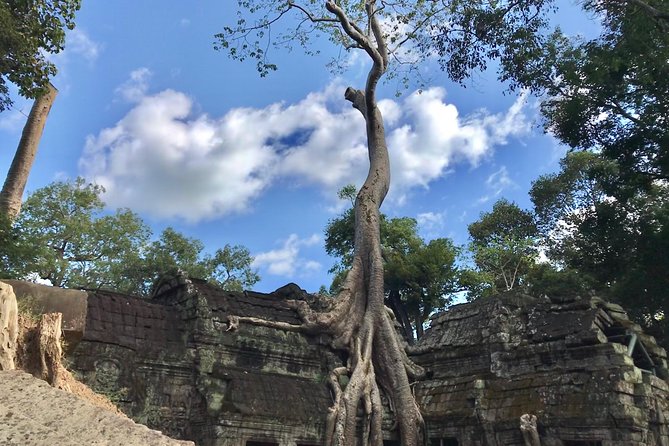
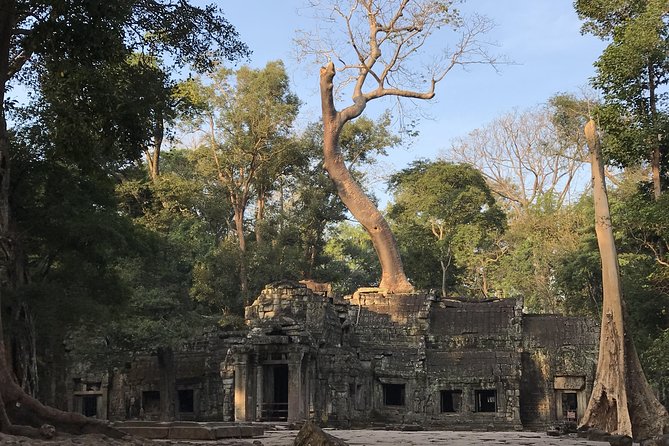
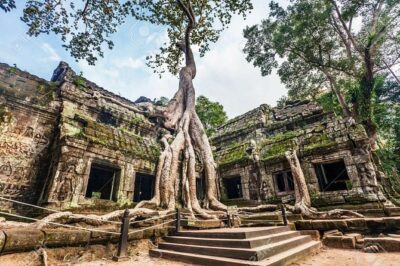
- Tree roots and movie fame: Ta Prohm offers the tour’s most atmospheric first stop, with enormous strangler fig roots gripping the ruins.
- A full Angkor introduction: Day one covers Ta Prohm, Angkor Thom, and Angkor Wat, with time for the major monuments and their stories.
- The best fine carving: Banteay Srei is smaller than Angkor Wat but famous for unusually delicate stonework.
- A real walk on day two: Kbal Spean involves roughly two hours of trekking to see carved lingas along the riverbed.
- Temple history meets village life: Day three pairs the ninth-century Roluos temples with a wooden boat through Kampong Phluk.
- Private means personal: Only your group joins the activity, making it easier to ask questions, pause for photographs, or request a different pace.
Why three days works better than a temple sprint
Siem Reap’s major sights spread across a large area. A short visit can cover Angkor Wat and one or two nearby temples, but it leaves out the quieter sites and the Tonle Sap communities that give the area more texture.
This tour divides the region into three sensible days. Day one handles the essential Angkor circuit. Day two reaches farther out for Preah Khan, Banteay Srei, and Kbal Spean. Day three leaves the main temple zone for Roluos and Kampong Phluk.
You start at 8:00 each morning with pickup from your hotel. The air-conditioned vehicle is not a minor detail. After several hours among sun-baked stones, shade and cold water can make the difference between enjoying the afternoon and merely enduring it.
The private setup is useful here. You are not tied to the interests of a large group, so you can ask for extra explanation at a relief, take a few more minutes at a courtyard, or keep moving if the heat begins to wear you down. The tour is still structured, but it does not have to feel rigid.
More Angkor Wat Tours in Siem Reap:
- Angkor Wat Sunrise or Sunset Tour with Guide from Siem Reap
★ 5.0 · 12,109 reviews - Siem Reap: Angkor Wat: Small-Group Sunrise or Sunset Tour
★ 5.0 · 9,444 reviews - Siem Reap: Angkor Wat 2-Day Tour with Sunrise and Sunset
★ 4.9 · 4,429 reviews
Day one: Ta Prohm, Angkor Thom, and Angkor Wat
Ta Prohm is a strong opening stop because it looks unlike the classic postcard image of Angkor. The temple is partly swallowed by jungle, with huge tree roots pressing across walls and doorways. It is also known for the Tomb Raider II filming connection, though the roots and ruined galleries are more important than the movie tie-in.
Allow about an hour here. Your guide can help you make sense of the layout and point out carved details that are easy to miss among the fallen stones. The temple’s mood comes from the contrast between carefully built galleries and the natural growth that has taken hold of them.
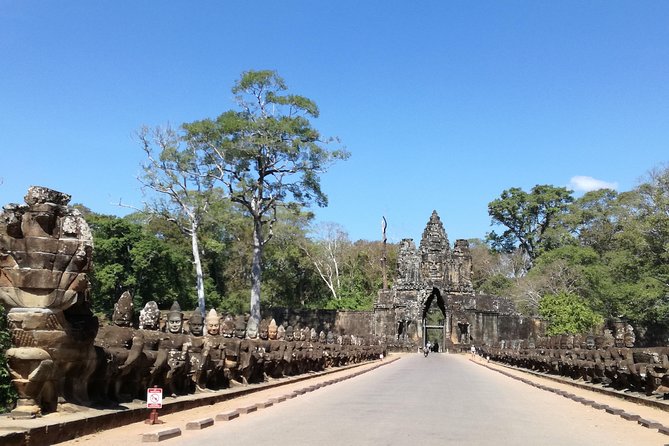
Next comes Angkor Thom, the last capital city of the Khmer Empire. The route enters through the Victory Gate, then continues to the Elephant Terrace, the Terrace of the Leper King, the Royal Enclosure, Phimean Akas, and Baphuon.
This is a broad stop, listed at about two hours, so expect more walking and a steady run of monuments rather than one single temple visit. The Elephant Terrace gives you long carved walls to study, while the Terrace of the Leper King offers dense detail and mythic figures. Baphuon adds another large architectural form to the morning.
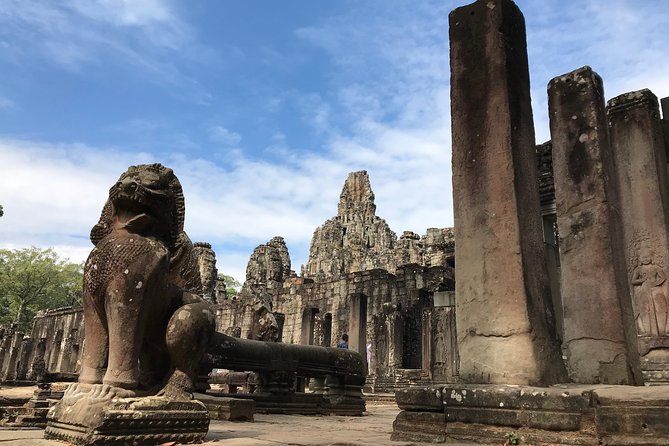
Bayon is the emotional center of Angkor Thom. Its towers carry the famous serene faces, which appear at different angles as you move through the temple. I would ask your guide to explain how the imagery connects to the political and religious purpose of the city, rather than treating the faces as a quick photo stop.
Angkor Wat follows after a lunch break. The schedule allows you to eat near the temples at a local restaurant, or ask about returning to town. Meals are at your own cost, so clarify the plan before setting off if you prefer a particular kind of food or want to control the budget.
The published stop description gives only two minutes for Angkor Wat, which clearly cannot represent a full visit to the world’s largest religious site. Treat the timing as a rough itinerary marker, not a promise of a literal two-minute look. Confirm with Bayon Guide how much time you will have inside Angkor Wat, especially if seeing the galleries and central towers is a priority.
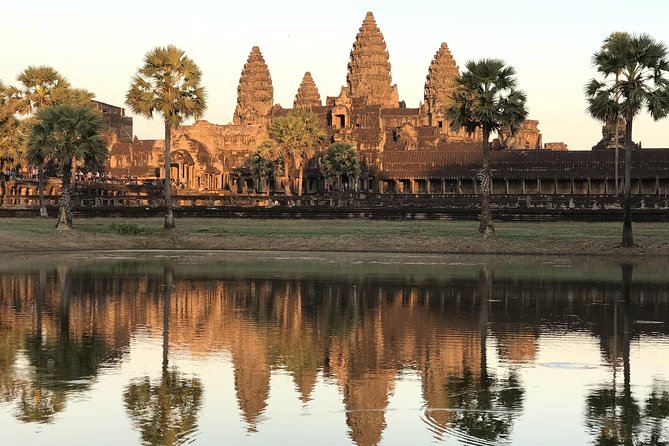
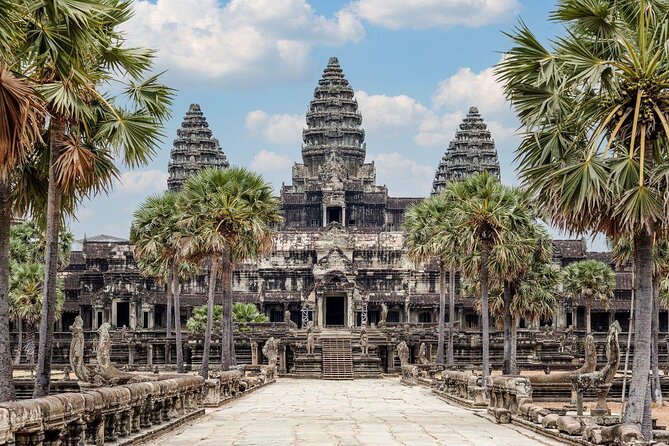
Angkor Wat rewards slower attention. Its scale can overwhelm you at first, but the bas-reliefs, long galleries, towers, and layered courtyards become easier to read with a guide beside you. The explanations are particularly useful for visitors who want to understand the Hindu and Buddhist symbols instead of simply collecting photographs.
Dinner with a cultural performance is included on the first evening. The supplied details do not name the venue or specify the exact style of performance, so ask for those particulars if the dinner is a major reason you are booking. It is best viewed as a convenient cultural evening, not a substitute for choosing your own restaurant experience in Siem Reap.
Day two: Preah Khan and Cambodia’s finest stone detail
Day two begins again at 8:00 AM with Preah Khan, part of the Grand Circuit. The temple is described as an ancient Buddhist university, a useful reminder that these complexes were more than royal monuments. They were places of worship, study, administration, and daily activity.
You have about an hour here. That is enough for a guided introduction, though visitors who love carved doorways and long corridors may wish for more time. Tell your guide early if you prefer close architectural study over a fast overview.
Banteay Srei is the day’s visual highlight for many people. Its name is often translated as Women’s Citadel, and it is known for exceptionally fine carving. The temple is smaller than Angkor Wat, but its scale makes the stonework easier to appreciate. Look for the precision in the figures and decorative borders rather than expecting huge courtyards.
The listed visit lasts about an hour and admission is shown as free in the supplied details. Still, the separate three-day temple pass is listed as a $62 cost for adults, so do not assume every Angkor-related admission is covered by the tour price. Children below age 12 are listed as free for the temple pass.
After lunch at your own expense, the tour continues to Kbal Spean. This is where the program becomes more active. The visit includes about two hours of trekking to reach the river with its thousand lingas, carved symbols associated with Hindu worship.
The walk is a real consideration. You need moderate physical fitness, and the trail may feel demanding after two mornings of temple walking. Wear practical footwear, carry the mineral water provided, and avoid treating this as a simple roadside viewpoint. The reward is a different kind of ancient art, placed along a river rather than arranged in a monumental temple.
Kbal Spean also changes the rhythm of the tour. Instead of moving from one stone complex to another by vehicle, you spend time on foot in a forest setting. That makes the second day feel less repetitive, though it also means heat and tired legs matter more.
Day three: Roluos and life on Tonle Sap
The final morning starts with the Roluos group, a set of three monuments linked to the former capital of Hari-Hara and dating to the ninth century. The visit begins with Preah Ko, a Hindu temple dedicated to Shiva, then continues through the group.
Roluos is valuable because it takes you back to an earlier phase of Khmer building. After the grandeur of Angkor Wat and Angkor Thom, these temples can help you see how the architectural tradition developed over time. The two-hour stop gives your guide room to explain the religious purpose and the relationship between the three monuments.
The afternoon shifts from ancient stone to present-day community life. After lunch at a local restaurant at your own cost, you take a wooden boat through Kampong Phluk, a fishing community on Tonle Sap Lake.
The boat trip is included, and the route passes through flooded forests. Water levels change with the season, so the exact appearance of the village and forest can vary. The point is not simply to photograph houses on stilts. It is to see how residents organize work and movement around a lake whose water level shapes daily life.
Kampong Phluk makes a fitting final stop because it adds people and current livelihoods to a trip otherwise focused on monuments. I would keep your expectations grounded, though. This is a community visit by boat, not a hands-on cultural workshop, and the supplied details do not promise home visits, meals with residents, or a particular type of local interaction.
The final boat ride can also be tiring if you have already packed your days too tightly. Ask your guide about the timing of the return, particularly if you have an evening bus, flight, or other fixed plan.
More Floating Village Tours in Siem Reap:
- From Siem Reap: Kampong Phluk Floating Village Tour by Boat
★ 4.9 · 6,979 reviews - Siem Reap: Kampong Phluk Floating Village Tour with Boat
★ 4.9 · 3,843 reviews - Siem Reap Floating Village Kampong Phluk Sunset with Boat
★ 5.0 · 1,962 reviews - Kompong Phluk Floating Village Half-Day Tour ( Morning / Sunset )
★ 5.0 · 1,494 reviews
What the $198.98 price really covers
At $198.98 per person, the tour is not the cheapest way to see Angkor. But price comparisons can mislead if they leave out transport, guiding, and the distance covered over three days.
The fee includes an air-conditioned vehicle, an expert guide, mineral water, cold tissues, dinner, and the Tonle Sap boat trip. It also gives you a private tour rather than a shared group arrangement. Those inclusions make the price more reasonable for couples, families, or small groups who value control over the schedule.
You still need to add the $62 adult temple pass. The pass is listed as free for children under 12. Lunches, other drinks, personal spending, tips, and hotel costs are not included.
For two adults, the tour fee alone comes to $397.96, before the temple passes and meals. A larger private group may find the per-person value better if group discounts apply, but the exact discount is not specified. Ask for the current total before booking.
The dinner is included, but most food is not. Since both temple days include lunch breaks at local restaurants, budget for those meals rather than assuming the package is all-inclusive.
The guide and driver can shape the whole experience
A temple guide is most useful when the person does more than recite dates. The strongest guide experiences connected with this tour include clear English, historical explanation, good photography advice, patience, and willingness to adjust the day.
Names associated with the guiding team include Sambath, Visovitou, Long, Mork, Chhoeum, and Smith. Drivers such as Veasna, Paul, and Phal have also been praised for professional driving and helpful service. You may not receive a particular guide or driver, so do not book on the assumption that one named person is guaranteed.
The consistent practical pattern is worth noting: guides have been described as punctual, friendly, flexible, and attentive to comfort. Mork, in particular, is associated with good photo stops and useful advice about Siem Reap. Chhoeum is noted for humor, while Long is noted for clear English. These details matter because three days of ruins can become tiring without a guide who reads the mood of the group.
You should tell the guide what matters to you at the start. Ask for more archaeology, more photography time, more religious context, or a faster pace. The private format makes that conversation worthwhile.
Comfort, effort, and what to pack
The tour requires a moderate fitness level. You will walk around large temple compounds on days one and two, then trek at Kbal Spean. The heat can make ordinary distances feel longer.
Bring light clothing suitable for temple visits, sturdy walking shoes, sun protection, and a small bag. The supplied mineral water and cold tissues are helpful, but you should still plan for personal needs throughout the day.
Start times are 8:00 AM each morning. The early departures help you reach the sites before the day becomes even hotter, but they also mean you should keep the previous evenings sensible, particularly after the cultural dinner.
The vehicle is air-conditioned, and pickup is offered from your hotel. The activity is private, so only your group participates. The information also notes access to public transportation nearby, though the tour itself is built around hotel pickup and a private vehicle.
Free cancellation is available if you cancel at least 24 hours before the start time. Changes or cancellations inside that window are not accepted for a refund. Keep the local cut-off time in mind.
Who should book this three-day route
I would choose this tour if you want the major Angkor sites but also want two different kinds of day trips: a forest trek and a lake community. It suits first-time visitors who want context without arranging separate guides, drivers, temple passes, and boat transport.
It is also a good match for couples and families who value a private schedule. The option to ask questions, adjust the pace, and stop for photographs is more useful over three days than it would be on a short half-day outing.
I would hesitate if you want a slow, specialist-level study of every temple. The itinerary covers a lot, and some stops may feel brief to serious photographers or architecture enthusiasts. I would also reconsider if you dislike walking in heat or do not want to pay extra for the temple pass and meals.
Should you book it?
Book this tour if you want a well-rounded Siem Reap visit in three days, with Angkor’s essential monuments, less central temples, a forest walk, and Tonle Sap by boat. The private vehicle, guide, hotel pickup, and practical refreshments add real value.
Before paying, confirm the exact Angkor Wat timing, the guide assignment, the current group discount, and the total after adding temple passes and meals. If those costs fit your budget and you can handle Kbal Spean’s trek, this is a strong choice for seeing more than the standard Angkor Wat postcard.
FAQ
What is included in the three-day private tour?
The tour includes hotel pickup, an air-conditioned vehicle, an expert tour guide, mineral water, cold tissues, dinner, and a boat trip to Kampong Phluk on Tonle Sap Lake.
Is the Angkor temple pass included?
No. The three-day temple pass costs $62 per person for adults. Children below 12 years old are listed as free for the temple pass.
Are meals included?
Dinner is included. Lunches, other meals, and beverages are not included, so you should budget for lunch at local restaurants on each day.
What time does the tour start?
Pickup begins at 8:00 AM on each of the three days.
Is the tour private?
Yes. Only your group participates in the activity.
Do I need to be physically fit?
You should have a moderate level of physical fitness. The itinerary includes walking through several temple complexes and about two hours of trekking at Kbal Spean.
Can I cancel for a full refund?
Yes, if you cancel at least 24 hours before the experience start time. Cancellations or changes made less than 24 hours before the start time are not accepted for a refund.
More 3-Day Experiences in Siem Reap
- From Siem Reap: Angkor Wat and Floating Village 3-Day Trip
★ 5.0 · 100 reviews - 3-Day Angkor Wat with All Interesting Major Temples, Banteay Srei & Beng Mealea
★ 5.0 · 70 reviews - 3-Day Angkor Wat & All Interesting Major Temples & Kulen Mount Waterfall
★ 5.0 · 63 reviews - 3 Days Siem Reap Explorer – Small Group
★ 5.0 · 50 reviews
New around Siem Reap
- Kulen Mountain With Ticket included Plus Banteay Srei Temple Tour★ 5.0 · 7 reviews
- 2 Days Angkor temples with Sunrise & Sunset★ 5.0 · 7 reviews
- Private Siem Reap Airport Transfer to hotel in town★ 5.0 · 7 reviews
- 1-Day private Angkor Temple Tour with Sun Rise by Tuk Tuk from Siem Reap★ 4.5 · 7 reviews
- Siem Reap: Morning Cooking Class & Market Tour★ 5.0 · 7 reviews
- Kulen Mountain, Killing Fields and War Museum Tour★ 5.0 · 7 reviews
- War Museum, Killing Field, and APOPO Hero RATs Tour★ 5.0 · 7 reviews
- Half-Day: Silk Farm, Senteur Angkor, and Satcha Workshop★ 4.6 · 7 reviews
Angkor Wat Tours, compared.
Angkor Wat Sunrise or Sunset Tour with Guide from Siem Reap
Read our review →
Angkor Wat: Small-Group Sunrise or Sunset Tour
Read our review →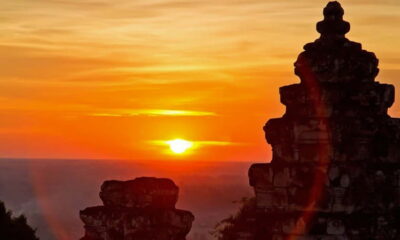
Angkor Wat Sunrise tour with Small – Group and Guide tours
Read our review →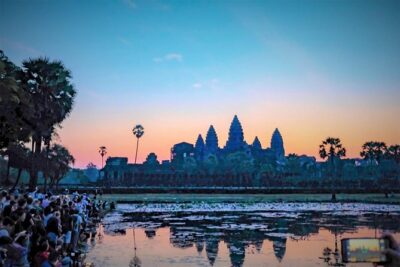
Angkor Wat Highlights and Sunrise Guided Tour from Siem Reap
Read our review →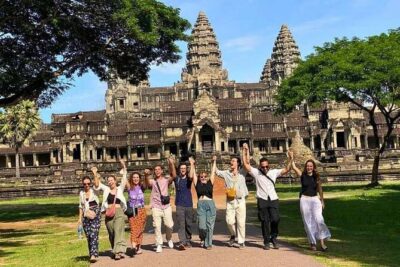
Angkor Wat Sunset Small Group Tour with Lunch Included
Read our review →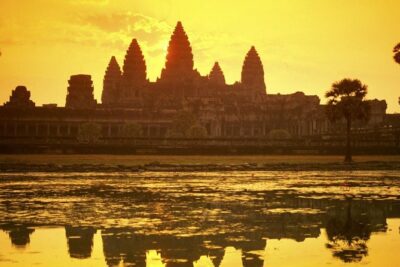
Full-Day Angkor Wat Sunrise Private Tour with Guide from Siem Reap
Read our review →
Angkor Wat Sunrise & 3 Main Temples with Breakfast – Small Group
Read our review →Browse the lists this tour appears in