
Reviewed · ANGKOR WAT TOURS
Angkor Wat Cycling Tour
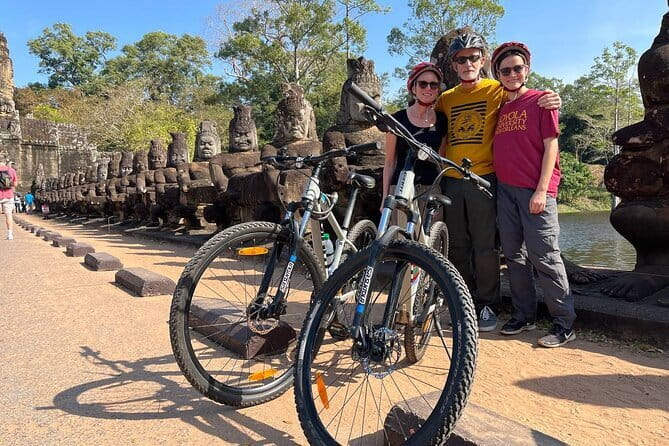
Angkor is easier to understand from a bicycle seat. You move through the trees, pass quiet back roads, and reach temples that can feel far removed from the main sightseeing loop. The route mixes famous monuments with smaller ruins and rural life outside the busiest paths.
I like the private format, since your guide can adjust the pace and the amount of riding. I also like the use of mountain bikes and helmets, plus the chance to reach Ta Nei and other less-visited corners. The main drawback is the length: six to eight hours of cycling and temple walking can feel demanding in Cambodia’s heat.
Key points to know before you book
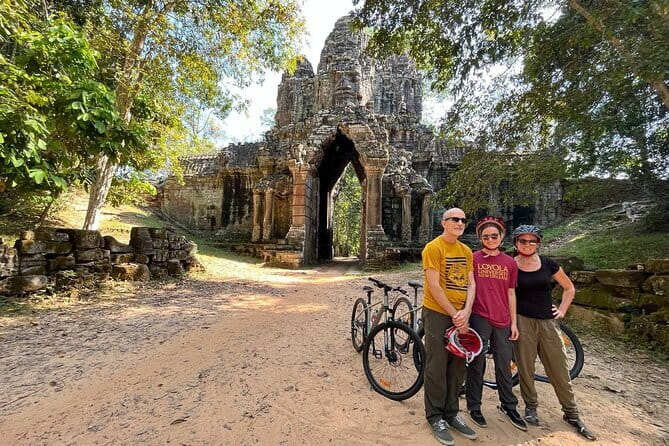
- Early hotel pickup at 7:30 a.m. gives you a useful start before the day becomes hotter.
- Back roads and forest trails make this more than a ride between the three most famous temples.
- Mr K is the guide name most often requested, with praise for his care, timing, and ability to adjust the ride.
- The private tour suits couples, families, and small groups who want a flexible pace rather than a fixed large-group schedule.
- The $45 price includes the guide, bikes, helmets, water, pickup, and drop-off, but not the Angkor temple pass.
- The temple pass costs $37 per person, so budget $82 per person before any extras.
Why a bicycle changes the Angkor experience
Angkor Wat is often visited by car or tuk-tuk, with short walks between stops. A bicycle changes those gaps into part of the experience. You ride beneath trees, use quieter routes, and get a better sense of the enormous park around the monuments.
That matters because Angkor is not just a collection of buildings. The temples sit among reservoirs, roads, forest, villages, and traces of an old royal city. On a bike, you notice the setting instead of treating each temple as an isolated stop.
This is not a racing tour. The description presents it as leisurely, and that is the right way to think about it. You will still cover a lot of ground, but the point is to enjoy the ride and pause at the temples, not to chase a mileage target.
The route also gives you a look at rural life around the park. That adds a human side to the visit, though the experience is still centered on the temples rather than on a formal village tour.
More Bike Tours in Siem Reap
- Siem Reap Countryside Bike Tour / E-Bike or Tuk Tuk
★ 5.0 · 935 reviews - Angkor Sunrise Bike Tour / E-Bike or Tuk Tuk
★ 5.0 · 615 reviews - Siem Reap: Bike the Angkor Temples – Full-Day 30km Tour
★ 5.0 · 463 reviews
The 7:30 a.m. start from your hotel
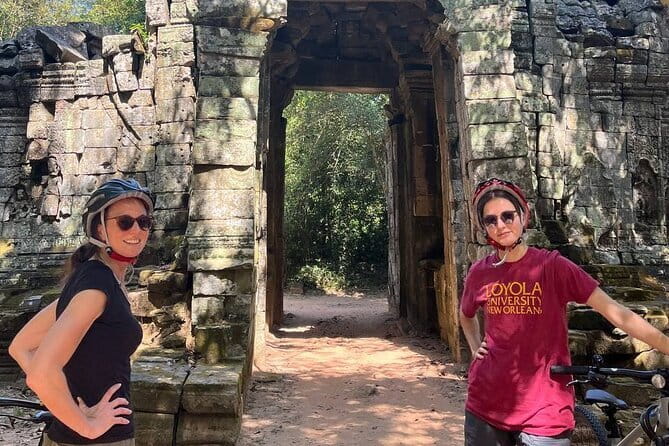
Pickup and drop-off are included, and the day begins at your Siem Reap hotel at 7:30 a.m. That early start is practical. Angkor’s open spaces offer little shelter from the sun, so an earlier departure gives you a better chance of riding comfortably.
Because this is a private activity, the guide can usually respond to your group’s pace. If you want a relaxed ride with plenty of stops, say so at the start. If your group is eager to spend more time on the bike, the guide can help shape the day around that preference.
The bikes are described as mountain bikes, and helmets are included. Cold drinking water is also provided. Those basics matter on a long day, although you should still bring suitable clothing, sun protection, and anything else you personally need for several hours outdoors.
The listed duration is about six to eight hours. That is a broad range, not a promise of an exact finish time. The length will depend on how long your group spends at each temple and how much riding you choose to do.
Angkor Wat, two hours at the great temple
The first major stop is Angkor Wat, the enormous 12th-century temple built during the reign of Suryavarman II between 1113 and 1150. It reaches about 65 meters high and is surrounded by a large moat, which gives you an immediate sense of the scale of the site.
Two hours is a sensible amount of time here. You can see the main structure, study the carved galleries, and walk through the courtyards without reducing the visit to a quick photo stop.
The bicycle approach also gives the temple a more gradual arrival. Instead of simply stepping out of a vehicle, you approach through the wider park and see how the monument relates to its surroundings.
The Angkor temple pass is not included. It costs $37 per person, so remember that the tour price is only part of the day’s cost. The pass is required for the temple visits described here.
Bayon and the faces of Angkor Thom
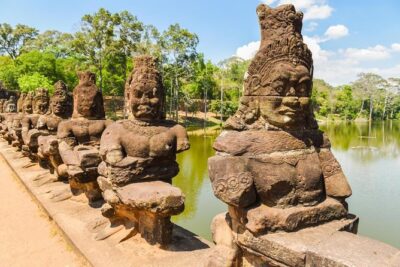
The route allows about two hours at Bayon, one of the most memorable temples in the Angkor complex. Built in the late 12th or early 13th century under Jayavarman VII, it is known for its towers and carved faces.
The temple is described as having 54 towers representing the provinces of the Khmer Empire. The number and symbolism give your guide useful material to explain, but Bayon is also a place where time pays off. Its galleries are close, layered, and visually busy, so a hurried visit can leave you seeing only the famous faces.
This is one of the stops where a guide adds real value. You can ask about the temple’s Buddhist design, its later changes, and the meaning of the carved scenes. The private setup makes those questions easier than they would be in a large group.
There is a small inconsistency in the stop description: a later stop is labeled Bayon Temple but describes the East, or Death, Gate of Angkor Thom. Treat that final stop as the gate rather than another full Bayon visit.
More Angkor Wat Tours in Siem Reap:
- Angkor Wat Sunrise or Sunset Tour with Guide from Siem Reap
★ 5.0 · 12,109 reviews - Siem Reap: Angkor Wat: Small-Group Sunrise or Sunset Tour
★ 5.0 · 9,444 reviews - Siem Reap: Angkor Wat 2-Day Tour with Sunrise and Sunset
★ 4.9 · 4,429 reviews - Siem Reap: Full-Day Angkor Wat Guided Tour with Sunset
★ 4.9 · 3,803 reviews
Chau Say Tevoda, a smaller temple with breathing room
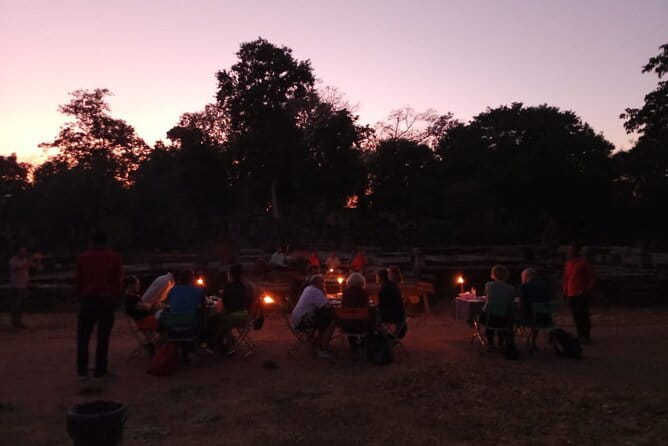
Chau Say Tevoda receives about 30 minutes. It sits east of Angkor Thom, south of Thommanon, across Victory Way, and dates from the mid-12th-century Angkor Wat period.
This is a Hindu temple, and its smaller scale provides a useful contrast with Angkor Wat and Bayon. You do not need half a day here. Thirty minutes is enough for a close look and a short explanation before getting back on the bike.
The value of this stop is variety. A day focused only on the biggest monuments can become repetitive, especially if you are not deeply interested in temple architecture. Chau Say Tevoda helps break up the rhythm with a more compact site and a quieter setting.
Ta Prohm, the famous jungle temple
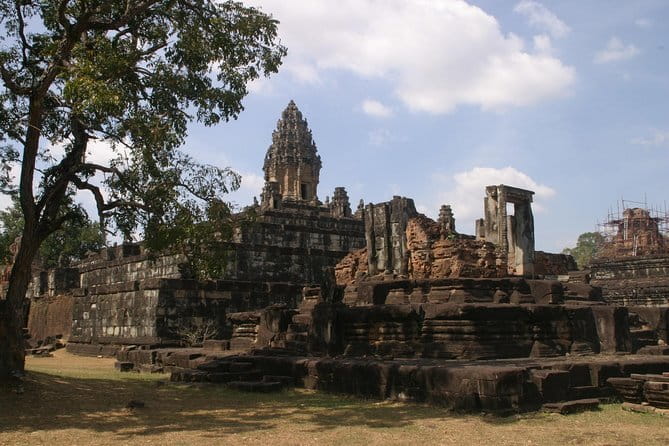
Ta Prohm gets about two hours, making it one of the main stops of the day. Jayavarman VII built it in the late 12th century and dedicated it to his mother in 1186.
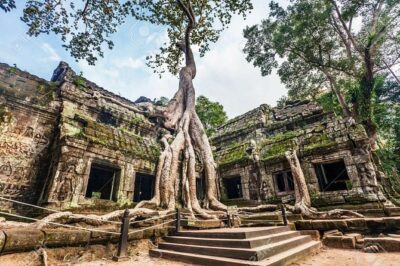
The temple began with a Buddhist purpose and was later changed to Hindu use. That change is part of the site’s long story, but Ta Prohm is best known for the way trees and stone occupy the same space. The roots, galleries, and fallen blocks create a setting unlike Angkor Wat’s grand order.
Two hours gives you time to look beyond the most photographed corners. You can study the carved doorways, move through the galleries, and see how the forest has shaped the site.
Ta Prohm can be a busy stop on the standard Angkor circuit. The bicycle route does not guarantee solitude, but the wider network of paths and the private guide can help you approach the day with less of a large-coach feel. If your priority is quiet, ask the guide about the best timing and side routes.
Ta Nei, the quieter temple stop
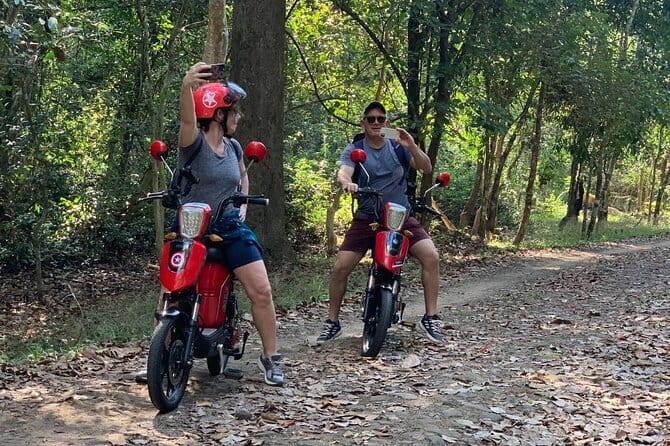
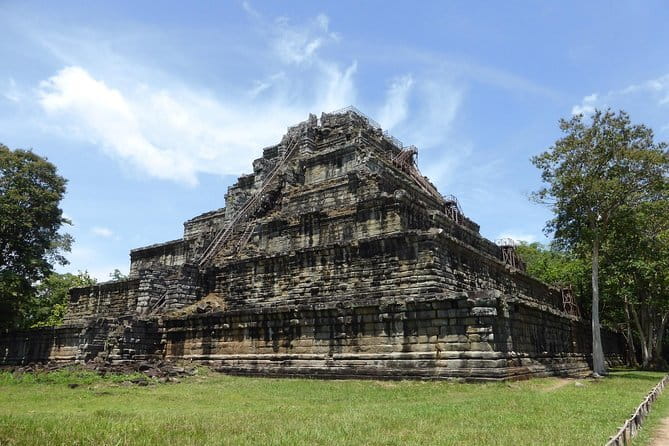
Ta Nei receives about one hour. This late 12th-century stone temple was built during Jayavarman VII’s reign and dedicated to the Buddha. It lies near the northwest corner of the East Baray, a large sacred reservoir.
Ta Nei is the sort of place that makes the bicycle tour worthwhile. It is less famous than Angkor Wat, Bayon, and Ta Prohm, and the route is intended to include smaller temples and forest paths that many people skip when moving by road vehicle.
You should not expect the same scale or preserved grandeur here. That is the point. Ta Nei offers a more modest ruin and a quieter look at the wider Angkor area. The one-hour stop gives you enough time to explore without making the day feel stalled.
The route description also highlights access to unusual sites and stretches of jungle that are not usually part of a standard visit. Exact trail conditions can vary, so listen to your guide and stay with the group, especially on less-used paths.
The East Gate and the ride back
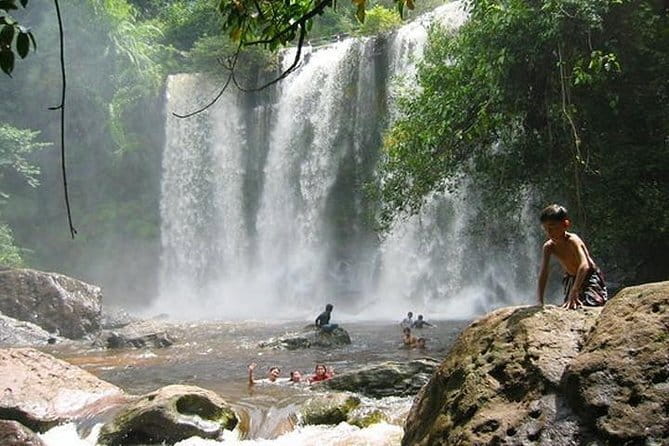
The final listed stop takes about 30 minutes and is described as the East, or Death, Gate of Angkor Thom. It was one of five gates guarding the ancient city and was built under Jayavarman VII during the late 12th century.
This is not another full temple visit. Think of it as a short architectural and historical stop that helps explain how Angkor Thom was organized and defended.
By this point, you may be ready for a rest. The day includes several hours on a bicycle, plus temple paths and uneven stone surfaces. A short final stop can work well because it gives you one more distinctive sight without requiring another long exploration.
Pickup and drop-off are included, so you return to your hotel rather than arranging your own way back. The exact return time is not fixed beyond the six to eight-hour estimate.
The guide can make or break the day
The guide is an important part of this experience. The booking includes an English-speaking guide, and the name that comes up repeatedly is Mr K. He is described as punctual, friendly, careful, and able to adjust the amount of cycling to suit the group.
That flexibility is especially useful for families or mixed-ability groups. One person may want a slow ride and longer temple visits, while another may prefer more time on the back roads. Since the activity is private, your guide has more room to adapt than a guide leading a fixed group.
The guide also helps with route finding and temple context. That combination matters here. You are not simply hiring a bike. You are paying for a person who can connect the monuments, paths, gates, and forest setting.
If having Mr K specifically is important to you, ask about guide availability when booking. The supplied information identifies him through the tour feedback, but it does not guarantee that every departure will be led by him.
Is $45 a good value?
The listed price is $45 per person. For that amount, you receive an English-speaking guide, hotel pickup and drop-off, a mountain bike, a helmet, and cold drinking water.
The Angkor pass is extra at $37 per person. With the pass included in your calculation, the day comes to $82 per person before any optional spending. That is not a budget temple outing, but the value is reasonable if you want a private guide and transport without booking a separate tuk-tuk, bike rental, and temple guide.
The biggest value comes from the route and the private format. A standard vehicle visit may be easier on your legs, but this tour gives you access to back roads and a more active way to move through the park. You are paying for time, guidance, and a different connection with the area, not just admission and transport.
Group discounts are offered, though no discount amount is provided. For a family or group of friends, ask for the current price before booking. A private activity can become better value when shared among several people, depending on the final rate.
Who should book this ride?
I would choose this tour if you enjoy cycling and want more than the standard Angkor highlights. It is a good match for couples, families, and small private groups who like having a guide adjust the pace.
It also suits repeat visitors who have already seen Angkor Wat and want smaller temples, back roads, and a different view of the park. The route includes enough famous monuments for a first visit, while Ta Nei and the forest paths add something less routine.
You should think twice if you dislike heat, long outdoor days, or cycling on routes that may be less direct than a vehicle road. The tour is described as leisurely, but six to eight hours is still a serious outing.
Bring a hat, comfortable clothing, and shoes you can use both on a bicycle and around temple ruins. You should also be ready for a mix of riding and walking, rather than expecting to cycle continuously from one monument to the next.
Booking, cancellation, and practical details
Confirmation is provided when you book, and mobile tickets are supported. The tour is commonly booked about 42 days ahead, which suggests planning early if you want a particular date or hope to request Mr K.
Most people can take part, and the activity is private for your group only. No special accessibility details are provided, so you should ask the operator directly if anyone in your group has mobility or cycling concerns.
Free cancellation is available until 24 hours before the start time for a full refund. Cancellations or changes made within 24 hours are not accepted for a refund, and the cut-off follows local Siem Reap time.
Should you book the Angkor Wat Cycling Tour?
Book it if you want Angkor to feel like a place rather than a checklist. The bicycle gives you a closer look at the forest, rural surroundings, and smaller ruins, while a private guide can tailor the pace. Mr K is the guide to request if available, especially if you value a friendly and flexible approach.
Skip it if you want the easiest possible temple day or if a full day of cycling and walking sounds tiring. For everyone else, the combination of major temples, Ta Nei, back roads, equipment, water, and hotel transfers makes this a strong choice for an active visit to Angkor.
FAQ
What is included in the Angkor Wat Cycling Tour?
The tour includes an English-speaking guide, hotel pickup and drop-off, cold drinking water, a mountain bike, and a helmet.
How long does the cycling tour last?
The experience lasts approximately six to eight hours.
What time does the tour begin?
Pickup begins from your hotel at 7:30 a.m.
Is the Angkor temple pass included?
No. The Angkor temple pass costs $37 per person and is not included in the $45 tour price.
Is this a private tour?
Yes. Only your group participates in the activity.
Which temples are included?
The route includes Angkor Wat, Bayon, Chau Say Tevoda, Ta Prohm, Ta Nei, and the East, or Death, Gate of Angkor Thom.
Is hotel pickup available?
Yes. Pickup and drop-off from your hotel are included.
Can I cancel for a full refund?
Yes. You can cancel at least 24 hours before the experience start time for a full refund. Cancellations or changes made less than 24 hours before the start time are not refunded.
New around Siem Reap
- Kulen Mountain With Ticket included Plus Banteay Srei Temple Tour★ 5.0 · 7 reviews
- 2 Days Angkor temples with Sunrise & Sunset★ 5.0 · 7 reviews
- Private Siem Reap Airport Transfer to hotel in town★ 5.0 · 7 reviews
- 1-Day private Angkor Temple Tour with Sun Rise by Tuk Tuk from Siem Reap★ 4.5 · 7 reviews
- Siem Reap: Morning Cooking Class & Market Tour★ 5.0 · 7 reviews
- Kulen Mountain, Killing Fields and War Museum Tour★ 5.0 · 7 reviews
- War Museum, Killing Field, and APOPO Hero RATs Tour★ 5.0 · 7 reviews
- Half-Day: Silk Farm, Senteur Angkor, and Satcha Workshop★ 4.6 · 7 reviews
Angkor Wat Tours, compared.
Angkor Wat Sunrise or Sunset Tour with Guide from Siem Reap
Read our review →
Angkor Wat: Small-Group Sunrise or Sunset Tour
Read our review →
Angkor Wat Sunrise tour with Small – Group and Guide tours
Read our review →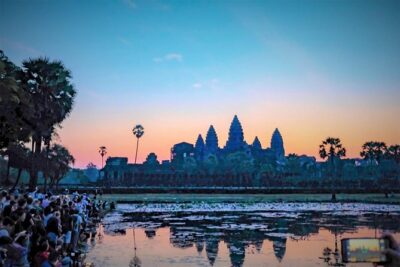
Angkor Wat Highlights and Sunrise Guided Tour from Siem Reap
Read our review →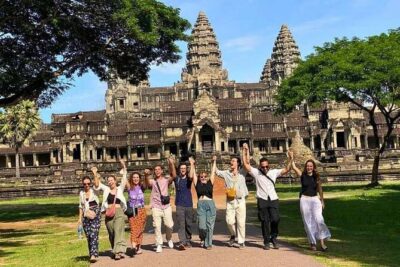
Angkor Wat Sunset Small Group Tour with Lunch Included
Read our review →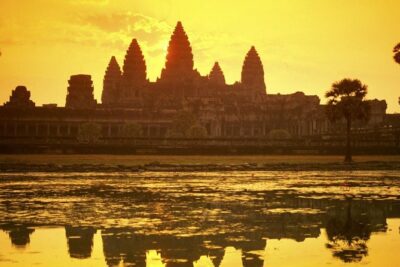
Full-Day Angkor Wat Sunrise Private Tour with Guide from Siem Reap
Read our review →
Angkor Wat Sunrise & 3 Main Temples with Breakfast – Small Group
Read our review →Browse the lists this tour appears in