
Reviewed · SIEM REAP TOURS
Angkor National Museum Ticket with Tuk-Tuk Pick-Up
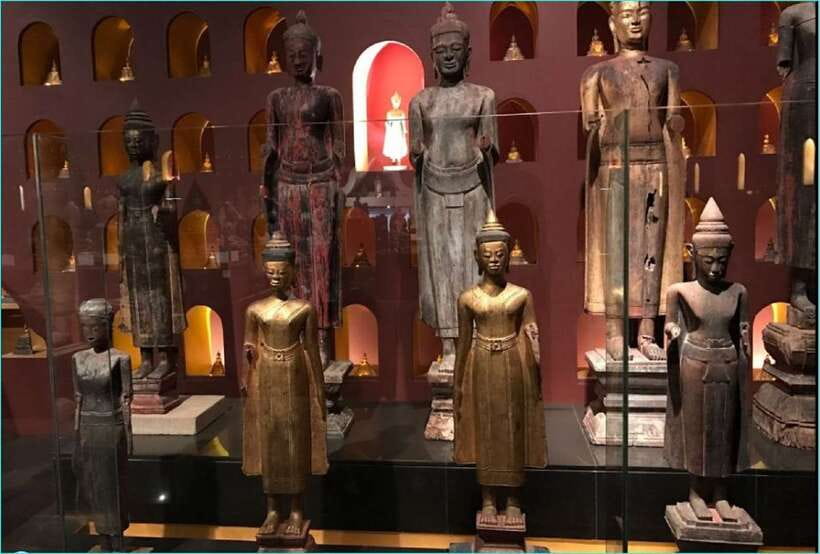
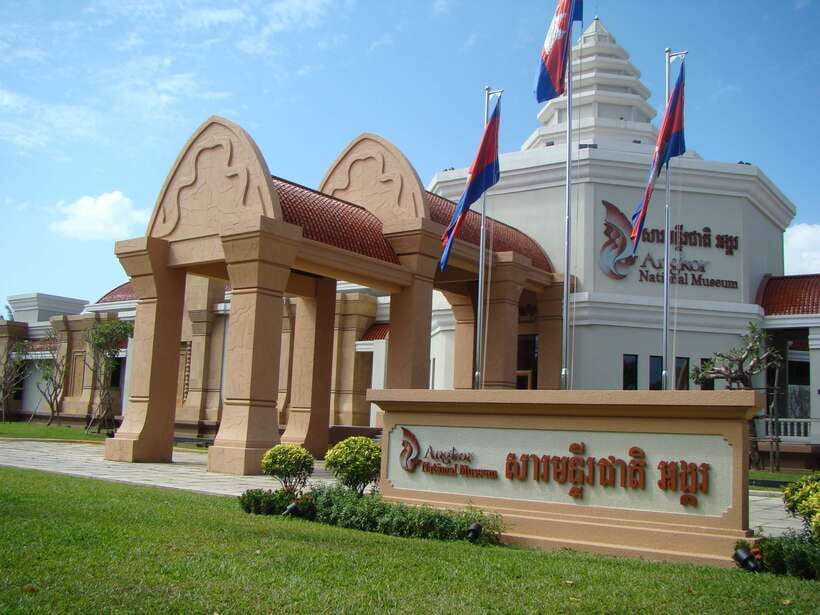
Angkor National Museum does something the temple visits alone cannot: it gives you the story before you meet the stones. Inside, eight chronological galleries trace Khmer civilization from its early beginnings to its greatest period, with a striking collection of 1,000 Buddha statues as one of the main draws.
I like the simple tuk-tuk pickup and the museum’s useful map, which lets you set your own pace. I also like the chance to visit before Angkor Wat, when the galleries can help you recognize religious ideas, royal symbols, and architectural details later in the temples. The main drawback is that the ride is one way only, and the audio guide costs extra.
Key points to know before you book
- Eight galleries tell one long story: The displays move in chronological order, from the origins of the Khmer Empire to its peak.
- The 1,000 Buddha gallery is the visual highlight: It gives the museum a memorable centerpiece and introduces important Buddhist traditions.
- Best before the temples: A museum visit first can make Angkor Wat and Angkor Thom easier to understand.
- Tuk-tuk pickup is included one way: You must provide your hotel name or location and wait in the lobby.
- The audio guide is extra: English is available for the activity, and a German audio guide is also available according to booking information.
- Plan for about two hours: That is enough for a useful visit, but you may need more time if you read every display carefully.
Why start your Angkor visit indoors?
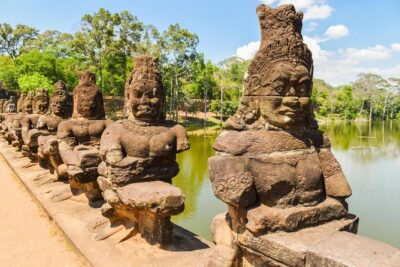
The temples of Angkor are powerful, but they can also feel confusing at first. You see enormous stone faces, towers, carvings, statues, and long galleries, yet the meaning behind them is not always clear from the site itself.
This museum helps put those sights into place. It introduces the development of the Khmer Empire, the beliefs that shaped its monuments, and the customs that influenced daily and religious life. You can then visit the temples with a better sense of what you are looking at.
I especially like the timing of this experience as a first stop in Siem Reap. One person who used the museum with the German audio guide found it more useful before visiting the Angkor temples. That is sensible advice. If you already know the temples well, the museum works as a review and a sheltered cultural stop. If Angkor is new to you, it can give your temple days more meaning.
The museum is also a practical choice when you need a break from outdoor sightseeing. The main temple circuit involves heat, walking, and large open spaces. Here, you can spend two hours with the material in a more controlled setting, using the map to move through the galleries without worrying about a guide keeping you on a fixed route.
More Museums in Siem Reap
- Bantey Srei, Kbal Spean and Landmine museum Private Tuk-Tuk
★ 4.7 · 30 reviews - Siem Reap City Tour with War Museum and Killing Field
★ 5.0 · 27 reviews - Private Tour: HERO Rats & Angkor National Museum
★ 4.5 · 16 reviews
The tuk-tuk pickup from your hotel
The experience includes one-way pickup from your hotel or accommodation to the museum. An English-speaking driver collects you by tuk-tuk, and you should wait in your accommodation’s lobby.
This is a small service, but it matters in Siem Reap. You do not need to arrange a separate ride to the museum, and the open-sided tuk-tuk gives you a quick taste of local transport. The ride is not a full city tour, though. Its purpose is simply to get you from your hotel to the museum.
You need to provide your hotel name or location before the visit. You should also give a contactable phone number and confirm your visiting time with the provider. The instructions are quite clear on this point: without the hotel information, the driver may not be able to find you.
Bring the ticket supplied for the activity. You need that ticket to enter the museum. The pickup is included, but the return journey is not, so plan to arrange your own tuk-tuk or other transport afterward.
That one-way arrangement is the main practical weakness. If you prefer an all-in-one transfer, you may find it less convenient than a round-trip option. If you are already planning to continue into central Siem Reap afterward, however, arranging your own return should be simple enough.
Entering the eight chronological galleries
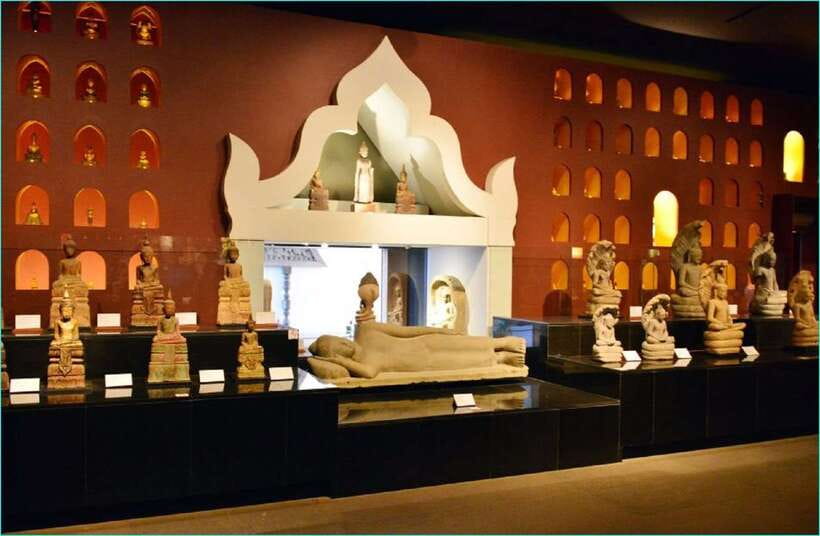
The museum arranges its objects in eight galleries, moving through time rather than presenting a random collection of artifacts. That order is useful because Khmer art and religious practice changed over many centuries.
You begin with the early development of the region and follow the story toward the height of Khmer civilization. The displays are supported by a realistic atmosphere, designed to make the period feel more tangible than a plain room of cases and labels would.
I would use the museum map at the start. It lets you see how the galleries connect and helps you keep the broad timeline in mind. You can move at your own speed, pause at objects that interest you, or continue when a display feels less relevant.
The chronological layout also helps you notice change. Architecture, religious imagery, and artistic styles are not frozen in one period. As you move through the museum, you can compare different eras and think about how the Khmer world developed.
The two-hour duration is a useful guide rather than a strict limit on your attention. You can make a quick, focused visit in that time, especially if you concentrate on the main displays. If you want to read every panel and use an audio guide, you may prefer to allow extra time if your schedule permits.
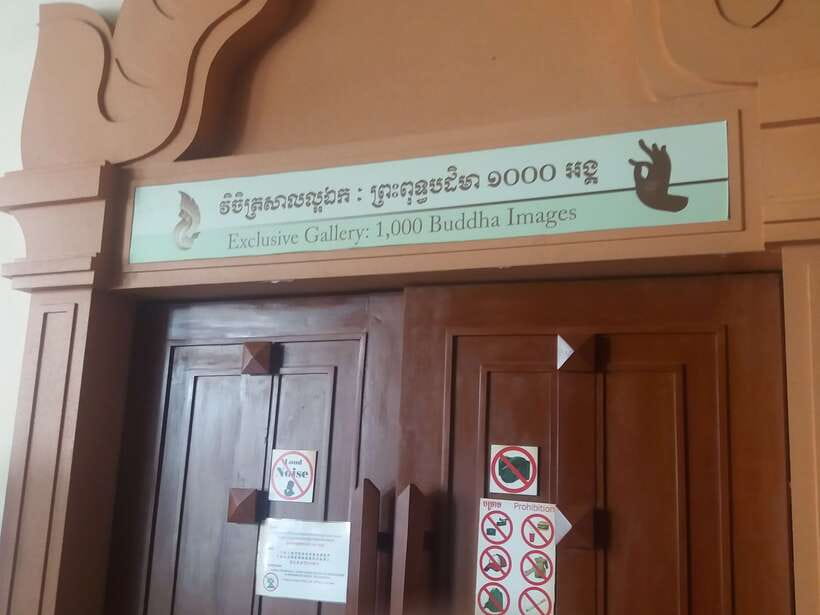
The gallery of 1,000 Buddha statues
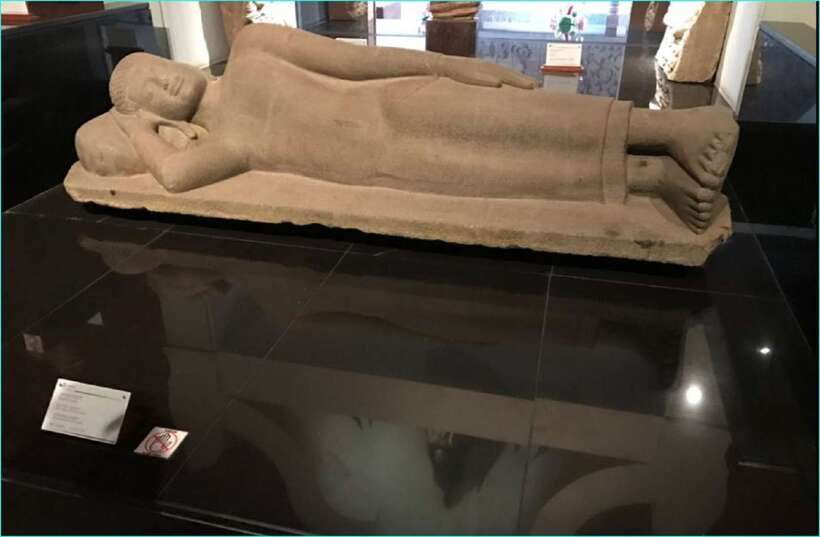
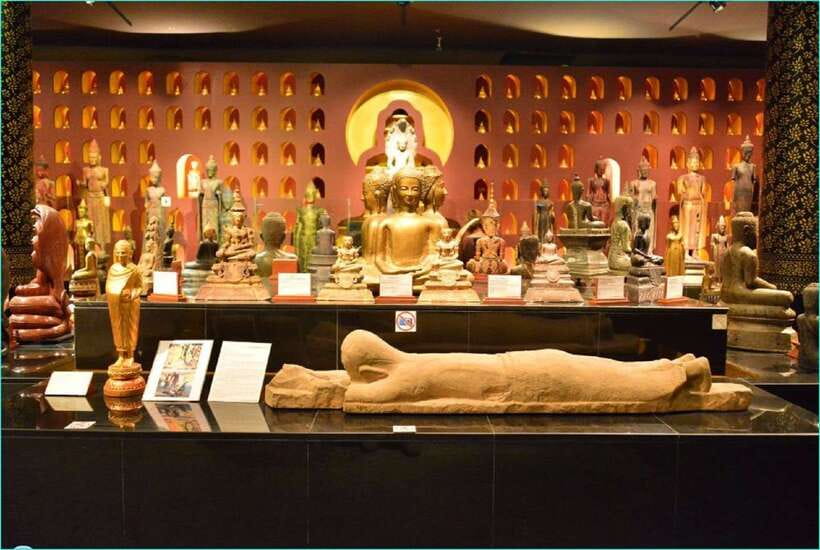
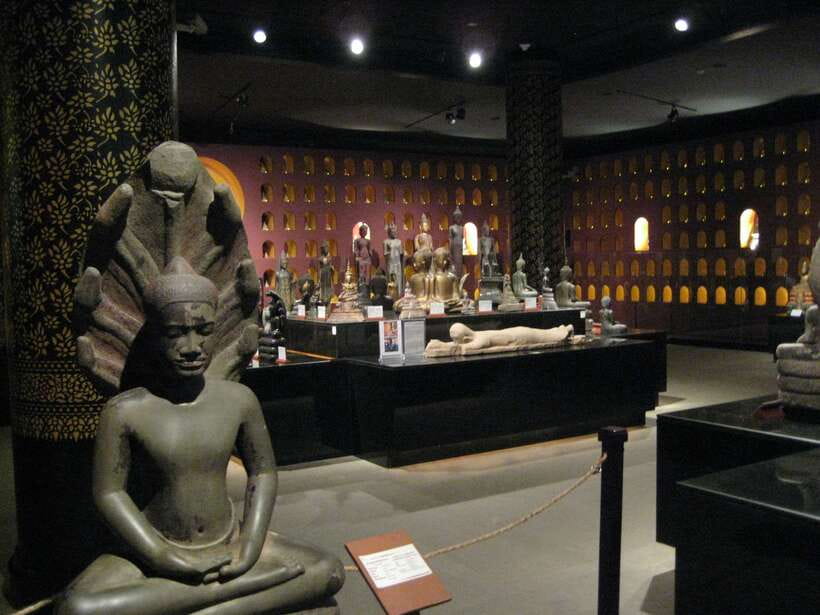
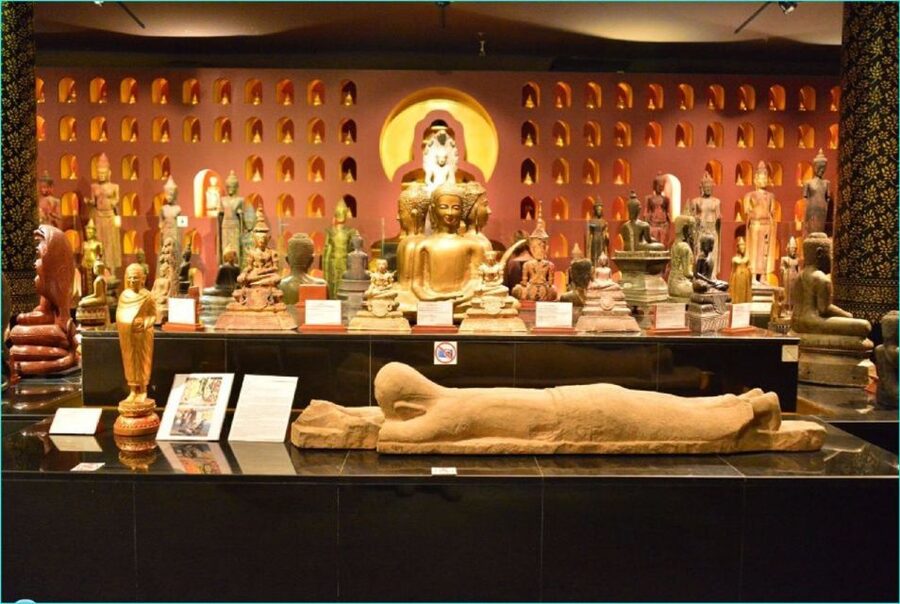
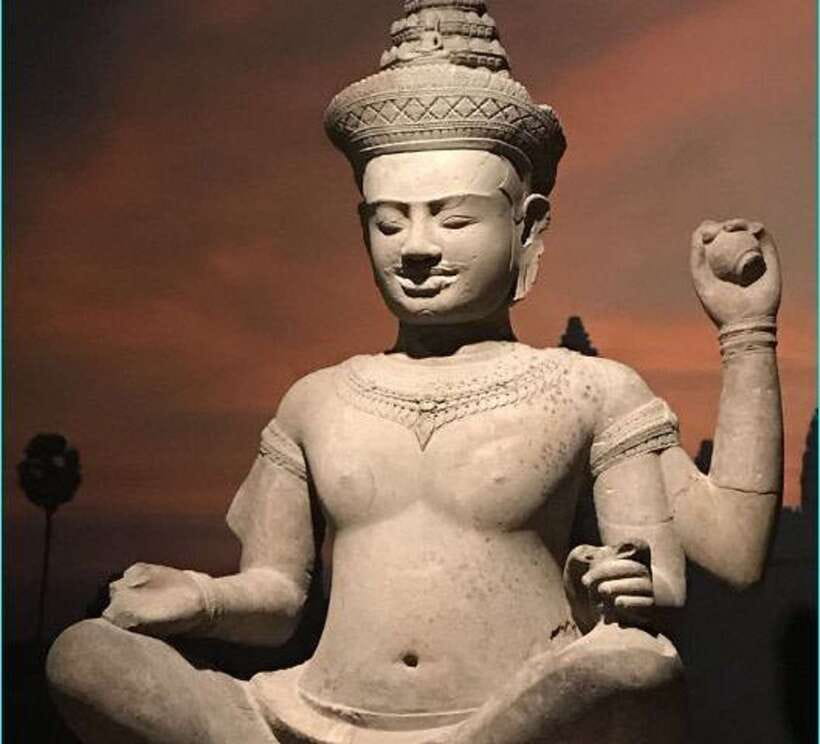
The gallery of 1,000 Buddha statues is the museum’s most memorable feature. It gives you a clear look at the scale and importance of Buddhist imagery in Khmer culture.
A large collection like this is valuable because it lets you compare statues rather than looking at one isolated piece. You can observe repeated forms and differences in expression, posture, and presentation. Even without specialist art knowledge, you can begin to see how religious images were made to express belief and devotion.
The gallery also provides a quiet contrast to the temple ruins. At Angkor, statues are often encountered as part of a huge architectural setting. In the museum, the objects receive your full attention. That makes it easier to focus on the figures themselves and consider their role in Khmer religious life.
The title suggests a perfectly complete count, but the important point for you is the scale of the collection. It is not a small display tucked into a corner. It is a major part of the museum visit and one of the reasons to include this stop in a Siem Reap plan.
More Tuk Tuk Tours in Siem Reap
- Siem Reap: Angkor Wat Private Tuk-Tuk Tour
★ 4.9 · 2,222 reviews - Siem Reap Countryside Bike Tour / E-Bike or Tuk Tuk
★ 5.0 · 935 reviews - Angkor Sunrise Bike Tour / E-Bike or Tuk Tuk
★ 5.0 · 615 reviews - Angkor Wat Private Tuk-Tuk Tour (sunrise Option) & more
★ 5.0 · 439 reviews
Khmer beliefs, customs, and daily life
The museum is not limited to architecture. It also explains ancient Khmer customs, traditions, and different beliefs.
That broader context is important. Angkor is often treated as an architectural subject, but the temples were created within a society shaped by religion, kingship, ritual, and long-standing customs. When you understand those ideas, the carvings and structures feel less like decoration and more like parts of a larger system.
The museum gives you a way to connect the objects with the people who made and used them. You can think about why certain religious images mattered, how beliefs influenced public monuments, and how traditions continued across different periods.
The information is particularly helpful if you are visiting the temples without a private guide. You receive an organized introduction rather than trying to piece everything together from isolated signs at each site.
The experience is educational, but it does not need to feel like a classroom. You can choose how much detail you want. The map supports independent exploring, while the optional audio guide gives you more explanation if you want a guided layer.
Understanding Angkor Wat and Angkor Thom architecture
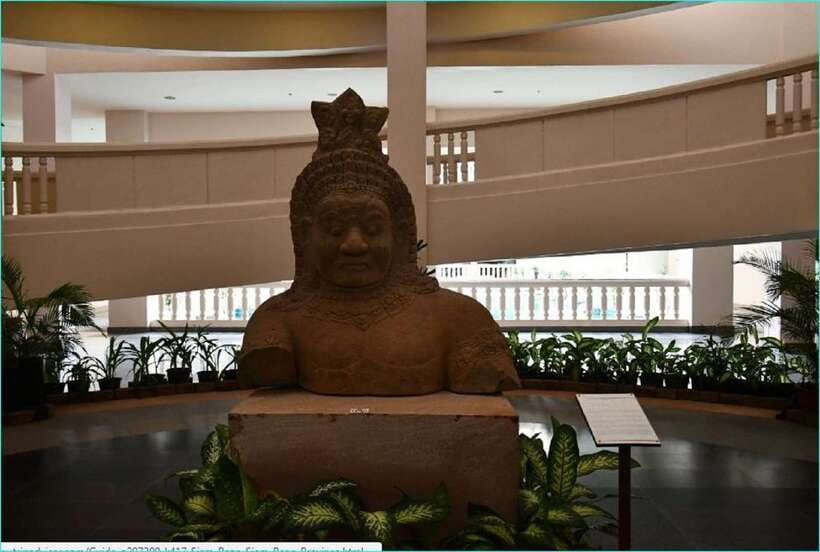
Two of the most useful subjects here are the architectural eras connected with Angkor Wat and Angkor Thom.
You will not be walking through the temples themselves during this activity. Instead, the museum prepares you to look at them more carefully later. That distinction matters. This is not a substitute for seeing Angkor Wat, Angkor Thom, or the other temple sites, but it can improve the way you experience them.
Before your temple visit, pay attention to how the museum explains architectural development and religious ideas. Later, you may find it easier to recognize the difference between a monument built for a particular belief system and one shaped by another period or tradition.
I like this pairing of museum and temple visits because it keeps the museum from being an isolated indoor attraction. It becomes part of a larger day or multi-day plan. You first learn the broad story, then see how that story appears in stone.
The museum is also useful after the temples. If you have already spent a day looking at towers and galleries, you can return here with specific questions in mind. You may recognize details that passed unnoticed outdoors and understand why certain forms appear again and again.
Choosing the audio guide or using the map
The audio guide set is not included in the $26 price. That is worth noting when you compare this option with other museum tickets.
You can still explore using the provided map. This suits you if you prefer to read at your own pace or if you want a shorter visit. The map also helps you follow the chronological order without needing to join a fixed group.
The audio guide makes more sense if you want fuller explanations of the objects and historical periods. One visitor used the headphones with a German audio guide and found that it added useful understanding. German is specifically available, while the activity itself is listed in English.
Because the audio guide costs extra, decide what kind of visit you want before arriving. For a quick introduction before the temples, the map may be enough. For a slower, more detailed museum visit, the additional charge may be worthwhile.
Do not assume the included English-speaking driver is a museum guide. The driver handles the pickup, while the museum visit is self-guided with the map unless you arrange the separate audio guide.
Is $26 good value?
At $26 per person, this experience combines museum admission with one-way hotel pickup. The value depends on how you would otherwise reach the museum and how much you want historical context before the temples.
The ticket is a fair choice if you want a simple arrival arrangement and a structured introduction to Khmer civilization. You are paying not only for entry, but also for the convenience of a tuk-tuk pickup and the chance to organize your visit around a clear timeline.
It is less attractive if you only want a short look at a few objects or if you already have a full private guide and museum visit arranged. The return transfer is not included, and the audio guide costs more, so those extras can affect the final cost.
I would consider the ticket good value for a first-time visit to Angkor, especially if you plan to see the major temples afterward. The museum can prevent the common problem of seeing impressive buildings without understanding the beliefs and history behind them.
The strong satisfaction attached to this experience also fits the practical strengths: the museum is considered interesting, the tuk-tuk service is useful, and the visit helps explain the culture, religion, and traditions connected with the temples. Those are exactly the areas where a short museum visit can improve a larger Siem Reap itinerary.
Rules and small practical details
Backpacks are not allowed, so pack lightly. Pets are also not permitted.
You should have your ticket ready when you reach the museum. The provider’s instructions connect the ticket and pickup, so you should not arrive expecting to enter without the supplied admission ticket.
Cancellation is flexible up to 24 hours before the activity for a full refund. You can also reserve now and pay later, which helps if your Siem Reap schedule may change.
The activity lasts two hours, with start times subject to availability. Confirm the time and pickup details before you go, particularly if your hotel is outside the usual central area or has more than one entrance.
Who should book this museum visit?
I would recommend it most strongly to first-time visitors who plan to see Angkor Wat and Angkor Thom. The museum gives you a framework for understanding the monuments, and the pickup removes one small transport task from your morning or afternoon.
It also suits families, students, and curious independent visitors who want more than photographs. The map lets you explore without committing to a formal group tour, while the optional audio guide offers more detail for people who enjoy listening as they walk.
It may be less suitable if you dislike museums, want a fully guided experience, or need a return transfer included. It is also not the right replacement for the temple visits themselves. Think of it as preparation and context, not the main Angkor adventure.
Should you book the Angkor National Museum ticket?
Book it if you want to understand Siem Reap’s temples instead of simply moving from one monument to the next. The eight galleries, 1,000 Buddha statues, and focus on Khmer customs give you a useful foundation, and the one-way tuk-tuk pickup makes the visit easy to arrange.
My best advice is to visit before your Angkor temple days if possible. Bring light luggage, provide your hotel details and phone number in advance, and budget separately for the audio guide and return ride.
If you already have museum entry and transport arranged, you may not need this package. Otherwise, $26 is a reasonable price for a two-hour cultural introduction that can make the rest of your Angkor experience clearer and more rewarding.
FAQ
What does the $26 ticket include?
The price includes admission to the Angkor National Museum and one-way pickup from your hotel by tuk-tuk.
Is the return tuk-tuk ride included?
No. The included transportation is one way, from your hotel or accommodation to the museum.
How long does the museum visit last?
The stated duration is two hours. Starting times depend on availability.
Is an audio guide included?
No. The audio guide set is not included and costs extra. A German audio guide is also available according to the provided booking information.
What language is available for the activity?
The activity is listed in English, and the pickup driver speaks English.
What information must I provide for pickup?
You must provide your hotel name or location, your visiting time, and a contactable phone number. You should wait for the tuk-tuk driver in your accommodation’s lobby.
New around Siem Reap
- Siem Reap Temple and Waterfall 3-Day Tour★ 4.5 · 3 reviews
- Savor the Countryside: Tours with Authentic Cooking Classes”★ 5.0 · 3 reviews
- Siem Reap Private Tour: Angkor Wat Sunrise And Banteay Srei★ 5.0 · 3 reviews
- Siem Reap: Guided Day Trip to Local Village & Cooking Class★ 5.0 · 3 reviews
- Angkor Wat Sunset In Private and Small-In-Group★ 4.3 · 3 reviews
- Angkor Wat Sunrise TukTuk Tour★ 5.0 · 3 reviews
- Angkor Wat: Highlights and Sunrise with Spanish Guide★ 4.8 · 3 reviews
- Full Day to Banteay Srei, Kulen National Park and Beng Mealea★ 5.0 · 3 reviews
Siem Reap Tours, compared.
Angkor Wat Sunrise or Sunset Tour with Guide from Siem Reap
Read our review →
Angkor Wat: Small-Group Sunrise or Sunset Tour
Read our review →

Sunset tour of Kampong Phluk stilts home village on the Tonle Sap
Read our review →
Kampong Phluk Floating Village Tour with Boat
Read our review →
Angkor Wat Sunrise tour with Small – Group and Guide tours
Read our review →
Angkor Wat Highlights and Sunrise Guided Tour from Siem Reap
Read our review →Browse the lists this tour appears in