
Reviewed · SIEM REAP TOURS
Private Tour: HERO Rats & Angkor National Museum
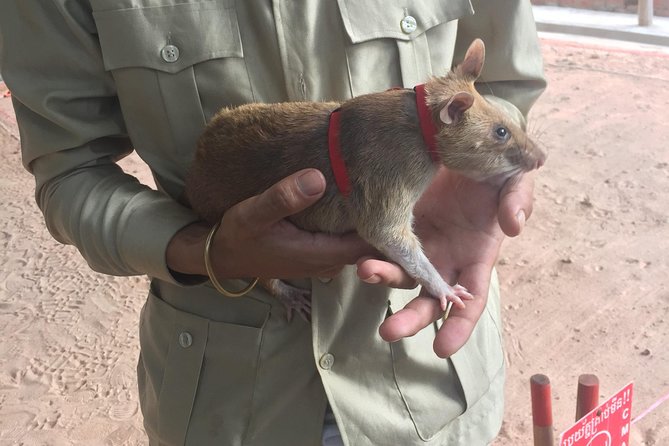
Cambodia’s Hero Rats are the unusual stars of this Siem Reap tour. Trained to detect landmines, they work where human lives would be at risk, and the APOPO visit lets you see how their training helps make rural Cambodia safer. The tour also pairs this modern story with Wat Thmei, a memorial to victims of the Khmer Rouge period, and Angkor National Museum, home to Khmer art from the 9th to 14th centuries.
I like the way the tour joins recent Cambodian history with the Angkor era, rather than treating Siem Reap as only a gateway to temples. I also like the private car, included admissions, hotel pickup, bottled water, and choice of morning or afternoon departure. The main concern is that Angkor National Museum is currently listed as closed, and the route may be changed. A few hours can also feel tight if you want a slow visit at every stop.
Key points to know
- Watch the Hero Rats work: The APOPO Visitor Center explains how trained rats detect landmines and why that work matters to Cambodian communities.
- Begin with a quiet memorial: Wat Thmei offers a brief but difficult look at the victims of the Khmer Rouge period.
- Choose your start time: Pickup is offered at 8am or 1pm, making this easy to fit around other Siem Reap plans.
- Travel privately: Only your own group participates, with an air-conditioned car and an English-speaking guide.
- Allow for route changes: Angkor National Museum is currently closed according to the tour information, so confirm the planned replacement before you go.
- Expect a history-focused outing: This is a thoughtful four-hour tour, not a general sightseeing drive or a temple circuit.
Why the Hero Rats are the heart of this Siem Reap tour
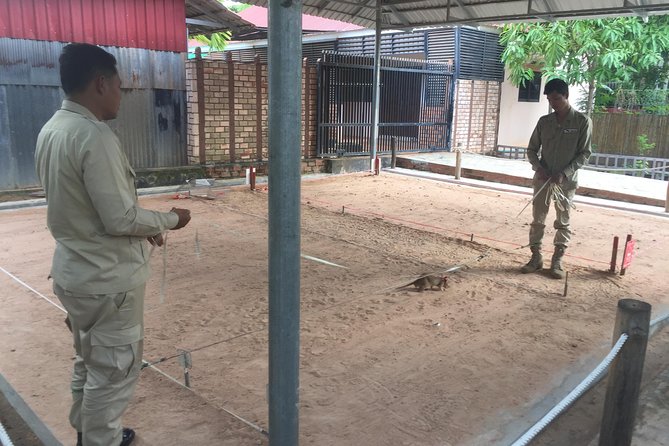
The most memorable part of the experience is likely to be the APOPO Visitor Center. Cambodia still lives with the effects of decades of conflict, and landmines remain tied to the safety and livelihood of rural communities. The center gives you a clear look at that problem and at one practical response: specially trained rats that can detect explosives by scent.
These are not ordinary pet rats being shown off for amusement. The point of the visit is their training and their work. You learn how they help identify dangerous areas without sending a person directly into harm’s way. The cleverness of the animals is entertaining, but the purpose is serious.
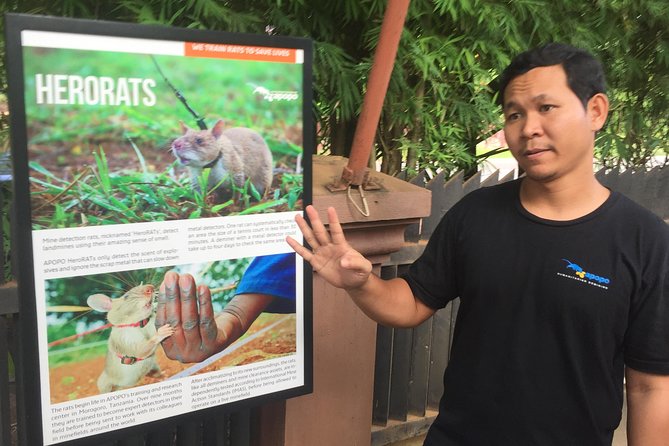
I like this stop because it gives you something to watch as well as something to think about. You are not simply looking at photographs or reading a plaque. The demonstrations help explain how the animals are trained and why their small size and sharp sense of smell are useful.
The visit lasts about one hour, with admission included. That is long enough to understand the program without letting the topic take over the entire day. If you are especially interested in humanitarian work, modern Cambodian history, or unusual animal training, this will probably be the strongest stop.
Your guide’s role matters here. The tour is led in English, and one named guide, Aaron, has been praised for linking the subject to his personal experience of Cambodia’s conflict. Guides can add the human context that a short presentation cannot provide, so it is worth asking questions rather than simply watching the demonstration and moving on.
More Museums in Siem Reap
- Bantey Srei, Kbal Spean and Landmine museum Private Tuk-Tuk
★ 4.7 · 30 reviews - Siem Reap City Tour with War Museum and Killing Field
★ 5.0 · 27 reviews - Kbal Spean Trekking Tour with Banteay Srei and Landmine Museum
★ 5.0 · 14 reviews
Wat Thmei puts Cambodia’s recent past first
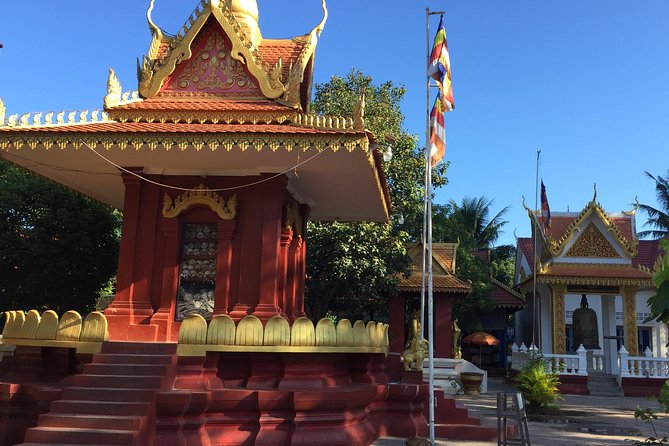
The day begins, or the afternoon begins, at Wat Thmei. This small memorial stupa contains skulls and bones of people killed during the Khmer Rouge period. The visit takes about 30 minutes, and admission is free.
Do not expect a large museum or a long guided program. Wat Thmei is a compact memorial, and its power comes from the directness of what it represents. The remains make the scale of the violence personal in a way that dates and political explanations cannot.
This can be a difficult stop. You may prefer to spend a few quiet minutes taking in the memorial rather than rushing through it for photographs. The short time allocated keeps the visit from becoming overwhelming, but it also means your guide’s explanation is important.
I appreciate that the memorial comes before the APOPO center. It gives you the human cost of conflict before you see the work being done to address one of its lasting dangers. Together, the two stops create a clear progression: what happened, what damage remains, and how people are trying to make the future safer.
Because this is a private tour, you can ask your guide to clarify the history at a pace that suits your group. If one person in your party already knows a great deal about Cambodia, the guide can spend more time on the memorial’s meaning or move on when appropriate. That flexibility is harder to get on a large group outing.
The APOPO visit connects history with daily safety
The APOPO presentation is valuable because landmines are not treated as a distant wartime subject. You learn about their effect on local communities and about the continuing work needed to clear them. That makes the visit more than a novelty stop involving trained animals.
The Hero Rats themselves offer a memorable way into a hard subject. Their work is easy to understand, even for children, while the wider story gives adults a reason to stay engaged. I would consider this a good choice for families, provided everyone is comfortable with the serious material at Wat Thmei.
One practical point: the center may be the part of the tour most affected by opening dates or holidays. A change during Cambodia’s New Year once led to a visit to the Cambodia Landmine Museum instead. That alternative was farther out of town, so you should be prepared for the route to change and for travel time to shift.
The replacement can still support the tour’s main theme, but it will not be the same experience as watching the rats work. Confirm the planned stops close to your departure date, especially if seeing the Hero Rats is the main reason you are booking.
Angkor National Museum adds imperial Khmer art
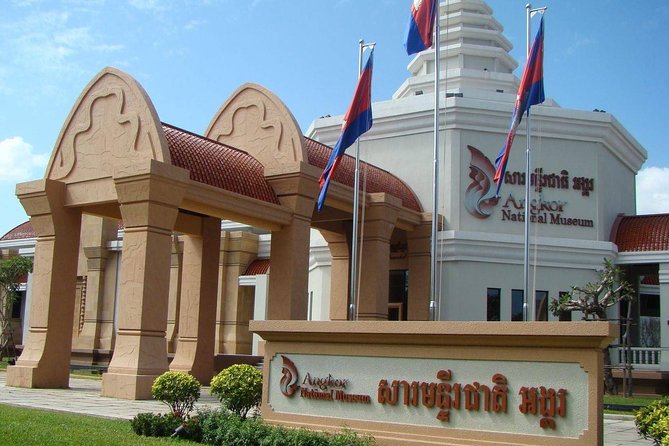
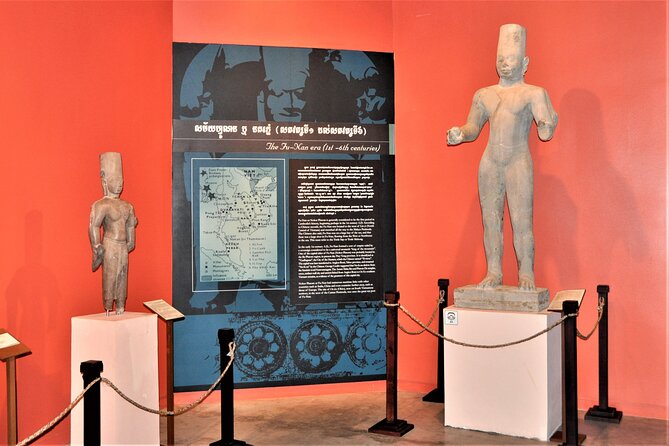
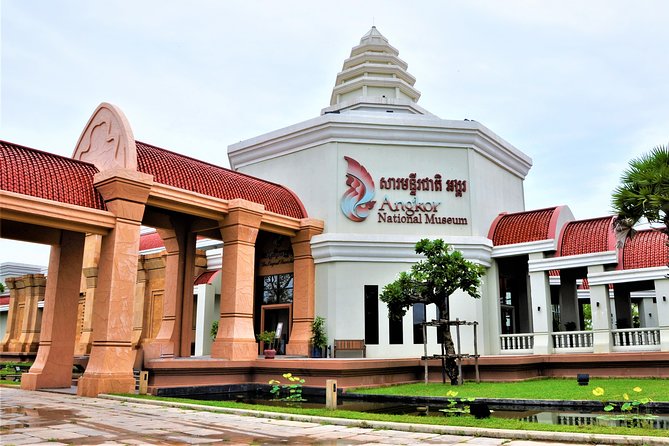
The final planned stop is Angkor National Museum, with about 90 minutes set aside. Its collection focuses on Angkorian artifacts, mainly from the 9th through 14th centuries. This gives you a useful bridge from Cambodia’s recent past to the earlier Khmer civilization associated with Angkor.
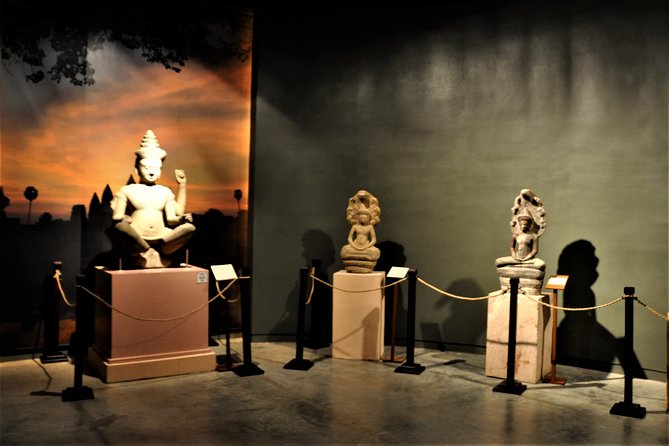
The museum is meant to help you read the art and architecture you may see elsewhere in Siem Reap. Sculptures, religious objects, and other artifacts make more sense when you understand their place in Khmer culture and the imperial period. If you are planning to visit Angkor Wat or other temple sites, this background can make the carved figures and religious imagery easier to recognize.
Ninety minutes is a sensible amount of time for an introduction, though you will not see everything at a slow pace. One booking described the museum as huge, which is useful warning. If museums are your main interest, you may want more time than this tour allows.
There is an important current limitation. The tour information says Angkor National Museum is closed and that the itinerary may be amended. Another changed itinerary substituted the Cambodia Landmine Museum, while a separate comment referred to the National War Museum. These are not interchangeable experiences, so ask exactly what will replace the museum before you set out.
Do not book this tour solely for Angkor National Museum unless you receive confirmation that it is open on your date. The museum is a strong part of the planned design, but current conditions mean it should be treated as a possible stop rather than a guarantee.
A completely different sort of day from the same base:
- Angkor Wat Sunrise or Sunset Tour with Guide from Siem Reap
★ 5.0 · 12,109 reviews - Siem Reap: Angkor Wat: Small-Group Sunrise or Sunset Tour
★ 5.0 · 9,444 reviews - From Siem Reap: Kampong Phluk Floating Village Tour by Boat
★ 4.9 · 6,979 reviews - Sunset tour of Kampong Phluk stilts home village on the Tonle Sap
★ 5.0 · 4,865 reviews
Four hours works best with the private car
The experience lasts about four hours, with pickup at either 8am or 1pm. That makes it easy to place before or after another activity in Siem Reap. The morning option leaves more of the day open afterward, while the afternoon option can suit you if you have temple plans earlier.
Pickup is offered, and you travel in a private air-conditioned car. Cambodia’s heat makes the car more than a luxury, especially after standing outdoors or moving between stops. One bottle of water per person is included, but meals, extra drinks, refreshments, insurance, personal spending, and tips are not.
Only your group participates. That matters at Wat Thmei, where you may want a quiet explanation, and at APOPO, where questions about the animals or landmines can be specific. You are not tied to the interests or pace of a busload of people.
The private format also helps with the museum problem. If the main museum is closed, your guide can explain the replacement and manage the altered route. It does not guarantee an equally satisfying substitute, but it is more convenient than discovering a change after joining a large fixed group.
The tour is listed at $85 per person. The value depends on your group size and priorities. For that price, you receive private transport, an English-speaking guide, water, pickup, and admissions. A solo traveler pays more per person in practical terms, while two or more people can spread the cost of the private car and guide.
I would consider the price reasonable if you want a focused, guided history outing and do not want to arrange transport between several less obvious sites. It is less compelling if you only want to see the Hero Rats and are happy to organize the visit yourself, or if the museum closure removes the part of the itinerary that interests you most.
What the guides add to a difficult subject
A tour like this depends heavily on the guide. The stops are worthwhile, but they cover sensitive subjects and require more than simple transportation. You want someone who can explain the Khmer Rouge period respectfully, describe the effects of landmines without sensationalizing them, and connect the museum objects to the wider story of Cambodia.
Guide Aaron was specifically praised for sharing personal experience connected with the killing fields. That kind of first-person context can make Wat Thmei much more meaningful, though you should remember that guide assignments can vary. The booking information promises an English-speaking guide, not a particular guide.
Good guiding is also useful when the route changes. If the APOPO center is closed for a holiday, or the national museum remains unavailable, your guide can tell you what the substitute offers and how it fits the subject. Ask direct questions at the start so you know what to expect.
The tour is not designed as a light, carefree morning. Even the entertaining rat demonstration sits beside stories of violence, injury, and loss. I think that balance is one of its strengths, but you should choose it because you want to understand Cambodia, not simply collect unusual photographs.
Who will get the most from this experience
I would recommend this tour to you if you want to see parts of Siem Reap that are easy to miss while concentrating on Angkor’s temples. It suits people interested in modern history, humanitarian projects, archaeology, and the way a country remembers difficult events.
Families may also find the Hero Rats especially engaging. The animals give younger visitors a concrete subject to follow, while the guide can adjust the explanation to the group. The Wat Thmei memorial is serious, so parents should decide whether the subject is suitable for their children.
This outing is also a good fit if you have limited time. Four hours gives you three distinct themes without taking a full day away from Siem Reap. The private vehicle, pickup, and two departure choices reduce the amount of planning you need to do.
You may want to skip it if your priority is a relaxed temple day, a food tour, or a long museum visit. The schedule is compact, and the subject matter is heavy. The current closure of Angkor National Museum is another reason to confirm the route before paying.
The tour has a 4.6 rating from 16 reviews, with 94 percent recommending it. That is a positive signal, but the small number of ratings and the changed itineraries suggest you should read the current conditions carefully rather than assume every departure will be identical.
Small practical details that affect the day
Choose the start time with the weather and your other plans in mind. The 8am departure gives you the first part of the day for the memorial and APOPO visit, while 1pm allows you to use the morning elsewhere. The information does not state exact return times, so allow some flexibility around the four-hour estimate.
Wear comfortable clothing for getting in and out of the vehicle and moving between stops. One comment described standing in hot sun for longer than expected during a changed museum visit. Since substitutions can affect the balance of indoor and outdoor time, carry water beyond the single included bottle if you normally drink often in hot weather.
Admissions are included for the listed attractions, which makes the $85 price easier to understand. You will still need to budget for food, extra drinks, souvenirs, tips, and any personal expenses.
Confirmation is provided when you book, and cancellation is free up to 24 hours before the start time. A cancellation made less than 24 hours ahead is not refunded, and changes inside that period are not accepted. The cut-off uses local Cambodian time.
Should you book the Hero Rats and Angkor museum tour?
Book it if you want a private, compact introduction to Cambodia’s difficult recent past, the continuing danger of landmines, and the older Khmer world in one outing. The combination is unusual, and the APOPO demonstration gives the day a memorable center.
Before booking, confirm whether Angkor National Museum has reopened and ask what happens if it has not. If seeing the rats is essential, also check that the APOPO Visitor Center will be operating on your date, since holiday closures have caused substitutions.
I would choose the morning departure if you want time afterward for another activity, and the afternoon departure if your morning is already filled. For a group that values a private guide and simple transport, $85 per person can be fair. For someone seeking only a quick animal encounter, the price may be harder to justify.
The best reason to go is the way the tour links Cambodia’s past with work being done now. You leave with more than an unusual story about clever rats. You gain a clearer sense of how conflict continues to shape everyday life, and how people are working to reduce its danger.
FAQ
How long does the private tour last?
The tour lasts approximately four hours.
What start times are available?
You can choose an 8am morning start or a 1pm afternoon start.
Is hotel pickup offered?
Yes. Pickup is offered as part of the experience.
Is the tour private?
Yes. Only your own group participates.
What is included in the price?
The price includes an air-conditioned private car, an English-speaking guide, one bottle of water per guest, and admissions.
What happens if Angkor National Museum is closed?
The itinerary may be amended. The tour information currently notes that the museum is closed, and previous changes have included visits to the Cambodia Landmine Museum or the National War Museum.
Can I cancel for a full refund?
Yes, if you cancel at least 24 hours before the experience start time. Cancellations made less than 24 hours before the start time are not refunded.
New around Siem Reap
- Kulen Mountain With Ticket included Plus Banteay Srei Temple Tour★ 5.0 · 7 reviews
- Private Siem Reap Airport Transfer to hotel in town★ 5.0 · 7 reviews
- 2 Days Angkor temples with Sunrise & Sunset★ 5.0 · 7 reviews
- 1-Day private Angkor Temple Tour with Sun Rise by Tuk Tuk from Siem Reap★ 4.5 · 7 reviews
- Siem Reap: Morning Cooking Class & Market Tour★ 5.0 · 7 reviews
- Kulen Mountain, Killing Fields and War Museum Tour★ 5.0 · 7 reviews
- War Museum, Killing Field, and APOPO Hero RATs Tour★ 5.0 · 7 reviews
- Half-Day: Silk Farm, Senteur Angkor, and Satcha Workshop★ 4.6 · 7 reviews
Siem Reap Tours, compared.
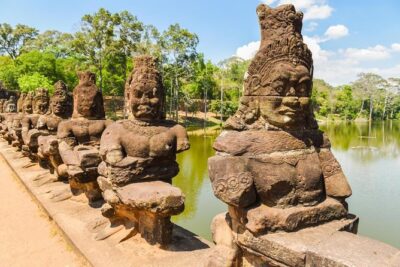
Angkor Wat Sunrise or Sunset Tour with Guide from Siem Reap
Read our review →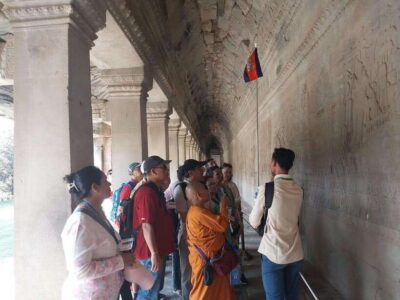
Angkor Wat: Small-Group Sunrise or Sunset Tour
Read our review →
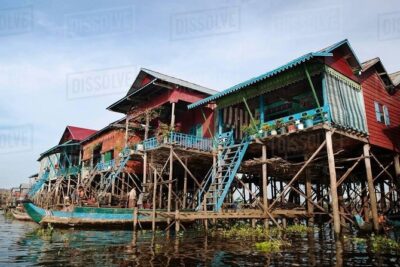
Sunset tour of Kampong Phluk stilts home village on the Tonle Sap
Read our review →
Kampong Phluk Floating Village Tour with Boat
Read our review →
Angkor Wat Sunrise tour with Small – Group and Guide tours
Read our review →
Angkor Wat Highlights and Sunrise Guided Tour from Siem Reap
Read our review →Browse the lists this tour appears in