
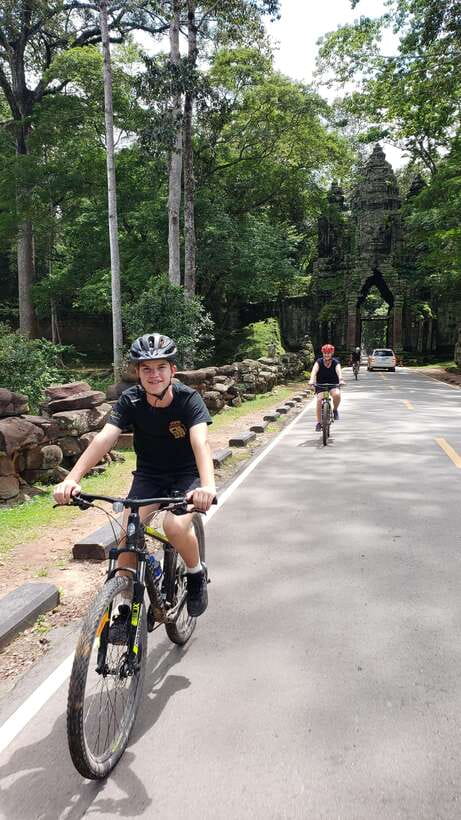
Reviewed · SIEM REAP TOURS
Angkor Jungle Biking Adventure Private Cycling Tour
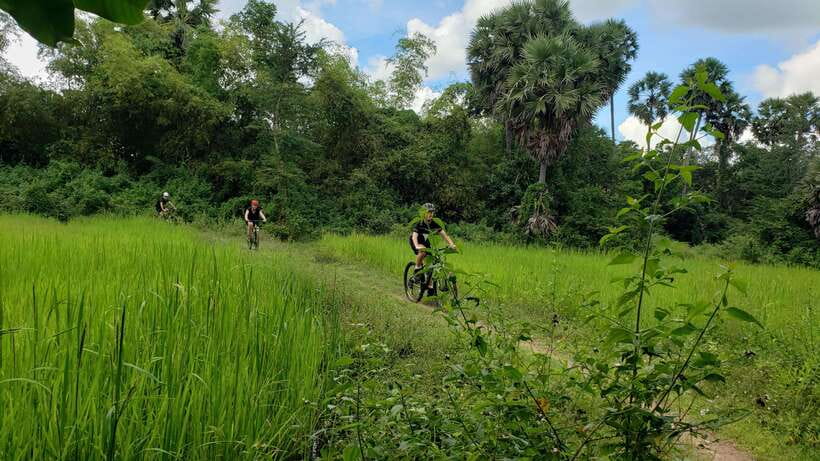
Angkor is best understood at bicycle speed. This private ride takes you away from the tuk-tuk queue and onto riverside roads, sandy jungle paths, and quiet routes between the temples. You cover roughly 25 to 35 kilometers, with plenty of stops to walk, listen, and look closely at the ruins.
I like two things right away. First, the guide does more than point at stones, offering stories about Cambodia’s past and explaining what you are seeing. Second, the route gives you both major sights and lesser-visited corners such as Ta Nei. The main consideration is the distance: 25 to 35 kilometers is manageable for a reasonably active cyclist, but it is still a full day in heat and sometimes loose sand.
Key things to know before booking
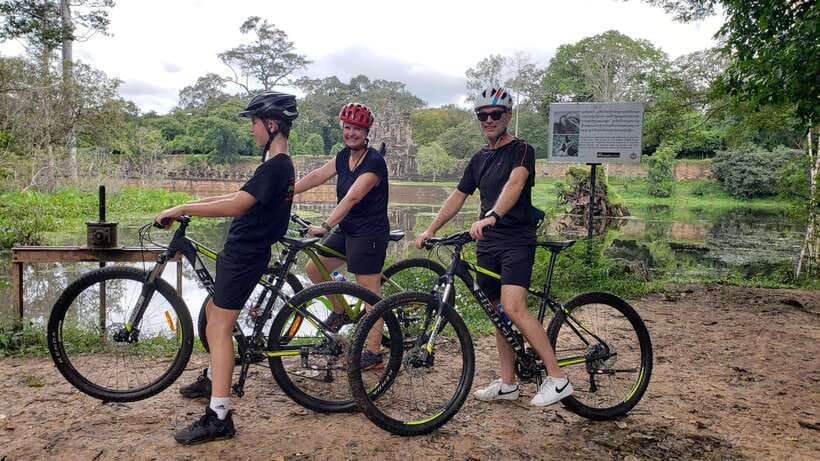
- Cycle beyond the standard temple circuit: The route uses riverside roads, jungle tracks, and paths inside Angkor Park.
- Expect a full 8-hour outing: Pickup starts in Siem Reap, and return to your hotel is planned for about 3:30 PM.
- See the essential temples: Angkor Wat, Bayon, Angkor Thom, and Ta Prohm all feature prominently.
- Reach Ta Nei by bike: This quieter temple, tucked farther into the trees, adds a more peaceful stop to the day.
- Bring money for extras: The $22 price covers the guide, bike, helmet, water, and hotel transport, but not the Angkor Pass, lunch, or tips.
- Bike sizes cover most families: Children’s bikes through XXL sizes are available, along with tagalong bikes for less confident young cyclists.
Why a bicycle changes your Angkor day
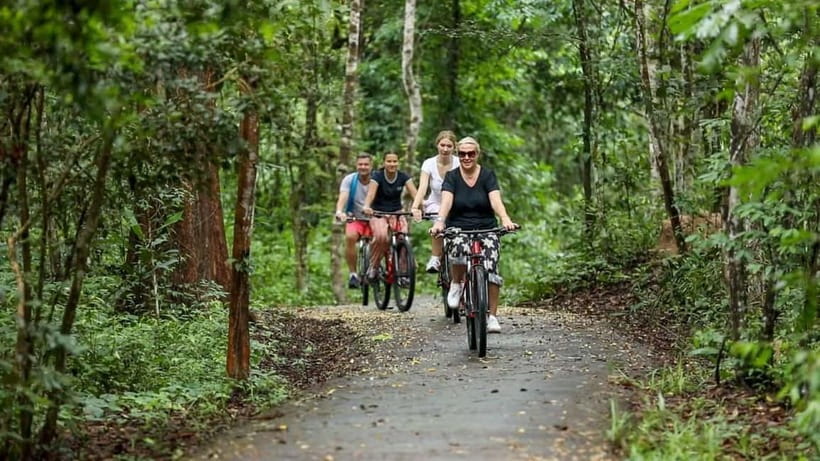
A tuk-tuk gets you from one temple gate to the next. A bicycle lets you notice the space in between. You pass along the riverside road, watch local life on the edge of Siem Reap, and then trade traffic for tree cover as you enter the park.
That change of pace matters at Angkor. The temples are huge, and it is easy to spend the day moving quickly from one famous photo stop to another. Cycling slows the rhythm down without turning the day into a long series of car rides. You still cover the big sights, but the ride itself becomes part of the experience.
This is a private or small-group tour, with an English-speaking licensed cycling guide. Guide names connected with the experience include Liap and Leap. The personal guiding is an important part of the value, especially if this is your first visit to Angkor and you want more than a quick introduction at each gate.
The ride is not presented as technical mountain biking. One useful detail is that sandy sections can appear along the route. That means the challenge is more about distance, heat, and balance on soft ground than steep climbs or difficult obstacles.
More Bike Tours in Siem Reap
- Siem Reap Countryside Bike Tour / E-Bike or Tuk Tuk
★ 5.0 · 935 reviews - Angkor Sunrise Bike Tour / E-Bike or Tuk Tuk
★ 5.0 · 615 reviews - Siem Reap: Bike the Angkor Temples – Full-Day 30km Tour
★ 5.0 · 463 reviews
Getting started from Siem Reap
After breakfast, your guide and driver meet you in your hotel lobby. A short tuk-tuk transfer, listed at about 15 minutes, gets the outing moving before the bicycle portion begins. At Spean Neak, you receive a safety briefing, a short explanation of the day, and a chance to get familiar with the bike.
The tour includes a mountain bike and helmet, with drinking water provided. You should give the operator your full hotel name and address in advance so pickup and drop-off go smoothly. Since the ride lasts eight hours, eat a proper breakfast rather than relying only on the later lunch stop.
The opening ride heads northeast from Siem Reap. You travel along the riverside road and see community life before reaching the Angkor Park ticket counters. This is a useful transition. You do not simply appear at a temple with the historical setting erased around you. The route shows how the modern town connects to the ancient site.
You need an Angkor Pass for this tour. It is not included in the $22 price, and you can buy one at the ticket area on the morning of the ride or through the official Angkor Enterprise website.
Angkor Wat, your first major stop
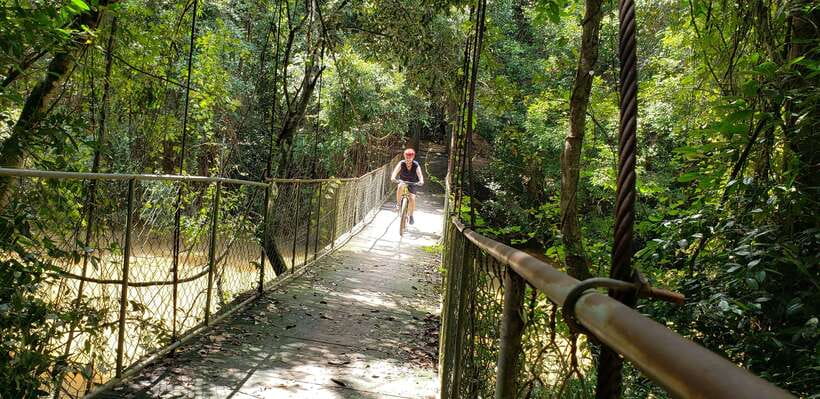
Angkor Wat receives about an hour and a half, including cycling, walking, sightseeing, photographs, and guiding. That is enough time for a meaningful visit, though not for every corner of the enormous complex.
Your guide provides the basic historical framework and points out details that are easy to miss when you are focused on getting a perfect photograph. Expect a mix of riding near the site and walking through the temple itself. The bicycle is useful for covering ground, but it cannot replace time on foot here.
I like having Angkor Wat early in the day because it gives you the grandest architectural statement before your legs have done the full distance. The drawback is simple: an 8-hour route with several temples means no single stop can receive unlimited attention. If you want a slow, highly detailed study of Angkor Wat alone, a dedicated walking tour would suit you better.
The ride continues through greenery after the temple. This is one of the pleasant differences between cycling and riding in a vehicle. You hear more of the surroundings, and the road becomes part of the story rather than an empty transfer.
Through Angkor Thom to Bayon
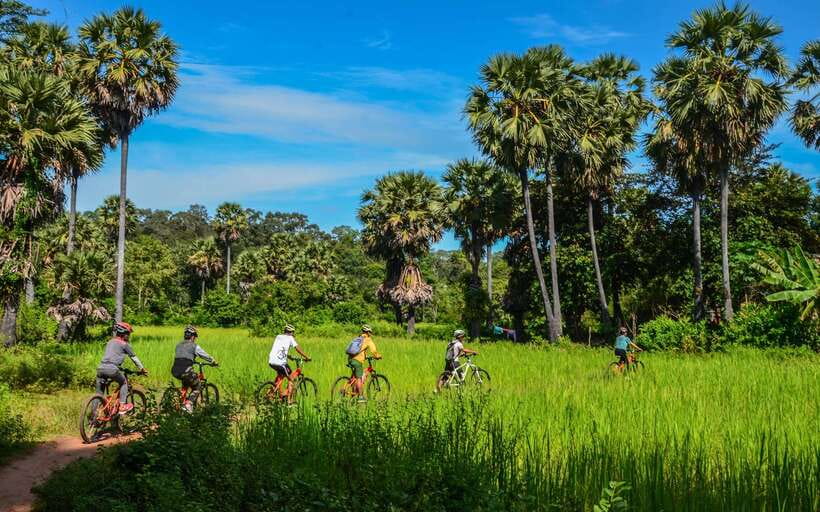
The route then enters Angkor Thom, the great ancient city enclosed by walls and gates. You see the Victory Gate, listed as a short stop of about 10 minutes, before moving farther into the city. The wall area and French Dam also receive brief visits, with the latter serving as a break and scenic stop.
These short stops help break up the physical effort. They also give the guide room to explain how the city was organized. You should expect quick visits here rather than long, formal lectures. If you want to photograph every gate and stretch of wall, tell your guide early, since the schedule is designed to keep the entire loop moving.
Angkor Thom itself gets about 45 minutes. You ride through the former city and stop to see its major features before reaching Bayon. The scale is different from Angkor Wat. Instead of one dominant temple approached across a broad causeway, Angkor Thom feels like a city with gates, walls, roads, and monuments spread through the trees.
Bayon receives roughly an hour. Its carved stone faces are the visual prize, but the temple is also a good place to hear the guide connect architecture with the wider Khmer kingdom. The route allows time for walking and photographs, while the bike keeps the approach easy.
This portion is especially rewarding if you enjoy seeing how temples fit into a larger urban plan. The main limitation is the same one found throughout the tour: you are seeing a lot in one day. The guide can help you focus on the strongest details instead of trying to absorb everything at once.
A completely different sort of day from the same base:
- Angkor Wat Sunrise or Sunset Tour with Guide from Siem Reap
★ 5.0 · 12,109 reviews - Siem Reap: Angkor Wat: Small-Group Sunrise or Sunset Tour
★ 5.0 · 9,444 reviews - From Siem Reap: Kampong Phluk Floating Village Tour by Boat
★ 4.9 · 6,979 reviews - Sunset tour of Kampong Phluk stilts home village on the Tonle Sap
★ 5.0 · 4,865 reviews
Lunch inside Angkor Park
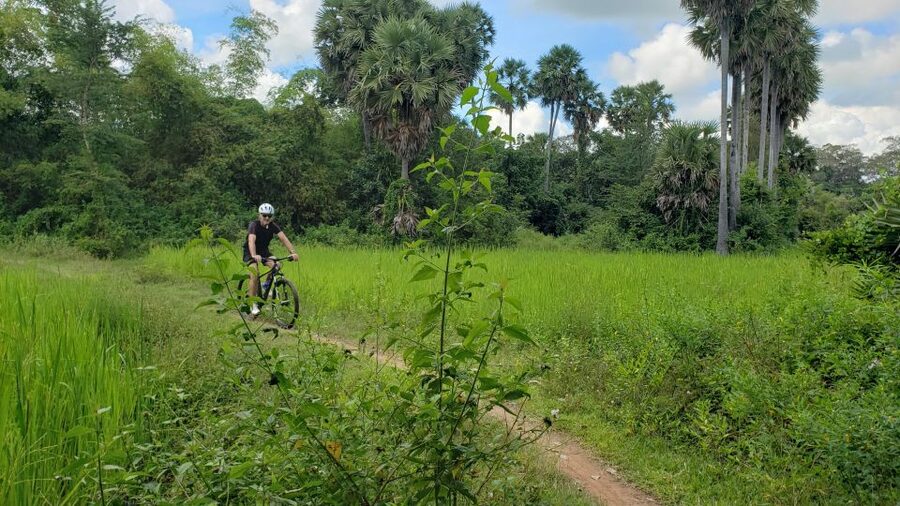
Lunch takes about 50 minutes at Sok Kun Restaurant 22, described as a local restaurant inside the Angkor Park. The food is Khmer, and the stop is intended to be a healthy, authentic break rather than a rushed snack.
Lunch is not included in the advertised $22 price, so budget separately for the meal. That is worth knowing before you set out. The tour includes water and mentions snacks in the experience details, but all other costs not specifically included remain your responsibility.
A 50-minute break is a sensible length for this route. You can eat, rest, and let your body cool down before getting back on the bike. I would not treat lunch as a long social stop. It is a practical pause in the middle of a physically active day.
Ta Nei, the quietest temple on the route
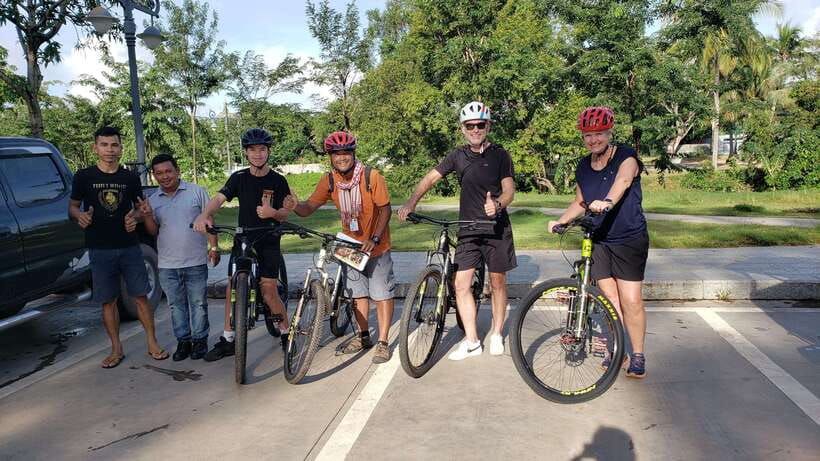
Ta Nei is one of the most appealing parts of the ride. The temple is reached by a route through the trees and is described as lying deep in the jungle. It receives about 45 minutes, enough for a guided visit, photographs, walking, and a look at the surrounding greenery.
Ta Nei offers a useful contrast to Angkor Wat and Bayon. The major temples can feel monumental and carefully staged. Ta Nei feels more tucked away, with the approach and setting doing as much work as the stonework. Cycling makes sense here because the journey through the trees is part of why you came.
Do not expect a polished, fully contained attraction with endless services at every stop. The point is the setting and the quieter atmosphere. Wear shoes that work for both pedals and uneven temple paths, and keep your water close.
Ta Prohm and the Tomb Raider atmosphere
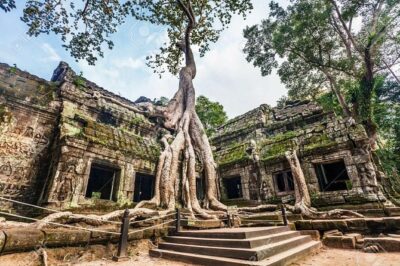
Ta Prohm is the final major temple highlight. The visit lasts about an hour and a half, including riding, walking, sightseeing, and photographs. This is the crumbling temple associated with the Tomb Raider films, where tree roots and stonework occupy the same space.
The appeal is obvious, but the site deserves more than a film reference. Your guide can explain how the temple was built and help you read the remains beyond the most famous root-covered scenes. The atmosphere is powerful because the jungle has not been reduced to a decorative backdrop. It is part of the way the temple is experienced.
Ta Prohm comes after a long ride and several major stops, so fatigue may affect how much you take in. Still, placing it late in the route gives the day a strong final temple visit before the ride back to Siem Reap.
The itinerary also lists very short stops at Prohm Kel Temple, Nara Art, and a local café. These are brief, around five minutes each, and function as photo, guide, or refreshment pauses rather than full sightseeing visits. They help mark the final stretch without adding another major ruin to an already full schedule.
The ride back to town
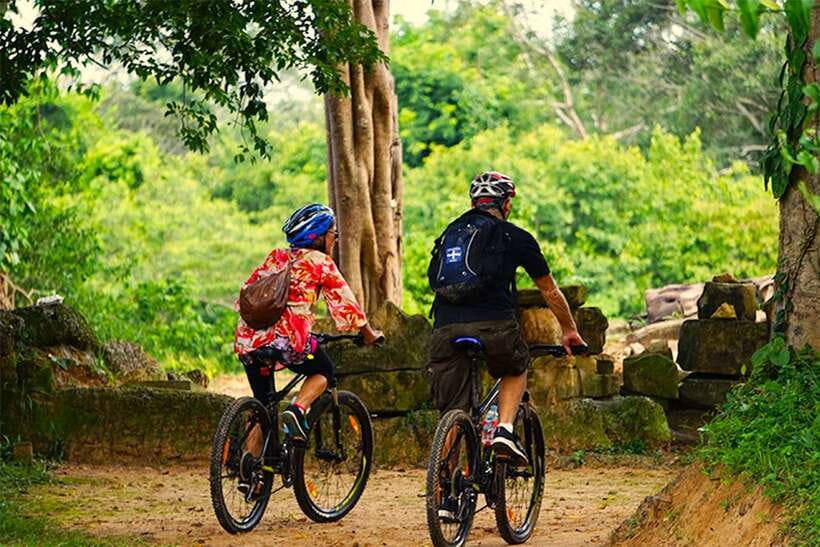
From Ta Prohm, you cycle back toward Siem Reap before transferring by tuk-tuk for the final portion. The planned arrival at your hotel is around 3:30 PM, though exact timing can depend on the pace of the group and the time spent at the temples.
The return ride is where the 25 to 35 kilometer estimate becomes real. The route is not described as technical, but sandy patches can make the bicycle work harder. You should be comfortable riding for several hours, even though the day is broken up by temple walks, stops, lunch, and the opening tuk-tuk transfer.
The guide’s role matters most on the return. A helpful guide will keep an eye on pace, water, and the condition of the group. The supplied feedback gives special praise to guides Liap and Leap for friendly support and clear explanations, and it notes that the bikes were in good condition. Those details are worth prioritizing when you communicate with the operator.
What the $22 price really covers
At $22 per person, the tour is inexpensive for a private or small-group full-day outing. You receive hotel pickup and drop-off, a professional English-speaking biking guide, a mountain bike, helmet, and drinking water.
The headline price is not your total cost. You must add the Angkor Pass, lunch, and any tip for the guide or driver. The temple pass is the largest extra to plan for, and lunch is also paid separately. Even after adding those costs, the tour can be good value if you want transport, equipment, guiding, and a planned cycling route handled in one booking.
The value is strongest for people who would otherwise hire separate transport and try to work out the temple route alone. You are paying for access to bicycles, route planning, historical explanation, and the ability to move between the ruins without arranging each transfer yourself.
It is less compelling if you only want to see Angkor Wat and Bayon at a slow pace. A long cycling loop is not the cheapest way to visit two temples. It becomes worthwhile when you want the road, the trees, Ta Nei, and the feeling of moving through Angkor under your own power.
Who should book this ride
I would recommend it to active first-time visitors who want the main temples with a different rhythm. It also suits anyone who finds a full day in a tuk-tuk too passive and would rather make the route part of the adventure.
Families can consider it because children’s bikes and tagalong bikes are available. Children under five are not suitable for the tour, and the ride still requires careful thought for older children. The operator offers equipment for less confident young cyclists, but the total distance and heat remain important factors.
This is not suitable for pregnant women, and it is a poor match for anyone who dislikes extended cycling. The route includes sandy sections, so even a generally easy ride can require extra effort. You should also be comfortable walking around temple ruins after spending hours on a bicycle.
The experience works well for couples, friends, and small private groups who want flexibility. Since private and small-group formats are available, you can usually keep the pace more personal than on a large scheduled bus excursion.
Practical advice for a smoother day
- Start with a solid breakfast: The tour runs for eight hours and includes substantial riding.
- Bring the Angkor Pass budget: The pass is not part of the $22 price.
- Wear practical clothing: You need clothes and shoes that work for cycling and temple walking.
- Expect sand: The cycling is not highly technical, but loose areas can appear.
- Use the water provided: Keep drinking regularly during the ride and temple visits.
- Ask about your bike size: Options range from children’s bikes to XXL, with tagalongs available.
- Keep the schedule in mind: Short stops such as Victory Gate, French Dam, Prohm Kel, and the café are not long visits.
- Plan for lunch as an extra: The local restaurant stop is included in the day, but the meal costs more.
The tour offers free cancellation up to 24 hours before departure and allows you to reserve now and pay later. Those terms give you some useful flexibility, but the important planning task remains choosing a day when you can handle the distance.
Should you book the Angkor Jungle Biking Adventure?
Book it if you want to ride between Angkor’s major temples, hear personal explanations from an English-speaking guide, and add quieter places such as Ta Nei to the classic circuit. The strongest features are the friendly guiding associated with Liap and Leap, the well-regarded bikes, the steady supply of water, and the chance to experience the jungle roads rather than only temple entrances.
Skip it if you want a relaxed vehicle tour, a short temple visit, or a day focused almost entirely on detailed study of Angkor Wat. At 25 to 35 kilometers, this is a real cycling day, even though the route is not highly technical.
For an active visitor, the $22 starting price offers a lot: equipment, guide, transport, and a carefully planned route through the park. Add the temple pass, lunch, and tip to your budget, then book with confidence if the idea of seeing Angkor at bicycle speed sounds better than watching it pass through a tuk-tuk window.
FAQ
How long does the Angkor Jungle Biking Adventure last?
The tour lasts about eight hours, with pickup from Siem Reap in the morning and an expected return to your hotel around 3:30 PM.
How far do you cycle?
The total biking distance is approximately 25 to 35 kilometers from the start to the end of the cycling route.
Which temples are included?
The route includes Angkor Wat, Ta Prohm, Ta Nei, Angkor Thom, Bayon, Victory Gate, and several shorter stops around the park, including Prohm Kel Temple.
Is the Angkor Pass included?
No. The Angkor Temple entrance ticket is not included. You can buy an Angkor Pass at the ticket counters when entering the temple zone or through the official Angkor Enterprise website.
Are bicycles and helmets provided?
Yes. The tour includes a mountain bike and helmet. Bike sizes range from children’s bikes to XXL, and tagalong bikes are available for less confident cycling children.
Is lunch included in the price?
No. The itinerary includes a lunch break at a local restaurant inside Angkor Park, but the meal is an additional cost.
Is hotel pickup available?
Yes. Pickup and drop-off at your hotel in Siem Reap are included. You need to provide the hotel name and full address so the guide and driver can meet you in the lobby.
New around Siem Reap
- Siem Reap Temple and Waterfall 3-Day Tour★ 4.5 · 3 reviews
- Siem Reap: Guided Day Trip to Local Village & Cooking Class★ 5.0 · 3 reviews
- Savor the Countryside: Tours with Authentic Cooking Classes”★ 5.0 · 3 reviews
- Siem Reap Private Tour: Angkor Wat Sunrise And Banteay Srei★ 5.0 · 3 reviews
- Angkor Wat Sunset In Private and Small-In-Group★ 4.3 · 3 reviews
- Angkor Wat Sunrise TukTuk Tour★ 5.0 · 3 reviews
- Exclusive Angkor temples and Small group temples tours★ 5.0 · 3 reviews
- Angkor Wat: Highlights and Sunrise with Spanish Guide★ 4.8 · 3 reviews
Siem Reap Tours, compared.
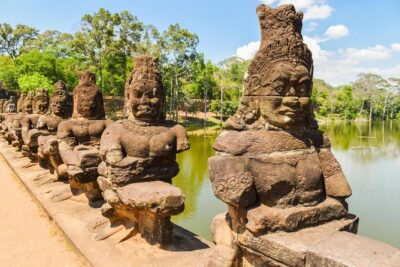
Angkor Wat Sunrise or Sunset Tour with Guide from Siem Reap
Read our review →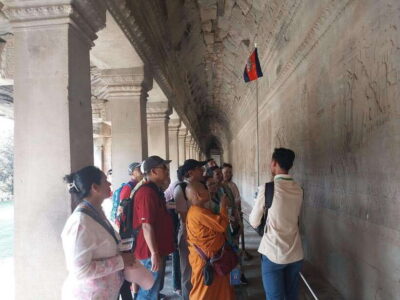
Angkor Wat: Small-Group Sunrise or Sunset Tour
Read our review →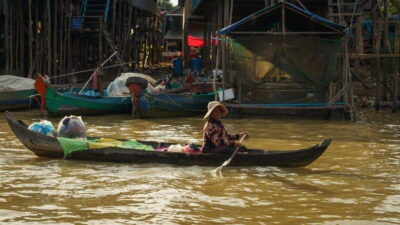
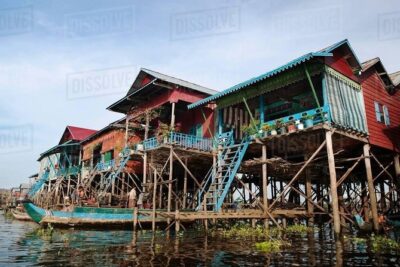
Sunset tour of Kampong Phluk stilts home village on the Tonle Sap
Read our review →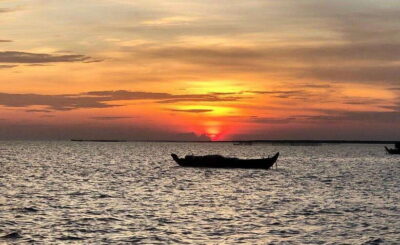
Kampong Phluk Floating Village Tour with Boat
Read our review →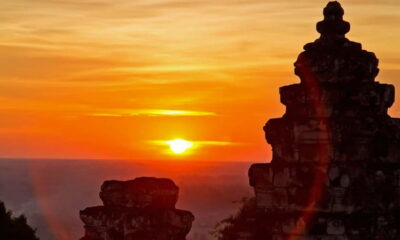
Angkor Wat Sunrise tour with Small – Group and Guide tours
Read our review →
Angkor Wat Highlights and Sunrise Guided Tour from Siem Reap
Read our review →Browse the lists this tour appears in