
Reviewed · ANGKOR TEMPLE TOURS
1-Day private Angkor Temple Tour from Siem Reap
Angkor Wat is only the beginning. This seven-hour private tour takes you from the carved galleries of Angkor Wat to Bayon’s giant stone faces, the terraces of Angkor Thom, and the tree-wrapped ruins of Ta Prohm. Guides such as Sim, Som, Arun, and Rith explain the temples in clear English and help you find strong photo spots.
I like the private format for two reasons: you can slow down when the heat bites, and you can ask as many questions as you wish without waiting for a large group. The driver also keeps cold water and, on many departures, refreshing towels ready at each stop. The main drawback is simple: this is a long, hot walking day, with about five kilometers of walking and plenty of steps.
Key points at a glance
- See Angkor’s essential temples in one day: Angkor Wat, Bayon, Baphuon, Phimeanakas, the South Gate, the Elephants Terrace, the Leper King Terrace, and Ta Prohm are all included.
- A private guide changes the experience: Guides including Sim, Som, Arun, Rith, and San explain the carvings, religious ideas, royal ceremonies, and Cambodian history behind the stones.
- Flexible pacing helps in the heat: You can take breaks, rest longer, adjust the order, or finish earlier if the day becomes too tiring.
- Transport is part of the comfort plan: Hotel pickup, return transfer, cold bottled water, and often cold towels are provided. Transport may be by tuk-tuk or air-conditioned vehicle.
- Budget carefully: The tour costs $34 per person, but the Angkor temple pass costs another $37 per person. Your practical total is $71 per person before food.
- Come dressed for a temple, not a beach: Shorts must cover the knees, and comfortable shoes, sunscreen, a camera, and light clothing are useful.
Why a private Angkor day makes sense
Angkor is not one temple with a few nearby ruins. It is a large archaeological area, and the famous sites can blur together if you move through them without context. A guide gives each place a purpose: royal capital, state temple, Buddhist shrine, ceremonial terrace, or jungle-covered monastery.
I especially like having a guide at Angkor Wat. The bas-reliefs are not just decoration. They show stories from Hindu mythology, scenes of battle, royal processions, and daily life. Without help, you can admire the stonework but miss what the sculptors were showing you.
The private setup is also practical. Sim adjusted breaks for people who needed them, while other guides have changed the order of stops or allowed more time at a favorite temple. If you have already visited Angkor Wat, the guide can spend less time there and give more attention to other sites.
The day is not effortless. You walk on uneven paths, climb temple steps, and spend long periods outside in heat and humidity. One person’s child struggled with the temperature, and another party found the pace manageable because they were fit and in their thirties. That is a useful warning: private touring gives you control, but it does not remove the physical demands of Angkor.
More Angkor Temple Tours in Siem Reap:
- Siem Reap Tour: Angkor Wat Sunrise, Bayon, Ta Prohm, Banteay Srei
★ 5.0 · 931 reviews - Siem Reap: Bike the Angkor Temples – Full-Day 30km Tour
★ 5.0 · 463 reviews - Angkor Wat one Day Private Tour for All Highlight Angkor Temples
★ 5.0 · 199 reviews
Hotel pickup and the ride into Angkor
The guide and driver collect you from your hotel lobby in Krong Siem Reap. The guide carries a card with the lead guest’s name, which makes the meeting easier, especially if your hotel has several entrances or a busy lobby.
Transport depends on the departure, but the experience may use a tuk-tuk or an air-conditioned car. The tuk-tuk gives you open-air movement between the ruins, while the car offers stronger relief from the heat. Several families and older visitors valued the air conditioning, and other groups enjoyed the breeze of the tuk-tuk.
The driver is not just a person waiting at the end of the day. The best part of the arrangement is having water and a cool towel ready when you return from a temple. In hot weather, that small touch matters. It gives you a chance to cool your face, drink, and reset before the next walk.
Angkor Wat, two hours among stone stories
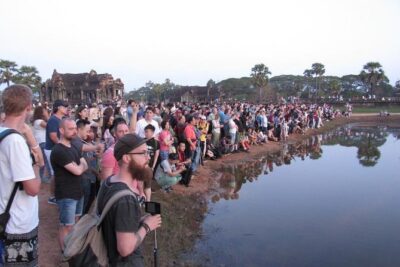
Allow about two hours for Angkor Wat. The approach alone gives you a sense of its scale, but the real pleasure comes from moving slowly through the galleries and central areas.
Your guide explains the temple’s original religious role, its architectural plan, and the stories carved into the walls. Angkor Wat is famous for its size, but its detail is what rewards close attention. Look for the long bas-relief panels, where figures, animals, gods, soldiers, and legendary scenes unfold across the stone.
You will have time for photographs and for walking into the central chambers. The guide can point out useful viewing angles and explain details you might otherwise pass without noticing. Guides such as Som and Rith are also praised for taking photographs, which is useful if you are traveling as a couple or small group and want more than quick arm’s-length snapshots.
Angkor Wat is often the emotional high point of the morning, but do not spend all your energy here. The tour continues through several more temples, and the sun becomes harder to manage later in the day. Wear shoes that can handle uneven ground, and use the water provided rather than saving it for later.
You need an Angkor entry ticket to enter. It costs $37 per person and covers the temples visited on this tour. The ticket is not included in the $34 tour price. Buying it onsite is possible, and one party obtained tickets within minutes, but allow extra time in case the process takes longer.
The South Gate and the approach to Angkor Thom
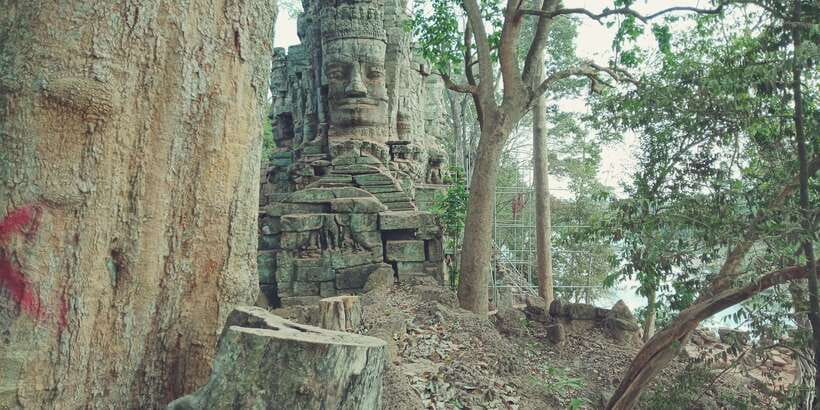
After Angkor Wat, the route reaches Tonle Om Gate, better known as the South Gate of Angkor Thom. Plan on about 20 minutes for a guided visit and photos.
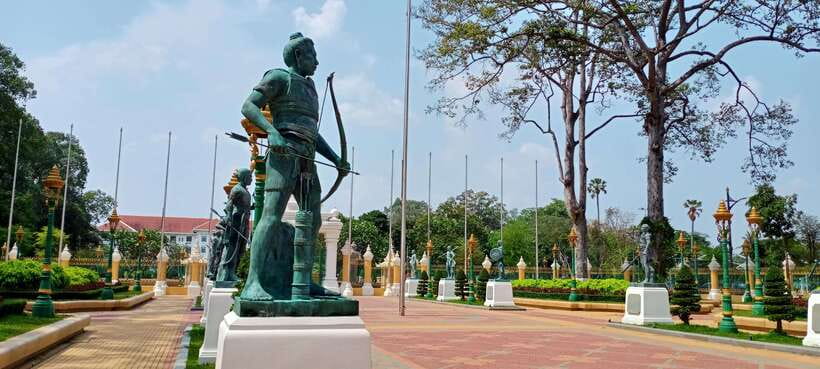
The gate is part of the ancient capital city of the Khmer Empire. Its approach gives you a visual introduction to the symbolism of Angkor Thom, with monumental figures and a causeway leading toward the entrance. This is a shorter stop, but it connects the separate temples into a larger idea: you are entering a royal city, not simply collecting isolated ruins.
The South Gate can also be a good place to pause before the more detailed temple visits. Your guide can explain the layout of Angkor Thom and help you understand why the next group of sites belongs together.
A few more Siem Reap half-days to weigh up
- 1-Day Amazing Angkor Wat Tour with Sunset & All Interesting Major Temples
★ 5.0 · 308 reviews - 1-Day Angkor Wat Sunrise & All Interesting Temples Private Tour
★ 5.0 · 174 reviews - Angkor Wat Sunrise Small-Group 1-Day Tour from Siem Reap
★ 5.0 · 107 reviews - From Siem Reap: Angkor Wat and Floating Village 3-Day Trip
★ 5.0 · 100 reviews
Bayon and the famous smiling faces
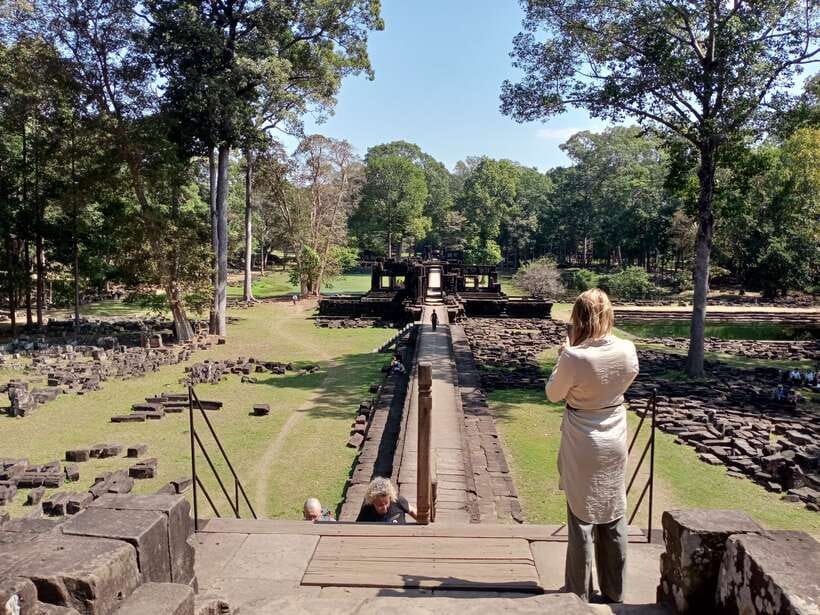
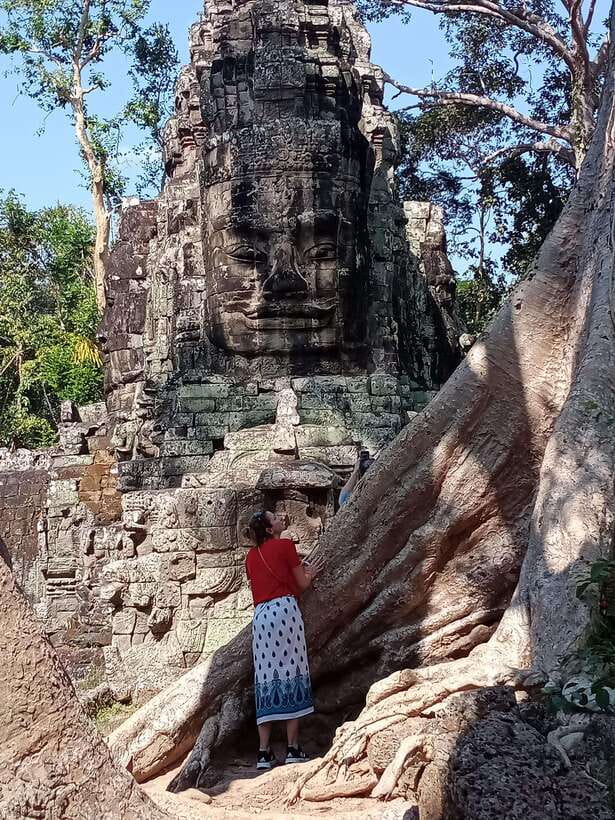
Bayon receives about 40 minutes. Its towers carry enormous carved faces, with more than 200 faces associated with the temple’s upper levels and central area.
The faces are the feature everyone remembers, but Bayon deserves more than a quick photo. Your guide can help you see the temple’s two sets of bas-reliefs. Alongside mythological scenes, they show military events and ordinary life, including the kinds of everyday moments that make the ancient city feel less distant.
Bayon’s passages can feel confusing. Towers appear, disappear, and overlap as you move through the structure. This is where a guide such as Sim or Arun earns the fee. Instead of wandering at random, you receive a route and an explanation of what you are seeing.
The stop is short compared with Angkor Wat, so use the time well. Take your main face photographs early, then listen and look for the less famous carvings. If you want an extended photo session, tell your guide. A private group can spend more time here if the rest of the day allows.
Baphuon, Phimeanakas, and Angkor Thom’s royal terraces
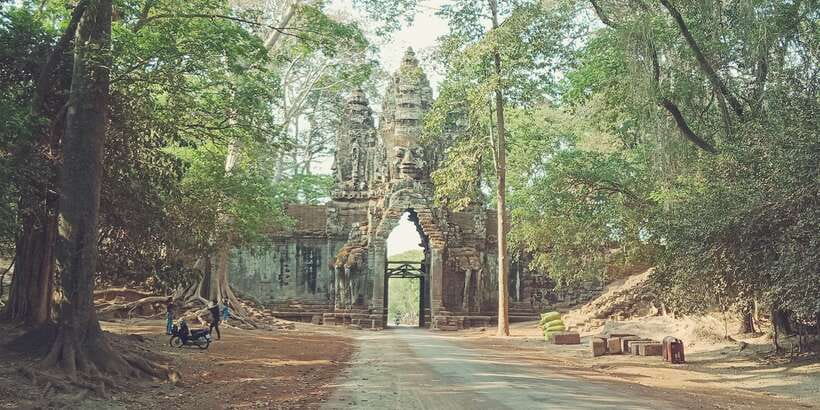
Baphuon follows with about 40 minutes. This 11th-century temple mountain rises in three tiers and once served as a state temple. Its scale and layered form make it different from Bayon, and the climb gives you a closer look at the structure’s stonework.
Baphuon requires more effort than a simple roadside photo stop. Steps, uneven surfaces, and heat can slow you down. Take the climb at your own pace and ask for a rest if needed. Your guide can explain how the temple fits into the royal center of Angkor Thom.
A short secret stop follows, allowing about 10 minutes for photographs and a quick look around. The exact character of this stop is not specified, so think of it as a brief extra pause rather than a major temple visit.
Phimeanakas receives around 30 minutes. Also called the Celestial Temple, it was built near the end of the 10th century as a three-tier pyramid. It is less instantly recognizable than Angkor Wat or Bayon, but that is part of its appeal. The stop lets you compare different periods and temple designs within the same ancient capital.
The Terrace of the Elephants takes about 20 minutes. This 350-meter-long platform served as a giant reviewing stand for public ceremonies. Its carved elephants and ceremonial scale help you picture the royal center as a place of processions, public displays, and state power.
Next comes the Terrace of the Leper King, a U-shaped structure connected by some interpretations with royal cremation practices. The terrace is compact, but its carved walls and unusual name make it a good place to ask questions. Here, a guide adds useful caution: ancient sites often have competing interpretations, and a careful explanation is better than a single oversimplified answer.
A brief additional stop, described as a hidden or lesser-known site, allows about 10 minutes for photos and free time. Since the exact location can vary, ask your guide what makes it special when you arrive.
Ta Prohm, the atmospheric finish
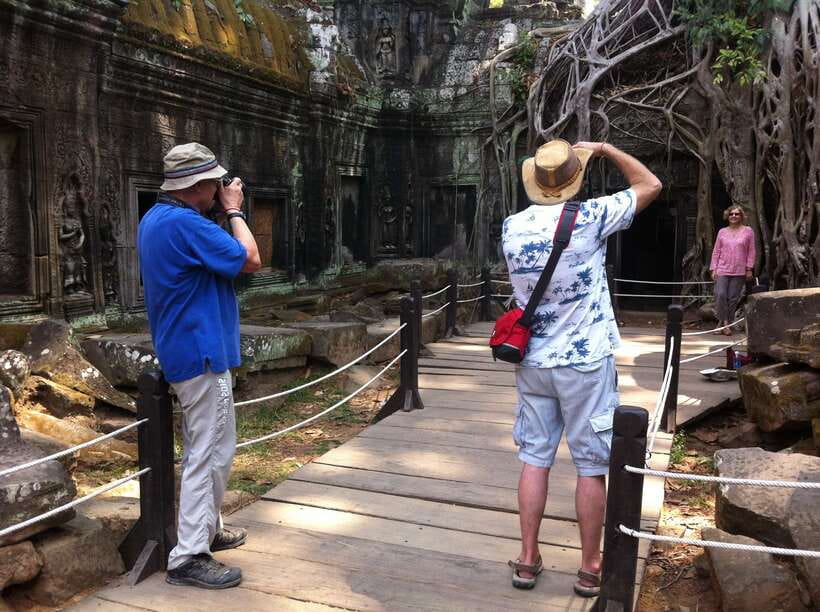
Ta Prohm gets about an hour, making it the longest stop after Angkor Wat. Built in the 13th century, it is often called the Tomb Raider temple because of its appearance in the film.
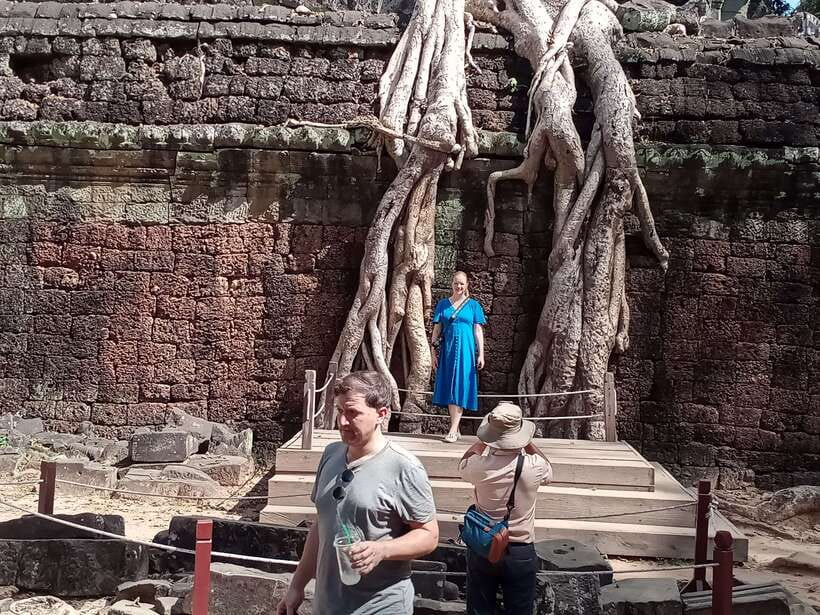
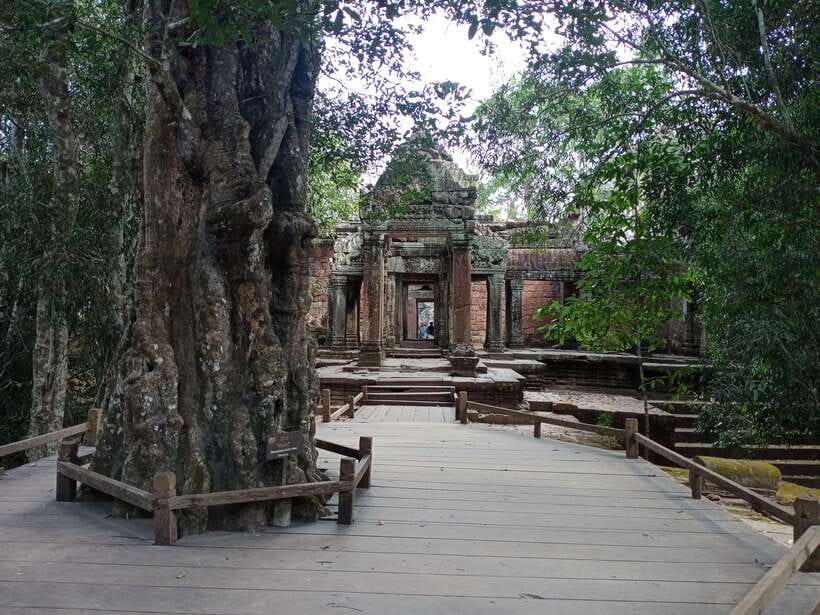
The attraction is not simply the movie connection. Ta Prohm has been left in much the same condition in which it was found, with large trees growing through and around the ruins. Roots grip walls, doorways frame tangled branches, and the jungle presses close to the carved stone.
This is one of the best places for photographs, but it can also be one of the busiest. Your guide can steer you toward strong viewpoints and help you find moments when the paths are less crowded. Rith, Som, and other guides are particularly useful here if you want help with composition as well as history.
Ta Prohm is a fitting final major temple because it feels different from the ordered grandeur of Angkor Wat. At Angkor Wat, human design dominates. At Ta Prohm, nature and architecture share the scene. Give yourself time to look beyond the most famous tree and doorway. The side passages and smaller courtyards can be just as striking.
Water, heat, walking, and lunch
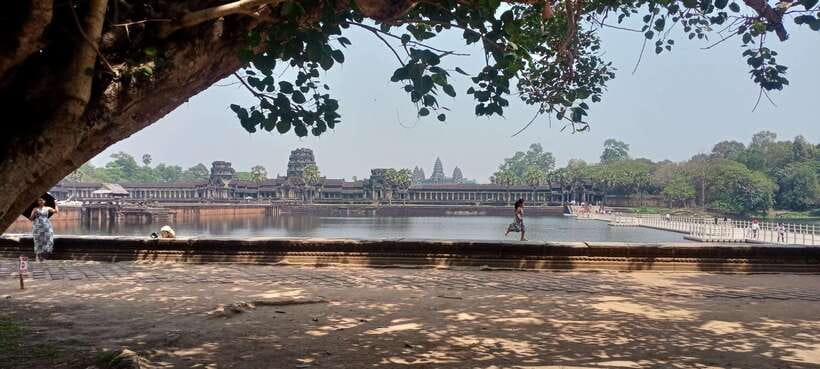
The advertised duration is seven hours, with morning pickup and a return to Siem Reap in the afternoon. Some parties finish around 3 p.m., while private groups may adjust the timing. The route covers a lot, so your day will feel full even if the guide keeps a sensible pace.
Expect roughly five kilometers of walking, along with climbing and uneven ground. The heat and humidity can be serious, especially outside the cooler dry-season mornings. Bring sunscreen, comfortable clothes, and a camera. Knee-covering shorts are accepted, but shorts above the knee are not suitable for temple entry.
Bring snacks if you like. One couple carried their own, and that can help if you do not want a long meal break. Lunch is not included in the stated price, and the timing or restaurant choice can vary. Some groups took a short lunch pause and continued comfortably, while others preferred to keep moving.
The driver generally supplies bottled water, and many departures include cool towels. These are not luxury extras in the Cambodian heat. They are practical comforts that help you keep going. If you have children, mobility concerns, or a low tolerance for heat, tell the guide at the start so the day can be adjusted.
What the $34 price really buys
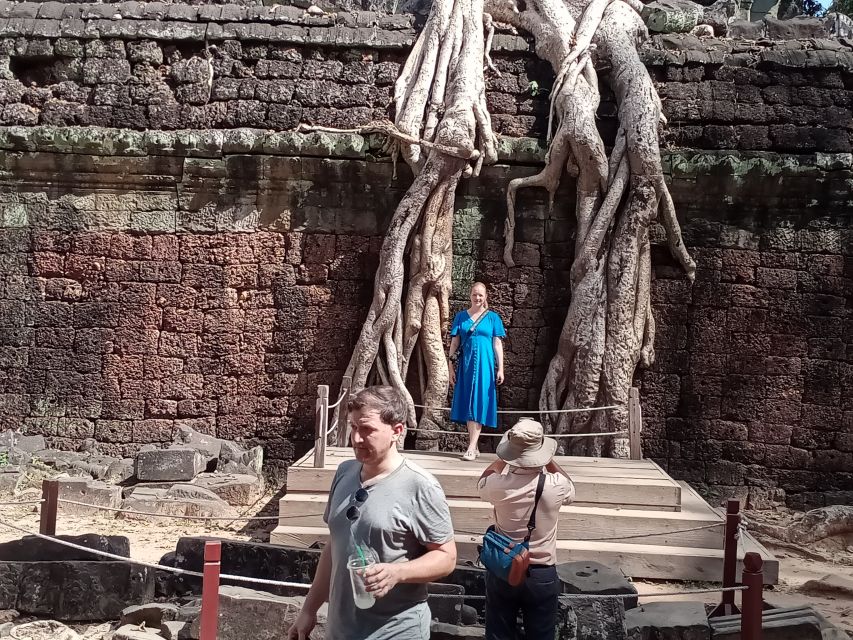
At $34 per person, the tour is a good value for a private seven-hour service, but the headline price does not cover your temple admission. Add the $37 Angkor pass, and the basic cost becomes $71 per person, before lunch.
That total includes an English-speaking guide, hotel pickup and return transfer, and bottled water. You are paying for more than a ride between temples. A strong guide gives the carvings meaning, answers questions about religion and Cambodian history, and keeps the day moving without turning it into a race.
The price is easiest to justify for two or more people sharing a private booking. You receive control over breaks, photo time, and the order of stops. A shared tour may cost less, but it cannot offer the same freedom when one person wants more time at Bayon and another needs shade.
The value is also higher if you are visiting Angkor only once. The temples are too important to reduce to a series of quick photographs. Having someone explain what you are looking at can turn a beautiful morning into a much more understandable experience.
Who should book this temple tour?
I would choose this tour if you want Angkor’s major highlights in one day and prefer explanations to independent wandering. It suits couples, families, and small groups who want the day adjusted around their energy and interests.
It is especially useful for first-time visitors, since the route includes the essential temples and the main parts of Angkor Thom. It also works for repeat visitors. If you have already seen Angkor Wat, tell the guide and ask for more time at Bayon, Baphuon, Ta Prohm, or the terraces.
You should think twice if you dislike heat, walking, or temple steps. A private guide can shorten the day, but you cannot see this much ancient architecture without spending time on your feet. Families with young children may want to build in extra rest and accept that they may not complete every stop.
The tour is conducted in English. Guides named in the bookings include Sim, Som, Arun, Rith, San, Reed, and Bunna, though the assigned guide depends on availability. The strongest pattern is clear: expect a guide who explains history and religion, helps with photographs, and adjusts the pace when asked.
Should you book it?
Book this tour if you want a well-organized introduction to Angkor with a private guide, reliable transport, and room to set your own pace. The cold water, towels, hotel pickup, and photo help are especially useful in the heat.
Skip it if you want a slow, solitary day at only one or two temples. For most first visits, though, the combination of Angkor Wat, Bayon, Angkor Thom, and Ta Prohm offers a strong return for the time and money. Just budget for the separate $37 temple ticket, wear proper shoes, and start the day ready for a lot of walking.
FAQ
How long does the private Angkor temple tour last?
The tour lasts seven hours, including hotel pickup, temple visits, transport between sites, and the return to Krong Siem Reap.
What temples are included?
The route includes Angkor Wat, the South Gate of Angkor Thom, Bayon, Baphuon, Phimeanakas, the Terrace of the Elephants, the Terrace of the Leper King, an additional short stop, and Ta Prohm.
Is the Angkor entry ticket included?
No. The Angkor temple ticket costs $37 per person and covers all the temples visited. It can be paid for onsite.
Is the tour private?
Yes. The tour is for a private group, so you can discuss the pace, breaks, photo time, and order of stops with your guide.
What transport is provided?
Return transfers from your hotel are included. Transport may be by tuk-tuk or air-conditioned vehicle, depending on the departure arrangement.
Is an English-speaking guide included?
Yes. An English-speaking live guide accompanies you throughout the tour. The guide and driver remain with you for the full tour.
What should I wear?
Wear comfortable clothing and shoes suitable for walking. Shorts must cover the knees to enter the temples.
Can children join the tour?
Yes. Children under 12 receive free entry to the temples. The heat and amount of walking can still be tiring, so use the private format to request breaks when needed.
New around Siem Reap
- Kulen Mountain With Ticket included Plus Banteay Srei Temple Tour★ 5.0 · 7 reviews
- 2 Days Angkor temples with Sunrise & Sunset★ 5.0 · 7 reviews
- Private Siem Reap Airport Transfer to hotel in town★ 5.0 · 7 reviews
- 1-Day private Angkor Temple Tour with Sun Rise by Tuk Tuk from Siem Reap★ 4.5 · 7 reviews
- Siem Reap: Morning Cooking Class & Market Tour★ 5.0 · 7 reviews
- Kulen Mountain, Killing Fields and War Museum Tour★ 5.0 · 7 reviews
- War Museum, Killing Field, and APOPO Hero RATs Tour★ 5.0 · 7 reviews
- Half-Day: Silk Farm, Senteur Angkor, and Satcha Workshop★ 4.6 · 7 reviews
Angkor Temple Tours, compared.
Private Full-Day Angkor Temple and Sunset Viewing with Lunch
Read our review →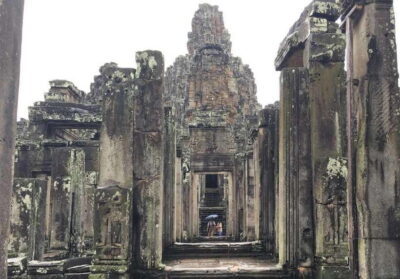
Private one-day tuktuk ‘small tour’ of the oldest Angkor temples
Read our review →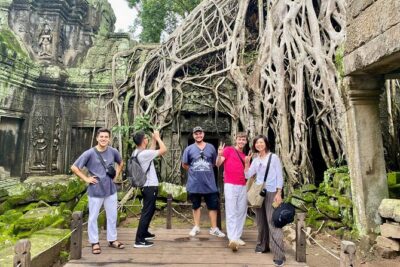
Explore Angkor Temple & Other – Private Vehicle with Tour Guided
Read our review →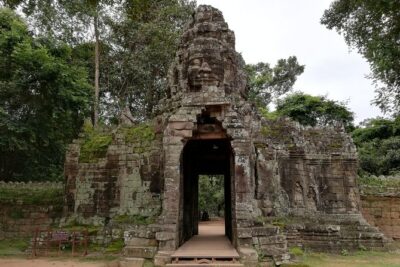
Angkor Wat Private Driver Tours to Angkor Wat Sunrise, Angkor Thom & Ta Prohm
Read our review →
Browse the lists this tour appears in