
Reviewed · ANGKOR WAT TOURS
Siem Reap: 2-Day Private Angkor Wat & Phnom Kulen Tour
Angkor Wat is only part of the story. This private two-day tour links the famous temples with Ta Prohm’s tree roots, Banteay Srei’s fine carvings, and a second day beyond the main park. You can choose sacred Phnom Kulen, ruined Beng Mealea, or a floating village on Tonlé Sap Lake.
I like the private transport and flexible second day, since you are not tied to a large group or a fixed side trip. I also like the strong language choice, with licensed guides available in English, Spanish, French, Italian, or Japanese. The main drawback is cost: $365 for up to two people is a fair private-tour price, but entrance fees and lunch come on top.
Key points at a glance
- Ta Prohm and Angkor Wat in one carefully packed day: You get the cinematic ruins, Angkor Thom, Bayon, and the world’s largest religious monument.
- Banteay Srei adds finer detail: Its pink sandstone carvings offer a welcome change from the larger, more imposing temples.
- Three choices for Day 2: Pair Phnom Kulen with Beng Mealea, Phnom Kulen with Tonlé Sap, or Beng Mealea with Tonlé Sap.
- Private pickup and transport: Your guide collects you at your hotel and provides an air-conditioned car, van, or bus based on group size.
- Language support is unusually broad: English, Spanish, French, Italian, and Japanese guides are available.
- Budget for extra tickets: Angkor costs $37 per person for one day, while Beng Mealea costs $10 and Phnom Kulen costs $20.
A big first day among Angkor’s essential temples
The first day begins with an 8:00 AM hotel pickup, unless you select the sunrise option. You meet your guide in the hotel lobby, then travel together to the ticket booth to buy your Angkor pass. You can also purchase it online in advance.
The Angkor Archaeological Park ticket is not included. It costs $37 per person for one day, and children under 12 do not need a ticket if they show a passport as proof of age. This is an important cost to add before you compare the tour price with other options.
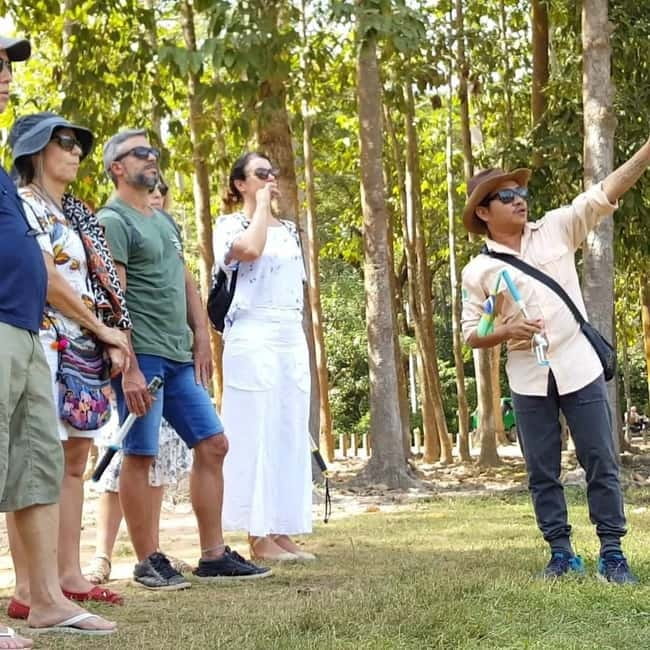
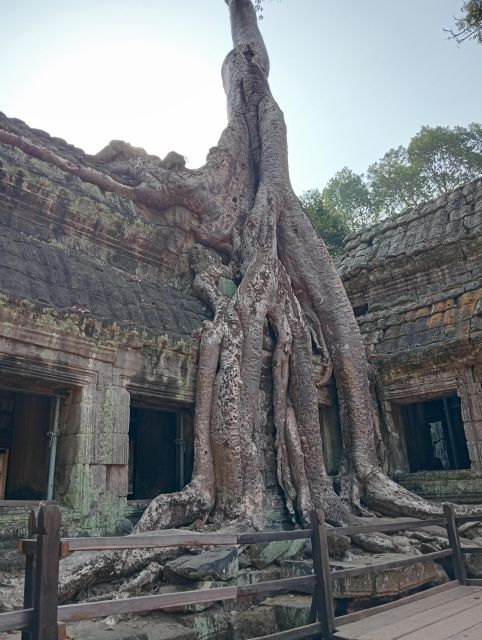
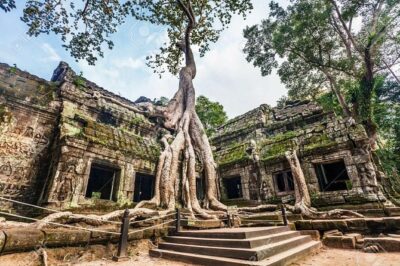
Your first major stop is Ta Prohm, where thick tree roots grip the old stone walls. The temple has a dramatic, partly ruined appearance, but it is not just a photo stop. Your guide can help you read the layout, point out carved details, and explain how nature and conservation have shaped what you see today.
I like beginning with Ta Prohm because it gives you an immediate sense of Angkor’s scale and mood. The fallen stones and root-covered galleries also make it feel different from the more ordered Angkor Wat later in the day. Give yourself time to look beyond the famous tree scenes. The temple’s corridors, doorways, and carved figures reward a slower pace.
More Angkor Wat Tours in Siem Reap:
- Angkor Wat Sunrise or Sunset Tour with Guide from Siem Reap
★ 5.0 · 12,109 reviews - Siem Reap: Angkor Wat: Small-Group Sunrise or Sunset Tour
★ 5.0 · 9,444 reviews - Siem Reap: Angkor Wat 2-Day Tour with Sunrise and Sunset
★ 4.9 · 4,429 reviews
Banteay Srei and the finest carved stone
The route continues to Pre Rup, a tall mountain-style temple with broad views toward the Cambodian countryside. Its upper levels require some walking and steps, so comfortable shoes matter. Pre Rup is less visually intact than Angkor Wat, but its strong brick and laterite form gives you a clear idea of how temple builders used height to create a sacred center.
Banteay Srei is one of the best reasons to choose this tour instead of a basic Angkor highlights trip. Known as the Citadel of Women, it is built from pink sandstone and covered with unusually fine carvings. The smaller scale lets you get close to the decorative work, and the detail feels more intimate than the giant faces and long galleries found elsewhere.
There is a practical tradeoff here. Banteay Srei sits away from the central temple group, so reaching it takes time on the road. If your main goal is to spend every possible minute inside Angkor Wat and Angkor Thom, the extra drive may feel like a cost. If you care about carving, proportion, and craftsmanship, I think the detour earns its place.
Lunch is taken at a nearby local restaurant and is not included. You should bring cash and ask your guide about the meal options before ordering. Drinks are also extra unless specifically included, although cold water is provided during the temple visits.
Angkor Thom, Bayon, and the faces in the stone
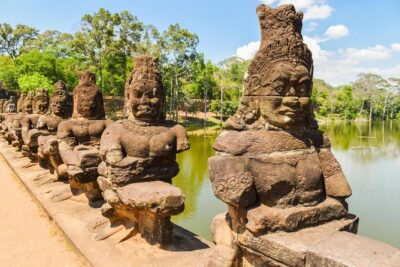
In the afternoon, you enter Angkor Thom through the Victory Gate. The gate is a useful introduction to the city’s defensive scale, and it makes a good short photo stop. The program allows about 10 minutes here, so expect a quick look rather than a long guided visit.
Inside Angkor Thom, you visit the Terrace of the Elephants and the Terrace of the Leper King. The Terrace of the Elephants served as a ceremonial viewing platform, and its long carved frontage helps you picture processions and public events in the ancient city. The Terrace of the Leper King is smaller and more enclosed, with layered carvings that reward close attention.
Baphuon adds another major structure to the day. The temple’s steep raised form gives it the feel of a stone mountain, though the steps can be demanding. The schedule allows about 30 minutes here, which is enough for an overview and some photographs, but not for an unhurried examination of every section.
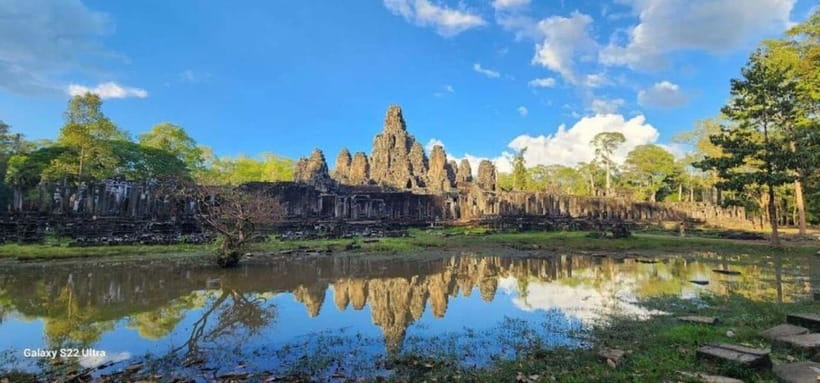
Bayon is the emotional center of Angkor Thom for many people. Its towers carry large stone faces with calm expressions, and the effect changes as you walk around the temple. I would stay close to your guide here, since the faces, bas-reliefs, and narrow passages can blur together without some explanation.
The published timing gives Bayon about 45 minutes and Angkor Thom as a whole about 105 minutes, including the terraces and Baphuon. That is a sensible amount of time for a highlights visit, but the day is full. You should expect steady walking, uneven stone, heat, and repeated steps. This is not a relaxed temple stroll.
Angkor Wat needs time, not just a photograph
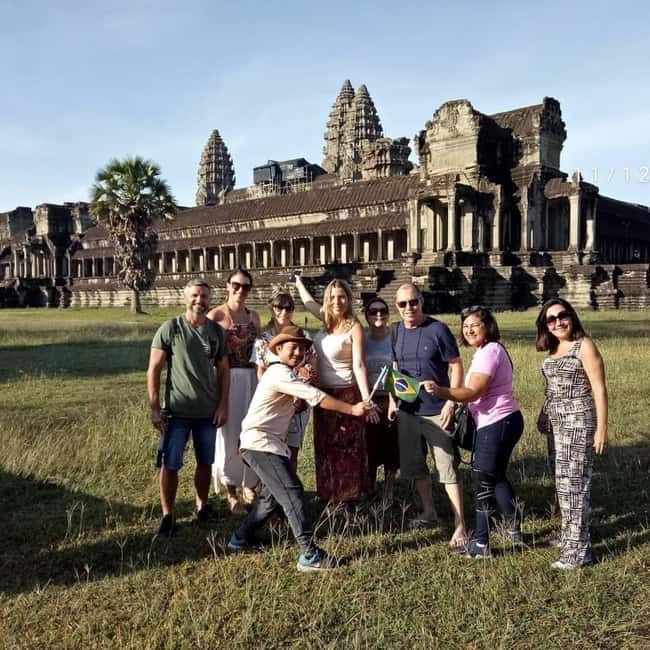
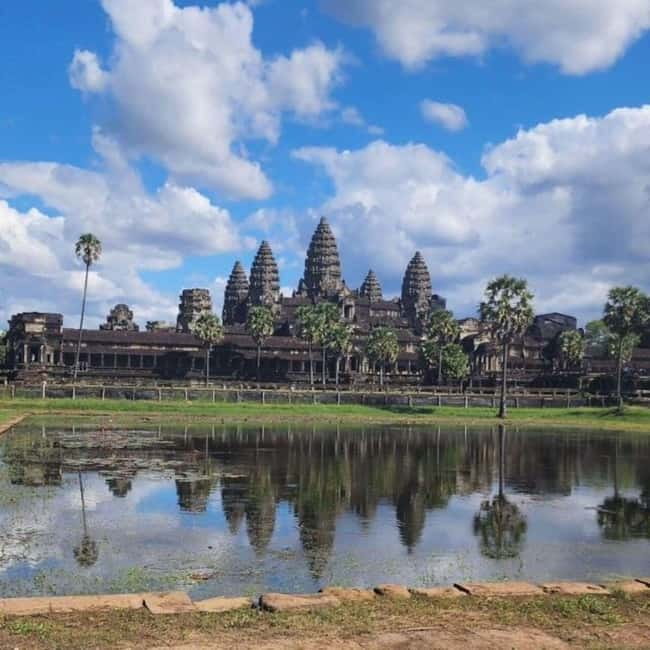
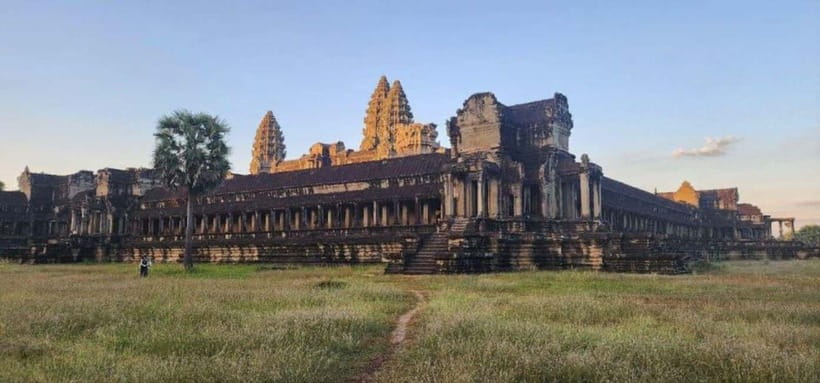
After lunch and the Angkor Thom sites, you reach Angkor Wat for about two hours. That is one of the strongest parts of the plan. Many short tours treat Angkor Wat as a quick final stop, but two hours gives you room to take in the approach, outer galleries, bas-reliefs, towers, and central sanctuary.
Angkor Wat is vast, and its design carries layers of religious meaning. Your guide can explain the symbolism, art, and history as you move through the complex rather than leaving you to guess what each section represents. I find that useful here, because the monument can feel almost too large to understand without a clear route.
Dress rules are strict. Wear clothing that covers your shoulders and knees. A scarf may cover knees and shoulders at most temples, but the supplied guidance says that, except at Angkor Wat, you should wear pants or a skirt covering the knees and a shirt covering the shoulders. Shorts, short skirts, tank tops, and other revealing clothes are not accepted.
The regular day finishes around 5:30 PM, followed by hotel drop-off. A sunrise option starts at 5:00 AM and finishes around 3:30 PM. The early start gives you a different rhythm and may suit you if you want cooler morning hours, but it creates a very long day. Check the exact option at booking, since the sunrise schedule is different from the standard timing.
More Kulen Mountain Tours in Siem Reap:
- Kulen Waterfall Join-in Tour (local Picnic lunch)
★ 5.0 · 2,434 reviews - Kulen Mountain: Small-Group Tour and Picnic lunch
★ 4.9 · 1,802 reviews - Siem Reap: Kulen Mountain, Beng Mealea and Tonle Sap Tour
★ 5.0 · 1,483 reviews - Phnom Kulen Waterfall & the Sacred 1000 Lingas (with Lunch)
★ 4.8 · 974 reviews
Choosing the right second day
Day 2 begins with an 8:30 AM pickup and ends around 5:00 PM. You choose one of three combinations:
- Phnom Kulen and Beng Mealea
- Phnom Kulen and a Tonlé Sap floating village
- Beng Mealea and a Tonlé Sap floating village
This is where the tour becomes more personal. Instead of repeating the central Angkor circuit, you can choose sacred mountain scenery, remote ruins, or present-day life on the lake.
Phnom Kulen and Beng Mealea
Phnom Kulen is described as the birthplace of the Khmer Empire and remains a sacred mountain. You visit the River of a Thousand Lingas, a reclining Buddha, and waterfalls surrounded by jungle. The setting changes the pace from stone courtyards to open nature, water, and forest.
The national park entrance fee is $20 per person and is not included. The day may suit you best if you want a clear contrast with the temples and do not mind adding another ticket. Bring insect repellent, comfortable shoes, a hat, and cash.
Beng Mealea is a 12th-century temple left largely unrestored. Collapsed corridors, stone galleries, and trees over the ruins create a rougher atmosphere than the carefully managed main Angkor monuments. The temple entrance fee is $10 per person, also extra.
I would choose this pairing if you want ruins with a less polished feel. You should not expect the same level of intact architecture or easy walking found at the headline temples. The broken structure is the attraction, but it also means uneven paths and a more physical visit.
Phnom Kulen and Tonlé Sap
This option combines a sacred mountain with a floating village. At Tonlé Sap, you cruise past floating houses, schools, and markets while learning how local communities live with water levels that change through the year.
The boat ticket and local taxes for the floating village are included, which makes this option easier to price. Phnom Kulen’s $20 park fee remains extra. I like this combination for anyone who wants both nature and a look at local life, rather than another full day of archaeological sites.
The floating village is not just scenery. Houses, schools, and markets on the water show how daily routines adapt to the lake. Keep your expectations grounded: this is a short cultural visit within a two-day tour, not a full study of Tonlé Sap communities.
Beng Mealea and Tonlé Sap
This is the most varied choice if you want both temple ruins and water-based local life without Phnom Kulen’s park fee. Beng Mealea supplies the old stone and jungle atmosphere, while Tonlé Sap brings you into a very different setting.
You still pay Beng Mealea’s $10 entrance fee per person. The combination may suit you if you prefer archaeology but also want one afternoon or morning focused on modern Cambodian life.
What private transport and guiding add
Hotel pickup and drop-off are included, and the guide meets you in your hotel lobby. Transport is private and air-conditioned, using a car, van, or bus according to the number of people in your group. For a two-day schedule with several separated sites, that privacy matters.
You can leave the hotel without arranging separate taxis, and you do not have to wait for strangers at each stop. You also have a guide who can keep the day moving, explain the temples in your chosen language, and help with the practical side of tickets and timing.
The available languages are English, Spanish, French, Italian, and Japanese. The strongest praise in the supplied feedback focused on guiding in Portuguese, including comments that the Portuguese was excellent. Portuguese is not listed among the standard language choices, so you should confirm availability before booking if that language is essential.
Cold water and a cold towel are provided during visits. That sounds like a small detail, but on a hot temple day it is genuinely useful. You should still carry cash, insect repellent, a hat, a camera, and comfortable clothes.
Price, extra costs, and overall value
The price is $365 per group of up to two people. For a private two-day service with hotel transfers, a licensed guide, air-conditioned transport, and the included Tonlé Sap boat ticket and taxes, the amount can make sense for a couple or two friends who value flexibility.
The final cost is higher than $365 once you add required or optional tickets. Two adults visiting Angkor for one day pay $74 in total for the park pass. Add $40 for two Phnom Kulen tickets, or $20 for two Beng Mealea tickets, depending on your chosen route. Lunch and drinks are also extra.
For two people, the private format is the main value. You are paying for direct transport, a personal guide, and the ability to choose your second-day focus. For solo visitors, the same group price is much harder to justify. For a family, children under 12 join the tour free, although you still need to follow the age-proof rule for Angkor tickets.
The tour has a five-star rating from four supplied bookings, with particular praise for the guide, service, and Portuguese communication. That is encouraging, but it is a small sample. I would treat the language support and private format as the reliable reasons to book, rather than assuming every guide will offer the same style.
Who should book this two-day plan?
I would recommend it to first-time visitors who want the major Angkor sights without building a complicated schedule from scratch. It is also a good fit for couples, families with older children, and small groups who want their own vehicle and guide.
Choose the sunrise start if you are willing to wake very early and want the day to finish sooner. Choose standard timing if a 5:00 AM pickup sounds punishing.
For Day 2, select Phnom Kulen and Beng Mealea for nature plus ruined temples. Pick Phnom Kulen and Tonlé Sap for the broadest mix of sacred sites, waterfalls, and local life. Choose Beng Mealea and Tonlé Sap if you want archaeological atmosphere without paying for Phnom Kulen.
The tour is not suitable for wheelchair users, babies under one year, or people over 95. Anyone with limited mobility should also think carefully about the uneven ground and temple steps, even if they do not fall into those categories.
Free cancellation is available up to 24 hours before the experience for a full refund, and you can reserve now and pay later. Pickup details require your hotel name or address and a contact number.
Should you book it?
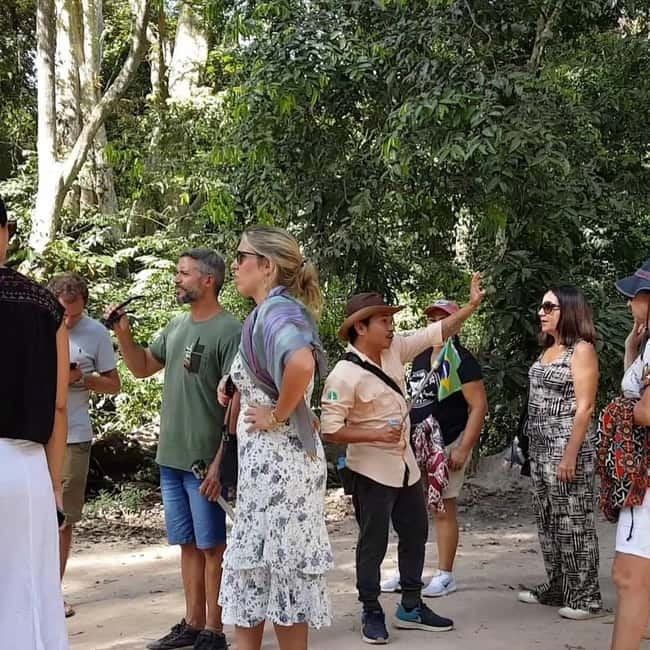
Book this tour if you want a private, guide-led introduction to Angkor and like the freedom to shape the second day around ruins, nature, or Tonlé Sap. The combination of Ta Prohm, Banteay Srei, Angkor Thom, Bayon, and Angkor Wat gives you a strong first look at the ancient sites.
I would skip it only if you want a slow, highly specialized temple study, or if the added entrance fees push the budget too far. The first day is full, and the second-day options can involve long transfers. For most people with only two days in Siem Reap, though, the plan offers a useful balance of famous monuments, lesser-restored ruins, nature, and modern Cambodian life.
FAQ
Is the Angkor entrance ticket included?
No. The Angkor Archaeological Park ticket costs $37 per person for one day and must be purchased separately. You can buy it at the ticket booth with your guide or online in advance.
What does the $365 price cover?
The price covers a private two-day tour for up to two people, a licensed guide, air-conditioned transport, hotel pickup and drop-off, the listed transfers, cold water, and cold towels. The Tonlé Sap boat ticket and local taxes are included when you choose the floating village option.
What extra fees should I expect?
Lunch and drinks are extra. Beng Mealea costs $10 per person, and Phnom Kulen National Park costs $20 per person. The Angkor pass costs $37 per person for one day.
What can I choose for Day 2?
You can choose Phnom Kulen with Beng Mealea, Phnom Kulen with a Tonlé Sap floating village, or Beng Mealea with a Tonlé Sap floating village.
Is a sunrise start available?
Yes. If selected at checkout, Day 1 starts at 5:00 AM and finishes around 3:30 PM. The regular schedule begins at 8:00 AM and finishes around 5:30 PM.
What clothing should I wear at the temples?
Wear clothing that covers your shoulders and knees. Shorts, short skirts, tank tops, and other revealing clothing are not permitted. Comfortable shoes, a hat, insect repellent, a camera, and cash are also recommended.
More 2-Day Experiences in Siem Reap
- Angkor 2-Day Sunset & Sunrise Small-Group Tour
★ 5.0 · 2,567 reviews - 2 Days Exclusive Temple Highlights with Sunset and Sunrise Tour
★ 5.0 · 1,157 reviews - Siem Reap: Angkor Sunrise 1- or 2-Day Guided Temples Tour
★ 4.9 · 1,132 reviews - 2 Days Guided Historical Tour in Angkor
★ 5.0 · 855 reviews
New around Siem Reap
- Siem Reap Temple and Waterfall 3-Day Tour★ 4.5 · 3 reviews
- Savor the Countryside: Tours with Authentic Cooking Classes”★ 5.0 · 3 reviews
- Siem Reap Private Tour: Angkor Wat Sunrise And Banteay Srei★ 5.0 · 3 reviews
- Siem Reap: Guided Day Trip to Local Village & Cooking Class★ 5.0 · 3 reviews
- Angkor Wat Sunrise TukTuk Tour★ 5.0 · 3 reviews
- Angkor Wat Sunset In Private and Small-In-Group★ 4.3 · 3 reviews
- Full Day to Banteay Srei, Kulen National Park and Beng Mealea★ 5.0 · 3 reviews
- Exclusive Angkor temples and Small group temples tours★ 5.0 · 3 reviews
Angkor Wat Tours, compared.
Angkor Wat Sunrise or Sunset Tour with Guide from Siem Reap
Read our review →
Angkor Wat: Small-Group Sunrise or Sunset Tour
Read our review →
Angkor Wat Sunrise tour with Small – Group and Guide tours
Read our review →
Angkor Wat Highlights and Sunrise Guided Tour from Siem Reap
Read our review →
Angkor Wat Sunset Small Group Tour with Lunch Included
Read our review →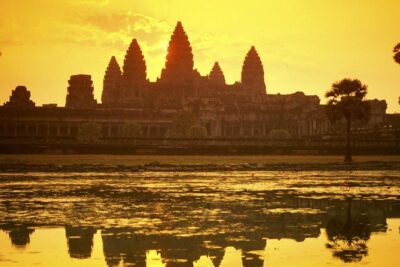
Full-Day Angkor Wat Sunrise Private Tour with Guide from Siem Reap
Read our review →
Angkor Wat Sunrise & 3 Main Temples with Breakfast – Small Group
Read our review →Browse the lists this tour appears in