
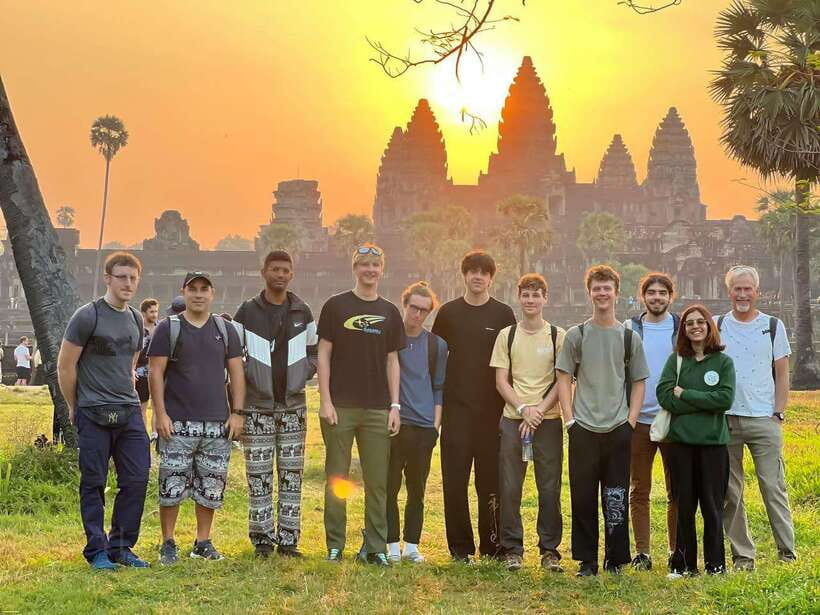
Reviewed · ANGKOR WAT TOURS
Siem Reap: Angkor Wat 2-Day Tour with Sunrise and Sunset
Angkor Wat at sunrise is the hook, but the real strength of this tour is the range. You get the famous temples on day one, then quieter ruins on day two, with guides such as Sary, Sam, Vone, and Pheap adding clear stories about religion, kings, and Khmer life. I especially like the air-conditioned minibus and the cold water and wet towels after hot temple walks. I also like the smart timing, which can place you a little ahead of larger groups at key stops.
The drawback is simple: these are long, hot days. Day one begins around 4:30 a.m., and day two runs from about 10:30 a.m. to 7 p.m. Lunch is not included, and the Angkor pass costs extra. The itinerary is also physically demanding, so it suits active visitors more than anyone who needs an easy-paced outing.
Key points at a glance
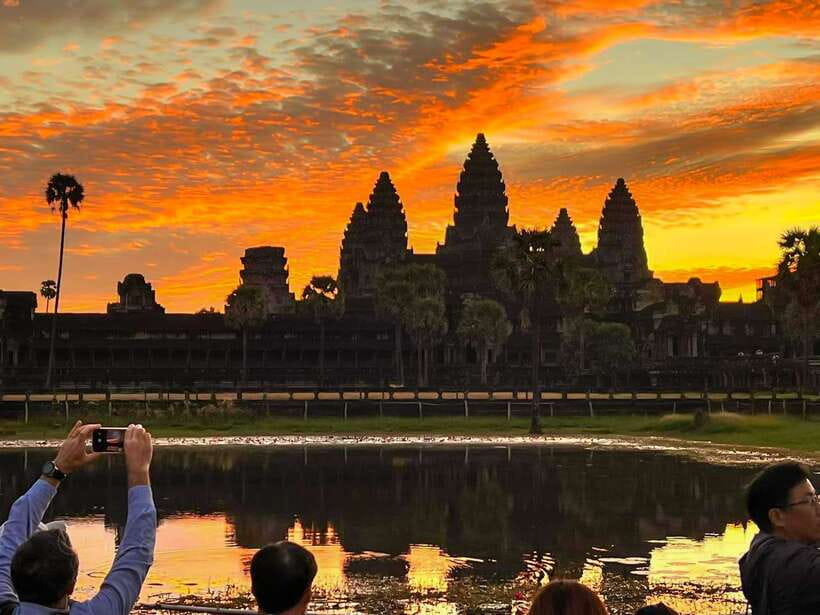
- Sunrise at Angkor Wat: Start before dawn for the classic reflection-pool view and cooler morning temple visits.
- Eleven temples in two days: Cover the major sights plus quieter, less familiar ruins on the outer circuit.
- Strong guide-led experience: Guides including Sam, Sary, Vone, Pheap, and Nick Kosal explain architecture, myths, dynasties, and photo locations.
- Comfort between ruins: Hotel pickup, an air-conditioned minibus, chilled bottled water, and refreshing wipe towels are included.
- Sunset finale: Finish the second day near Phnom Bakheng, where the hilltop setting and 33 towers bring a dramatic close.
- Good value at $34: The price covers two guided days and transport, but not the required temple pass or meals.
Why two days works better than one
Angkor is not a single temple. It is a huge archaeological park with monuments spread across a broad area, and the sites do not all feel alike. A one-day visit can cover Angkor Wat, Bayon, and Ta Prohm, but it often leaves little time for the temples that explain how the Khmer Empire developed.
This tour divides the experience into two useful moods. Day one handles the best-known monuments, beginning with Angkor Wat and continuing through Ta Prohm, Angkor Thom, Bayon, Ta Keo, and the South Gate. Day two moves through Preah Khan, Neak Pean, Ta Som, East Mebon, Pre Rup, and Phnom Bakheng.
That division matters. The first day gives you the iconic images you came to see. The second lets you slow down and notice the differences between a former city temple, a water shrine, an ancestor temple, and a hilltop monument.
You also get a practical advantage from using the three-day temple pass over two days. You can keep the third day open for rest, a return to a favorite temple, or a private tuk-tuk outing. The guide supplies the background first, so a later visit can be more personal and less confusing.
More Angkor Wat Tours in Siem Reap:
- Angkor Wat Sunrise or Sunset Tour with Guide from Siem Reap
★ 5.0 · 12,109 reviews - Siem Reap: Angkor Wat: Small-Group Sunrise or Sunset Tour
★ 5.0 · 9,444 reviews - Siem Reap: Full-Day Angkor Wat Guided Tour with Sunset
★ 4.9 · 3,803 reviews
Day one begins before dawn at Angkor Wat
Pickup starts early, around 4:30 a.m. You should be ready at your hotel at least 30 minutes before the stated start time, since the exact collection schedule can vary. The pre-dawn start is hard on sleep, but it gives you cooler air for the most demanding walking.
Angkor Wat is the obvious centerpiece. Built as a Hindu temple and later used as a Buddhist site, it is packed with carved galleries, towers, stairways, and scenes from religious stories. At sunrise, the dark outline of the towers changes slowly as the sky brightens behind them.
The sunrise itself is never guaranteed to be spectacular. Cloud, haze, and weather decide that. One useful lesson from the experience is not to judge the whole morning by the sky. Even a plain sunrise leaves you inside the temple complex early, before the heat becomes severe.
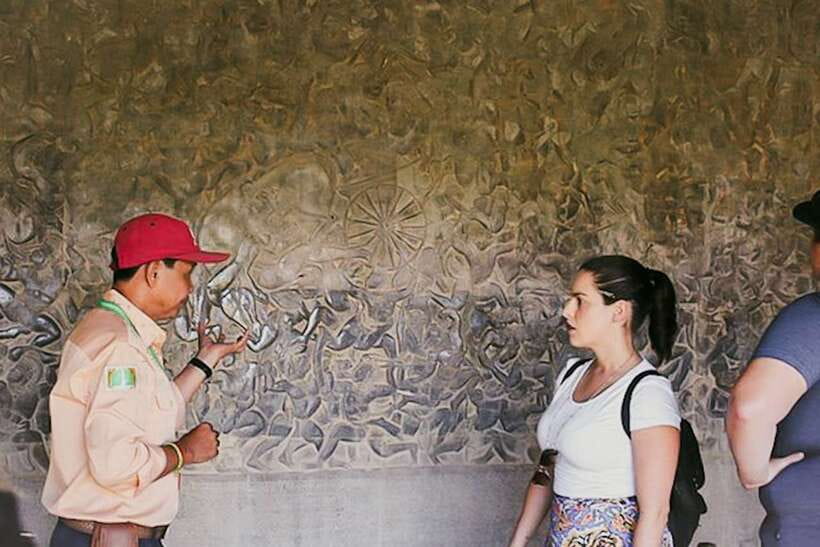
Your guide can also help you position yourself for photographs and explain what you are seeing instead of leaving you to stare at a wall of carvings. Guides such as Pheap and Sayon have been especially praised for finding good viewpoints, taking group photos, and explaining the religious ideas behind the art.
After sunrise, you explore Angkor Wat while the temperature is still manageable. Wear proper temple clothing: shorts, short skirts, and sleeveless shirts are not allowed. Comfortable clothes, sunscreen, sunglasses, and a charged smartphone are sensible essentials.
Ta Prohm gives the ruins a different mood
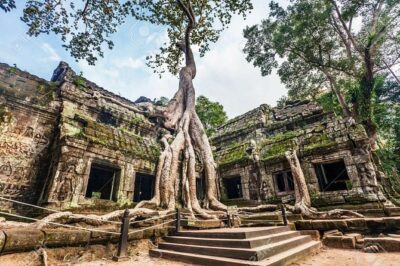
Ta Prohm is the temple most closely linked with the Tomb Raider film, but its appeal goes well beyond cinema. Trees grow through the stonework, roots twist across walls, and galleries open into courtyards where nature and architecture meet.
The site is visually striking, though it can also be crowded. The tour aims to reach it earlier than many other group excursions, which may help you find better angles and quieter corners. Your guide can point out carvings that are easy to miss while you are busy watching the roots.
The temple is also a good reminder that Angkor was not built as a set of isolated photo stops. Its halls, walls, and sculptures formed part of a larger religious and political world. A guide who explains that connection gives Ta Prohm more meaning than a quick walk through its most famous doorway.
Keep your expectations practical. You will walk over uneven ground and may need to negotiate steps. The combination of heat, stone paths, and an early start can catch up with you here, even if you felt fresh at Angkor Wat.
Bayon and Angkor Thom reveal the empire’s public face
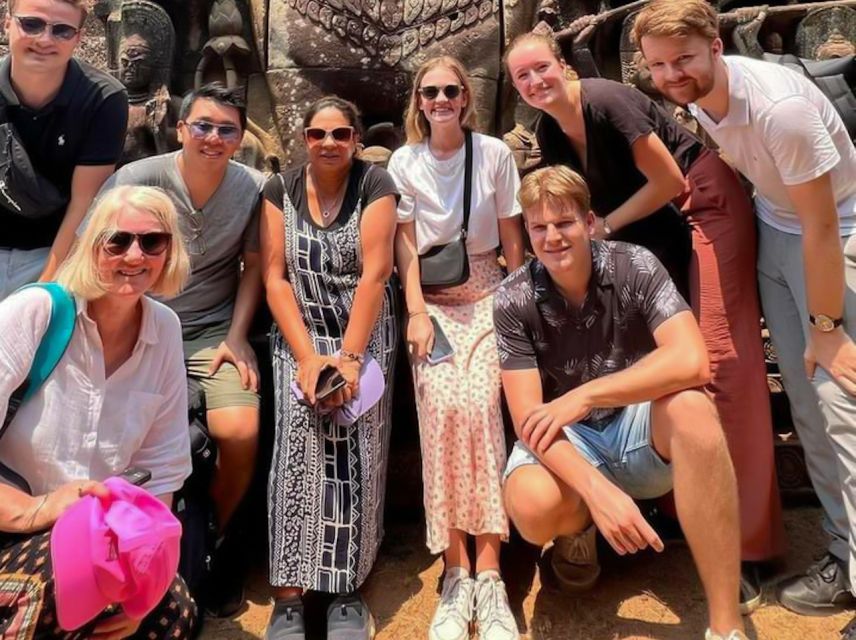
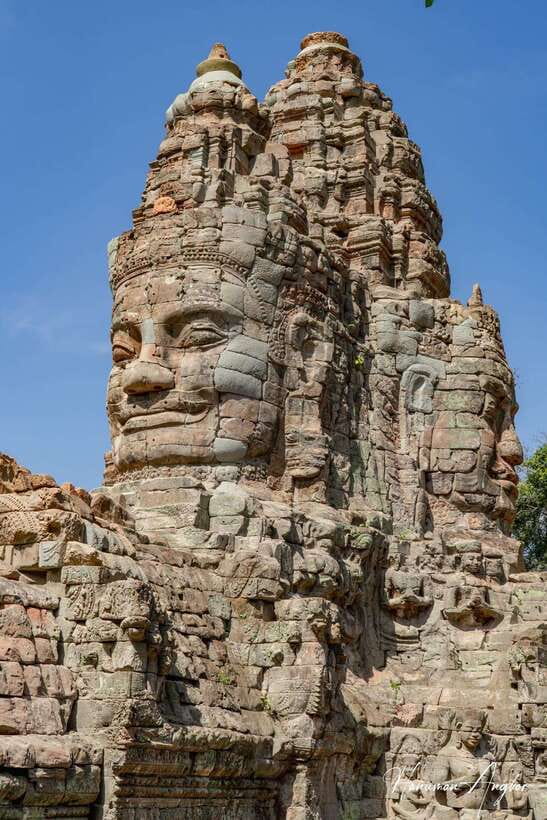
Bayon sits within Angkor Thom, the great walled city associated with King Jayavarman VII. Its most famous feature is the collection of enormous smiling faces carved into the towers. From different angles, the faces seem to watch over the temple.
Bayon is more confusing to explore than Angkor Wat. The towers, narrow passages, and changing levels can make it hard to understand the plan without help. This is where a good guide earns the day’s fee. Guides such as Sam, Nick Kosal, and Vone have been praised for explaining the symbolism without burying you under dates.
Bayon was built during the reign of Jayavarman VII and is notable as the only Buddhist state temple and the last major temple built during the Angkor Empire. That detail helps explain why its mood differs from the Hindu imagery at earlier sites.
The surrounding Angkor Thom area adds scale. You are not just visiting one monument, but moving through the former center of a powerful capital. Take time to look at the stone gateways and the layout of the old city before rushing on to the next temple.
More Sunset Tours in Siem Reap:
- Sunset tour of Kampong Phluk stilts home village on the Tonle Sap
★ 5.0 · 4,865 reviews - Angkor Wat Sunset Small Group Tour with Lunch Included
★ 5.0 · 3,059 reviews - Angkor 2-Day Sunset & Sunrise Small-Group Tour
★ 5.0 · 2,567 reviews - Siem Reap: Angkor Wat Sunrise or Sunset Guided Tour
★ 4.9 · 2,123 reviews
Ta Keo and the South Gate finish the first circuit
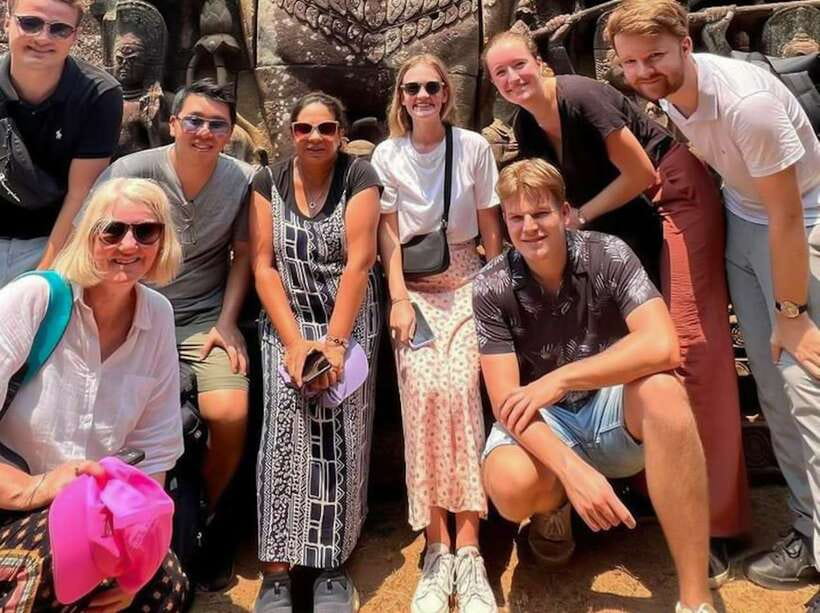
Ta Keo is a 10th-century mountain temple built in a steep, tiered style. You climb toward the upper levels, moving between broad stone steps and strong geometric lines. It lacks the tree-covered drama of Ta Prohm, but its height and simple mass make it a useful contrast.
The climb can be tiring, especially after several hours on foot. If your knees or feet are sensitive, tell your guide early. Several guides, including Heang, have been praised for allowing people to move at their own pace and helping them manage difficult steps.
The South Gate of Angkor Thom is the final listed stop for day one. A bridge lined with gods and demons crosses toward the gate, with two rows of figures holding the body of a seven-headed naga. It is one of the clearest visual expressions of the struggle between opposing forces in Khmer religious thought.
By the time you return around 1 p.m. or a little later, you may be ready for a shower and a nap. That early finish is useful. It gives you a real chance to recover before the second day, rather than forcing you through another afternoon of temples.
Day two trades famous names for quieter ruins
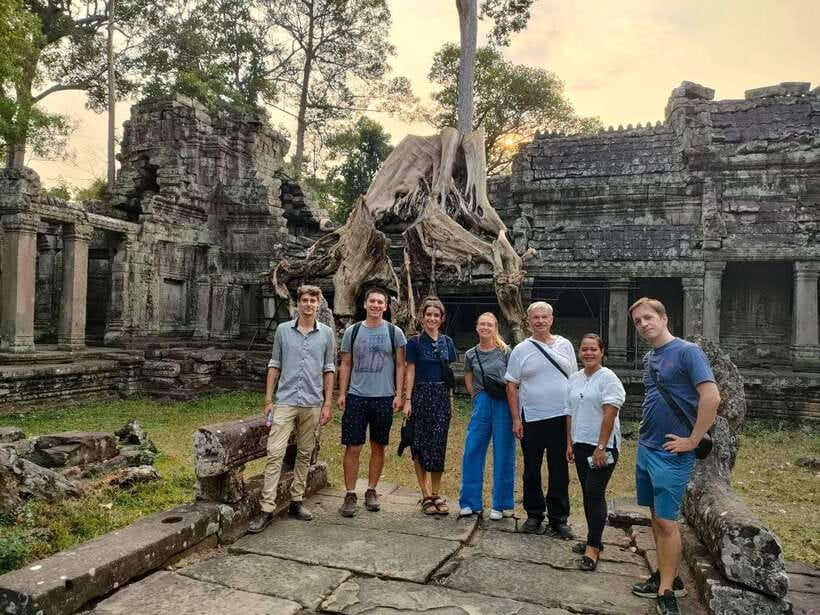
The second day begins later, at about 10:30 a.m., and runs until roughly 7 p.m. This is easier on your sleep but not necessarily easier on your body. The afternoon heat can be fierce, and the long circuit includes several stops with limited shade.
The reward is a different side of Angkor. After seeing the famous monuments, you can appreciate smaller details and less crowded spaces. Guides such as Sam, Pheap, and Pip are particularly useful here because the temples do not always explain themselves through one instantly recognizable feature.
Breaks for food and rest are part of the day. Meals are not included, so bring money and use the stops to eat and drink. Lunch timing can affect the pace, and a long meal may feel frustrating if you are eager to continue, but it also gives your feet and body a needed pause.
Preah Khan is a maze with a personal story
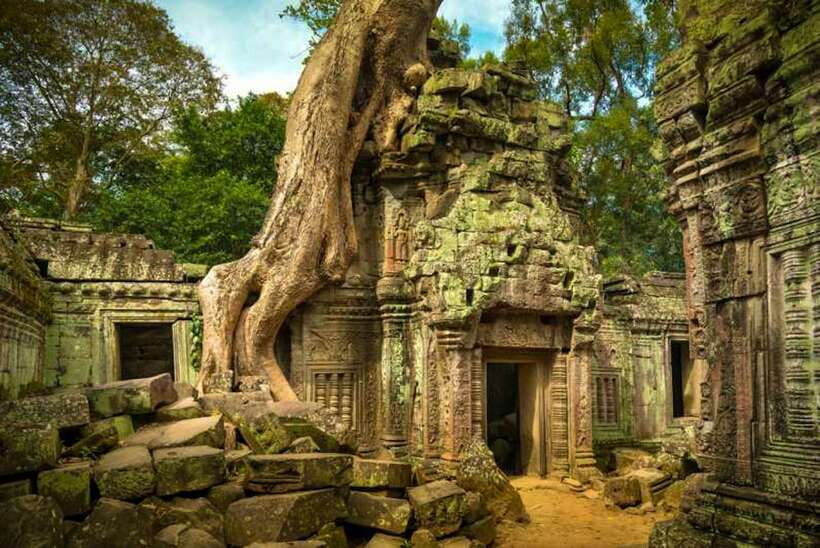
Preah Khan is described as the largest temple on this circuit. It was built by King Jayavarman VII for his father, giving the monument a personal as well as religious purpose.
Its corridors and courtyards can feel maze-like. You move through layers of stonework, carved figures, and partially restored spaces. The size helps you understand the scale of royal building projects, while the details reward a slower look.
This is a place where explanations about family, kingship, and faith make a difference. Without context, Preah Khan can seem like another set of ruins. With a guide, its purpose becomes easier to grasp.
Neak Pean turns water into sacred design
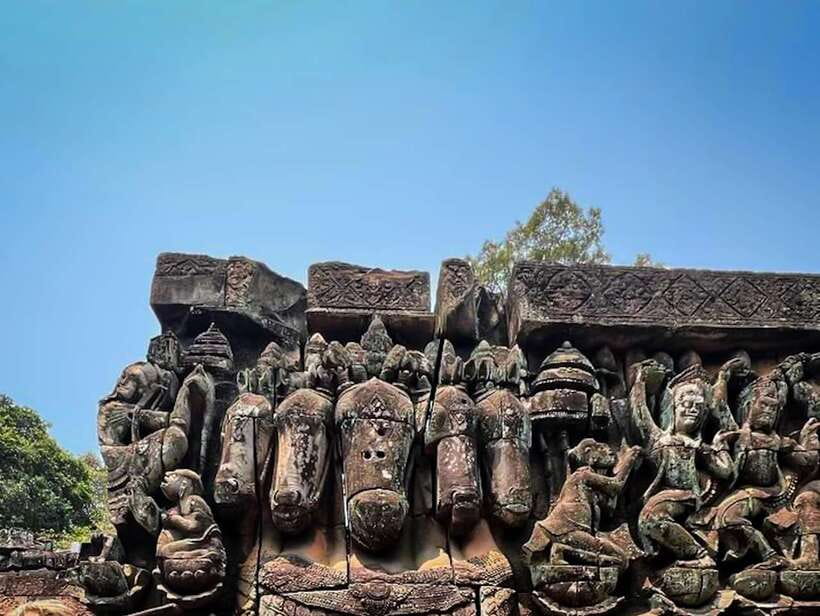
Neak Pean is a small island temple surrounded by water. During the Angkor period, the surrounding pools were used for bathing and health purposes.
The approach and the water give the site a calmer feel after the heavier stonework at Preah Khan. It is not the largest or most elaborate stop, so you should not expect another Angkor Wat. Its value lies in showing how water, healing, and religious design worked together.
The setting also provides a break from climbing. You still walk to the temple, but the stop is less about steep stairways and more about seeing the relationship between the structure and its pools.
Ta Som and East Mebon show two kinds of age
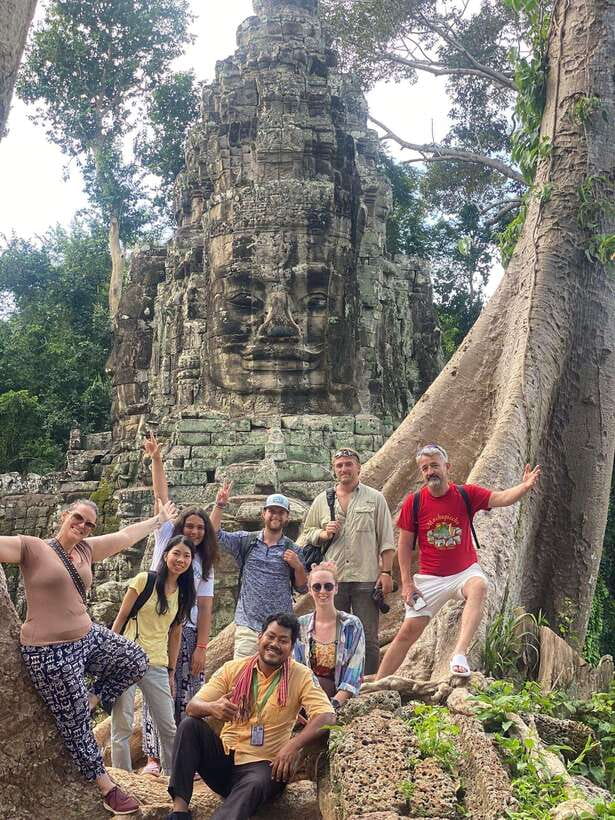
Ta Som is best known for the large tree over its east gate. The roots and stone make a memorable frame, but look beyond the gateway. The temple contains many sculptures of dancers with long hair and was built for the king’s sister.
That family connection gives Ta Som a human scale. Royal monuments were not only built for abstract religious reasons. They could also honor relatives and mark relationships within the ruling family.
East Mebon gives you another useful contrast. Built for the ancestors and dating as early as the 10th century, it once stood in the middle of a reservoir. The water is gone, but the original location helps explain why the temple feels designed as an island monument rather than simply a building on dry ground.
The two temples are close enough in the itinerary to make comparison easy. Ta Som feels intimate and partly reclaimed by trees. East Mebon feels more formal and exposed, with its earlier design and ancestor-centered purpose.
Pre Rup and Phnom Bakheng close the long day
Pre Rup was built by a king for himself. It is sometimes mistaken for a crematorium because one stone structure looks like a coffin, but that structure was used by Hindus for meditation during the full moon.
The temple’s name and appearance can encourage quick assumptions, so this is another stop where a guide’s explanation prevents confusion. You get a glimpse of how modern interpretations can drift away from the original purpose of a monument.
The final stop is Phnom Bakheng, a hilltop temple with 33 towers representing the heavens. The climb adds effort at the end of an already full day, and the site may not suit anyone uncomfortable with hills or steps.
The payoff is the sunset setting. The tour description allows for sunset on the second day, and the timing runs until about 7 p.m. Like sunrise, the quality depends on weather. Still, ending high above the surrounding area gives the two-day visit a fitting final image.
The guides are a major part of the value
The temples are impressive on their own, but the guide determines how much you take away. Names frequently associated with strong guiding on this experience include Sary, Sam, Vone, Pheap, Pip, Sok, Sayon, John, Heang, and Nick Kosal.
The best guiding style here is practical rather than academic. You want someone who can explain Khmer history, Hindu and Buddhist ideas, temple design, and local customs in clear English, then show you where to stand for a good photograph.
Pheap has been praised for combining humor, stories, historical context, and group photography. Sam is noted for explaining temple origins and religious background in a way that gives the second day more weight. Vone is particularly good for visitors who want both architectural detail and help with photographs.
The company assigns guides by day, so you may have different people on the two circuits. That can be a benefit. You get two perspectives, and the second guide may bring fresh energy after the first day’s major sights.
Transport, heat, clothing, and the real pace
Hotel pickup and drop-off are included, along with an air-conditioned minibus. That matters in Siem Reap. After walking through exposed courtyards and climbing stone steps, a cool vehicle is not a luxury. It is what makes the next temple possible.
Chilled bottled water and refreshing wipe towels are also provided at stops. These are small touches, but they have real value in Cambodia’s heat. Bring your own water as well if you drink heavily, and use every rest break rather than trying to push through.
The group can be private or small, depending on the option you choose. Small groups make it easier to hear the guide and to adjust the pace than a large coach tour. They do not turn the day into a private visit, though. The main temples can still be busy.
The clothing rules are strict for good reason. Wear comfortable, modest clothing that covers your shoulders and knees. Bring sunscreen, sunglasses, and a fully charged phone. Alcohol and drugs are not allowed.
The accessibility information needs careful attention. The activity is described as wheelchair accessible in one part of the booking details, but it is also marked as not suitable for wheelchair users and people over 70. Given the uneven paths, stairs, heat, and long walking days, you should confirm suitability directly before booking if mobility is a concern.
Is $34 good value for two days?
At $34 per person, the cost covers a surprising amount: two separate guided days, hotel transfers, an air-conditioned minibus, visits to 11 temples, English guiding, bottled water, wipe towels, and local tax.
You still pay separately for the Angkor Archaeological Park entry ticket and meals. The temple pass is essential, and you can buy it online through the official Angkor Enterprise website or at the ticket office after pickup. Since the tour uses a three-day pass over two days, you may also have a spare day for another visit, subject to the pass rules and your own plans.
The value is strongest if you want structure, transport, and historical explanation without arranging separate tuk-tuk rides. It is less attractive if you already have a driver, prefer to set your own pace, or want to spend a full day at only one temple.
Free cancellation up to 24 hours before the activity and reserve-now, pay-later booking terms make planning easier. Pickup details must be accurate, and you should be ready before the stated collection time.
Who should book this Angkor tour?
I would choose this tour if you are visiting Siem Reap for several days and want a solid introduction before exploring alone. It works well for first-time visitors, solo travelers who like joining a small group, couples, and families with older children who can manage the heat and walking.
It also suits people who want photographs but do not want to spend the day guessing where to stand. Several guides are good at finding viewpoints and taking group pictures, which saves time and keeps the party together.
I would think twice if you dislike early mornings, struggle with long walks, or prefer spontaneous stops. Two full temple days can feel intense, and the combination of sunrise, heat, steps, and afternoon fatigue is real.
Should you book it?
Book this tour if you want to see the main Angkor monuments plus a useful selection of quieter temples for a low upfront price. The guide explanations, cool transport, water, and two-part schedule make it a sensible choice for a first visit.
Skip it if you need a slow, highly flexible itinerary or if stairs and heat are serious concerns. For most active visitors, though, the plan is well judged: famous temples first, more reflective ruins second, and sunset at the end.
FAQ
How long is the Angkor tour?
The experience lasts two days. Day one runs approximately from 4:30 a.m. to 1 p.m., while day two runs approximately from 10:30 a.m. to 7 p.m.
Does the tour include sunrise at Angkor Wat?
Yes. Sunrise at Angkor Wat is included on the first day of the tour.
Is sunset included too?
The tour information includes sunset on the big tour on day two, with the day ending at about 7 p.m. Availability can depend on the scheduled option.
How many temples are visited?
The tour includes visits to 11 temples across the two days.
Which temples are visited on day one?
Day one includes Angkor Wat, Ta Prohm, Angkor Thom, Bayon, Ta Keo, and the South Gate of Angkor Thom.
Which temples are visited on day two?
Day two includes Preah Khan, Neak Pean, Ta Som, East Mebon, Pre Rup, and Phnom Bakheng.
Is the Angkor temple pass included?
No. You must buy the Angkor Archaeological Park entry ticket separately, either online through the government website or at the ticket office.
Are meals included?
No. Meals are not included, although the day includes occasional food and rest breaks.
What transport is provided?
Hotel pickup and drop-off are included, along with an air-conditioned minibus.
What language does the guide speak?
The live guide speaks English.
What should I bring?
Bring sunglasses, sunscreen, comfortable clothing, and a charged smartphone. You should also wear clothing that covers your shoulders and knees.
Can wheelchair users join?
The information is conflicting. The activity is marked wheelchair accessible in one place but also listed as unsuitable for wheelchair users. Because of the uneven paths, steps, heat, and long walking days, confirm directly before booking.
More early starts in Siem Reap
- Angkor Wat Sunrise tour with Small – Group and Guide tours
★ 5.0 · 3,655 reviews - Angkor Wat Highlights and Sunrise Guided Tour from Siem Reap
★ 5.0 · 3,213 reviews - Full-Day Angkor Wat Sunrise Private Tour with Guide from Siem Reap
★ 5.0 · 2,920 reviews - Angkor Wat Sunrise & 3 Main Temples with Breakfast – Small Group
★ 5.0 · 2,857 reviews
More things to do after dark in Siem Reap
- Siem Reap Floating Village Kampong Phluk Sunset with Boat
★ 5.0 · 1,962 reviews - Full-Day Guided Sunset Tour of Angkor Wat
★ 5.0 · 1,507 reviews - Kompong Phluk Floating Village Half-Day Tour ( Morning / Sunset )
★ 5.0 · 1,494 reviews - Siem Reap: Full Day Angkor Wat Temple Experience with Sunset
★ 4.9 · 1,490 reviews
New around Siem Reap
- Kulen Mountain With Ticket included Plus Banteay Srei Temple Tour★ 5.0 · 7 reviews
- 2 Days Angkor temples with Sunrise & Sunset★ 5.0 · 7 reviews
- Private Siem Reap Airport Transfer to hotel in town★ 5.0 · 7 reviews
- 1-Day private Angkor Temple Tour with Sun Rise by Tuk Tuk from Siem Reap★ 4.5 · 7 reviews
- War Museum, Killing Field, and APOPO Hero RATs Tour★ 5.0 · 7 reviews
- Siem Reap: Morning Cooking Class & Market Tour★ 5.0 · 7 reviews
- Kulen Mountain, Killing Fields and War Museum Tour★ 5.0 · 7 reviews
- Half-Day: Silk Farm, Senteur Angkor, and Satcha Workshop★ 4.6 · 7 reviews
Angkor Wat Tours, compared.
Angkor Wat Sunrise or Sunset Tour with Guide from Siem Reap
Read our review →
Angkor Wat: Small-Group Sunrise or Sunset Tour
Read our review →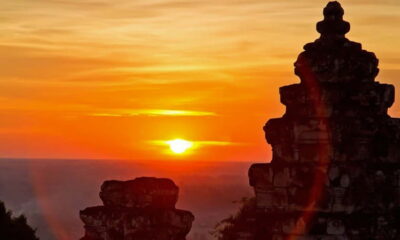
Angkor Wat Sunrise tour with Small – Group and Guide tours
Read our review →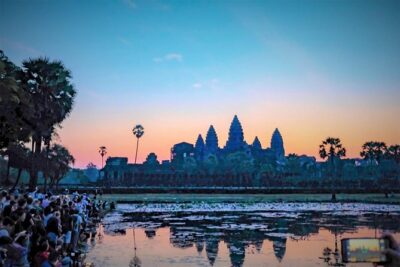
Angkor Wat Highlights and Sunrise Guided Tour from Siem Reap
Read our review →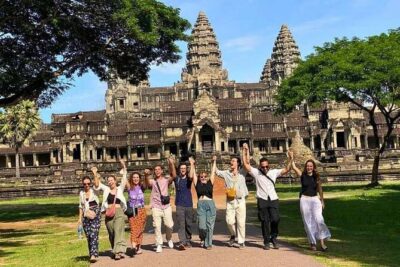
Angkor Wat Sunset Small Group Tour with Lunch Included
Read our review →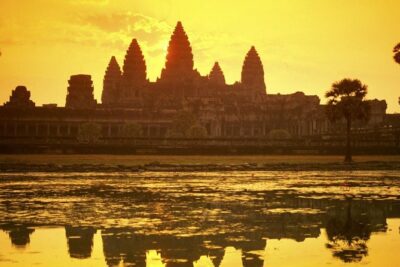
Full-Day Angkor Wat Sunrise Private Tour with Guide from Siem Reap
Read our review →
Angkor Wat Sunrise & 3 Main Temples with Breakfast – Small Group
Read our review →Browse the lists this tour appears in