
Reviewed · SIEM REAP TOURS
Angkor Cycling Tour
Angkor is far more rewarding when you slow down. This 35 km cycling tour uses forest tracks, old walls, quiet lanes, and the moat around Angkor Wat to connect the famous temples with the countryside between them. You get the big monuments, but also birds, butterflies, monkeys, and perhaps freshwater otters at Jayatataka Baray.
I like the 70 percent off-road route, which keeps much of the day away from busy roads and brings you close to the forest. I also like the patient, personal guiding style praised by Glaucia, Lars, and Michaela, especially for a tour that balances history with a bit of dirt-track adventure. The main consideration is the heat: 35 km over seven hours is manageable for a reasonably active rider, but it is still a full day under the Cambodian sun.
Key points
- Seventy percent off-road: Ride forest tracks, countryside paths, and single trails around Bakheng Hill and Angkor Thom.
- Seven hours and 35 km: This is a full-day outing with a medium difficulty rating and several temple walks.
- Major temples plus quieter stops: See Angkor Wat, Bayon, Ta Nie, and Ta Prohm in one carefully linked route.
- Wildlife at Jayatataka Baray: Pause for birdwatching, with possible sightings of cranes, egrets, kingfishers, monkeys, butterflies, and freshwater otters.
- Food and support included: Mountain bike, helmet, guide, lunch, water, snacks, first aid kit, spare parts, and tuk tuk transfers are provided.
- Temple pass extra: You need a valid Angkor temple pass, but it is not included in the $65 price.
Why a bicycle makes Angkor feel different
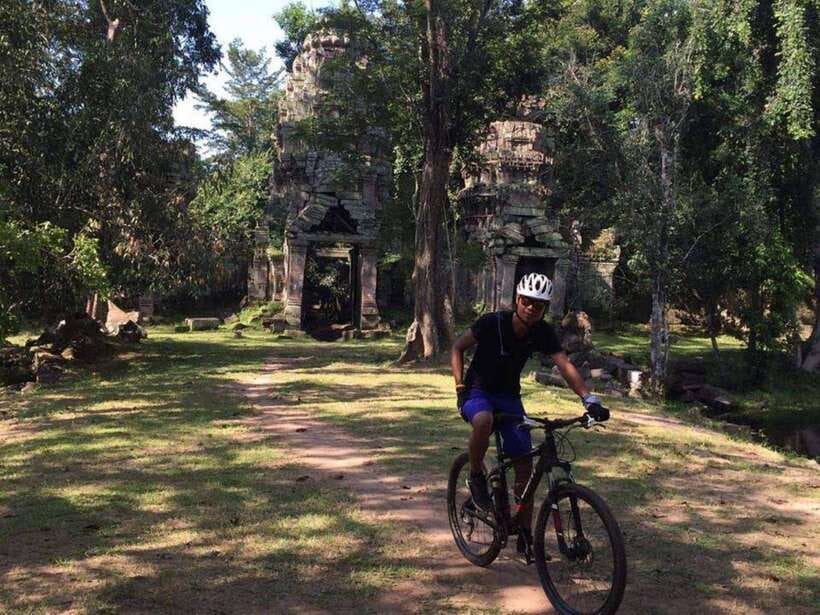
Most people see Angkor from a car or tuk tuk. That is efficient, but a bicycle gives you a better sense of the space between the temples. You hear the forest, feel the changing road surface, and notice how quickly the crowds thin once the route leaves the main circuit.
This is not a racing trip. The ride is rated medium, and one verified booking described most of the route as easy with only a few moderate sections. That sounds right for the format: the challenge comes less from steep climbs than from distance, heat, loose surfaces, and getting on and off the bike around the monuments.
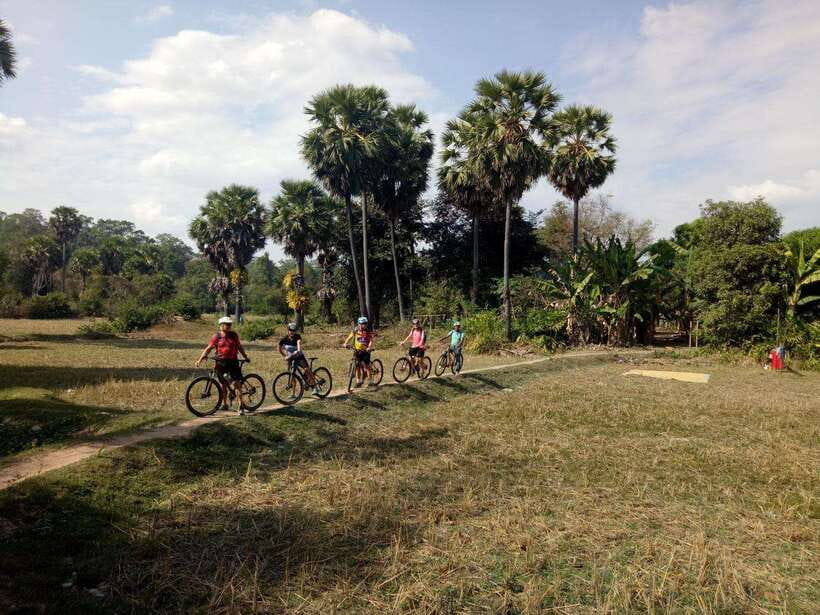
The route is split between roughly 30 percent paved roads and 70 percent off-road trails. You should expect a mixture of smooth cycling paths, jungle tracks, countryside routes, and narrow single trails. Some riders will find this the best part of the day. If you prefer a fully smooth ride, the rougher sections may feel tiring.
The $65 price is sensible for what is included. You receive a mountain bike in your size, helmet, guide, lunch, water, snacks, first aid support, spare bike parts, and free tuk tuk transfers. The Angkor temple pass is extra, so add that to your budget before comparing this tour with other ways to visit the temples.
More Bike Tours in Siem Reap
- Siem Reap Countryside Bike Tour / E-Bike or Tuk Tuk
★ 5.0 · 935 reviews - Angkor Sunrise Bike Tour / E-Bike or Tuk Tuk
★ 5.0 · 615 reviews - Siem Reap: Bike the Angkor Temples – Full-Day 30km Tour
★ 5.0 · 463 reviews
Starting from Siem Reap at 7:45 AM
Pickup is offered in Krong Siem Reap and includes hotel, apartment, and Airbnb lobby collection, normally about 15 minutes before the stated start time. Transport may be by tuk tuk or minivan, depending on the group size.
At the bike shop, the guide helps with a quick fitting before you set off. That small step matters. A properly adjusted saddle and a bike suited to your height make a long day much easier, so provide your height in centimeters when booking.
The ride heads toward Angkor Wat by way of the Siem Reap River, then enters the rainforest tracks of the Angkor complex. The early start is useful because it gives you cooler cycling conditions and gets you moving before the strongest heat of the afternoon.
You should wear closed-toe shoes and light, breathable clothing. Loose clothing is not allowed, and sunscreen and sunglasses are strongly recommended. Shorts are fine while riding, but bring spare clothing for the temple visits because modest dress is required at sacred sites.
Angkor Wat by bike and on foot
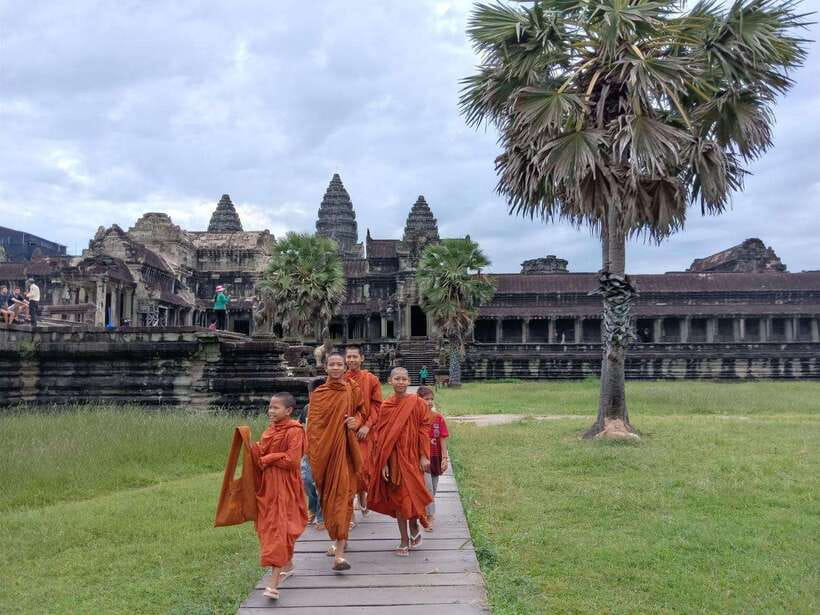
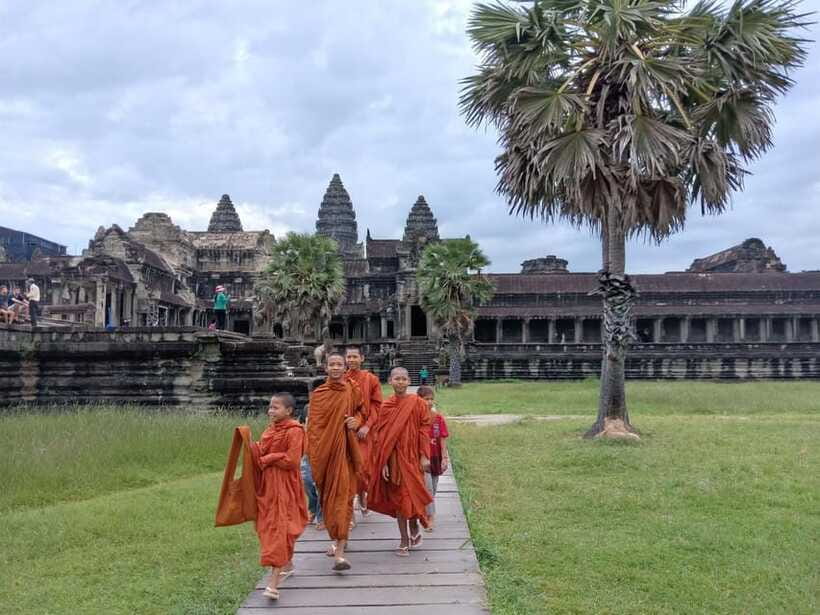
The first major stop is Angkor Wat, where you spend about two hours with the guide. The ride itself begins with the moat and surrounding paths, giving you a sense of the temple’s scale before you walk inside.
Angkor Wat rewards patience. Its galleries, towers, courtyards, and carved details are too much to absorb in a quick photo stop. Two hours gives you time to hear the main stories, see the important architectural features, and pause for photographs without turning the visit into a frantic checklist.
The bicycle is left behind while you explore on foot, so this is a good place to conserve energy. The guide is there to explain the temple rather than simply point out names. That personal approach was one of the strongest themes in the feedback, with specific praise for patience, good humor, and clear organization.
The drawback is that Angkor Wat can be the busiest stop of the day. Cycling helps you approach it in a quieter way, but it cannot remove the crowds inside the monument. Wear shoes that are comfortable for walking as well as riding.
Bakheng Hill, the South Gate, and Angkor Thom’s wall
After Angkor Wat, the route follows the moat and moves toward the forest trails near Bakheng Hill. This section is valuable because it gives you a break from the formal temple paths and takes you onto tracks that feel much more connected to the surrounding woodland.
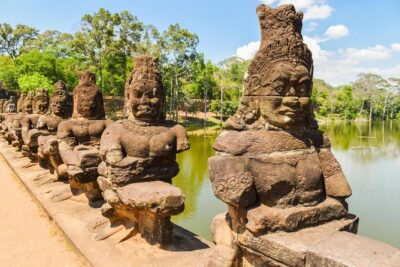
You then enter Angkor Thom through the South Gate. One of the unusual features of this tour is the chance to cycle along the ancient wall of the city. Riding above or along a historic fortification is more memorable than simply stopping at a gate for a picture, though you should follow the guide’s instructions carefully on any narrow or uneven section.
The wall leads toward the Ghost Gate, a quieter and more atmospheric entrance with plenty of room for stories and photographs. The name suggests a spooky stop, but the real appeal is its position away from the main flow of the Angkor circuit.
This part of the ride brings variety. You are not simply moving from one famous temple to the next. You are following old defensive lines, forest tracks, and routes through a former city that covered a huge area. That makes the cycling feel like part of the historical visit rather than just a way to get from one photo stop to another.
A completely different sort of day from the same base:
- Angkor Wat Sunrise or Sunset Tour with Guide from Siem Reap
★ 5.0 · 12,109 reviews - Siem Reap: Angkor Wat: Small-Group Sunrise or Sunset Tour
★ 5.0 · 9,444 reviews - From Siem Reap: Kampong Phluk Floating Village Tour by Boat
★ 4.9 · 6,979 reviews - Sunset tour of Kampong Phluk stilts home village on the Tonle Sap
★ 5.0 · 4,865 reviews
Bayon’s stone faces and lunch at Elephant Terrace
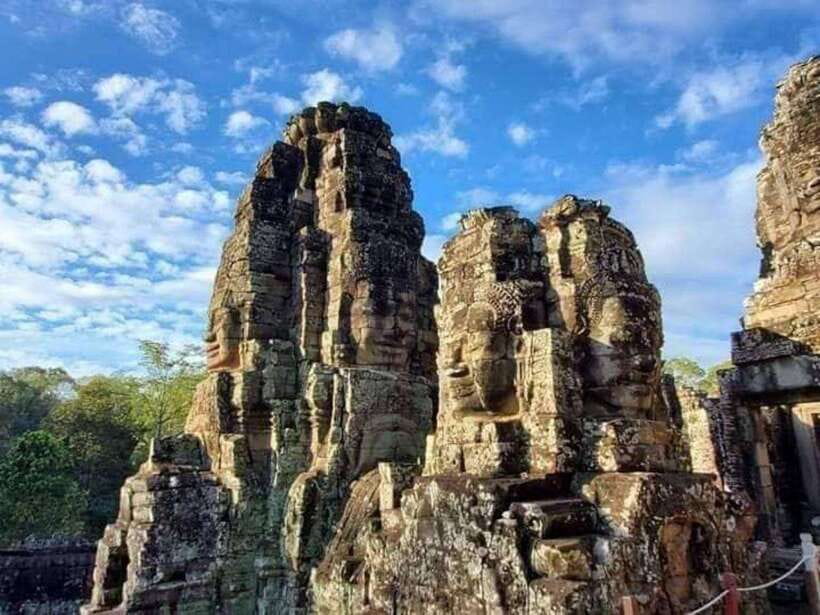
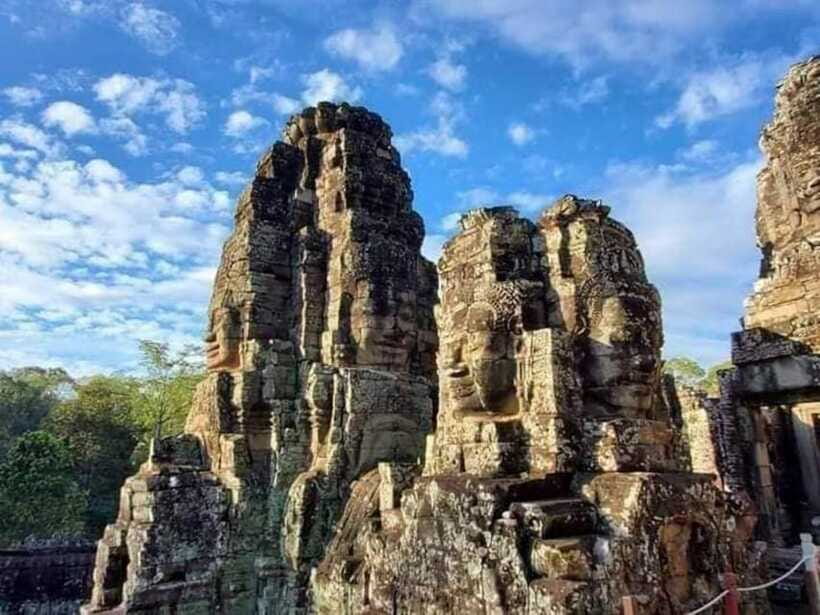
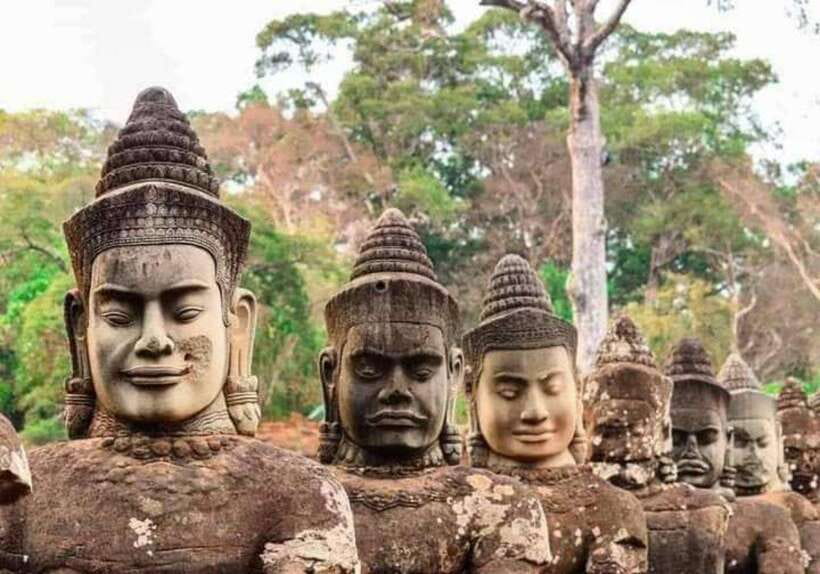
About one kilometer from the Ghost Gate, Bayon Temple appears with its famous stone faces. Their calm expressions are carved high above the temple, and they look different as you move through the towers and changing light.
Bayon is compact compared with Angkor Wat but can feel more confusing inside. The guide’s help is useful here, since the layout includes several levels, galleries, and towers packed into a relatively tight space. Allow time to look upward. The faces are easy to miss if you concentrate only on the lower carvings.
Lunch follows a short ride away at a local restaurant in front of the Elephant Terrace. The meal is included, along with a taste of Khmer specialties, water, snacks, and seasonal fruit. Eating near the terrace gives you a practical pause at roughly the right point in the day, when both hunger and heat begin to catch up.
The food stop is not presented as a luxury meal, and you should not book the ride expecting a long restaurant experience. Its value is convenience, local flavor, and the chance to refuel without leaving the Angkor area. Cold water and snacks are also provided at temple breaks, which is especially welcome on the off-road sections.
Ta Nie and the quieter side of Angkor
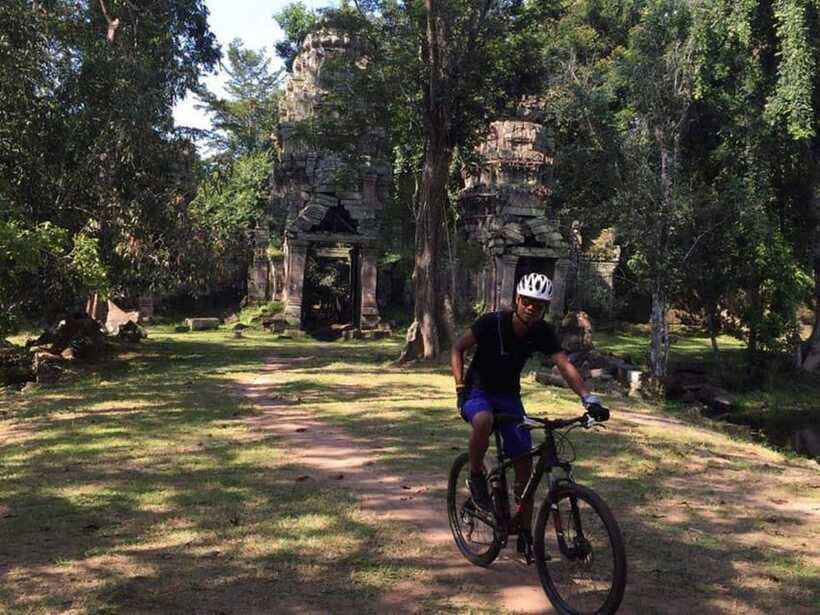
Ta Nie is one of the best reasons to choose this route instead of a standard temple circuit. It is a smaller sanctuary surrounded by forest, and the ride out to it uses trails that feel more remote than the paths around Angkor Wat and Bayon.
Here, the attraction is not one huge architectural feature. It is the combination of worn stone, trees, shade, and relative solitude. The temple offers a slower moment after the larger monuments, and the ride itself becomes part of the visit.
The route describes single tracks connected with the remains of the Angkorian civilization. Conditions can vary, so this is where sturdy shoes, a comfortable bike, and a willingness to handle uneven ground matter most. You do not need to be an expert cyclist, but you should be comfortable riding for several hours.
If you are mainly interested in famous structures and polished viewpoints, Ta Nie may feel modest. I see that as a strength for riders who want a more varied day. It gives the tour a sense of discovery without asking you to give up the major temples.
Birdwatching at Jayatataka Baray
The stop at Jayatataka Baray adds a welcome nature break. The baray, or reservoir area, is a place to slow down and look beyond the stones. Possible sightings include cranes, egrets, lesser whistling ducks, and bright kingfishers.
You might also see butterflies, monkeys, and freshwater otters playing in the river. Wildlife is never guaranteed, so think of this as a chance to observe rather than a formal animal-spotting excursion. Bring patience and keep your eyes moving around the water and trees.
This is one of the tour’s most appealing contrasts. You spend the morning among monumental architecture, then pause in a setting where birds and insects take over the scene. The experience becomes less about collecting temple names and more about seeing how nature and the old city now share the same space.
A peaceful tree nursery garden is also part of the photographic appeal. It offers shade and a gentler setting for a short rest. After several hours of cycling and walking, this kind of pause is not filler. It helps you stay comfortable for Ta Prohm and the final ride home.
Ta Prohm, where trees claim the stones
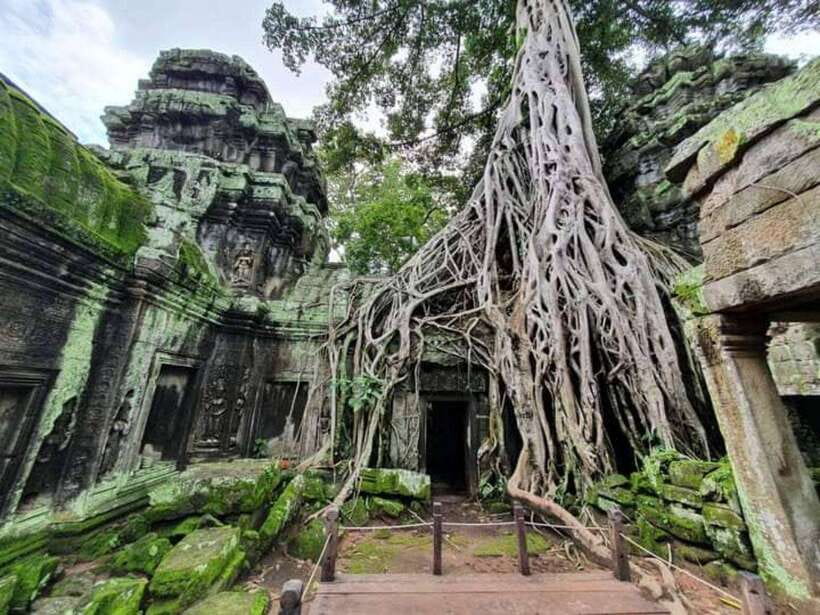
Ta Prohm is the final major temple, known worldwide for its huge roots wrapped around stone walls. It is often called the Tomb Raider temple, but the nickname should not overshadow the place itself. The drama comes from seeing a living forest pressing against an old sanctuary.
The timing works well. You reach Ta Prohm after the quieter forest stops, so the temple feels like a grand final chapter rather than just another item on a long list. The guide can help explain the site while you explore the courtyards and root-covered sections.
Ta Prohm is also where fatigue may become noticeable. You have already cycled a long distance, walked through several temples, and spent much of the day outdoors. Take the temple visit at a steady pace, drink water, and do not feel obliged to chase every viewpoint.
The site can be crowded, especially around the most famous trees. The cycling route reduces the amount of time spent on ordinary roads, but it does not guarantee empty temples. You are paying for a more active and varied way to reach the monuments, not a private after-hours visit.
The 12 km ride back to Siem Reap
The return covers about 12 km on winding single tracks and smoother bike lanes. After the monuments, this final section gives you a chance to settle into the rhythm of the ride and enjoy the change from forest to town.
For some riders, the return will be the most tiring part because the day has already included several temple walks. For others, it will feel relaxing, especially with the major sightseeing finished. The support vehicle and tuk tuk transfers provide useful backup, though the supplied details do not specify exactly when a rider may switch to transport.
The route ends in Siem Reap Province or Krong Siem Reap, with drop-off options in the city. The combination of cycling and transport support makes the outing easier to manage than a self-guided ride, where you would need to arrange bikes, directions, food, and mechanical help yourself.
Who should book this ride
I would choose this tour if you want Angkor to feel like a large outdoor setting rather than a string of monuments viewed from a vehicle. It suits active visitors who can handle a medium-level ride, enjoy uneven tracks, and like mixing history with birds, forest, and countryside.
It is also a good choice if you have already seen Angkor by tuk tuk and want a different angle. The route includes enough major sites to feel complete, but the off-road sections give the day a more personal pace.
The tour may not suit you if you dislike heat, have difficulty cycling 35 km, want a short temple visit, or prefer smooth paved routes. It is not suitable for pregnant women. Anyone uncertain about the physical demand should note that the ride is rated medium, not easy, even though much of the cycling may feel manageable.
English and Spanish-speaking guides are available. The strongest praise has focused on the guides being patient, accommodating, personal, and good at keeping the day organized. That matters here because the experience depends on more than bike rental. You are relying on the guide for route choices, temple context, pacing, and practical support.
Is the $65 price good value?
At $65 per person, the tour offers solid value if you intend to spend a full day at Angkor and would otherwise pay separately for transport, bike hire, food, drinks, and a guide. The mountain bike, helmet, lunch, snacks, water, spare parts, first aid kit, and tuk tuk transfers are all included.
The temple pass is the main extra cost. Since it is required and not part of the tour price, include it when planning your total budget. Personal expenses and travel insurance are also excluded.
I would not compare the $65 only with the price of a basic bicycle rental. That misses the point. You are paying for a planned route linking the main temples with less obvious tracks, plus a guide who handles the practical details. The value is strongest for someone who wants to see a lot without spending the day in a vehicle.
Free cancellation up to 24 hours before the tour and a reserve-now, pay-later option add useful flexibility. The activity lasts seven hours from activation, so keep most of the day open rather than scheduling another major outing afterward.
Practical details before you go
Bring closed-toe shoes, sunscreen, sunglasses, and extra clothing suitable for temple visits. You can wear shorts while cycling, but sacred sites require modest attire, so a spare layer is a smart addition.
Carry or accept plenty of water. Drinks and snacks are supplied, but cycling in Cambodian heat can be intense, and hydration affects both comfort and safety.
Give your height in centimeters when booking so the bike fitting can be done properly. Mountain bikes are available in all sizes, and helmets are included.
The guide can speak English or Spanish. Pickup is included from Siem Reap city accommodation lobbies, with transport by tuk tuk or minivan based on group size. A temple pass is essential, and you should have it ready before entering the Angkor complex.
Should you book the Angkor Cycling Tour?
Book it if you want a full, active day that links Angkor Wat, Bayon, Ta Nie, and Ta Prohm with forest tracks, ancient walls, and a wildlife stop. The mix is the real strength: you get the major monuments, but you also experience the spaces between them.
Skip it if you want a gentle sightseeing day, dislike off-road cycling, or are not comfortable riding in heat for several hours. For fit beginners and regular cyclists who want a slower, more personal way to see Angkor, the $65 package is a strong choice. The patient guiding, thoughtful route, included support, and quiet nature stops make it feel like more than a temple transfer with bicycles.
FAQ
How long is the Angkor Cycling Tour?
The tour lasts seven hours and covers approximately 35 km.
How difficult is the cycling?
The route is rated medium. About 30 percent is on paved roads and 70 percent is on off-road trails, including forest paths, countryside tracks, and single trails.
What temples does the tour visit?
The route includes Angkor Wat, Bayon Temple, Ta Nie Temple, and Ta Prohm. It also passes the Angkor Thom wall, Ghost Gate, Elephant Terrace, and the Angkor moat.
Is the Angkor temple pass included?
No. A temple pass is required, but it is not included in the $65 tour price.
What is included in the price?
The price includes a mountain bike, helmet, English or Spanish-speaking guide, lunch at a local restaurant, water, snacks, seasonal fruit, first aid support, spare bike parts, and free tuk tuk transfers.
What should I bring?
Bring closed-toe shoes, sunscreen, sunglasses, and spare clothing suitable for temple visits. Shorts are permitted during the cycling portion, but temple visits require modest clothing.
Is hotel pickup available?
Yes. Pickup is included from hotels, apartments, and Airbnb lobbies in Siem Reap city, usually about 15 minutes before the 7:45 AM start.
Can I cancel the booking?
Yes. You can cancel up to 24 hours in advance for a full refund. You can also reserve now and pay later.
New around Siem Reap
- Siem Reap Temple and Waterfall 3-Day Tour★ 4.5 · 3 reviews
- Siem Reap: Guided Day Trip to Local Village & Cooking Class★ 5.0 · 3 reviews
- Savor the Countryside: Tours with Authentic Cooking Classes”★ 5.0 · 3 reviews
- Siem Reap Private Tour: Angkor Wat Sunrise And Banteay Srei★ 5.0 · 3 reviews
- Angkor Wat Sunset In Private and Small-In-Group★ 4.3 · 3 reviews
- Angkor Wat Sunrise TukTuk Tour★ 5.0 · 3 reviews
- Angkor Wat: Highlights and Sunrise with Spanish Guide★ 4.8 · 3 reviews
- Full Day to Banteay Srei, Kulen National Park and Beng Mealea★ 5.0 · 3 reviews
Siem Reap Tours, compared.
Angkor Wat Sunrise or Sunset Tour with Guide from Siem Reap
Read our review →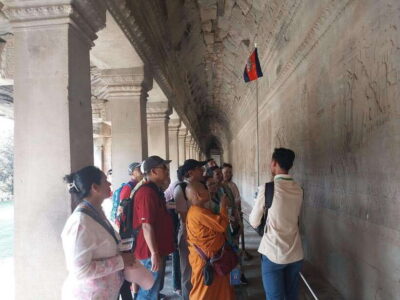
Angkor Wat: Small-Group Sunrise or Sunset Tour
Read our review →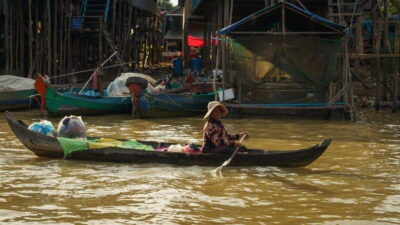
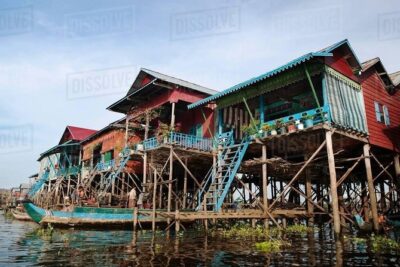
Sunset tour of Kampong Phluk stilts home village on the Tonle Sap
Read our review →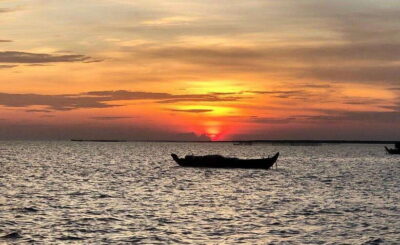
Kampong Phluk Floating Village Tour with Boat
Read our review →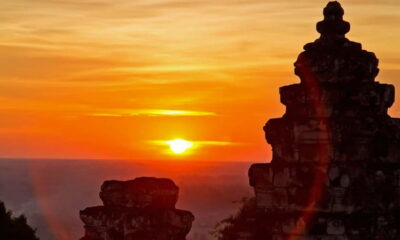
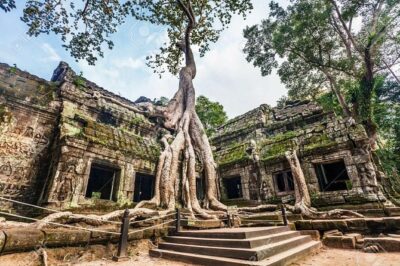
Angkor Wat Sunrise tour with Small – Group and Guide tours
Read our review →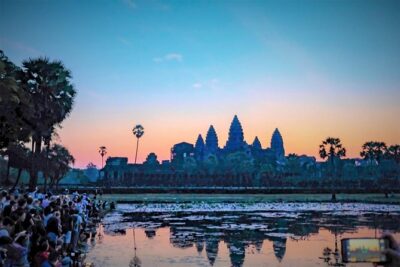
Angkor Wat Highlights and Sunrise Guided Tour from Siem Reap
Read our review →Browse the lists this tour appears in