
Reviewed · SIEM REAP TOURS
Siem Reap Temple and Waterfall 3-Day Tour
Angkor Wat is only the beginning here. This three-day private tour links the great temples with Kulen Waterfall, a pink sandstone shrine, a floating village, and quieter sites that are easy to miss without your own transport.
I like the flexible private setup, plus the carefully timed sunrise and sunset visits. I also like the range: Bayon’s giant stone faces, Ta Prohm’s tree-covered ruins, Banteay Srei’s fine carvings, and Tonlé Sap all feel different.
The main drawback is cost control. The $171.50 price does not include temple tickets, lunch, or accommodation, and the days start early. You will need modest clothing, a little stamina, and room in your budget for entrance fees.
Key points to know before booking
- Three private touring days: Your group travels by air-conditioned car, van, or minibus with hotel pickup and drop-off in Siem Reap.
- Sunrise and sunset included: Day three begins around 5:00 am at Angkor Wat, while day one ends with sunset at Phnom Bakheng or Pre Rup.
- A broad temple mix: The route covers Angkor Thom, Bayon, Baphoun, Phimeanakas, Angkor Wat, Ta Prohm, Preah Khan, Neak Pean, Ta Som, Pre Rup, and Banteay Srei.
- Kulen adds a change of pace: See the River of 1000 Lingas, a large reclining Buddha, and a waterfall outside the main Angkor zone.
- Tonlé Sap is part of the plan: The floating village and floating market give the trip a look at life beyond temple walls.
- Extra costs matter: Temple admission, food, and personal spending are not included in the tour price.
Why a private car makes sense around Siem Reap
Siem Reap’s major sights spread across a large area. Angkor Thom and Angkor Wat sit near town, but Banteay Srei and Phnom Kulen take you much farther out, while Tonlé Sap lies in another direction.
Without public transport, arranging these trips yourself can mean hiring separate rides and working out the order of each stop. Here, you have one vehicle, one pickup plan, and one guide for three days. That saves time and keeps the focus on the temples rather than on negotiating transport.
The tour is private, so only your own party joins the activity. That suits families, couples, and small groups who want to pause for photographs or take a longer break without keeping pace with strangers.
You travel in an air-conditioned car, van, or minibus. Cool water and towels are included, which matters in Cambodia’s heat. The schedule still asks a lot of you, though. Day three begins at 5:00 am, and all three days involve walking around exposed stone sites.
The tour price is $171.50 per person. I see the value mainly in the private transport and the wide route, not in bundled admissions or meals. Since tickets and lunch are separate, compare the final cost with your own transport plans before booking.
More Waterfall Tours in Siem Reap:
- Kulen Waterfall Join-in Tour (local Picnic lunch)
★ 5.0 · 2,434 reviews - Phnom Kulen Waterfall & the Sacred 1000 Lingas (with Lunch)
★ 4.8 · 974 reviews - Guided Small-Group Tour in Kulen Mountain Park Waterfall
★ 5.0 · 480 reviews
Day one: Bayon faces, Angkor Wat, and evening light
The first day begins at 8:00 am at the South Gate of Angkor Thom. This is a strong opening because Angkor Thom gives you several major sights in one walled city, rather than sending you straight to the most famous temple.
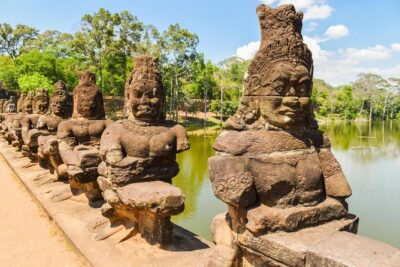
At the South Gate, look for the long rows of figures holding the body of the serpent. The entrance leads into the former Khmer capital, where the scale becomes clear before you even reach the temples.
Bayon Temple and its stone faces
Bayon was built in the late 12th century as a Buddhist state temple dedicated to the bodhisattva Avalokitesvara. Its most memorable feature is the collection of huge smiling faces carved into the towers.
The faces appear from different angles as you move through the narrow passages. This is not a temple you understand from one viewpoint, so stay close to your guide and take time to look upward and around corners.
Bayon also has reliefs showing daily life and warfare, including battles with the Champa Kingdom. These carvings are useful because they show more than royal ceremony. You can look for market scenes, boats, processions, and the practical details of Khmer life.
Baphoun and Phimeanakas
After leaving Bayon through the north side, the route continues to Baphoun. This pyramid-shaped temple rises on a long approach, giving it a different feel from Bayon’s crowded towers and enclosed corridors.
Phimeanakas follows nearby, next to the former Royal swimming pool. It is a quieter part of Angkor Thom’s central area, and the setting helps you picture the old royal complex as a functioning city rather than a collection of isolated ruins.
Lunch comes in the Angkor Park, followed by a rest. Lunch is not included, so bring money for the meal. The planned pause is welcome, particularly on a hot day, but do not expect the first day to feel light. You will already have spent hours walking on uneven temple surfaces.
A few more Siem Reap half-days to weigh up
- From Siem Reap: Angkor Wat and Floating Village 3-Day Trip
★ 5.0 · 100 reviews - 3-Day Angkor Wat with All Interesting Major Temples, Banteay Srei & Beng Mealea
★ 5.0 · 70 reviews - 3-Day Angkor Wat & All Interesting Major Temples & Kulen Mount Waterfall
★ 5.0 · 63 reviews - 3 Days Siem Reap Explorer – Small Group
★ 5.0 · 50 reviews
Angkor Wat in the afternoon
The afternoon centers on Angkor Wat, Cambodia’s best-known monument and the largest site on this route. Visiting after lunch lets you see its long causeway, galleries, towers, and carved walls without squeezing the entire complex into the early morning.
The temple was first built as a Hindu monument and later used as a Buddhist site. Your guide can help connect the architecture with the religious change, while the reliefs give the building a sense of story and movement.
The final stop is sunset at Phnom Bakheng or Pre Rup. The exact choice matters. Phnom Bakheng is known for its high position, while Pre Rup is a large brick temple with a broad upper level and warm evening color.
The plan allows either site, so ask your guide which one is scheduled and what the walking conditions will be like. Sunset times can bring a large crowd, and the value of the stop is strongest if you enjoy the light and views rather than expecting a quiet temple.
Day two: Phnom Kulen, pink sandstone, and Tonlé Sap
Day two begins at 8:00 am and leaves the central Angkor area. The drive toward Phnom Kulen passes Khmer communities and rural views, giving you a look at everyday life outside Siem Reap’s temple circuit.
This day is important because it changes the rhythm. Instead of spending every hour among monumental ruins, you see a sacred hill, a waterfall, a small-scale temple, and a floating village.
Phnom Kulen and the River of 1000 Lingas
Phnom Kulen is described as the first major shrine and city connected with the birth of the Khmer Empire. Its importance is religious and historical, but the setting also gives the day a more natural feel.
The site includes the River of 1000 Lingas, a large reclining Buddha image, and a waterfall. The combination makes Kulen more varied than a standard temple visit. You can move from carved riverbed details to a large religious image and then to the water itself.
You should expect a long day because Kulen is outside the main temple park. The tour includes transport, which is the real advantage here. Reaching the hill independently requires extra planning, and fitting it beside Banteay Srei and Tonlé Sap would be awkward without a driver.
The waterfall is also a good reason to pack light cotton clothing and sensible footwear. The tour instructions stress Cambodia’s heat and humidity. November, December, and January are identified as the most pleasant months, while the other months may feel much hotter and wetter.
Banteay Srei, the small temple with fine detail
After lunch and a short rest, the route continues to Banteay Srei. This temple is smaller than Angkor Wat or Angkor Thom, but its pink sandstone and precise carvings make it one of the most distinctive stops.
The name is often associated with women, and the site is widely admired for its detailed Khmer art. Here, I would slow down rather than hurry through for photographs. Small carvings reward close viewing, especially around the doorways and lintels.
Banteay Srei sits away from the central Angkor temples, so the private vehicle again saves time. The tradeoff is that you spend part of the afternoon on the road. If you prefer a short list of major monuments, that may feel inefficient. If you want variety, it is one of the strongest choices on the three-day plan.
Tonlé Sap floating village and market
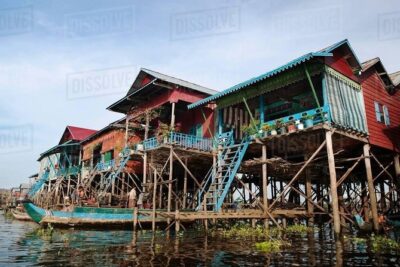
The final stop is Tonlé Sap, with a floating village and floating market. This brings you into contact with a different side of Cambodia, shaped by the lake rather than by royal temple building.
The tour description does not specify which floating village you will visit or how long the boat portion lasts, so treat this as a planned regional experience rather than a tightly defined attraction. Your guide can explain what you are seeing on the day.
Tonlé Sap is worth including because it prevents the trip from becoming three days of stone corridors. At the same time, conditions at a floating village can vary with water levels and timing. Keep your expectations practical and see it as a chance to understand local life on the lake.
Day three: Angkor Wat sunrise and the Grand Circuit
The final day begins around 5:00 am at your hotel. The goal is sunrise at Angkor Wat, followed by breakfast at a local restaurant.
This early start is the tour’s biggest scheduling challenge, but it is also one of its most memorable moments. The temple silhouette and reflecting pool are closely tied to the classic Angkor view. Bring patience, because sunrise is popular and the best spots can fill quickly.
Breakfast is not included. Since you will have already been awake for hours, plan to pay for food at the local restaurant and carry water. Cool water is supplied by the tour, but it is still wise to keep drinking throughout the morning.
Ta Prohm before the large crowds
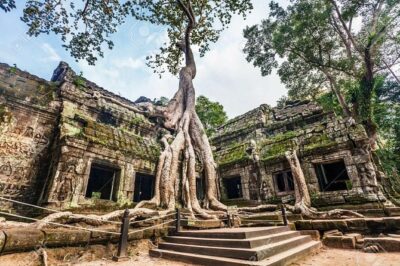
After breakfast, the route goes to Ta Prohm, the temple associated with the Tomb Raider film. The attraction is not only its movie connection. Ta Prohm shows what happens when trees, roots, stone, and time share the same space.
Roots wrap around walls and doorways, creating some of Angkor’s most recognizable photographs. The site can feel tight in places, so an early visit is useful. The schedule aims to reach Ta Prohm before the biggest crowds arrive.
You should still expect uneven ground and narrow paths. Wear footwear that can handle old stone surfaces, and avoid clothing that restricts movement. The temple dress rule requires covered shoulders and knees.
Preah Khan, Neak Pean, and Ta Som
A short drive along the Grand Circuit leads to Preah Khan. It is described as the largest ancestor temple built by a Buddhist king in honor of his father. The long layout gives you a sense of scale, while the mix of courtyards and galleries rewards a slower walk.
Neak Pean comes next. This temple sits in the middle of a reservoir and is linked with a holy pool. Its island setting makes it unlike the enclosed temples earlier in the tour, though the experience depends on water levels and access conditions.
Ta Som sits by another reservoir and is a smaller, more compact stop. It can feel easier to take in after the larger sites. The sequence of Preah Khan, Neak Pean, and Ta Som is well judged because the day moves from a large complex to smaller, more focused places.
Pre Rup as the final temple
The last stop is Pre Rup, a 10th-century royal state temple and one of the area’s major brick sanctuaries. Its warm brick towers give it a different color and texture from the gray stone of Bayon and Ta Prohm.
Ending at Pre Rup also connects to the sunset plan mentioned for day one. The temple is a fitting final look at Angkor’s changing design, from earlier brick construction to later Buddhist monuments.
The third day covers a lot. If you like a full schedule, it gives you an excellent spread of temples. If you need long breaks or have young children, the 5:00 am start followed by several more sites may feel tiring. One family group included a four-year-old child and found the private format helpful, but the early hour still deserves serious thought.
Guides, transport, and the human side of the tour
The named guides connected with this experience include Boy, Young, and Makara. Young is described as professional, kind, playful, and good with a group that included five adults and a four-year-old. Makara is also noted for taking photographs, which may be useful if you want group shots without relying on a stranger.
Boy and the driver Chantha are also singled out by name in the tour correspondence. You may not receive a particular guide, so confirm names after booking if that matters to you. The important point is the personal format: your guide can adjust the pace and help with temple details in a way a large bus group usually cannot.
The driver handles the long transfers between Siem Reap, Kulen, Banteay Srei, and Tonlé Sap. Air conditioning is essential in this climate, not a luxury. Cool towels are a small but useful touch after a walk through hot courtyards.
Dress rules, tickets, and the real price
Temple clothing rules are strict enough to plan around. Wear light cotton clothing with shoulders covered and shorts or skirts that reach the knees. Tank tops, scarves, and shawls are not accepted, so do not rely on throwing a loose cover-up over unsuitable clothing.
The tour price excludes entrance fees. The supplied ticket information lists the temple ticket at $37 per person for a single day. Since this is a three-day program, ask the provider how the required admission applies to your dates and which ticket product you need.
Lunch is also excluded on all days, as are personal expenses and accommodation. The $171.50 price therefore works best for you if you value private transport and a guide, especially for the remote stops. A solo visitor may find the cost harder to justify, while a couple or small group can spread the private vehicle cost across several people.
Group discounts are available. Confirmation is received at booking, and free cancellation applies if you cancel at least 24 hours before the start time. Changes or cancellations inside that window are not accepted for a refund.
Who should book these three days?
I would choose this tour if you want the major Angkor temples but also want Phnom Kulen and Tonlé Sap without arranging separate transport. It suits first-time visitors who prefer a ready-made route and families who value having a private vehicle.
It is also a good fit for photographers. Sunrise at Angkor Wat, sunset at Phnom Bakheng or Pre Rup, pink sandstone at Banteay Srei, and tree roots at Ta Prohm provide plenty of visual variety. A guide such as Makara may also help with group photographs.
I would hesitate if you want a slow, unstructured holiday. The schedule begins early, includes long drives, and keeps adding sites even after you have seen several major temples. The excluded tickets and meals also mean the advertised price is not the full trip cost.
Should you book the Siem Reap Temple and Waterfall Tour?
Book it if your priority is coverage, private transport, and a guide who can connect Angkor’s famous monuments with less central places. The route is broad, the sunrise timing is useful, and Kulen Waterfall gives the three days a needed change of pace.
Think twice if you dislike early mornings, hot walks, or tightly planned sightseeing. Before paying, confirm the temple ticket arrangement, your pickup time, the sunset temple, and the specific guide assigned to your group. For a small party that wants a practical way to see Siem Reap beyond Angkor Wat, this is a strong-value plan once those extra costs are added.
FAQ
What is included in the Siem Reap three-day tour?
The tour includes pickup and drop-off in Siem Reap, transport by air-conditioned car, van, or minibus, cool water, and cool towels. A private guide is provided for your group.
Are temple entrance fees included?
No. Entry fees and tickets are excluded. The provided information lists a temple ticket at $37 per person for one day.
Are meals included?
No. Lunch is not included, and breakfast after the Angkor Wat sunrise is also at your own expense.
What time does the tour start?
The first two days start at 8:00 am. Day three starts at about 5:00 am for sunrise at Angkor Wat.
What should I wear to the temples?
Wear light cotton clothing in the heat, with shoulders covered and shorts or skirts reaching the knees. Tank tops, scarves, and shawls are not allowed.
Can I cancel for a full refund?
Yes, if you cancel at least 24 hours before the experience start time. Cancellations or changes made less than 24 hours before the start are not accepted for a refund.
New around Siem Reap
- Savor the Countryside: Tours with Authentic Cooking Classes”★ 5.0 · 3 reviews
- Siem Reap Private Tour: Angkor Wat Sunrise And Banteay Srei★ 5.0 · 3 reviews
- Siem Reap: Guided Day Trip to Local Village & Cooking Class★ 5.0 · 3 reviews
- Angkor Wat Sunset In Private and Small-In-Group★ 4.3 · 3 reviews
- Angkor Wat Sunrise TukTuk Tour★ 5.0 · 3 reviews
- Full Day to Banteay Srei, Kulen National Park and Beng Mealea★ 5.0 · 3 reviews
- Exclusive Angkor temples and Small group temples tours★ 5.0 · 3 reviews
- Angkor Wat: Highlights and Sunrise with Spanish Guide★ 4.8 · 3 reviews
Siem Reap Tours, compared.
Angkor Wat Sunrise or Sunset Tour with Guide from Siem Reap
Read our review →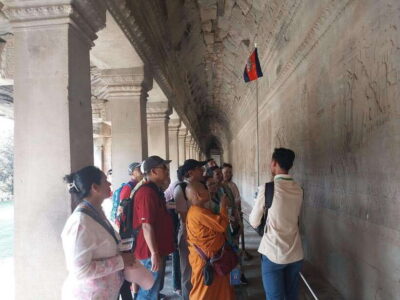
Angkor Wat: Small-Group Sunrise or Sunset Tour
Read our review →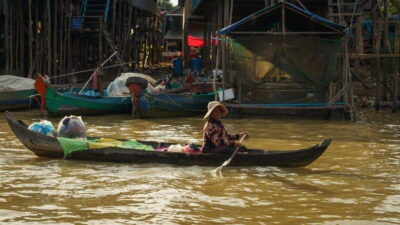
Sunset tour of Kampong Phluk stilts home village on the Tonle Sap
Read our review →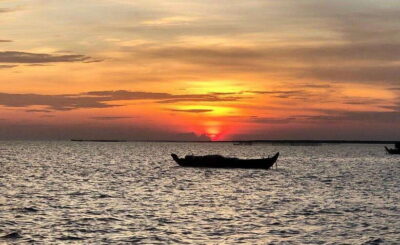
Kampong Phluk Floating Village Tour with Boat
Read our review →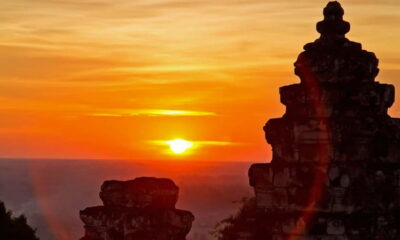
Angkor Wat Sunrise tour with Small – Group and Guide tours
Read our review →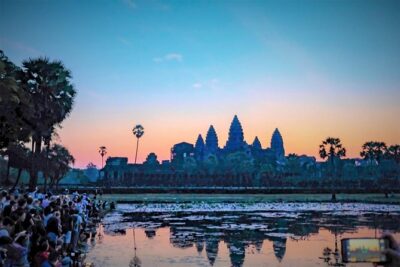
Angkor Wat Highlights and Sunrise Guided Tour from Siem Reap
Read our review →Browse the lists this tour appears in