

Reviewed · SIEM REAP TOURS
War Museum, Killing Field, and APOPO Hero RATs Tour
Siem Reap is more than Angkor Wat, and this half-day tour gives you a clear look at Cambodia’s recent past, present-day recovery, and living craft traditions. The most unusual stop is APOPO’s HeroRATs, where specially trained African giant pouched rats show how they help detect landmines.
I like the way the tour joins two very different experiences: the sobering War Museum and Wat Thmey memorial, followed by the hopeful work of APOPO. I also like the practical setup, with private transport, hotel pickup, an English-speaking guide, and admission included. The main drawback is that the day covers heavy subjects in a short time, and lunch is not included despite the tour description’s mention of local street food.
Key points to know before booking

- HeroRATs are the tour’s most unusual stop: See how trained rats help locate landmines and support safer communities.
- The War Museum is a serious visit: Expect rusting military equipment and difficult reminders of Cambodia’s wartime years.
- Wat Thmey adds a quiet memorial stop: The small Buddhist pagoda site honors victims of the Khmer Rouge period.
- Private touring keeps the pace flexible: Only your group takes part, with hotel pickup and drop-off in an air-conditioned vehicle.
- Satcha brings the focus to living culture: Learn how Cambodian artisans are trained and supported through long-term programs.
- Budget for your own meal: The price covers listed entrance fees, but lunch is excluded.
A half-day look at Cambodia beyond the temples
The tour costs $75 per person and lasts about five hours. That is not a low-cost outing, but the price includes a private vehicle, hotel pickup and return, an English-speaking guide, and admission to the War Museum, Wat Thmey, and APOPO Visitor Center.
For you, the value depends on what you want from Siem Reap. If your plans already focus on Angkor’s temples, this tour adds modern Cambodian history and a local social mission. If you only want grand monuments and scenic photo stops, the first half may feel heavy.
The schedule is also useful for a short stay. You can see five different places without arranging separate tuk-tuks, taxis, and entrance payments. The private format means your group is not combined with strangers, which should make it easier to ask questions or pause briefly at a difficult memorial.
The tour description refers to local street food, but the listed stops do not include a specific food tasting stop. Lunch is clearly not included. Ask the operator how food fits into your chosen departure before booking, and plan to pay for any meal yourself.
More Museums in Siem Reap
- Bantey Srei, Kbal Spean and Landmine museum Private Tuk-Tuk
★ 4.7 · 30 reviews - Siem Reap City Tour with War Museum and Killing Field
★ 5.0 · 27 reviews - Private Tour: HERO Rats & Angkor National Museum
★ 4.5 · 16 reviews
War Museum Cambodia: military objects and difficult questions
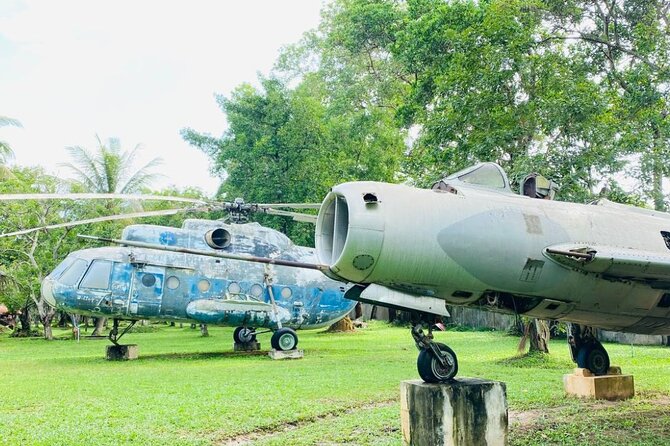
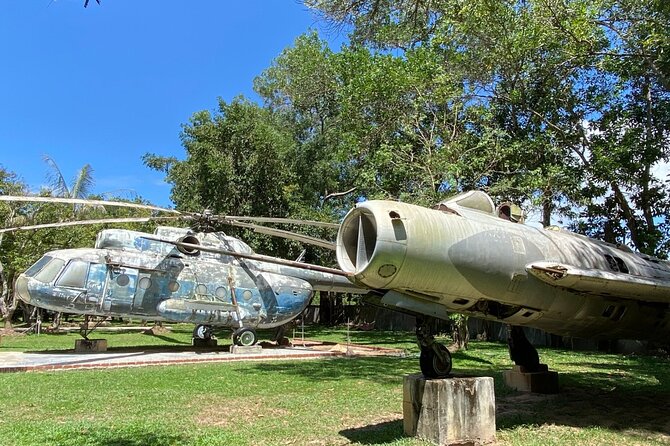
Your first major stop is the War Museum Cambodia, located on National Road 6 between central Siem Reap and the international airport. The site covers more than two hectares and was founded in 2001. You have about one hour and 30 minutes here, with admission included.
The museum presents Cambodia’s wartime story through military equipment and outdoor displays. The rusting condition of some items is part of the atmosphere. This is not a polished military museum built around shiny vehicles and neat timelines. The objects feel exposed to the tropical air, and that gives the visit a rough, direct quality.
Your guide matters here. A good explanation can connect the equipment to Cambodia’s decades of conflict and help you understand why landmines remain such an important issue. Guides Somra and Londgy are specifically praised for making the historical material clear and memorable, so you can request one of them when arranging the tour if available. Availability is not guaranteed, but it is a useful question to ask.
The museum can be difficult for children, especially younger ones. A family with a 12-year-old found the experience educational and moving, but the tone is serious. If you are traveling with children, explain beforehand that the visit deals with war, injury, and Cambodia’s painful past.
The long time allocation is welcome. You are not rushed through in 20 minutes, but you should still expect an outdoor visit with limited comfort compared with a modern indoor museum. Wear practical clothing and shoes, and bring water. The tour vehicle is air-conditioned, which gives you a break between stops.
Wat Thmey: a quiet memorial in a working pagoda
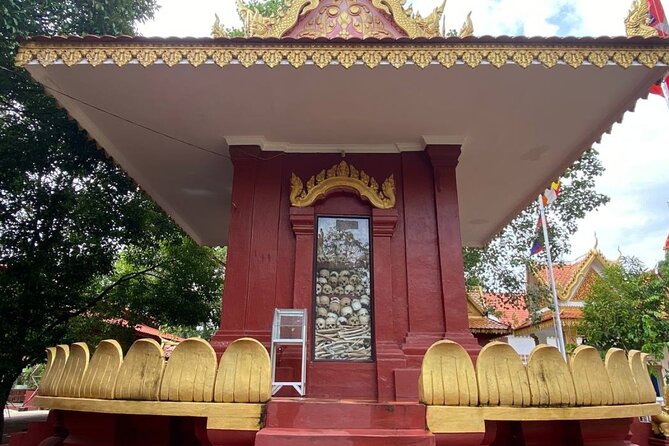
Wat Thmey, also called the Killing Fields memorial site in Siem Reap, receives about 40 minutes. It is a small but important memorial within the grounds of a functioning Buddhist pagoda. The site honors people killed during the Khmer Rouge regime.
This stop is quieter than the War Museum. Instead of military displays, you encounter a memorial setting tied to a living religious place. That combination matters. Cambodia’s past is not separated from daily life here. A pagoda can serve worshippers while also holding a place of remembrance.
Your guide can provide the historical background, but allow the site itself some silence. Forty minutes is enough for a respectful visit, though not enough for a full study of the Khmer Rouge period. I would treat this as one part of your education, not as a complete account of Cambodia’s modern history.
The phrase Killing Fields can sound like a large, isolated memorial complex, but Wat Thmey is a small site in Siem Reap. Keep your expectations in line with that scale. Its value comes from the chance to pause and reflect, not from a long list of exhibits.
Because the subject is painful, this may be the most emotionally demanding part of the tour. The schedule’s switch from Wat Thmey to APOPO is well judged, since the next stop offers a practical example of work that saves lives today.
APOPO HeroRATs: an unusual lesson in saving lives
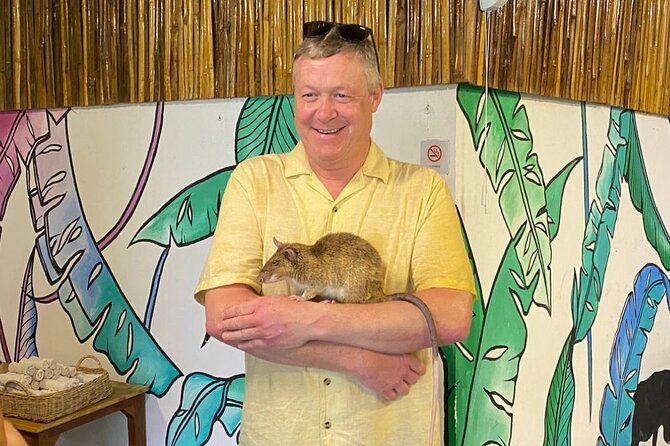
The APOPO Visitor Center is scheduled for one hour, and this is likely to be the most distinctive part of your day. APOPO trains African giant pouched rats, known as HeroRATs, to detect landmines. Their work is connected to one of Cambodia’s most serious long-term problems.
The visit is educational rather than a standard animal attraction. You learn how the rats are trained and see a demonstration of their ability to locate landmine scents. The idea may sound strange at first, but the rats are suited to the task because they are light enough not to trigger mines and can be trained to respond to specific smells.
The center gives the tour a sense of forward movement. The War Museum and Wat Thmey explain the damage caused by conflict. APOPO shows one way people are working to reduce the danger left behind. That contrast gives the day a clear shape without pretending that Cambodia’s problems are solved.
You may have the option to pet the rats, but it is not required. If you are uneasy around rodents, you can still learn from the presentation without handling one. This makes the stop workable for families and for anyone who wants the educational side but not the hands-on element.
The HeroRAT demonstration is also a good reason to keep this tour in your plans even if you have limited interest in military history. It is a rare chance to see an inventive, life-saving program in action. Ask your guide to explain how the work relates to Cambodia and to APOPO’s work in other countries, since the organization operates in Cambodia and six other countries.
A completely different sort of day from the same base:
- Angkor Wat Sunrise or Sunset Tour with Guide from Siem Reap
★ 5.0 · 12,109 reviews - Siem Reap: Angkor Wat: Small-Group Sunrise or Sunset Tour
★ 5.0 · 9,444 reviews - From Siem Reap: Kampong Phluk Floating Village Tour by Boat
★ 4.9 · 6,979 reviews - Sunset tour of Kampong Phluk stilts home village on the Tonle Sap
★ 5.0 · 4,865 reviews
Satcha: Cambodian craft with a practical purpose

Satcha, at #256 BBU Road, is Cambodia’s first handicraft incubation center. It opened in March 2023 and gives the tour a different focus after the memorial and museum visits. You have about 40 minutes here.
Satcha supports local artisans through intensive, multi-year training programs. This is more than a quick shop stop. You can look at Cambodian handicrafts while learning how makers are trained, how skills are passed on, and how an organization helps local craft businesses develop.
The word incubation suggests long-term support rather than a one-time sales opportunity. That matters if you want to buy souvenirs with a clearer connection to Cambodian makers. Still, the tour information does not specify which crafts are displayed, what products are for sale, or how much shopping time you will have.
Forty minutes is enough for an introduction, but it may feel brief if you want to browse carefully or buy gifts. If shopping is important to you, ask whether the guide can allow extra time or explain the best way to make purchases. The purpose of Satcha is not simply to fill a gap in the schedule. It helps connect Cambodia’s past with its present by showing people building livelihoods through craft.
Royal Residence: a short look at Siem Reap’s royal setting
The final listed stop is the Royal Residence, scheduled for 30 minutes. The villa was built in 1904 and serves as the official residence of the King of Cambodia when he visits Siem Reap. It also has links to the period of the French protectorate.
The short visit makes sense as an exterior or brief orientation stop, since no separate entrance fee is listed for the Royal Residence. The tour information does not promise access to the interior, so do not book this experience expecting a full palace tour.
Instead, use the stop to place Siem Reap within Cambodia’s royal and colonial-era story. After spending the morning with war memorials and contemporary craft work, the residence adds another layer to the city’s identity.
Thirty minutes is enough for a quick look and explanation, but it is not a major attraction on the scale of Angkor Wat. I would see it as a compact final stop rather than the main reason to choose the tour.
Why the private format matters

This is described as a private activity, so only your own group takes part. That format is helpful for a tour with sensitive subjects. You can ask the guide to explain a point again, take a little more time at Wat Thmey, or keep moving if a particular display feels too difficult.
Hotel pickup and drop-off are included, as is an air-conditioned vehicle. Siem Reap can be hot, and five hours of road travel and outdoor sightseeing would be tiring without a cool vehicle between stops.
An English-speaking guide is included. The strongest part of the experience will depend on how the guide handles Cambodia’s history. Somra and Londgy are named as guides who made a particularly strong impression through clear explanations and passion for the subject. If you have a preference, ask at booking.
The tour is listed as suitable for most people and near public transportation, but no detailed accessibility information is provided. If you use a wheelchair, have limited mobility, or need specific vehicle arrangements, contact Angkor Daily Trip before paying.
Who should book this Siem Reap tour?
I would recommend it to you if you want more than temple architecture. It suits first-time visitors who need a compact introduction to Cambodia’s recent past, families with older children, and anyone interested in humanitarian work.
It is also a sensible choice if you have already visited Angkor and want a different side of Siem Reap. The combination of war artifacts, a Khmer Rouge memorial, landmine detection, Cambodian crafts, and a royal residence gives you a much broader picture of the city.
You should think twice if you are seeking a light, relaxed sightseeing morning. The War Museum and Wat Thmey deal with painful subjects, and the experience can leave you thoughtful rather than cheerful. The APOPO visit brings hope, but it does not erase the weight of the earlier stops.
The food promise also needs clarification. You may be interested in Siem Reap street food, but lunch is excluded and no specific food stop appears among the scheduled visits. Treat food as an optional extra unless the operator confirms otherwise.
Price, timing, and cancellation advice
At $75 per person, the tour is priced above a basic tuk-tuk outing, but the comparison is not quite fair. You are paying for a private, air-conditioned vehicle, hotel transfers, an English-speaking guide, and three listed entrance fees.
The five-hour schedule is compact but full. The War Museum receives the most time, while Wat Thmey, Satcha, and the Royal Residence are shorter visits. APOPO receives a full hour, which is appropriate for a demonstration and explanation.
Confirmation is provided at booking. Free cancellation is available if you cancel at least 24 hours before the start time. Cancellations or changes made less than 24 hours in advance are not accepted for a refund, and the cut-off uses local Cambodian time.
My call: book it for context, not just sightseeing
Book this tour if you want a thoughtful half-day that explains why Cambodia’s recent past still matters and how people are addressing its effects today. The HeroRATs are the unusual draw, while the guide and private transport make the serious museum and memorial visits easier to handle.
I especially like the balance between remembrance and practical hope. Just confirm the food arrangements, ask about your preferred guide, and prepare children for the difficult subject matter. If that sounds right for your trip, $75 buys a useful and varied introduction to Siem Reap beyond the temples.
FAQ
How long does the tour last?
The tour lasts approximately five hours.
Is hotel pickup included?
Yes. Hotel pickup and drop-off are included.
Is this a private tour?
Yes. Only your group participates in the activity.
Is an English-speaking guide included?
Yes. An English-speaking tour guide is included. Guides named in the available information include Somra and Londgy.
Which entrance fees are included?
Admission to the Siem Reap War Museum, Wat Thmey Killing Field, and APOPO Visitor Center is included.
Is lunch included?
No. Lunch is not included.
Can I see the APOPO HeroRATs in action?
Yes. The APOPO Visitor Center includes an educational experience about trained African giant pouched rats and their landmine detection work.
Do I have to pet the rats?
No. Petting the rats is optional.
Is the Royal Residence included in the tour?
Yes. The Royal Residence is a scheduled stop lasting about 30 minutes. The available information does not specify interior access or a separate admission fee.
Can I cancel for a full refund?
Yes, if you cancel at least 24 hours before the experience start time. Cancellations or changes made less than 24 hours before the start time are not accepted for a refund.
New around Siem Reap
- Kulen Mountain With Ticket included Plus Banteay Srei Temple Tour★ 5.0 · 7 reviews
- 2 Days Angkor temples with Sunrise & Sunset★ 5.0 · 7 reviews
- Private Siem Reap Airport Transfer to hotel in town★ 5.0 · 7 reviews
- 1-Day private Angkor Temple Tour with Sun Rise by Tuk Tuk from Siem Reap★ 4.5 · 7 reviews
- Siem Reap: Morning Cooking Class & Market Tour★ 5.0 · 7 reviews
- Kulen Mountain, Killing Fields and War Museum Tour★ 5.0 · 7 reviews
- Half-Day: Silk Farm, Senteur Angkor, and Satcha Workshop★ 4.6 · 7 reviews
- Angkor Explorer by Cambodiajeep★ 5.0 · 7 reviews
Siem Reap Tours, compared.
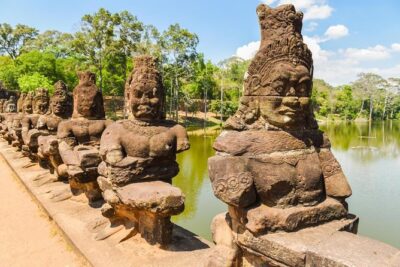
Angkor Wat Sunrise or Sunset Tour with Guide from Siem Reap
Read our review →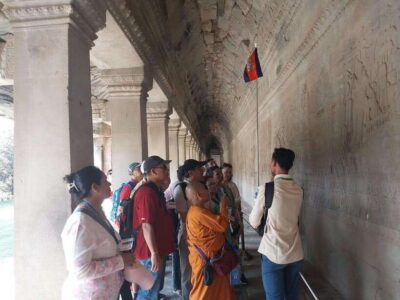
Angkor Wat: Small-Group Sunrise or Sunset Tour
Read our review →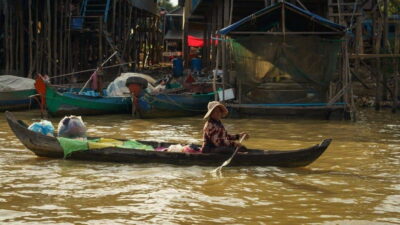
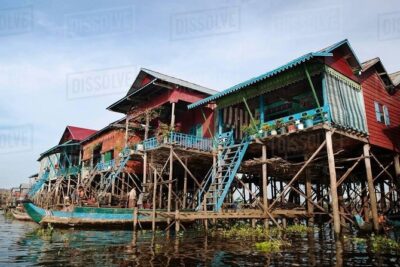
Sunset tour of Kampong Phluk stilts home village on the Tonle Sap
Read our review →
Kampong Phluk Floating Village Tour with Boat
Read our review →

Angkor Wat Sunrise tour with Small – Group and Guide tours
Read our review →
Angkor Wat Highlights and Sunrise Guided Tour from Siem Reap
Read our review →Browse the lists this tour appears in