
Reviewed · ANGKOR WAT TOURS
3-Day Angkor Wat Tour with Kulen Mountain & Floating Village
Angkor Wat at sunrise is the headline, but this three-day trip gives you much more than one famous temple. You move from the grand stone avenues of Angkor to rural villages, a mountain waterfall, a jungle temple, and life on Tonle Sap Lake. The early start earns you cooler air and better views, especially on the first morning.
I like the mix of major monuments and ordinary Cambodian life. I also like the small-group setup, which lets guides such as Sam, Moni, Phanne, and Kamsan adjust the pace and explain what you are seeing. The drawback is simple: this is a full schedule, and Day 3 in particular asks a lot of you.
Key points to know before booking
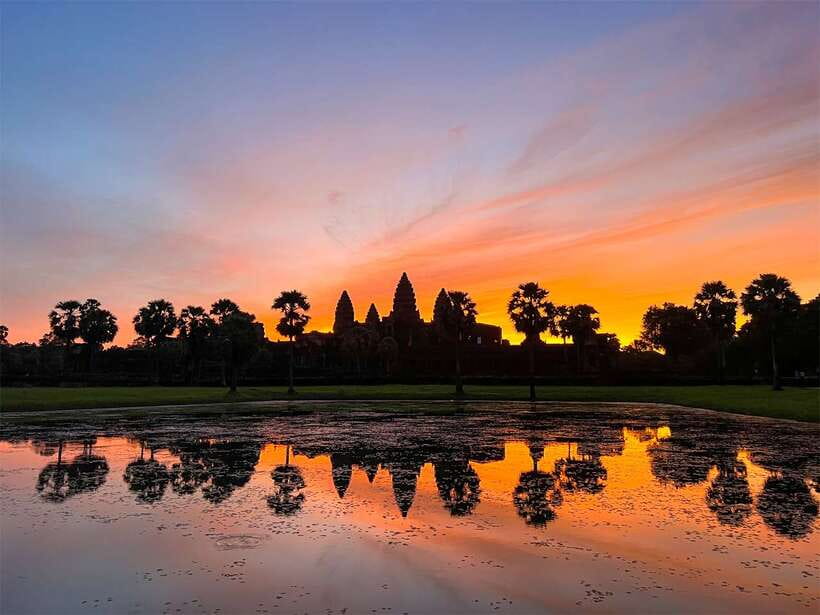
- Angkor Wat before sunrise: Leave your hotel between 4:30 and 5:00 am for the temple’s famous morning view, followed by an early interior visit.
- Both Angkor circuits included: See Angkor Wat, Ta Prohm, Bayon, Angkor Thom, Preah Khan, Neak Pean, Ta Som, East Mebon, and Banteay Srei.
- Kulen Mountain adds a different Cambodia: Waterfalls, a reclining Buddha, and the River of Thousand Lingas replace temple corridors for part of Day 3.
- The tour reaches Beng Melea and Kampong Phluk: One is a heavily overgrown temple, the other a fishing community on Tonle Sap Lake.
- The advertised price is not the final cost: Add the three-day Angkor pass, Kulen National Park fee, and boat ticket.
- Expect a small group, not necessarily a private tour: The group limit is 10, while a fully private option may offer more flexibility.
Why this three-day route works
Siem Reap is easy to treat as a temple-only destination. This tour avoids that trap. The first two days focus on the monuments around Angkor, while the third heads into the countryside and toward Tonle Sap. That change of scenery matters, since three straight days of sandstone towers can become tiring even when every temple is worth seeing.
The route also gives you useful historical range. Angkor Wat shows the empire at its most ambitious. Ta Prohm shows how vegetation has taken hold of an abandoned monument. Banteay Srei brings you close to fine carving on a smaller scale, while Kulen Mountain reaches back to the birth of the Khmer Empire.
The guides are an important part of the experience. Past guide assignments have included Sam, Moni, Phanne, Tha, Dara, Mony, and Kamsan. The strongest guide experiences described the guide as attentive, patient, and good at explaining both the temples and Cambodian life. That matters here because the schedule moves quickly, and a good guide helps turn a procession of ruins into a connected story.
Transport is by air-conditioned car or minivan, with hotel pickup and drop-off. Bottled water and cool towels are supplied during the tour. Those towels are no small luxury after walking around sun-heated stones.
More Angkor Wat Tours in Siem Reap:
- Angkor Wat Sunrise or Sunset Tour with Guide from Siem Reap
★ 5.0 · 12,109 reviews - Siem Reap: Angkor Wat: Small-Group Sunrise or Sunset Tour
★ 5.0 · 9,444 reviews - Siem Reap: Angkor Wat 2-Day Tour with Sunrise and Sunset
★ 4.9 · 4,429 reviews
Day 1: Angkor Wat before the crowds
Your pickup is scheduled between 4:30 and 5:00 am. You should be in the hotel lobby about 10 minutes early, with your clothes, camera, and temple pass arrangements already sorted. The pre-dawn departure is demanding, but it gives you a chance to see Angkor Wat in the soft morning light and enter the temple before the day becomes hot.
After sunrise, the plan allows about 90 minutes to explore the full building. This early visit is one of the smartest features of the tour. You can look at the galleries, towers, and carved details before the heaviest crowds arrive, then stop for breakfast in a nearby village.
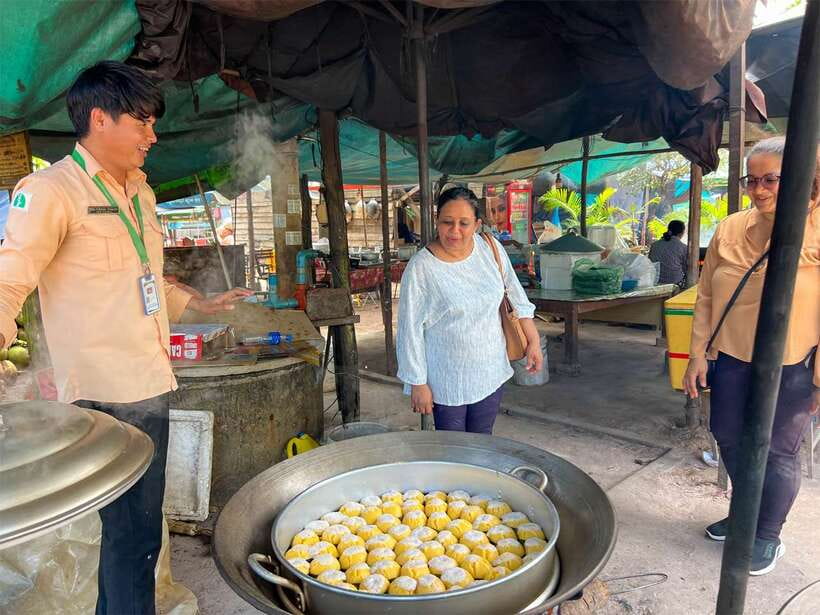
Breakfast is included only on Day 1. The meal is described as local food, with options such as Khmer noodle soup and traditional sweets including palm cake and steamed rice dumplings with palm sugar. If you usually rely on coffee alone in the morning, bring a snack anyway. This day begins early and continues for hours.
The next stop is a local market, which gives you a brief look at everyday buying and selling before the temple circuit resumes. It is a useful counterpoint to the royal scale of Angkor. You are not only moving from one monument to another, you are also seeing how the modern countryside around Siem Reap functions.
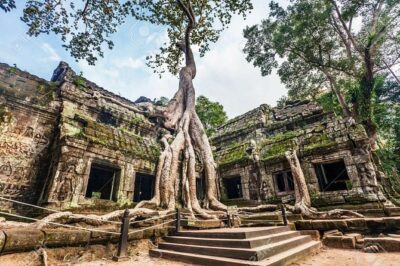
Pre Rup follows. Its brick towers and raised form make it a good place to understand the visual language of Angkor temple architecture. Then comes Ta Prohm, the jungle temple often associated with massive roots and walls partly swallowed by trees. The appeal is obvious, but it can also be crowded and uneven underfoot, so wear shoes with a firm sole.
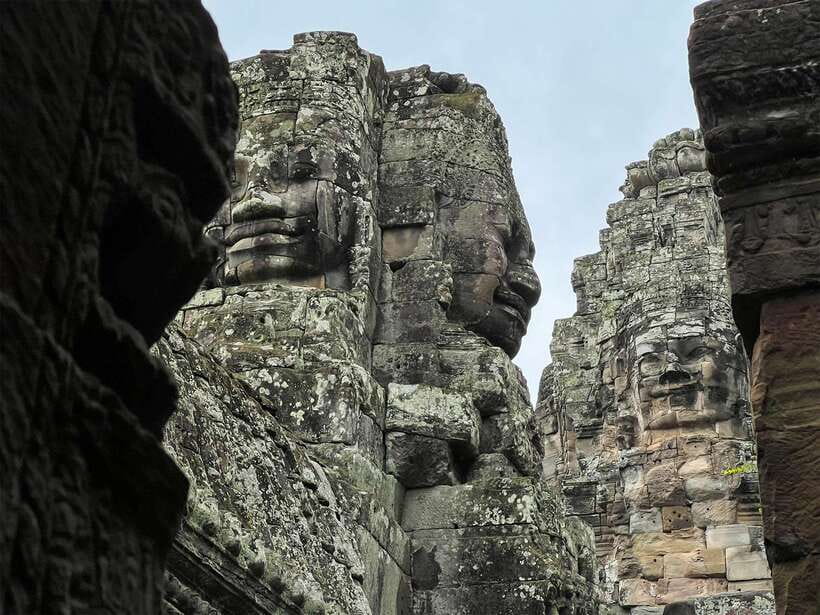
After Ta Prohm, the route reaches Bayon, famous for its serene stone faces. The temple can feel confusing at first, with towers and galleries packed tightly together. This is where your guide earns their keep by pointing out the faces, reliefs, and the way the monument fits into Angkor Thom.
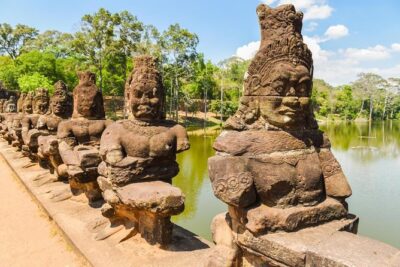
You also see Angkor Thom’s Victory Gate. The gate is more than a photo stop. It helps you grasp the scale of the old city and the grand approach to its central temples.
Day 1 is visually packed and physically tiring. You get the best-known Angkor sights, but you pay for them with an early wake-up and a long morning on your feet. Plan a quiet evening afterward rather than adding another major activity.
Day 2: Grand Circuit temples and Banteay Srei
Day 2 begins at 8:00 am, a much kinder hour. You first head through the countryside beyond Siem Reap’s center, where rice fields and village life replace the hotel district. The tour does not simply rush you to the next monument. It uses the drive to show you a more local side of the province.
The temple route includes Preah Khan, Neak Pean, Ta Som, and East Mebon. Preah Khan is a large complex with corridors, courtyards, and carved stone details. Its size can make it hard to read without help, so listen for the guide’s explanation of how the different spaces fit together.
Neak Pean is a smaller and more unusual stop, associated with a central island and surrounding water features. It feels different from the giant enclosures at Angkor Wat and Preah Khan. Ta Som offers another compact temple experience, while East Mebon gives you a chance to see an older temple form with strong brick and stone elements.
Lunch is included on Day 2, with one dish ordered from a menu. That is a practical inclusion because the route is outside the city for much of the day. Food and soft drinks beyond the included meal are not covered, so keep some money available.
In the early afternoon, you continue to Banteay Srei. This smaller sandstone temple is known for exceptionally detailed reliefs. Compared with Angkor Wat, it is intimate and precise rather than monumental. The carved figures and patterns reward a slower look, though the drive out to it adds time to an already busy day.
The final stop is the Cambodian Landmine Museum. Its presence changes the tone of the day. After centuries-old temples, you confront a much more recent part of Cambodia’s past. It is a worthwhile stop for anyone who wants to understand that the country’s story did not end with the fall of Angkor.
Day 2 is probably the best balance of the three days. You still see major temples, but the morning countryside drive and the museum give the day more variety. If you want the guide to spend extra time at one site, this is the day when a small group or private booking helps most.
Day 3: Kulen Mountain and the Khmer Empire’s beginnings
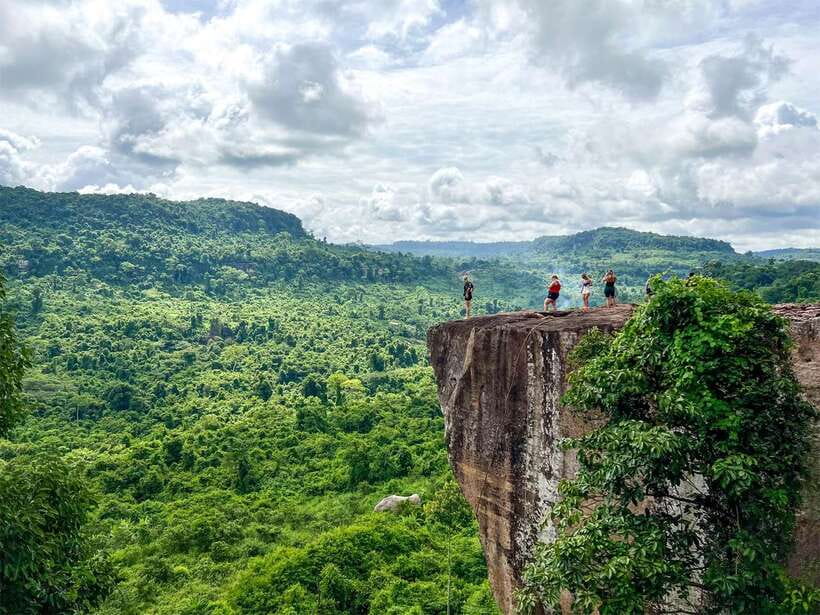
Day 3 starts at 8:00 am and heads about an hour toward Phnom Kulen National Park. The drive passes through rural villages and rice paddies. You might see people going about daily routines, and the road itself becomes part of the experience rather than just a transfer between attractions.
Kulen Mountain is important because it is linked with the early Khmer Empire. The stop also gives your body a break from the repeating temple pattern of the first two days. Instead of only stone galleries, you see a national park with waterfalls, a reclining Buddha sculpture, and the River of Thousand Lingas.
The River of Thousand Lingas was created in 802 AD. Carvings in the riverbed connect the natural setting with the religious and political world of early Khmer rule. Your guide can help you understand why the site matters, since the details are easy to miss if you are focused only on getting from one stop to the next.
The waterfalls are the most obvious pleasure of the mountain visit. One review specifically recalls lunch near the falls, with excellent Thai food, but the standard tour information only confirms lunch at a local restaurant in the afternoon. Do not assume a particular menu or dining spot unless your guide confirms it on the day.
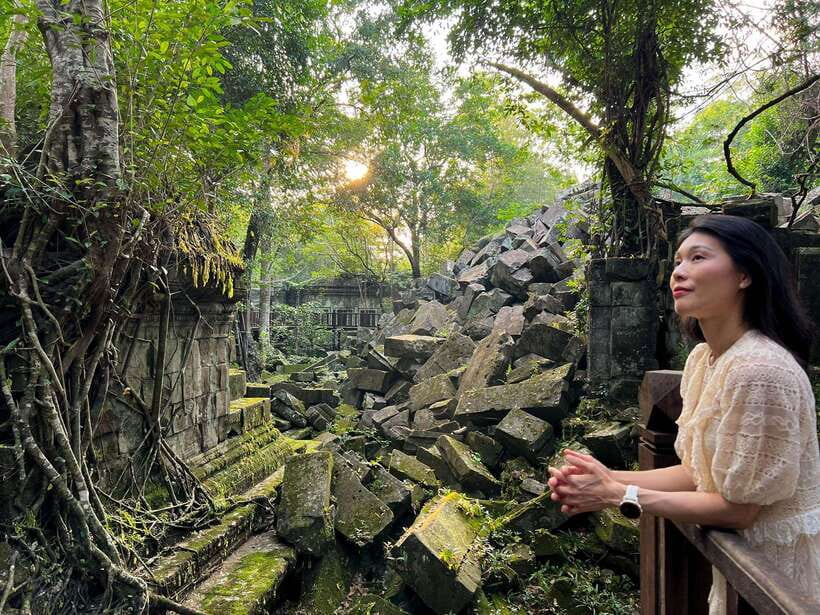
After lunch, you continue to Beng Melea, a 12th-century temple deep in the forest. Vegetation, trees, vines, and moss cover much of the site, and it has not been fully restored. That rough condition is exactly what gives Beng Melea its appeal. You are looking at a ruin where broken stones and plant growth remain part of the view, rather than a monument rebuilt into a neat presentation.
Beng Melea also adds a sense of distance from the better-known Angkor temples. It is not as polished or easy to read, and the uneven ruins require care. If you prefer fully restored monuments with clear walkways, this may be less comfortable. If you like atmospheric ruins, it can be one of the most memorable stops.
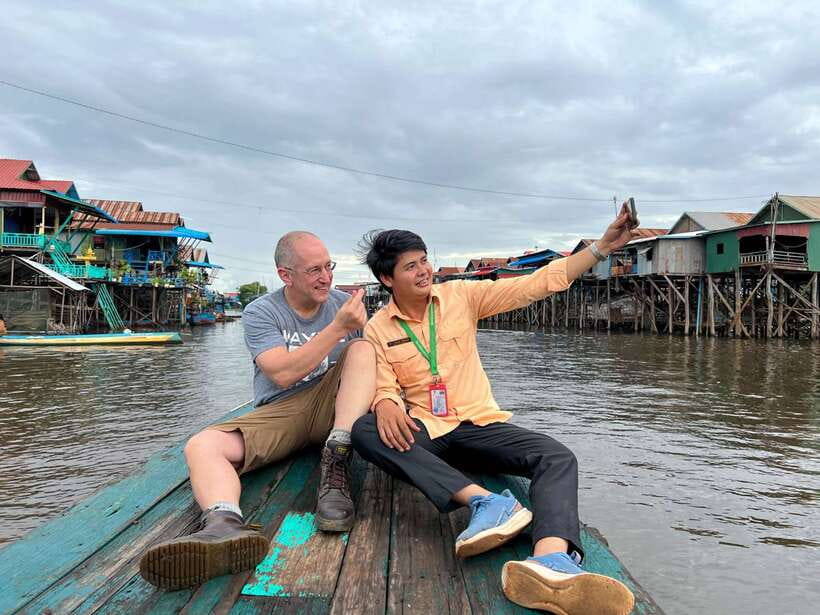
The final leg reaches Kampong Phluk on Tonle Sap Lake. You take a boat from the ferry area and see a community where many families depend mainly on fishing. Houses are built on long poles near the water, helping residents cope with the lake’s changing levels during the rainy season.
The boat ride provides a direct look at a way of life tied to the lake rather than to the temple economy. Conditions can vary with water levels and weather, so the exact appearance of the village may change. The boat ticket and private cruise cost an additional $15 per person.
This is the day most likely to feel slow or tiring, especially after the first two temple-heavy days. The long drives are part of the price of reaching Kulen Mountain and Beng Melea. Still, the contrast is valuable. You finish not with another royal monument, but with living communities and the natural setting that continues to shape Cambodia.
More Kulen Mountain Tours in Siem Reap:
- Kulen Waterfall Join-in Tour (local Picnic lunch)
★ 5.0 · 2,434 reviews - Kulen Mountain: Small-Group Tour and Picnic lunch
★ 4.9 · 1,802 reviews - Siem Reap: Kulen Mountain, Beng Mealea and Tonle Sap Tour
★ 5.0 · 1,483 reviews - Phnom Kulen Waterfall & the Sacred 1000 Lingas (with Lunch)
★ 4.8 · 974 reviews
What the $139 price really covers
The base price is $139 per person. It includes an English-speaking guide, air-conditioned private transportation, hotel pickup and drop-off, water, cool towels, Day 1 village breakfast, and one local-food lunch on Day 2.
You also need to budget for:
- A three-day Angkor pass: $62 per person
- Kulen National Park admission: $20 per person
- Tonle Sap Lake ticket and private boat cruise: $15 per person
- Food and soft drinks not specifically included
That brings the known cost to at least $236 per person before extra meals and drinks. I would judge the value on that full figure, not the advertised starting price.
For three days of transport, guiding, and a wide route that includes Angkor, Kulen Mountain, Beng Melea, and Tonle Sap, the total can make sense. You are not paying only for temple entry. You are also paying to avoid arranging several long transfers yourself.
The value is strongest for first-time visitors who want a broad introduction to Siem Reap. It is less appealing if you prefer slow photography, long lunches, or returning to the same temple at different times of day.
Small group or private option?
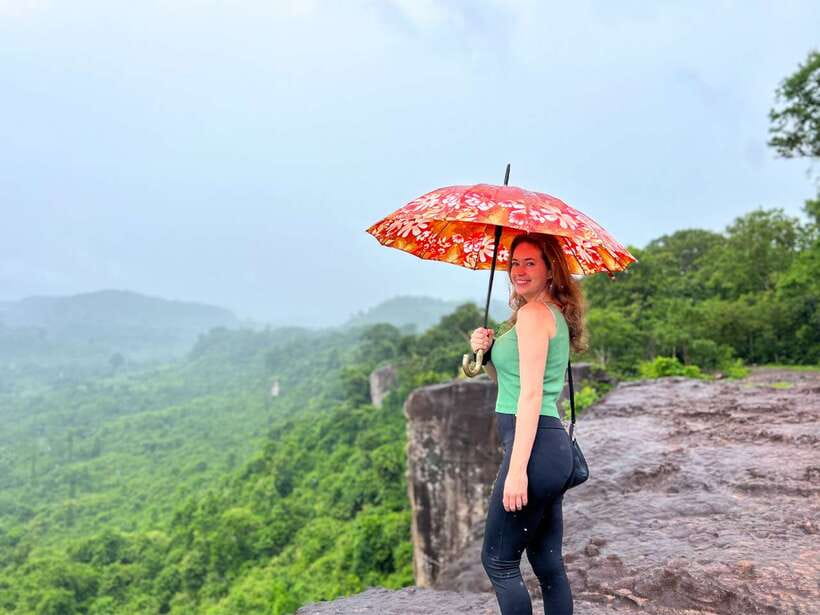
The regular format is a small group limited to 10 people. That is far more manageable than a large coach, but it does not guarantee a quiet or fully flexible day.
A private option is worth considering if you care about timing, photography, or breaks. One particularly useful detail from the guide experiences is that private arrangements allowed extra visits to be added. Guides also adjusted their attention to practical needs, with Moni checking when breaks were needed and drivers such as Tha and Tria keeping cold water and towels ready.
Your exact guide and driver are assigned rather than guaranteed. Still, the repeated praise for Sam, Moni, Phanne, Kamsan, and others points to the importance of the local guide role. Ask questions. Request a slower look at a favorite carving. Tell the guide when you need shade or a rest.
Dress, heat, and daily comfort
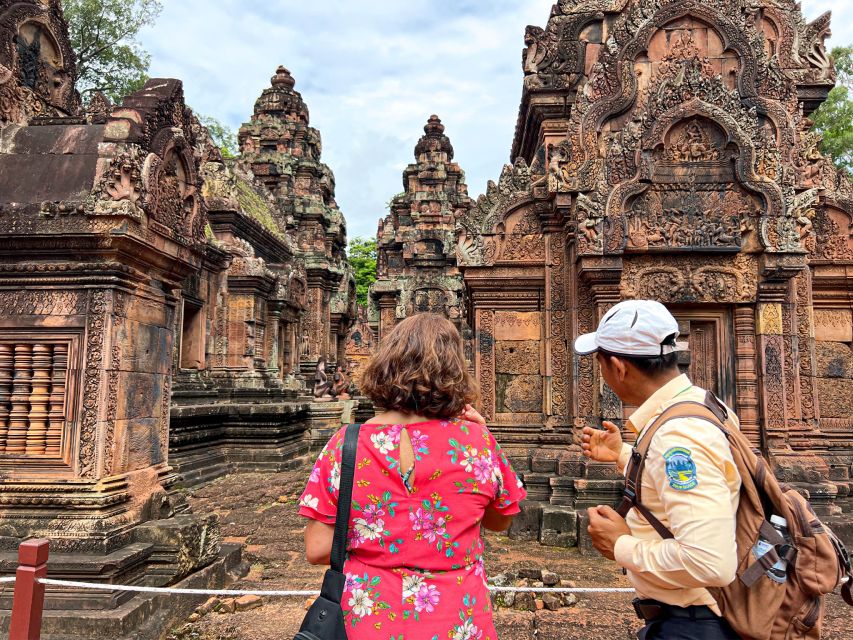
Cambodian temple sites require respectful clothing. Short skirts and sleeveless shirts are not allowed, so pack light clothing that covers your shoulders and knees. Bring sunglasses, a hat, insect repellent, and sunscreen.
The first morning is cool by comparison, but the days become harder as walking and heat build up. Comfortable shoes matter most at Ta Prohm, Beng Melea, and the larger temple complexes. A small day bag is useful for water, sun protection, and personal items.
The schedule is active, not strenuous in a technical sense. The challenge comes from repeated walking, uneven surfaces, early starts, and long drives. If you are traveling with children, older relatives, or anyone who needs frequent rest, discuss the pace with the guide at the start of each day.
Free cancellation is available up to 24 hours before departure, and you can reserve now and pay later. Pickup is from your hotel lobby, so confirm the hotel name and make sure the booking uses the correct contact details. One delayed start happened because the guide had trouble locating a party whose booking name did not match the hotel reservation.
Who should book this Angkor tour?
I would choose this tour if you have three days in Siem Reap and want a broad first look at the area. It suits you if you want the major Angkor temples but also care about villages, Cambodian food, recent history, nature, and life on Tonle Sap.
It is especially useful for someone who does not want to plan several separate day trips. The guide, vehicle, and route are arranged, and the air-conditioned transport is welcome on the longer drives.
I would hesitate if your priority is a slow, scholarly study of Angkor. You will see many sites, but the schedule leaves limited room to linger. I would also think twice if you dislike early mornings, long road transfers, or changing from temple walking to a boat trip in one day.
The strongest reason to book is the variety. You get sunrise at Angkor Wat, the faces of Bayon, Ta Prohm’s roots, Banteay Srei’s fine carving, Kulen’s waterfalls, Beng Melea’s rough forest ruins, and Kampong Phluk’s stilted homes. Few three-day routes around Siem Reap cover so many different sides of the region.
FAQ
What is included in the $139 tour price?
The price includes an English-speaking guide, air-conditioned private transportation, hotel pickup and drop-off, bottled water, cool towels, breakfast in a village on Day 1, and one local-food lunch on Day 2.
What extra fees do I need to pay?
You need to pay $62 per person for the three-day Angkor pass, $20 per person for Kulen National Park admission, and $15 per person for the Tonle Sap Lake ticket with private boat cruise. Other food and soft drinks are also extra.
How early does the first day begin?
Hotel pickup is between 4:30 and 5:00 am so you can reach Angkor Wat for sunrise. You should wait in the hotel lobby 10 minutes before the scheduled pickup time.
Is the tour private?
The standard tour is a small-group experience limited to 10 participants. A fully private option is available and may provide more flexibility with stops and pacing.
What should I wear and bring?
Wear clothing that covers your shoulders and knees. Short skirts and sleeveless shirts are not allowed. Bring sunglasses, a hat, insect repellent, and sunscreen.
Can I cancel the booking?
You can cancel up to 24 hours in advance for a full refund. The tour also offers a reserve-now-and-pay-later option.
More 3-Day Experiences in Siem Reap
- From Siem Reap: Angkor Wat and Floating Village 3-Day Trip
★ 5.0 · 100 reviews - 3-Day Angkor Wat with All Interesting Major Temples, Banteay Srei & Beng Mealea
★ 5.0 · 70 reviews - 3-Day Angkor Wat & All Interesting Major Temples & Kulen Mount Waterfall
★ 5.0 · 63 reviews - 3 Days Siem Reap Explorer – Small Group
★ 5.0 · 50 reviews
More Floating Village Tours in Siem Reap
- From Siem Reap: Kampong Phluk Floating Village Tour by Boat
★ 4.9 · 6,979 reviews - Siem Reap: Kampong Phluk Floating Village Tour with Boat
★ 4.9 · 3,843 reviews - Siem Reap Floating Village Kampong Phluk Sunset with Boat
★ 5.0 · 1,962 reviews - Kompong Phluk Floating Village Half-Day Tour ( Morning / Sunset )
★ 5.0 · 1,494 reviews
New around Siem Reap
- Kulen Mountain With Ticket included Plus Banteay Srei Temple Tour★ 5.0 · 7 reviews
- 2 Days Angkor temples with Sunrise & Sunset★ 5.0 · 7 reviews
- Private Siem Reap Airport Transfer to hotel in town★ 5.0 · 7 reviews
- 1-Day private Angkor Temple Tour with Sun Rise by Tuk Tuk from Siem Reap★ 4.5 · 7 reviews
- Siem Reap: Morning Cooking Class & Market Tour★ 5.0 · 7 reviews
- Kulen Mountain, Killing Fields and War Museum Tour★ 5.0 · 7 reviews
- War Museum, Killing Field, and APOPO Hero RATs Tour★ 5.0 · 7 reviews
- Half-Day: Silk Farm, Senteur Angkor, and Satcha Workshop★ 4.6 · 7 reviews
Angkor Wat Tours, compared.
Angkor Wat Sunrise or Sunset Tour with Guide from Siem Reap
Read our review →
Angkor Wat: Small-Group Sunrise or Sunset Tour
Read our review →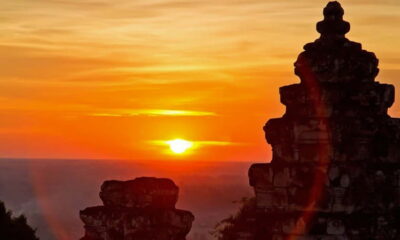
Angkor Wat Sunrise tour with Small – Group and Guide tours
Read our review →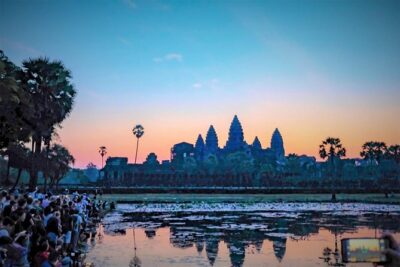
Angkor Wat Highlights and Sunrise Guided Tour from Siem Reap
Read our review →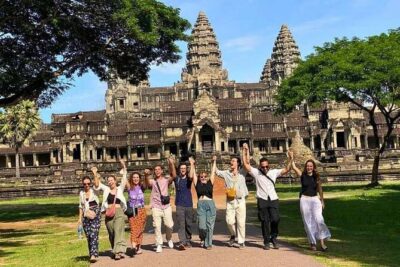
Angkor Wat Sunset Small Group Tour with Lunch Included
Read our review →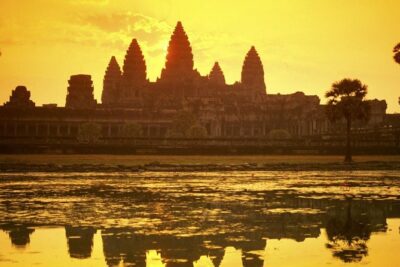
Full-Day Angkor Wat Sunrise Private Tour with Guide from Siem Reap
Read our review →
Angkor Wat Sunrise & 3 Main Temples with Breakfast – Small Group
Read our review →Browse the lists this tour appears in