
Reviewed · SIEM REAP TOURS
Angkor Jungle Biking Adventure Private Cycling Tour
Angkor is best understood at bicycle speed. This private ride leaves the main roads behind for shaded forest paths, old causeways, and quiet temple lanes, linking famous monuments with lesser-known ruins. I especially like the chance to see Ta Nei, a late 12th-century temple often missed by people following the standard circuit, and the freedom to stop often instead of being carried from one sight to the next.
I also like the strong personal touch. Guides including Leap and Sok are praised for lively storytelling, and the support vehicle, driven by Titya on one reported outing, adds welcome peace of mind. The main drawback is the distance: 25 to 40 kilometers over seven to eight hours is a real day of exercise, especially in Cambodia’s heat. Angkor admission and lunch cost extra.
- Forest riding: Cycle along quiet back trails and temple roads away from much of the traffic.
- Major monuments included: See Angkor Wat, Bayon, Angkor Thom’s South Gate, and Ta Prohm.
- A quieter temple stop: Visit Ta Nei, a late 12th-century shrine surrounded by trees.
- Private guiding: Your group rides with an English-speaking cycling guide rather than joining a large tour.
- Useful support: Hotel transfers, mountain bikes, helmets, bottled water, and snacks are included.
- Flexible pace: A private format makes it easier to stop for photos, rests, and questions.
Why Angkor Works So Well by Bicycle
Most first-time visitors see Angkor from a tuk-tuk or car. That is practical, but a bicycle gives you a different day. You hear birds and water before you reach a ruin. You feel the shade change as the route moves under the forest canopy. The ancient roads and causeways become part of the experience, not just the pavement between one monument and the next.
This tour covers the classic sights, but the route is not limited to the busiest temple roads. You may ride 25 to 40 kilometers, depending on the day’s routing and conditions. That range matters. Twenty-five kilometers is a substantial but manageable ride for many active adults. Forty kilometers, combined with temple steps, heat, and frequent stops, calls for better fitness.
The private format is a major advantage. You do not have to match the pace of a large group, and you can ask for more history at one site or less at another. If you are riding with family or friends, your guide can adjust the day within the planned route. One guide, Leap, has even been praised for combining two different tour plans for a couple, which shows the value of having a private guide rather than following a fixed group script.
Starting at Your Hotel and Reaching the Park
Your guide and driver meet you in the hotel lobby, then transfer you to the starting point before you begin riding toward Angkor Park. Hotel pickup and drop-off are included, but you need to provide your hotel name when booking.
This arrangement makes sense. It avoids asking you to find a bike shop or make your own way to a distant starting point. It also means the day begins with a vehicle transfer rather than a long ride through Siem Reap’s city streets.
You receive a mountain bike and helmet, along with bottled water and snacks. The support vehicle is another useful feature, particularly on a long, hot route. The supplied information does not specify the bike sizes, saddle styles, or child equipment, so ask about those details if anyone in your group is short, tall, or not used to standard mountain bikes.
The tour is described as suitable for people with moderate physical fitness. Take that seriously. You do not need to be a racing cyclist, but you should be comfortable spending most of a day on a bicycle and walking around temple grounds afterward.
More Bike Tours in Siem Reap
- Siem Reap Countryside Bike Tour / E-Bike or Tuk Tuk
★ 5.0 · 935 reviews - Angkor Sunrise Bike Tour / E-Bike or Tuk Tuk
★ 5.0 · 615 reviews - Siem Reap: Bike the Angkor Temples – Full-Day 30km Tour
★ 5.0 · 463 reviews
Angkor Wat: Two Hours at the Great Monument
Angkor Wat receives about two hours on this route. That is enough time to see the main architectural story, but it is not an exhaustive visit to every gallery and relief.
The temple is the largest and best-preserved monument in the Angkor group. Its appeal is not just its size. The design depends on balance, proportion, towers, galleries, and carved surfaces working together. A guide can help you read those parts as a planned whole instead of treating the temple as a series of impressive walls.
Arriving by bicycle adds a pleasant sense of approach. You are not simply dropped beside the entrance and sent inside. The ride gives you time to see the monument’s setting and to arrive with a clearer sense of how the temple relates to the surrounding forest and old roads.
The Angkor admission ticket is not included. Your guide assists you in purchasing it at the entrance to Angkor Park, but you should budget for that separately. The ticket counter is described as organized and efficient, which helps keep the entry process from eating too much of the morning.
Two hours can pass quickly here. If Angkor Wat is your top priority, tell your guide early. The private format may allow some adjustment, but the total day still has to accommodate several other temples and a long ride.
Ta Nei, a Quiet Late 12th-Century Stop
Ta Nei receives about 30 minutes, and that short stop may be one of the most rewarding parts of the day for anyone who prefers atmosphere over a checklist.
This stone temple dates from the late 12th century and was built during the reign of King Jayavarman VII. It was dedicated to the Buddha and sits near the northwest corner of the East Baray, a large sacred reservoir. The site is less prominent than Angkor Wat, Bayon, or Ta Prohm, so it offers a more subdued pause in the forest.
Do not expect Ta Nei to match Angkor Wat in scale. Its value is the setting and the feeling of reaching a place that is not usually the main focus of a first visit. The ride itself becomes part of the sightseeing here, since the route through trees and quiet temple roads helps separate this stop from the grand ceremonial monuments.
Thirty minutes is enough for an introduction, photographs, and a guide’s explanation. It is not enough for a long archaeological study. That is a fair trade in a full-day route that aims to show both major monuments and smaller sites.
French Dam: Water, Trees, and a Brief Rest
The French Dam stop lasts about 19 minutes. That may sound minor beside the major temples, but it provides a useful change of pace.
Here you can take in the old temple area, large trees, and the water. The sound of birds and moving water gives the stop a more natural character than the stone monuments. It is also a chance to pause physically before the next major temple.
The short timing means you should not treat this as a full sightseeing stop. Think of it as a scenic break built into the cycling route. On a hot day, these small pauses matter. They let you drink, cool down, and reset before climbing off the bike again.
A completely different sort of day from the same base:
- Angkor Wat Sunrise or Sunset Tour with Guide from Siem Reap
★ 5.0 · 12,109 reviews - Siem Reap: Angkor Wat: Small-Group Sunrise or Sunset Tour
★ 5.0 · 9,444 reviews - From Siem Reap: Kampong Phluk Floating Village Tour by Boat
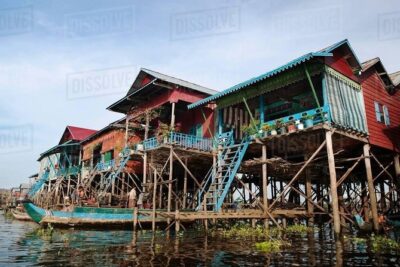
★ 4.9 · 6,979 reviews - Sunset tour of Kampong Phluk stilts home village on the Tonle Sap
★ 5.0 · 4,865 reviews
Bayon and the Faces of Angkor Thom
Bayon gets about one hour. Built nearly a century after Angkor Wat, it served as the central temple of a royal city. Its structure and earliest development remain uncertain, but its monumental stone faces are the feature most people remember.
The experience here differs from Angkor Wat. Angkor Wat rewards you with grand symmetry and long galleries. Bayon feels more enclosed and visually busy, with towers and carved faces appearing from different angles as you move through the temple.
A guide is especially useful at Bayon because the site can seem confusing at first. You need help understanding how the temple sits within Angkor Thom and why its central position mattered. Leap is described as a strong storyteller who can turn centuries of Cambodian history into something relatable rather than a string of dates.
One hour gives you time to explore the main areas without making the entire day feel like a museum march. Temple floors can be uneven, and the combination of cycling and walking means you should keep some energy in reserve.
Angkor Thom’s South Gate and the Ancient Approach
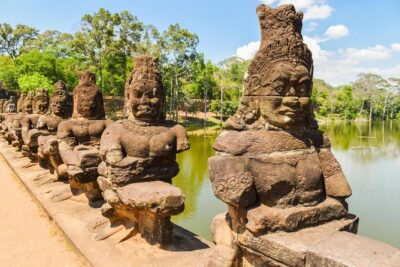
The South Gate receives 30 minutes. It is the best-known entrance to Angkor Thom, and much of its appeal comes from the approach itself.
The gate has been restored, and many of the sculpted heads remain in place. It sits on the main road into Angkor Thom from Angkor Wat, so this section may feel more exposed to traffic than the forest tracks around Ta Nei.
Even so, the gate is worth slowing down for. It helps you picture Angkor Thom as a planned royal city rather than a collection of separate ruins. The road, entrance, sculpture, and surrounding trees form a clear introduction to the city’s scale.
Thirty minutes is enough to look closely, take photographs, and hear the basic story. If you want extensive time examining each figure, you may need to ask your guide how that fits with the rest of the route.
Ta Prohm and the Power of the Forest
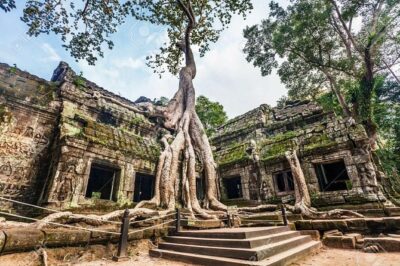
Ta Prohm receives about one hour, making it one of the day’s longer temple visits. It is famous for its trees, and the site has been left largely untouched by archaeologists, apart from clearing visitor paths and adding structural support where needed.
This is the temple where nature becomes part of the architecture. Tree roots press against stone, branches cross walls, and rooms appear to emerge from the vegetation. The effect is dramatic, but it is not simply a wild ruin. The paths and safety work make it possible to visit without losing the sense of age and disorder.
Cycling to Ta Prohm through forest trails prepares you for the site better than arriving after a long stretch of city traffic. You have already spent hours among trees, so the temple feels connected to its setting rather than placed apart from it.
Ta Prohm can be a busy stop on standard Angkor routes. The cycling option does not guarantee an empty temple, and the tour description promises a crowd-free perspective rather than a private monument. Still, the back roads and private timing can help you avoid some of the most congested parts of the day.
What the Guide Adds to the Ride
The guide is not just there to lead the bicycles. The strongest part of this experience is the combination of route knowledge, temple interpretation, and practical care.
Guides such as Leap and Sok are named in the available information. Leap is praised for energetic delivery and for explaining a thousand years of Cambodian history through stories people can follow. Sok is described as pairing culture, nature, and adventure, while pointing out details along jungle trails that are easy to miss from a vehicle.
That difference matters. Angkor is too large and too complex to understand from photographs alone. A guide can explain why Bayon differs from Angkor Wat, place Ta Nei in the reign of Jayavarman VII, and help you see the relationship between temples, roads, reservoirs, and royal cities.
You also receive water and snacks during the day. Lunch is not included, but your guide can take you to a local restaurant. Vegetarian and non-vegetarian choices are available, with dishes priced from about $3 to $10. Because lunch time is part of a long active day, keep some cash available and tell the guide about any dietary needs when you meet.
Is $61.75 Good Value?
At $61.75 per person, this is not the cheapest way to see Angkor. You are paying for a private guide, hotel transfers, bicycle and helmet use, water, snacks, and a full day that links major temples with quieter routes.
The value is strongest for couples, families, or friends who want an active day and would rather not organize bikes, navigation, temple order, and transport themselves. A private tour also gives you more control than a large group excursion. You are not paying only for a bicycle. You are paying to have the day’s logistics handled while still seeing Angkor under your own group’s pace.
The price does not include the Angkor ticket or lunch. Those are important additions to your budget. Tips for the guide are also separate. If you compare this tour with a basic transport-only temple circuit, it will cost more. If you compare it with arranging a quality bike, guide, support, and transfers independently, the price looks more reasonable.
Group discounts are offered, though the exact savings are not stated. For a small private group, ask about the final per-person rate before booking.
Who Should Book This Cycling Tour?
I would choose this outing if you want Angkor to feel like a place, not just a set of famous photo stops. It suits active couples, families with older children who can handle the distance, and friends who like history with a physical challenge.
It is also a good fit if you have already seen Angkor by car or tuk-tuk and want a different angle. The forest paths, Ta Nei, French Dam, and quiet stretches between monuments add variety to the standard temple day.
I would hesitate if you dislike heat, are uncomfortable on a bicycle, or want long, unhurried visits inside every major temple. The itinerary covers a lot. You will ride, walk, listen, photograph, and ride again. That variety is the point, but it can feel tiring by late afternoon.
Book with realistic expectations about the distance. Wear practical riding clothes, bring sun protection, and use the water provided. Confirm your hotel details, ask about the likely route length, and mention any fitness concerns before the day begins.
Final Verdict: A Strong Choice for Active Angkor Explorers
This is a well-balanced way to see Angkor if you want the famous monuments without spending the entire day on the main roads. Angkor Wat, Bayon, Angkor Thom, and Ta Prohm provide the essential sights, while Ta Nei and the forest route give the day its character.
The best reasons to book are the private format, the English-speaking guide, and the chance to cover quiet ground under your own power. Leap and Sok bring the kind of personal storytelling that can make the ruins easier to understand, while the driver and support vehicle add comfort on a long ride.
The main warning is simple: this is not a gentle sightseeing loop. At up to 40 kilometers, it asks something of you. If that sounds appealing, $61.75 buys an active, well-supported day with more variety than a standard temple transfer. If you want maximum comfort and minimum exertion, choose a vehicle-based tour instead.
Free cancellation is available when you cancel at least 24 hours before the start time. Cancellations or changes made less than 24 hours ahead are not accepted for a refund.
FAQ
How long does the Angkor Jungle Biking Adventure last?
The experience lasts approximately seven to eight hours.
How far will I cycle?
The route covers approximately 25 to 40 kilometers through forest trails, quiet temple roads, and ancient causeways.
Which temples are included?
The route includes Angkor Wat, Ta Nei Temple, Bayon Temple, Angkor Thom’s South Gate, and Ta Prohm. It also includes a stop at the French Dam.
Is hotel pickup available?
Yes. Pickup and drop-off at your hotel are included. You need to provide the hotel name for pickup.
Is the Angkor admission ticket included?
No. The Angkor ticket is not included. Your guide will assist you with purchasing it at the entrance to Angkor Park.
Is lunch included?
No. Lunch is at your own expense. Local restaurants offer vegetarian and non-vegetarian options, with menu prices ranging from about $3 to $10 per dish.
What equipment and refreshments are provided?
A mountain bike, helmet, bottled water, and snacks are included.
Is this a private tour?
Yes. Only your group participates in the activity, and an English-speaking biking guide accompanies you.
New around Siem Reap
- Siem Reap Temple and Waterfall 3-Day Tour★ 4.5 · 3 reviews
- Siem Reap: Guided Day Trip to Local Village & Cooking Class★ 5.0 · 3 reviews
- Savor the Countryside: Tours with Authentic Cooking Classes”★ 5.0 · 3 reviews
- Siem Reap Private Tour: Angkor Wat Sunrise And Banteay Srei★ 5.0 · 3 reviews
- Angkor Wat Sunset In Private and Small-In-Group★ 4.3 · 3 reviews
- Angkor Wat Sunrise TukTuk Tour★ 5.0 · 3 reviews
- Angkor Wat: Highlights and Sunrise with Spanish Guide★ 4.8 · 3 reviews
- Full Day to Banteay Srei, Kulen National Park and Beng Mealea★ 5.0 · 3 reviews
Siem Reap Tours, compared.
Angkor Wat Sunrise or Sunset Tour with Guide from Siem Reap
Read our review →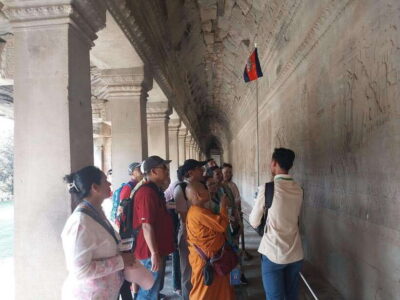
Angkor Wat: Small-Group Sunrise or Sunset Tour
Read our review →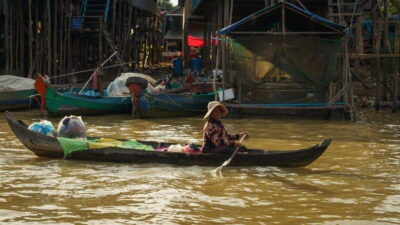
Sunset tour of Kampong Phluk stilts home village on the Tonle Sap
Read our review →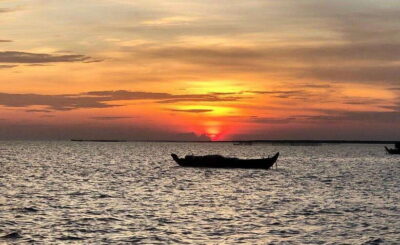
Kampong Phluk Floating Village Tour with Boat
Read our review →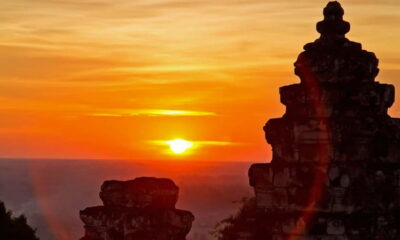
Angkor Wat Sunrise tour with Small – Group and Guide tours
Read our review →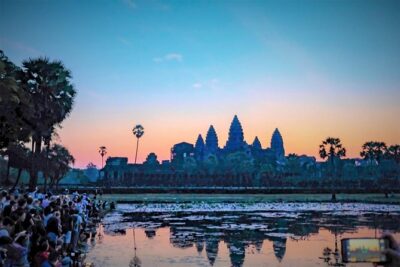
Angkor Wat Highlights and Sunrise Guided Tour from Siem Reap
Read our review →Browse the lists this tour appears in