
Reviewed · ANGKOR TEMPLE TOURS
Preah Khan, Ta Prohm, Bayon Off Beaten Track
Preah Khan, Ta Prohm, and Bayon give you three different views of King Jayavarman VII’s Angkor. Preah Khan feels broad and layered, Ta Prohm is famous for trees growing through its ruins, and Bayon brings you face to face with its calm stone faces. The plan is built to steer you away from the heaviest crowds, with about eight hours for the outing.
I like the private format for up to three people, since you are not tied to a bus group or a fixed pace. I also like that the tour includes a licensed guide, driver, bottled water, and air-conditioned transport, while the guide Panha has a reputation for being flexible and helpful with wider Siem Reap plans. The main catch is simple: the $159 price does not include temple admission or lunch, and the 9 a.m. start is not designed for sunrise.
Key points at a glance
- Three major Jayavarman VII temples: See Preah Khan, Ta Prohm, and Bayon in one full-day route.
- Private group pricing: The $159 fee covers up to three people, not each person separately.
- Panha as guide: The service is associated with a friendly, flexible guide who can explain Cambodian culture and daily life as well as temples.
- About eight hours on the road: The listed temple time totals five hours, leaving useful time for transport, breaks, and a relaxed pace.
- Admission is extra: You need to budget separately for the Angkor entrance fee and lunch.
- Return to the starting point: The tour begins and ends at Prince Angkor Hotel & Spa on Sivutha Boulevard.
Why these three temples make a strong Angkor day
Many first visits to Angkor focus on Angkor Wat alone. That is understandable, but it leaves out the temples that best show the ambition of Jayavarman VII, one of the Khmer Empire’s most important kings. This tour stays with three sites linked to his reign and gives each enough time to feel different.
Preah Khan was built in the 12th century to honor the king’s father. Ta Prohm followed in the late 12th or early 13th century and was originally called Rajavihara. Bayon served as the state temple of Jayavarman VII and is known for its carved faces and dense decoration.
The appeal is variety. You are not spending the day looking at three nearly identical sets of ruins. Instead, you move from long corridors and courtyards at Preah Khan, to tree-covered stonework at Ta Prohm, then to the sculpted towers of Bayon.
The private setup matters here. You can ask Panha to slow down at a carving, explain a religious detail, or give you time to take photographs. A large group often turns temple sightseeing into a march. This plan gives you more control.
More Angkor Temple Tours in Siem Reap:
- Siem Reap Tour: Angkor Wat Sunrise, Bayon, Ta Prohm, Banteay Srei
★ 5.0 · 931 reviews - Siem Reap: Bike the Angkor Temples – Full-Day 30km Tour
★ 5.0 · 463 reviews - Angkor Wat one Day Private Tour for All Highlight Angkor Temples
★ 5.0 · 199 reviews
Preah Khan: a royal complex with room to wander
Your first listed stop is Preah Khan, meaning Royal Sword. It sits northeast of Angkor Thom and west of the Jayatataka baray, an ancient reservoir. The temple was built for Jayavarman VII in honor of his father, giving the site a personal purpose as well as a religious one.
Allow about two hours here. That is a sensible amount of time because Preah Khan is not just one compact sanctuary. Its layout includes long passageways, courtyards, doorways, and layers of stonework that reward a slower walk.
I like Preah Khan as an opening stop because it gives you space to get used to Angkor’s scale. You can look at the overall plan, then focus on smaller details such as carved figures and repeating architectural patterns. The effect is less theatrical than Ta Prohm, but it can be more rewarding if you enjoy seeing how a temple works as a complete complex.
The drawback is that the site can feel confusing without a guide. Corridors lead into other corridors, and the meaning of each section is not always obvious from the stones alone. This is where a licensed guide adds real value. Panha can help connect the building to Jayavarman VII, his family, and the role of the temple.
Wear shoes suited to uneven ground and expect a moderate level of walking. The tour information specifically recommends a moderate physical fitness level. You do not need to treat the visit as a strenuous hike, but you should be comfortable walking through ruins for several hours.
Ta Prohm: famous trees, crowded corners, and atmospheric ruins
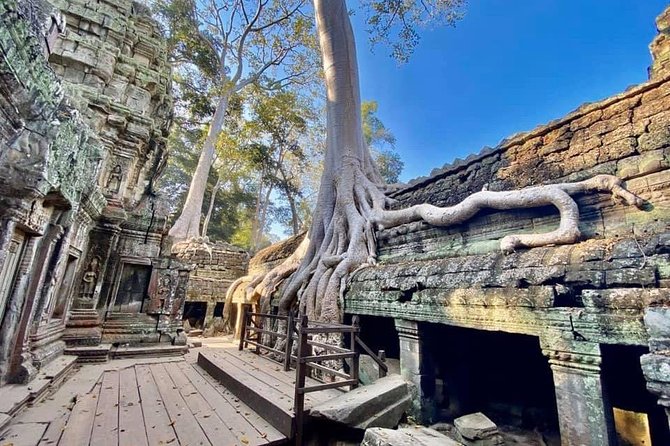
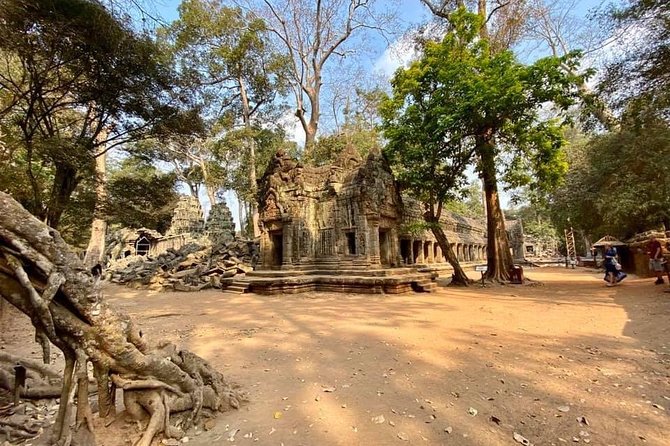
Ta Prohm is the most instantly recognizable stop on this route. Built in the Bayon style in the late 12th and early 13th centuries, it was originally known as Rajavihara, or the royal monastery. Its modern name refers to the temple’s connection with Brahma.
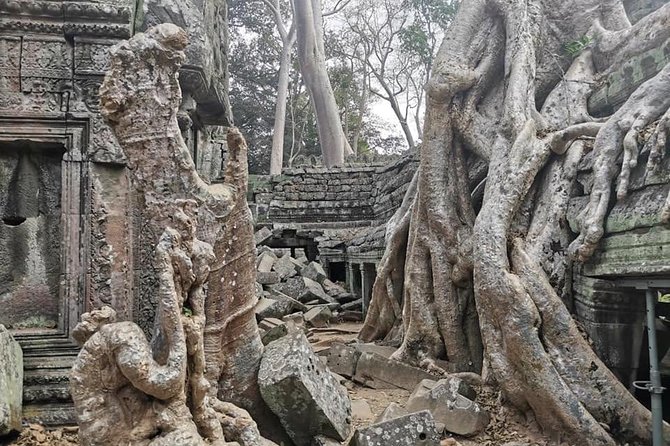
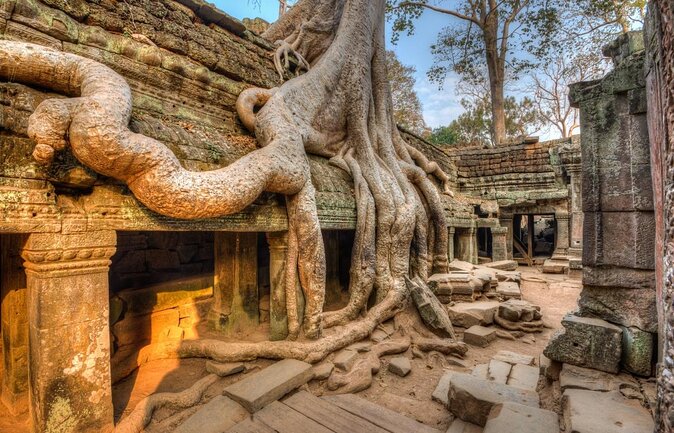
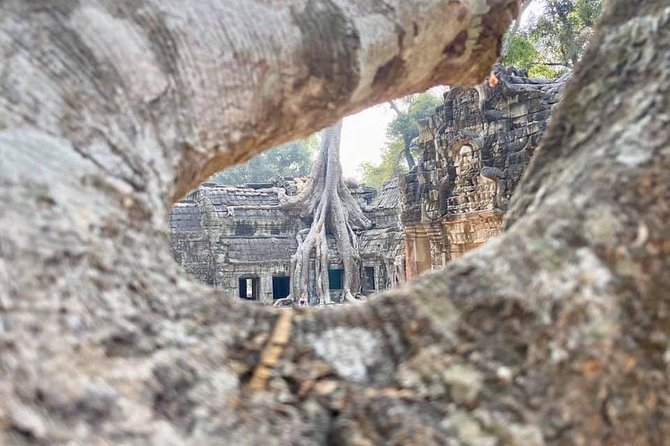
The site is known for trees growing through and around the stonework. Roots press over walls, branches rise above galleries, and the old structure feels caught between human construction and the natural world. This is the temple most likely to supply the photographs people imagine when they think of Angkor ruins.
The plan allows two hours, which gives you time to move beyond the first dramatic tree-covered section. Do not rush straight to the most photographed doorway and leave. Ta Prohm works best when you look at the surrounding galleries, carvings, and collapsed sections as well.
There is one practical issue: Ta Prohm’s fame can make it the busiest stop of the three. The tour is designed around avoiding the heaviest tourist crowds, but no schedule can guarantee an empty temple. Your private guide and flexible transport should help, especially if the route can adjust during the day, but you should still expect popular photo points to be busy at times.
Ta Prohm is also a good place to ask about conservation. The trees are part of the temple’s identity, but the roots also place pressure on the ancient stone. A guide can help you understand why some areas are open and others are restricted.
Bayon: stone faces at the heart of Angkor Thom
Bayon is your final temple stop, with about one hour scheduled for the visit. It was built in the late 12th or early 13th century as the state temple of Jayavarman VII, when Mahayana Buddhism shaped the royal program.
The temple is famous for its large carved faces. They appear on towers throughout the central structure, creating a memorable sense that the temple is watching you from every direction. The faces are not the only reason to visit. Bayon also has detailed bas-reliefs that show scenes of warfare, ceremonies, and ordinary Khmer life.
One hour is enough for a focused introduction, though it is shorter than the time at Preah Khan or Ta Prohm. You can examine the main towers, walk through the central area, and ask about the carvings. If you prefer detailed photography or want to study every relief, you may find the stop brief.
Bayon can also be visually confusing. Towers overlap, passages narrow, and the faces are easier to appreciate once you understand how the temple was arranged. This is another place where a guide helps turn a striking image into a meaningful visit.
Ending at Bayon gives the day a strong finish. Ta Prohm is the atmospheric favorite for many people, but Bayon offers the clearest sense of Jayavarman VII’s royal vision. Its stone faces and carved scenes make the temple feel like more than a collection of ruins.
A few more Siem Reap half-days to weigh up
- Angkor Wat Sunrise or Sunset Tour with Guide from Siem Reap
★ 5.0 · 12,109 reviews - Siem Reap: Angkor Wat: Small-Group Sunrise or Sunset Tour
★ 5.0 · 9,444 reviews - From Siem Reap: Kampong Phluk Floating Village Tour by Boat
★ 4.9 · 6,979 reviews - Sunset tour of Kampong Phluk stilts home village on the Tonle Sap
★ 5.0 · 4,865 reviews
What the private vehicle changes
The price is $159 per group of up to three people. That is not a per-person fare, so the value improves sharply if three people share the ride. For two or three people, you are paying for a private vehicle, driver, licensed guide, bottled water, pickup service, and a full day devoted to your group.
The vehicle is described as air-conditioned, an important detail in Cambodia. You will spend time moving between temple areas, and a cool vehicle gives you somewhere to recover between walks. The driver handles the road while the guide handles the temple visits, a useful division of labor.
The transport arrangement also gives you privacy. You are not waiting for a large group to return from every courtyard. The listed end point is the same as the starting point, Prince Angkor Hotel & Spa, at Sivutha Boulevard in Siem Reap.
Pickup is offered, but the published meeting point is Prince Angkor Hotel & Spa. Confirm the exact pickup arrangement when you book, especially if you are staying elsewhere. The tour starts at 9 a.m., so plan to be ready before then.
The eight-hour duration is an estimate. The three scheduled temple visits add up to five hours, leaving time for driving, getting settled, water breaks, and lunch arrangements. Since lunch is not included, you should clarify when and where the meal break will happen if you want a proper sit-down meal.
The guide and the human side of the day
The guide associated with this service is Panha. His role goes beyond pointing out doorways. He is described as someone who can explain Cambodian history, culture, and daily life, while also helping with practical plans around Siem Reap.
That wider local knowledge can be useful. Past service connected with Panha has included airport assistance, restaurant and bar suggestions, and help adjusting temple plans. Those services are not listed as guaranteed parts of this specific outing, so treat them as a sign of the provider’s broader local support rather than part of the package.
The strongest reason to choose a private guide is flexibility. You can tell Panha what interests you most, such as architecture, religion, photography, or everyday Cambodian life. You can also ask for more explanation at one temple and less at another.
Do remember that the title and guide assignment may depend on availability. If having Panha specifically is important to you, ask for confirmation before booking. The package promises a licensed tour guide, but the supplied information does not guarantee that every departure is led by him.
Crowds, timing, and the best pace
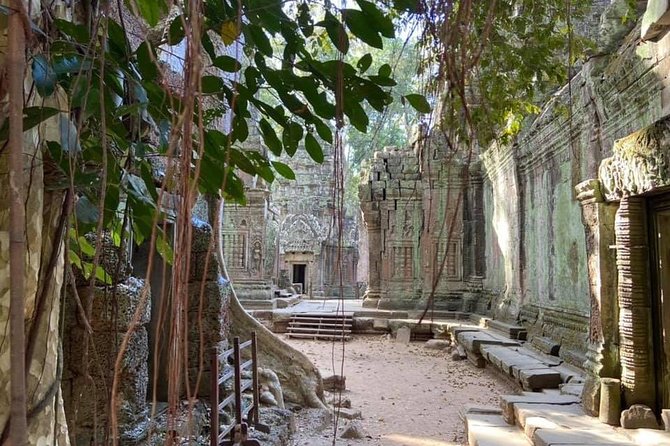
The experience is presented as an off-the-beaten-track way to see three of Angkor’s top temples. That does not mean secret or empty. Ta Prohm and Bayon are well-known places, and their most famous areas can draw plenty of people.
The advantage is the route and the private vehicle. You are not locked into a standard large-group schedule, and the guide can help you focus on less obvious details once you have seen the main highlights. The 9 a.m. start is convenient for a relaxed morning, but it will not give you dawn light or sunrise at Angkor Wat.
If photography is your main goal, ask about the day’s timing before departure. Light and crowd levels change, and the tour description does not promise a particular photo condition. If your main goal is understanding the temples without rushing, the schedule is more suitable.
Bring water, even though a bottle is included. Wear modest clothing suitable for temple visits, and choose practical footwear. The moderate fitness requirement is the clearest warning: you will be walking across uneven temple surfaces for much of the day.
What the $159 price really covers
At $159 per group, this is best judged as a private day service rather than a cheap temple transfer. The cost includes a driver, licensed guide, bottled water, and private participation for your party. For three people, that works out to $53 each before entrance fees and lunch.
The price does not include the Angkor entrance fee. That is a meaningful extra, so check the current official fee before you travel and add it to your budget. Lunch is also separate, and the package does not state that food or drinks beyond bottled water are provided.
The value is strongest for people who care about time, explanation, and privacy. If you only want a driver to drop you at each site, you could be paying for more service than you need. If you want context and the freedom to ask questions, the licensed guide is a major part of what you are buying.
Free cancellation is available if you cancel at least 24 hours before the 9 a.m. start time. Changes or cancellations made inside that window are not accepted for a refund.
Who should book this temple route
I would suggest this outing to couples, families, and small groups of friends who want a private day without arranging separate transport and guiding. It is especially useful for a first visit, when the scale of Angkor can otherwise feel overwhelming.
It suits you if you want three major temples tied to Jayavarman VII, prefer a later start, and like having a local guide explain more than dates and building names. It also works well if you want to adjust the pace or ask for help with wider Siem Reap plans.
I would think twice if your priority is sunrise photography, a very low-cost ride, or a full-day visit to only one temple. Bayon receives just one scheduled hour, and admission and lunch increase the final cost.
Should you book it?
Book this tour if you want a private, guide-led day focused on Preah Khan, Ta Prohm, and Bayon, with air-conditioned transport and a group size capped at three. The combination gives you comfort, flexibility, and useful context without the feel of a bus excursion.
Before paying, confirm the pickup point, the guide assigned to your date, the current temple entrance cost, and the lunch plan. If those details fit your budget, this is a sensible way to see three very different Angkor temples in one organized day.
FAQ
How long does the tour last?
The experience lasts about eight hours.
What time does the tour start?
The scheduled start time is 9 a.m.
Where does the tour start?
The listed meeting point is Prince Angkor Hotel & Spa, Sivutha Boulevard, Sivatha Road, Krong Siem Reap.
Where does the tour end?
The activity ends back at the meeting point.
How many people can join the private tour?
The $159 group price covers up to three people.
Which temples are included?
The route includes Preah Khan, Ta Prohm, and Bayon Temple.
Are temple entrance fees included?
No. Entrance fees are not included in the tour price.
Is lunch included?
No. Lunch is not included.
What is included in the tour?
The package includes bottled water, a private tour, a licensed tour guide, and a driver. Pickup is offered.
Can I cancel for a full refund?
Yes, if you cancel at least 24 hours before the experience start time. Cancellations or changes made less than 24 hours before the start are not accepted for a refund.
New around Siem Reap
- Kulen Mountain With Ticket included Plus Banteay Srei Temple Tour★ 5.0 · 7 reviews
- 2 Days Angkor temples with Sunrise & Sunset★ 5.0 · 7 reviews
- Private Siem Reap Airport Transfer to hotel in town★ 5.0 · 7 reviews
- 1-Day private Angkor Temple Tour with Sun Rise by Tuk Tuk from Siem Reap★ 4.5 · 7 reviews
- Kulen Mountain, Killing Fields and War Museum Tour★ 5.0 · 7 reviews
- War Museum, Killing Field, and APOPO Hero RATs Tour★ 5.0 · 7 reviews
- Siem Reap: Morning Cooking Class & Market Tour★ 5.0 · 7 reviews
- Half-Day: Silk Farm, Senteur Angkor, and Satcha Workshop★ 4.6 · 7 reviews
Angkor Temple Tours, compared.
1-Day private Angkor Temple Tour from Siem Reap
Read our review →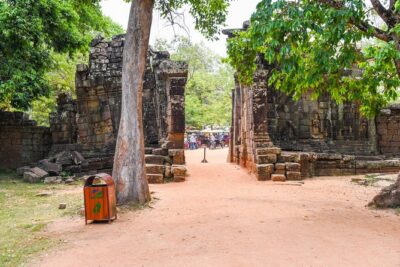
Private Full-Day Angkor Temple and Sunset Viewing with Lunch
Read our review →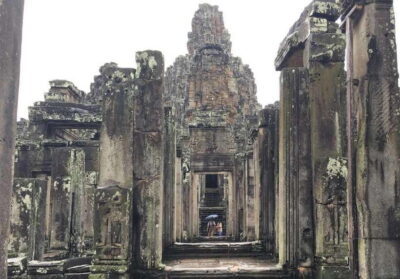
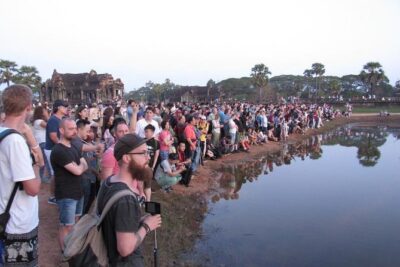
Private one-day tuktuk ‘small tour’ of the oldest Angkor temples
Read our review →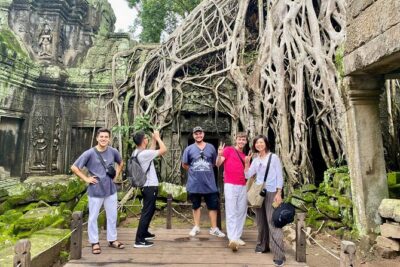
Explore Angkor Temple & Other – Private Vehicle with Tour Guided
Read our review →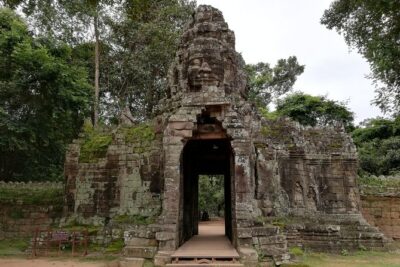
Angkor Wat Private Driver Tours to Angkor Wat Sunrise, Angkor Thom & Ta Prohm
Read our review →Browse the lists this tour appears in