
Reviewed · ANGKOR WAT TOURS
One Day Private Guide Tour of Angkor Thom, Bayon, Ta Phrom & Angkor Wat
Angkor’s best moments come in very different moods: the giant stone faces of Bayon, the jungle-wrapped courtyards of Ta Prohm, and the long, measured beauty of Angkor Wat. This private nine-hour tour links them with an English-speaking guide, air-conditioned vehicle, and the $37 Angkor pass already included.
I especially like the sensible split in the day: Angkor Thom and its smaller temples in the morning, then Ta Prohm and Angkor Wat after lunch. I also like having a guide who can explain symbols, point out photo spots, and help you avoid the most crowded paths. The main drawback is the pace. Eight major stops in one day give you a strong first look, but not the slowest, quietest temple experience.
Key Points at a Glance
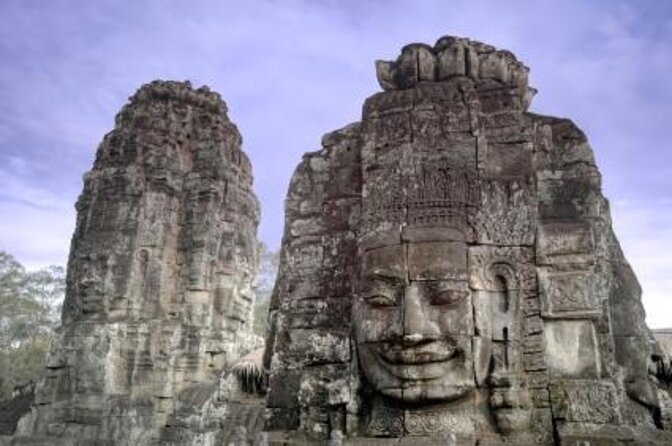
- Bayon’s 200-plus stone faces: Spend an hour among the mysterious faces of Avalokitesvara at the centre of Angkor Thom.
- A full Angkor Thom circuit: See the South Gate, Baphuon, Phimeanakas, the Royal Enclosure area, and both terraces.
- Two-hour Ta Prohm visit: Allow time for the dark galleries, courtyards, carvings, and tree-covered ruins.
- Angkor Wat in the late afternoon: The final three hours are reserved for Cambodia’s most famous monument and possible sunset light.
- Private transport and guide: Your group travels in a modern, air-conditioned vehicle with a licensed English-speaking guide.
- Good inclusions for the price: The $37 single-day temple ticket, water, taxes, and service charges are included. Lunch is not.
Why This Route Works for a First Day at Angkor
This is a broad but well-planned introduction to the Angkor Archaeological Park. You see the royal centre of Angkor Thom, the unusual faces of Bayon, a restored temple mountain, the atmospheric ruins of Ta Prohm, and the great architectural statement of Angkor Wat.
The Khmer Empire controlled much of present-day Cambodia, Laos, Thailand, and Vietnam between the ninth and twelfth centuries. The temples are not just large piles of old stone. They were religious centres, royal projects, political symbols, and carefully planned spaces filled with sculpture.
You begin at 8:00 a.m., which gives you a useful head start before the hottest part of the day. This is not a sunrise tour, so you will not need to begin in darkness. That makes the schedule easier for anyone who wants breakfast first and prefers a full day without an exhausting pre-dawn start.
Because the tour is private, the day can feel more personal than a large coach outing. You can ask why a temple was built, stop for a photograph, or request a little more time at a place that catches your eye. The tradeoff is that the stated route is packed. If you want long periods of quiet contemplation at every temple, you will need to discuss priorities with your guide.
More Angkor Wat Tours in Siem Reap:
- Angkor Wat Sunrise or Sunset Tour with Guide from Siem Reap
★ 5.0 · 12,109 reviews - Siem Reap: Angkor Wat: Small-Group Sunrise or Sunset Tour
★ 5.0 · 9,444 reviews - Siem Reap: Angkor Wat 2-Day Tour with Sunrise and Sunset
★ 4.9 · 4,429 reviews
Crossing Angkor Thom Through the South Gate
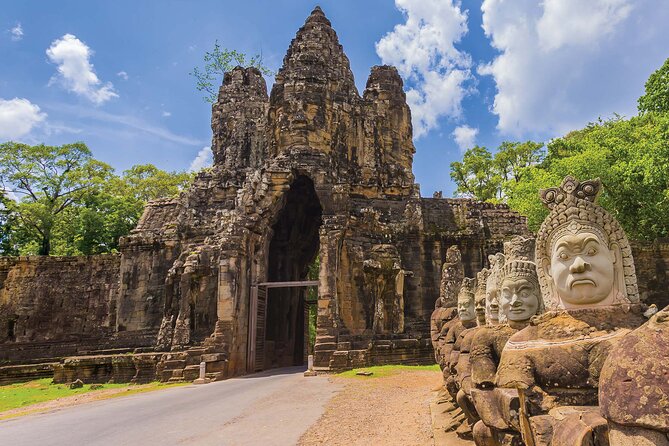
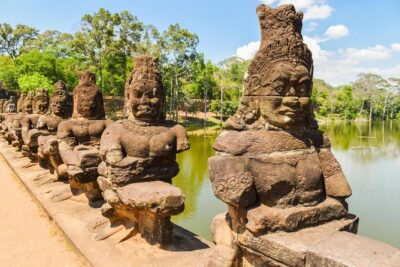
The first stop is Angkor Thom’s South Gate, with about 45 minutes set aside. This is one of the most memorable entrances in the park.
A broad causeway crosses the moat. Along it are monumental figures linked to the Hindu story of the churning of the ocean of milk. Gods and demons pull on a giant serpent, creating a dramatic entrance before you even reach the gate tower.
The South Gate introduces one of the tour’s central ideas: Angkor was designed to communicate power. The scale is deliberate. The causeway, moat, towers, and carved figures make you feel that you are entering a royal capital, not simply approaching a single shrine.
Your guide can give this scene a stronger sense of order. Without context, the statues can look like a line of similar stone figures. With an explanation of the story and the layout, the entrance becomes a carefully staged religious and political image.
Allow some time for photos, but do not let the gate consume your energy. Several major monuments are still ahead, and the morning is when you want to be freshest.
Bayon and the Faces at Angkor Thom’s Centre
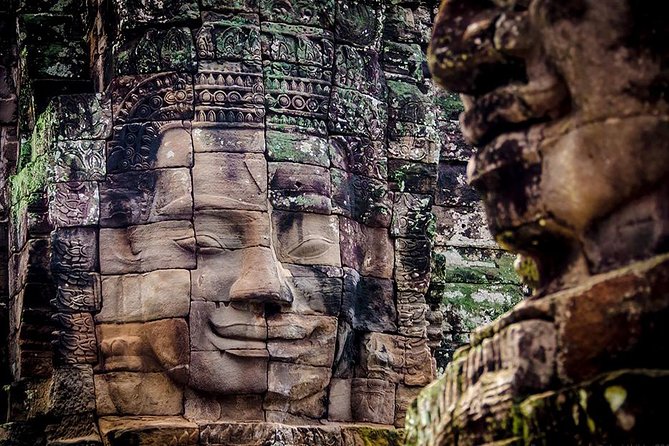
Bayon receives about an hour, and it deserves that time. Built at the centre of Angkor Thom, the temple is known for its towers covered with more than 200 large smiling faces associated with Avalokitesvara.
The faces appear from different angles as you move around the upper levels. One moment you see a single expression framed by stone. A few steps later, several faces seem to look toward you from different towers. Their calm expressions are part of the temple’s lasting appeal.
Bayon is not as immediately orderly as Angkor Wat. Its galleries, towers, and passageways create a more confusing experience. That is a strength if you enjoy discovery, but it can be hard to understand without help. A good guide can explain the religious imagery and show you how to read the temple’s layout rather than simply leading you from one photo stop to the next.
The tour gives you an hour here, enough for a useful introduction. If Bayon becomes your favourite site, ask whether you can trade a little time from one of the smaller stops. The private format makes that request possible, though the overall route may limit how much time can be added.
Baphuon, the Terraces, and Angkor Thom’s Royal Quarter
Baphuon follows Bayon, with about 30 minutes planned. This three-tiered temple mountain was built in the mid-eleventh century as the state temple of Udayadityavarman II.
Its form is different from Bayon’s crowded towers. Baphuon is more geometric, with long approaches and rising levels that make the temple feel like a carefully built mountain. It also reopened after years of restoration, which makes it an important part of the Angkor Thom visit.
Thirty minutes is enough to see its main shape and understand its place in the city. It is not enough for an unhurried study of every detail. Wear shoes you can walk in comfortably, since temple visits involve repeated movement across stone surfaces and uneven ground.
The next stops shift from temple towers to royal public spaces. The Terrace of the Elephants takes about 30 minutes. King Jayavarman VII used this long platform to watch victorious armies return to the capital. Its name comes from the detailed elephant carvings along the terrace.
The Terrace of the Leper King sits near the northwest corner of Angkor Thom’s Royal Square. It was built in the Bayon style under Jayavarman VII. Its modern name comes from a statue and later interpretation, not from a simple description of the site’s original purpose.
These terraces help you picture Angkor Thom as a working capital. The city had ceremonial routes, royal viewing platforms, religious buildings, and controlled entrances. You are not only visiting isolated monuments. You are moving through the remains of an urban centre that was once the heart of the Khmer Empire.
More Angkor Temple Tours in Siem Reap:
- Siem Reap Tour: Angkor Wat Sunrise, Bayon, Ta Prohm, Banteay Srei
★ 5.0 · 931 reviews - Siem Reap: Bike the Angkor Temples – Full-Day 30km Tour
★ 5.0 · 463 reviews - Angkor Wat one Day Private Tour for All Highlight Angkor Temples
★ 5.0 · 199 reviews - 1-Day private Angkor Temple Tour from Siem Reap
★ 4.9 · 178 reviews
Phimeanakas and the Smaller Stops
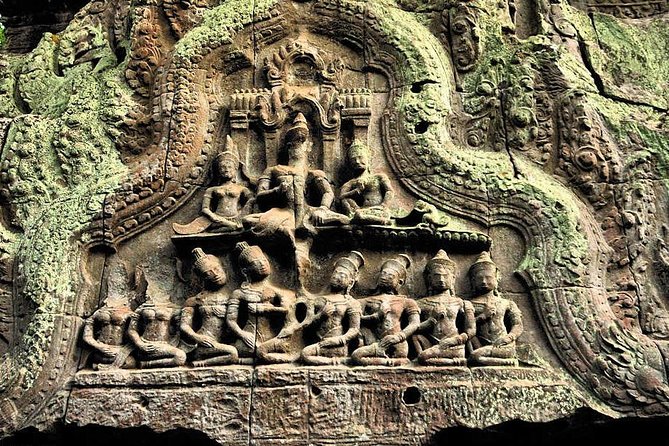
Phimeanakas is given 30 minutes. This Hindu temple was built in the Khleang style at the end of the tenth century under Rajendravarman, then completed under Suryavarman I. Its three-tiered form provides another example of how Khmer rulers used temple mountains to express religious and royal authority.
Compared with Bayon, Baphuon, and Angkor Wat, Phimeanakas may feel less immediately dramatic. That is precisely why the guide’s role matters here. A clear explanation connects the structure to the changing history of Angkor Thom and keeps the stop from becoming a quick look at another old ruin.
The itinerary also includes the Royal Enclosure area, though the named stop durations focus on Phimeanakas and the two terraces. Do not expect every corner of the enclosure to receive the same attention as Bayon or Angkor Wat. This is a broad overview, not a specialist study of Angkor Thom alone.
By the end of this morning section, you will have seen several types of Khmer architecture and public space. You will also have walked quite a bit. The air-conditioned vehicle provides useful relief between sites, especially in Cambodia’s heat.
Ta Prohm’s Tree-Covered Courtyards
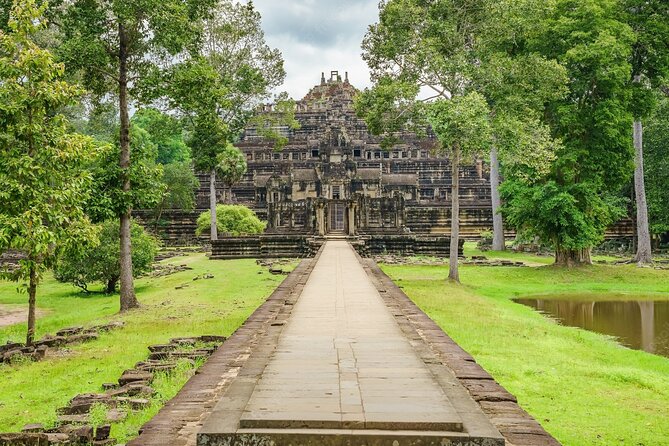
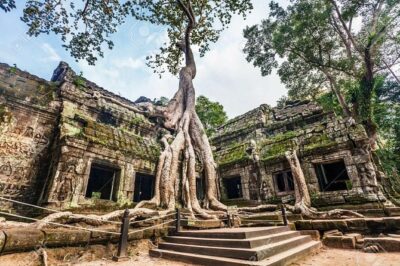
Ta Prohm receives two hours, making it one of the tour’s strongest sections. Built in 1186 by Jayavarman VII as a monastery dedicated to his mother, it has a darker and more enclosed character than the open scale of Angkor Wat.
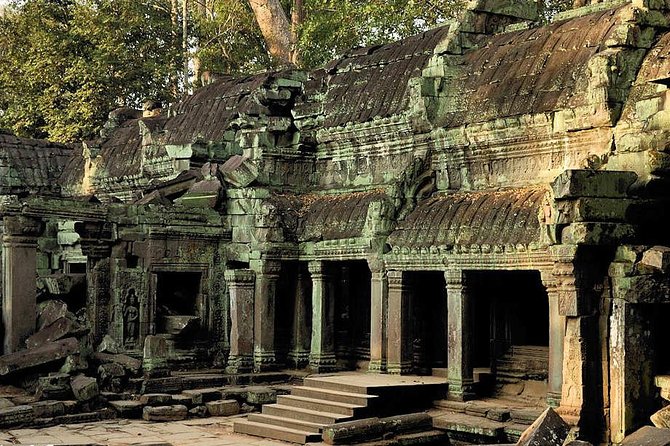
The sandstone towers, narrow courtyards, galleries, and carved surfaces create a mood of mystery. Trees grow over and around parts of the ruins, giving the site its famous appearance. The trees are not simply decoration. They show the long tension between the forest and the built temple complex.
Two hours gives you time to move beyond the first dramatic view. You can look at the carved doorways, compare the courtyards, and notice how the temple’s design changes as you pass through it. This is also a good place to rely on your guide for practical movement advice, since the most attractive routes can become congested.
Ta Prohm is often the most atmospheric stop, but it is not necessarily the easiest. Some areas are narrow, the stone is uneven, and the dark galleries can make it harder to orient yourself. Take your time and watch your footing rather than rushing after photographs.
The guide can also help distinguish genuine architectural details from the simple visual effect of trees on stone. If you like photographs, this is the stop where patience pays off. The most memorable frame may not be the first obvious tree-and-wall view.
Lunch Break and the Long Visit to Angkor Wat
Lunch is on your own account, with a break before the afternoon visit. The tour includes transport, temple admission, water, and guiding, but not food or drinks with the meal. Plan for that extra expense and use the break to rest, since Angkor Wat receives three hours.
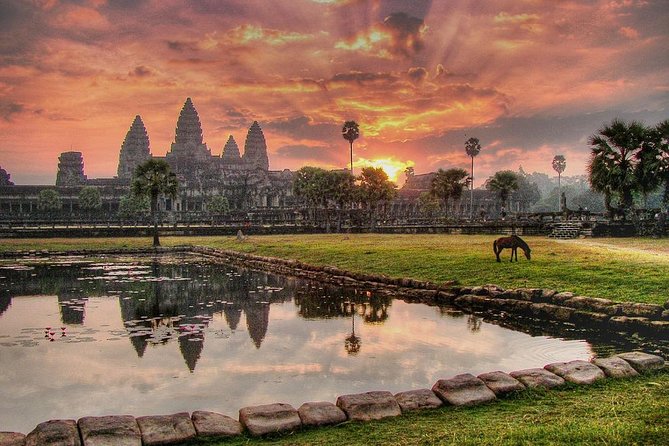
Angkor Wat was built as the funeral temple of King Suryavarman II, who ruled in the twelfth century. It is the largest and most famous monument in the park, and its scale can be hard to grasp from a single viewpoint.
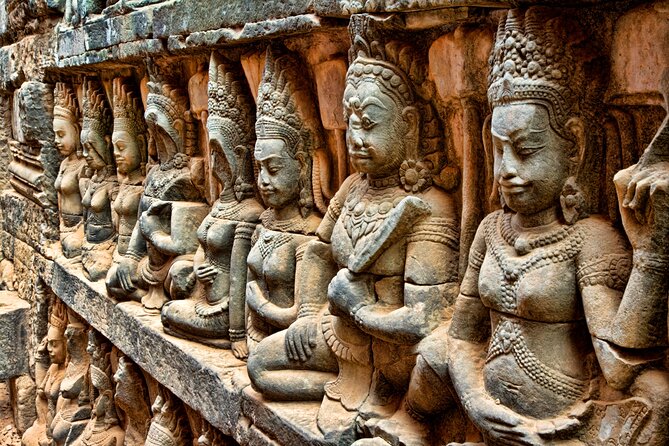
Three hours lets you approach the monument, cross its main spaces, study the galleries, and spend time with its carvings. You can appreciate both the grand plan and the small details. The long causeway and towers create the famous overall image, while the bas-reliefs reward a slower look.
Late afternoon is a smart time for this final major visit. The light can soften the stone, and the heat may be less punishing than at midday. The schedule also leaves room for sunset hours, although the exact quality of sunset depends on weather and the day’s conditions.
Do not assume the final three hours mean three uninterrupted hours inside every section. Angkor Wat is large, and the time includes moving between areas, listening to explanations, taking breaks, and finding good viewpoints. Your guide can help you decide how much attention to give the galleries, towers, exterior views, and sunset.
This is where the tour’s broad design pays off. You have already seen the strange intimacy of Bayon and the tree-covered remains of Ta Prohm. Angkor Wat then gives you a more formal, balanced climax.
What the Private Format Adds
The private arrangement is the main reason to choose this experience over a lower-cost shared outing. Only your group participates, and transport is provided in a modern, air-conditioned vehicle.
That matters in a nine-hour temple day. You can leave one site when you are ready, ask for a short pause, and speak directly with the guide. You are not waiting for a large group to gather around a flag or trying to hear an explanation from the back of a bus.
The guide is a licensed English speaker. One guide associated with the provider is Sim, who has been praised for explaining temple history and local ways of life in clear English. If Sim is assigned to your group, you can ask about him when booking. Other guides may lead the tour, so do not treat a particular guide as guaranteed unless the provider confirms it.
The strongest guide can also improve the day in small but important ways: showing you where a photograph works best, explaining what a carving represents, and suggesting how to avoid the busiest stretches. Those practical choices can matter as much as the historical information.
Two bottles of mineral water per person are included while sightseeing and during transfers. That is useful, but it is not a substitute for planning your own hydration needs during a hot day. Lunch and meal drinks remain your responsibility.
Is $146.67 Per Person a Fair Price?
At $146.67 per person, the value depends on the size of your private group. The fee covers a modern air-conditioned vehicle, a licensed English-speaking guide, temple entrance fees, two bottles of water per person, taxes, and service charges.
The included Angkor pass is worth $37 for a single day. Removing that cost leaves about $109.67 per person for private transport and guiding, though the practical value improves when two or more people share the vehicle and guide.
A solo booking will feel expensive. For a small group that wants a personal guide and a full day at the park, the price is easier to justify. You are paying for convenience, interpretation, and control over the day, not just a ride between temple gates.
Group discounts are offered, but the exact reduction is not stated. Ask for the current price based on your group size before booking. Lunch, personal insurance, and drinks during meals are not included, so keep those costs separate.
Free cancellation is available if you cancel at least 24 hours before the 8:00 a.m. start time. Changes or cancellations inside that window are not accepted for a refund.
Who Should Choose This Angkor Wat Tour?
I would recommend this tour to a first-time visitor who wants to cover the major temples in one day without managing transport and tickets alone. It also suits couples, families, and small groups that value a private guide more than the lowest possible price.
It works well if you want both famous sights and some context. Angkor Wat is the headline, but the route gives equal attention to Angkor Thom’s gates, faces, terraces, and smaller temples before reaching Ta Prohm.
You should think twice if you prefer a very slow schedule. The route has eight stops over about nine hours, and the 30-minute visits to Baphuon, the terraces, and Phimeanakas are designed as introductions. A private guide may help adjust the pace, but you cannot see every part of this huge park in depth in one day.
You should also be ready for walking, stone surfaces, heat, and a long afternoon. The air-conditioned vehicle softens the physical effort, but it does not remove it.
Should You Book It?
Book this tour if you want a well-organized first day at Angkor with private transport, an English-speaking guide, and the temple pass included. The best features are the sensible morning and afternoon split, the full Angkor Thom circuit, the two hours at Ta Prohm, and the three-hour finish at Angkor Wat.
Before confirming, ask which guide will lead your group, whether pickup from your accommodation is available, and how the group discount applies. If you want extra time at Bayon or Angkor Wat, say so early.
For a first visit, the tour gives you the right big picture. For a second visit, I would choose a slower route focused on fewer temples. This experience is about seeing the essential Angkor monuments in one carefully arranged day, with enough explanation to make the stones speak.
FAQ
Where does the tour take place?
The tour takes place in Siem Reap and the Angkor Archaeological Park in Cambodia.
What time does the tour start?
The start time is 8:00 a.m.
How long does the tour last?
The experience lasts approximately nine hours.
Is the tour private?
Yes. Only your group participates in the private tour or activity.
Is transportation included?
Yes. Private transportation in a modern, air-conditioned vehicle is included.
Is an English-speaking guide included?
Yes. A professional licensed English-speaking guide is included.
Is the Angkor temple ticket included?
Yes. The single-day Angkor Archaeological Park admission fee, listed as $37, is included.
Is lunch included?
No. Lunch is on your own account, and drinks during meals are also excluded.
Can I cancel for a full refund?
Yes, if you cancel at least 24 hours before the experience start time. Cancellations or changes made less than 24 hours before the start time are not accepted for a refund.
More 1-Day Tours in Siem Reap
- 1-Day Amazing Angkor Wat Tour with Sunset & All Interesting Major Temples
★ 5.0 · 308 reviews - 1-Day Angkor Wat Sunrise & All Interesting Temples Private Tour
★ 5.0 · 174 reviews - Angkor Wat Sunrise Small-Group 1-Day Tour from Siem Reap
★ 5.0 · 107 reviews - From Siem Reap: Angkor Wat and Floating Village 3-Day Trip
★ 5.0 · 100 reviews
New around Siem Reap
- Siem Reap Temple and Waterfall 3-Day Tour★ 4.5 · 3 reviews
- Siem Reap: Guided Day Trip to Local Village & Cooking Class★ 5.0 · 3 reviews
- Savor the Countryside: Tours with Authentic Cooking Classes”★ 5.0 · 3 reviews
- Siem Reap Private Tour: Angkor Wat Sunrise And Banteay Srei★ 5.0 · 3 reviews
- Angkor Wat Sunset In Private and Small-In-Group★ 4.3 · 3 reviews
- Angkor Wat Sunrise TukTuk Tour★ 5.0 · 3 reviews
- Exclusive Angkor temples and Small group temples tours★ 5.0 · 3 reviews
- Angkor Wat: Highlights and Sunrise with Spanish Guide★ 4.8 · 3 reviews
Angkor Wat Tours, compared.
Angkor Wat Sunrise or Sunset Tour with Guide from Siem Reap
Read our review →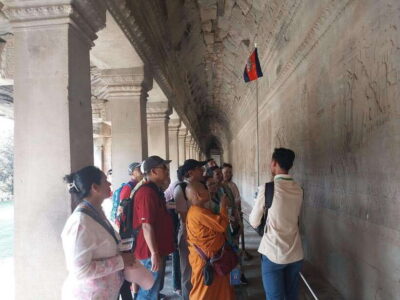
Angkor Wat: Small-Group Sunrise or Sunset Tour
Read our review →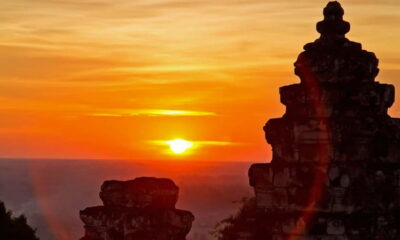
Angkor Wat Sunrise tour with Small – Group and Guide tours
Read our review →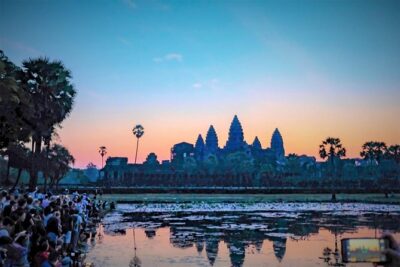
Angkor Wat Highlights and Sunrise Guided Tour from Siem Reap
Read our review →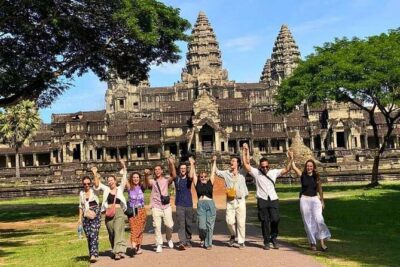
Angkor Wat Sunset Small Group Tour with Lunch Included
Read our review →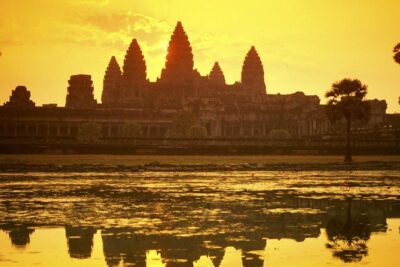
Full-Day Angkor Wat Sunrise Private Tour with Guide from Siem Reap
Read our review →
Angkor Wat Sunrise & 3 Main Temples with Breakfast – Small Group
Read our review →Browse the lists this tour appears in