
Reviewed · ANGKOR WAT TOURS
Sun Rise at Angkor Wat Small Group Day Tour from Siem Reap
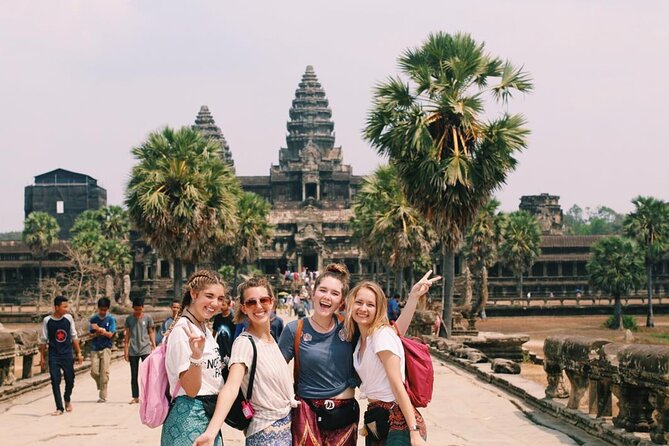
Angkor Wat before sunrise is the main event here. You leave Siem Reap in the dark, enter from the quieter eastern side, and follow the Jungle Path toward the ancient library pools. The temple slowly takes shape as daylight arrives, then your guide leads you through its carvings, central chambers, and upper terraces.
I like the small maximum group of 10, which gives you a better chance to hear the guide than on a big coach tour. I also like the early start and air-conditioned transport, since you see the major temples before the heat is at its worst. Guides named in guest feedback include Nara, Raj, and Sim, with special praise for clear explanations and friendly support.
The main drawback is the real cost. The tour is $17 per person, but the Angkor admission ticket costs another $37, bringing the basic total to $54. You also need to wake well before dawn, and sunrise is never guaranteed to produce a dramatic sky.
Key points to know before booking
- Sunrise from Angkor Wat’s eastern approach: Enter in darkness by the less-used eastern side and walk along the Jungle Path to the library pools.
- A focused eight-hour route: Angkor Wat, Ta Prohm, Bayon, the South Gate, and the Terraces of the Elephants and Leper King fit into one long morning and afternoon.
- Small-group format: The group is limited to 10 people, with hotel pickup and drop-off included.
- Guide-led temple visit: English-speaking guides such as Nara, Raj, and Sim explain Khmer culture, temple design, carvings, and royal history.
- Breakfast pause included in the rhythm: Bring a boxed breakfast from your hotel, then eat at a local cafe near Angkor Wat if you prefer.
- Low tour price, separate temple ticket: The $17 fee covers guiding, transport, water, and hotel service, but not the $37 Angkor pass.
Why the sunrise start is worth the early alarm
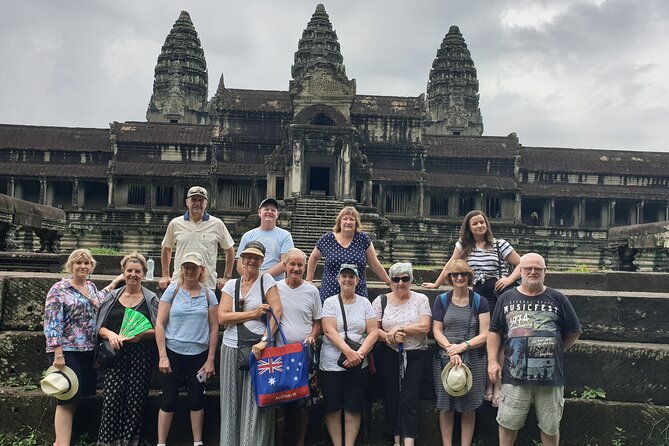
This tour begins before dawn, when Siem Reap is still quiet and Angkor Wat is mostly a dark outline. The short ride from your hotel gets you to the temple early enough to walk in darkness, rather than arriving after the first light and joining the larger daytime flow.
The eastern entrance is a smart touch. Most first-time visitors picture the famous western causeway and the temple reflected in the ponds, but this experience begins on the less-visited eastern side. You follow the Jungle Path toward the ancient library pools, where you wait for the sky to brighten.
You should keep your expectations practical. A sunrise can mean glowing color, soft gray cloud, or a pale morning with no dramatic display. The value is not only the photograph. It is the change in mood as Angkor Wat shifts from shadowy stone to a readable monument, with towers, galleries, and pools coming into view.
The early hour also helps with the heat. Cambodia can become hot and tiring around exposed temple courtyards, so completing Angkor Wat’s most demanding visit in the cool part of the day is useful. You still have a long day ahead, but you are not saving the largest temple for midday.
More Angkor Wat Tours in Siem Reap:
- Angkor Wat Sunrise or Sunset Tour with Guide from Siem Reap
★ 5.0 · 12,109 reviews - Siem Reap: Angkor Wat: Small-Group Sunrise or Sunset Tour
★ 5.0 · 9,444 reviews - Siem Reap: Angkor Wat 2-Day Tour with Sunrise and Sunset
★ 4.9 · 4,429 reviews
Angkor Wat’s carvings and upper terraces
After sunrise, you have about two hours at Angkor Wat. This is enough time for a guided introduction, a look at the long bas-relief galleries, and a visit to the central chambers and upper terraces.
Angkor Wat was built in the 12th century and is the world’s largest religious monument. Its scale can be hard to grasp at first. A guide helps you read the plan of the temple, understand the role of the galleries, and notice details that are easy to miss when you are focused only on getting the classic photo.
The bas-reliefs are a major reason to take a guided visit. They run along an exceptionally long stretch of wall and show scenes tied to Khmer religious and royal life. Rather than rushing past the carvings, you can ask your guide what you are seeing and how the scenes fit into the temple’s purpose.
The route also goes toward the central chambers and upper terraces. These higher sections give you a stronger sense of Angkor Wat’s layered design, but they can involve steps and uneven walking. Wear flat shoes with good comfort for walking, and bring water even though bottled water is supplied.
Dress matters here. Some temple areas require clothing that covers your knees and shoulders. A light shirt with sleeves and longer shorts or trousers will save you from having to adjust your clothing at the gate.
Breakfast after the first temple visit
A breakfast pause follows the Angkor Wat visit. The practical advice is to arrange a boxed breakfast from your hotel before you leave, since your normal hotel breakfast may not be open at this hour.
You can also eat at a local cafe near Angkor Wat. That gives the morning a more local feel, but the supplied information does not promise a particular cafe or meal. If you need coffee, a substantial breakfast, or food for dietary reasons, bringing your own box is the safer choice.
The pause is well placed. Sunrise and the first temple visit require an early start, and a short break lets you eat before Ta Prohm and Angkor Thom. It also gives you a chance to rest in the air-conditioned vehicle before more walking.
One useful detail from the tour experience is the supply of cold towels in hot weather. Bottled water is included as well. These are small comforts, but they matter after several hours in the sun, especially if you are visiting during a hotter period.
Ta Prohm, where trees meet stone
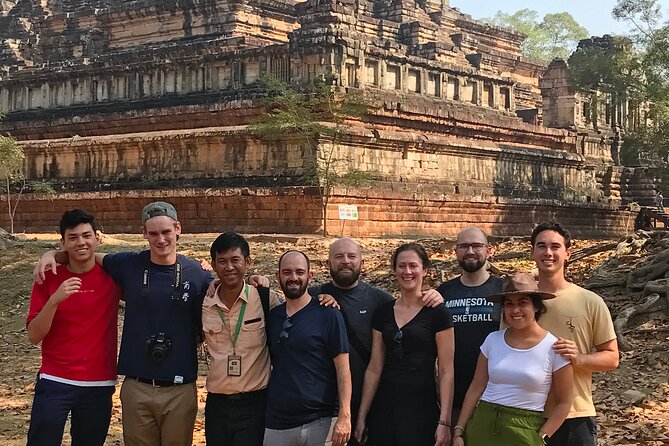
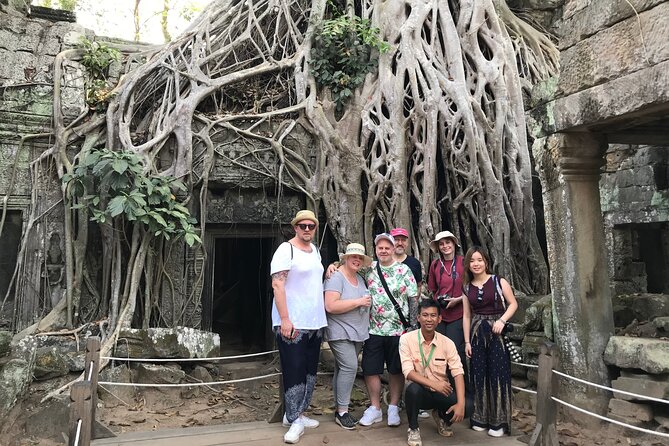
Ta Prohm is scheduled after the breakfast stop and takes about an hour. It is the temple most closely linked with the Tomb Raider film, but its appeal does not depend on the movie.
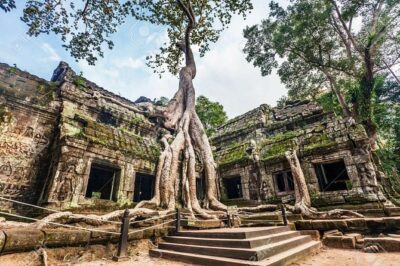
The temple was built in the 13th century and has been left in a more atmospheric condition than Angkor Wat. Trees and roots press against the stonework, and narrow passages make the visit feel more enclosed and irregular. The vegetation is not just decoration. It shows how the site looked when conservation work had to balance safety with the character of an old jungle temple.
Ta Prohm is also a place where a guide can help you slow down. You may notice carved doorways, courtyards, and collapsed sections, but the main pleasure is seeing how architecture and nature now share the same space. The hour gives you a useful visit without turning the stop into a long expedition.
Expect uneven surfaces and some tight areas. Comfortable flat shoes are important here, and the temple can feel demanding after the sunrise start. If you want a quiet, slow visit at every stop, this full route may feel busy. If you want a broad first look at the Angkor area, the pace is sensible.
More Small Group Tours in Siem Reap:
- Angkor Wat Sunset Small Group Tour with Lunch Included
★ 5.0 · 3,059 reviews - Angkor Wat Sunrise & 3 Main Temples with Breakfast – Small Group
★ 5.0 · 2,857 reviews - Angkor 2-Day Sunset & Sunrise Small-Group Tour
★ 5.0 · 2,567 reviews - Kulen Mountain: Small-Group Tour and Picnic lunch
★ 4.9 · 1,802 reviews
Entering Angkor Thom through the South Gate
The South Gate visit lasts about 30 minutes. It is one of the five gates of Angkor Thom, the fortified capital city associated with the Khmer Empire.
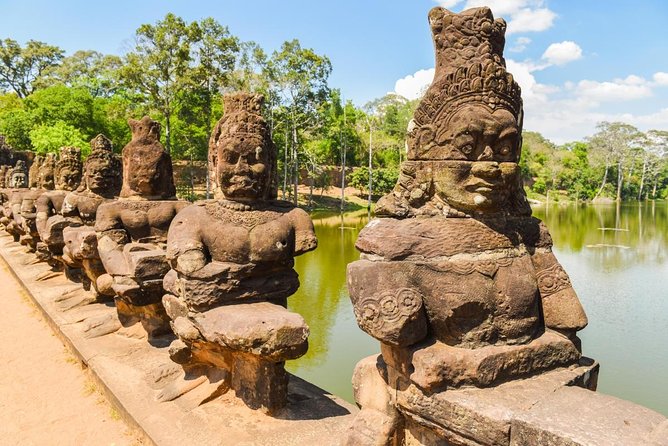
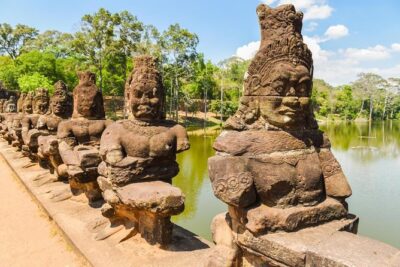
The approach is memorable because the gate is flanked by rows of stone figures. Fifty-four figures line each side, creating a ceremonial entrance rather than a simple road through the wall. You have time to see the gate, the faces, and the causeway setting before moving farther into the old city.
This stop works best as a scene setter. You are not spending hours inside the gate itself. Instead, you get a clear sense that Angkor Thom was planned as a major royal city, with grand entrances and monumental public spaces.
The stop is also useful for photographs, but do not treat it as only a photo pause. Your guide can connect the figures and gate design to the wider city, making the next visit to Bayon easier to understand.
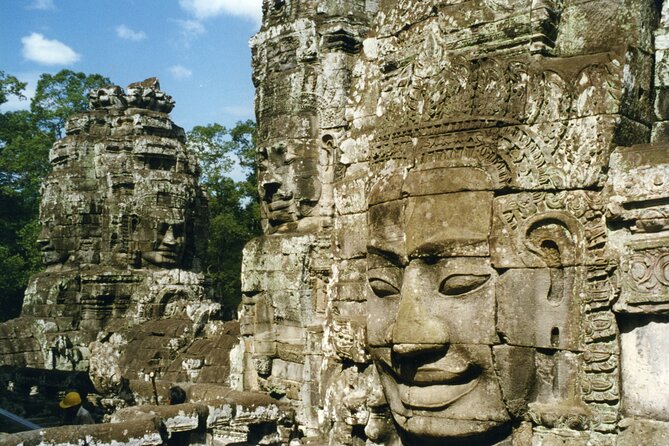
Bayon’s many stone faces
Bayon receives about an hour and sits at the center of Angkor Thom. It was built in the 13th century as the state temple of King Jayavarman VII.
The temple has a different personality from Angkor Wat. Angkor Wat is broad, ordered, and carefully framed by long galleries. Bayon feels more crowded with towers and carved faces, with routes that turn through the central structure. The famous faces are the feature most people want to see, but the bas-reliefs and compact layout deserve attention too.
Your guide’s explanations are especially useful here because the temple can appear confusing at first. You can spend your hour looking for the faces, then shift your attention to the reliefs and the way the temple occupies the center of the capital.
One practical point: this is another stop where the ground and steps may be uneven. The group format helps keep the visit moving, but you should stay aware of the meeting point and follow your guide’s timing. An eight-hour tour has room for the major sights, not unlimited time at each carving.
Angkor Thom’s terraces and quieter moments
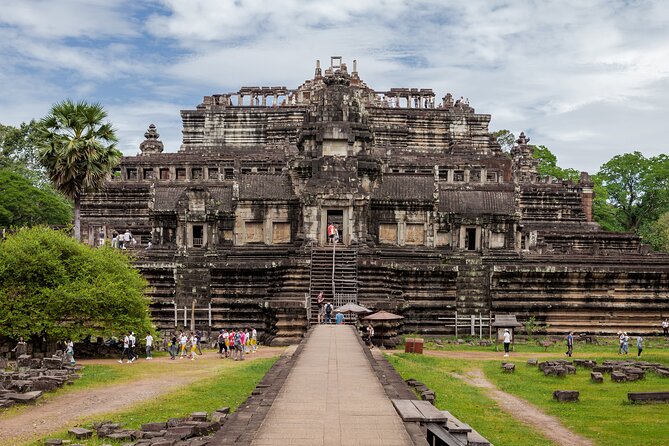
The itinerary includes time at the Terrace of the Leper King and the Terrace of the Elephants, each listed at about 40 minutes. These are open, horizontal monuments rather than enclosed temples, so the heat may feel stronger here.
The Terrace of the Leper King is a U-shaped structure built in the 13th century under Jayavarman VII. Some interpretations connect it with royal cremation ceremonies. Its modern name comes from a statue and later associations, but the carved walls and enclosed layout are the main reasons to stop.
The Terrace of the Elephants stretches about 350 meters. It served as a reviewing stand for public ceremonies and as a base for the king’s grand audience. Local Khmer residents sometimes call it the Ancient Khmer Stadium, a name that helps you picture its long public frontage.
These terraces add an important civic side to the day. Angkor is not only a collection of religious buildings. These broad platforms show how royal events, audiences, and public display fitted into the capital.
The tour also promises a less-seen place within Angkor Thom. The precise location is not stated, so you should treat it as a bonus rather than plan your day around a specific secret site. It may give your group a quieter pause, but the core value remains the named temples and terraces.
Transport, group size, and guide quality
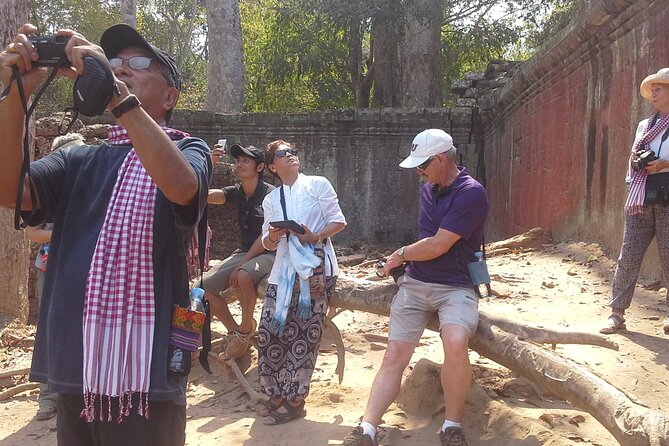
Hotel pickup and drop-off are included, along with an air-conditioned vehicle, an English-speaking guide, and bottled water. The group maximum is 10, a useful middle ground between a private tour and a large bus.
A small group can make a real difference at Angkor. You can hear the explanation, ask a question, and keep track of the guide without dealing with dozens of people. It does not mean you will have every monument to yourself, especially at sunrise, but it should feel more personal than a large scheduled group.
The transport may vary if you are the only person booked. One guest was told the tour would continue with a tuk-tuk when there were no other bookings, and described that change as adding to the adventure. The standard inclusions specify an air-conditioned vehicle, so confirm the transport arrangement if comfort is especially important to you.
The guides named in the supplied feedback include Nara, Raj, and Sim. Nara is described as friendly and strong on information, while Raj received praise for an informative morning and for the value of the breakfast pause. Sim guided a solo guest when the group did not fill. These names give you a useful sense of the staff, but the assigned guide can vary.
What the $17 price really covers
At $17 per person, this is an inexpensive way to arrange transport, a guide, hotel service, water, and a full day at the temples. The admission ticket is not included, and the stated Angkor ticket price is $37 per person.
That makes the basic total $54 per person before any personal breakfast or other spending. I would judge the value on the full amount, not the headline price. For that total, you receive about eight hours of organized sightseeing, several major Angkor sites, and a guide who can provide context instead of leaving you to work out the complex on your own.
The value is strongest if you want the major sights in one day. A private guide and private transport would normally offer more control, but this small-group option keeps the cost lower. It also removes the need to arrange a pre-dawn ride, which is one of the less convenient parts of a sunrise visit.
Group discounts are listed as a feature, though no discount amount is provided. Ask for the current terms if you are booking for several people.
Who should book this Angkor day?
I would recommend this tour to a first-time visitor with one full day for the main Angkor highlights. You get the signature sunrise, Angkor Wat’s galleries, Ta Prohm’s tree-covered ruins, Bayon’s faces, and the public monuments of Angkor Thom in one route.
It also suits you if you want some guidance but do not need a private itinerary. The maximum of 10 is small enough for questions and practical help, while the $17 operator fee keeps the arrangement fairly accessible before the temple ticket.
It is less suitable if you dislike early starts, want long unstructured time at one temple, or need a guaranteed air-conditioned vehicle when traveling alone. The route is active, and the main temples require walking on uneven surfaces. Families and most adults who can manage a full sightseeing day should be able to participate, according to the stated tour information.
Free cancellation is available up to 24 hours before the start time. Changes or cancellations inside that window are not accepted for a refund, so keep the local cutoff in mind.
Should you book this sunrise tour?
Book it if you want an efficient first day at Angkor and appreciate a guide who can explain what you are seeing. The strongest features are the eastern-side entry into Angkor Wat, the small group, the early timing, and the clear route through the best-known temples.
Before paying, budget for the separate $37 admission ticket, arrange a boxed breakfast, and wear clothing that covers your knees and shoulders. If those points work for you, this is a practical, good-value introduction to Angkor, with enough structure to make a huge archaeological site manageable without turning the day into a rushed bus tour.
FAQ
Where does this tour take place?
The tour begins in Siem Reap, Cambodia, with pickup and drop-off at your hotel.
How long does the tour last?
The experience lasts approximately eight hours.
What time does the tour begin?
It starts before dawn so you can reach Angkor Wat in darkness and wait for sunrise. A specific pickup time is not provided.
Is the Angkor admission ticket included?
No. The Angkor Wat admission fee is listed separately at $37 per person.
How much does the tour itself cost?
The listed tour price is $17 per person, excluding the $37 temple admission ticket.
How large is the group?
The tour has a maximum of 10 travelers.
What transport is included?
Hotel pickup and drop-off and an air-conditioned vehicle are included. A tuk-tuk may be used if only one person books, so confirm the arrangement if needed.
Is breakfast included?
Breakfast is not listed as an inclusion. You are advised to take a boxed breakfast from your hotel or eat at a local cafe near Angkor Wat.
What should I wear?
Some temples require clothing that covers your knees and shoulders. Flat, comfortable shoes are recommended for walking.
What is included in the tour price?
An English-speaking guide, transport, hotel pickup and drop-off, and bottled water are included.
Can I cancel for a full refund?
Yes, if you cancel at least 24 hours before the experience start time. Cancellations made less than 24 hours in advance are not refunded.
New around Siem Reap
- Kulen Mountain With Ticket included Plus Banteay Srei Temple Tour★ 5.0 · 7 reviews
- 2 Days Angkor temples with Sunrise & Sunset★ 5.0 · 7 reviews
- Private Siem Reap Airport Transfer to hotel in town★ 5.0 · 7 reviews
- 1-Day private Angkor Temple Tour with Sun Rise by Tuk Tuk from Siem Reap★ 4.5 · 7 reviews
- Siem Reap: Morning Cooking Class & Market Tour★ 5.0 · 7 reviews
- Kulen Mountain, Killing Fields and War Museum Tour★ 5.0 · 7 reviews
- War Museum, Killing Field, and APOPO Hero RATs Tour★ 5.0 · 7 reviews
- Angkor Explorer by Cambodiajeep★ 5.0 · 7 reviews
Angkor Wat Tours, compared.
Angkor Wat Sunrise or Sunset Tour with Guide from Siem Reap
Read our review →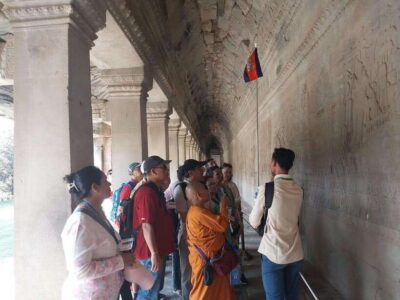
Angkor Wat: Small-Group Sunrise or Sunset Tour
Read our review →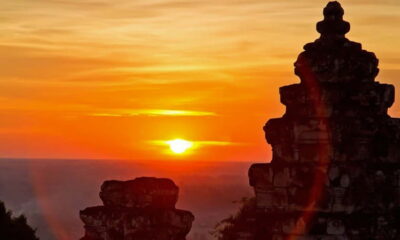
Angkor Wat Sunrise tour with Small – Group and Guide tours
Read our review →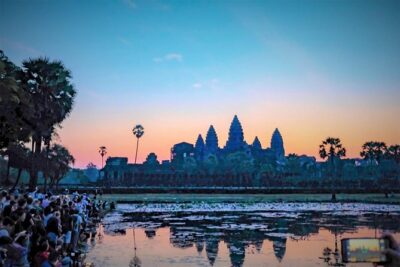
Angkor Wat Highlights and Sunrise Guided Tour from Siem Reap
Read our review →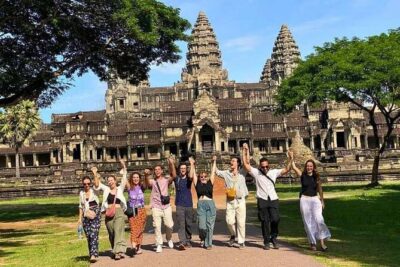
Angkor Wat Sunset Small Group Tour with Lunch Included
Read our review →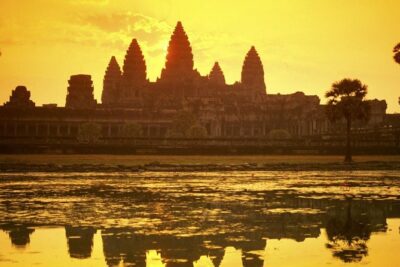
Full-Day Angkor Wat Sunrise Private Tour with Guide from Siem Reap
Read our review →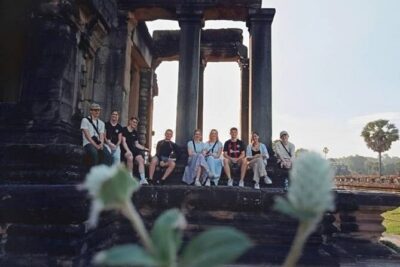
Angkor Wat Sunrise & 3 Main Temples with Breakfast – Small Group
Read our review →Browse the lists this tour appears in