
Reviewed · ANGKOR WAT TOURS
Full-Day private Tour in Lost City & Angkor Wat from Siem Reap
Angkor Wat is only the opening act here. This private eight-hour tour links the great temple with Bayon’s giant stone faces, the long terraces of Angkor Thom, and Ta Prohm’s tree-covered ruins. I like the eastern approach to Angkor Wat and the chance to move at your own pace with a guide such as Sim or Rith.
I also like that the tour includes hotel pickup, a private vehicle, bottled water, and an English-speaking guide for $30 per person. The catch is that the temple admission fee, lunch, and cold drinks are extra, and the heat can make the long itinerary tiring.
Key points to know
- Eastern-side entry at Angkor Wat: Begin away from the usual approach, then follow a jungle path toward the temple chambers and bas-reliefs.
- Private pacing: Your group alone joins the tour, so you can adjust the order or slow down when temple fatigue sets in.
- A full Angkor Thom circuit: Bayon, Baphuon, Phimeanakas, the Terrace of the Elephants, and the Terrace of the Leper King all appear in one day.
- Ta Prohm at the finish: The famous tree-covered temple provides one of the day’s most atmospheric stops.
- Strong guide support: Sim and Rith are named guides associated with the experience, with particular praise for clear history, flexibility, and personal pacing.
- Budget-friendly structure: The $30 price covers transport and guiding, but you must budget separately for admission, food, and drinks.
One day, three faces of Angkor
This tour gives you a broad look at Angkor rather than spending the whole day at one temple. You begin with the scale and formal beauty of Angkor Wat, move into the old capital of Angkor Thom, and finish among the roots and broken galleries of Ta Prohm.
That order works well because each place feels different. Angkor Wat is grand and carefully planned. Bayon feels crowded with stone faces and stories. Ta Prohm is more irregular, with trees and ruins sharing the same space.
The schedule adds up to about eight hours, including roughly two hours at Angkor Wat, an hour at Bayon, an hour at Baphuon, and an hour at Ta Prohm. The other stops fill in the middle of the day. You will walk a lot, climb some temple steps, and spend much of the time outdoors, so comfortable flat shoes matter.
More City Tours in Siem Reap
- Siem Reap: City Walking Tour
★ 4.6 · 583 reviews - Angkor Wat Sunrise & Ancient City Discovery
★ 5.0 · 124 reviews - Siem Reap City Walking Tour
★ 4.5 · 114 reviews
Angkor Wat from the quieter eastern side
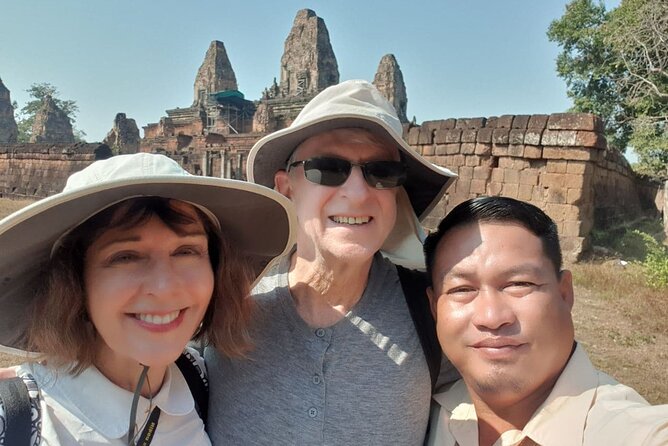
The first major stop is Angkor Wat, the largest religious monument in the world. Built in the early 12th century, it has remained an active religious center since its foundation, which gives the site more weight than a simple archaeological ruin.
Instead of starting from the best-known western entrance, this tour uses the less-visited eastern side. You then walk along a jungle path toward an ancient library pool before entering the great temple complex. This route offers a slower start and can help you avoid the busiest flow near the main approach.
Inside, your guide explains the temple’s layout, stories, myths, and carved scenes. The bas-reliefs run for an extraordinary distance along the walls, and they reward patient looking. You will see scenes that are easy to mistake for decoration until someone points out the characters, battles, gods, and symbols.
The route continues into the central chambers and up toward the upper terraces. That makes the visit more than a quick photo stop, but it also means stairs and uneven surfaces. Sacred areas require clothing that covers your knees and shoulders, so pack a light layer or wear suitable clothes from the start.
Allow two hours here, and do not spend all of that time rushing between viewpoints. Angkor Wat is the place where a guide can help you see what you might otherwise walk past.
The South Gate and the road into Angkor Thom
After Angkor Wat, the vehicle takes you to the South Gate of Angkor Thom. This was one of five entrances into the fortified capital of the Khmer Empire.
The gate is lined by 54 stone figures on each side, creating a dramatic approach over the causeway. The figures represent the forces involved in the famous churning of the ocean of milk, a story that appears in Khmer and Hindu religious art.
You have about 20 minutes here. That is enough for photographs and a look at the gate, but not a long exploration. The stop works mainly as a visual introduction to Angkor Thom before you reach the temples inside.
Bayon and its 200 stone faces
Bayon is the emotional center of the Angkor Thom portion. Built in the 13th century as the state temple of King Jayavarman VII, it rises at the center of the old capital.
Its most memorable feature is the group of huge serene faces carved on the temple towers. More than 200 faces look out from different levels, and their expressions change as you move around them. From one angle they seem calm and distant. From another, they feel almost personal.
Give yourself an hour here. The temple is not best understood from one viewpoint, so walk through its galleries and upper levels where access allows. Your guide can explain the two sets of bas-reliefs: the outer gallery shows historical events and ordinary Khmer life, while the inner gallery focuses on religious and mythological scenes.
Bayon is less orderly than Angkor Wat. Corridors narrow, stones overlap, and the route can feel confusing. That is exactly where a good guide earns the fee. Sim is described as flexible and strong at explaining the ancient culture, while Rith is also associated with attentive guiding and a calm pace.
More Angkor Wat Tours in Siem Reap:
- Angkor Wat Sunrise or Sunset Tour with Guide from Siem Reap
★ 5.0 · 12,109 reviews - Siem Reap: Angkor Wat: Small-Group Sunrise or Sunset Tour
★ 5.0 · 9,444 reviews - Siem Reap: Angkor Wat 2-Day Tour with Sunrise and Sunset
★ 4.9 · 4,429 reviews - Siem Reap: Full-Day Angkor Wat Guided Tour with Sunset
★ 4.9 · 3,803 reviews
Baphuon, the bronze tower of Angkor Thom
Baphuon sits northwest of Bayon and takes about an hour. Built in the mid-11th century, it is a three-tiered temple mountain that once served as a state temple.
The scale is impressive. Its base measures about 120 meters from east to west and 100 meters from north to south. The structure rises about 34 meters without its original tower, which would have brought the total height close to 50 meters.
Baphuon has a more open, ascending feel than Bayon. You can better sense the temple-mountain design here, with each level leading upward toward the sacred center. The climb and uneven stone make sturdy footwear useful.
The long approach is part of the experience, but the stop may feel demanding after Angkor Wat and Bayon. If your energy drops, tell your guide. The private setup allows more room to adjust than a fixed group schedule.
Angkor Thom’s quieter corners
The tour includes short pauses at less prominent parts of Angkor Thom. They are described as places many tourists do not see, but the exact stops are not specified in detail.
Treat these as breathing spaces rather than major monuments. Ten minutes can be enough to enjoy the trees, walls, and old capital setting without trying to turn every stop into a formal visit. These brief breaks also give your guide a chance to alter the order if the heat, crowds, or rain make another plan wiser.
One past outing with Sim moved a temple earlier in the day and later paused at a coffee place near Angkor Wat when temple fatigue set in. That flexibility is useful. Eight hours among major ruins is a lot, and a private tour should not feel like a race.
Phimeanakas inside the royal enclosure
Phimeanakas, also called Vimeanakas, is located inside the walled Royal Palace area of Angkor Thom. The temple began in the late 10th century under Rajendravarman and was later completed by Suryavarman I.
Its form is a three-tiered pyramid. A tower once rose from the top, with galleries around the upper platform. Unlike Bayon and Angkor Wat, Phimeanakas can feel more restrained. Its value comes from its setting inside the royal enclosure and its place in the development of Khmer temple design.
The listed visit lasts about an hour, which gives you time to look beyond the main photo angle. Ask your guide to connect the temple to the larger royal compound. Without that context, Phimeanakas can seem like a simple stone pyramid beside more famous sites.
The Terrace of the Elephants
The Terrace of the Elephants stretches about 350 meters and was used as a viewing stand for public ceremonies and royal audiences. Some Khmer residents call it the Ancient Khmer Stadium, a useful comparison because the terrace was built for public display rather than private worship.
The elephant carvings are the obvious draw, but the long platform also helps you picture how the royal court presented itself. King Jayavarman VII built it in the 13th century, and it formed part of the ceremonial heart of Angkor Thom.
You have about 40 minutes here. The stop is less enclosed than the main temples, so sunlight can be intense. Use the time for photographs, then listen as your guide explains how the terrace functioned.
The Terrace of the Leper King
Nearby, the Terrace of the Leper King offers a different kind of detail. The U-shaped structure may have served as a royal cremation site, though the exact use is not certain.
It was built in the 13th century under Jayavarman VII. The modern name comes from a later sculpture found at the site, which depicts Yama, the Hindu god of death. The narrow enclosed passages make this stop more intimate than the long Terrace of the Elephants.
Plan on about 40 minutes. Look carefully at the carved figures tucked into the inner walls. This is a place where a quick walk around the outside misses the best material.
Ta Prohm, where trees meet the ruins
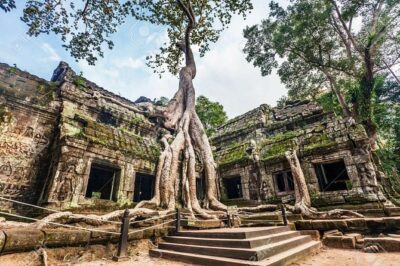
Ta Prohm is the final major temple and the stop most closely tied to popular images of Angkor. Built in the 13th century, it was a religious center in the middle of the ancient Khmer university.
Its appeal comes from the way the ruins and jungle remain together. Trees grow through and over parts of the temple, while roots press against galleries and doorways. Ta Prohm was kept in much the condition in which it was found, which gives it a less restored and more atmospheric feel than Angkor Wat.
The temple is often called the Tomb Raider temple, and that nickname has helped make it one of the most visited sites in Cambodia. The fame brings crowds, so do not expect total solitude. Still, the setting feels different from the open ceremonial spaces earlier in the day.
You have about an hour here. Watch your footing, especially around broken stones and narrow passages. Ta Prohm is best taken slowly, with time to notice the carved doorways and the contrast between living trees and ancient masonry.
What the $30 price really covers
At $30 per person, this is a low-cost way to arrange a private day around Angkor. The price includes hotel pickup and drop-off, a private comfortable vehicle, bottled water, and an English-speaking guide.
That matters because transport between the temples is part of the day. You are not left to arrange separate rides between Angkor Wat, Angkor Thom, and Ta Prohm, and you have a shaded vehicle between walking sections.
The main extra cost is the temple admission fee. The guide sends a link in advance so you can purchase the temple entrance e-ticket. Lunch and cold drinks are also not included, although the schedule provides time to eat at a restaurant near the temples.
The value is strongest for a small group that wants private service without paying for a luxury package. If you are traveling alone, $30 buys convenience and guidance, but the admission fee and meals make the final cost higher.
Heat, clothing, and the pace of the day
Cambodia’s heat is the main practical challenge. One past outing was described as excellent despite coarching humidity, and another included a coffee break after the group became temple-weary. Plan around that reality.
Wear flat shoes that can handle uneven ground and steps. Cover your knees and shoulders for sacred areas, and bring water even though bottled water is supplied. A hat and light clothing may help, but the clothing still needs to meet temple requirements.
The schedule is full. Angkor Wat, Bayon, Baphuon, and Ta Prohm each deserve real attention, while the terraces and smaller Angkor Thom stops add more walking. You should choose this tour if you want a broad first look at the major sites. If you prefer long quiet periods at one temple, the pace may feel too busy.
The private format is the best safeguard. You can ask to shorten a stop, change the order, or take a brief pause. The guide is not simply there to point out names. The strongest part of the experience is the ability to connect carved scenes, royal power, religion, and daily life as you move through the ruins.
Who should book this Angkor day?
Book this tour if you want the main Angkor highlights in one organized day, especially if you value hotel pickup and a guide who can adapt to your energy. It suits first-time visitors, couples, families, and small groups that do not want to share a fixed coach schedule.
It is also a good fit if you want more than the standard Angkor Wat photo stop. The route includes the South Gate, Bayon, Baphuon, Phimeanakas, both terraces, and Ta Prohm, giving you a useful sense of how the temples fit into the old capital.
Think twice if you dislike heat, long walks, or a tightly packed sightseeing day. The tour is private, but it is still eight hours of temple roads and stone paths. Ask for a slower plan if you know you will need more breaks.
Free cancellation is available up to 24 hours before the start time for a full refund. Changes or cancellations within 24 hours are not refunded or accepted.
FAQ
How long does the tour last?
The tour lasts about eight hours.
Is hotel pickup included?
Yes. Pickup and drop-off at your hotel are included.
Is this a private tour?
Yes. Only your group participates in the activity.
Is temple admission included in the price?
No. The Angkor temple admission fee is not included. The guide sends a link so you can purchase the temple entrance e-ticket in advance.
Which temples are included?
The route includes Angkor Wat, Bayon, Baphuon, Phimeanakas, Ta Prohm, the South Gate of Angkor Thom, the Terrace of the Elephants, and the Terrace of the Leper King.
Is lunch included?
No. Lunch and cold drinks are not included. The schedule provides time to eat at a restaurant near the temples.
What should I wear?
Wear clothing that covers your knees and shoulders when entering sacred areas. Flat, comfortable shoes are recommended for walking.
Can I cancel for a full refund?
Yes. You can cancel at least 24 hours before the experience start time for a full refund. Cancellations or changes made less than 24 hours before the start time are not accepted, and the amount paid is not refunded.
More Full-Day in Siem Reap
- Full-Day Angkor Wat Sunrise Private Tour with Guide from Siem Reap
★ 5.0 · 2,920 reviews - Siem Reap: Angkor Wat Sunrise and Full-Day Sightseeing Tour
★ 4.9 · 2,828 reviews - Full-Day Guided Sunset Tour of Angkor Wat
★ 5.0 · 1,507 reviews - Siem Reap: Full Day Angkor Wat Temple Experience with Sunset
★ 4.9 · 1,490 reviews
New around Siem Reap
- Kulen Mountain With Ticket included Plus Banteay Srei Temple Tour★ 5.0 · 7 reviews
- 2 Days Angkor temples with Sunrise & Sunset★ 5.0 · 7 reviews
- Private Siem Reap Airport Transfer to hotel in town★ 5.0 · 7 reviews
- 1-Day private Angkor Temple Tour with Sun Rise by Tuk Tuk from Siem Reap★ 4.5 · 7 reviews
- Siem Reap: Morning Cooking Class & Market Tour★ 5.0 · 7 reviews
- Kulen Mountain, Killing Fields and War Museum Tour★ 5.0 · 7 reviews
- War Museum, Killing Field, and APOPO Hero RATs Tour★ 5.0 · 7 reviews
- Half-Day: Silk Farm, Senteur Angkor, and Satcha Workshop★ 4.6 · 7 reviews
Angkor Wat Tours, compared.
Angkor Wat Sunrise or Sunset Tour with Guide from Siem Reap
Read our review →
Angkor Wat: Small-Group Sunrise or Sunset Tour
Read our review →
Angkor Wat Sunrise tour with Small – Group and Guide tours
Read our review →
Angkor Wat Highlights and Sunrise Guided Tour from Siem Reap
Read our review →
Angkor Wat Sunset Small Group Tour with Lunch Included
Read our review →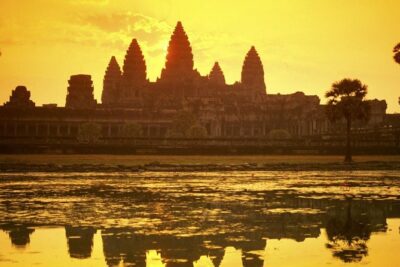
Full-Day Angkor Wat Sunrise Private Tour with Guide from Siem Reap
Read our review →
Angkor Wat Sunrise & 3 Main Temples with Breakfast – Small Group
Read our review →Browse the lists this tour appears in