
Reviewed · SIEM REAP TOURS
Siem Reap: City Walking Tour
Siem Reap’s temples get the headlines, but this $6 walking tour shows you the town where you eat, shop, pray, and plan your evenings. In two hours, you move from the Royal Residence and gardens through colonial-era lanes, a major pagoda, the Old Market, and Pub Street.
I like the easy introduction to local life, especially the explanations of Cambodian food, road-crossing habits, homes, religion, and daily routines. I also like the small groups, limited to 10 people, and the chance to ask a local guide where to eat or what to do after dark. The main drawback is the heat: even with shaded stretches, comfortable shoes, a hat, sunscreen, and water make a big difference.
Key points at a glance
- Royal Gardens first: Begin near the Royal Residence and see a calmer, greener side of central Siem Reap.
- Kandal Village on foot: Browse a fashionable area of small shops and coffee houses set among older colonial buildings.
- Wat Preah Prom Rat: Visit Siem Reap’s largest pagoda and see its striking reclining Buddha.
- Markets with local context: Walk through Psar Chas, where souvenirs sit beside produce, fish, clothing, and food stalls.
- Pub Street in daylight: Learn how the nightlife district works before deciding where to return in the evening.
- A strong first-day tour: The route helps you understand distances and gives you a useful local contact for the rest of your stay.
Why this short walk works so well
Siem Reap can feel scattered when you first arrive. Hotels, restaurants, markets, pagodas, galleries, and nightlife areas all sit within a walkable central zone, but the connections are not always obvious. This tour gives you a mental map before you spend your days visiting Angkor.
The format is simple: meet outside Damnak Supermarket at the corner of Wat Bo Road and 7 Makara Street, also called High School Road, five minutes before the start. There is no hotel pickup, so allow time to reach the meeting point. A tuk-tuk is a practical way to get there if you are staying farther away.
The two-hour length is one of the tour’s best features. You get a useful introduction without giving up half a day of temple time. A few guides have allowed the walk to run longer when the group wanted more time, but you should plan on two hours rather than count on an extended outing.
The strongest part of the experience is the guide. Tee, Sai, Ty, Chek, Tea, and other guides are praised for clear English, humor, personal stories, and a real sense of pride in Cambodia. Guide assignments can change, but the best version of this tour feels like a friendly conversation with someone who can explain what you are seeing without turning every stop into a lecture.
More City Tours in Siem Reap
- Angkor Wat Sunrise & Ancient City Discovery
★ 5.0 · 124 reviews - Siem Reap City Walking Tour
★ 4.5 · 114 reviews - Siem Reap City Hidden Gems (Private Guided Tour)
★ 5.0 · 105 reviews
Starting at the Royal Residence and Gardens
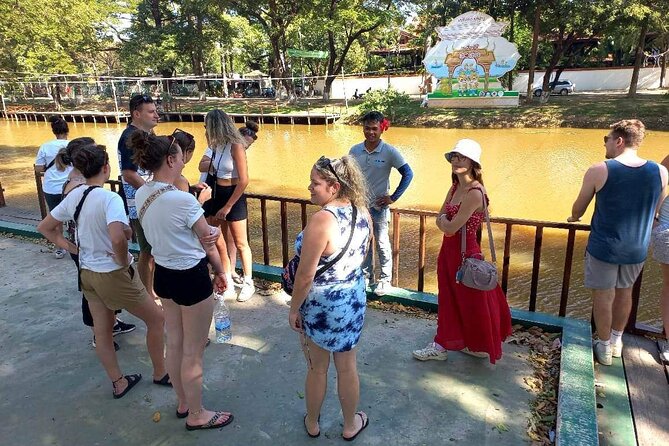
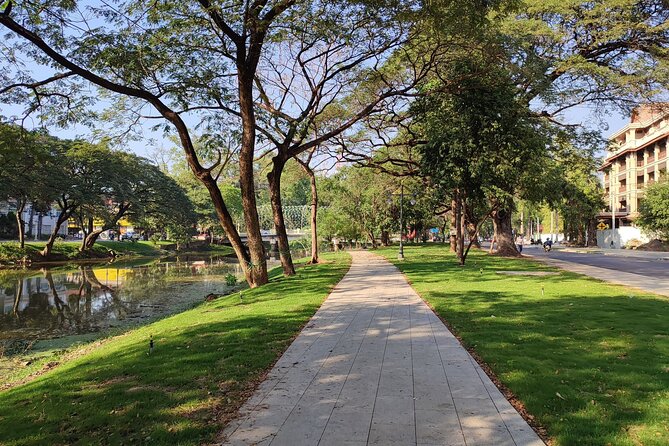
The tour opens at the Royal Gardens and Royal Residence, a pleasant place to begin learning how Siem Reap’s public center is arranged. You get a change of pace from traffic and shopfronts, with open garden space and a sense of the town’s civic heart.
Your guide can add meaning to details you might otherwise walk past. The point here is not a long palace visit or an elaborate royal tour. It is an orientation stop that places modern Siem Reap in a wider Cambodian setting.
This section also gives you a chance to settle into the walking pace. Depending on the starting time, heat and sun can be serious factors. Much of the route is manageable, and some sections offer shade, but you should not treat this as an air-conditioned sightseeing experience.
The gardens are especially useful at the start of a first visit. You can ask practical questions early: which areas are best for dinner, how to handle tuk-tuks, and where you might return after the tour. The guides have also helped people locate evening performances and other activities.
Colonial lanes and the style of Kandal Village
From the royal area, the route moves through back streets toward Kandal Village. This is one of the most appealing parts for anyone who wants to see more than the main tourist strips.
Kandal Village mixes boutique shops, coffee houses, and older colonial architecture. The area has a polished side, but walking through it with a local guide helps you see how the newer businesses fit into Siem Reap’s older street pattern.
You may want to stop and browse, though this is not primarily a shopping tour. The useful thing is the context. Your guide can point out architectural details, explain how parts of the town have changed, and suggest places worth returning to when you have more time.
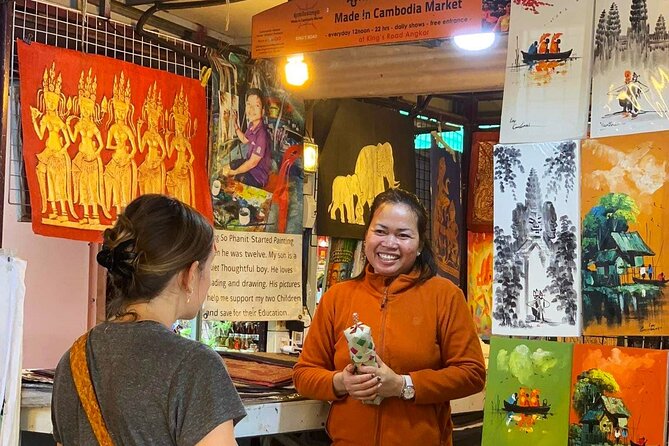
A stop at a local craft or art market may also be included along the route. One especially worthwhile type of visit is a market selling handmade goods connected with local and disabled artists. It gives you a chance to buy a souvenir with a clearer connection to Cambodia than a generic airport purchase, though shopping is optional and personal spending is not included.
Wat Preah Prom Rat and the reclining Buddha
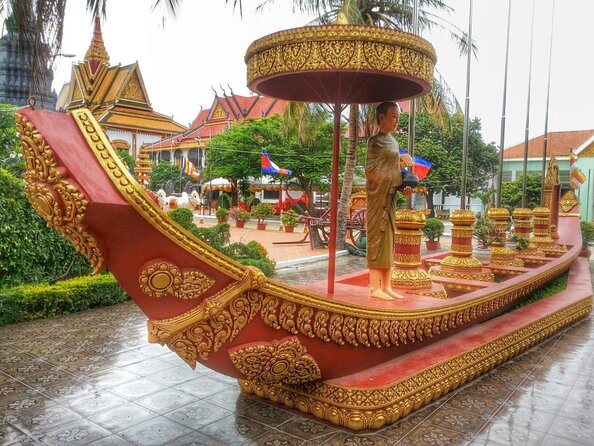
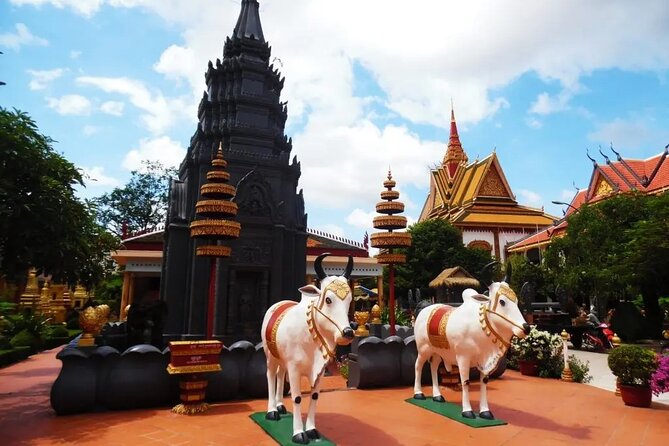
Wat Preah Prom Rat is the spiritual center of the walk. It is described as Siem Reap’s largest pagoda, and its reclining Buddha is the visual highlight.
You must remove your shoes before entering a pagoda. Dress and behave respectfully, and protect your footwear so you can find it easily afterward. The tour is not a substitute for a full temple visit at Angkor, but it gives you a useful introduction to how a living religious site functions.
This is where the guide’s role matters most. Rather than simply pointing out statues, the guide explains how Buddhism fits into daily Cambodian life, what people do at a pagoda, and how to understand the images and customs around you. You may also hear about the Buddha’s life and the role of monks.
At times, you might hear monks praying. That adds a sense of ordinary religious life that you do not always get at major archaeological sites. Angkor is essential, but it is largely experienced as historic architecture. Wat Preah Prom Rat helps you understand Buddhism as a present-day part of the community.
The pagoda stop does require attention to timing. Some groups have wanted more time for questions, while others have moved quickly to cover the full route. If religious sites are your priority, tell your guide early so the pace can match your interests.
A few more Siem Reap half-days to weigh up
- Siem Reap Walking Tour: Landmarks & Hidden Gems
★ 5.0 · 15 reviews - Angkor Wat: Tuk Tuk and Walking Tour
★ 5.0 · 12 reviews - Customs and Culture Half Day Walk and Bike Tour in Battambang
★ 5.0 · 23 reviews - Exploring Battambang History (Walking Tour)
★ 5.0 · 17 reviews
Psar Chas, where Siem Reap shops and eats
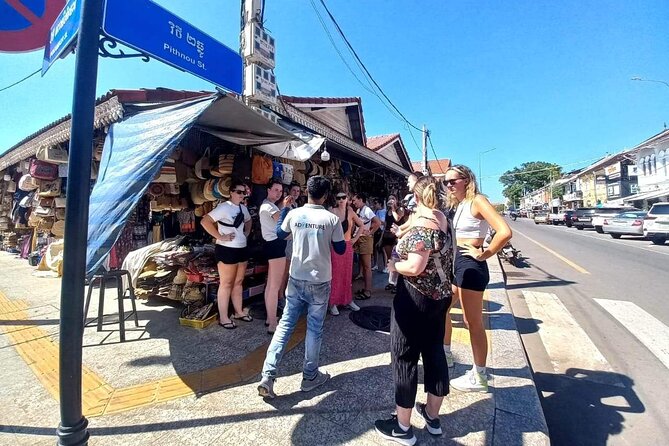
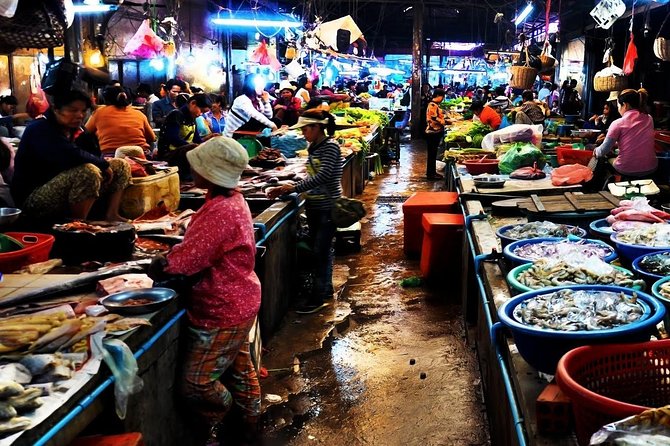
The route continues to Psar Chas, or the Old Market. This is the practical, noisy, useful part of the tour.
You will find clothing, souvenirs, fresh produce, fish, and food stalls in the same general market area. That mix makes it more revealing than a market set up only for sightseeing. A guide can help identify local fruits and products and explain how some foods are prepared.
You may not get a full food tasting, since food and drinks are not included. Still, the market is a good place to ask questions about Cambodian cuisine before you order dinner. If you are unsure what you are seeing, ask. The value here is not just looking at stalls; it is getting a local explanation of what belongs in everyday Cambodian cooking.
Psar Chas can also be crowded and visually intense. Watch your footing, keep personal items secure, and stay aware of the group. The route is described as an easy walk, but market surfaces and traffic crossings can slow things down.
This stop gives the tour a useful balance. The Royal Gardens and pagoda explain public and religious life. The Old Market shows the practical side of town, where people shop and eat. Together, they make Siem Reap feel less like a resort built around Angkor and more like a working Cambodian community.
Pub Street before the crowds
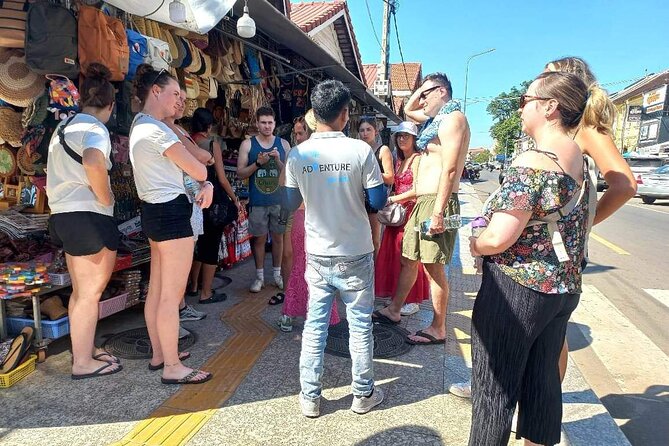
Ending around Pub Street gives you a look at Siem Reap’s best-known nightlife area while it is still possible to focus on the layout. By day, you can see how the streets connect to the Old Market and nearby restaurants. Your guide can also offer tips for returning at night.
That advice may be more useful than a simple list of bars. You can ask about where to eat, how to get back to your hotel, and which streets are worth exploring after dark. The tour does not include dinner or drinks, so you are free to choose your own place when the walk ends.
Pub Street is not the quietest or most traditional stop, and it may not appeal to you if you prefer temples and residential neighborhoods. Still, it is part of modern Siem Reap, and seeing it in daylight makes the evening scene easier to understand.
Some people finish the tour and go straight for a meal nearby. Others use the final stop as a reference point before taking a tuk-tuk elsewhere. Either way, the location is practical.
The guide makes the difference
The route is good, but the guide determines how much you take away. The most praised guides use humor and clear English while explaining serious subjects such as Cambodian history, religion, family life, and national identity.
Tee is repeatedly described as warm, funny, and well informed. Sai has been praised for turning the walk into an entertaining lesson while covering markets, the royal area, pagodas, and popular streets. Ty and Chek are also noted for strong English and helpful explanations.
Names may be written or pronounced in different ways, and you cannot select a particular guide from the information provided. That is worth knowing if you are booking because of one specific person. What you can reasonably expect is a local English or Cambodian-speaking guide leading a small group.
The best questions are practical ones. Ask where local people eat, what foods to try, how people use the pagoda, how to cross roads safely, and which places make sense for your schedule. Guides have shared personal and family stories, which can turn a basic sightseeing route into a more human picture of Siem Reap.
The group limit of 10 is important. A small group makes it easier to hear explanations in traffic and easier to ask questions at the pagoda or market. If only a few people join, you may get a more flexible experience, though the exact pace depends on the guide and group.
Price, comfort, and practical value
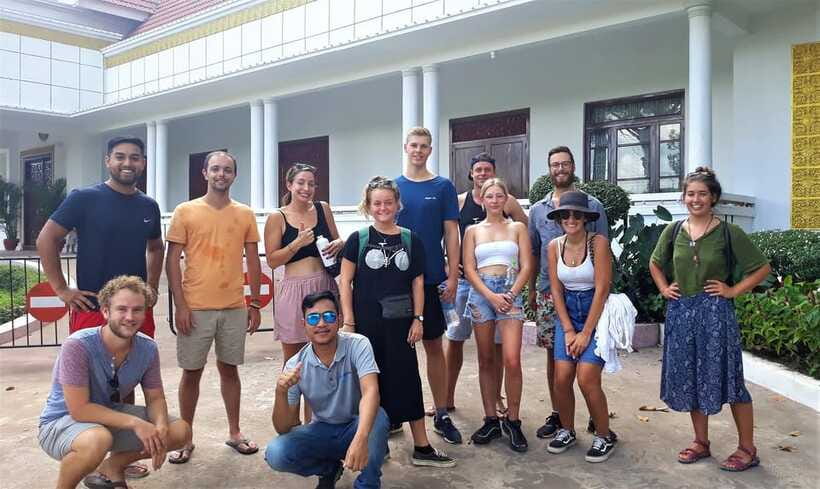
At $6 per person, this is an unusually inexpensive way to get oriented. You are paying for a live guide, not transport, meals, entrance tickets, or a private tour. Since the main sights are viewed from the public route and the walk stays within central Siem Reap, the low price makes sense.
The value is strongest on your first day. You get a basic map of the center, a feel for walking distances, suggestions for eating and nightlife, and an introduction to Buddhist practice. That can save you from wasting time later or missing places that sit only a few streets from your hotel.
You should wear comfortable shoes. Bring sun protection, including a hat, sunglasses, and sunscreen, and carry water even though drinks are not included. You will remove your shoes at the pagoda, so easy footwear is helpful.
A restroom stop is not clearly built into the route. If you need one, use facilities before meeting or ask the guide at the start. The walking pace is generally easy, but heat can make two hours feel longer, especially during the hottest part of the day.
The meeting point matters. Hotel pickup is not included, and one participant found the walk to the starting point longer than expected. Check your location before booking and leave extra time. If you are arriving in Siem Reap that day, a tuk-tuk can make the connection simple.
Cancellation is flexible: you can cancel up to 24 hours ahead for a full refund, and the reserve-now, pay-later option keeps you from paying at once. Starting times vary, so check availability for the date you want.
Who should book this Siem Reap walk?
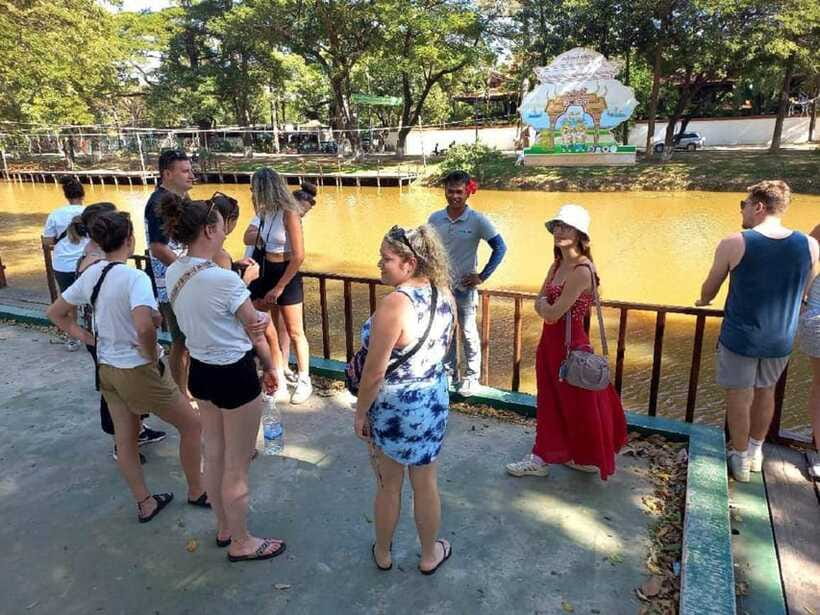
I would choose this for a first visit, especially if you plan to spend the next day or two at Angkor. It gives you cultural background before you meet the temples, and it helps you understand the town as more than a base for archaeological sightseeing.
It also suits solo visitors. A group capped at 10 gives you company without the feel of a large coach excursion, and the guide can often answer personal questions about food, evening plans, and local customs.
Families with older children may like the variety. The route changes often enough to hold attention: gardens, old architecture, shops, a pagoda, a market, and nightlife streets. Very young children may find the heat and walking less comfortable, but no age restriction is provided.
You might skip it if you want a deep archaeological tour, hotel transport, a food tasting, or a private itinerary. You should also think twice if you dislike shopping areas or public markets. This is a town-orientation walk, not a temple-heavy excursion.
Final decision: a smart first two hours
Book this tour if you want a low-cost, human introduction to Siem Reap before tackling Angkor. The strongest reasons are the small group, practical local tips, Wat Preah Prom Rat, and guides such as Tee, Sai, Ty, and Chek, who bring humor and personal insight to the route.
The experience will not replace a full temple tour, and the heat, meeting point, and lack of included food or transport require a little planning. But at $6, it offers a lot: a useful town map, a living pagoda, market life, colonial streets, and a better idea of where to spend your evenings.
FAQ
How much does the Siem Reap City Walking Tour cost?
The tour costs $6 per person.
How long does the walking tour last?
The scheduled duration is two hours. Some guides may continue longer if the group prefers a slower pace, but you should plan for the stated two-hour schedule.
Where is the meeting point?
Meet outside Damnak Supermarket at the corner of Wat Bo Road and 7 Makara Street, also known as High School Road.
How early should I arrive?
You should arrive five minutes before the tour begins.
Is hotel pickup included?
No. You must make your own way to the meeting point.
What languages are available?
The tour is offered in English and Cambodian.
How large is the group?
The group is limited to 10 participants.
Do I need to remove my shoes?
Yes. Shoes must be removed when entering pagodas.
What should I bring?
Wear comfortable shoes and bring sun protection such as a hat, sunglasses, and sunscreen.
Are food and drinks included?
No. Food, drinks, and personal expenses are not included.
Can I cancel the booking?
You can cancel up to 24 hours in advance for a full refund. A reserve-now, pay-later option is also available.
New around Siem Reap
- Kulen Mountain With Ticket included Plus Banteay Srei Temple Tour★ 5.0 · 7 reviews
- 2 Days Angkor temples with Sunrise & Sunset★ 5.0 · 7 reviews
- Private Siem Reap Airport Transfer to hotel in town★ 5.0 · 7 reviews
- 1-Day private Angkor Temple Tour with Sun Rise by Tuk Tuk from Siem Reap★ 4.5 · 7 reviews
- War Museum, Killing Field, and APOPO Hero RATs Tour★ 5.0 · 7 reviews
- Siem Reap: Morning Cooking Class & Market Tour★ 5.0 · 7 reviews
- Kulen Mountain, Killing Fields and War Museum Tour★ 5.0 · 7 reviews
- Half-Day: Silk Farm, Senteur Angkor, and Satcha Workshop★ 4.6 · 7 reviews
Siem Reap Tours, compared.
Angkor Wat Sunrise or Sunset Tour with Guide from Siem Reap
Read our review →
Angkor Wat: Small-Group Sunrise or Sunset Tour
Read our review →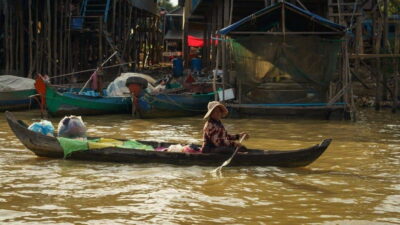
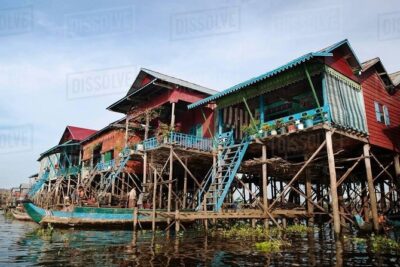
Sunset tour of Kampong Phluk stilts home village on the Tonle Sap
Read our review →
Kampong Phluk Floating Village Tour with Boat
Read our review →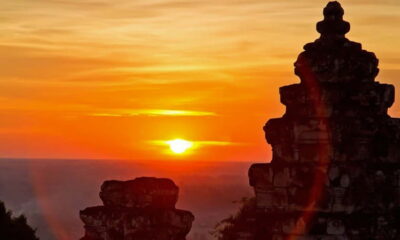
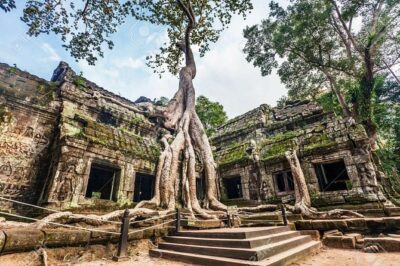
Angkor Wat Sunrise tour with Small – Group and Guide tours
Read our review →
Angkor Wat Highlights and Sunrise Guided Tour from Siem Reap
Read our review →Browse the lists this tour appears in