
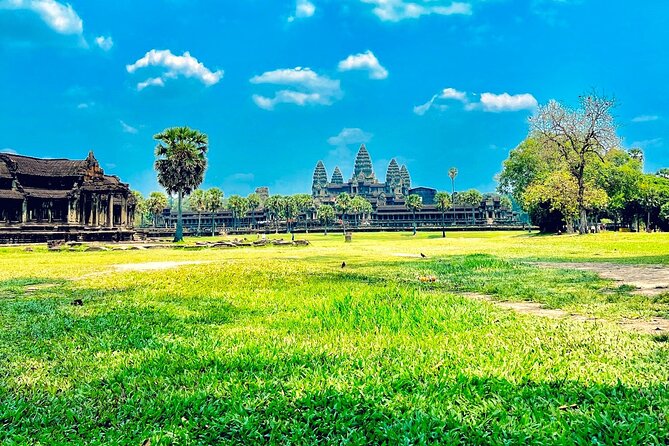
Reviewed · SIEM REAP TOURS
Highlight of Angkor Complex 2 Days Private Tour
The best thing about this two-day Angkor tour is its range. You get the famous monuments, including Angkor Wat, Bayon, and Ta Prohm, but you also reach quieter places such as Ta Nei and Banteay Prei. That mix gives you both the grand Khmer Empire story and a taste of temple exploration away from the main crowds.
I like the private vehicle and guide, since you can ask questions, adjust the pace, and stay with your own group. I also like the careful selection of smaller temples, especially Ta Nei and Banteay Prei, which add texture to a visit that could otherwise become a parade of famous names. The main drawback is the packed schedule, particularly on Day 1. With Angkor Wat and nine other stops, you will spend a lot of time on your feet.
Key points at a glance
- Angkor Wat receives three hours: You have enough time to see more than the main entrance and central causeway.
- Ta Prohm and Ta Nei offer different jungle moods: Ta Prohm is famous and dramatic, while Ta Nei is smaller, quieter, and harder to find.
- Day 1 covers Angkor Thom in detail: Bayon, Baphuon, Phimeanakas, and both royal terraces help explain the old capital.
- Day 2 reaches the outer temples: Banteay Srei, Banteay Samre, Preah Khan, and Banteay Prei widen the picture beyond Angkor Wat.
- The tour is private: Only your group participates, with hotel pickup and a private vehicle included.
- The advertised price excludes major costs: The Angkor Pass, meals, guide gratuities, and driver gratuities are extra.
Why the two-day format works
Angkor is not one temple. It is a huge archaeological zone spread around Siem Reap, with monuments built across several centuries and for different religious purposes. A single morning can give you a memorable first look, but two days lets you compare styles and settings.
This tour uses Day 1 for the central Angkor Thom area, Ta Prohm, Angkor Wat, and the lesser-known Ta Nei. Day 2 follows a broader circuit that includes Banteay Srei and several eastern and northern temples. That structure makes sense, though the first day is demanding.
The scheduled temple time on Day 1 adds up to more than eight hours before driving, buying the park pass, lunch, or short breaks. Day 2 is lighter at roughly six and a half hours of listed stops, but the outer temples require road time. You should think of this as two active sightseeing days rather than two easy half-day outings.
A private setup helps here. You are not waiting for a large group to finish photographs or wander back to the vehicle. If you want to spend longer at a bas-relief or shorten a stop that is not holding your attention, ask your guide. The exact flexibility will depend on traffic, opening conditions, and the day’s timing, but a private tour gives you a much better chance to adjust the rhythm.
A few more Siem Reap half-days to weigh up
- Siem Reap: Angkor Wat 2-Day Tour with Sunrise and Sunset
★ 4.9 · 4,429 reviews - Angkor 2-Day Sunset & Sunrise Small-Group Tour
★ 5.0 · 2,567 reviews - 2 Days Exclusive Temple Highlights with Sunset and Sunrise Tour
★ 5.0 · 1,157 reviews
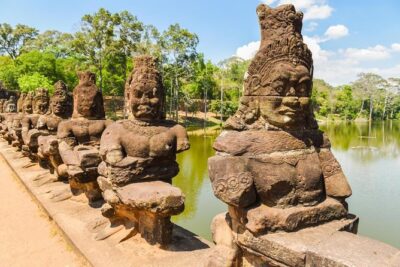
Entering Angkor Thom through the South Gate
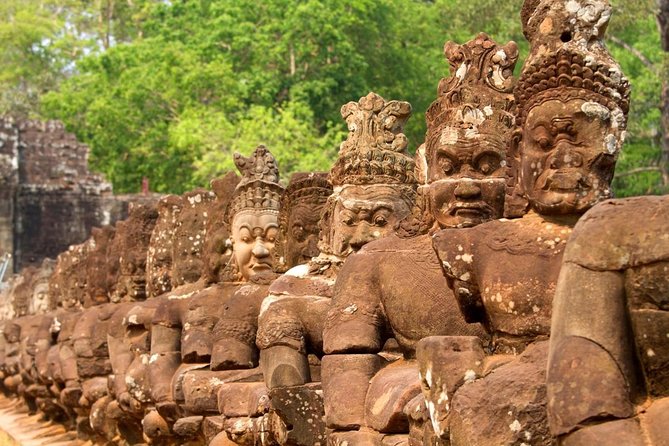
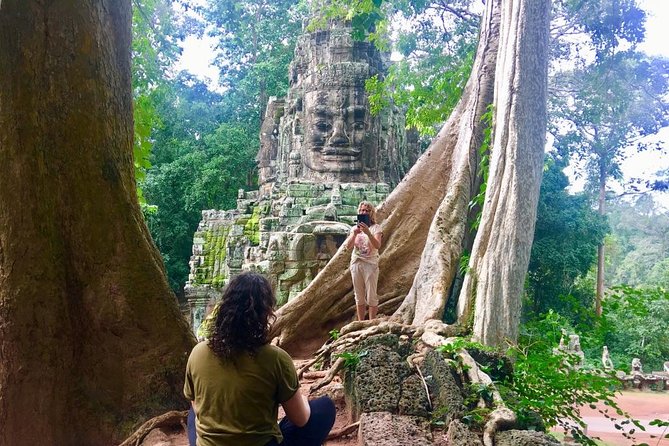
The South Gate is one of the most recognizable approaches to Angkor Thom. Its restored entrance and surviving stone heads create an immediate sense of arrival, even before you reach the temples inside.
Allow about 25 minutes here. Your guide can explain the gate’s sculptural program and its place on the road from Angkor Wat. It is also a useful orientation stop because Angkor Thom is not just a temple. It was a royal city enclosed by walls, with several major monuments inside.
The stop is short, so do not expect a long architectural lesson at the gate itself. Its value comes from setting up the larger story of the capital.
Bayon and the royal center of Angkor Thom
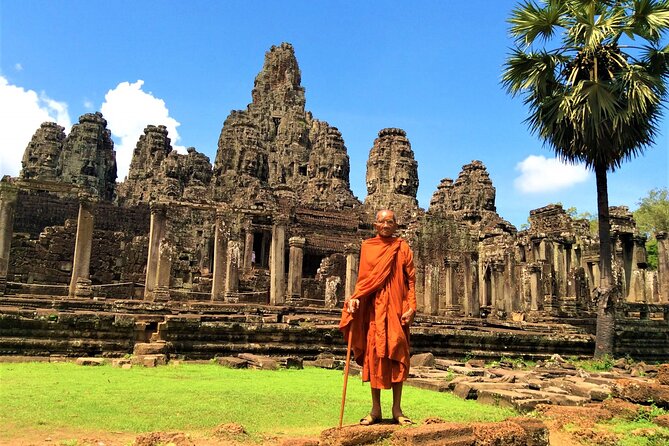
Bayon is likely to be one of your strongest first impressions. Its towers carry the famous serene stone faces, and the temple’s compact, maze-like form rewards slow movement. You have about an hour here, which is enough to look closely rather than simply walk around the outside.
The temple was built nearly a century after Angkor Wat and occupied the center of Angkor Thom. Its original development is not fully clear, which gives your guide room to explain the changing religious and royal ideas connected with it without pretending every detail is certain.
After Bayon, you spend about 30 minutes seeing Angkor Thom as a city rather than only as a collection of monuments. That distinction matters. The broad scale helps you understand how Jayavarman VII used architecture to express royal power and Buddhist beliefs.
Baphuon, Phimeanakas, and the two terraces
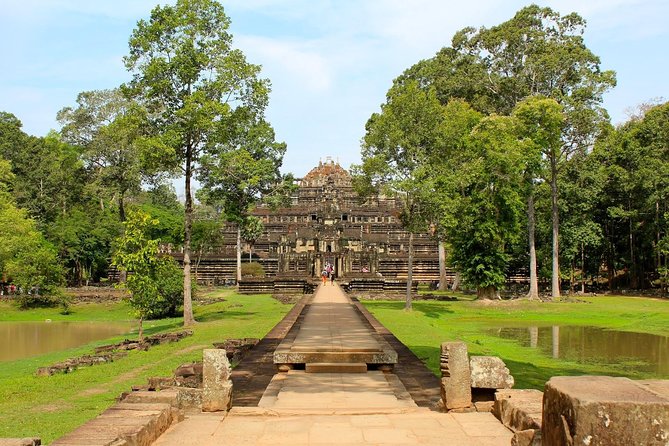
Baphuon takes about 45 minutes. Its long sandstone base and five roughly similar levels give it a different shape from temples that narrow sharply as they rise. Look for the large reclining Buddha formed from later stonework on the western side, if conditions and access allow, and ask your guide how the structure was restored.
Phimeanakas is a shorter 30-minute stop near the old Royal Palace area. It is less visually overwhelming than Bayon, but its position helps explain the relationship between sacred buildings and royal space. The original temple was thought to have had a golden pinnacle, according to an old account, though what you see today is a weathered stone structure.
The Terrace of the Elephants gets about 45 minutes. Its carved elephants and royal imagery once formed part of a ceremonial viewing platform. This is a good place to imagine processions and public events, though much of the experience comes from the terrace’s length and position rather than a single intact building.
The Terrace of the Leper King follows with about 30 minutes. Its inner and outer walls carry dense bas-reliefs, and the enclosed passages can reveal carvings that are easy to miss from a distance. Your guide’s explanations are especially useful here because the figures and scenes can look like a jumble without context.
These four stops are close together, but they are not interchangeable. Baphuon shows unusual temple architecture, Phimeanakas points toward the royal compound, and the terraces make royal ceremony visible through sculpture.
A completely different sort of day from the same base:
- Angkor Wat Sunrise or Sunset Tour with Guide from Siem Reap
★ 5.0 · 12,109 reviews - Siem Reap: Angkor Wat: Small-Group Sunrise or Sunset Tour
★ 5.0 · 9,444 reviews - From Siem Reap: Kampong Phluk Floating Village Tour by Boat
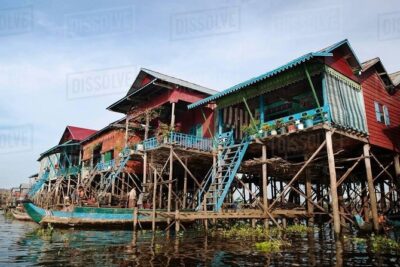
★ 4.9 · 6,979 reviews - Sunset tour of Kampong Phluk stilts home village on the Tonle Sap
★ 5.0 · 4,865 reviews
Ta Prohm, where stone and trees share the frame
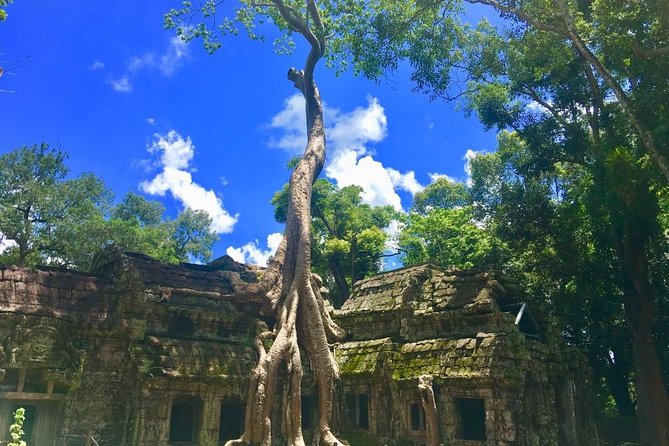
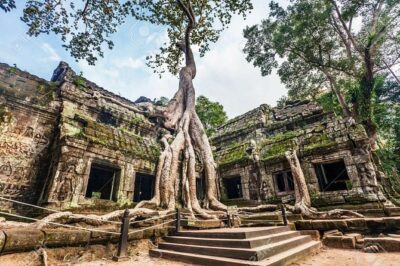
Ta Prohm is the tour’s most theatrical stop after Angkor Wat. It is often called the kingdom of the trees because roots press against walls, doorways, and galleries. Archaeologists cleared visitor paths and strengthened unstable areas, but the temple retains a more overgrown appearance than many other major monuments.
You have about 90 minutes here. That is a useful amount of time because Ta Prohm can feel confusing at first. The best approach is to let your guide lead you through the main corridors, then pause at the tree-covered sections and carved galleries.
Its fame means this is unlikely to be a quiet stop. Still, the contrast between the damaged stone and living roots gives the temple a mood that a fully restored monument cannot match. Wear shoes with a firm grip and keep your attention on uneven ground rather than only on your camera.
Three hours at Angkor Wat
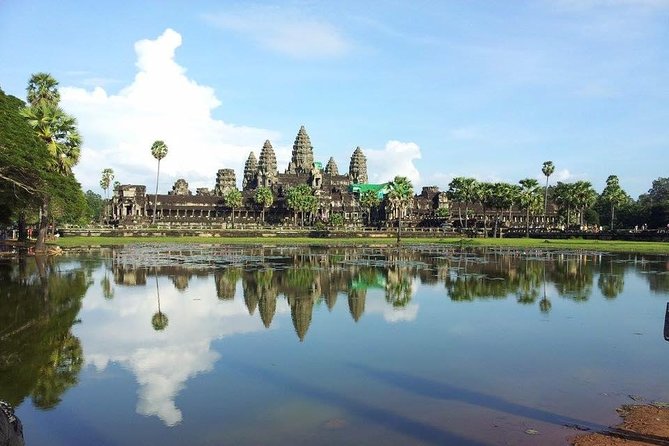
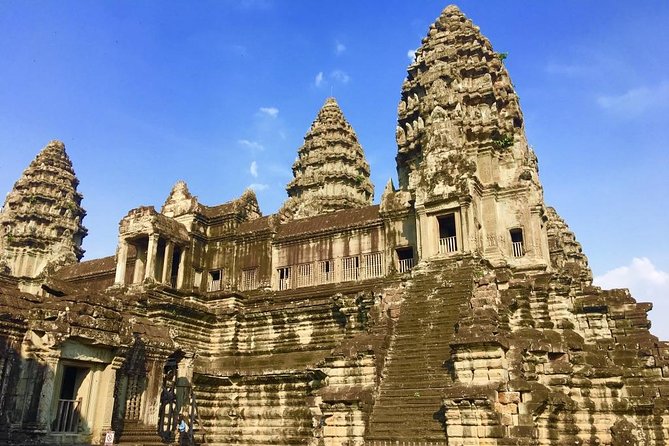
Angkor Wat receives the longest stop, about three hours, and it deserves it. This is the largest and best-preserved monument in the Angkor group, with a carefully balanced plan, long galleries, towers, courtyards, and extensive reliefs.
A short visit can leave you with only the standard view of the towers reflected in water. Three hours allows time for the outer galleries, the relief panels, the central areas, and the changing scale of the building as you move through it. Your guide can connect the architecture to the Khmer Empire and explain how the monument functioned as both a religious center and a statement of royal ambition.
The drawback is simple: after several hours at Angkor Thom and Ta Prohm, you may be tired when you reach Angkor Wat. Treat lunch and water as part of the day’s strategy, not an afterthought. Meals are not included, but local restaurants offer vegetarian and non-vegetarian dishes generally priced from $3 to $10 per dish.
Ta Nei, a quieter temple with a rougher edge
Ta Nei is a smart addition for anyone who wants more than the standard Angkor circuit. It sits in the forest, about 200 meters west of the East Baray, and can be difficult to locate. Its obscurity means it usually feels more remote than Ta Prohm.
The stop lasts about 45 minutes. Do not expect the same scale or polish as Angkor Wat. Ta Nei is valuable because it lets you see a smaller temple in a less finished state, with the setting contributing as much as the surviving structure.
This is also where the private format matters. A guide and driver who know the route can save you from wasting time trying to find it. Conditions may affect access, so keep your expectations practical.
Banteay Srei and Banteay Samre on Day 2
Day 2 begins at Banteay Srei, around 35 kilometers from the main Angkor cluster. You have about 80 minutes there, enough to study its fine pinkish sandstone carvings and compact design.
Banteay Srei is smaller than Angkor Wat, but its detailed decoration makes it one of the most rewarding stops on the tour. Look closely at the door lintels, pediments, guardian figures, and floral patterns. The scale makes the carving easier to appreciate because you are not standing far below a huge tower.
Banteay Samre follows for about 45 minutes. It is one of the more complete complexes in the area because of restoration using anastylosis, a method that reassembles original architectural pieces. The site has not received consistent maintenance in recent decades, so do not expect every section to look pristine.
Together, these temples make a good pair. Banteay Srei is about delicate carving and compact beauty. Banteay Samre is about proportion, enclosure, and the effect of restoration.
Pre Rup and Eastern Mebon: brick, stone, and water
Pre Rup receives about 50 minutes. Its bold, tiered design gives it a strong silhouette, and the temple’s balance and scale are easier to appreciate from the upper levels. Like Eastern Mebon, it reflects a style that differs from the better-known central monuments.
Eastern Mebon takes about 30 minutes. Once located on an island in the East Baray reservoir, it now sits on dry ground because the reservoir is no longer filled as it was in the temple’s original setting. The free-standing stone elephants at the corners are the main details to seek out.
These two stops work best when your guide explains the role of water in Angkor’s religious and royal planning. Without that context, they can look like two more sets of towers. With it, you begin to see how reservoirs, temples, roads, and royal centers were tied together.
Neak Pean and Preah Khan on the Grand Circuit
Neak Pean is a compact and unusual stop. A central island and surrounding pools form the main design, with the original complex built around a large square artificial pond. You have about 45 minutes, mostly to walk along the approach and study the water-centered layout.
The site may not offer the towering drama of Bayon, but its design is memorable. It was made to suggest a sacred healing setting, and the pools are central to understanding the monument.
Preah Khan gets about an hour. Built in the late 12th century by Jayavarman VII and dedicated to his father, it is much larger than Neak Pean and combines long galleries, courtyards, carved doorways, and areas where vegetation presses into the old stone.
Preah Khan can be one of the most satisfying stops on Day 2 because it offers variety without the same level of fame as Angkor Wat. You can examine layers of construction and restoration while moving through a temple that still feels like a place to explore rather than a single photo stop.
Banteay Prei and the village stop
Banteay Prei is a minor temple near Prasat Prei. The 45-minute stop is best suited to people who want to study Angkor beyond the major monuments. If you are already worn out, this is the place where the packed schedule may catch up with you.
The final stop is Om Pich steamed toddy palm cake at Preah Dak Market, with about 30 minutes. This adds a local food and market element after two days of stone temples. You can look for souvenirs, local arts, and the traditional palm cake mentioned in the tour plan.
This stop is not a substitute for a full village visit or cooking class. It is a short chance to see a local market and try a Cambodian specialty. Keep a little cash available if you want to buy food or souvenirs, since neither is included in the tour price.
What the $149.46 price really covers
At $149.46 per person, the price is most attractive for a small private group that wants its own guide, vehicle, hotel pickup, and drop-off. You also receive an English-speaking licensed guide, drinking water, and cool fresh tissues throughout the trip.
The value drops if you look only at the admission cost, because the Angkor Pass is not included. The pass covers the temples in the program, and the guide assists with buying it at the entrance to Angkor Park. Lunch is also extra, with dishes generally running from $3 to $10, and tips for both guide and driver are not included.
For a private two-day service covering major temples and less visited sites, the price can make sense, especially when divided among several people in the same group. Ask for the total cost of the Angkor Pass before departure so your budget is clear.
Practical advice for a smoother two days
Wear clothing that covers your shoulders and reaches your knees or lower. These are ancient religious grounds, and suitable dress is required. Light clothing, sturdy shoes, sun protection, and a refillable water bottle will make the long walking days easier.
Tell the operator your hotel name when booking so pickup can be arranged. Confirmation is provided at booking, and the tour is offered in several languages, though the included guide is described as English-speaking. If you need another language, confirm availability before paying.
The tour is private, and most people can participate. It is near public transportation, but the included private vehicle is the more useful way to connect the widely scattered temples.
The experience has a 4.9 rating from 13 submitted ratings, with 100 percent recommending it. The strongest praise centers on a well-planned route, broad temple coverage, an on-time guide and driver, and attention to comfort. One named guide, Mr. Sara, received particular approval for explaining Khmer history and keeping the day flexible. A stop at the Land Mine Museum was added on request in one case, but do not assume that extra stop is part of the standard program. Ask in advance.
Free cancellation is available up to 24 hours before the start time. Changes or cancellations inside that window are not accepted for a refund.
Should you book this Angkor tour?
Book it if you want to see far more than Angkor Wat and prefer a private guide to explain what you are looking at. It is especially well suited to couples, families, and small groups who value hotel pickup, their own vehicle, and the chance to request a modest change in the plan.
Think twice if you want slow temple photography, long café breaks, or a relaxed pace. Day 1 is ambitious, and even the quieter stops require walking on uneven ground. You will get the best value by starting rested, accepting that you cannot linger everywhere, and treating the guide as a partner in deciding which details deserve your time.
FAQ
How long is the Angkor Complex private tour?
The experience lasts approximately two days.
Is the tour private?
Yes. Only your own group participates in the tour.
Is hotel pickup included?
Yes. Hotel pickup and drop-off are included. You need to provide the hotel name for pickup arrangements.
Is transportation included?
Yes. Private transfers by a comfortable vehicle are included as described in the tour plan.
Is an English-speaking guide included?
Yes. A professional English-speaking licensed guide is included. The experience is also offered in a range of languages, so confirm the language you need before booking.
Is the Angkor Pass included in the price?
No. The Angkor Pass is extra and covers the temples in the tour plan. The guide assists with purchasing it at the Angkor Park entrance.
Are meals included?
No. Lunch is at your own expense. Local restaurants offer vegetarian and non-vegetarian dishes, with menu prices generally ranging from $3 to $10 per dish.
What should I wear?
Wear a shirt that covers your shoulders and trousers, knee-length pants, or a knee-length skirt. Appropriate clothing is required at the ancient religious sites.
Are water and tissues provided?
Yes. Drinking water and cool fresh tissues are provided throughout the tour.
Can I cancel for a full refund?
Yes, if you cancel at least 24 hours before the experience start time. Cancellations or changes made less than 24 hours beforehand are not accepted for a refund.
New around Siem Reap
- Kulen Mountain With Ticket included Plus Banteay Srei Temple Tour★ 5.0 · 7 reviews
- Private Siem Reap Airport Transfer to hotel in town★ 5.0 · 7 reviews
- 2 Days Angkor temples with Sunrise & Sunset★ 5.0 · 7 reviews
- 1-Day private Angkor Temple Tour with Sun Rise by Tuk Tuk from Siem Reap★ 4.5 · 7 reviews
- Siem Reap: Morning Cooking Class & Market Tour★ 5.0 · 7 reviews
- Kulen Mountain, Killing Fields and War Museum Tour★ 5.0 · 7 reviews
- War Museum, Killing Field, and APOPO Hero RATs Tour★ 5.0 · 7 reviews
- Half-Day: Silk Farm, Senteur Angkor, and Satcha Workshop★ 4.6 · 7 reviews
Siem Reap Tours, compared.
Angkor Wat Sunrise or Sunset Tour with Guide from Siem Reap
Read our review →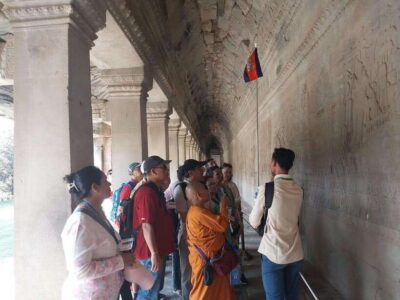
Angkor Wat: Small-Group Sunrise or Sunset Tour
Read our review →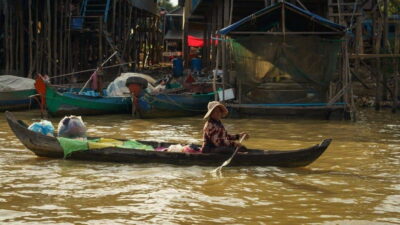
Sunset tour of Kampong Phluk stilts home village on the Tonle Sap
Read our review →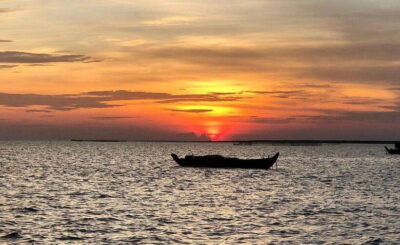
Kampong Phluk Floating Village Tour with Boat
Read our review →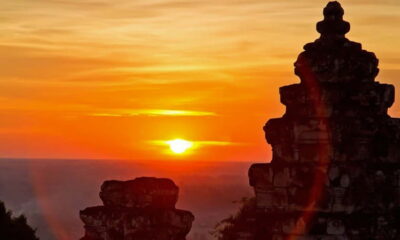
Angkor Wat Sunrise tour with Small – Group and Guide tours
Read our review →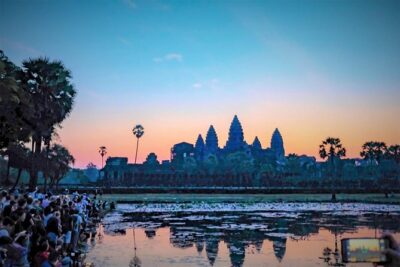
Angkor Wat Highlights and Sunrise Guided Tour from Siem Reap
Read our review →Browse the lists this tour appears in