
Reviewed · TONLE SAP LAKE TOURS
3-Day ‘Temples & Tonle Sap’ Tour
Angkor Wat is only the headline here. Over three full days, you’ll also see the enormous stone faces of Bayon, tree-covered Ta Prohm, delicate Banteay Srei, early Khmer temples at Roluos, and stilt villages on Tonle Sap. I like that this tour gives you both the grand monuments and the everyday life around Siem Reap.
I especially like the private touring setup, with your own group in an air-conditioned vehicle, and the way the route includes lesser-visited sites such as Roluos and Banteay Samre. Hotel pickup, an English-speaking guide, the boat ride, water, and cold towels are useful touches. The tradeoff is pace: this is an ambitious schedule, and the long temple days involve plenty of walking, stairs, heat, and early starts.
Key points to know
- Angkor Wat appears twice: You visit the great temple on the first afternoon, then return for sunrise on Day 2.
- The route goes beyond the usual three temples: Bayon, Baphuon, Ta Prohm, Banteay Srei, Banteay Samre, Banteay Kdei, and the Roluos group are all included.
- Tonle Sap adds a change of pace: A motorized boat takes you through Kampong Phluk, a fishing community built largely on stilts.
- The $250 price covers major logistics: Hotel transfers, private vehicle service, an English-speaking guide, boat fee, bottled water, and cold towels are included.
- The Angkor pass is extra: A three-day pass is listed at $62 per person, and meals and drinks are also separate.
- This is a private activity: Only your own group participates, although group discounts are offered.
Three days that connect temples, villages, and markets
I see this as a time-saving way to organize Siem Reap. Instead of arranging separate tuk-tuks, drivers, temple tickets, and a Tonle Sap boat, you have one air-conditioned vehicle and one guide handling the route.
The schedule is not relaxed. Day 1 alone includes Angkor Thom, Ta Prohm, Angkor Wat, and Phnom Bakheng. Day 2 begins with sunrise, then stretches out to Banteay Srei before returning to several other temples. Day 3 trades carved stone for water, fishing villages, early Khmer sites, and local markets.
That packed design will suit you if you have only three days in Siem Reap and want to cover a lot. If you prefer long lunches, quiet photography, or an hour simply sitting beneath an old tree, you may find the program too full.
More Tonle Sap Lake Tours in Siem Reap:
- Sunset tour of Kampong Phluk stilts home village on the Tonle Sap
★ 5.0 · 4,865 reviews - Siem Reap: Kulen Mountain, Beng Mealea and Tonle Sap Tour
★ 5.0 · 1,483 reviews - Tonle Sap Lake & Kampong Phluk Village Half-Day Tour
★ 5.0 · 1,045 reviews
Day 1: Bayon faces, Ta Prohm roots, and Angkor Wat
The first stop is the Angkor Enterprise ticket office, where you buy the required temple pass. For this schedule, you need at least the three-day pass, listed at $62 per person. A seven-day pass is listed at $72, but it is not needed for this three-day program.
The ticket cost is a key part of the real budget. At $250, the tour includes many services, but you should add the pass, meals, soft drinks, and alcohol before deciding how it fits your trip.
Bayon and the center of Angkor Thom
Bayon gives you a strong first look at Khmer temple design. Its most famous feature is the collection of large carved faces looking out from the towers. The temple was built in the late 12th or early 13th century under Jayavarman VII as a Mahayana Buddhist state temple.
You have about an hour here. That is enough to walk through the main areas and hear the basic story from your guide, but not enough for a slow study of every carving. Look closely at the bas-reliefs if you can. They show scenes of warfare, processions, and daily life, giving the stone work a human scale.
Baphuon and the Terrace of the Elephants
Baphuon is another temple mountain, built in the mid-11th century as a state temple dedicated to Shiva. It has a different feel from Bayon, with its tall, tiered form and broad approach.
The schedule allows about an hour. You should expect steps, uneven stone, and exposed areas. Later, the Terrace of the Elephants gives you a shorter stop of about 30 minutes. This long carved platform once bordered the royal palace grounds and faced the parade area. Elephant carvings provide its name, while the nearby Terrace of the Leper King adds another important monument to the same royal zone.
A few more Siem Reap half-days to weigh up
- From Siem Reap: Angkor Wat and Floating Village 3-Day Trip
★ 5.0 · 100 reviews - 3-Day Angkor Wat with All Interesting Major Temples, Banteay Srei & Beng Mealea
★ 5.0 · 70 reviews - 3-Day Angkor Wat & All Interesting Major Temples & Kulen Mount Waterfall
★ 5.0 · 63 reviews - 3 Days Siem Reap Explorer – Small Group
★ 5.0 · 50 reviews
Ta Prohm, the temple most people picture
Ta Prohm is the atmospheric stop of the morning. Built in the late 12th and early 13th centuries, it was originally called Rajavihara and was constructed in the Bayon style.
The site is known for stone corridors, galleries, and trees growing over parts of the ruins. You have about an hour, which lets you see its key areas without spending half a day here. The paths can be uneven, and the combination of roots, stones, and crowds can slow your progress, so wear shoes with a good grip.
Ta Prohm also helps you understand why the Angkor complex is more than a collection of grand monuments. Bayon is powerful and formal. Ta Prohm feels more tangled and intimate. Having both on the same day gives you a better sense of the range of Khmer building.
Angkor Wat after lunch
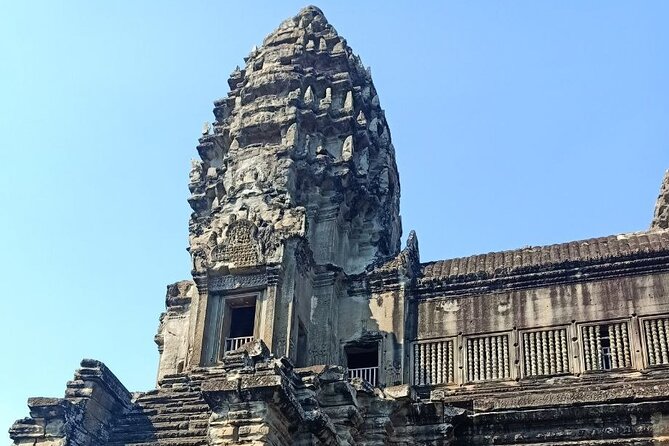
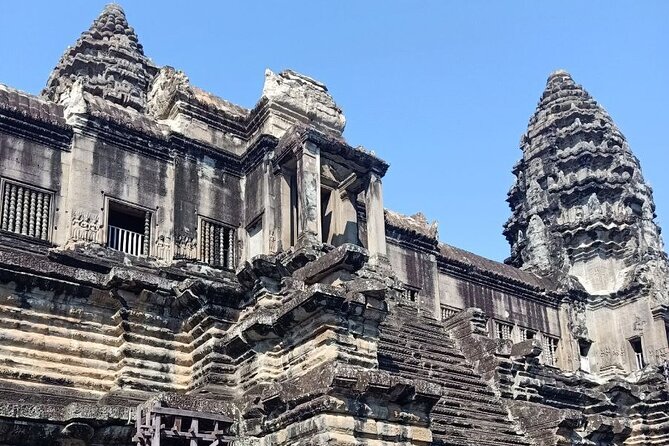
After lunch, the main event gets three hours. Angkor Wat is the largest religious monument in the world, occupying a site of about 162.6 hectares. It began as a Hindu temple dedicated to Vishnu and later became a Buddhist center.
Three hours is a sensible amount of time for a first visit. You can cross the approach, explore the outer galleries, study the bas-reliefs, and see the central towers. Your guide can help place the architecture in its religious and royal setting, which matters here because the scale can otherwise become overwhelming.
You will need to budget for lunch yourself. No meals are included, and the schedule does not specify a particular restaurant or dining arrangement. Ask your guide how the lunch break will work so you know how much time remains for Angkor Wat.
Phnom Bakheng and a demanding finish
The day ends at Phnom Bakheng, a temple mountain dedicated to Shiva and built in the late ninth century during the reign of Yasovarman. It sits on a hill and is now a popular place for visitors.
The listed time is three hours, making this the longest stop of the day. A hill climb after several major temples may feel demanding, especially in the heat. If the schedule includes a long wait or extended time at the hilltop, you should be ready for a late finish.
The first day is the toughest test of your fitness. The tour notes say it is not suitable for anyone with less than average fitness or who cannot walk normally. That warning is worth taking seriously. You should expect extended walking and temple surfaces that are not smooth or level.
Day 2: Sunrise at Angkor Wat and the outlying temples
Day 2 begins with a return to Angkor Wat for sunrise. The stated general start time is 8:30 a.m., but sunrise requires an earlier departure. Confirm the exact pickup time with Asia Voyage Tour before the day begins, since the vehicle cannot leave at 8:30 and still take you to sunrise.
You spend about three hours at Angkor Wat, then return to the hotel for breakfast. This arrangement has one clear advantage: you do not have to carry your breakfast around the temple grounds. It also makes the morning long, since you will have already been awake and walking before the day’s regular touring starts.
Sunrise is appealing, but it is not guaranteed to be dramatic. The value is returning to the monument in a different light and seeing the moat, towers, and approach before the hotter part of the day. Keep your expectations practical and enjoy the setting rather than counting on a perfect sky.
Preah Khan, Neak Poan, Ta Som, and East Mebon
After breakfast, you visit four temples grouped in the same general part of the Angkor area: Preah Khan, Neak Poan, Ta Som, and East Mebon. The schedule gives this group two hours, so your guide will need to keep the route moving.
Preah Khan is likely to be the main focus. It is a large temple complex with long corridors and many carved details. Neak Poan is quite different, built around a central island and associated with water. Ta Som is smaller and easier to take in at a glance, while East Mebon gives you another view of an earlier temple style.
This section works well as a contrast to Angkor Wat. You are not simply seeing the same kind of monument four times. The sites vary in size, plan, and setting. The drawback is that two hours is brief for four stops, so you should treat this as a guided overview rather than a slow archaeological visit.
Banteay Srei, the finely carved temple
After lunch, the route heads about 25 kilometers northeast of the main Angkor area to Banteay Srei. The name often translates as the ladies temple, and the site is a 10th-century Hindu temple dedicated to Shiva.
You have two hours here, which is generous compared with some of the smaller stops. Banteay Srei is known for its detailed carvings and smaller scale. The red-toned stone and fine decoration make it noticeably different from the huge monuments closer to Siem Reap.
The drive out is part of the point. You leave the densest temple zone and see a broader portion of the area. Since lunch is not included, the timing and location of your meal should be confirmed with the guide.
Banteay Samre and Banteay Kdei
Banteay Samre was built in the early 12th century during the reigns of Suryavarman II and Yasovarman II. It is a Hindu temple built in the Angkor Wat style, and the one-hour visit gives you time to see its layout without the pressure of a major centerpiece.
Banteay Kdei, meaning a citadel of chambers, is a Buddhist temple southeast of Ta Prohm. It was built in the mid-12th to early 13th century and is also known as the Citadel of Monks’ Cells.
These stops are valuable because they round out the story. You see Hindu and Buddhist monuments, large royal temples and smaller complexes, early and later building styles. By the end of Day 2, though, the number of sites may blur together. Take brief notes or photographs of your guide’s key points if you want to remember which temple was which.
Day 3: Stilt villages on Tonle Sap and the Roluos group
Day 3 changes the mood. Instead of spending the whole day among carved galleries, you head to Kampong Phluk, a collection of villages largely built on stilts beside Tonle Sap.
The name means Harbor of the Tusks. Fishing is central to the community, and the area changes with the seasons. During the wet season from May through October, fishing is a major part of local life. The three-hour visit includes the motorized boat fee, so you get a close look at the village setting from the water without arranging a separate boat trip.
The Tonle Sap visit is important because it shows modern life connected to the same regional water system that supported settlements for centuries. Still, you should approach it with respect. This is a working community, not simply a photo set. Listen to your guide about what you are seeing, and keep your camera use considerate.
Seasonal water levels may affect how the village looks and how the boat moves through it. The provided schedule does not promise a particular water level or exact boat route, so consider the experience as a visit to the stilted community and surrounding waterway rather than a guaranteed version of one postcard view.
Roluos and the early Khmer period
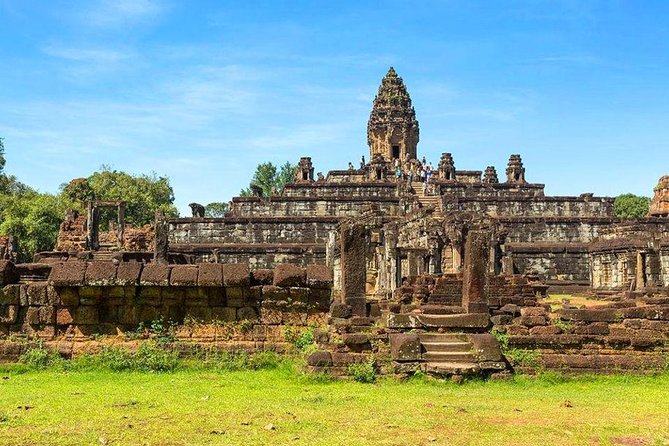
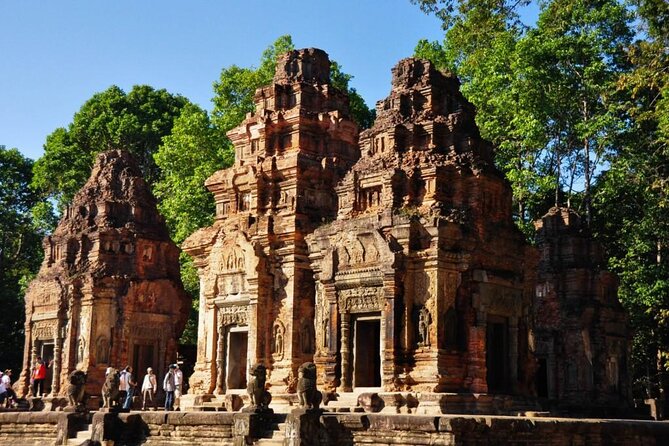
The Roluos group gives you a useful historical counterpoint to Angkor Wat. These temples include some of the earliest permanent Khmer structures and date from the late ninth century, marking the beginning of the classical period of Khmer civilization.
You have three hours here, far more than the schedule gives to some individual temples. That allows a slower look at the brickwork and early forms. Some structures were built almost entirely of brick, which gives them a different texture from the later sandstone monuments.
I like the placement of Roluos on the final day. After two days of famous Angkor sites, these earlier temples help you see that Khmer architecture developed over time. They are less immediately famous, but they can be more rewarding if you want context rather than another quick stop at a major icon.
Markets and local craft at the end
On the way back, the route takes in Phsar Leu, also called the top market, Phsar Chas, or the old market, and Artisans d’Angkor. The schedule allows two hours for this final section.
This is a practical ending. You can see a different side of Siem Reap after the monuments and water villages, and you may find a chance to browse local goods or crafts. The schedule does not include purchases, meals, or drinks, so bring an allowance if you plan to shop.
Because market visits vary by interest, tell your guide what you want from the stop. You may prefer a quick look, more time for craft work, or a chance to browse food stalls. The route gives you the opportunity, but the exact balance is something to discuss on the day.
What the $250 price really covers
The listed price is $250 for approximately three days. The value depends on how much you would otherwise pay for private transport, a guide, and the boat separately.
Included are hotel pickup and drop-off, an air-conditioned vehicle for transfers and touring, a professional English-speaking guide, the motorized boat fee, bottled water, and cold towels. Those last two items sound small, but they matter in Cambodia’s heat, especially on full temple days.
The biggest extra cost is the three-day Angkor pass, listed at $62 per person. Meals, soft drinks, and alcohol are also excluded. If you are comparing this with arranging transport yourself, add those items to the advertised price before making a fair comparison.
Only your own group participates, which is a major advantage if you want to adjust the pace or ask questions without a large busload. Group discounts are offered, but the available information does not explain the discount amount or whether the $250 price is calculated per person or for the group. Confirm that point when booking.
Practical details that affect your days
Complimentary hotel pickup and drop-off are included, and the vehicle departs your hotel at the tour start time. The listed start time is 8:30 a.m., but Day 2’s sunrise visit needs an earlier pickup, so confirm that detail directly.
Confirmation is provided at booking, and the experience is available near public transportation. It is not available for children under three years old. Most people can participate, but you need average or better fitness and the ability to walk normally.
Bring light clothing that lets you move, shoes suited to uneven temple paths, and a way to protect yourself from the sun. The tour provides water and cold towels, but it does not provide meals or drinks beyond bottled water.
Free cancellation is available if you cancel at least 24 hours before the local start time. Cancellations or changes made within 24 hours are not refunded or accepted.
Who should book this Siem Reap tour?
I would choose this tour if you have three days, want the major Angkor monuments, and do not want to negotiate transport for every stop. It is also a good fit if you want more than Angkor Wat and Ta Prohm, since Roluos, Banteay Srei, Banteay Samre, Kampong Phluk, and the markets create a broader visit.
The private format suits couples, families with older children, friends, and small groups who value their own vehicle. The English-speaking guide can explain the temples and local culture as you move through the area, while hotel transfers remove much of the daily planning.
I would hesitate if your priority is a slow pace. This program asks you to cover a lot of ground and includes early morning sightseeing, long walks, a hilltop temple, and repeated temple visits. You should also be comfortable paying extra for the Angkor pass and meals.
FAQ
What is included in the $250 tour price?
The price includes hotel pickup and drop-off, an air-conditioned vehicle, a professional English-speaking guide, the motorized boat fee, bottled water, and cold towels.
Is the Angkor temple pass included?
No. The three-day Angkor pass is separate and is listed at $62 per person. A seven-day pass is listed at $72 per person.
Are meals included?
No. Meals, soft drinks, and alcohol are not included in the tour price.
Is this a group tour?
No. This is a private activity, so only your own group participates. Group discounts are offered.
Does the tour visit Tonle Sap by boat?
Yes. The Day 3 visit to Kampong Phluk includes a motorized boat ride, and the boat fee is included.
Is hotel pickup available?
Yes. Complimentary hotel pickup and drop-off are available. The listed general start time is 8:30 a.m., but you should confirm the earlier pickup time required for the Angkor Wat sunrise visit.
Is the tour suitable for young children?
Children under three years old cannot participate. The tour also requires average or better fitness and the ability to walk normally.
Should you book it?
Book this tour if you want an efficient three-day sweep of Siem Reap’s major temples, quieter historical sites, Tonle Sap, and local markets, all with private transport and a guide. The strongest value comes from the range: you get Angkor Wat twice, but you also see early Khmer temples and a living fishing community.
Before paying, confirm the sunrise pickup time, the exact pricing basis for your group, and how lunch breaks are handled. If you accept the busy schedule and budget separately for the $62 temple pass and meals, this is a practical, well-rounded way to see far more than the usual Angkor highlights.
New around Siem Reap
- Kulen Mountain With Ticket included Plus Banteay Srei Temple Tour★ 5.0 · 7 reviews
- 2 Days Angkor temples with Sunrise & Sunset★ 5.0 · 7 reviews
- Private Siem Reap Airport Transfer to hotel in town★ 5.0 · 7 reviews
- 1-Day private Angkor Temple Tour with Sun Rise by Tuk Tuk from Siem Reap★ 4.5 · 7 reviews
- Siem Reap: Morning Cooking Class & Market Tour★ 5.0 · 7 reviews
- Kulen Mountain, Killing Fields and War Museum Tour★ 5.0 · 7 reviews
- War Museum, Killing Field, and APOPO Hero RATs Tour★ 5.0 · 7 reviews
- Half-Day: Silk Farm, Senteur Angkor, and Satcha Workshop★ 4.6 · 7 reviews
Tonle Sap Lake Tours, compared.
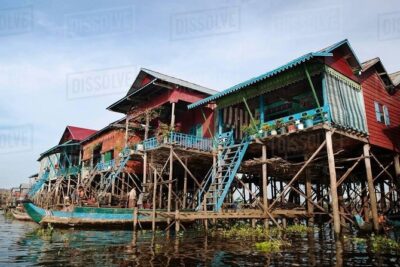
Sunset tour of Kampong Phluk stilts home village on the Tonle Sap
Read our review →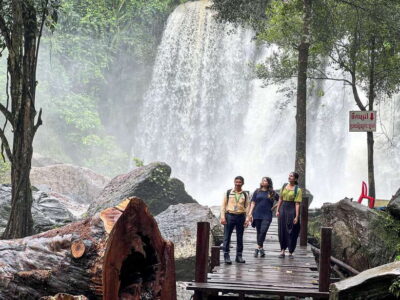
Kulen Mountain, Beng Mealea and Tonle Sap Tour
Read our review →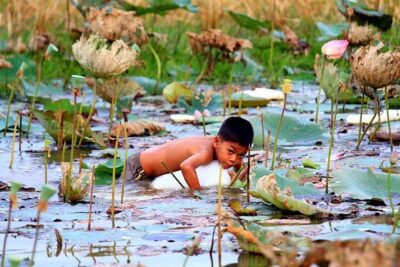
Tonle Sap Lake & Kampong Phluk Village Half-Day Tour
Read our review →
Tonle Sap, Kampong Phluk & Floating Village Tour
Read our review →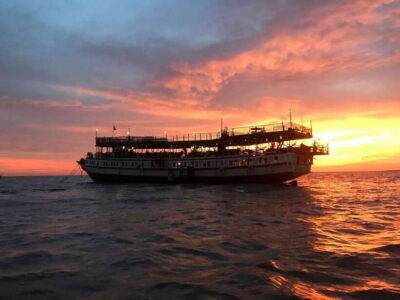
Sunset Dinner Tour: Tonle Sap Lake Floating Village
Read our review →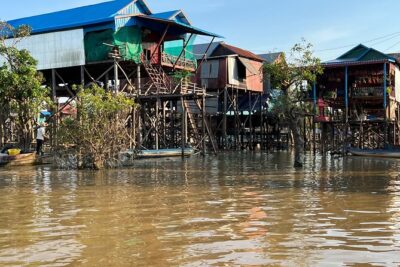
Half Day Kompong Pluck stilt home Village on Tonle Sap & Sunset
Read our review →Kampong Khleang Floating Village and Tonle Sap Half Day Tour
Read our review →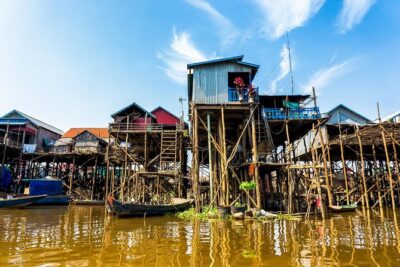
Tonle Sap Lake and Kampong Phluk Village Private Half Day Tour
Read our review →Browse the lists this tour appears in