
Reviewed · ANGKOR WAT TOURS
Angkor Wat: Tuk Tuk and Walking Tour
Angkor’s famous temples are best understood on foot, and this tour gets you away from the simple drive, stop, photograph, repeat routine. You ride a private tuk tuk to the eastern gate, then walk through Angkor Thom, climb the Dead Gate, follow old city walls, and work your way into the tree-filled ruins of Ta Prohm.
I like the private tuk tuk arrangement, since it gives you a cool, open-air ride between walking sections and keeps the day personal. I also like the guides’ focus on Khmer culture and ordinary life, not just dates and stonework. Guides named Monirom, Poleak, Bun, Sam, and Bob have all led departures, with especially strong praise for clear English and friendly explanations.
The catch is the amount of walking. One departure covered about nine miles, and another ran for nine to ten hours rather than the advertised seven. Add heat, uneven temple paths, steps, and no included lunch, and this is not a soft sightseeing day for anyone with limited mobility.
Key points about this Angkor walking tour
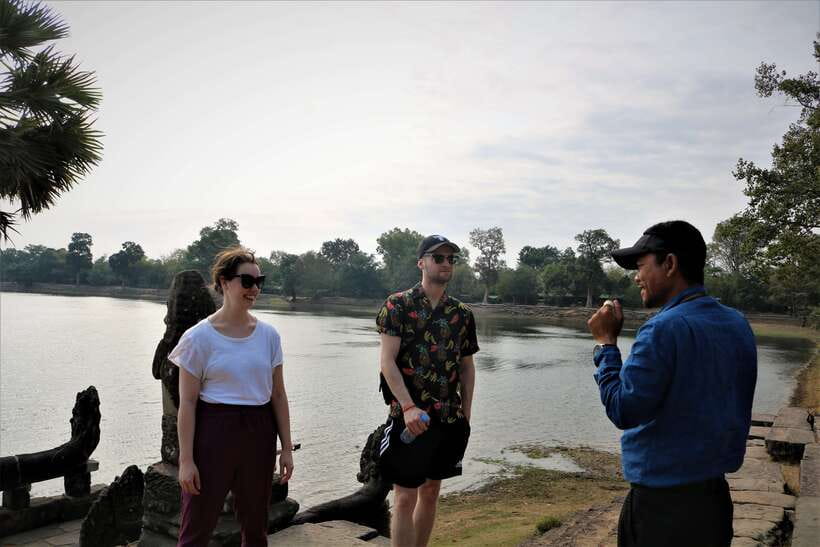
- The eastern gate starts the day away from Angkor Wat’s busiest approach, giving you a quieter way into the temple complex.
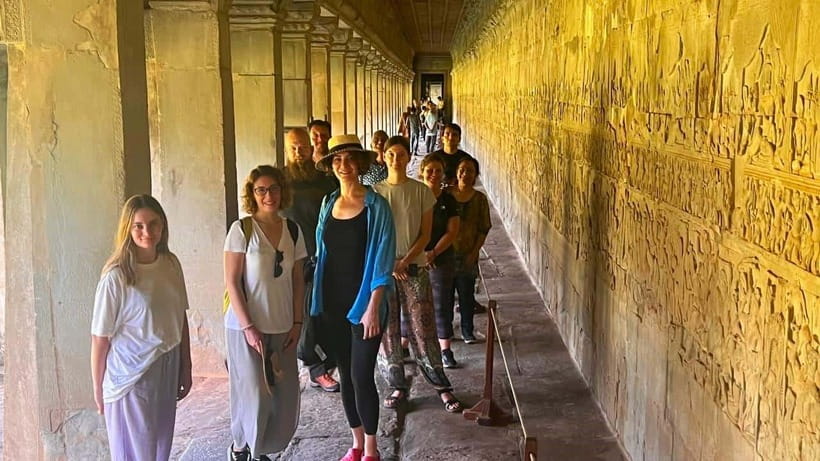
- Angkor Thom comes mostly on foot, including the Dead Gate, old city walls, and Victory Gate.
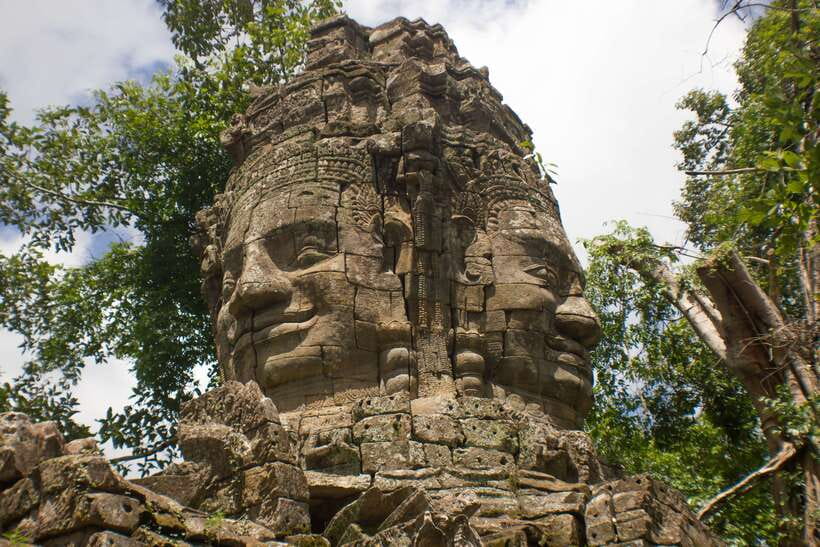
- Bayon’s giant stone faces give you one of the most memorable views of Khmer temple art.
- Ta Prohm offers a maze of corridors and tree-covered ruins, with a rawer feel than restored temple sites.
- A private tuk tuk, hotel pickup, water, and soft drinks are included, but the $37 one-day temple pass and lunch are extra.
- Expect a demanding day of walking, with comfortable shoes and insect repellent essential.
A tuk tuk start at Angkor’s eastern gate
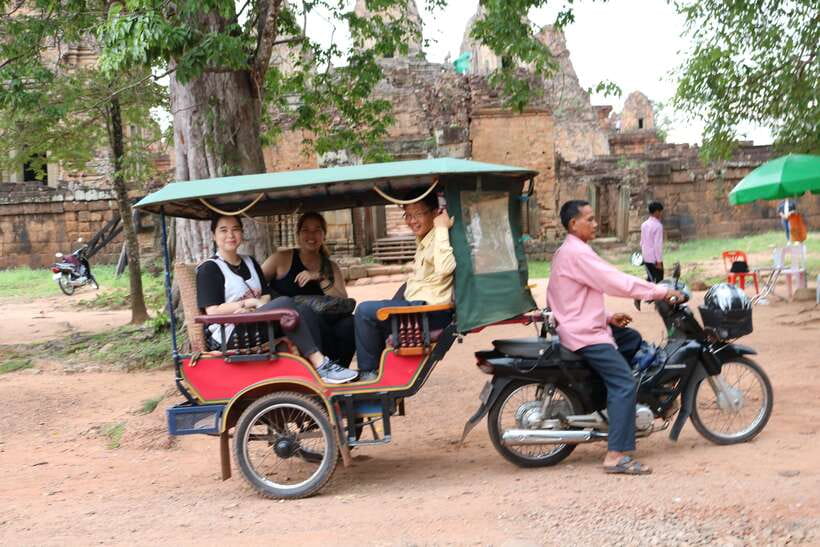
Your day begins with hotel pickup in Siem Reap and a ride in a private tuk tuk toward Angkor’s eastern gate. This is a practical choice for the area. You get open air, a better sense of the road, and a simple way to move between temples without arranging separate transport.
The eastern gate also shapes the day nicely. Instead of treating Angkor as a string of isolated photo stops, you enter through the old city and begin walking through its ruins. The first part feels more like an expedition than a standard temple circuit.
Your English-speaking local guide provides the setting as you go. The strongest part of this tour is likely to be the human explanation: not only what a carved doorway means, but how the Khmer Empire worked and what Cambodian life is like today. Monirom, for example, has been praised for explaining both the temples and everyday Khmer culture. Poleak was also noted for clear English, warmth, and solid temple knowledge.
Guide assignments can change, so you should not book on the assumption that one named guide will lead your departure. Still, the repeated praise for several guides suggests that the experience depends heavily on the local guide, as it should at a place as large and complicated as Angkor.
More Tuk Tuk Tours in Siem Reap
- Siem Reap: Angkor Wat Private Tuk-Tuk Tour
★ 4.9 · 2,222 reviews - Siem Reap Countryside Bike Tour / E-Bike or Tuk Tuk
★ 5.0 · 935 reviews - Angkor Sunrise Bike Tour / E-Bike or Tuk Tuk
★ 5.0 · 615 reviews
Walking through Angkor Thom and its old defenses
Angkor Thom was once a major Khmer royal city, and this tour gives it more attention than a quick drive-through. You walk through the ancient urban area, hearing how the city and empire were organized while the remains appear around you.
The Dead Gate is one of the more unusual parts of the route. You climb it, then continue along the old city walls. That walk gives the day a strong sense of place. You are not only looking at a temple facade. You are tracing the defenses and entrances of a former capital.
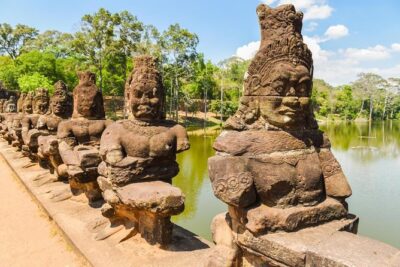
The route reaches the Victory Gate, where royal processions and soldiers once passed. The gate’s name provides a useful opening for the guide to explain power, warfare, and ceremony in the Khmer world. Details such as these are why a guide matters here. Without context, Angkor Thom can look like a series of stone openings surrounded by trees. With context, the walls and gates begin to read as parts of a working city.
The walking can be uneven and tiring. You may climb steps and move across rough ground, so sandals with poor support are a bad idea. The tour is specifically not suitable for people with mobility impairments, and that warning deserves attention rather than a quick glance.
Bayon and the famous stone faces
Bayon is the visual high point of the Angkor Thom section. Its towers carry enormous carved faces, creating a strange, watchful mood as you move through the temple.
The faces are easy to remember, but Bayon rewards patience. You will walk around and through a crowded maze of towers, galleries, and narrow passages. The guide can help you make sense of the layout and point out details that disappear when you are focused only on getting the perfect picture.
This is also where the tour’s walking format pays off. From a tuk tuk, you see Bayon as a stop. On foot, you feel the changes in space as the outer areas give way to tighter interior passages. The contrast between broad city walls and Bayon’s compressed corridors makes the morning feel varied.
Bring water and use the bottles and soft drinks supplied by the operator, but do not assume those supplies replace regular breaks. A long day around Angkor can wear you down quickly. The pace may be manageable for an active visitor, yet the guide cannot remove the heat, steps, or distance.
Lunch is simple, local, and not included
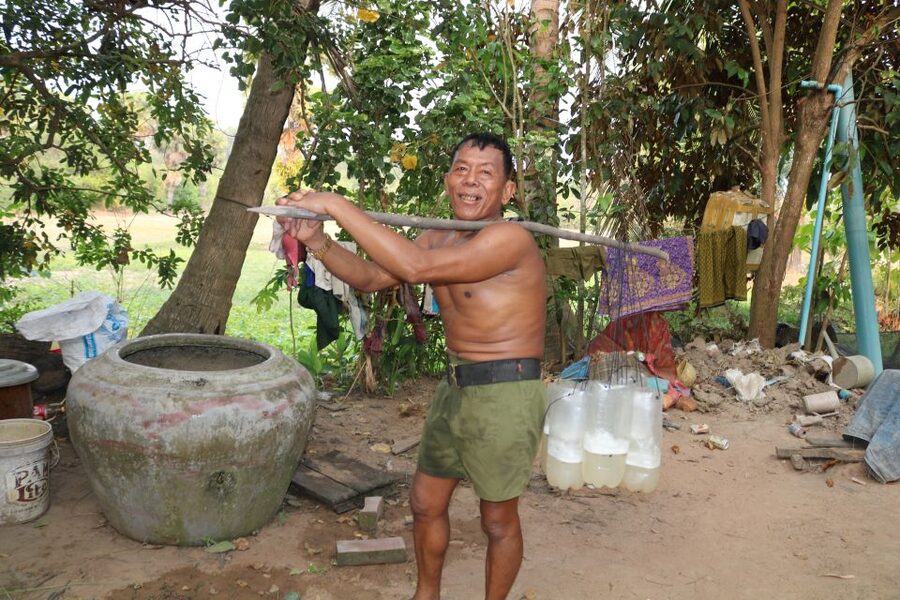
After the morning’s walking, you get a lunch break before visiting Ta Prohm. Lunch is not part of the $49 tour price, so budget for it separately.
The exact restaurant is not specified, but one departure included a tasty meal at a local restaurant. That is encouraging, though you should still ask your guide about the price and menu when the day begins. The break is more than a chance to eat. It gives you time to cool off, refill, and decide how much energy you have for Ta Prohm.
There is a useful lesson here: do not spend the morning treating the tour as a light outing. One departure covered roughly nine miles in total, and another lasted close to nine or ten hours. Even if your scheduled day is seven hours, a slow pace, longer explanations, weather, or extra walking can extend it.
More Angkor Wat Tours in Siem Reap:
- Angkor Wat Sunrise or Sunset Tour with Guide from Siem Reap
★ 5.0 · 12,109 reviews - Siem Reap: Angkor Wat: Small-Group Sunrise or Sunset Tour
★ 5.0 · 9,444 reviews - Siem Reap: Angkor Wat 2-Day Tour with Sunrise and Sunset
★ 4.9 · 4,429 reviews - Siem Reap: Full-Day Angkor Wat Guided Tour with Sunset
★ 4.9 · 3,803 reviews
Ta Prohm, where the forest presses through the ruins
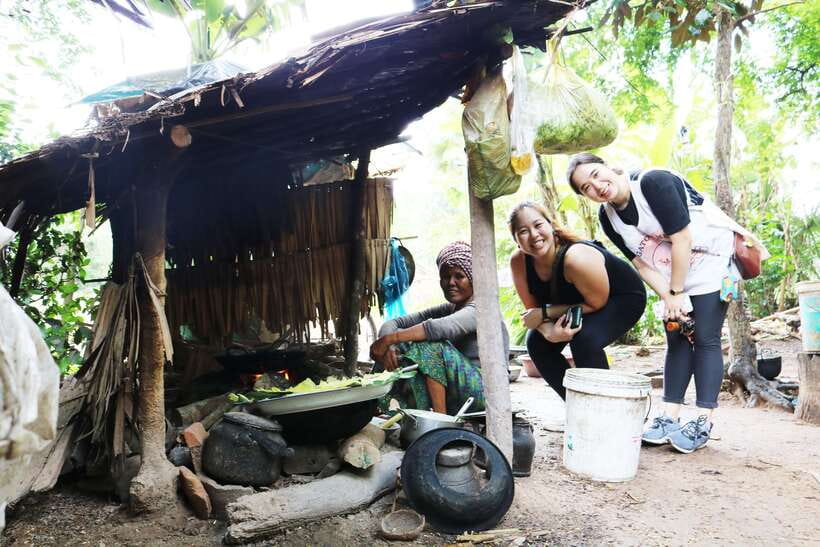
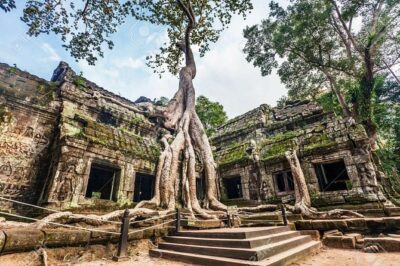
Ta Prohm is the tour’s most atmospheric stop. Trees grow through the stonework, roots push across walls, and corridors twist into a maze. The result is not a polished monument but a place where the forest and the ruins seem to occupy the same space.
The temple is often called the jungle temple, and that description fits the mood. You move between courtyards and narrow passages while roots frame doorways and cover sections of masonry. The setting also helps you picture how the site looked before modern conservation work made access easier.
The appeal is partly visual, but Ta Prohm also shows the cost of leaving a monumental site exposed to nature. Stone blocks shift, roots spread, and paths can become muddy in wet weather. One departure skipped a nearby village walk because heavy rain made the route narrow, dirty, and slippery. The guide arranged a quick return to the tuk tuk, which is exactly the sort of practical judgment you want in changing conditions.
Do not confuse the forest setting with an easy stroll. Ta Prohm has uneven ground and tight spaces. Insect repellent is specifically recommended, and comfortable shoes are essential. You should also dress with temple rules in mind. Shorts are not allowed on this experience, so wear clothing that covers your knees.
Forest tracks and the value of a local guide
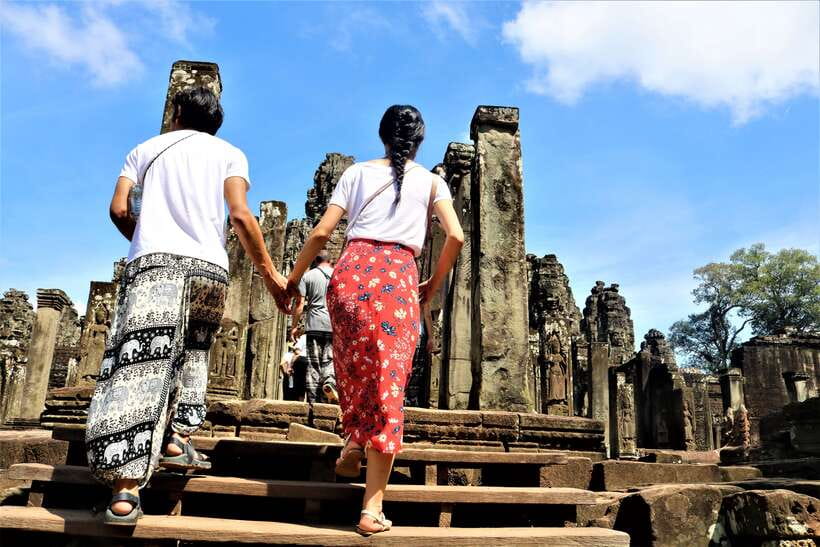
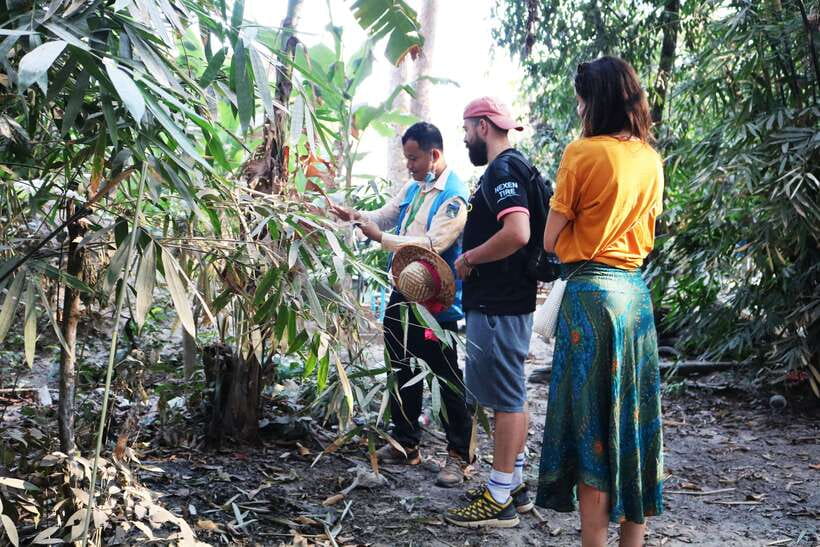
The route includes forest paths and less polished areas around the temples. These sections add a sense of discovery, but they also bring the least predictable conditions of the day. Rain can turn tracks into mud, and narrow paths may not suit everyone.
This is where the private format helps. Your tuk tuk is yours, rather than a shared vehicle making a long chain of pickups. The guide can respond to weather and your pace, although the tour still has a set route and a full day’s walking built into it.
The best guides make these adjustments without losing the thread of the visit. Bun, for example, was praised for getting the timing right and for handling a rainy change of plan. The point is not that every departure will unfold in exactly the same way. It is that an attentive guide can make the difference between a wet path becoming a minor detour and a miserable slog.
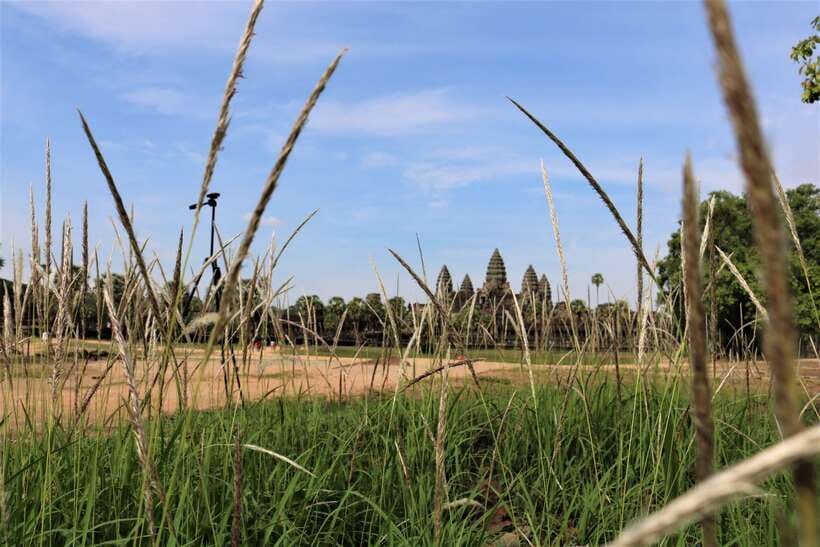
You should also know what the tour does not promise. It does not include Angkor Wat’s main temple as a featured stop in the described route. You explore Angkor Thom, Bayon, Ta Prohm, forest tracks, and the temple ruins around them. If standing before Angkor Wat’s central towers is your main goal, check the exact route before booking or arrange a separate visit.
What the $49 price really covers
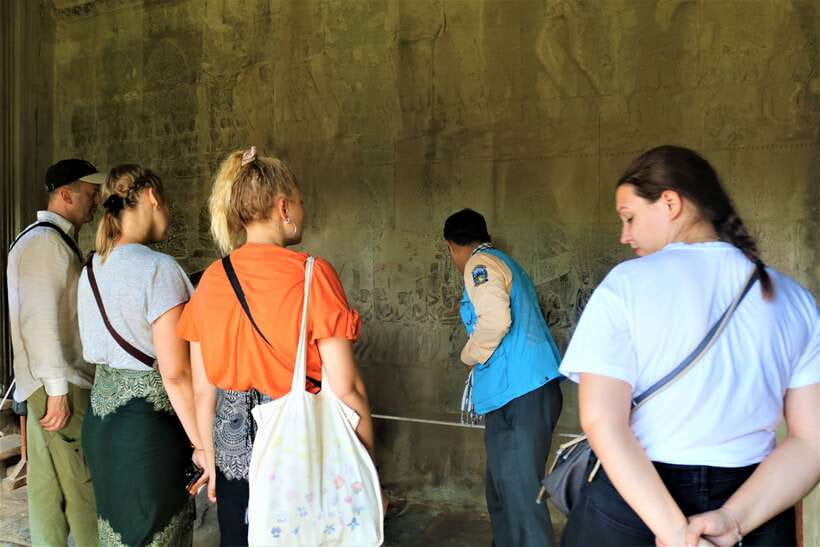
The tour costs $49 per person. The one-day temple pass adds $37, bringing the known total to $86 before lunch. That is not a bargain-basement temple outing, but it includes private tuk tuk transport, hotel pickup and drop-off, a professional local guide, bottled water, and soft drinks.
I consider that reasonable if you want a guide and do not want to negotiate tuk tuk transport yourself. Angkor is spread over a large area, and a good explanation can turn impressive ruins into a coherent visit. The private vehicle also gives you a place to return to between walking sections.
The value drops if you want a short, relaxed outing or already know the temples well. You are paying for structure, transport, and interpretation, not just entry. Since lunch and admission are extra, include those costs when comparing this with a self-arranged tuk tuk and temple pass.
The tour also advertises skipping the ticket line, but the entrance fee itself is not included. Plan to pay the $37 pass separately and confirm the current entry process when you book.
Who should book this seven-hour temple day
I would choose this experience if you want to combine an active walk with easy transport. It suits visitors who enjoy old walls, gates, narrow temple corridors, and explanations about Khmer culture. It is especially useful if you are visiting Siem Reap without a private vehicle or want one organized day rather than several separate temple outings.
You should be comfortable walking for hours. A report of around nine miles is a serious warning for anyone expecting a gentle half-day. Wear supportive shoes, bring insect repellent, and be ready for heat, rough paths, and steps.
This is a poor fit if you have a mobility impairment, dislike walking, or need a tightly fixed finish time. The listed duration is seven hours, but departures have sometimes run longer. Give yourself flexibility at the end of the day.
The tour does make room for weather changes and personal requests. A guide adjusted one rainy route rather than forcing the group onward, and another guide was praised for responding to suggestions. That flexibility is useful, but it cannot guarantee dry paths or a shorter itinerary.
Booking details worth knowing before you go
Hotel pickup and drop-off in Siem Reap are included, as is private tuk tuk transportation. The tour is conducted in English with a live local guide.
You can cancel up to 24 hours ahead for a full refund, and the reserve-now, pay-later option keeps your plans flexible. Starting times depend on availability, so check the departure time rather than assuming every day follows the same schedule.
The dress rule is firm enough to plan around: shorts are not allowed. You should bring comfortable shoes and insect repellent. Feeding animals is also prohibited.
The experience has received a perfect five-star average from 12 ratings, with repeated praise for guide quality, communication, timing, cultural explanations, and the care shown during weather changes. One lower score still rated the guide highly but pointed out two practical concerns: a missed village section and a wish for more help taking photographs at the main temple. That is a fair reminder to ask your guide for a picture when you want one, rather than waiting for the moment to happen.
Should you book the Angkor tuk tuk and walking tour?
Book it if you want an active, guide-led introduction to Angkor Thom, Bayon, and Ta Prohm, with a private tuk tuk handling the road between walking sections. The guides appear to be the main strength, especially for visitors who want Khmer culture and daily life explained alongside the monuments.
Skip it if your priority is a slow day, a guaranteed seven-hour finish, or a route centered on Angkor Wat’s main temple. The $49 fee is only part of the budget once you add the $37 pass and lunch, and the walking can reach roughly nine miles.
For a fit visitor who wants more than quick temple photographs, this is a strong choice. Just treat it as a full physical day, not a casual ride through the ruins.
FAQ
How long does the Angkor Tuk Tuk and Walking Tour last?
The listed duration is seven hours. At least one departure lasted about nine to ten hours, so you should leave extra time in your schedule.
What is included in the tour price?
The price includes bottled water, soft drinks, a professional local guide, hotel pickup and drop-off, and private tuk tuk transportation.
Is the Angkor temple entrance fee included?
No. The one-day temple pass costs $37 per person and must be paid separately.
Is lunch included?
No. Lunch is not included, although a departure included a meal at a local restaurant during the break.
Which temples and sites does the tour visit?
The route includes Angkor Thom, the Dead Gate, the old city walls, Victory Gate, Bayon, Ta Prohm, and forest tracks around the Angkor temples.
Is the tour suitable for people with mobility impairments?
No. The experience is listed as unsuitable for people with mobility impairments, and the route includes extensive walking, uneven ground, and temple steps.
What should I bring and wear?
Bring comfortable shoes and insect repellent. Shorts are not allowed, and feeding animals is prohibited.
More Walking Tours in Siem Reap
- Siem Reap: City Walking Tour
★ 4.6 · 583 reviews - Siem Reap City Walking Tour
★ 4.5 · 114 reviews - Siem Reap Walking Tour: Landmarks & Hidden Gems
★ 5.0 · 15 reviews - Customs and Culture Half Day Walk and Bike Tour in Battambang
★ 5.0 · 23 reviews
New around Siem Reap
- Kulen Mountain With Ticket included Plus Banteay Srei Temple Tour★ 5.0 · 7 reviews
- 2 Days Angkor temples with Sunrise & Sunset★ 5.0 · 7 reviews
- Private Siem Reap Airport Transfer to hotel in town★ 5.0 · 7 reviews
- 1-Day private Angkor Temple Tour with Sun Rise by Tuk Tuk from Siem Reap★ 4.5 · 7 reviews
- Siem Reap: Morning Cooking Class & Market Tour★ 5.0 · 7 reviews
- Kulen Mountain, Killing Fields and War Museum Tour★ 5.0 · 7 reviews
- War Museum, Killing Field, and APOPO Hero RATs Tour★ 5.0 · 7 reviews
- Half-Day: Silk Farm, Senteur Angkor, and Satcha Workshop★ 4.6 · 7 reviews
Angkor Wat Tours, compared.
Angkor Wat Sunrise or Sunset Tour with Guide from Siem Reap
Read our review →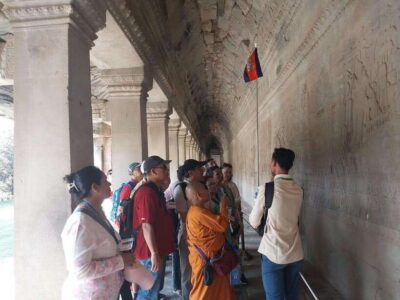
Angkor Wat: Small-Group Sunrise or Sunset Tour
Read our review →
Angkor Wat Sunrise tour with Small – Group and Guide tours
Read our review →
Angkor Wat Highlights and Sunrise Guided Tour from Siem Reap
Read our review →
Angkor Wat Sunset Small Group Tour with Lunch Included
Read our review →
Full-Day Angkor Wat Sunrise Private Tour with Guide from Siem Reap
Read our review →
Angkor Wat Sunrise & 3 Main Temples with Breakfast – Small Group
Read our review →Browse the lists this tour appears in