
Reviewed · SIEM REAP TOURS
2-Day Eight Temple Tour with Optional Sunrise
The most appealing part of this two-day tour is its range. You move from the steep towers of Pre Rup to the pink sandstone carvings at Banteay Srei, then from jungle-wrapped Ta Prohm to the vast galleries of Angkor Wat. It gives you a broad look at the Angkor complex without arranging several separate rides.
I like the private format, since your group can spend more time at a temple that catches your eye instead of waiting for strangers. I also like the guide-led approach, especially if you are paired with someone as engaging as Sam, whose storytelling and photography skills received particular praise. The main drawback is the pace: eight temples in two days means plenty of walking, heat, and visual overload.
Key points at a glance
- Eight temples across two days: See Pre Rup, Banteay Samre, Banteay Srei, Ta Prohm, Banteay Kdei, Angkor Wat, Preah Khan, and Bayon.
- Private touring: Only your group takes part, so you can explore at your own pace.
- A strong mix of temple styles: Compare pink sandstone carvings, Buddhist monastic ruins, jungle growth, royal monuments, and mountain temples.
- Private transport from your Siem Reap hotel: Transport is included and suited to your group size.
- Guide-led interpretation: Your guide explains the stories and background of each stop, rather than leaving you with stones and guesswork.
- The temple pass costs extra: The listed tour price is $98, but the required three-day temple pass is not included and costs $62 per person.
Why this two-day route works
The Angkor Archaeological Park is not one compact ruin. It spreads across a large area around Siem Reap, with major temples separated by roads and countryside. Visiting eight sites on your own can mean arranging transport, checking opening plans, and deciding which temples deserve your limited time.
This tour takes care of the transport and gives you a guide for both days. That matters most at the smaller sites, where carvings and layouts can be hard to understand without context. You still have room to explore, but you are not left trying to identify every tower and doorway yourself.
The itinerary also has a sensible rhythm. Day one focuses on several smaller and medium-sized temples, including the famous jungle setting at Ta Prohm. Day two brings the three major headline sites: Angkor Wat, Preah Khan, and Bayon.
You should still expect full days. The tour covers a lot, and the word private does not mean leisurely at every stop. It means the schedule can respond to your group, not that the temples are close together or effortless to visit.
More early starts in Siem Reap:
- Angkor Wat Sunrise or Sunset Tour with Guide from Siem Reap
★ 5.0 · 12,109 reviews - Siem Reap: Angkor Wat: Small-Group Sunrise or Sunset Tour
★ 5.0 · 9,444 reviews - Siem Reap: Angkor Wat 2-Day Tour with Sunrise and Sunset
★ 4.9 · 4,429 reviews
Day one: from Pre Rup’s high towers to Ta Prohm’s jungle roots
Pre Rup and the climb above the countryside
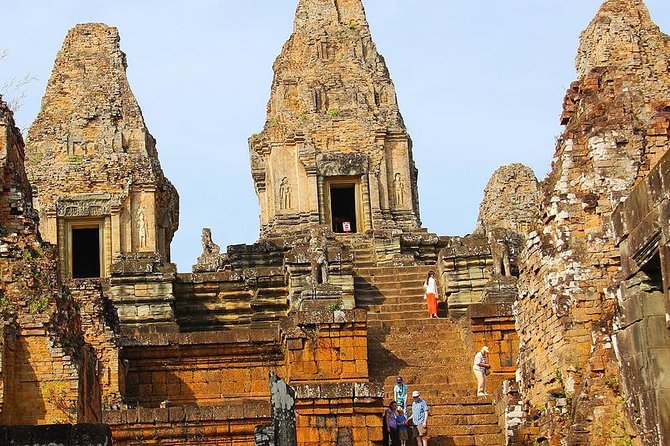
Pre Rup begins the first day with a physical challenge. The temple is built as a mountain temple, so you climb steep steps toward the towers at the top. The effort is rewarded with a different view of the countryside around Siem Reap.
This is one of the earlier temples built by the Khmer kings, and its high brick towers give it a strong, compact shape. It is a useful first lesson in how Khmer builders used height to create a symbolic mountain.
The steps can be demanding, especially in warm weather. If you have knee trouble or dislike steep climbs, ask your guide how much of the upper level you need to tackle. You can still appreciate the lower parts without forcing yourself to the top.
Banteay Samre and its Angkor Wat connection
Banteay Samre offers a more enclosed temple experience. It was built in a style similar to Angkor Wat, with towers, galleries, and detailed carvings that reward a slow look.
You can easily spend about an hour here, which is useful because the temple has enough detail to justify more than a quick photo stop. Look at how the structure frames its inner areas and how the carvings soften the heavy stonework.
This stop helps you compare different Khmer monuments. Angkor Wat is immense and ceremonial, while Banteay Samre feels more contained. A private guide can point out those differences as you move through the towers and passages.
A few more Siem Reap half-days to weigh up
- Angkor 2-Day Sunset & Sunrise Small-Group Tour
★ 5.0 · 2,567 reviews - 2 Days Exclusive Temple Highlights with Sunset and Sunrise Tour
★ 5.0 · 1,157 reviews - Siem Reap: Angkor Sunrise 1- or 2-Day Guided Temples Tour
★ 4.9 · 1,132 reviews - 2 Days Guided Historical Tour in Angkor
★ 5.0 · 855 reviews
Banteay Srei’s pink sandstone carvings
Banteay Srei is one of the most distinctive stops on the route. Its pink sandstone gives the temple a warm color that differs sharply from the gray and reddish stone at many other Angkor sites.
The carvings are the main attraction. They are unusually fine, with small figures and detailed patterns cut into the sandstone. A popular legend says the work was too beautiful to have been done by men, attributing it to women instead. Treat that as a story rather than established fact, but it adds a memorable touch to the visit.
Banteay Srei is also farther from the central group of temples than some stops, which makes included private transport especially useful. You do not have to negotiate a separate ride or sacrifice another temple to reach it.
Ta Prohm, the Tomb Raider temple
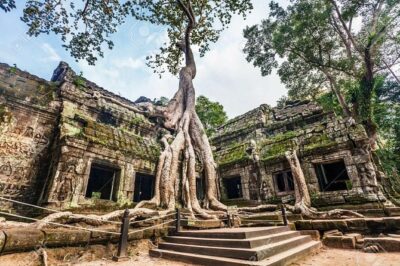
Ta Prohm is the most cinematic stop on day one. It is widely known as the Tomb Raider temple because it was used as a filming location for the movie starring Angelina Jolie.
The film connection brings people here, but the real draw is the way the old temple has been left partly to the elements. Trees grow through the structure, roots press against walls, and jungle growth occupies spaces that would otherwise feel like formal courtyards.
The site is not simply a ruin swallowed without care. It has been made safe for visitors, while much of its rough character remains. That balance gives you a sense of how the temples might have looked before large-scale restoration and tourism changed the park.
Ta Prohm can also be one of the busiest stops. A private tour cannot remove other groups from the site, but your guide can help you keep moving and choose where to pause. Take time to look beyond the most photographed tree and doorway. The temple has more to offer than its famous movie connection.
Banteay Kdei and the quieter close to day one
Banteay Kdei sits near Ta Prohm and is known as the Citadel of Chambers or Citadel of Monks’ Cells. It is a Buddhist temple with a less polished, more worn appearance.
After Ta Prohm, this can feel like a calmer way to finish the day. The name points to its many chambers and enclosed spaces, so watch for the way the plan differs from the broad ceremonial approach of Angkor Wat.
Banteay Kdei is popular, but it often feels less overwhelming than the largest temples. It gives you another chance to see Buddhist architecture and compare the condition of one complex with another.
Day two: Angkor Wat, Preah Khan, and Bayon
Angkor Wat rewards a slow start
Day two begins with Angkor Wat, the temple most people associate with Siem Reap. It is the largest temple built during the Khmer Empire and the centerpiece of the Angkor Archaeological Park.
The scale can be hard to take in at first. You move through broad approaches, galleries, towers, and carved surfaces that seem to keep going. Do not treat it as a single photo stop. The value comes from allowing enough time to understand how the sections fit together.
An optional sunrise start is available, but the supplied tour details do not specify the exact departure time or how long you will stay afterward. Ask for those details before booking if sunrise is important to you. Early starts can bring special light, but they also add fatigue to an already busy two-day schedule.
The temple attracts more than two million visitors each year, so you should not expect solitude. The private format gives you control over your own group, not exclusive access to the monument. Wear clothing that covers your shoulders and knees, as this is required for temple entry.
Preah Khan keeps its rough edges
Preah Khan is another 12th-century temple built by Jayavarman VII, one of the best-known Khmer kings. Unlike heavily restored monuments, it has been left with much of its original, weathered character.
The site has been made safe for visitors, but little restoration work has been done. That means you see collapsed sections, worn stone, and vegetation alongside paths that are open for exploration.
I find this kind of temple useful because it shows the work involved in preserving Angkor. The ruins are not frozen in perfect condition. They are old buildings that need protection, and the limited restoration lets you see both the architectural plan and the effects of time.
Preah Khan is a good place to ask your guide about Jayavarman VII and the religious changes reflected in the monuments. The tour notes that Bayon includes Hindu inscriptions as well as Mahayana and Theravada Buddhist inscriptions, and the wider route gives you a chance to notice how religious traditions overlap across the park.
Bayon’s stone faces and hidden corners
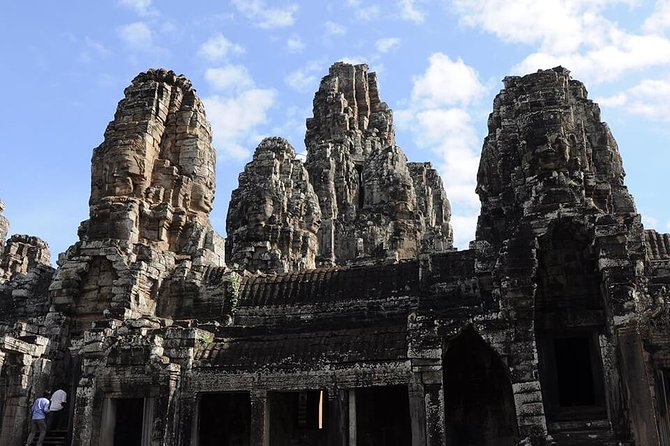
Bayon is often the favorite stop for first-time visitors because it feels so different from Angkor Wat. Its towers carry large carved faces, and the temple is full of tight passages, stacked stone, and unexpected viewpoints.
The layout can be confusing. That is where a private guide earns much of the fee. Instead of wandering past the main faces and leaving, you can spend several hours exploring the nooks and corners.
Bayon also carries layers of religious history. Hindu inscriptions appear alongside references connected with Mahayana and Theravada Buddhism. Your guide can help explain those changes while you look at the temple itself.
Allowing a few hours here is sensible, but it adds to the physical demands of day two. After Angkor Wat, you may already be tired. Tell your guide if you need a shorter route or a pause. The benefit of a private tour is the ability to adjust the experience for your group.
What the private guide and transport add
The tour includes a guide, cold water, and transport suited to your group size. Hotel pickup in Siem Reap is included, which removes one of the small but irritating tasks of temple touring.
The guide is not just a driver with a list of stops. The stated plan includes history and stories at each temple, and that can change how you see the ruins. At Banteay Srei, for example, the guide can connect the stone color and delicate carving to the temple’s identity. At Ta Prohm, the guide can separate the movie image from the older religious and architectural setting.
One guide connected with the tour, Sam, was praised for storytelling and photography. That does not guarantee he will lead your particular departure, so ask when booking if a named guide matters to you. Still, it gives you a useful picture of the kind of guide who can make this route memorable: someone who explains the place and helps you make better use of your camera.
Cold water is a modest inclusion, but a valuable one in Cambodia’s heat. Food and drinks beyond that are not included, so plan to pay for meals yourself. Personal expenses are also extra.
Is $98 a good value?
The $98 price covers two days, private transport, a guide, and cold water. The three-day temple pass costs an additional $62 per person, bringing the basic combined cost to $160 per person before food, drinks, and personal expenses.
That total is easier to judge when you compare it with what you would need to arrange alone. You are covering transport across a wide temple area, two days of guiding, hotel pickup, and a route that includes eight significant sites. For a private group, that can be fair value, especially if you want explanations rather than a vehicle and a map.
The value is lower if you prefer to see only two or three temples at a very slow pace. You are paying for breadth and convenience, and the itinerary is built around covering a lot of ground.
Group discounts may improve the price for larger parties, but the details are not specified. Check the final amount for your group before confirming. Also remember that accommodation, meals, drinks, personal expenses, and the temple pass are outside the $98 rate.
Who should book this temple tour?
I would suggest this tour to a first-time Siem Reap visitor who wants the major temples plus several sites that are easy to miss. It suits you if you value a private guide, hotel pickup, and the ability to move at your own pace.
It is also a good match for families or small groups with different interests. One person can spend longer with carvings, another can focus on photography, and the group does not have to follow a large coach schedule.
You should think twice if you dislike early mornings, steep steps, long temple days, or repeated walking on uneven surfaces. The route is physically active, and the optional sunrise plan may make the second day feel even longer.
Dress for temple rules by covering shoulders and knees. Most people can take part, but the itinerary includes steep climbs and extensive walking, so consider your own comfort before booking.
Final verdict: a strong two-day introduction to Angkor
Book this tour if you want an efficient, private introduction to the Angkor temples and you like having a guide explain what you are seeing. The best parts are the contrast between sites: Pre Rup’s high towers, Banteay Srei’s pink carvings, Ta Prohm’s tree roots, Angkor Wat’s scale, and Bayon’s stone faces.
The main caution is pace. Eight temples in two days is ambitious, and the $98 price does not include the $62 temple pass or meals. If that sounds acceptable, the route offers a practical way to cover a wide area with private transport and a guide who can turn a long list of ruins into a connected story.
FAQ
How many temples does the tour visit?
The tour visits eight temples: Pre Rup, Banteay Samre, Banteay Srei, Ta Prohm, Banteay Kdei, Angkor Wat, Preah Khan, and Bayon.
Is the tour private?
Yes. Only your group participates, and the tour includes private transport suited to your group size.
Is sunrise included?
An optional sunrise start is available. The supplied details do not specify the exact departure time or the precise sunrise arrangement, so confirm those details before booking.
Does the $98 price include the temple pass?
No. The three-day temple pass costs $62 per person and is not included in the tour price.
Are food and drinks included?
Food and drinks are not included. Cold water is included, while meals, other drinks, and personal expenses are your responsibility.
What should I wear to the temples?
You must cover your shoulders and knees to enter the temples.
New around Siem Reap
- Siem Reap Temple and Waterfall 3-Day Tour★ 4.5 · 3 reviews
- Savor the Countryside: Tours with Authentic Cooking Classes”★ 5.0 · 3 reviews
- Siem Reap Private Tour: Angkor Wat Sunrise And Banteay Srei★ 5.0 · 3 reviews
- Siem Reap: Guided Day Trip to Local Village & Cooking Class★ 5.0 · 3 reviews
- Angkor Wat Sunrise TukTuk Tour★ 5.0 · 3 reviews
- Angkor Wat Sunset In Private and Small-In-Group★ 4.3 · 3 reviews
- Full Day to Banteay Srei, Kulen National Park and Beng Mealea★ 5.0 · 3 reviews
- Exclusive Angkor temples and Small group temples tours★ 5.0 · 3 reviews
Siem Reap Tours, compared.
Angkor Wat Sunrise or Sunset Tour with Guide from Siem Reap
Read our review →
Angkor Wat: Small-Group Sunrise or Sunset Tour
Read our review →
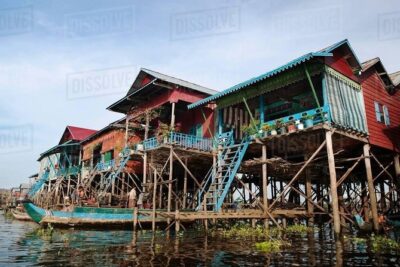
Sunset tour of Kampong Phluk stilts home village on the Tonle Sap
Read our review →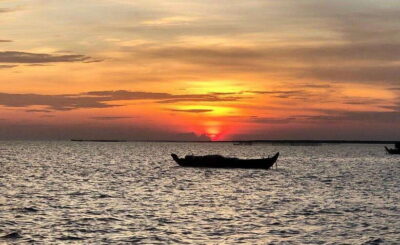
Kampong Phluk Floating Village Tour with Boat
Read our review →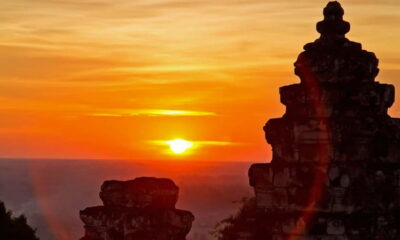
Angkor Wat Sunrise tour with Small – Group and Guide tours
Read our review →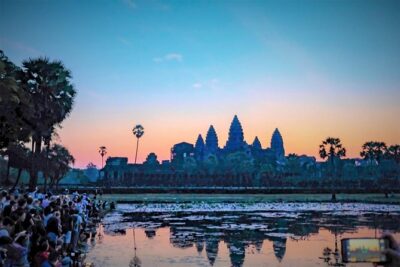
Angkor Wat Highlights and Sunrise Guided Tour from Siem Reap
Read our review →Browse the lists this tour appears in