
Reviewed · PHNOM PENH TOURS
Khmer Cooking Class Half Day (AM or PM)
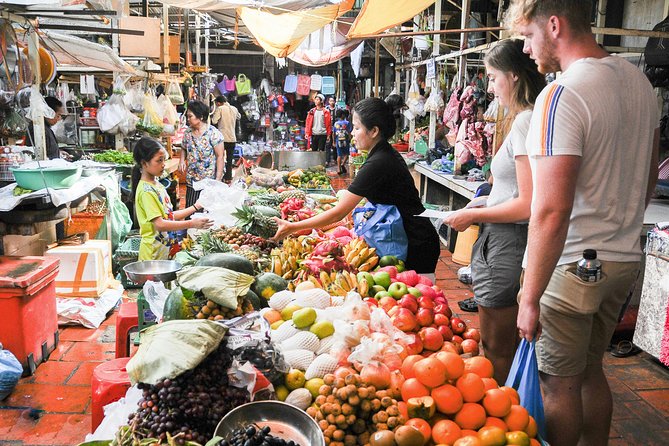
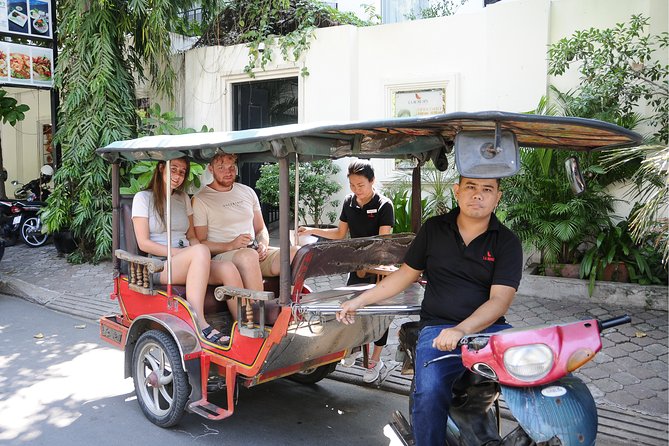
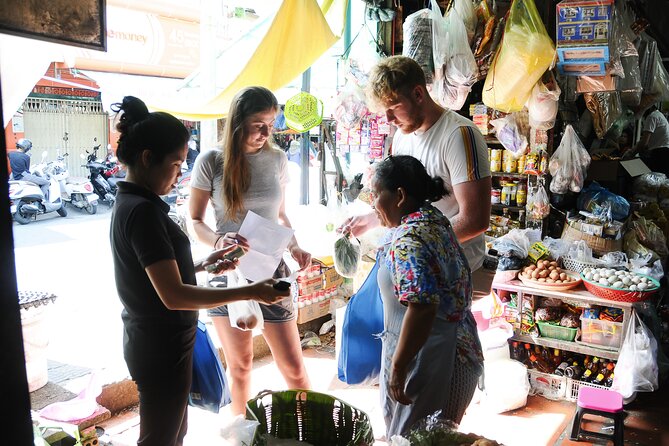
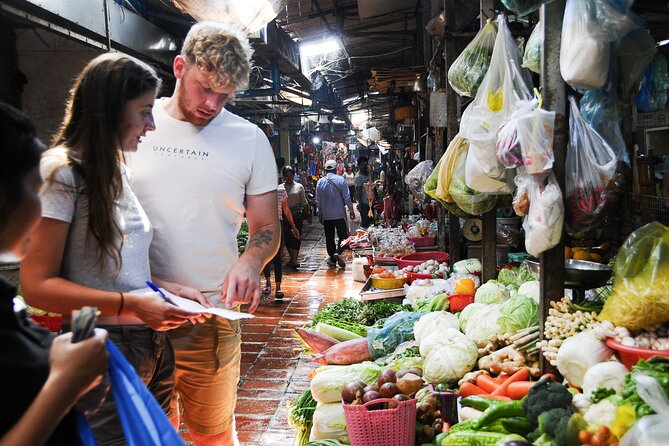
The most interesting part of this Phnom Penh cooking class starts before you enter the kitchen. You ride by tuk-tuk to a local market, choose the fruits, vegetables, herbs, and spices for your meal, then bring them back to cook under the guidance of an instructor such as Lom Ang or Sophen.
I like the market visit because it gives you a practical look at Cambodian food rather than a quick cooking demonstration. I also like the individual cooking stations, which let you chop, season, and cook your own portion instead of watching someone else do the work. The main consideration is that the class can feel quiet if you are the only participant, and some people may not enjoy eating a full meal alone.
Key points to know
- Market shopping comes first: A tuk-tuk takes you to a local market to identify and buy the ingredients used in class.
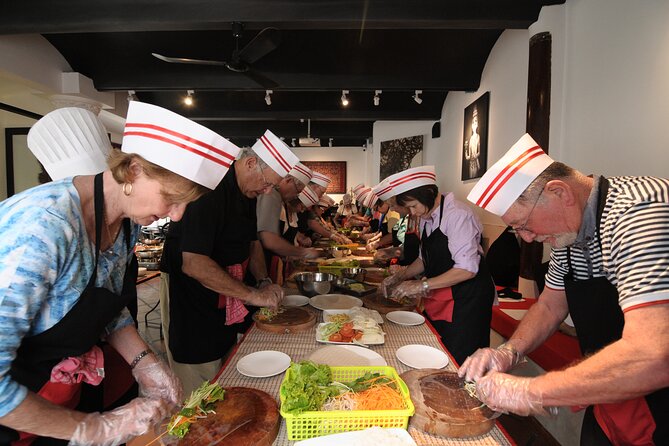
- You cook at your own station: Each student has cooking utensils, a wok, and space to prepare a personal portion.
- Three Khmer dishes are included: Menus shown in the class include fish amok, chicken curry, spring rolls, green mango salad, and a banana dessert.
- Chef Lom Ang is a frequent instructor: She is described as patient, clear, friendly, and helpful with ingredient substitutions.
- The meal is the payoff: You sit down to eat the food you prepared, with enough to make a proper lunch or dinner.
- You leave with useful extras: Printed recipes, ingredient lists, a certificate, and sometimes leftover food are provided.
Why this class is more than a cooking demonstration
At $31, this four-hour experience gives you a market visit, local transportation, hands-on instruction, a three-dish meal, recipes, and a certificate. That is a fair price in Phnom Penh, especially because you are not simply watching a chef prepare food for you.
The value is strongest for people who want to understand how Cambodian dishes are built. You learn what the ingredients look like before they are cleaned and chopped, how they are selected, and how they work together in a finished dish.
I like that the experience connects the market and kitchen. A curry paste or banana dessert makes more sense when you have just seen the herbs, vegetables, and fruit in their original setting. You also get advice about possible substitutes for ingredients that may be hard to find at home.
This is not a luxury food tour with a long list of tastings. It is a practical class in a calm cooking-school setting. If your main goal is to eat without cooking, choose a restaurant meal instead. If you want to learn a few dishes you can attempt again, this is a better use of half a day.
More Cooking Classes in Phnom Penh:
- Khmer Cooking Class Full Day
★ 5.0 · 13 reviews - Khmer Cooking Class at a Local’s Home in Krong Siem Reap
★ 5.0 · 2,731 reviews - Siem Reap: Khmer Cooking Class at a Local’s Home
★ 5.0 · 1,108 reviews
The morning or afternoon schedule
You can choose a morning class beginning at 9:00 a.m. or an afternoon class beginning at 3:00 p.m. The morning session finishes around noon, while the afternoon session ends at about 6:00 p.m.
You meet at Banana Cooking Class at 4B Abdul Carime Street 21 in Phnom Penh. From there, the class uses a tuk-tuk to reach the local market. The ride is short enough to be part of the experience rather than a major time commitment, and it gives you a little street-level contact with the city.
After about an hour at the market, you return by tuk-tuk to the school. You receive a refreshing drink, a cold towel, and the recipes before the cooking begins. That small break matters in Phnom Penh’s heat, especially after walking through a market.
The schedule is fairly structured. A theory and demonstration session begins at about 10:30 a.m. for the morning class, or 4:30 p.m. for the afternoon class. Around 11:00 a.m. or 5:00 p.m., you begin preparing the dishes yourself.
Lunch or dinner follows at about noon or 6:00 p.m. You eat what you cooked, receive a certificate, and have a photo session before returning to the meeting point. The timing makes this easy to fit around other Phnom Penh sightseeing, though you should allow the full four hours rather than trying to squeeze in another fixed appointment.
Shopping for ingredients at a local market
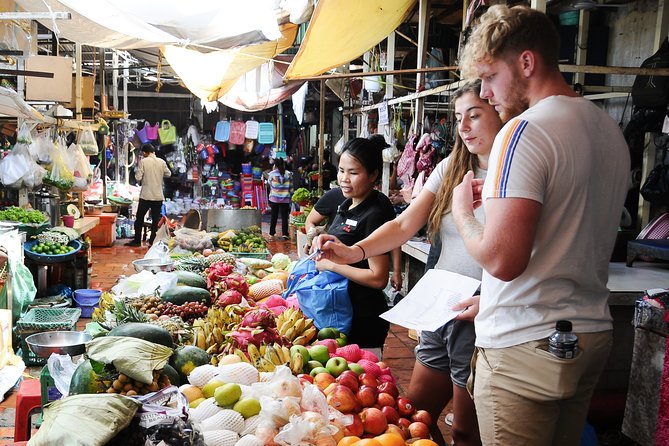
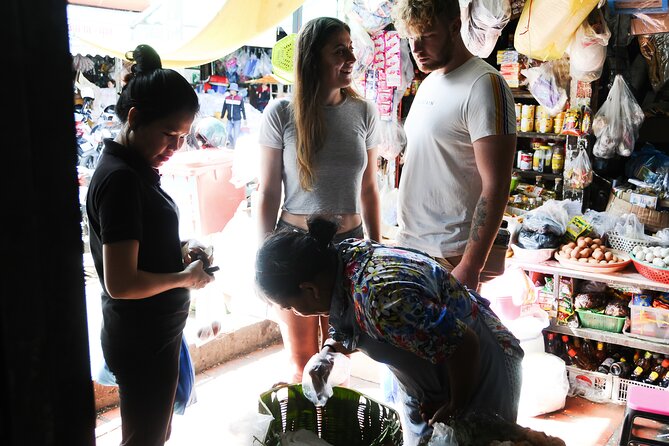
The market stop is the cultural heart of the class. You are shown Cambodian fruits, vegetables, herbs, and spices, then help gather the ingredients needed for your recipes.
This is not just shopping for supplies. You learn what the instructor looks for in fresh produce and how Cambodian cooks use ingredients that may be unfamiliar to you. The market also gives you a chance to see ordinary food buying and local stalls, with the smells and visual clutter that come with a real wet market.
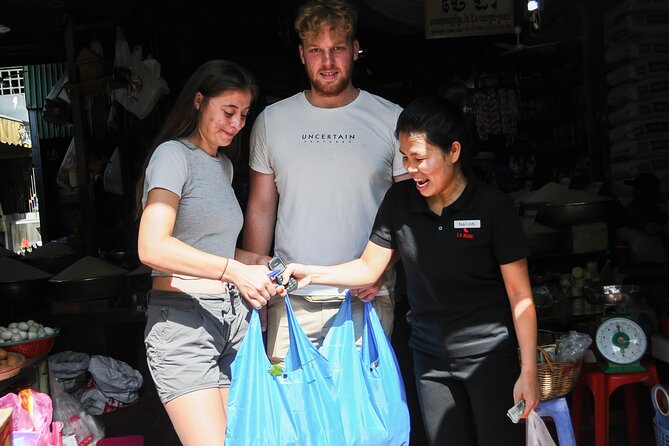
The class handles the buying process with you. You are not left to bargain for every item or guess which herb is correct. The instructor guides you from stall to stall, which is useful if you have never cooked Khmer food before.
I would wear comfortable shoes and clothes that can handle heat and market odors. One description notes that some smells are not pleasant, but that is part of the point. You get a more honest picture of local food shopping than you would in a polished shop aimed at visitors.
The market visit is also useful if you plan to cook Cambodian food later. You can see the ingredients whole, not just measured into small bowls. The instructor may also explain which items have reasonable substitutes in the United States or other countries, a practical detail that can save you frustration at home.
Cooking fish amok, curry, salads, and dessert
Back at the school, the chef demonstrates the dishes one stage at a time. You then repeat the preparation at your own station, with your own utensils and wok.
Menus described for the class include fish amok, chicken curry, fresh spring rolls, green mango salad, and a banana palm sugar or banana caramel dessert. The exact combination may depend on the session, but the format is consistent: a starter or salad, a main course, and a sweet finish.
Fish amok is a particularly good choice for learning about Khmer cooking. It is often described as a favorite part of the meal, and the class gives you a chance to work through the preparation instead of meeting it only as a finished restaurant dish.
Chicken curry is another popular main course. One class description singles out the yellow chicken curry as especially good. You learn how to prepare the vegetables and seasonings, then follow the cooking process with help close by.
The spring rolls offer a gentler introduction to the class. You can focus on preparing and handling the fillings before moving on to more involved cooking. Green mango salad adds a fresh, sharp element to the meal and shows that Cambodian food is not only about curries and coconut-based dishes.
Dessert may be the simplest course, but it can be quite sweet. If you make the banana palm sugar dessert or banana caramel and find it too sugary, you can adjust the amount of sugar when you repeat it at home. That is one benefit of cooking your own food: you learn where the recipe can bend to your taste.
The instruction is designed for different skill levels. If you already cook often, you can pay attention to technique and ingredient choices. If you are new to cooking, the chef demonstrates each step before asking you to copy it. You are not expected to arrive with knife skills or wok experience.
More hands-on workshops in Phnom Penh:
- Award-Winning Cooking Class Experience with Professional Teacher
★ 5.0 · 745 reviews - Siem Reap: Cambodian Pottery Class
★ 4.9 · 339 reviews - Cambodian Village Cooking Class
★ 5.0 · 265 reviews - Cambodian Cooking Class from Siem Reap
★ 4.9 · 190 reviews
What the private format feels like
The activity is listed as a private tour, so only your group participates. In practice, the class may be one-on-one or limited to two people, depending on bookings.
A private format gives you direct access to the chef. You can ask why a certain spice is added, how long to cook a dish, or what to substitute at home. Chef Lom Ang is especially noted for patient instruction and for explaining which ingredients can and cannot be replaced.
There is a tradeoff. A small class means plenty of attention, but it may not have the social energy of a larger group. One participant found it disappointing to dine alone and was not able to invite a driver to join the meal. If you are traveling solo, that is worth considering.
For couples, friends, and families, the private setup can work very well. Parents can keep children involved at their own pace, and partners can divide the work without being crowded by strangers. The class has also been described as suitable for children, though the supplied information does not specify a minimum age.
English instruction is available, but it may not always be perfectly fluent. The demonstrations and step-by-step format help, and the printed recipes give you a clear record afterward. Still, you should be comfortable asking for a step to be shown again if a spoken explanation is unclear.
The cooking-school setting
The school is reached from the market by tuk-tuk and is described as part of a quiet boutique-hotel setting with gardens and clean facilities. Some sessions take place in an air-conditioned kitchen, which is a welcome feature in Phnom Penh.
The calm setting changes the feel of the class. You get a break from traffic, heat, and market noise, then work in a prepared kitchen with tables laid out for cooking. Relaxed music and helpful staff have been noted as part of the atmosphere.
This is a good match for you if you value comfort but still want a local food experience. It is not a rough street-food lesson, and it does not pretend to be one. The market provides the everyday Cambodian side, while the school supplies a clean, organized place to cook.
Some people combine the class with another service at the hotel, such as a massage at the day spa. That is optional and not part of the $31 cooking experience, but the setting makes it possible to turn the class into a longer, slower afternoon.
Eating the food you prepared
The final meal is not a token taste. You sit down to eat the dishes you made, and the portions are described as plentiful enough for a full lunch or dinner.
This part gives the class a clear sense of purpose. You can compare the finished dish with the chef’s demonstration and see how your own choices affected the result. If something is too sweet, too mild, or not quite cooked as you expected, the chef can explain what happened while the lesson is still fresh.
A few people have been able to take unfinished food with them, though you should not assume this will always be possible. The class is designed to serve the meal at the end, and food-sharing arrangements may depend on the group and staff.
The meal also makes this a useful choice for travelers who want to save money on one meal while gaining a skill. You are paying for instruction and an activity, but you are also eating the result. At $31, that combination gives the price real value.
Recipes, substitutions, and the certificate
You receive recipes and ingredient lists to take home. This is one of the most useful parts of the experience, because Cambodian dishes often depend on ingredients that are easy to confuse when you first encounter them.
Chef Lom Ang has explained possible substitutions for people cooking outside Cambodia. That advice can be more useful than a recipe alone. A printed list tells you what the school uses, while the chef’s guidance helps you decide what to do when a local shop lacks a particular herb or spice.
The certificate and photo at the end are small extras, but they suit the experience. The certificate is a pleasant souvenir, especially for children or anyone who enjoys collecting cooking-class mementos. The recipes are the real prize, since they give you a way to share the meal with family and friends later.
Do not expect a professional culinary qualification. This is a short cultural cooking lesson, not chef training. You leave with three recipes and practical experience, not a formal credential.
Who should book this Phnom Penh class?
I would choose this class if you want a hands-on activity that connects food with daily life in Cambodia. It is especially suited to:
- Couples and friends who want to cook and eat together
- Families looking for an active, child-friendly Phnom Penh activity
- Solo cooks who enjoy one-on-one instruction
- People who want recipes they can repeat at home
- Visitors who have already seen temples and museums and want a different side of the city
It may not suit you if you dislike wet markets, hot weather, tuk-tuk rides, or sweet food. The market can have strong smells, and the class requires active participation. You will chop, prepare, and cook for much of the session.
The private format is excellent for questions, but solo visitors should think about the dining portion. You may have a very personal lesson, then eat alone at the end. That is not a problem for everyone, but it is the one clear social drawback in an otherwise well-organized experience.
Practical details before you book
Confirmation is provided when you book, and the activity ends back at the meeting point. The school is near public transportation, though the market transfers during the class are handled by tuk-tuk.
You can book a morning or afternoon session. The stated duration is about four hours, so keep the rest of your schedule flexible. The meeting point is Banana Cooking Class, 4B Abdul Carime Street 21, Phnom Penh.
The activity offers free cancellation if you cancel at least 24 hours before the start time. Cancellations within 24 hours are not refunded, and late changes are not accepted. The cut-off uses Phnom Penh local time.
Should you book it?
I would book this class if you want to learn Cambodian food through shopping, preparation, and eating, rather than through a short demonstration. The market visit, personal cooking station, three-course meal, recipes, and tuk-tuk transfers make $31 a strong value.
Choose the morning session if you want a freshly cooked lunch and a free afternoon. Choose the afternoon session if you prefer a later start and dinner at the end.
For the best fit, book it with a companion if shared dining matters to you. If you are comfortable eating alone, a private session can give you unusually direct help from an instructor such as Lom Ang or Sophen. Either way, you leave with more than a full stomach: you gain a workable introduction to Khmer cooking and recipes you can try again at home.
FAQ
Where does the Khmer cooking class begin?
The class begins at Banana Cooking Class, 4B Abdul Carime Street 21 in Phnom Penh.
How long does the cooking class last?
The half-day course lasts approximately four hours.
What time are the morning and afternoon classes?
The morning class begins at 9:00 a.m. and ends around noon. The afternoon class begins at 3:00 p.m. and ends around 6:00 p.m.
Is transportation to the market included?
The itinerary includes tuk-tuk transportation from Banana Cooking Class to the local market and back to the school.
How many dishes will I cook?
You prepare three traditional Cambodian dishes. Examples include fish amok, chicken curry, fresh spring rolls, green mango salad, and a banana palm sugar or banana caramel dessert.
Do I receive the recipes after class?
Yes. Recipes and ingredient information are provided for you to take home, along with a certificate at the end of the class.
What is the cancellation policy?
You can cancel for a full refund up to 24 hours before the experience begins. Cancellations or changes made less than 24 hours before the start time are not accepted and are not refunded.
New around Phnom Penh
- One Day Private Guide Tours History in Phnom Penh Incl. admission★ 4.5 · 7 reviews
- ( Free eSim) Phnom Penh Historical Full Day Tour★ 5.0 · 7 reviews
- Ground Transfer/ Minivan/ Phnom Penh to Siem Reap★ 5.0 · 7 reviews
- Phnom Penh: Bike & Boat Tour / E-Bike Available★ 4.8 · 7 reviews
- Private Taxi Phnom Penh to Siem Reap or Siem Reap to Phnom Penh★ 5.0 · 8 reviews
- Cambodia 7 Days Private Tour from Angkor Temples to Coastline★ 5.0 · 8 reviews
- Head, Back and Shoulder Massage in Phnom Penh★ 4.5 · 8 reviews
- Private Half-Day Tour of Phnom Penh’s Traditional Markets★ 4.5 · 8 reviews
Phnom Penh Tours, compared.
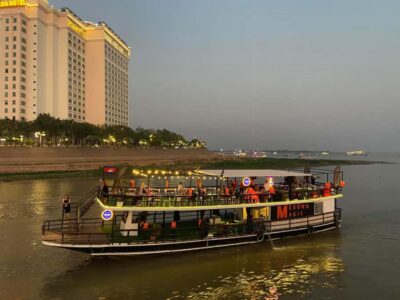
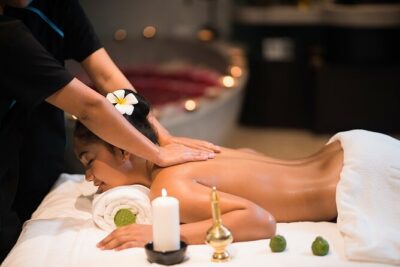
Aroma Therapy Massage, Relaxation therapeutic aromatherapy oil massages.
Read our review →
Sunset Cruise with Unlimited Beer &Fruit platter
Read our review →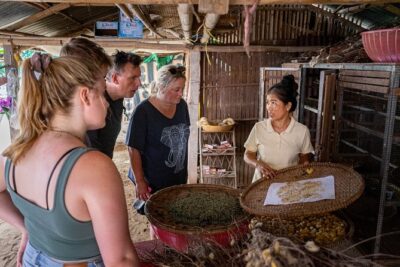
Phnom Penh Silk Island Bike Tour/ E-Bike or Tuk Tuk
Read our review →
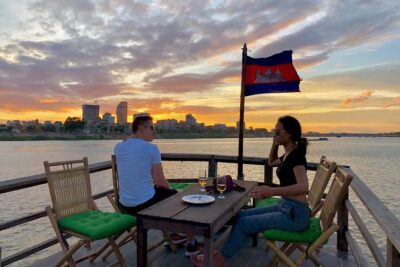
Sunset Cruise with unlimited beer & soft drinks -English speaking guide on board
Read our review →
Ultimate Phnom Penh Food Tour by Tuk Tuk: 20 Tastings and Drinks
Read our review →
Sunset & Evening Dinner Cruise With One Way Free Pick Up
Read our review →Browse the lists this tour appears in