
Reviewed · SIEM REAP TOURS
Siem Reap: Cambodian Pottery Class
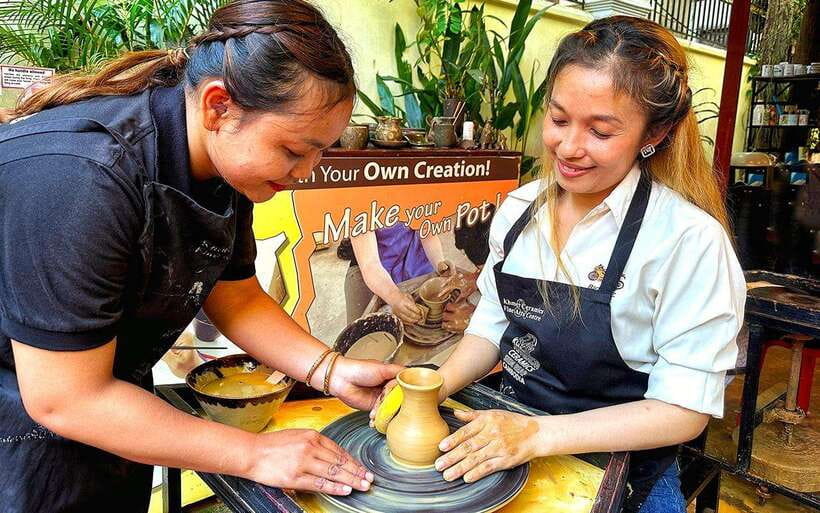
The most memorable part of this Siem Reap class is the manual pottery wheel. You power it with your foot while trying to keep a lump of local clay centered, shaped, and upright. It looks simple until your bowl starts leaning like a tired temple wall.
I like two things here: you get real hands-on time rather than just watching a demonstration, and the class connects your souvenir to Khmer ceramic art through carved decoration. The teachers are patient, and they can often rescue a wobbly piece without taking the whole job away from you.
The main catch is timing. Your fired pottery is usually ready at 6pm the following day, so you need to remain in Siem Reap long enough to collect it. If you leave sooner, you can select a shop item instead, but that is not quite the same as carrying home your own bowl.
Key Points Before You Book
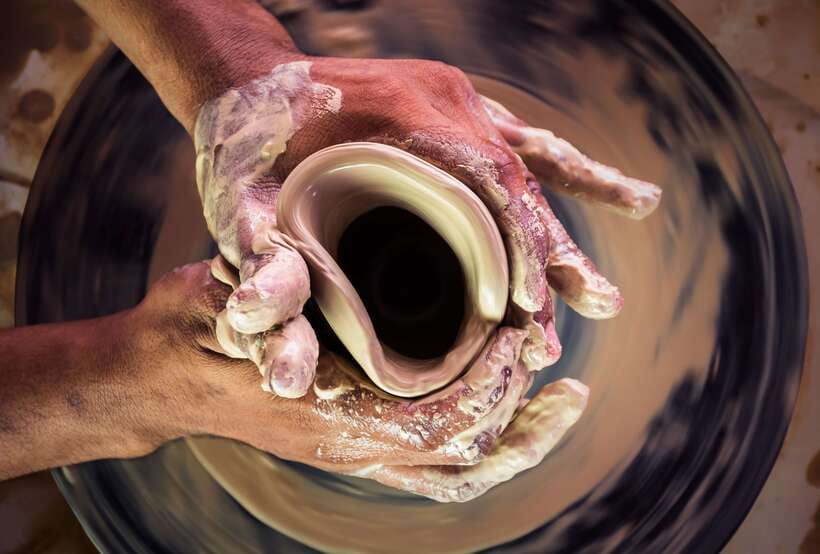
- Five chances to practice: The class commonly lets you make several pieces, with demonstrations for items such as a mug, bowl, or vase, followed by time to create your own designs.
- A foot-powered wheel: You control the wheel with your foot, which gives this Cambodian workshop a different feel from many modern pottery studios.
- Khmer carving included: You can decorate your clay with local ornamentation before the piece goes into the kiln.
- One fired piece included: The class includes a handmade bowl or another selected creation. Additional pieces can cost extra.
- Pickup is the next day: Finished pottery is available at 6pm the day after class. Hotel delivery is not included.
- Good midday escape: The two-hour session takes place indoors and works well during Siem Reap’s hot part of the day.
A Tuk Tuk Ride Into Siem Reap’s Pottery Tradition
Your two-hour activity begins with hotel pickup and a tuk tuk ride into central Siem Reap. That short transfer matters because it turns the class into more than a craft lesson at your hotel. You are going to a working arts center connected with Cambodian ceramic production.
Siem Reap has been an important center for traditional Cambodian ceramics for centuries. The class gives you a small, practical look at that tradition. You will not become a professional potter in two hours, but you will understand how much control and patience go into even a plain bowl.
The Khmer Ceramics & Fine Arts Centre is also a useful stop after long days at Angkor. Temple visits involve walking, heat, and a lot of visual information. Here, your hands do the work. The pace is quieter, and the focus shifts from looking at old art to making something yourself.
Pickup and drop-off are included, which makes the $27 price easier to judge. You do not need to arrange a tuk tuk for the workshop or negotiate a fare at the end. Exact starting times depend on availability, so check the schedule before booking.
More hands-on workshops in Siem Reap:
- Khmer Cooking Class at a Local’s Home in Krong Siem Reap
★ 5.0 · 2,731 reviews - Siem Reap: Khmer Cooking Class at a Local’s Home
★ 5.0 · 1,108 reviews - Award-Winning Cooking Class Experience with Professional Teacher
★ 5.0 · 745 reviews
The Demonstration: Watch the Clay Before You Touch It
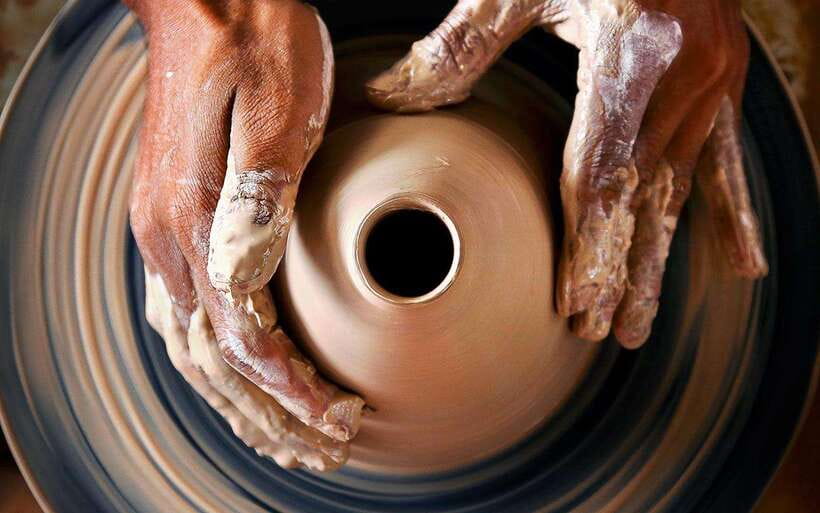
Once you arrive, a Cambodian English-speaking teacher explains the basic ceramic process and demonstrates the main techniques. You see how the clay is prepared, centered, opened, and pulled upward into a vessel.
That demonstration is important because pottery is harder than it appears. Several people who had never tried a wheel before found that their first pieces collapsed or went off center. This is normal. The teachers provide fresh clay and let you try again, rather than treating a failed piece as a disaster.
Instruction is practical and visual. Some teachers communicate through demonstration and gestures, with English support available during the class. This can actually make you watch the movement of the hands closely. You see where the fingers go, how much pressure is used, and when to stop pulling the clay.
The teaching style is gentle but active. You do most of the work, while the instructor steps in when the clay begins to buckle. That balance is one of the strongest parts of the session. You get the satisfaction of making the piece, but your teacher is nearby to prevent every attempt from becoming a lump.
Five Pieces, From Guided Shapes to Your Own Ideas
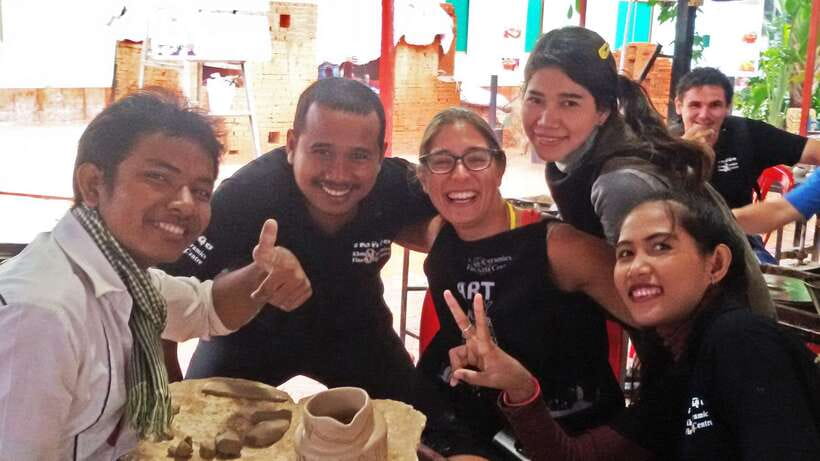
The class structure gives you more than one attempt. You may make around five pieces in total, though the exact number and forms can vary with the lesson and your pace.
The early pieces follow the teacher’s examples. You may learn to make a mug, bowl, or vase. These guided shapes teach the basic motions without asking you to invent a form before you understand how the clay behaves.
Later, you get more freedom. You can choose a shape of your own, adjust the proportions, or make something that is not perfectly symmetrical. This is where the class becomes personal. A slightly uneven cup can be more meaningful than a flawless factory souvenir because you made every decision yourself.
The manual wheel adds a physical challenge. You operate it with your foot, so your leg keeps the wheel moving while both hands shape the clay. It is not a fast process, and you will need to coordinate several movements at once.
Give yourself permission to make imperfect pottery. The goal is not to produce five showroom pieces. The goal is to learn the feel of Cambodian clay, understand the wheel, and leave with something that shows where your hands struggled and improved.
The teachers can repair many mistakes. They may reshape a wall, steady a rim, or add support to a form that is about to collapse. Still, they do not simply make the entire item for you. You remain involved, which is what makes the final piece satisfying.
Khmer Carvings Add a Local Signature
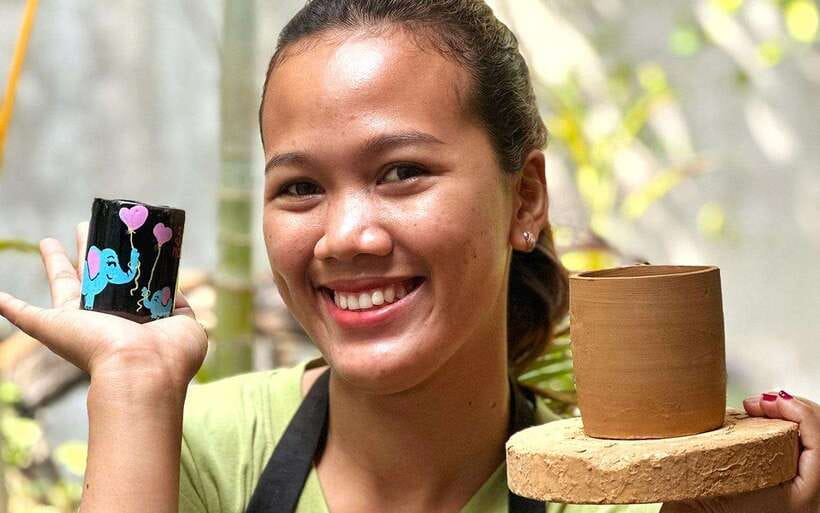
After shaping the pottery, you can decorate it with Khmer-inspired carvings. The workshop supplies tools for scratching, cutting, and adding ornamentation to the clay surface.
This step gives the class a clear Cambodian identity. Without the carving, you would have a basic wheel lesson that could happen in many countries. With it, your bowl carries a small visual link to Khmer design.
You do not need to be a trained artist. The teacher shows you ways to mark the surface, and you can follow an example or create a simple pattern of your own. Since clay can be unforgiving, keep your design clear rather than trying to cover every inch.
The carving stage is also a good time to slow down. The wheel work asks for concentration and quick corrections. Decorating lets you sit with the shape you have made and decide what suits it. A basic line, repeated mark, or border can be enough.
You should cut your fingernails before the class. Long nails make it harder to work the clay cleanly and can get in the way when you are shaping the inside of a bowl. Wear clothing that can handle some clay dust and splashes, since getting dirty is part of the fun.
A few more Siem Reap half-days to weigh up
- Angkor Wat Sunrise or Sunset Tour with Guide from Siem Reap
★ 5.0 · 12,109 reviews - Siem Reap: Angkor Wat: Small-Group Sunrise or Sunset Tour
★ 5.0 · 9,444 reviews - From Siem Reap: Kampong Phluk Floating Village Tour by Boat
★ 4.9 · 6,979 reviews - Sunset tour of Kampong Phluk stilts home village on the Tonle Sap
★ 5.0 · 4,865 reviews
Firing, Collection, and the One-Piece Rule
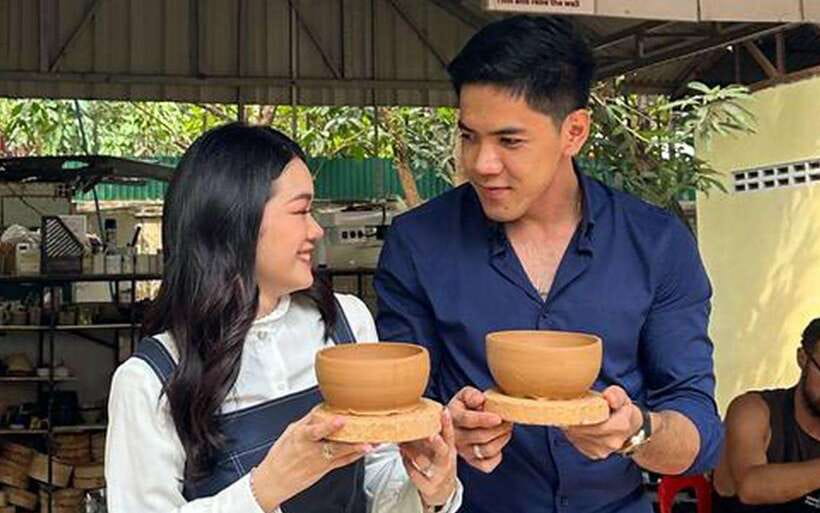
Your pottery is fired overnight and is normally ready for collection at 6pm the next day. This quick turnaround is helpful, but it creates a real planning issue.
If you are staying two or more nights, the process is straightforward. Take the class one day, return the following evening, and collect your fired item. The staff wrap the pottery for you, making it easier to carry back to your hotel or onward journey.
The included package covers one handmade piece. During the class, you may make several items, but keeping every piece can cost extra. Additional pottery has been offered at about $5 per item, and the center also has a shop where you can choose a handmade product for less than $5 in place of waiting for your own work.
If you leave Siem Reap before the collection time, delivery to your hotel is not included in the price. Some past class arrangements have offered delivery for a small extra charge, but you should confirm the current option directly rather than assume it is available.
For a short visit, this detail can decide the booking. If your flight leaves the morning after class, the included fired piece may not be practical. In that case, the shop alternative gives you a Cambodian ceramic souvenir, but it changes the experience from I made this to I selected this.
What the $27 Price Really Buys
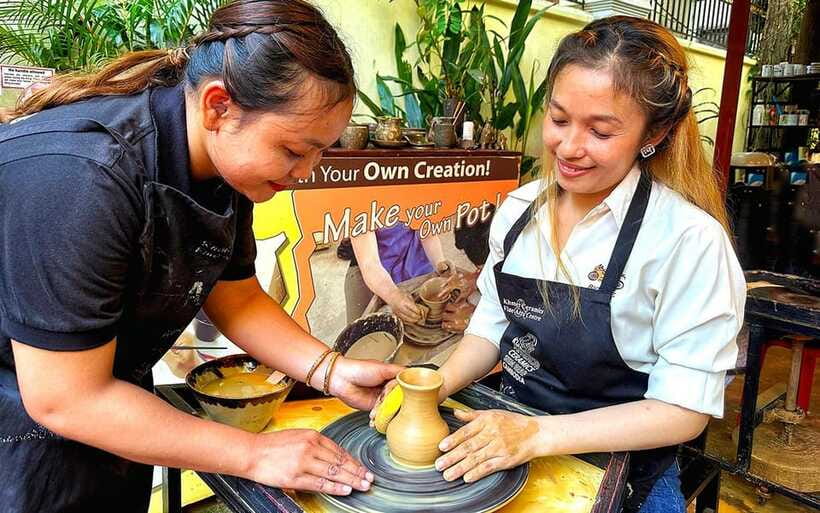
At $27 per person, this is not simply a two-hour pottery lesson. The price includes hotel tuk tuk transfers, the workshop, an English-speaking local teacher, clay and tools, a demonstration, one pottery piece, a Cambodian potter’s diploma, water, and taxes and handling charges.
That is good value if you want an activity with transport and materials already arranged. You also get several attempts, which makes the lesson more generous than a quick session where you shape one item and leave.
The price becomes less attractive only if you cannot collect your pottery and do not care for the shop selection. You are paying for instruction, time, and the cultural setting as well as the object itself, so the class can still be worthwhile. But if your only aim is to buy inexpensive ceramics, visit the shop without taking the class.
Additional pieces can also change your final cost. You may arrive planning to keep one bowl and leave wanting every mug, vase, and plate you made. Decide before class how much you want to spend on extras.
The small perks help round out the visit. Refreshments are available, and some sessions have included ice cream afterward. There is also a coffee shop and a ceramic shop on site, giving you a pleasant place to sit or browse after working with the clay.
A Good Fit for First-Timers, Children, and Creative Adults
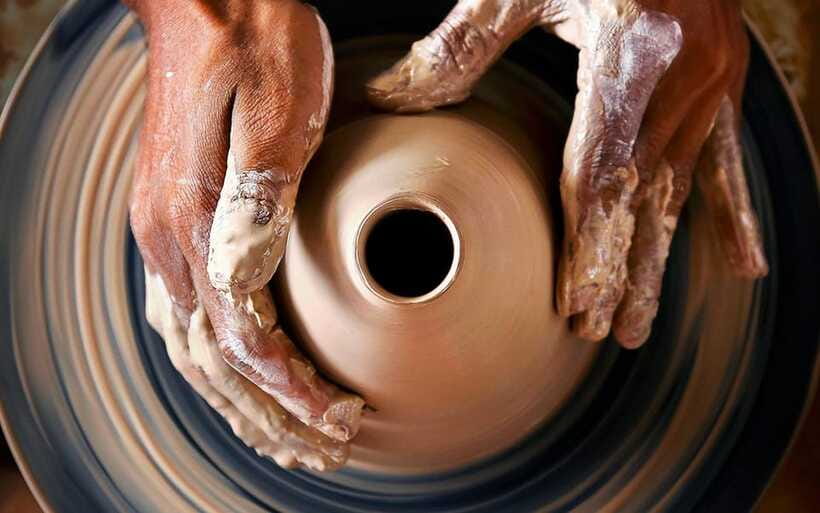
You do not need previous pottery experience. In fact, the class is best suited to beginners because the teachers expect awkward first attempts and provide close help.
Children can enjoy it too, provided they can follow instructions and manage the hands-on work. One family found it a strong activity for children, while adults also appreciated having enough time to try different forms. The process is active without requiring a full day.
Artists may enjoy the manual wheel for a different reason. If you are used to electric wheels, the foot-powered system gives you a new technical problem to solve. You must control the speed yourself while shaping the clay, and that extra coordination can be a satisfying challenge.
The workshop also suits couples and small groups. You can compare your crooked bowls, laugh at the failed ones, and see how different shapes emerge from the same lesson. Solo visitors should not feel out of place. Private or lightly attended sessions can give you more direct help and extra time with the teacher.
I would not choose this for someone who wants a polished, relaxing craft demonstration with no mess. Pottery takes effort. Your hands will get dirty, your first form may collapse, and your final bowl may shrink during firing. That unpredictability is part of the appeal, but it is not for people who need perfect results.
Supporting Cambodian Artists Through a Hands-On Visit
The class offers a direct way to spend money with a local arts center and its Cambodian teachers. You learn from artists working with clay, see the workshop setting, and can buy additional handmade ceramics from the on-site shop.
The program also supports the deaf community in Cambodia. Some instructors are deaf, and the class uses demonstrations, gestures, and communication support to teach the techniques. This creates a different classroom rhythm, one that asks you to pay close attention instead of waiting for a long spoken explanation.
That social element gives the visit more weight than a standard souvenir stop. You are not only purchasing a finished item. You are paying for instruction and taking part in a working arts program.
The shop is worth time after class if you want a more polished piece. It offers handmade ceramics in several styles, and you can choose something even if your own bowl does not survive the kiln. The class souvenir and the shop purchase serve different purposes, so there is no shame in taking home both.
Timing the Class Around Angkor
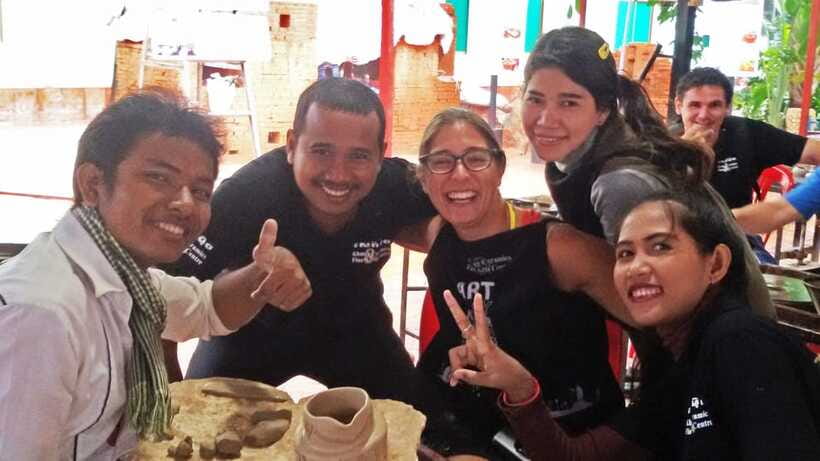
A two-hour class fits neatly into a Siem Reap schedule. It can work on an arrival day, as one visitor used it after flying in that morning, or during the hot midday hours when outdoor sightseeing is less pleasant.
Avoid booking it too close to a departure. You need the following day until at least 6pm to collect the fired work. If you plan to visit Angkor early the next morning, remember that pickup is in the evening, not immediately after breakfast.
The activity includes hotel pickup and return, but food and drinks are not included. You can buy refreshments at the center, though you should not treat the class as a meal stop.
Wheelchair access is listed, which makes this one of the more inclusive creative activities in Siem Reap. Still, pottery involves reaching a wheel, handling wet clay, and working with foot control, so ask the provider about your specific needs when booking.
Free cancellation is available up to 24 hours before the activity, and you can reserve now and pay later. Those terms are useful when your temple plans depend on weather, energy, or a changing arrival time.
Should You Book the Cambodian Pottery Class?
Book it if you want a short, hands-on Cambodian activity that gives you more than a shop purchase. The patient teaching, foot-powered wheel, Khmer carvings, and chance to make several pieces create a memorable break from temple sightseeing.
I especially recommend it if you will still be in Siem Reap at 6pm the following day. That lets you collect the fired bowl and complete the experience properly.
Skip it if your schedule is too tight for next-day pickup, if you dislike getting messy, or if you want a guaranteed perfect souvenir. For everyone else, $27 buys useful instruction, local contact, transport, and a handmade object with a story attached.
FAQ
How long does the Siem Reap pottery class last?
The activity lasts two hours, including the workshop visit, pottery demonstration, hands-on class, and decoration of your piece.
Is hotel pickup included?
Yes. Hotel pickup and drop-off by tuk tuk are included in the activity.
How many pottery pieces can I make?
The class commonly gives you the chance to make around five pieces. You are guided through several forms, then get time to create your own designs. One fired piece is included, while additional pieces may cost extra.
When can I collect my pottery?
Your pottery is fired overnight and is available for pickup at 6pm the following day.
Can I take my pottery home on the same day?
No. Your handmade piece needs to be fired first, so same-day collection is not available. If you cannot wait until the following day, you can choose a shop product for less than $5 on the class day.
Is the class suitable for wheelchair users?
The activity is listed as wheelchair accessible. Since pottery involves working at a wheel and using foot control, contact the provider to discuss your specific access needs before booking.
New around Siem Reap
- Kulen Mountain With Ticket included Plus Banteay Srei Temple Tour★ 5.0 · 7 reviews
- Private Siem Reap Airport Transfer to hotel in town★ 5.0 · 7 reviews
- 2 Days Angkor temples with Sunrise & Sunset★ 5.0 · 7 reviews
- 1-Day private Angkor Temple Tour with Sun Rise by Tuk Tuk from Siem Reap★ 4.5 · 7 reviews
- Siem Reap: Morning Cooking Class & Market Tour★ 5.0 · 7 reviews
- Kulen Mountain, Killing Fields and War Museum Tour★ 5.0 · 7 reviews
- War Museum, Killing Field, and APOPO Hero RATs Tour★ 5.0 · 7 reviews
- Half-Day: Silk Farm, Senteur Angkor, and Satcha Workshop★ 4.6 · 7 reviews
Siem Reap Tours, compared.

Angkor Wat Sunrise or Sunset Tour with Guide from Siem Reap
Read our review →
Angkor Wat: Small-Group Sunrise or Sunset Tour
Read our review →

Sunset tour of Kampong Phluk stilts home village on the Tonle Sap
Read our review →
Kampong Phluk Floating Village Tour with Boat
Read our review →

Angkor Wat Sunrise tour with Small – Group and Guide tours
Read our review →
Angkor Wat Highlights and Sunrise Guided Tour from Siem Reap
Read our review →Browse the lists this tour appears in