
Reviewed · PHNOM PENH TOURS
Cooking Class in Phnom Penh
Cambodian cooking starts with the spice paste, not a packet or a shortcut. At Phnom Penh Spice, you cut fresh spices, pound them by hand, mix the paste with meat and vegetables, and later sit down to eat what you made. The class is hands-on and small, with no more than eight participants.
I like the warm start with coconut water and seasonal fruit, followed by a useful look at Cambodian spices. I also like that the evening includes a food presentation, so you learn why rice, fish, herbs, and outside influences matter in Khmer cooking. The main thing to consider is the evening schedule: dinner does not begin until about 8:00 PM, so this is a full three-hour activity rather than a quick demonstration.
Key points to know before booking
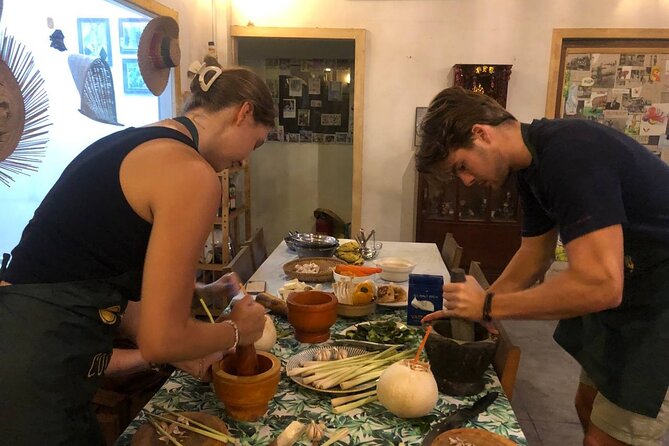
- You pound your own spice paste: The class begins with cutting spices and working them into a paste by hand.
- The group is capped at eight: A small class should give you a better chance to follow each cooking step.
- The evening covers a full meal: You prepare seasoned meat and vegetables, Cambodian-style barbecue, and dessert.
- The food lesson continues after cooking: A slide presentation explains the role of rice, fish, herbs, and neighboring culinary influences.
- Dinner and drinks are included: Water, a soft drink, and one or two beers are part of the meal.
- The price is $31 per person: For about three hours of instruction, cooking, a presentation, dinner, and drinks, the cost is easy to justify for food-focused visitors.
Starting with coconut water and Cambodian spices at 5:00 PM
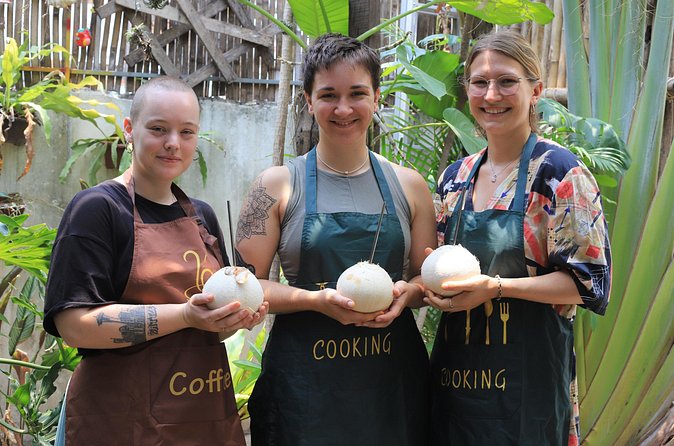
You meet at Phnom Penh Spice cooking class, at 111, St 1MC, Phnom Penh, at 5:00 PM. The class begins in an easygoing way, with coconut water and seasonal fruit before the work starts.
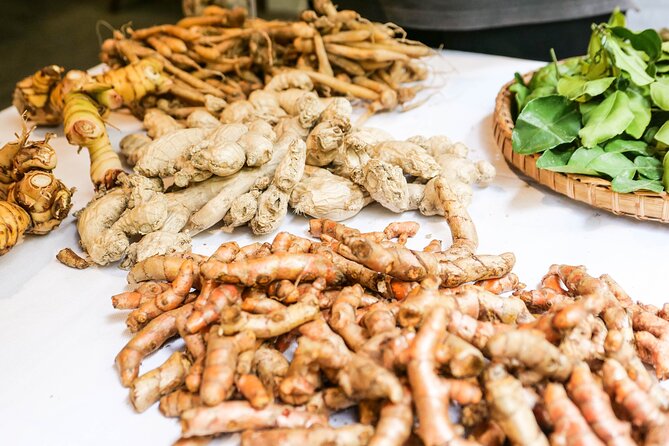
That opening matters. You get a moment to settle in, meet the small group, and hear about the spices used in Cambodian cooking. It is a better introduction than rushing straight to a chopping board. You can begin to recognize the ingredients before they are blended into a paste and mixed into the dishes.
The opening also sets the tone for the class. This is not only a recipe lesson. It connects the food on your plate with basic Cambodian ingredients and cooking habits. If you are new to Khmer food, this early explanation gives you a useful frame for the rest of the evening.
The meeting point is also the ending point, so you do not need to arrange a separate ride home as part of the activity. The supplied details do not state that transportation to or from the meeting point is included, so plan to reach 111, St 1MC on your own.
More Cooking Classes in Phnom Penh:
- Khmer Cooking Class Half Day (AM or PM)
★ 5.0 · 316 reviews - Khmer Cooking Class Full Day
★ 5.0 · 13 reviews - The Mekong Village Cooking Escape
★ 5.0 · 4 reviews
Cutting and pounding the spice paste at 5:15 PM
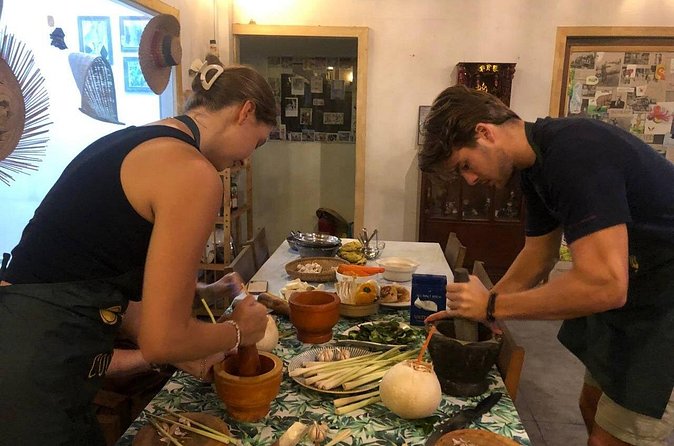
About 15 minutes after meeting, you start cutting spices and pounding them into a paste. This is the most physical part of the class, and it gives you a direct feel for how flavor is built.
A prepared sauce can make cooking look effortless. Pounding the ingredients yourself shows the opposite. You see the raw spices change texture, release their scent, and become the base for the dishes that follow. The work is simple, but it makes the final meal feel more connected to your effort.
The schedule lists this stage as beginning at 5:15 PM. Since the class has a maximum of eight participants, you should have a more personal setting than you would in a large group. Still, the pace depends on the group and the instructor, so the listed times are best treated as a guide rather than a strict restaurant timetable.
If you want a class that lets you handle the ingredients, this part is a strong reason to book. If you prefer to watch a chef do everything while you take notes, this format may feel more active than you want.
Mixing meat and vegetables with the paste
At about 5:30 PM, the class moves from spice preparation to seasoning. You mix the paste with vegetables and meat, learning how the flavor base is used in the meal.
This step is valuable because it links the ingredients together. You are not simply making a paste as a separate exercise. You see how it changes the main food, and you get a better sense of the balance between seasoning, vegetables, and meat.
The description does not name the exact dishes or meat used. That is worth keeping in mind if you need to plan around a particular diet or dislike. The available information confirms that meat and vegetables are part of the preparation, but it does not specify vegetarian substitutions, allergies, or other dietary arrangements.
The class is therefore best for people who want a general introduction to Cambodian home-style flavors rather than a precise menu promised in advance. You will leave with a clearer idea of how Khmer dishes are assembled, even if the exact recipes are not listed before booking.
Steaming at 6:45 PM and keeping the meal moving
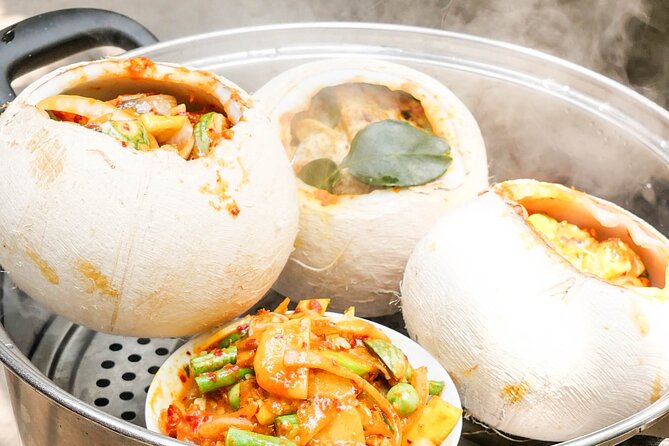
The seasoned food goes into steaming at about 6:45 PM. This creates a natural pause in the cooking process, but the evening does not stop there.
Steaming gives the food time to cook while you move on to another part of the meal. It also keeps the class from becoming a single long session at the cutting board. The schedule has a clear rhythm: prepare, season, cook, then prepare the next course.
You should allow some flexibility around the times. The class is described as approximately three hours, and hands-on cooking rarely follows a clock perfectly when several people are working together. The final dinner is scheduled for 8:00 PM, so you have a useful sense of when the evening ends even if individual stages shift slightly.
More hands-on workshops in Phnom Penh:
- Khmer Cooking Class at a Local’s Home in Krong Siem Reap
★ 5.0 · 2,731 reviews - Siem Reap: Khmer Cooking Class at a Local’s Home
★ 5.0 · 1,108 reviews - Award-Winning Cooking Class Experience with Professional Teacher
★ 5.0 · 745 reviews - Siem Reap: Cambodian Pottery Class
★ 4.9 · 339 reviews
Making Cambodian-style barbecue at 7:00 PM
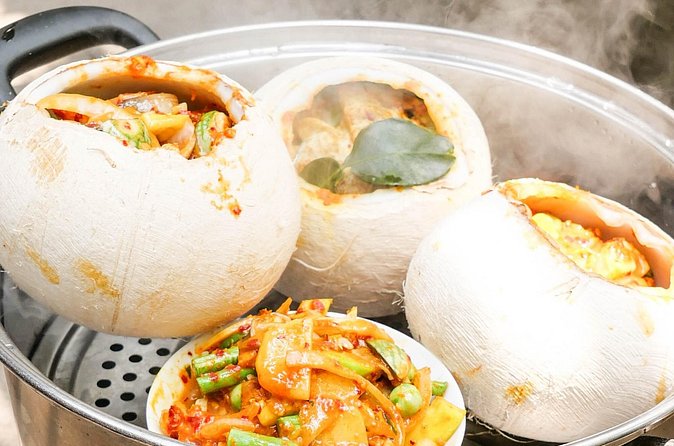
At 7:00 PM, you prepare barbecue in Cambodian style. This adds a second cooking method to the evening and gives you another way to see how Cambodian seasoning works with food.
The contrast with steaming is part of the appeal. You are not learning one technique and repeating it for the whole class. The meal includes food cooked in different ways, which makes the final dinner more varied.
The details do not identify the exact barbecue ingredients or equipment. I would not book this expecting a particular cut of meat or a specific named dish unless the provider confirms it first. What you can count on is the chance to take part in a Cambodian-style barbecue preparation as part of the larger meal.
This is also a good stage for a social class. Cooking over heat and preparing food together tends to keep the group involved, rather than leaving everyone waiting for a demonstration to finish.
Making dessert before the food presentation
At around 7:15 PM, you make dessert. This is a small but important touch because it gives the class a complete meal structure.
Many cooking lessons focus on a main dish and stop there. Here, you prepare something sweet as well, then move into the cultural presentation before dinner. The dessert course helps the evening feel like a full meal rather than a single recipe workshop.
The type of dessert is not specified. That keeps the menu a little uncertain, but it also means you should approach the class as an introduction to Cambodian cooking rather than a fixed tasting menu. If dessert is a major reason for booking, ask the provider what is planned.
By this point, you have worked with spices, meat, vegetables, steamed food, barbecue, and dessert. The evening offers a broad sample of cooking tasks for a modest fee.
The 7:30 PM food presentation
After the practical cooking, you watch a slide presentation about Cambodian food. It covers the place of rice, fish, herbs, and spices, along with culinary influences from nearby countries.
This is where the class gains more depth. Recipes make more sense when you understand the ingredients that support them. Rice is central to the meal, fish is important to Cambodian food, and herbs and spices shape the flavor. The presentation gives you a way to connect those broad ideas with the dishes you have just prepared.
The reference to neighboring influences is useful, too. Cambodian cuisine did not develop in isolation, and food traditions in the region overlap and change across borders. A short presentation cannot cover every detail, but it can help you see Khmer cooking as its own tradition with outside connections.
I especially like the order of the evening. You cook first, then hear the wider food story, then eat. The presentation is likely to mean more because you have already handled the ingredients. It is not a lecture placed before the practical part, when you may still be trying to remember everyone’s name.
Dinner at 8:00 PM with drinks included
Dinner is scheduled for 8:00 PM, when you eat the food prepared during the class. Water, a soft drink, and one or two beers are included.
This final meal is the payoff, but it is also part of the lesson. You can taste the effect of the spice paste, compare the steamed food with the barbecue, and see how the dessert completes the meal. The flavors should be more memorable because you took part in each stage.
The drink inclusion adds value to the $31 price. You are not paying only for a short demonstration. The fee covers roughly three hours, ingredients, instruction, the food presentation, dinner, and listed drinks. That makes the price reasonable for a visitor who wants both a meal and a structured cultural activity.
Keep the timing in mind. Dinner begins at 8:00 PM, so you may not want to schedule an early evening show or another fixed appointment afterward. The activity ends back at the meeting point, but no later transport timing is provided.
What the $31 price really gives you
At $31 per person, this class sits in an accessible range for a three-hour food experience in Phnom Penh. The value comes from the combination of activity and meal.
You receive a welcome drink and fruit, an introduction to Cambodian spices, hands-on preparation, several cooking stages, a dessert session, a food presentation, and dinner. You also receive water, a soft drink, and one or two beers. Taken together, that is more useful than paying for a simple meal if you want to understand how the food is made.
The class also limits attendance to eight people. A small group does not automatically guarantee perfect instruction, but it gives the session a more manageable scale. You are less likely to feel lost in a crowd, and the instructor has a better chance to keep an eye on the work.
The tradeoff is that the menu is not fully detailed in the information provided. You know the broad components, but not the exact dishes, dessert, or meat. For some people, that is part of the fun. For others, especially those with food restrictions, it is a reason to contact Phnom Penh Spice before booking.
Who will get the most from this class
I would choose this experience if you want to do the cooking yourself, not just watch someone prepare a Cambodian meal. The spice-pounding stage alone makes the format more tactile than a standard food talk.
It suits food lovers who want context with their dinner. The presentation on rice, fish, herbs, spices, and regional influences adds a cultural layer without taking over the whole evening.
It should also work well for couples or small groups who enjoy shared activities. The maximum of eight participants keeps the format intimate, and the final meal gives everyone a natural reason to sit together.
You may want to think twice if you need a precisely stated menu, strict dietary accommodation, or a quick activity that ends before dinner. The available details do not confirm substitutions or special meal arrangements, and the schedule runs from 5:00 PM to about 8:00 PM.
The experience has a perfect rating from seven submitted reviews, with praise focused on the educational side, the hosting, and the food. One response is signed by Sreng, who thanked two participants for their energy and interest in learning about the country. That gives you a useful sense of the host’s approach: the class is designed to share information as well as get food on the table.
Practical details to keep in mind
You receive a mobile ticket, which makes the booking easy to carry on your phone. Confirmation is sent within 48 hours, subject to availability, so do not assume your place is final until confirmation arrives.
The class starts at 5:00 PM at Phnom Penh Spice cooking class, 111, St 1MC, Phnom Penh, Cambodia. It ends at the same meeting point. The activity lasts approximately three hours and accepts no more than eight participants.
Cancellation is generous if your plans change early. You can cancel at least 24 hours before the local start time for a full refund. Cancellations or changes made within 24 hours are not accepted for a refund.
Should you book the Phnom Penh Spice class?
Book it if you want a small, practical introduction to Cambodian food with dinner included. The strongest features are the hand-pounded spice paste, the mix of cooking methods, the food presentation, and the reasonable $31 price.
I would skip it only if you need a guaranteed menu, a special diet confirmed in advance, or an activity that finishes before 8:00 PM. For everyone else, this is a well-shaped evening: you learn the ingredients, prepare several parts of a meal, hear the food explained, and then eat the results. That is a useful way to spend an evening in Phnom Penh.
FAQ
Where does the cooking class take place?
The class takes place at Phnom Penh Spice cooking class, 111, St 1MC, Phnom Penh, Cambodia.
What time does the experience start?
The class starts at 5:00 PM.
How long does the cooking class last?
The activity lasts approximately three hours and is scheduled to finish around 8:00 PM.
Where does the experience end?
The activity ends back at the meeting point at Phnom Penh Spice cooking class.
How much does the class cost?
The price is $31 per person.
How many people can join the class?
The activity has a maximum of eight participants.
What food preparation is included?
You cut and pound spices into a paste, mix the paste with vegetables and meat, prepare food for steaming, make Cambodian-style barbecue, and prepare dessert.
Are drinks included?
Yes. Water, a soft drink, and one or two beers are included with the dinner.
Can I cancel for a full refund?
Yes. You can cancel at least 24 hours before the experience start time for a full refund. Cancellations or changes made less than 24 hours before the start time are not accepted for a refund.
New around Phnom Penh
- Island Community Life in Phnom Penh★ 4.5 · 3 reviews
- Prasith and Reap Temples Private Day Trip from Phnom Penh★ 4.5 · 3 reviews
- Full-Day Amazing Phnom Penh City Tours★ 5.0 · 3 reviews
- Half Day – Phnom Penh Food Tour★ 4.5 · 3 reviews
- Riverside Walking Tour with Snack, Drinks & Local Ferry Ride★ 5.0 · 3 reviews
- Day Tour In Phnom Penh With Bophany★ 5.0 · 3 reviews
- ( Free eSim) Oudong Mountain Full Day Tour – From Phnom Penh★ 4.5 · 3 reviews
- Phnom Penh to Koh Rong/Koh Rong Sanloem by Car or Minivan & Boat★ 5.0 · 3 reviews
Phnom Penh Tours, compared.
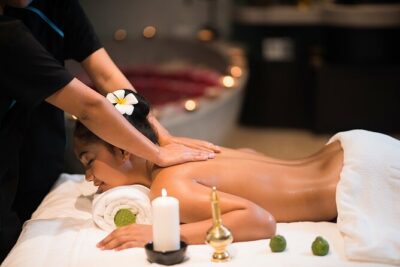
Aroma Therapy Massage, Relaxation therapeutic aromatherapy oil massages.
Read our review →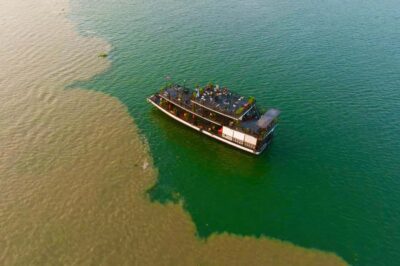
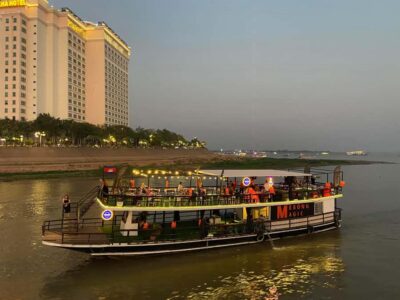
Sunset Cruise with Unlimited Beer &Fruit platter
Read our review →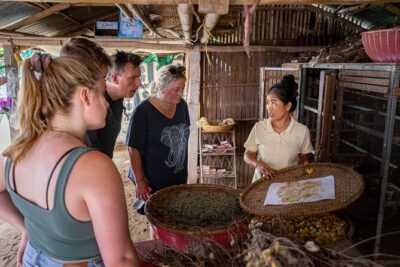
Phnom Penh Silk Island Bike Tour/ E-Bike or Tuk Tuk
Read our review →
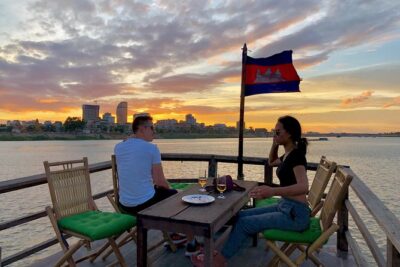
Sunset Cruise with unlimited beer & soft drinks -English speaking guide on board
Read our review →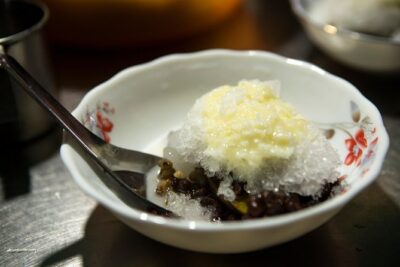
Ultimate Phnom Penh Food Tour by Tuk Tuk: 20 Tastings and Drinks
Read our review →
Sunset & Evening Dinner Cruise With One Way Free Pick Up
Read our review →Browse the lists this tour appears in