
Reviewed · SIEM REAP TOURS
2-Days Tour (The Best Historical of Khmer Empire)
The best thing about this tour is its sweep. In two days, you move from the giant faces of Bayon and the jungle-wrapped towers of Ta Prohm to the fine carvings of Banteay Srei and the earliest temples at Roluos. A private guide and driver keep the pace flexible, which matters when the heat and temple steps begin to catch up with you.
I especially like two details: the quiet forest setting at Preah Palilay, where many hurried itineraries do not linger, and the chance to watch the sun fall near Pre Rup. I also like the practical care, with an air-conditioned vehicle, cold water, and chilled towels. The main consideration is cost: at $145 per person, you still need to pay for the Angkor pass, lunches, and personal expenses.
Key points to know before booking
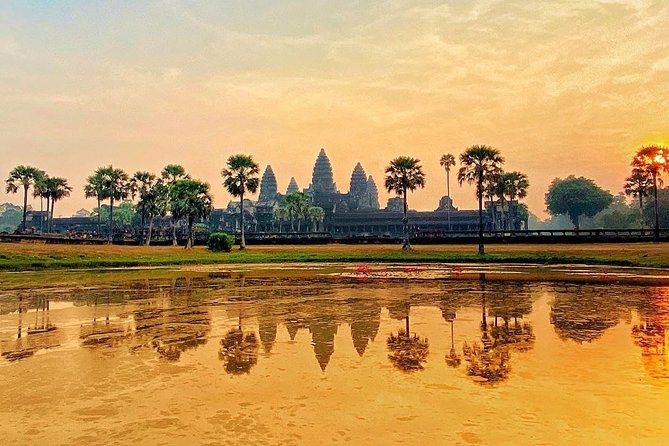
- Two full days cover both major sights and older temple groups, including Angkor Wat, Bayon, Ta Prohm, Banteay Srei, and Roluos.
- Private touring allows adjustments, so you can request a slower pace, extra photo stops, or changes to suit your group.
- Guides Veasna and Vutha receive especially warm praise, with clear explanations, humor, and help with taking photographs.
- Pre Rup offers a sunset option, but the experience depends on weather and crowd conditions.
- The Angkor Archaeological Site pass is not included, and it must be purchased separately in US dollars.
- Temple clothing rules are strict, so cover your shoulders and wear clothing that falls below the knees.
Why the private format works well in Angkor
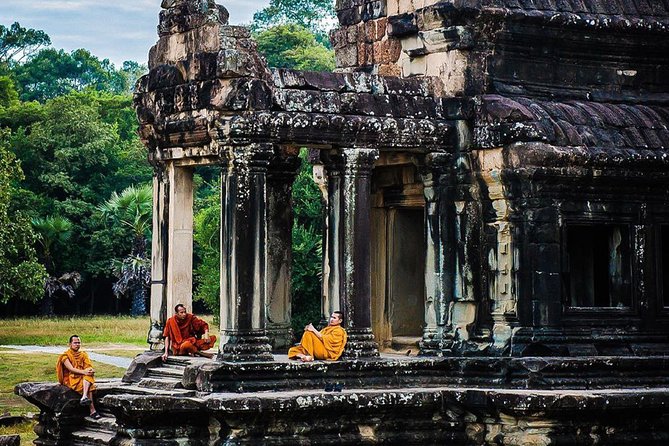
Angkor is not one temple. It is a vast collection of monuments spread around Siem Reap, and the distances between them can make an unplanned visit tiring. This private setup gives you a driver who handles the roads while your guide explains what you are seeing.
The air-conditioned vehicle is more than a comfort upgrade. After walking through sun-baked courtyards and climbing stone stairways, a cool ride gives you a chance to recover before the next stop. Cold water and wet towels are supplied throughout the day, a small touch that becomes valuable in Cambodia’s heat.
You also avoid the fixed rhythm of a large group. If your family needs more time at Angkor Wat, or if you have had enough of carvings by mid-afternoon, you can discuss the pace with your guide. The tour is operated entirely for your group, with no other participants joining you.
Several guides receive strong praise for their personal approach. Veasna is described as warm, funny, and particularly good at answering questions. Vutha is praised for his stories, timing, and willingness to help with photographs. Sophea is also singled out for making two full days feel well organized. Guide names can vary, so request a particular person when booking, but do not assume availability.
More Historical Tours in Siem Reap
- 2 Days Guided Historical Tour in Angkor
★ 5.0 · 855 reviews - Siem Reap: Banteay Srei and Grand Circuit Heritage Tour
★ 4.9 · 163 reviews - Banteay Srei and Grand Circuit Heritage Tour from Siem Reap
★ 5.0 · 142 reviews
Day one begins with Angkor Thom’s stone faces
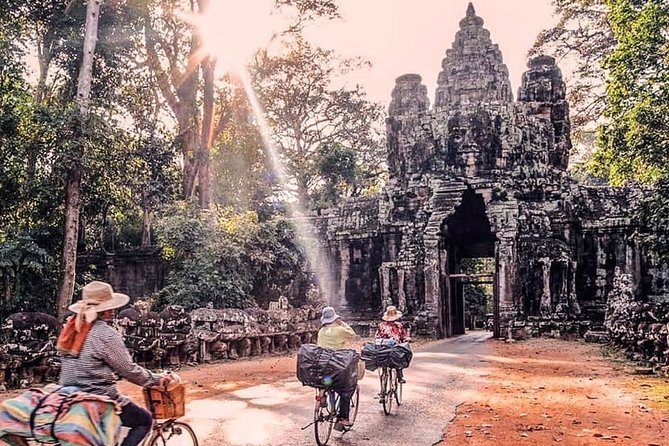
The first morning focuses on Angkor Thom, the final and largest capital city of the Khmer Empire. The centerpiece is Bayon, famous for its huge carved faces looking out from a cluster of stone towers.
You get about 40 minutes here, enough to see the main forms and hear how the temple fits into Angkor Thom. The faces are the obvious attraction, but the narrow passages and layered towers reward close attention. Your guide can help you look beyond the familiar photographs and notice the structure of the temple itself.
Next comes Baphuon, a three-tiered temple mountain dedicated to Shiva. It predates Angkor Wat and sits close to Bayon, making it an efficient addition to the morning. Allow about 30 minutes, though the steps and exposed stone can make this feel more strenuous than the clock suggests.
The Terrace of the Elephants follows. Its long wall, about 300 meters, carries carved elephants and garudas. You have roughly 20 minutes here, which is enough for a walk along the face of the terrace and a sense of how it once related to royal ceremonies and the city center.
The nearby Terrace of the Leper King is smaller but densely carved. Its double walls show nagas, demons, and other mythological figures. The stop lasts about 15 minutes, so listen closely to your guide before moving on. This is not a place where you need a long walk, but it is easy to miss the inner carvings if you only look from outside.
Quieter Angkor Thom corners add welcome variety
Preah Palilay changes the mood. Its sandstone and laterite tower sits in a shaded forest setting, away from the broad ceremonial spaces of the terraces. The eastern entrance has Buddhist carvings, and the 20-minute visit gives you a chance to see a less formal side of Angkor Thom.
Phimeanakas is a pyramid temple from the 10th century, located near the old royal enclosure. The remains are more restrained than Bayon or Angkor Wat, but the setting helps you understand that Angkor Thom was a functioning royal capital, not simply a collection of isolated shrines.
These shorter stops are one of the tour’s strengths. You are not given only the famous postcard sites. You also see the smaller structures that help explain how the capital was organized. The drawback is that Day One packs in many places, so you should expect a full schedule rather than a leisurely stroll.
Banteay Srei rewards the long afternoon drive
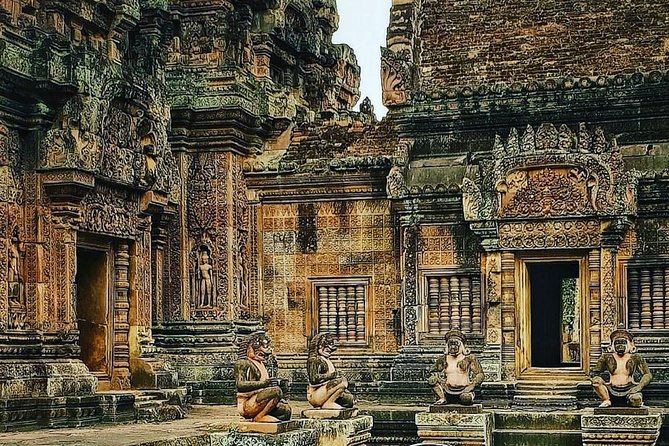
After lunch, the route heads to Banteay Srei, about 1 hour and 30 minutes. The name is commonly translated as citadel of women, and the temple is known for delicate carvings cut into pinkish sandstone.
Banteay Srei is smaller than Angkor Wat, but its detail is the reason for the drive. Close-set carvings cover lintels, doorways, and pediments. Give your guide room to explain the stories and figures, because the decoration can look like a blur if you simply walk around the outer walls.
The time here is well judged for a first visit. You get enough to examine the main carvings without adding another huge complex to an already demanding day. Still, this stop is far from central Siem Reap, and the ride takes up part of the afternoon. If you prefer maximum time at the central temples, ask if the itinerary can be adjusted.
Banteay Samre comes next, with about 45 minutes. This large, flat temple has an Angkor Wat-like design and a more compact feel than the major monuments. Its legend involves a farmer who accidentally killed a king who later rose to power, adding a local story to the stonework.
A completely different sort of day from the same base:
- Angkor Wat Sunrise or Sunset Tour with Guide from Siem Reap
★ 5.0 · 12,109 reviews - Siem Reap: Angkor Wat: Small-Group Sunrise or Sunset Tour
★ 5.0 · 9,444 reviews - From Siem Reap: Kampong Phluk Floating Village Tour by Boat
★ 4.9 · 6,979 reviews - Sunset tour of Kampong Phluk stilts home village on the Tonle Sap
★ 5.0 · 4,865 reviews
Pre Rup closes Day One with a possible sunset
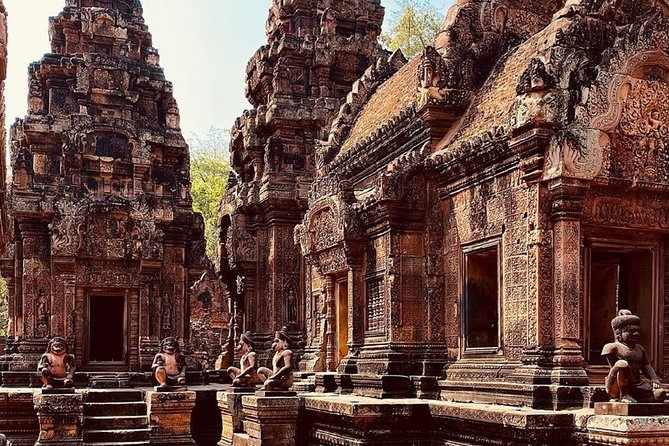
Pre Rup is offered as an optional sunset stop, lasting about an hour. It is a temple mountain with carved false doors on the upper level and wide views over the surrounding countryside.
The word optional matters. Sunset plans depend on weather, timing, and site conditions, and you should not treat a colorful sky as guaranteed. Even without a perfect sunset, Pre Rup is worth considering for its form and elevated views.
This is also a good point to think about your energy. Day One includes many stops, and the combination of heat, walking, and temple stairs can be tiring. A private tour lets you decide if Pre Rup is the right finish or if returning to Siem Reap makes more sense.
Angkor Wat deserves the fresh morning
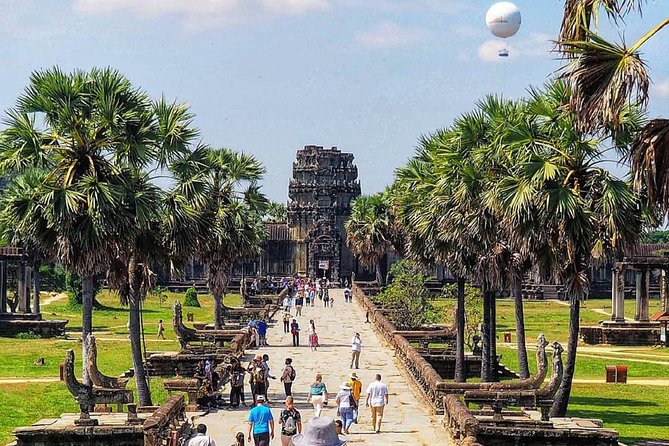
Day Two starts with Angkor Wat and gives you about two hours. This is the tour’s grandest stop, so the early start is sensible. The scale becomes clear as you move through the approach, galleries, courtyards, and towers.
Angkor Wat is famous for its architecture, but its decorative details deserve equal attention. Your guide can connect the carvings and layout to the temple’s original religious purpose. Two hours provides a strong introduction, though you could easily spend much longer if you want to examine every gallery.
The heat builds quickly around the exposed stone. Bring a hat, sunglasses, and high-SPF sunblock, even on a cloudy day. Wear shoes suitable for uneven surfaces, and remember that some temple areas require clothing covering shoulders and knees.
The admission pass is not part of the $145 price. You buy the Angkor Archaeological Site pass separately at the main gate, with options ranging from one day to seven days. Fees are charged in US dollars, and the pass must remain visible. Children under 12 enter free of charge.
Ta Prohm brings the jungle into the story
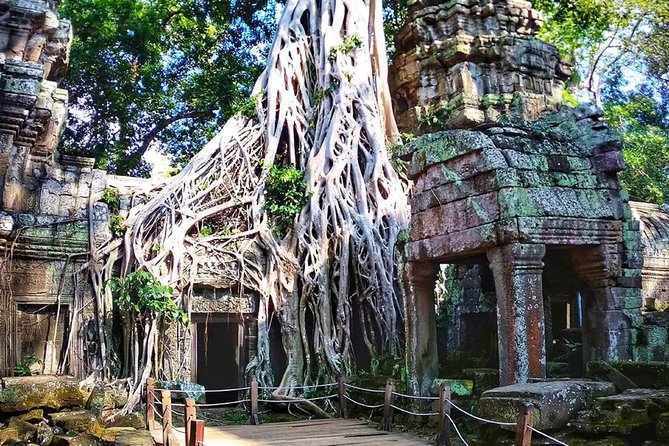
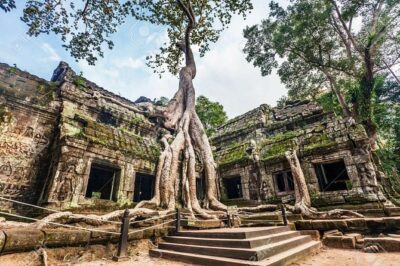
Ta Prohm receives about two hours, and that is useful because it is a sprawling monastic complex rather than a single compact building. Parts of it remain tangled with jungle growth, creating the famous tree-and-stone scenes.
The appeal is not only photographic. Ta Prohm lets you see what happens when a large religious complex is left partly to vegetation and time. Roots press against walls, corridors feel enclosed, and the temple has a different mood from the open terraces of Angkor Thom.
It can also be hard on the knees. There is walking over uneven ground, and some passages are narrow. Tell your guide if you need a slower route. The operator says it uses the most comfortable approaches available from the entrance, but this is still an active sightseeing day.
Roluos shows the empire before Angkor reached its peak
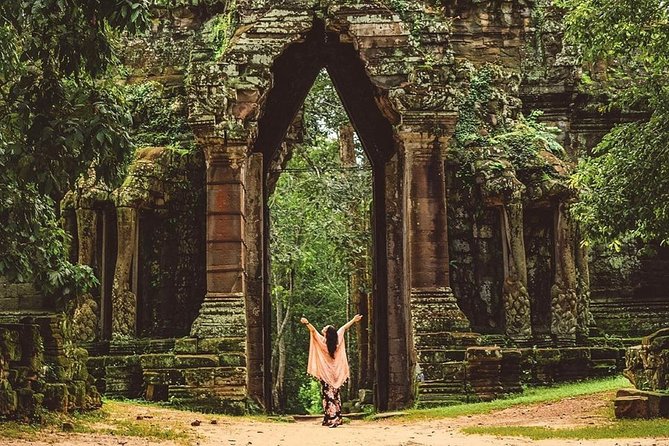
After lunch, the tour turns to the Roluos Group, an important contrast to the larger central temples. Bakong is the most impressive of the three listed sites and is described as the first sandstone temple mountain built by Khmer rulers.
You have about an hour at Bakong. Its form helps you see how temple mountains developed before the monumental scale of Angkor Wat. The structure is easier to understand when your guide explains its position within the early capital of Hariharalaya.
Lolei is smaller, with about 20 minutes. It was built on an island in a large baray, or reservoir, that is now dry. That detail matters because Khmer rulers used waterworks as part of their capital design. You are not just looking at a small Hindu temple, but at a remnant of a much larger planned setting.
Preah Ko, the Sacred Bull, is the briefest stop at 15 minutes. It is one of the empire’s first major temples and another part of Hariharalaya. The short visit works as a final historical link before the tour returns toward modern Siem Reap.
Roluos is a strong choice for anyone interested in development over time. If you only want the most famous monuments, it may feel less urgent than Angkor Wat. If you want to understand how Khmer architecture changed, do not skip it.
Old Market and Artisans Angkor finish with modern Siem Reap
The final afternoon leaves the temples for Psar Chaa, the Old Market. You get about an hour to browse souvenirs and local curios. This is a practical stop if you want gifts, but shopping is not included in the tour price, and bargaining or spending is your responsibility.
The market can feel very different from the quiet temple sites. Keep your expectations clear: this is a commercial visit, not another archaeological monument. You can use the time to shop, look around, or simply enjoy a change of pace after two days of stone corridors.
Artisans Angkor follows, with about an hour. It serves as a training ground for rural young people in handicraft skills, helping them develop work in traditional production. This stop gives the itinerary a useful present-day dimension. You see that Siem Reap is not only a base for ancient temples, but also a place where craft training and local livelihoods matter.
What $145 per person really covers
The price is $145 per person, with group discounts available. For a private two-day tour, the value depends heavily on your group size and how much you value a dedicated guide and driver.
The price includes transport in an air-conditioned vehicle, a licensed English-speaking guide, cold water, wet towels, taxes, and service charges. It does not include the Angkor pass, meals, drinks beyond the supplied water, tips, shopping, porter fees, accommodation, travel insurance, or possible single supplements.
That means the advertised price is not your final trip cost. The biggest extra is the temple pass, and you should also budget for two lunches and any market purchases. Still, splitting the tour among a family or group can make the private arrangement more appealing than it first appears.
The tour is often booked well ahead, with an average booking lead time of 78 days. That does not guarantee that you need to book that early, but it is a useful warning if you have fixed travel dates.
Who should book this two-day temple plan
I would choose this tour if you want a broad introduction to Angkor without handling transport and route planning yourself. It suits couples, families, and groups who prefer their own vehicle and the freedom to ask questions.
Families may find the private format especially useful. A guide can adjust the pace for children, and a driver provides a cool break between sites. The supplied water and towels also reduce some of the daily hassle.
This is less suitable if you dislike full sightseeing days, have difficulty with uneven walking, or want a slow, highly specialized study of only one or two temples. The schedule includes many stops and some walking, so you should be realistic about your stamina.
The tour requires appropriate dress at several sites. Cover your shoulders and wear clothing below the knees. Protect cameras and phones from natural elements, and bring sun protection even if the sky looks gray.
Free cancellation is available if you cancel at least 24 hours before the start time. Changes or cancellations inside that window are not refunded, and poor weather may lead to a new date or a full refund. Pickup and return transfers apply to hotels inside Siem Reap, so provide correct accommodation details when booking.
Should you book it?
Book this tour if you want the major Angkor landmarks plus smaller sites, early Khmer temples, a market, and a craft center in one organized two-day plan. The strongest reason to choose it is the private guide service, especially if you can secure someone such as Veasna or Vutha.
At $145 per person before entrance fees and meals, it is not the cheapest way to see Siem Reap. But the air-conditioned transport, flexible pacing, personal explanations, cold towels, and wide route give it solid value for families and small groups.
I would ask for a slower schedule if you prefer depth over quantity, and I would confirm exactly what pickup area and guide language are available. For a first visit focused on the Khmer Empire, this is a well-rounded choice that gives you both the famous temples and the older foundations beneath them.
FAQ
Is the tour private?
Yes. Only your group participates in the activity.
Is hotel pickup included?
Pickup and return transfers are included for customers staying inside Siem Reap. You must provide correct hotel information.
Is the Angkor entrance pass included?
No. You purchase the Angkor Archaeological Site pass separately at the main gate.
How much does the tour cost?
The listed price is $145 per person. Group discounts are available.
What type of vehicle is used?
Transportation is provided in an air-conditioned vehicle with a professional driver. Some bookings have used a comfortable Lexus SUV.
Is an English-speaking guide included?
Yes. A licensed English-speaking guide is included. Other languages may be available on request, subject to availability and extra charges.
Are meals included?
No. Lunch is excluded on both days, and you make your own arrangements.
How much walking is required?
Some walking is required at the temples. The operator says it uses comfortable routes from the entrance where possible, but uneven surfaces and temple steps remain part of the experience.
What should I wear?
Wear clothing that covers your shoulders and falls below your knees. Several temple sites, including Baphuon, enforce a strict dress code.
Can I cancel for a full refund?
Yes, if you cancel at least 24 hours before the experience starts. Cancellations within 24 hours are not refunded. If poor weather causes the operator to cancel, you are offered another date or a full refund.
More 2-Day Experiences in Siem Reap
- Siem Reap: Angkor Wat 2-Day Tour with Sunrise and Sunset
★ 4.9 · 4,429 reviews - Angkor 2-Day Sunset & Sunrise Small-Group Tour
★ 5.0 · 2,567 reviews - 2 Days Exclusive Temple Highlights with Sunset and Sunrise Tour
★ 5.0 · 1,157 reviews - Siem Reap: Angkor Sunrise 1- or 2-Day Guided Temples Tour
★ 4.9 · 1,132 reviews
New around Siem Reap
- Kulen Mountain With Ticket included Plus Banteay Srei Temple Tour★ 5.0 · 7 reviews
- 2 Days Angkor temples with Sunrise & Sunset★ 5.0 · 7 reviews
- Private Siem Reap Airport Transfer to hotel in town★ 5.0 · 7 reviews
- 1-Day private Angkor Temple Tour with Sun Rise by Tuk Tuk from Siem Reap★ 4.5 · 7 reviews
- Siem Reap: Morning Cooking Class & Market Tour★ 5.0 · 7 reviews
- Kulen Mountain, Killing Fields and War Museum Tour★ 5.0 · 7 reviews
- War Museum, Killing Field, and APOPO Hero RATs Tour★ 5.0 · 7 reviews
- Half-Day: Silk Farm, Senteur Angkor, and Satcha Workshop★ 4.6 · 7 reviews
Siem Reap Tours, compared.
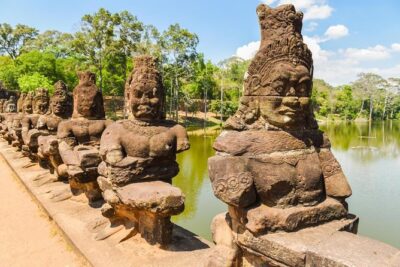
Angkor Wat Sunrise or Sunset Tour with Guide from Siem Reap
Read our review →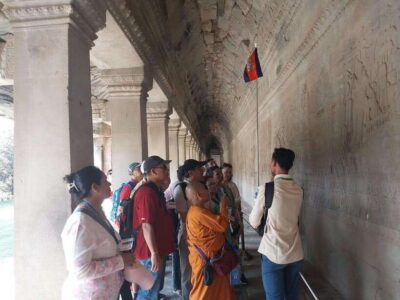
Angkor Wat: Small-Group Sunrise or Sunset Tour
Read our review →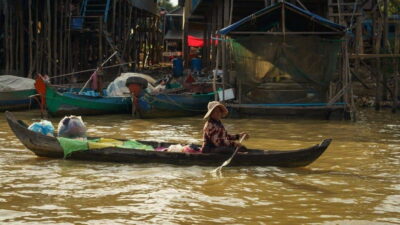
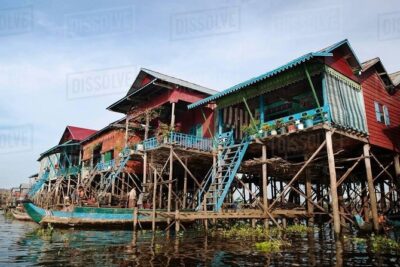
Sunset tour of Kampong Phluk stilts home village on the Tonle Sap
Read our review →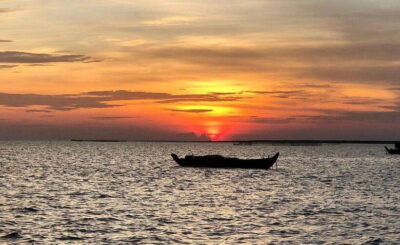
Kampong Phluk Floating Village Tour with Boat
Read our review →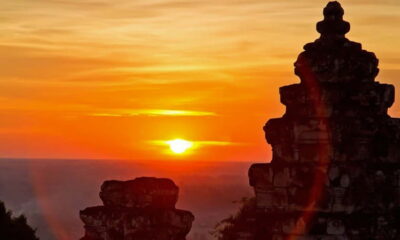
Angkor Wat Sunrise tour with Small – Group and Guide tours
Read our review →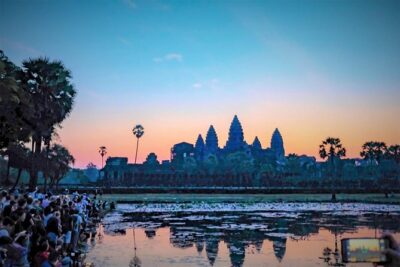
Angkor Wat Highlights and Sunrise Guided Tour from Siem Reap
Read our review →Browse the lists this tour appears in