
Reviewed · ANGKOR WAT TOURS
Two-days tour discovering Angkor Wat and Floating Village
Angkor Wat is only one part of this two-day outing. You’ll also see Bayon’s many stone faces, Ta Prohm’s tree-wrapped ruins, the stilt houses of Kompong Phluk, and a workshop where you can try stone carving. I like the private format and the fact that an English-speaking guide and air-conditioned vehicle handle both days. I also like the mix of major monuments, village life, museum displays, and local craft.
The main catch is cost control. At $92 per person, the tour is reasonable for private transport and guiding, but entrance tickets and every meal are extra. You’ll also spend long stretches on your feet, especially on the temple day, so this suits an active schedule more than a slow one.
Key points to know before booking
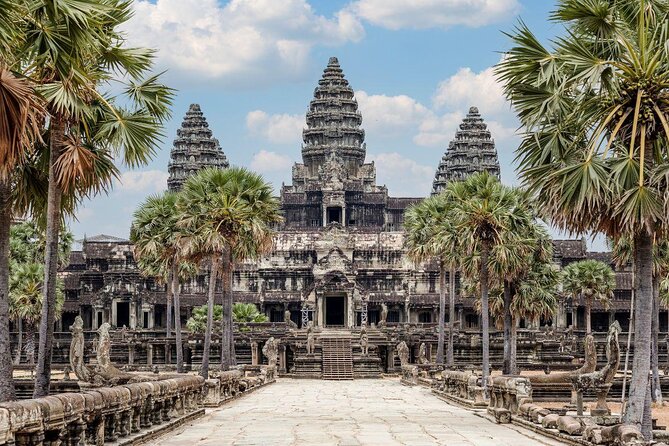
- Sunset at Angkor Wat: Day one ends with time at Cambodia’s best-known temple and a planned sunset visit.
- A private group: Only your own party takes part, making it easier to ask questions or adjust the pace.
- Sen may be your guide: He is specifically praised for being positive, helpful, and easy to communicate with.
- Kompong Phluk adds a different Cambodia: Tall stilted homes, fishing life, a floating hospital, and lake scenery replace stone ruins for part of day two.
- Tickets are not included: Budget separately for all entrance fees, plus breakfast, lunch, and dinner.
- Cooling touches matter: Air-conditioning, cold water, and cold towels are included during two warm sightseeing days.
Why this two-day plan works
Siem Reap can tempt you into rushing from one famous temple to the next. This plan gives you two days and a private vehicle, so you are not working out every transfer yourself or following a large group through the ruins.
Day one is built around the great Angkor complex. You visit Angkor Thom, Bayon, Ta Prohm, Banteay Kdei, and Angkor Wat. Day two changes the subject: first the Tonle Sap lake village of Kompong Phluk, then the Angkor National Museum and Artisans Angkor.
I like that balance. The temples show you grand Khmer architecture and stone carving on a huge scale. The village and craft workshop show how modern Cambodian life connects with the area’s older traditions. The program is still busy, but it is not simply four temples repeated for two days.
The tour starts at 8:30 a.m. Pickup is offered, and transport is included in an air-conditioned vehicle. That matters in Siem Reap, where heat can make even a short ride feel welcome after walking among sunlit stone walls.
Because this is a private activity, only your group participates. That gives you more control than a large coach tour. You can ask your guide to explain a carving, repeat a point, or help you understand the order of the monuments without worrying about a full bus waiting.
More Angkor Wat Tours in Siem Reap:
- Angkor Wat Sunrise or Sunset Tour with Guide from Siem Reap
★ 5.0 · 12,109 reviews - Siem Reap: Angkor Wat: Small-Group Sunrise or Sunset Tour
★ 5.0 · 9,444 reviews - Siem Reap: Angkor Wat 2-Day Tour with Sunrise and Sunset
★ 4.9 · 4,429 reviews
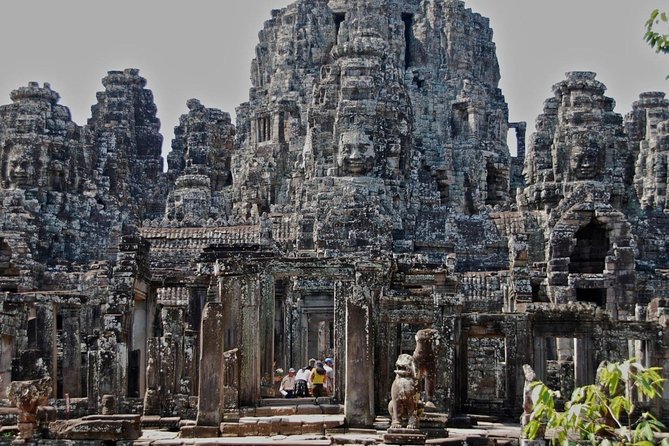
Bayon and the stone faces of Angkor Thom
Your first major stop is the south gate of Angkor Thom, followed by Bayon and Baphoun. Allow about two hours for this section.
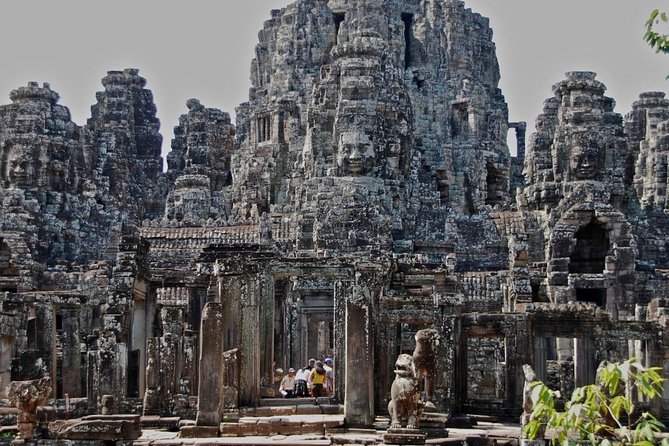
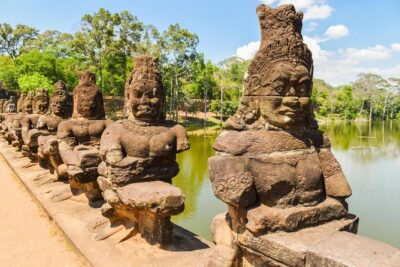
Bayon is the visual centerpiece. Its towers carry the famous faces associated with the temple, with the site described as having 54 towers and 216 faces of the bodhisattva Avalokeshvara. Those figures are easy to recognize in photographs, but the experience is better when you walk close to the towers and see how the faces appear from different angles.
A guide is useful here because Bayon can feel confusing at first. The towers, galleries, and passages form a dense stone setting, and a good explanation helps you understand what you are looking at instead of treating the temple as a backdrop for photos.
Baphoun adds another layer to the visit. It is part of the Angkor Thom stop, so you are not using a separate transfer just to see it. Give yourself time to look up and around rather than racing straight to the next monument.
The two-hour estimate is helpful, but it is not a promise that you will spend every minute at one exact point. Your pace will depend on your group and guide. Wear shoes you can walk in comfortably, and expect uneven temple surfaces.
Ta Prohm and the trees over the ruins
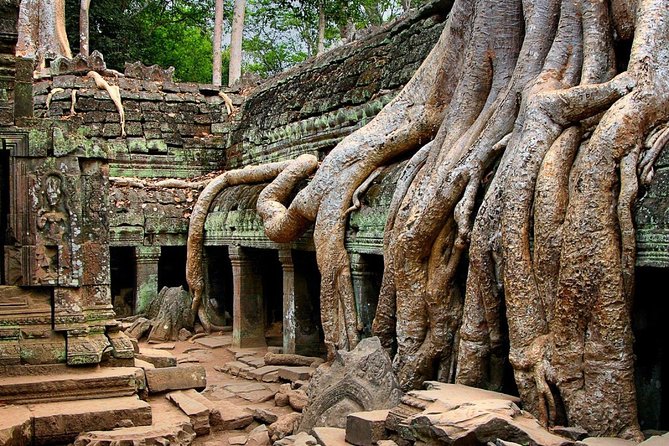
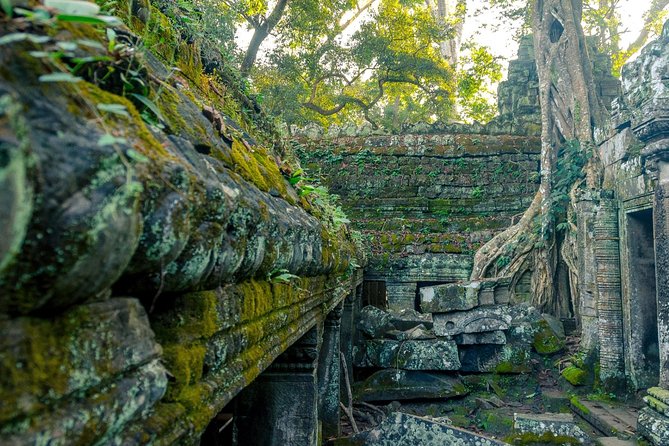
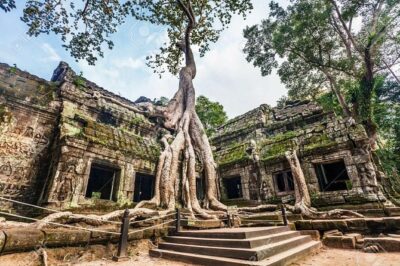
Next comes Ta Prohm, with about two hours set aside. This is the temple many people picture when they imagine Angkor: stone walls and towers wrapped by huge tree roots.
The trees are not a decorative extra. They are central to the character of the place, making Ta Prohm feel different from the more formal scale of Angkor Wat. You can look for the way roots press against walls and how vegetation frames doorways and carved stone.
Ta Prohm is also one of the most visually memorable stops, which means you may want to linger. The private setup helps here. You are not tied to the pace of a large party, though the tour still has several more stops to cover.
Keep your expectations practical. This is an ancient ruin, not a polished museum. Paths and stone surfaces can be uneven, and you will be walking for much of the visit. The supplied plan does not include a meal, so you need to arrange food separately during the day.
Banteay Kdei, a quieter temple pause
The afternoon includes Banteay Kdei, built by King Jayavarman VII in the late 12th century. The visit is scheduled for about one hour.
After the larger and more famous temples, Banteay Kdei gives the day a different rhythm. You can pay attention to the structure itself and the details of the stonework without treating every corner as a major photo stop.
This is also where a private guide can add value by putting the temple into the wider Angkor story. You have already seen Bayon and Ta Prohm, so Banteay Kdei helps you compare the style and scale of another monument from the same broad period.
The visit is shorter than the stops at Bayon and Ta Prohm. That keeps the day moving toward Angkor Wat, but it also means you should not expect a long, slow exploration of every part of the temple.
More Floating Village Tours in Siem Reap:
- From Siem Reap: Kampong Phluk Floating Village Tour by Boat
★ 4.9 · 6,979 reviews - Siem Reap: Kampong Phluk Floating Village Tour with Boat
★ 4.9 · 3,843 reviews - Siem Reap Floating Village Kampong Phluk Sunset with Boat
★ 5.0 · 1,962 reviews - Kompong Phluk Floating Village Half-Day Tour ( Morning / Sunset )
★ 5.0 · 1,494 reviews
Angkor Wat and the planned sunset
The final temple stop lasts about three hours. Angkor Wat is the largest and best-known site on the route, and it is also a UNESCO World Heritage Site.
Three hours gives you a fair amount of time to see the temple rather than making a quick photo stop. Your guide can help you focus on the main spaces and carvings, while the vehicle means you do not need to manage the route between monuments yourself.
The itinerary is designed to end the day with sunset over Angkor Wat. Light changes quickly, so the exact feel of this part depends on timing and conditions. Still, ending here makes sense. After seeing smaller sections of the Angkor complex, you finish with the site that gives the whole visit its name.
Plan for a long day. Bayon, Ta Prohm, Banteay Kdei, and Angkor Wat add up to many hours of walking, and the heat can make the schedule feel fuller than it appears on paper. The included cold water and cold towel are small details, but they are genuinely useful by late afternoon.
Kompong Phluk and life above Tonle Sap
Day two shifts from temple stone to water. You visit Kompong Phluk, a traditional Khmer floating village about 30 kilometers from Siem Reap, with roughly four hours allotted.
The village is known for tall stilted houses above the surface of Southeast Asia’s largest freshwater lake. You may see the floating hospital, fishing activity, and signs of a way of life shaped by the water. This is not simply another scenic stop. It shows how homes, work, and community services adapt to the lake.
Four hours gives the village a substantial share of the second day. That is useful if you want more than a quick look from a vehicle, but it also makes day two dependent on the lake visit. If your main goal is temple architecture, this will feel like a detour. If you want to see a different side of Cambodia, it is one of the tour’s strongest choices.
The description does not specify every boat arrangement or meal stop, so check the final details when booking. What is clear is that transport and an English-speaking guide are included, while entrance fees and meals are not.
Angkor National Museum after the lake
The Angkor National Museum follows Kompong Phluk and takes about one hour. It presents a major collection of Buddha statues and relics in a gallery setting.
The museum is valuable after the temples because it gives you a chance to see religious art away from the weather and open-air ruins. You can look more closely at statues and objects, then connect them with the monuments visited on day one.
One hour is enough for an introduction, not a full museum study. If you already have a strong interest in Khmer art, you may want more time than the schedule allows. For most people, though, this stop provides a useful change of pace after the village and helps tie the two days together.
Remember that the tour does not include admission tickets. The supplied information lists all entrance fees as extra, so include the museum and other paid sites in your budget rather than assuming the $92 covers everything.
Artisans Angkor and a hands-on craft stop
The final scheduled stop is Artisans Angkor, a local NGO that works to improve the lives of disadvantaged Cambodians from rural areas. You visit its workshop and can try your hand at stone carving.
This is a welcome practical addition. At the temples, you look at carved stone made centuries ago. Here, you get a closer sense of the craft itself and the effort required to shape a design. Even a short attempt can make the carvings at Bayon, Ta Prohm, and Angkor Wat easier to appreciate.
The workshop visit lasts about one hour. It is not presented as a full craft course, so keep your expectations modest. You are getting an introduction and a chance to work with the material, not several days of formal instruction.
I also like the social purpose of this stop. It gives the second day more substance than shopping alone, though you should still decide for yourself whether the workshop fits your interests.
Guide Sen, transport, and the private format
The guide specifically named in the available feedback is Sen. He is described as positive, upbeat, accommodating, and easy to communicate with. Those traits matter on a two-day private tour, where the guide shapes much of the experience.
The driver is not named, but transport is provided on both days in an air-conditioned vehicle. That removes a practical burden. You do not need to arrange separate rides to the temples, the lake, the museum, or the workshop.
Cold water and a cold towel are included. In Cambodia’s heat, these are not just pleasant extras. They give you a small reset between walks and rides.
The tour is also listed as suitable for most participants, with children required to travel with an adult. That does not mean the route is effortless. The temple day involves extended walking, and some surfaces may be uneven, so families should consider how well their children handle heat and long sightseeing periods.
Is $92 per person good value?
The $92 price makes the most sense if you value private transport, a guide for both days, and a broad range of stops. You are paying for more than admission to Angkor Wat. The package connects the major temples with Kompong Phluk, the museum, and Artisans Angkor.
Still, do not treat $92 as the final trip cost. All entrance tickets are excluded, as are breakfast, lunch, and dinner. Depending on the admissions required for your chosen visits, the extra expenses may change the value calculation.
For a solo visitor, the cost may feel less attractive because there is no large group sharing the private vehicle. For two or more people, the private arrangement becomes easier to justify, especially if you prefer not to spend time organizing local transport.
The tour also offers group discounts, though the amount is not provided. Ask about the current discount before booking if you are traveling with several people.
Free cancellation is available up to 24 hours before the start time for a full refund. Changes or cancellations made less than 24 hours before the start time are not accepted for a refund.
Who should book this two-day tour?
I would consider this tour a good match for you if you want the main Angkor temples but also care about seeing something beyond ruins. The inclusion of Kompong Phluk gives day two a clear purpose, and the museum and workshop add useful context.
It also suits you if you want a private outing without arranging every transfer yourself. An English-speaking guide, air-conditioned vehicle, cold water, and cold towel cover several practical needs.
You may want a different plan if you prefer a slow temple schedule, long museum visits, or full control over meal and sightseeing breaks. The program has a lot packed into two days, and tickets and meals are extra.
FAQ
How long is the tour?
The experience lasts approximately two days, with an 8:30 a.m. start time.
Is this a private tour?
Yes. Only your own group participates in the activity.
Is hotel pickup available?
Pickup is offered. The stated start time is 8:30 a.m.
Are entrance tickets included?
No. All entrance ticket fees are excluded from the tour price.
Are meals included?
No. Breakfast, lunch, and dinner are not included.
Who is the tour guide?
The tour includes an English-speaking guide. Sen is specifically named as a guide associated with the experience.
Can I cancel for a full refund?
Yes, if you cancel at least 24 hours before the experience start time. Cancellations or changes made less than 24 hours before the start time are not eligible for a refund.
Should you book it?
Book this tour if you want Angkor’s headline temples, a sunset finish, and a real change of scene at Tonle Sap. The private format, included transport, and upbeat guidance associated with Sen make the busy two-day plan easier to manage.
Before paying, confirm the current entrance costs and ask how the day’s meal breaks work. If you accept those extra costs and are ready for plenty of walking, this is a practical way to combine Cambodia’s great ruins with village life and living craft traditions.
New around Siem Reap
- Siem Reap Temple and Waterfall 3-Day Tour★ 4.5 · 3 reviews
- Siem Reap: Guided Day Trip to Local Village & Cooking Class★ 5.0 · 3 reviews
- Savor the Countryside: Tours with Authentic Cooking Classes”★ 5.0 · 3 reviews
- Siem Reap Private Tour: Angkor Wat Sunrise And Banteay Srei★ 5.0 · 3 reviews
- Angkor Wat Sunset In Private and Small-In-Group★ 4.3 · 3 reviews
- Angkor Wat Sunrise TukTuk Tour★ 5.0 · 3 reviews
- Exclusive Angkor temples and Small group temples tours★ 5.0 · 3 reviews
- Angkor Wat: Highlights and Sunrise with Spanish Guide★ 4.8 · 3 reviews
Angkor Wat Tours, compared.
Angkor Wat Sunrise or Sunset Tour with Guide from Siem Reap
Read our review →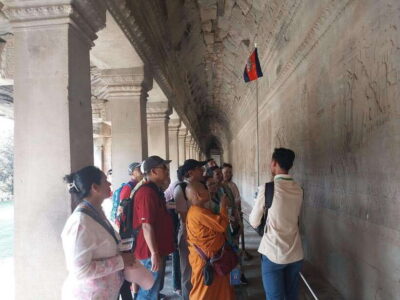
Angkor Wat: Small-Group Sunrise or Sunset Tour
Read our review →
Angkor Wat Sunrise tour with Small – Group and Guide tours
Read our review →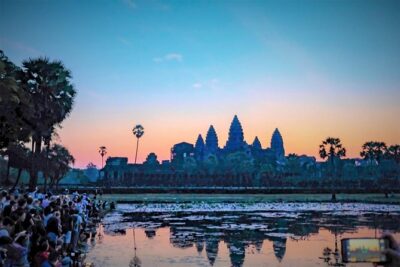
Angkor Wat Highlights and Sunrise Guided Tour from Siem Reap
Read our review →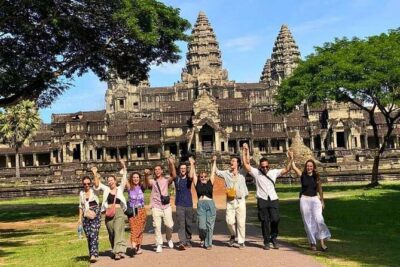
Angkor Wat Sunset Small Group Tour with Lunch Included
Read our review →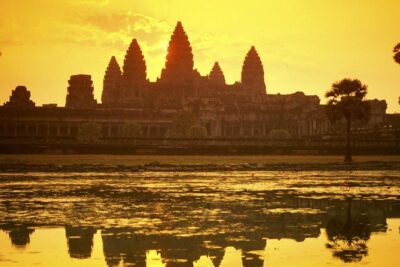
Full-Day Angkor Wat Sunrise Private Tour with Guide from Siem Reap
Read our review →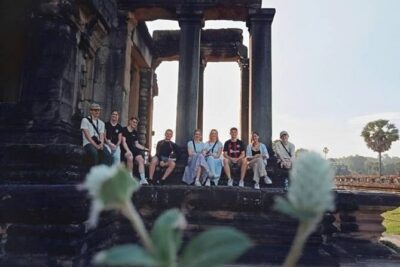
Angkor Wat Sunrise & 3 Main Temples with Breakfast – Small Group
Read our review →Browse the lists this tour appears in