
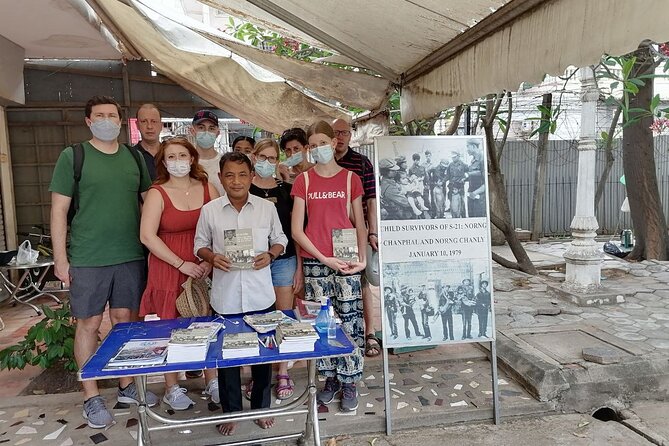
Reviewed · KILLING FIELDS TOURS
The killing field and Toul Sleng Genocide museum (S21) Tour
Choeung Ek and Tuol Sleng tell the story of Cambodia’s Khmer Rouge years from two different angles: one was a place of mass execution and burial, while the other was a prison where people were interrogated and tortured. Taken together, they make the country’s recent past painfully clear.
I like the two-site format, since you do not have to arrange separate transport or work out the history alone. I also like the small group limit of 20, air-conditioning, and cold water, which matter in Phnom Penh’s heat. The main drawback is emotional: this is a difficult morning, and some descriptions and exhibits are graphic. You also pay $8 extra for admission.
Key points at a glance
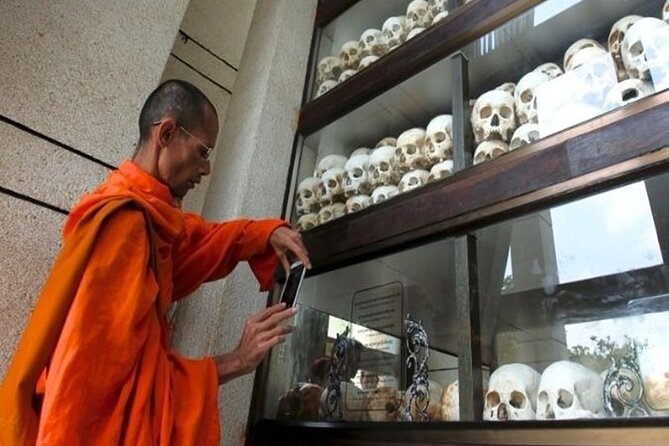
- Two essential sites in one half-day: Visit Choeung Ek, about 15 kilometers south of Phnom Penh, and Tuol Sleng in the city.
- Guided context matters: An English-speaking guide explains the Khmer Rouge period and connects the sites to Cambodia’s recovery.
- A practical $18 base price: Transport, a driver, guide, air-conditioning, and bottled water are included, but entrance fees add $3 for Choeung Ek and $5 for Tuol Sleng.
- A manageable group size: The vehicle and tour can hold up to 20 people, giving you a more organized outing than arranging every transfer yourself.
- Guides with a personal approach: Neang and Mr Seth are specifically praised for clear, detailed explanations, with Mr Seth noted for speaking about the subject on a personal level.
- Plan for a serious experience: The tour is educational, but it is not light sightseeing. Give yourself quiet time afterward.
Why these two places belong together
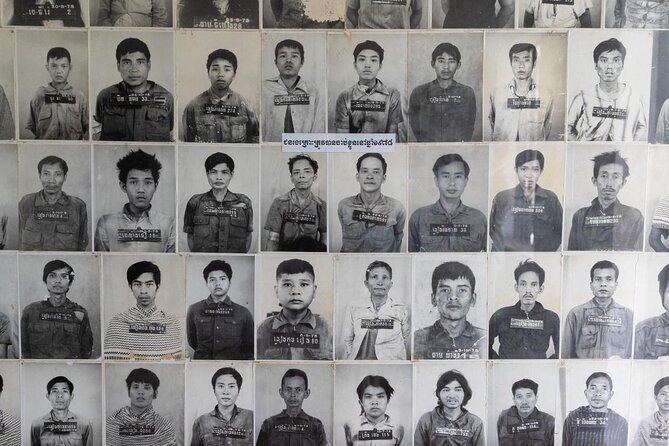
The Khmer Rouge ruled Cambodia from 1975 to 1979 under Pol Pot. The regime emptied cities, forced people into agricultural labor, and imprisoned or killed those it viewed as enemies. The period remains close to the present, and the tour’s greatest value is showing you that this was not distant ancient history.
At Choeung Ek, you see the setting used for executions and burials. At Tuol Sleng, you see the former high school converted into a high-security prison. One site shows the final stage of the system. The other shows the machinery of fear before many prisoners were sent away.
You can visit both places by taxi or tuk-tuk, but the transport is only part of the problem. Without context, you may see buildings, photographs, and memorials without understanding how they fit together. A good guide gives the sequence meaning, explains the political setting, and helps you approach the evidence with care.
The tour is advertised at about four hours and 15 minutes. Each main stop is planned for roughly two hours, with the rest used for driving and transfers. That makes this a useful half-day activity, though you should not expect unlimited time at every exhibit.
More Museums in Phnom Penh
- The Killing Field and Toul Sleng Genocide Museum (S21) Tour
★ 5.0 · 1,977 reviews - Killing field and Toul Sleng genocide museum Tour
★ 5.0 · 610 reviews - Private Half Day To Killing Field & S21 Genocidal Museum in Phnom Penh
★ 5.0 · 137 reviews
Choeung Ek: the killing fields south of Phnom Penh
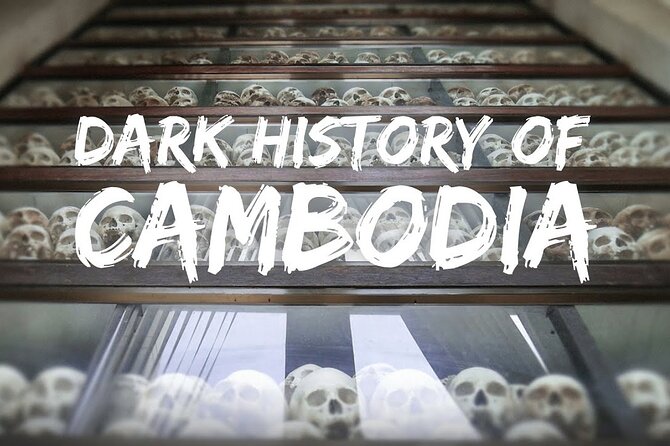
The first stop is Choeung Ek Genocidal Center, around 15 kilometers south of Phnom Penh. The site was once an orchard and a Chinese cemetery. Under the Khmer Rouge, it became one of the places where prisoners were executed and buried.
The name killing fields refers to many such sites across Cambodia, not just Choeung Ek. This particular place has become the best-known memorial site for visitors based in Phnom Penh. The tour explains its role in the larger system and the scale of the crimes committed there.
The supplied information gives a figure of about 20,000 people executed at Choeung Ek. It also describes mass killing and burial on a scale of 2.5 million people during the three-year period. The numbers are hard to absorb, which is one reason a guide is useful. You need someone to explain what the site represents without turning the visit into a list of statistics.
Expect the experience to be quiet and serious. The memorial setting, burial areas, and historical interpretation ask you to slow down. Descriptions can be explicit, and one piece of feedback calls the tour very graphic. If you are sensitive to accounts of violence, read only what you feel able to handle and tell your guide if you need a pause.
The planned two-hour visit gives you time to listen and look around, but some people may want longer. One comment specifically notes that a little more time at each place would have been welcome. That is the tradeoff with a half-day tour: you get both major sites in one morning, but the schedule may feel firm.
I like that the stop is not treated as a quick photo break. Choeung Ek is a memorial, not an attraction to rush through. Wear practical shoes, carry water if you need more than one bottle, and keep your attention on the setting rather than trying to record every moment.
Tuol Sleng: a prison inside a former school
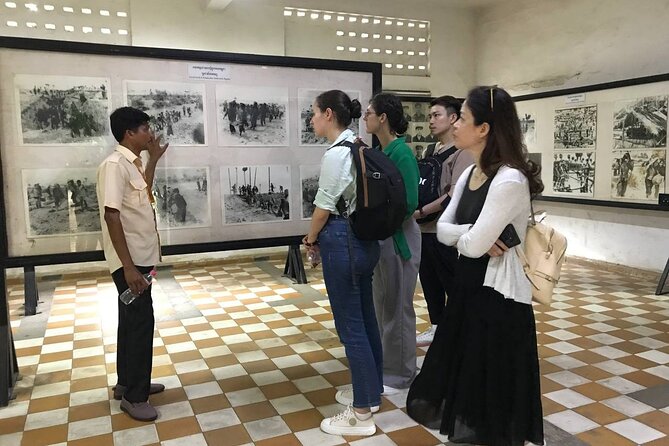
Tuol Sleng Genocide Museum, also called S21, gives you a different view of the same regime. Before the Khmer Rouge took control, the site was a popular high school. Pol Pot’s government turned it into a high-security prison.
The name Tuol Sleng means hill of the poisonous trees. Around 20,000 people were imprisoned there, and many were tortured for information. The former school setting makes the visit especially unsettling. A place built for education was used for interrogation, confinement, and terror.
The museum’s importance lies in the physical evidence and the story it tells about state control. Choeung Ek helps you understand mass execution and burial. S21 shows how prisoners were processed, questioned, and held before their deaths. Visiting both prevents the history from becoming abstract.
This is also the city-center stop, so it may be easier to visit on your own than Choeung Ek. The tour earns its price here through interpretation rather than access alone. Your guide can help connect rooms, photographs, and the prison’s purpose to the wider Khmer Rouge system.
The English-speaking guides are the heart of this experience. Neang is praised for explaining the war and genocide clearly, while also teaching a few Khmer words. Mr Seth is noted for giving detailed, honest explanations and speaking about the events in a personal way. Those guides may not be assigned to every departure, so treat their names as examples rather than a guarantee, but the pattern is useful: you want a guide who can explain the facts with restraint and respect.
Allow yourself room to think after S21. The tour is informative, but the subject can stay with you. If you are planning a packed afternoon, leave some space rather than moving straight into another demanding activity.
What the $18 price really covers
The advertised price is $18 per person. That is not the final cost, because the two entrance tickets are separate: $3 for Choeung Ek and $5 for Tuol Sleng. Your practical total is therefore $26 per person before any tip or other personal spending.
For that price, you receive an English-speaking guide with a driver, an air-conditioned vehicle, transport between the sites, and cold bottled water. The vehicle is described as clean, hygienic, good, and safe. In Phnom Penh’s heat, air-conditioning is more than a luxury. It gives you a chance to cool down between two emotionally demanding visits.
The value is strongest if you want a single organized outing. You are paying for coordination, transfers, and historical explanation, not simply a ride to two museums. If you are comfortable arranging a tuk-tuk and hiring audio guides or researching the sites yourself, you might spend less or have more control over your timing. You would also take on the responsibility of moving between places and building the historical link yourself.
The maximum group size is 20. That is not an intimate private tour, but it is small enough to keep the day organized. The quality of the experience will depend partly on where you are standing and how clearly your guide speaks. The strongest feedback focuses on guides who explain the subject in detail and with feeling, so listen closely and stay near the guide during site talks.
More Killing Fields Tours in Phnom Penh:
- Visit 11 Places in One Day including S21 & Killing Field
★ 5.0 · 361 reviews - Half Day Tuol Sleng S21 and Choeung Ek Killing Field Tour
★ 5.0 · 228 reviews - Killing Fields and Prison S21 Bus Tour
★ 4.0 · 206 reviews - Tuol Sleng Genocide Museum (S-21) and Choeung Ek Killing Fields Tour
★ 5.0 · 123 reviews
The four-hour schedule and transport
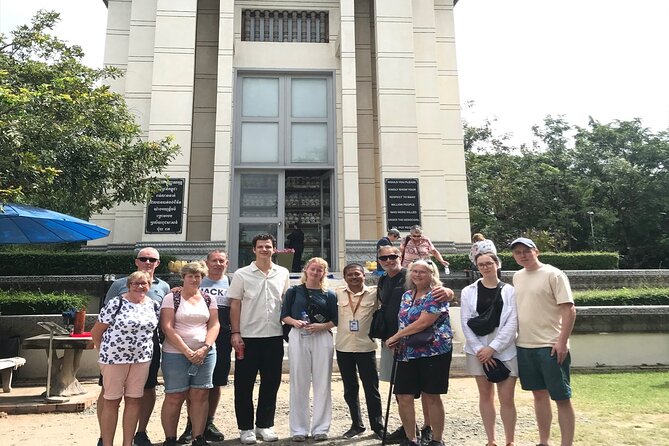
The tour lasts about four hours and 15 minutes. Choeung Ek and Tuol Sleng each receive approximately two hours in the planned schedule, with driving time between them and pickup included.
Pickup is offered, which removes one common Phnom Penh nuisance: working out where to meet a driver in unfamiliar streets. Confirmation is provided at booking, and the activity is near public transportation. Most people can participate, according to the supplied details.
The order given for the tour begins at Choeung Ek and finishes at Tuol Sleng. That arrangement takes you from the burial and execution site to the prison and gives the day a clear historical progression. Departure details can affect the exact timing, so check your confirmation carefully.
The activity requires good weather. If poor weather causes cancellation, you are offered another date or a full refund. You can also cancel for a full refund up to 24 hours before the start time. Changes or cancellations inside that 24-hour window are not accepted, and the local time cutoff applies.
Preparing for a difficult morning
Treat this as a memorial visit with transport, not a standard sightseeing trip. The subject includes torture, execution, imprisonment, and mass death. One person described the tour as emotionally hard, while another called it sad but eye-opening. Those descriptions are fair.
A few simple choices can make the day easier:
- Wear cool, respectful clothing and comfortable shoes.
- Bring a little extra water, even though a cold bottle is provided.
- Keep your schedule light afterward.
- Listen to the guide before taking photographs.
- If a description becomes too much, step back and take a quiet moment.
The tour is suitable for most participants, but the material is not suitable for everyone. Parents should decide carefully before bringing children, since the supplied information specifically notes that the tour can be explicit and graphic. The activity data does not give a child age policy, so ask the provider if that matters for your booking.
The role of a local guide
The best reason to book this tour is not simply convenience. It is the chance to hear Cambodia’s recent history explained by someone who can place the sites in a local context.
The feedback gives several guide names and qualities to look for. Neang is praised for explaining the war and teaching a few Khmer words. Mr Seth is praised for detailed English, direct explanations, and a personal connection to the subject. Another account describes a guide whose connection to his own family made the history feel close rather than theoretical.
That personal element must be handled carefully. The guide should help you understand, not turn suffering into a performance. The strongest descriptions of this tour point to respectful, clear, and honest delivery. That is exactly what you need at S21 and Choeung Ek.
You may also find that the guide changes the balance between the two sites. Some guides spend longer explaining the killing fields, while others give more detail at S21. Since the total time is limited, stay aware of the clock and use any free time to read the exhibits that matter most to you.
Who should book this Phnom Penh tour
I would recommend this tour to you if you want the essential Khmer Rouge sites covered in one half-day, prefer organized transport, and value spoken explanation. It is also a good fit if this is your first visit to Phnom Penh and you want a clear introduction to the country’s recent past.
History lovers will find plenty to consider, but you do not need a specialist background. The guide’s job is to build the story from the basics. The tour also suits solo visitors who would rather not arrange a private vehicle or visit these places without support.
You may prefer a private tour if you want a slower pace, more control over the order, or extra time at each site. You may also prefer independent visits if you already understand the history and mainly want to read the museum material at your own speed.
Do not book it because it sounds like an easy morning activity. It is convenient, but it is not cheerful. The tour asks for attention and emotional energy, and that is part of its value.
Should you book the Killing Field and Tuol Sleng tour?
Book it if you want a practical, fairly priced way to visit both Choeung Ek and S21 with transport and a guide. The extra $8 admission cost is easy to calculate, and the combined total remains reasonable for a four-hour, two-site experience.
The strongest reason to choose it is the guide-led context, especially if you can confirm a guide such as Neang or Mr Seth is available. The main warning is the subject matter and the fixed half-day schedule. If you need more time for reflection or detailed museum viewing, arrange a private option instead.
For most first-time visitors to Phnom Penh, this is a worthwhile and respectful introduction to Cambodia’s darkest modern chapter. Go prepared, listen carefully, and leave the rest of your day open.
FAQ
How long does the tour last?
The tour lasts approximately 4 hours and 15 minutes.
Which places does the tour visit?
It visits Choeung Ek Genocidal Center, known as the Killing Fields, and Tuol Sleng Genocide Museum, also called S21.
How far is Choeung Ek from Phnom Penh?
Choeung Ek is about 15 kilometers south of Phnom Penh.
Is transport included?
Yes. The tour includes travel in an air-conditioned vehicle, along with a driver, guide, and cold bottled water. Pickup is offered.
What is not included in the $18 price?
Entrance tickets are separate. Choeung Ek costs $3 per person, and Tuol Sleng costs $5 per person. Tips, personal expenses, and travel insurance are also excluded.
How large is the group?
The maximum group size is 20 people.
Is the tour conducted in English?
Yes. A professional English-speaking guide is included.
Can I cancel for a full refund?
Yes. You can cancel at least 24 hours before the experience starts for a full refund. Cancellations made less than 24 hours before the start time are not refunded.
What happens if bad weather cancels the tour?
If the experience is canceled because of poor weather, you will be offered another date or a full refund.
New around Phnom Penh
- One Day Private Guide Tours History in Phnom Penh Incl. admission★ 4.5 · 7 reviews
- ( Free eSim) Phnom Penh Historical Full Day Tour★ 5.0 · 7 reviews
- Ground Transfer/ Minivan/ Phnom Penh to Siem Reap★ 5.0 · 7 reviews
- Phnom Penh: Bike & Boat Tour / E-Bike Available★ 4.8 · 7 reviews
- Private Taxi Phnom Penh to Siem Reap or Siem Reap to Phnom Penh★ 5.0 · 8 reviews
- Cambodia 7 Days Private Tour from Angkor Temples to Coastline★ 5.0 · 8 reviews
- Head, Back and Shoulder Massage in Phnom Penh★ 4.5 · 8 reviews
- Private Half-Day Tour of Phnom Penh’s Traditional Markets★ 4.5 · 8 reviews