
Reviewed · ANGKOR WAT TOURS
Siem Reap: Angkor Wat Tour with French-Speaking Guide
Angkor is not one temple. It is a huge ancient city, and this tour gives you a French-speaking guide to help make sense of its towers, carvings, royal roads, and tree-covered ruins. I especially like the choice between a focused 1-day route and a slower 2-day visit, plus the welcome relief of cold water and towels in Cambodia’s heat.
The strongest points are the guides, including Mey, Alex, Kamal, Piset, and Philrom, who bring humor and clear historical explanations, and the practical transport setup. The main drawback is that the $50 price does not include the Angkor pass or lunch, and the 1-day program can feel full, especially with an early sunrise start.
Key points to know before booking
- French-speaking guides: Guides such as Mey, Alex, Kamal, Piset, and Philrom explain Cambodian history and culture in French.
- Two useful formats: Pick the 1-day Small Circuit for the major sights, or add the Grand Circuit and Banteay Srei over 2 days.
- Strong heat protection: Cold drinking water and fresh towels are supplied during the visits.
- Transport changes by group size: One or two people usually ride in a tuk-tuk, while larger groups use an air-conditioned van or bus.
- The temple pass costs extra: Budget $37 for one day or $62 for a pass valid for two to three days.
- A real clothing rule: Angkor Wat requires clothing that covers your shoulders and knees, not just something light for the heat.
Why the French-speaking guide matters at Angkor
Angkor can look impressive even when you know nothing about it. But without context, you may see a series of stone buildings and miss the ideas connecting them: royal power, Hindu and Buddhist beliefs, water management, warfare, and the daily life of a vast Khmer capital.
A good guide turns the carvings into a readable story. The French-speaking guides on this tour explain the temples in a structured way, with enough humor to keep a long hot day from becoming a lecture. Piset is noted for clear French explanations and a well-organized route, while Kamal is described as both friendly and funny. Philrom focuses on Cambodian history and helps connect the monuments to the wider country.
You should still expect to walk and listen outdoors for much of the day. The guide can explain the stones, but the sun remains in charge. Comfortable shoes, sunscreen, a hat, sunglasses, and insect repellent are sensible additions to your day bag.
More Angkor Wat Tours in Siem Reap:
- Angkor Wat Sunrise or Sunset Tour with Guide from Siem Reap
★ 5.0 · 12,109 reviews - Siem Reap: Angkor Wat: Small-Group Sunrise or Sunset Tour
★ 5.0 · 9,444 reviews - Siem Reap: Angkor Wat 2-Day Tour with Sunrise and Sunset
★ 4.9 · 4,429 reviews
The 1-day route: Angkor’s greatest hits
The standard 1-day plan runs from about 8:30 AM to 5:00 PM. Hotel pickup is included, with the guide collecting you between 8:30 and 9:00 AM in Siem Reap. You then go to the ticket booth, unless you have bought the pass online in advance.
This option concentrates on the main temples around Angkor Thom, Ta Prohm, and Angkor Wat. It is a good match if you have limited time, want the essential sights, or prefer to spend the rest of your Siem Reap visit on other activities.
Ta Prohm and the drama of tree-covered ruins
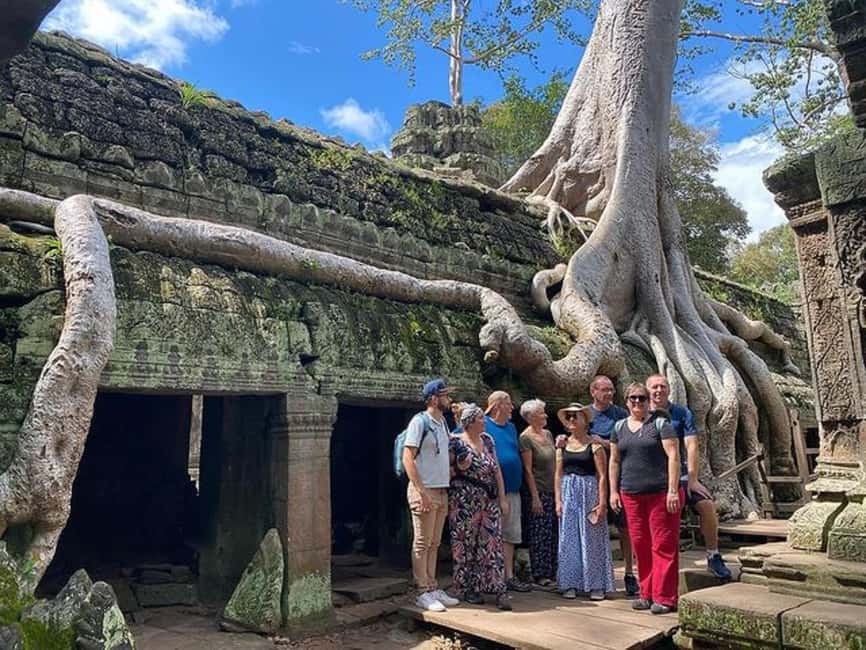
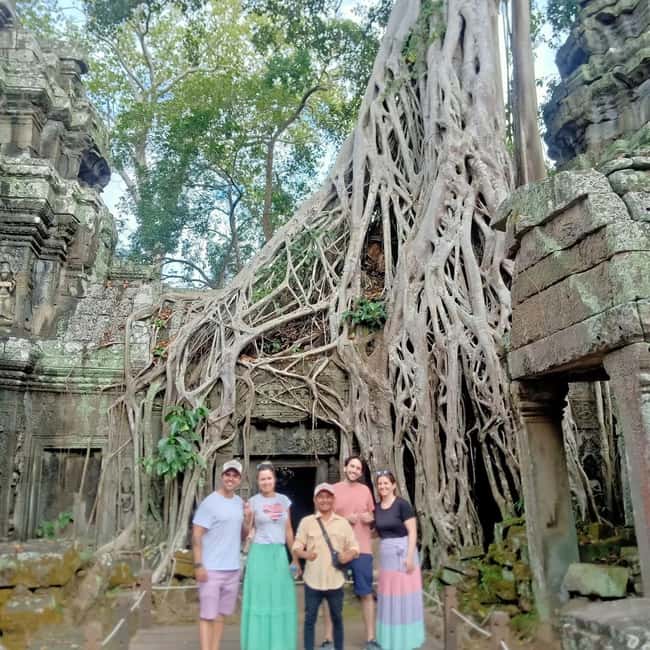
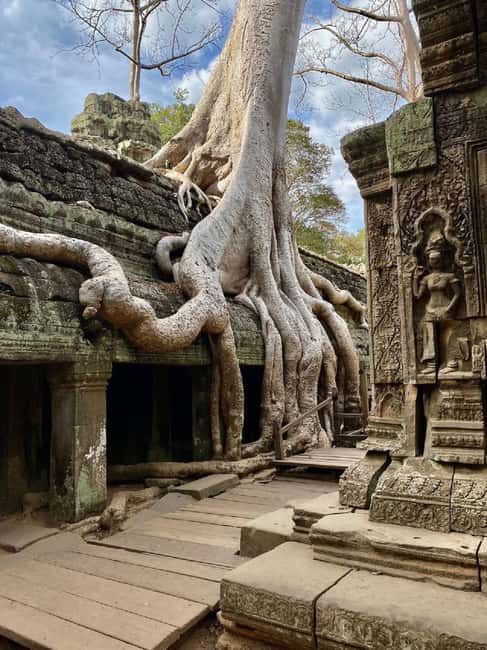
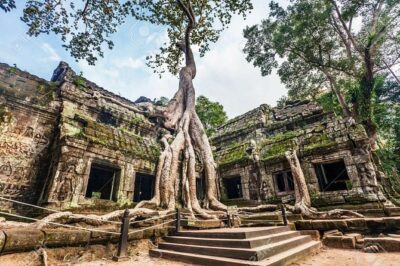
Ta Prohm is an excellent early stop because it immediately shows how nature and architecture have collided at Angkor. Large roots wind over walls and doorways, creating the famous scene many people recognize from photographs and films.
Your guide helps you look beyond the tree roots. Carved galleries, enclosed courtyards, and damaged stonework reveal that this was more than a picturesque ruin. You will spend about an hour walking here, and the site offers some of the tour’s best pictures.
The catch is that Ta Prohm’s most photogenic corners can be busy. A guide who knows the route can help you reach good viewpoints without wasting time, but you should not expect solitude at every doorway.
Victory Gate and the approach to Angkor Thom
A short photo stop at Victory Gate gives you a quick look at one of Angkor Thom’s grand entrances. It is not a long visit, but it helps you understand the scale of the walled city before you walk through its central monuments.
The gate is best treated as a visual introduction rather than a full temple visit. Your guide can point out the design and explain how the city was arranged, while the short stop keeps the day moving.
A few more Siem Reap half-days to weigh up
- From Siem Reap: Kampong Phluk Floating Village Tour by Boat
★ 4.9 · 6,979 reviews - Sunset tour of Kampong Phluk stilts home village on the Tonle Sap
★ 5.0 · 4,865 reviews - Siem Reap: Kampong Phluk Floating Village Tour with Boat
★ 4.9 · 3,843 reviews - Siem Reap: Full-Day Angkor Wat Guided Tour with Sunset
★ 4.9 · 3,803 reviews
Angkor Thom, a city rather than a single monument
Angkor Thom deserves time. The visit lasts around two and a half hours and includes several key sights inside the ancient city. Here, wide paths and monumental gateways give you a stronger sense of the former capital’s size than any single temple can provide.
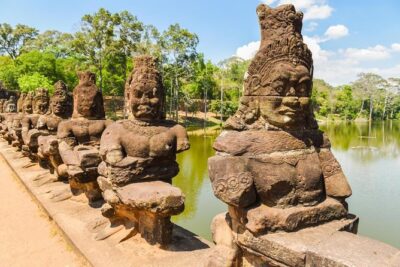
The South Gate is especially memorable for its rows of figures and giant stone faces. The faces create a striking welcome, but the scene also reflects the political and religious ideas built into Angkor’s design. This is where a guide becomes especially useful, since the visual details can be easy to overlook.
The route includes the Terrace of the Elephants, the Terrace of the Leper King, Baphuon, and Bayon. You will walk between these areas, so expect uneven surfaces, steps, and plenty of sun.
Terrace of the Elephants and the Terrace of the Leper King
The Terrace of the Elephants is a long carved platform once used for royal ceremonies and public displays. Its name comes from the elephant reliefs, which are easy to spot along the stone wall.
The Terrace of the Leper King has a different mood. Carvings cover the walls, and the enclosed passages make the site feel more detailed and intimate. This is a short part of the route, about 15 minutes at the Terrace of the Elephants, but it adds useful context to Angkor Thom’s royal center.
Baphuon, a steep climb with a clear payoff
Baphuon is a large temple with a strong vertical design. You will spend about 45 minutes here, walking across its long approach and climbing sections of the monument.
The climb and uneven stone can be tiring in the heat. Take your time and keep water close. From higher points, you get a better sense of the temple’s shape and its place inside Angkor Thom.
Bayon and the famous stone faces
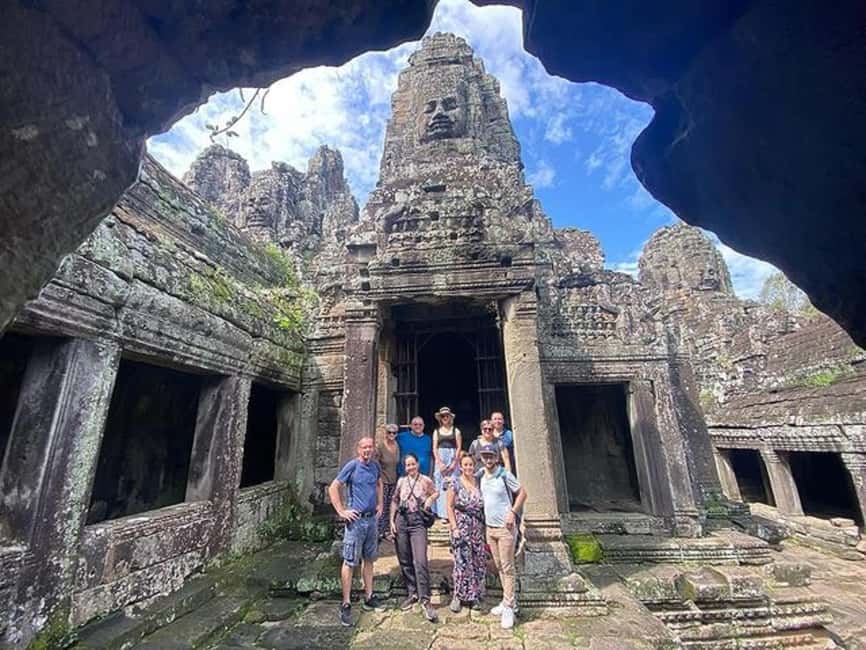
Bayon is one of the most rewarding stops for a guide-led visit. Its towers carry serene faces that look in different directions, and the narrow passages can feel like a puzzle of stone corridors and galleries.
Give yourself time to look closely at the bas-reliefs, not just the famous faces. They show scenes of daily life, conflict, processions, and the world of the Khmer Empire. The guided visit lasts about 45 minutes, though you may wish you had longer if you like photography or detailed art.
Lunch near the temples
Lunch is not included, and the tour stops at a nearby local restaurant for about an hour. This is convenient because you do not need to leave the park, but it also means you should keep your expectations practical.
One useful caution: the restaurant choice can be expensive for the quality. If food value matters to you, ask your guide about the available options before ordering, and bring a little patience to the midday break. The hour provides a needed pause, especially on the 1-day route, but it is not a food-focused part of the tour.
Angkor Wat, the day’s grand finish
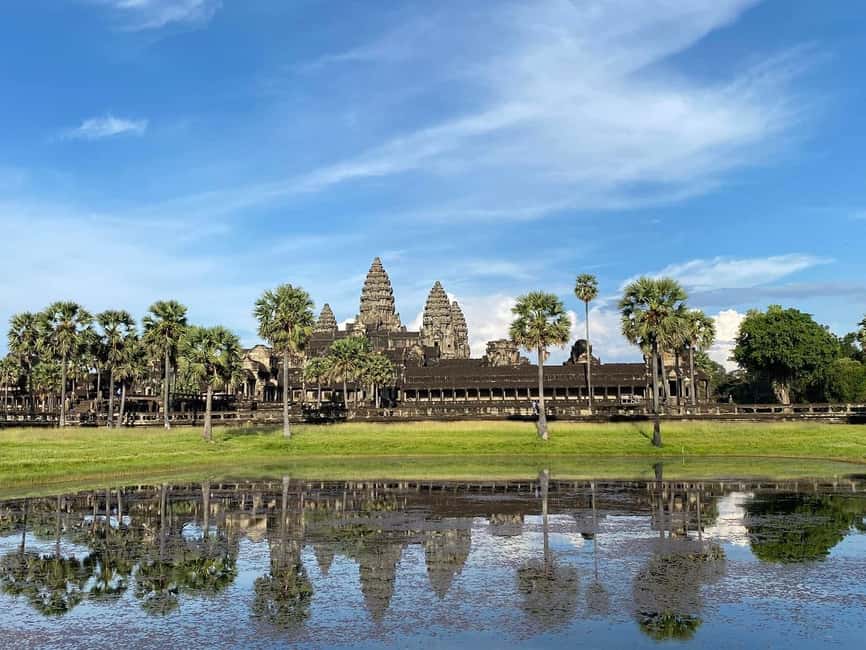
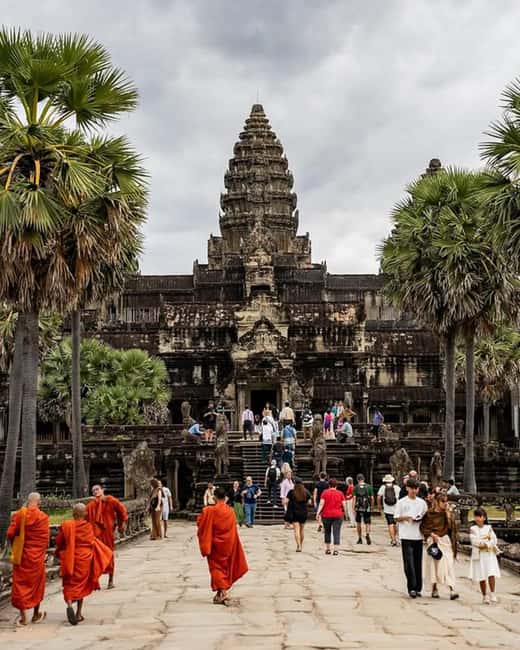
Angkor Wat receives about two hours on the 1-day schedule. That is enough for a guided introduction to its galleries, towers, art, and symbolism, but it is not enough to inspect every carving.
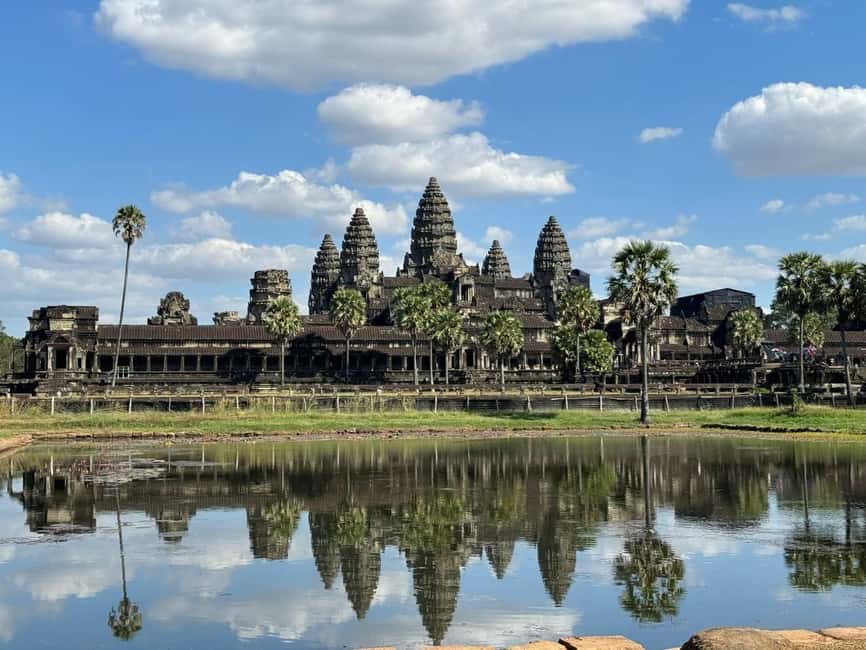
The monument’s scale is the first thing you notice. Long approaches, moats, galleries, and rising towers lead you through a carefully planned religious complex. Your guide can explain how the design expresses sacred geography and royal ambition, giving the building more meaning than a quick photo stop would provide.
Dress carefully here. Pants or skirts must cover the knees, and shirts must cover the shoulders. A scarf may work at some temples, but Angkor Wat has the strictest standard. Shorts, short skirts, tank tops, and sleeveless shirts are not allowed.
The 2-day plan: more temples, less rushing
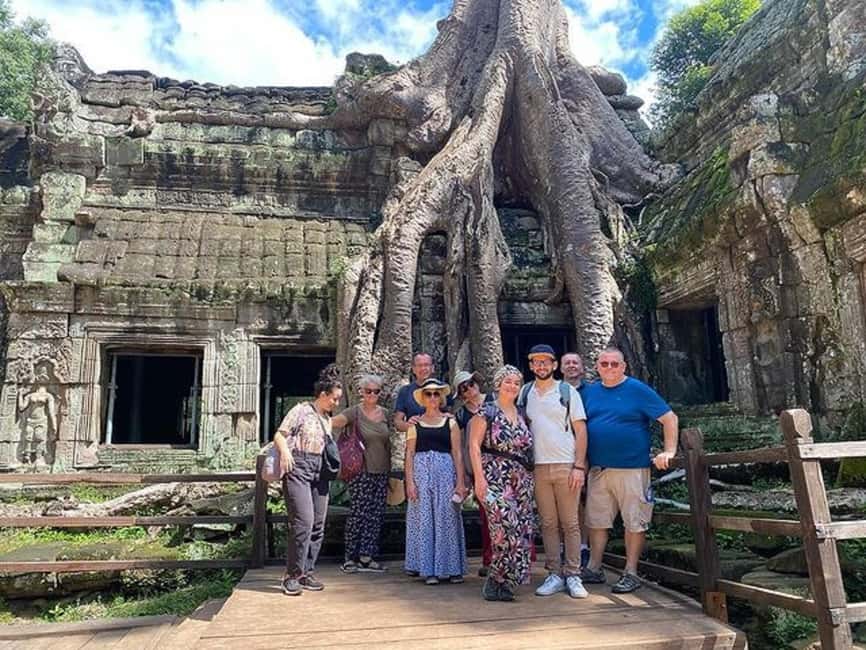
The 2-day option includes the Small Circuit on Day 1, then the Grand Circuit and Banteay Srei on Day 2. The second day usually runs until about 4:00 PM, which gives you a little more breathing room than trying to add every site to one long day.
I would choose this option if you care about temple details, dislike rushing, or want to see more than the standard Angkor highlights. The extra entrance pass costs $62 for two to three days, compared with $37 for one day, so the ticket difference is modest when spread across two days.
Preah Khan and long atmospheric corridors
Day 2 begins at Preah Khan, a large monastic complex with long corridors and detailed carvings. It rewards slow walking. The scale can be easier to appreciate here because the route leads you through connected spaces rather than one open viewpoint.
Preah Khan is also a good place to listen to your guide. The layout can feel confusing, and the explanations help you understand how the complex functioned rather than simply noting which doorway looks best in a picture.
Neak Pean and its tranquil pools
Neak Pean is smaller and more unusual than the major temple compounds. Water surrounds the central structure, and the pools give the site a calmer feel after the larger, busier monuments.
The visit is more about setting and design than long exploration. It is a pleasant change of pace, but do not expect the same scale as Angkor Wat or Angkor Thom.
Ta Som and the tree-covered gate
Ta Som brings back the atmospheric quality found at Ta Prohm, with a tree-covered gate that makes an especially strong photograph. The site is smaller, so it can feel more manageable after a morning of large temple grounds.
This is another place where timing helps. The guide can take you toward the notable gate and explain the carvings while keeping the visit from becoming a quick picture stop.
East Mebon and Pre Rup
East Mebon once stood on an island in a large reservoir. Today, the surrounding water is gone, but the temple’s raised position and stone layout hint at the engineering behind Angkor’s water system.
Pre Rup has a bold, mountain-like design and broad views over the Cambodian countryside. You will climb steps here, and the stone can be hot underfoot. The reward is a strong view of the temple’s stacked levels and a chance to see how Angkor’s builders used height to express sacred importance.
Banteay Srei, the finest detail of the second day
Banteay Srei is often the favorite stop for people who enjoy carving. Its pink sandstone reliefs are unusually fine, with small figures, floral patterns, and carefully cut details that reward a close look.
The name means Citadel of Women, and the temple is smaller than the central Angkor monuments. That is part of its appeal. Instead of overwhelming you with size, Banteay Srei asks you to slow down and inspect the workmanship.
It is also farther out in the park than the Small Circuit temples, which is one reason it fits better on a 2-day plan. Adding it to a rushed 1-day schedule would make the day harder, not better.
Sunrise: beautiful timing, tough schedule
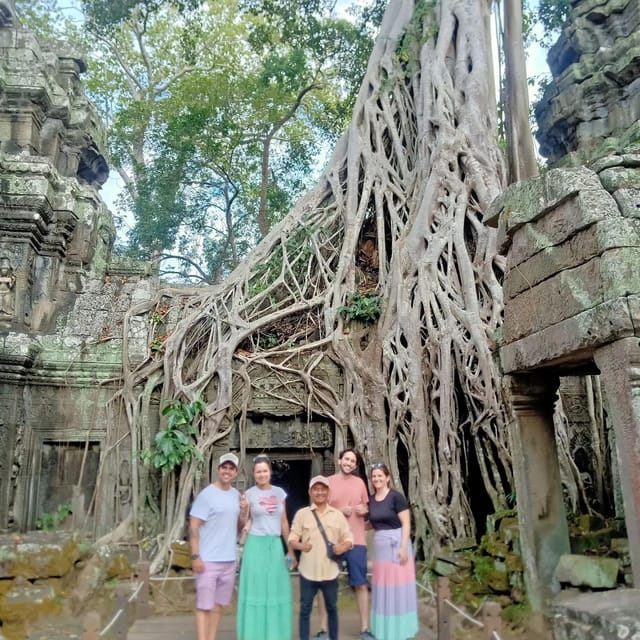
The sunrise option begins at 5:00 AM. On the 1-day version, the visit finishes around noon. On the 2-day version, the early start applies if selected for Day 2 at checkout, with the day ending around noon.
You should bring breakfast from your hotel. The early start can produce beautiful light around Angkor Wat, but it also means leaving your room before dawn and spending the morning walking in rising heat. I would choose sunrise if photography matters to you or if you prefer to handle the most exposed walking before the hottest part of the day.
The standard start is kinder to your sleep. It still gives you a full temple day, and the itinerary already includes a lot of walking.
Tuk-tuk, van, or car: what the transport means
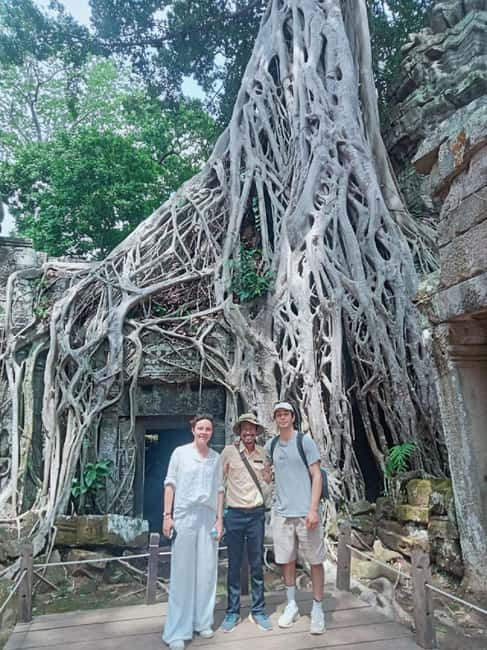
For one or two people on a shared tour, transport is generally by tuk-tuk. On a private 1-day tour, one or two people can also use a tuk-tuk, with a car available as an option at checkout.
Groups of three or more use an air-conditioned van or bus. On the private 2-day option, one or two people use a tuk-tuk on Day 1 and a car on Day 2. This matters because the vehicle becomes your cool-down space between temples.
Cold water and fresh towels are included. In temperatures around 35 degrees Celsius, those details are not decoration. They help you recover between walks, and the air conditioning is especially welcome after climbing Baphuon or Pre Rup.
Price, group size, and overall value
The tour costs $50 per person, before the temple pass and lunch. That is not the cheapest way to see Angkor, but French-speaking guiding is less common than English-language service, and the price includes hotel pickup, transport, a live guide, cold water, towels, and guided visits.
The value improves if you want explanations rather than just transportation. It also improves for a private group, since you can set a more comfortable pace and, for children under 12, private tours allow them to join free. Children must show a passport to confirm their age, and they do not need an entrance ticket.
A shared tour can keep costs under control, but your timing may be less personal. A private tour costs more in some cases, yet it gives you more control over pauses, photos, and the pace of temple visits.
The tour has a 4.9 rating from 245 bookings, and transport received a 96 percent perfect score. The consistent strengths are clear French, friendly guides, organized movement between sites, cold refreshments, and fresh towels. The weak point is the lunch stop, not the temples or transport.
Who should book this Angkor tour?
I would recommend it to French-speaking visitors who want the major Angkor temples explained in their own language. It also suits first-time visitors who would rather not manage ticket buying, temple routes, transport, and timing alone.
The 1-day option fits you if Angkor is one stop on a larger Cambodia trip. Choose the 2-day plan if you want Banteay Srei, prefer a slower pace, or enjoy looking closely at carvings.
This is not a good match for wheelchair users, and it is not suitable for people over 95. You should also be ready for substantial walking, steps, uneven stones, strong sun, and strict clothing rules.
Booking is flexible, with free cancellation up to 24 hours before the start and a reserve-now, pay-later option. Give the operator your hotel name, address, and contact number so the pickup goes smoothly, especially if your accommodation is hard to find.
Should you book it?
Book this tour if French guidance is important and you want a well-planned route with practical comfort built in. I would lean toward the 2-day option because Angkor is easier to appreciate when you are not racing from one monument to the next.
Choose the 1-day tour when time is short, but understand the tradeoff: you get the essential temples in one full day, with less room for lingering. Bring proper clothing, sun protection, breakfast if you choose sunrise, and a budget for the pass and lunch. With those costs and limits understood, this is a strong, sensible way to meet Angkor.
FAQ
Is the Angkor entrance ticket included?
No. The Angkor Archaeological Park pass must be purchased separately. It costs $37 for one day or $62 for two to three days.
Does the tour include hotel pickup?
Yes. Pickup and drop-off are included. The guide collects you from your hotel lobby in Siem Reap, generally between 8:30 and 9:00 AM for the standard start.
What language does the guide speak?
The live tour guide speaks French.
Can I choose a private tour?
Yes. Private and small-group options are available. Children under 12 join free on private tours only.
What temples are included on the 1-day tour?
The 1-day route includes Ta Prohm, Angkor Thom, the Terrace of the Elephants, the Terrace of the Leper King, Baphuon, Bayon, and Angkor Wat, with a photo stop at Victory Gate.
What does the 2-day tour add?
The second day adds Preah Khan, Neak Pean, Ta Som, East Mebon, Pre Rup, and Banteay Srei.
Is lunch included?
No. Lunch is not included. The tour stops at a nearby local restaurant, and you pay for your meal separately.
What type of transport is used?
One or two people generally travel by tuk-tuk, although a car may be selected for some private options. Groups of three or more use an air-conditioned van or bus.
What should I wear to Angkor Wat?
Wear pants or a skirt covering the knees and a shirt covering the shoulders. Shorts, short skirts, tank tops, sleeveless shirts, and revealing clothing are not permitted.
New around Siem Reap
- Kulen Mountain With Ticket included Plus Banteay Srei Temple Tour★ 5.0 · 7 reviews
- 2 Days Angkor temples with Sunrise & Sunset★ 5.0 · 7 reviews
- Private Siem Reap Airport Transfer to hotel in town★ 5.0 · 7 reviews
- 1-Day private Angkor Temple Tour with Sun Rise by Tuk Tuk from Siem Reap★ 4.5 · 7 reviews
- War Museum, Killing Field, and APOPO Hero RATs Tour★ 5.0 · 7 reviews
- Siem Reap: Morning Cooking Class & Market Tour★ 5.0 · 7 reviews
- Kulen Mountain, Killing Fields and War Museum Tour★ 5.0 · 7 reviews
- Half-Day: Silk Farm, Senteur Angkor, and Satcha Workshop★ 4.6 · 7 reviews
Angkor Wat Tours, compared.
Angkor Wat Sunrise or Sunset Tour with Guide from Siem Reap
Read our review →
Angkor Wat: Small-Group Sunrise or Sunset Tour
Read our review →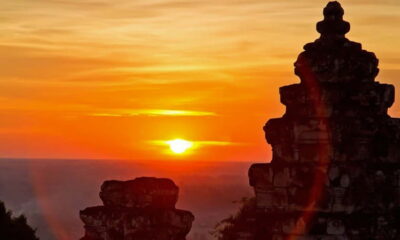
Angkor Wat Sunrise tour with Small – Group and Guide tours
Read our review →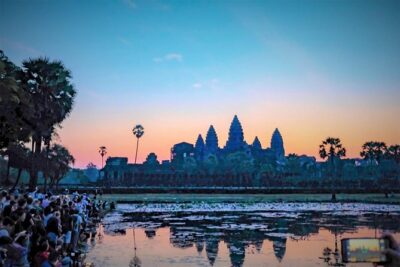
Angkor Wat Highlights and Sunrise Guided Tour from Siem Reap
Read our review →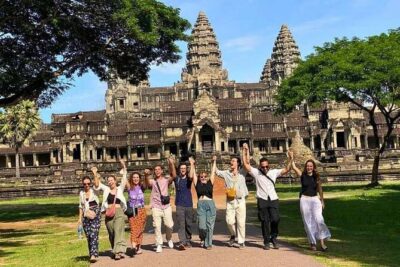
Angkor Wat Sunset Small Group Tour with Lunch Included
Read our review →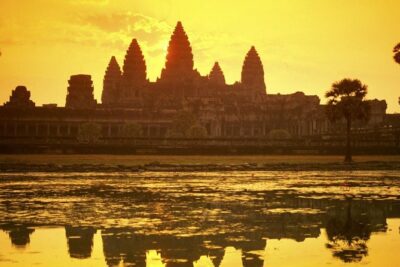
Full-Day Angkor Wat Sunrise Private Tour with Guide from Siem Reap
Read our review →
Angkor Wat Sunrise & 3 Main Temples with Breakfast – Small Group
Read our review →Browse the lists this tour appears in